This site uses cookiesMore Information.

Reimagination of an American Icon

Daytona International Speedway Renovation | Daytona Beach, Florida
SIZE
3.2 million sq. ft. / 297,290 sq. m.
101,500 seats
KEY FEATURES
World's first motorsports stadium transformation
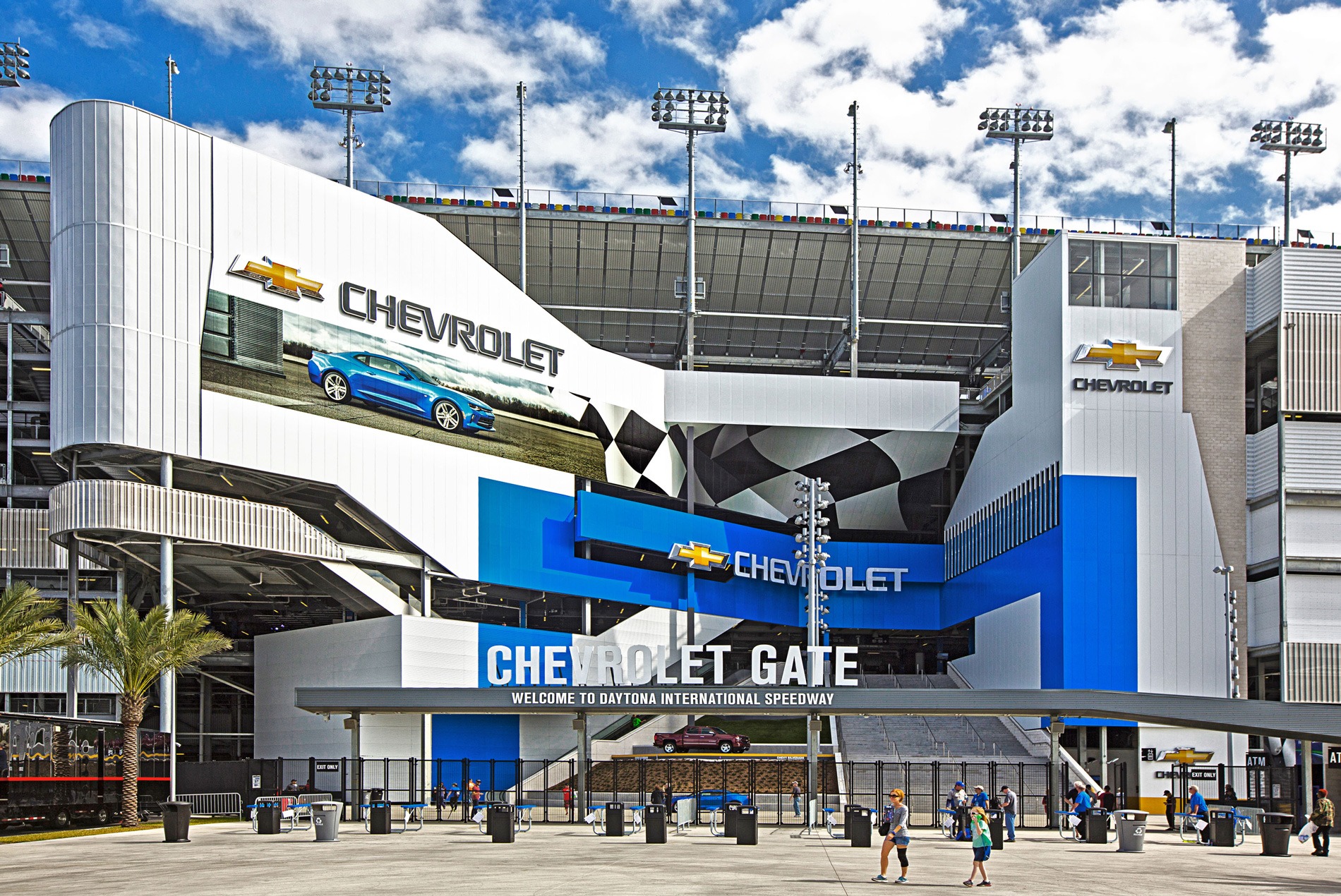
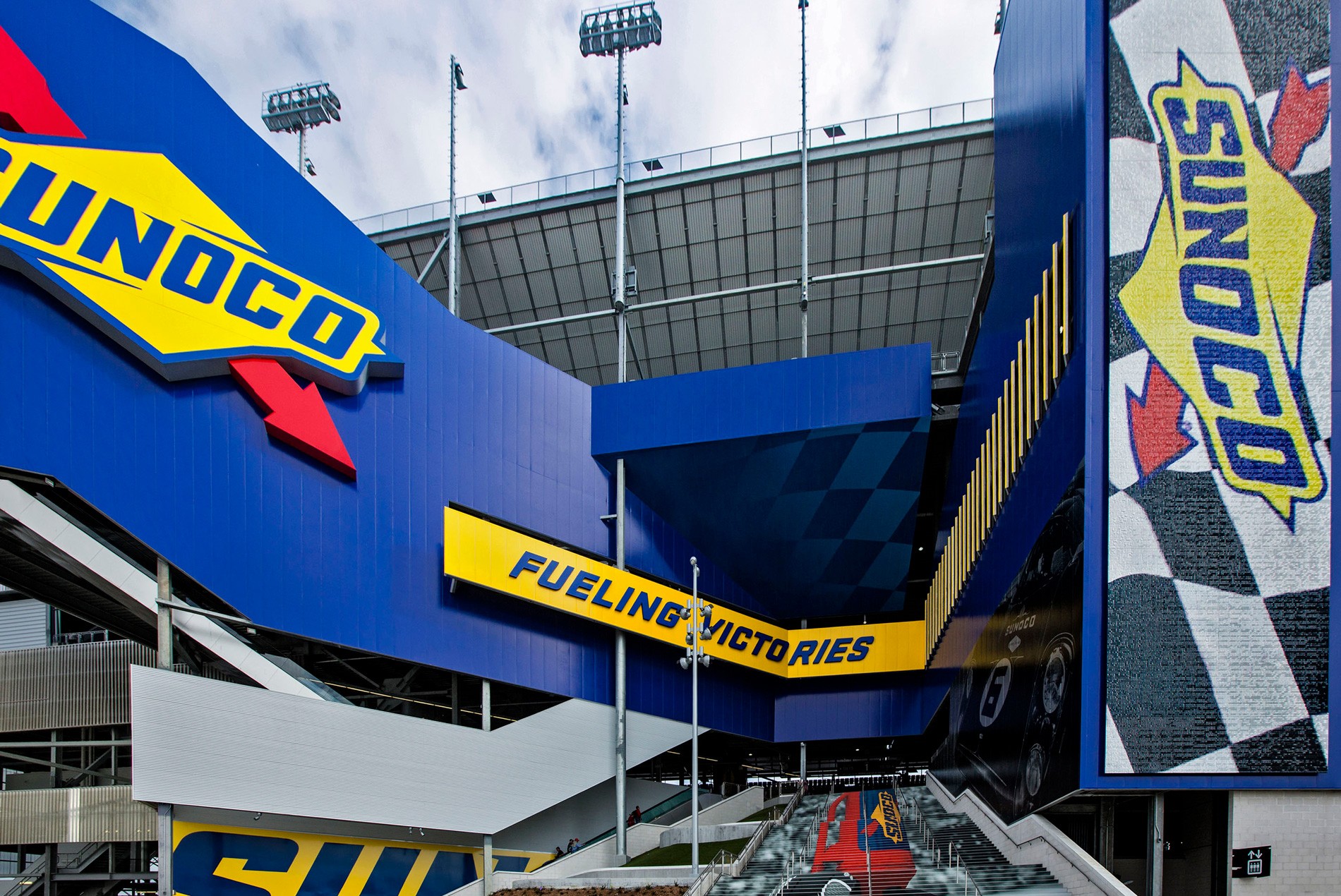
Five branded Injectors that combine entry, wayfinding and sponsorship
Reimagined Midway with integrated fan experiences
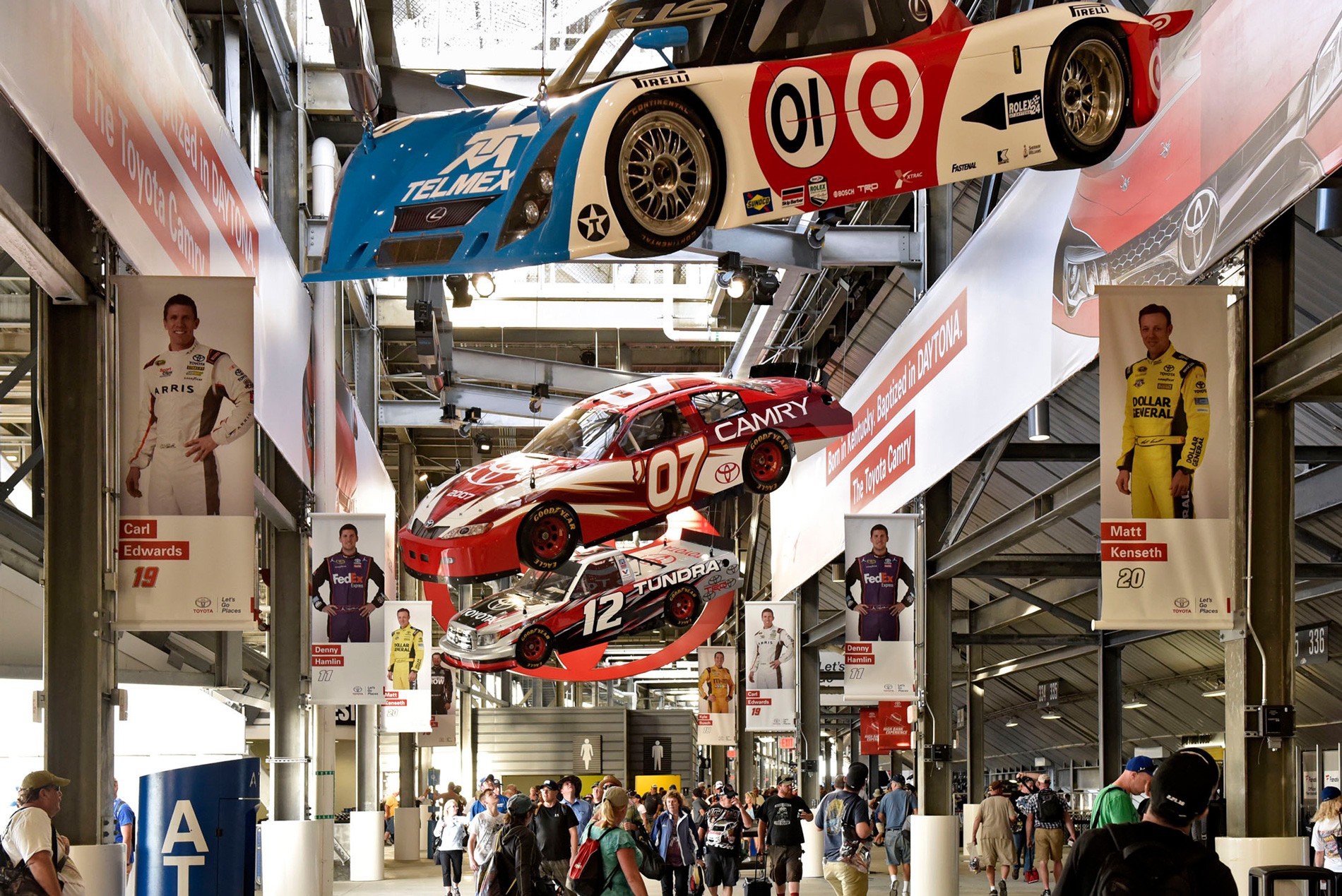
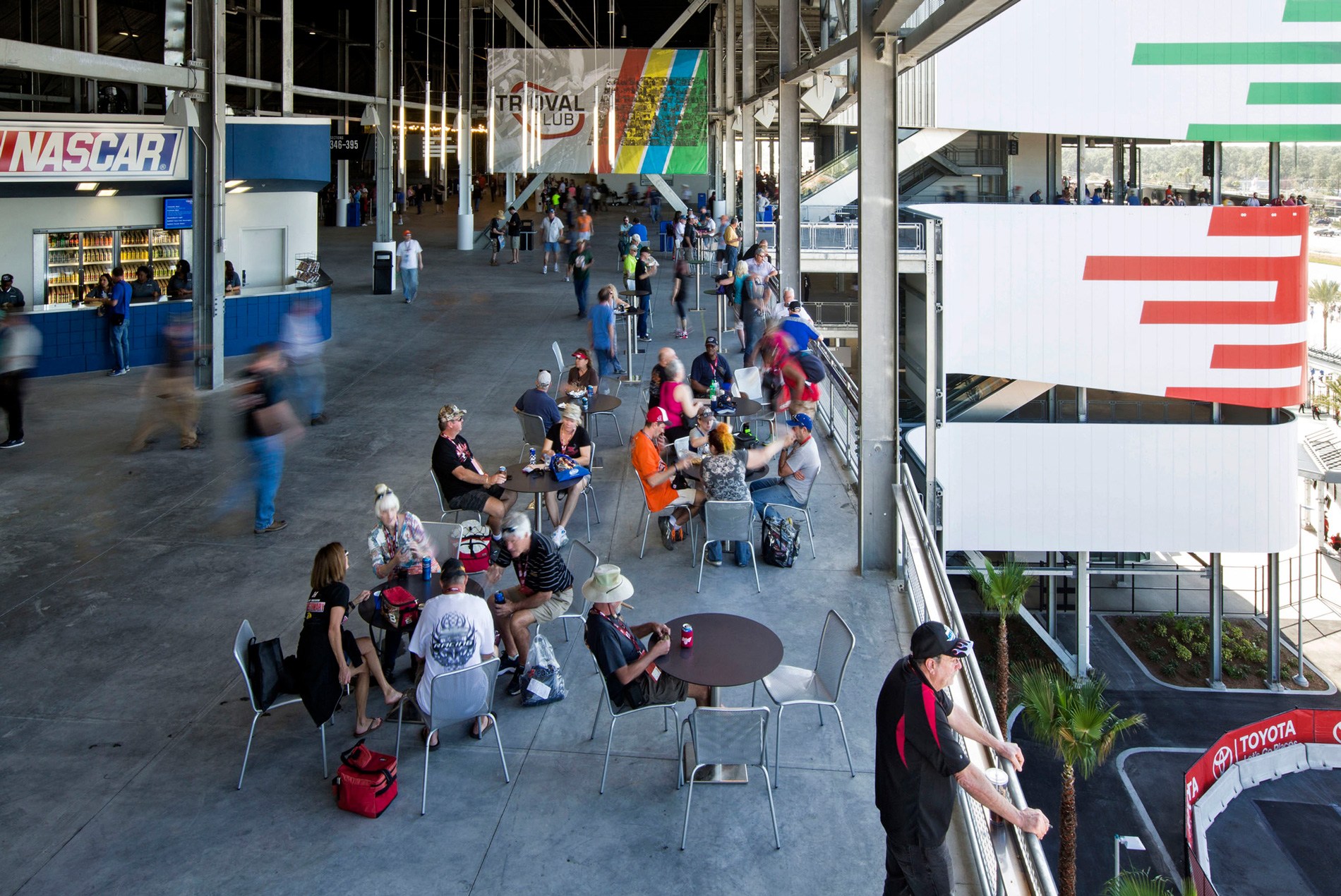
11 concourse neighborhoods with amenities and gathering spaces
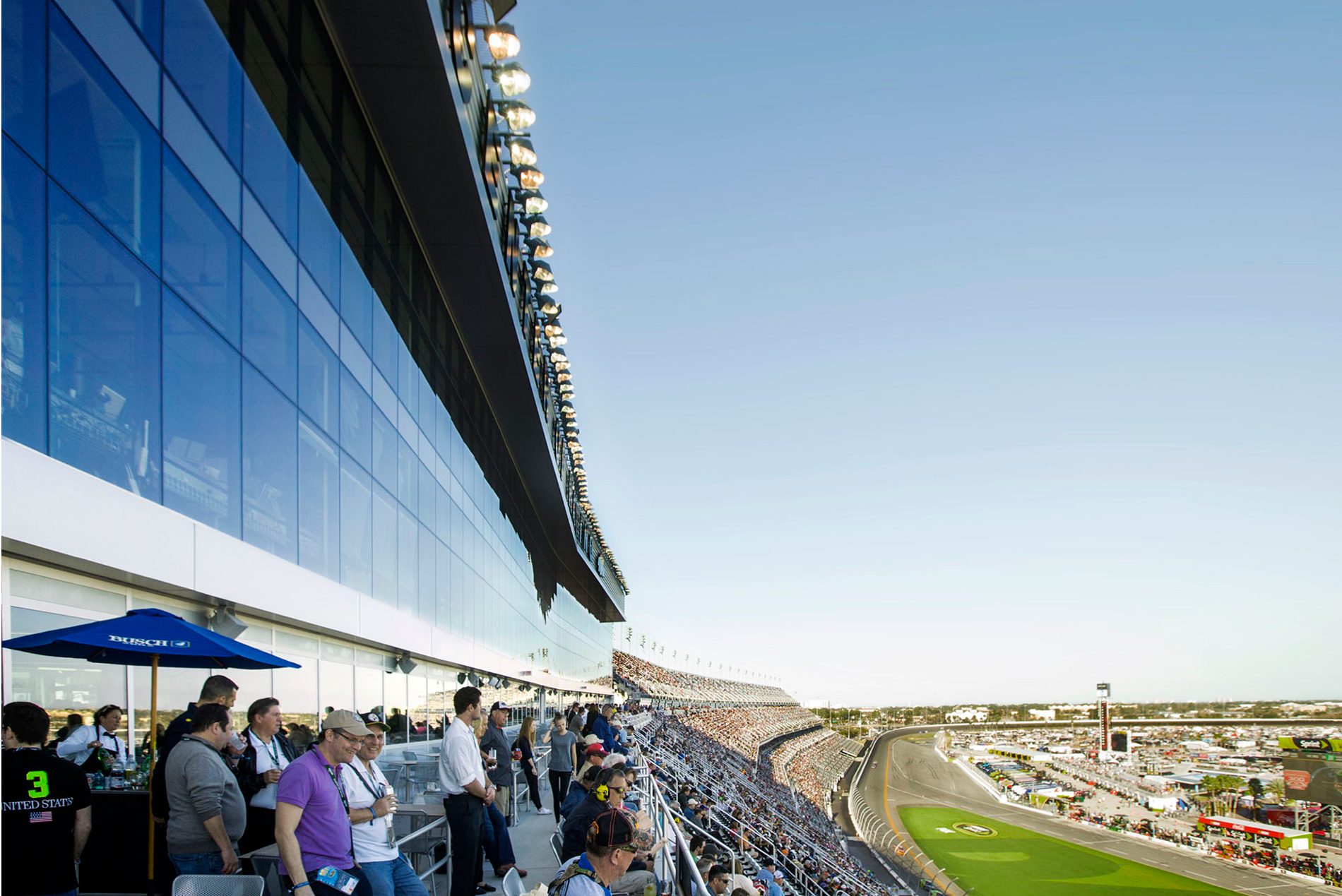
Grandstand reshaped for improved sightlines
Premium hospitality expanded tenfold with 60 permanent suites
Parametric modeling optimized sightlines across 2.5-mile track
101,500-seat venue focused on fan proximity
$1.6 billion annual economic impact
Project Facts

By 2011, Daytona International Speedway no longer met the expectations of modern fans or corporate partners. Built in 1959, the venue had changed little over five decades and no longer reflected its standing as a global motorsports icon.

NASCAR set out not to renovate, but to reinvent. The design team and NASCAR’s Design & Development team spent six months in immersive Discover Workshops examining the Speedway from every perspective: fan expectations, operational challenges, corporate partnership value and long-term business potential.

That work pointed to a single ambition: reimagine Daytona International Speedway as a motorsports stadium that would redefine the fan experience and set a new model for corporate partnership. Guided by the venue’s scale and legacy, the vision focused on elevating the fan journey, deepening corporate partnership and positioning Daytona as the flagship of NASCAR for the next generation.

Establishing a Strategic Vision

In December 2011, that ambition became a formal mandate. Shaped by the Speedway’s monumental scale and historic significance, the design transforms the approach into an immersive threshold, expands premium hospitality and choreographs a fan journey that unfolds from entry to seat through a series of social destinations and integrated brand experiences.

“ROSSETTI dared us to think beyond Daytona International Speedway as a motorsports venue and instead position ourselves as a sports phenomenon. Their bold design solution takes our brand to a new level.” — Doug Bolas , VP Design, NASCAR Design & Development

Sponsorship as a Core Design Driver

In motorsports, corporate partnership isn’t peripheral—it’s part of the culture. From the outset, sponsorship was treated as a core design driver, integrated into the architecture rather than applied as signage. The goal was to deliver physical, tactile brand experiences that engage fans throughout the event.

A strategic, data-driven approach identified five new entries, known as Injectors, as the linchpin for delivering partner value. By consolidating sponsorship into immersive fan experiences, founding partners achieved visibility and engagement far beyond traditional branding models. Each Injector functions as a fully branded environment, integrating architecture and experiential marketing from exterior to interior and extending into adjacent neighborhoods as fans move through the stadium. The integrated approach helped drive an anticipated 11% year-over-year increase in sponsorship revenue for NASCAR.

Slideshow

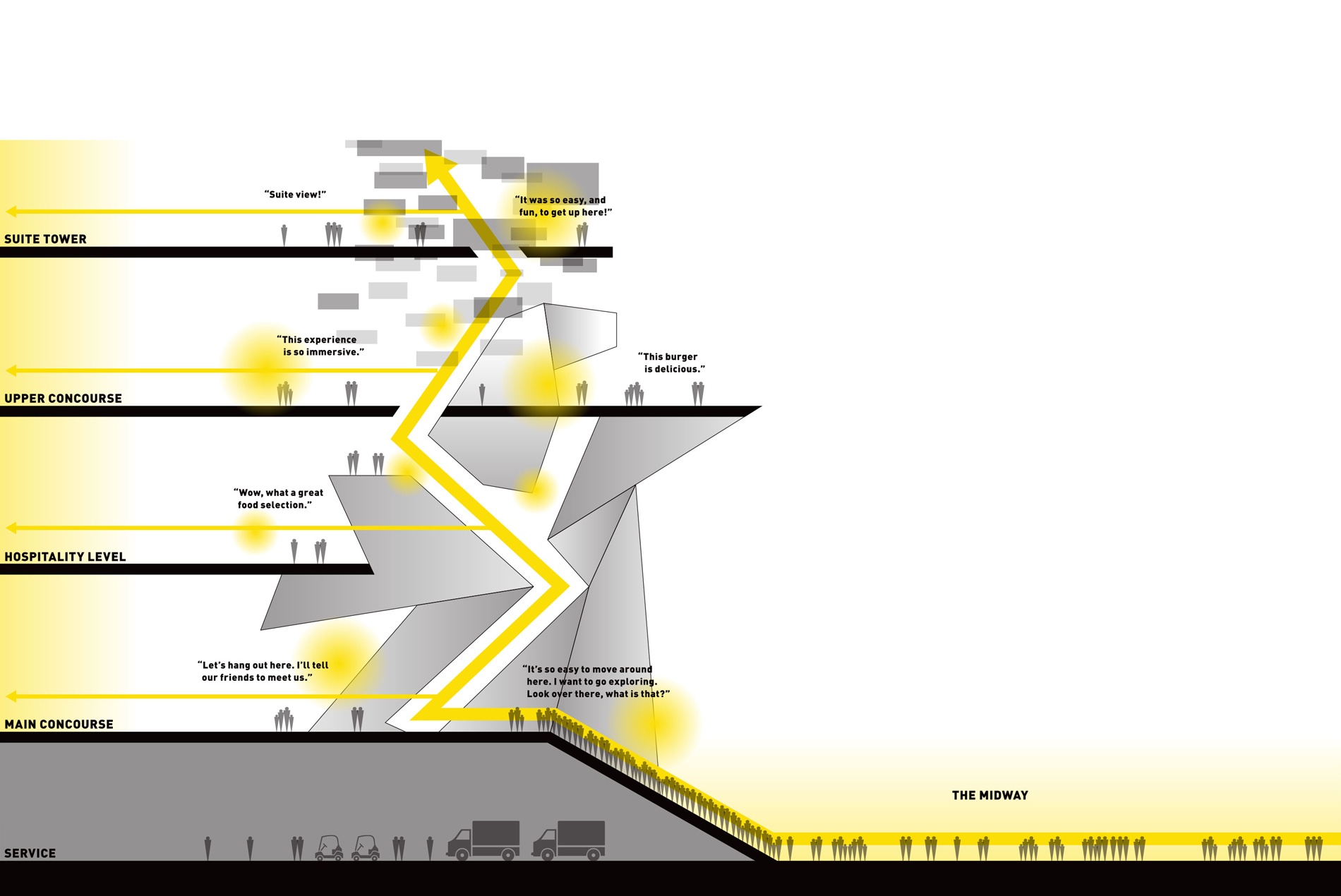
Inspired by the stock car itself, the guiding concept frames the stadium as a coordinated system of parts working together to generate energy and performance. “Machine on the Beach” shapes both the architecture and the fan journey, which unfolds in four sequenced moments: intake, compression, ignition and acceleration.

Intake: Stadium Arrival

For decades, Daytona lacked a clear arrival sequence. The Midway was remote, sponsor activations were scattered across the site and fans encountered service roads, trailers and unmarked entry points. Wayfinding was limited and vertical access to seating was inefficient. The front of the stadium functioned as back-of-house rather than a welcoming civic presence.

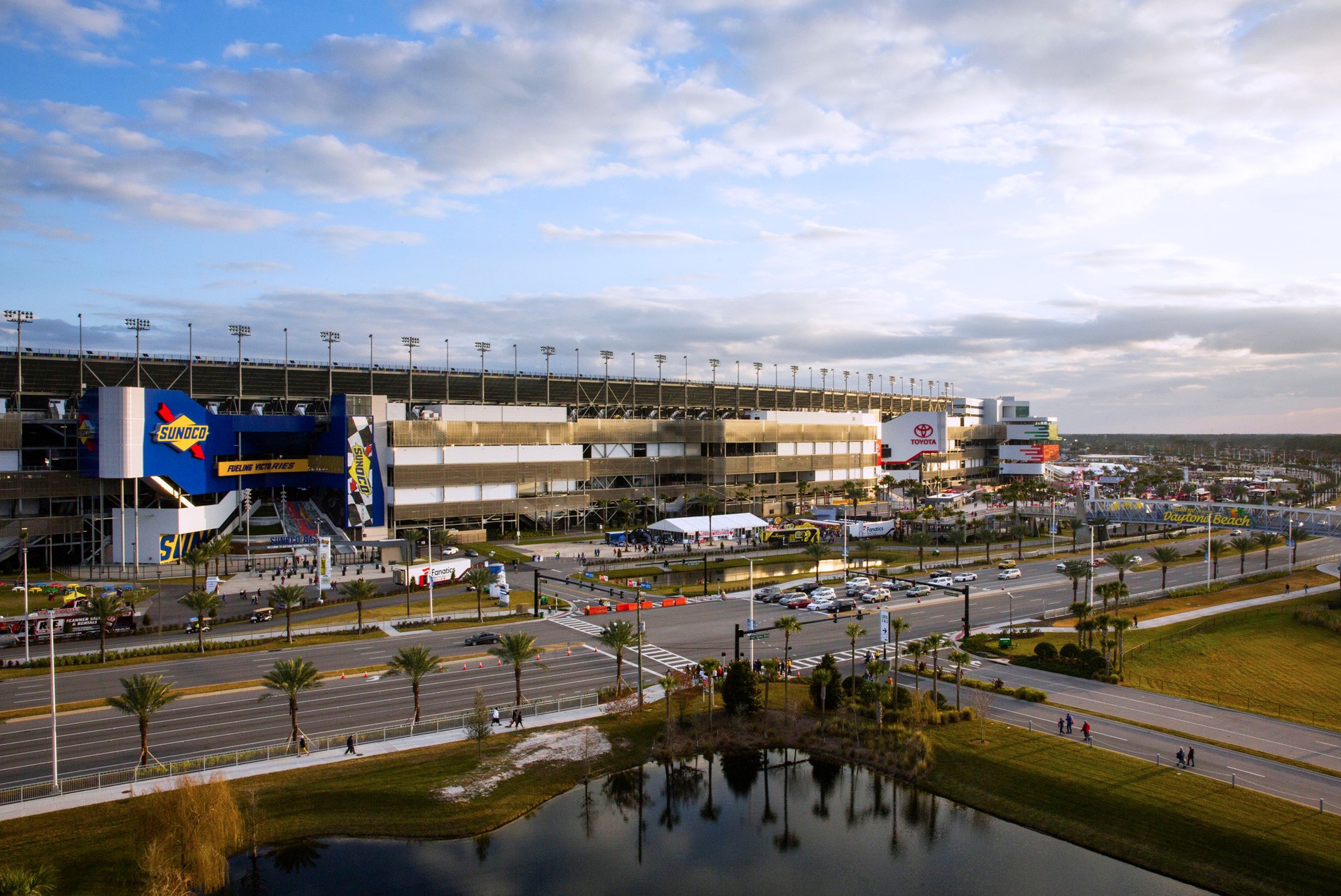
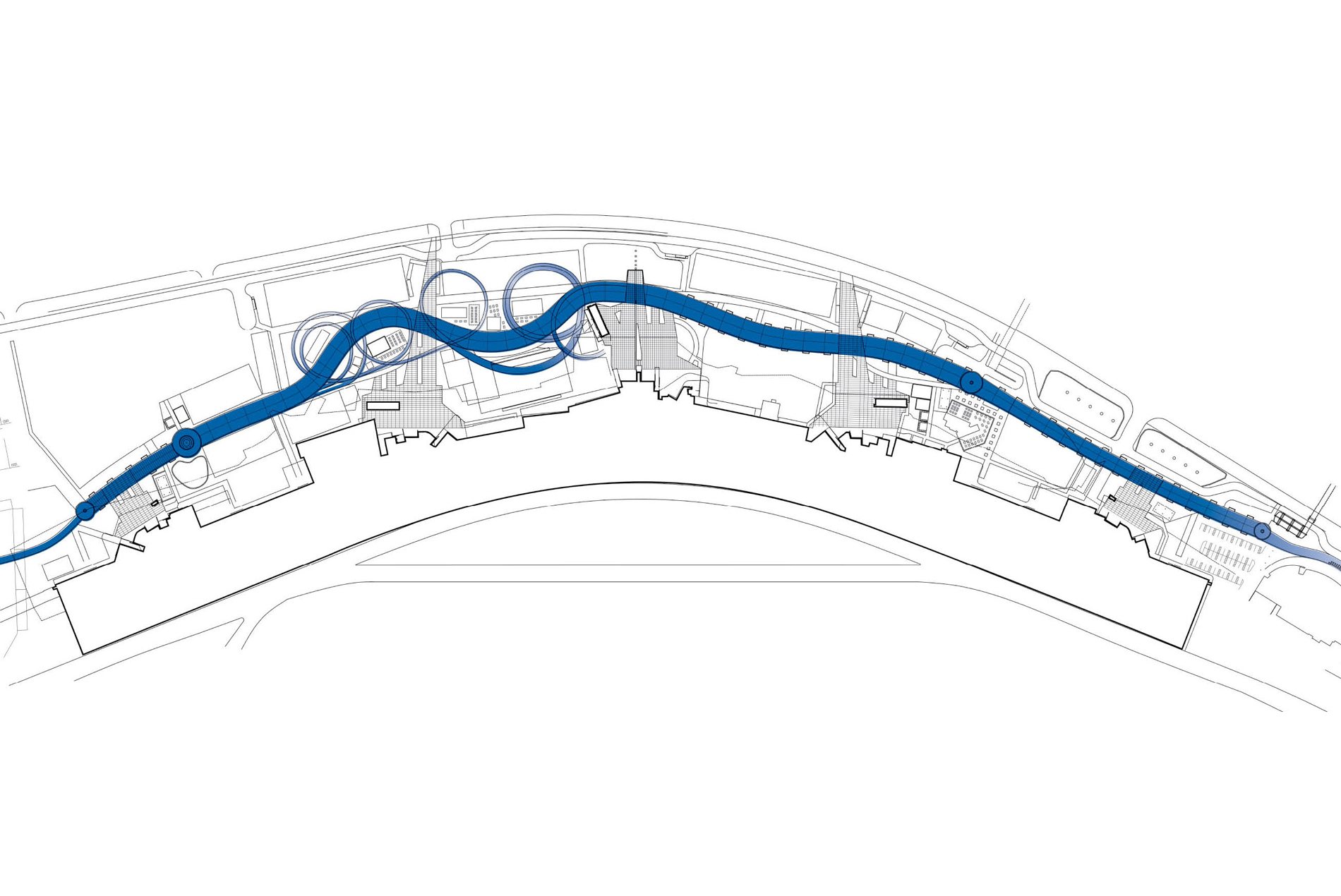
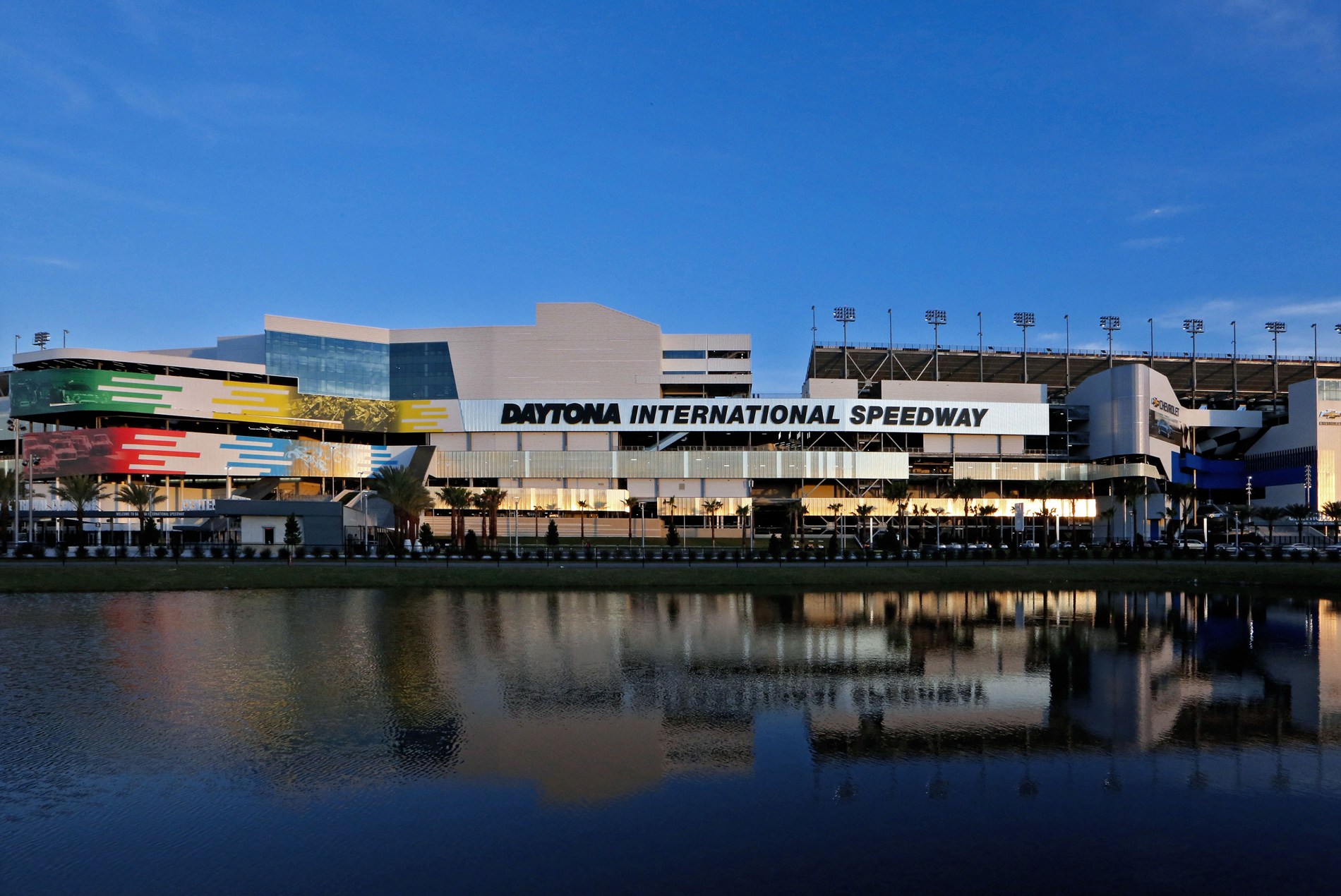
The entire front of the site was reimagined as an active fan approach. Fans now cross International Speedway Boulevard and move through a relocated Midway positioned directly in front of the stadium. A streamlined facade is organized around five large-scale Injectors that serve as branded landmarks, wayfinding devices and gateways into the stadium. Together, they choreograph movement across nearly two-thirds of a mile and establish a strong architectural identity for the Speedway.

Inspired by the Race

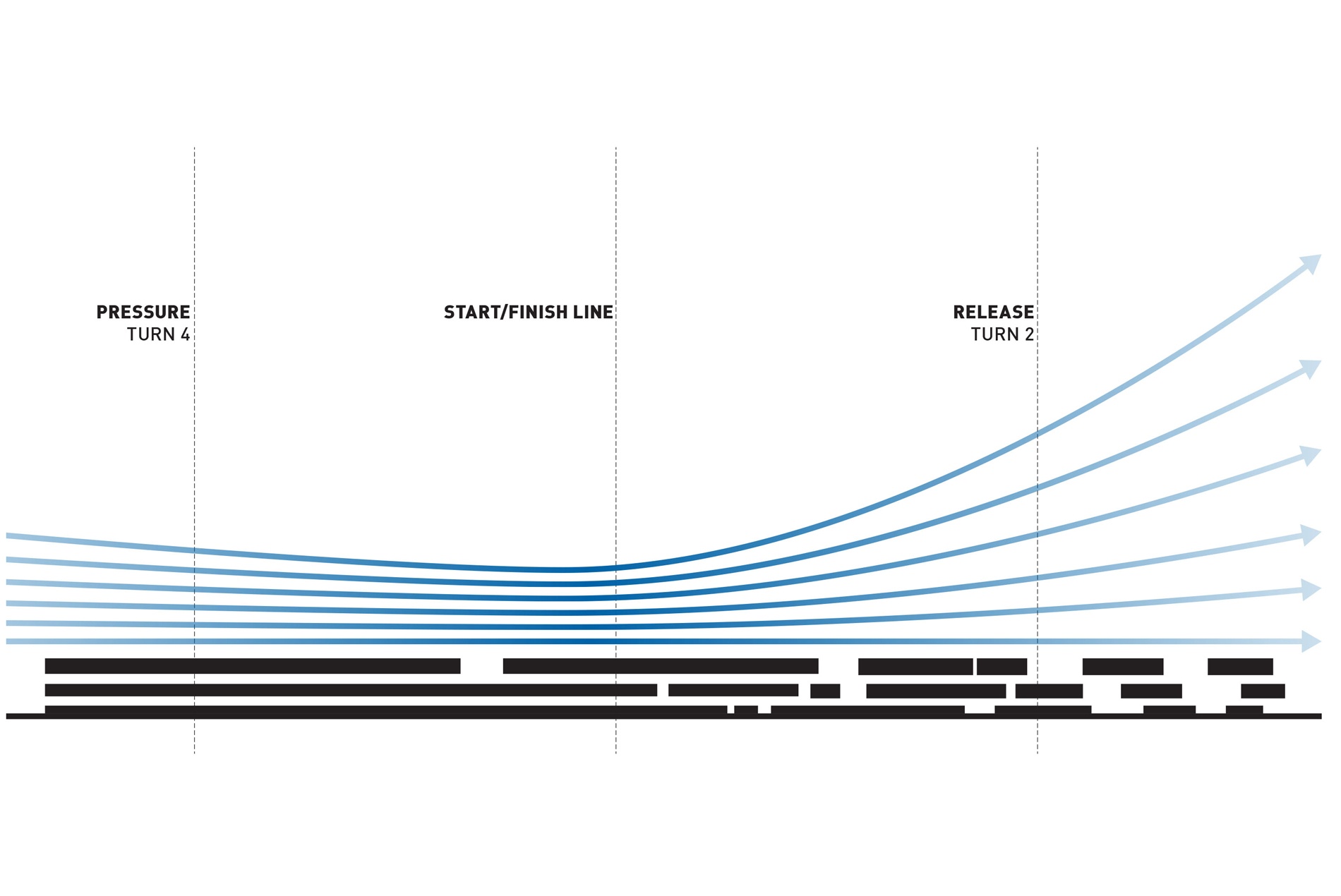
The exterior expresses the intensity and rhythm of racing. Solid and perforated metal panels form a dynamic facade that conveys speed, pressure and motion. The composition shifts along the building’s length, mirroring how cars compress and release at the start-finish line.

Relocating the Midway

By moving hospitality and back-of-house operations inside the stadium, nearly two million square feet of valuable real estate were freed and reimagined as the Midway. Curved circulation paths, inspired by victory skid marks, guide movement and maximize visibility for sponsor activations, merchandise, and food and beverage. The Midway reinforces Daytona’s festival atmosphere while forming a powerful threshold into the Speedway.

Compression: Entrance by Injection

The original entrances lacked identity and clarity. Fans climbed long stairways or waited on limited elevators with little sense of transition. There was no connective experience between exterior activity and the race itself.

Each Injector now funnels approximately 20,000 fans through a vertically stacked sequence of branded environments, views and activity. Escalators, elevators and stairs are integrated into bold architectural forms that make circulation visible and intuitive. Together, the Injectors consolidate sponsorship, circulation and wayfinding into a single architectural gesture.

Formed by Vertical Circulation

Vertical movement through the Injectors mirrors the mechanics of an engine. Fans compress as they rise, then release into expansive concourses and neighborhoods. Cross-level views let fans see one another, reinforcing the shared energy and anticipation that build toward the race.

Ignition: Energetic Concourse

Over time, the original concourses had become cluttered and disorganized. Concessions, retail, sponsorship and back-of-house functions overlapped. Fans and service vehicles shared circulation paths, creating operational and safety risks.

More than 1.2 million square feet of concourse space is now organized into 11 distinct neighborhoods, each with its own identity, amenities and social atmosphere. Concessions tripled. Retail and restrooms doubled. Communal gathering areas punctuate circulation paths, letting fans pause without losing connection to the event.

Acceleration: The Race

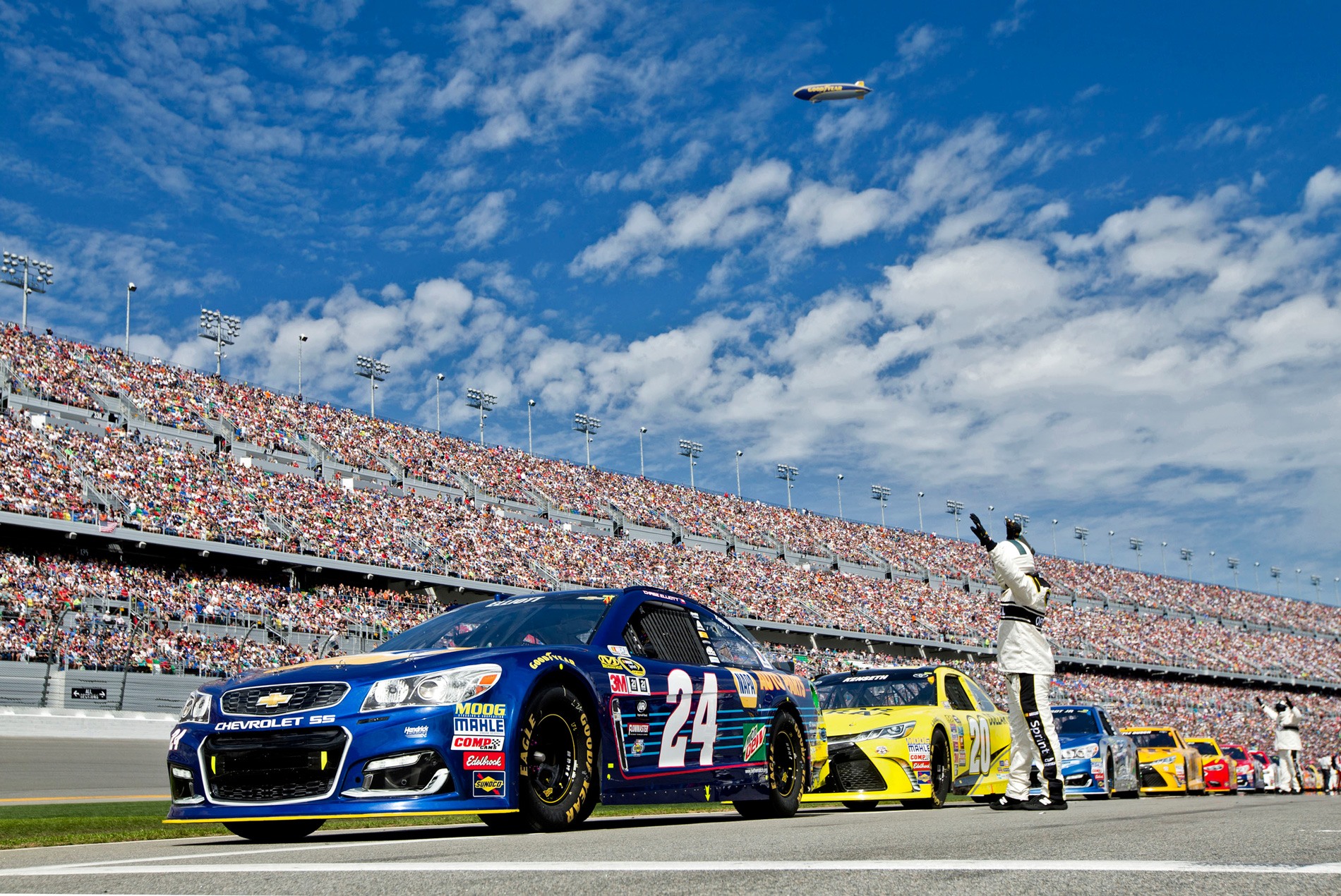
Outdated seating, limited premium offerings and inflexible layouts failed to reflect how fans experience racing. Many seats sat far from the start-finish line, and corporate partners lacked compelling hospitality environments.

The grandstand was right-sized from 145,000 seats to 101,500 and reshaped to bring all seats closer to the action. Parametric modeling simulated multiple focal points across the 2.5-mile track based on car position, giving designers real-time data to optimize sightlines and set a new standard for NASCAR venues.

Slideshow

Three design moves shortened, raised and refocused the grandstand to bring every fan closer to the start-finish line.

A New Model for Premium Seating

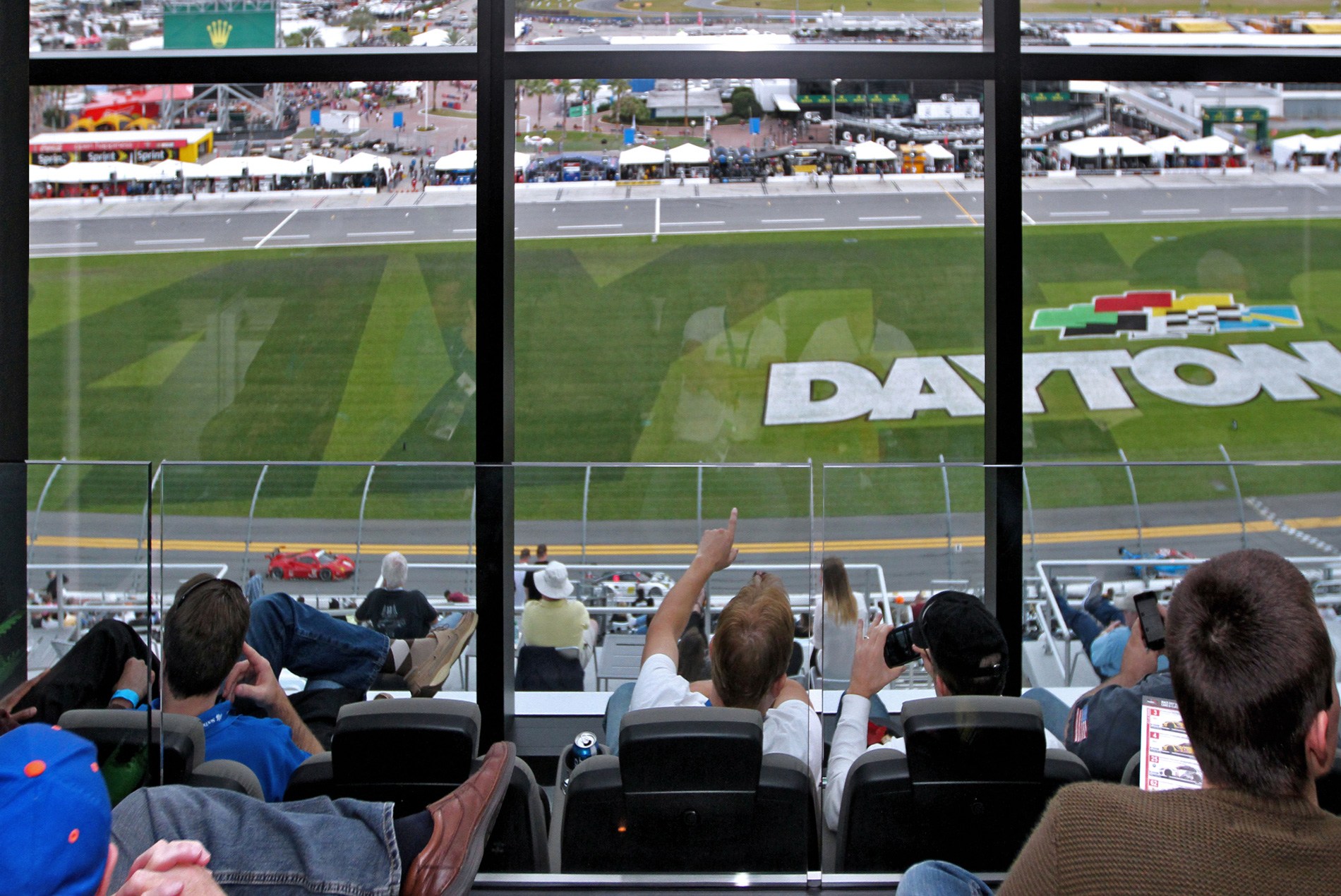
A data-driven analysis guided a complete rethinking of premium seating to elevate the corporate and fan hospitality strategy. Working with NASCAR, a new multi-tier model expanded premium offerings tenfold and permanently integrated 60 suites into the stadium, replacing the former temporary tent village. The result is a flexible portfolio that supports a wide range of corporate entertaining while keeping premium guests close to the action.

Loge boxes became the defining feature of the new premium experience. Introduced for the first time in a NASCAR venue, loges offer social, flexible viewing with movable seating, integrated counters and personal technology embedded directly into the seating bowl. Additional premium options include climate-controlled suites for groups of 50 to 500, alongside social lounges, terraces and club spaces positioned above the start-finish line. Signature experiences such as the Rolex 24 Lounge combine indoor and outdoor social environments with expansive track and infield views, reinforcing premium hospitality as central to race-day culture.

“DAYTONA Rising fundamentally changed how our guests experience our races. It transformed the experience at our flagship facility.” — Lesa France Kennedy , Executive Vice Chair, NASCAR

Collaboration Through Technology

The scale and complexity of the design-build project, delivered in partnership with construction manager Barton Malow, required extensive use of virtual design and construction technology to manage scope, coordination and decision-making. More than 25 software platforms and a fully integrated model environment connected interdisciplinary teams across design and construction. Virtual walkthroughs allowed stakeholders to experience key spaces before construction, improving alignment, reducing risk and supporting informed decisions.

Technology also enabled two major design changes without affecting the opening date. Point cloud scanning and model integration supported the decision to retain existing steel, saving approximately 4,000 tons of material and simplifying construction sequencing. Later, the bowl was right-sized to align with budget and performance goals. Both changes were executed through BIM-driven collaboration, preserving design intent while delivering long-term value.

The World’s First Motorsports Stadium

The reimagination transformed a 50-year-old grandstand into the world’s first motorsports stadium. Guided by fan experience and data-driven design, the project honors Daytona’s legacy while redefining its future.

Through an immersive approach, energized concourses, integrated sponsorship and industry-leading sightlines, Daytona International Speedway reinforces its role as the World Center of Racing and the flagship of NASCAR for generations to come. Beyond the venue itself, the reimagined Speedway now generates an estimated $1.6 billion in annual economic impact for the State of Florida.

Originally designed by ROSSETTI, which joined HOK in 2026.

Your browser is out-of-date!

Update your browser to view this website correctly. Update my browser now

×