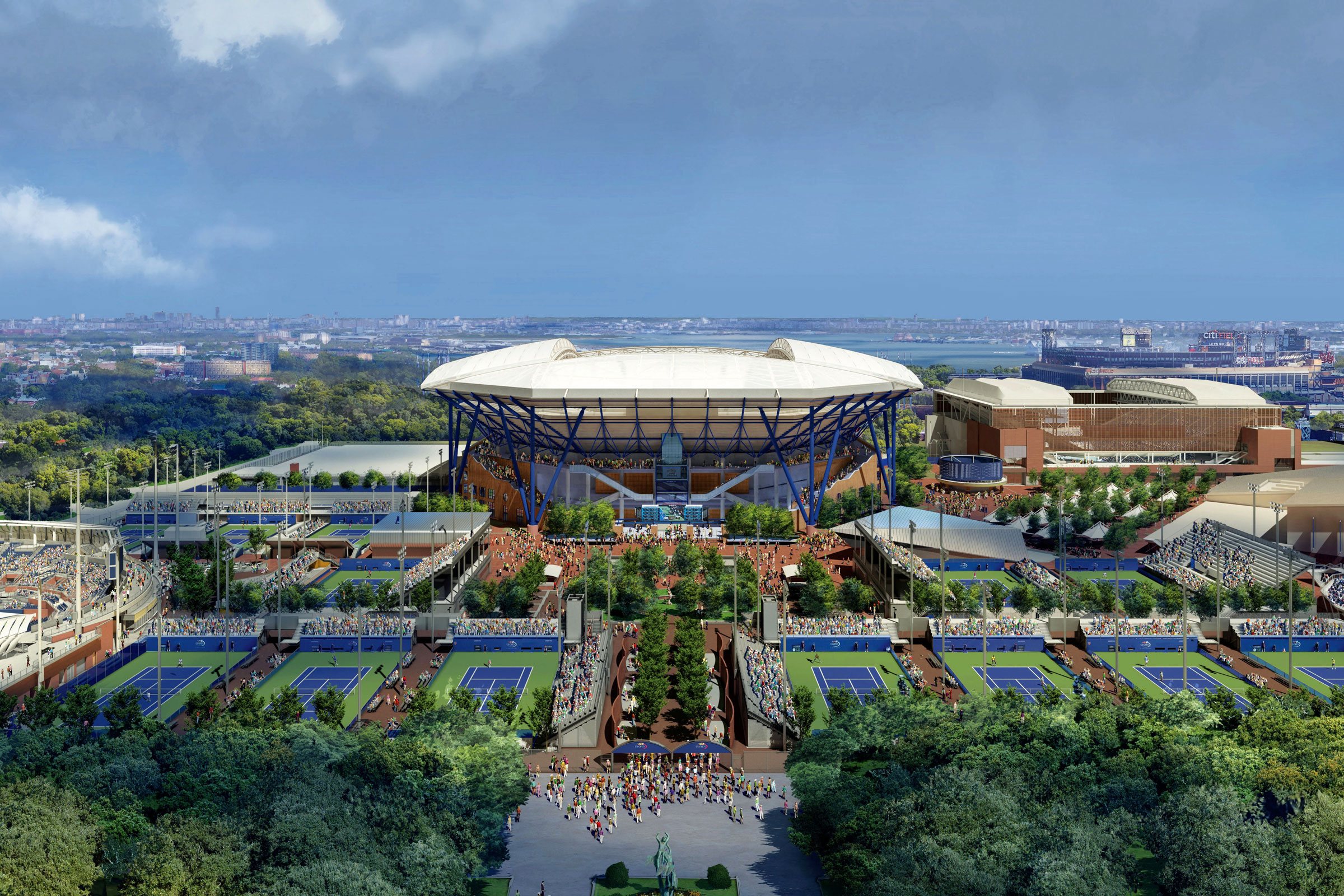
Ahead of the 2026 tournament, an $800 million transformation of Arthur Ashe Stadium and the USTA Billie Jean King National Tennis Center builds on a design partnership dating to 1990.
When the US Open main draw begins Sunday, Aug. 30, fans will return to a campus being remade through the largest single investment in the tournament’s history.
The United States Tennis Association’s $800 million project includes a full-scale overhaul of Arthur Ashe Stadium and a new Player Performance Center. The team is delivering it in three phases without interrupting the tournament, with completion scheduled before the 2027 US Open.
When ROSSETTI joined HOK in 2026, its team had worked with the USTA for more than three decades. Since 1990, that work has included Arthur Ashe Stadium, the campus master plan, the Grandstand, Louis Armstrong Stadium and Ashe’s retractable roof.
The relationship spans two generations.
“We were hired in 1990 with a team led by my dad,” said Matt Rossetti, a senior principal and director of HOK’s Sports + Recreation + Entertainment practice. “They spent a few years master planning the site, with Arthur Ashe Stadium as the centerpiece. We’ve been building on that foundation ever since.”
The Roof Nobody Could Build
Arthur Ashe Stadium opened in 1997 as the world’s largest tennis-specific venue. But rain could still stop play. Over the years, multiple teams explored ways to add a retractable roof, but none worked. When the USTA commissioned an early roof study in the mid-2000s, it selected another firm. Then came a phone call from Daniel Zausner, chief operating officer of the USTA National Tennis Center.
“Daniel told me, ‘I’ve got good news and bad news,’” Rossetti recalled. “‘The bad news is we’re not going with you for the roof. The good news is we see you in a different light now.’ He told us the USTA would soon issue an RFP for a master plan for the entire site and encouraged us to pursue it. So we did, and we won.”
The roof challenge eventually returned to the team. Working with engineering partner WSP, ROSSETTI found the answer.
“There were iterations upon iterations that nobody could make work,” said Sande Frisen, a principal and senior project manager in HOK’s Detroit studio. “The breakthrough was to stop trying to support the roof with the building. Instead, we designed an umbrella over the stadium that never touches it. That was the inflection point.”
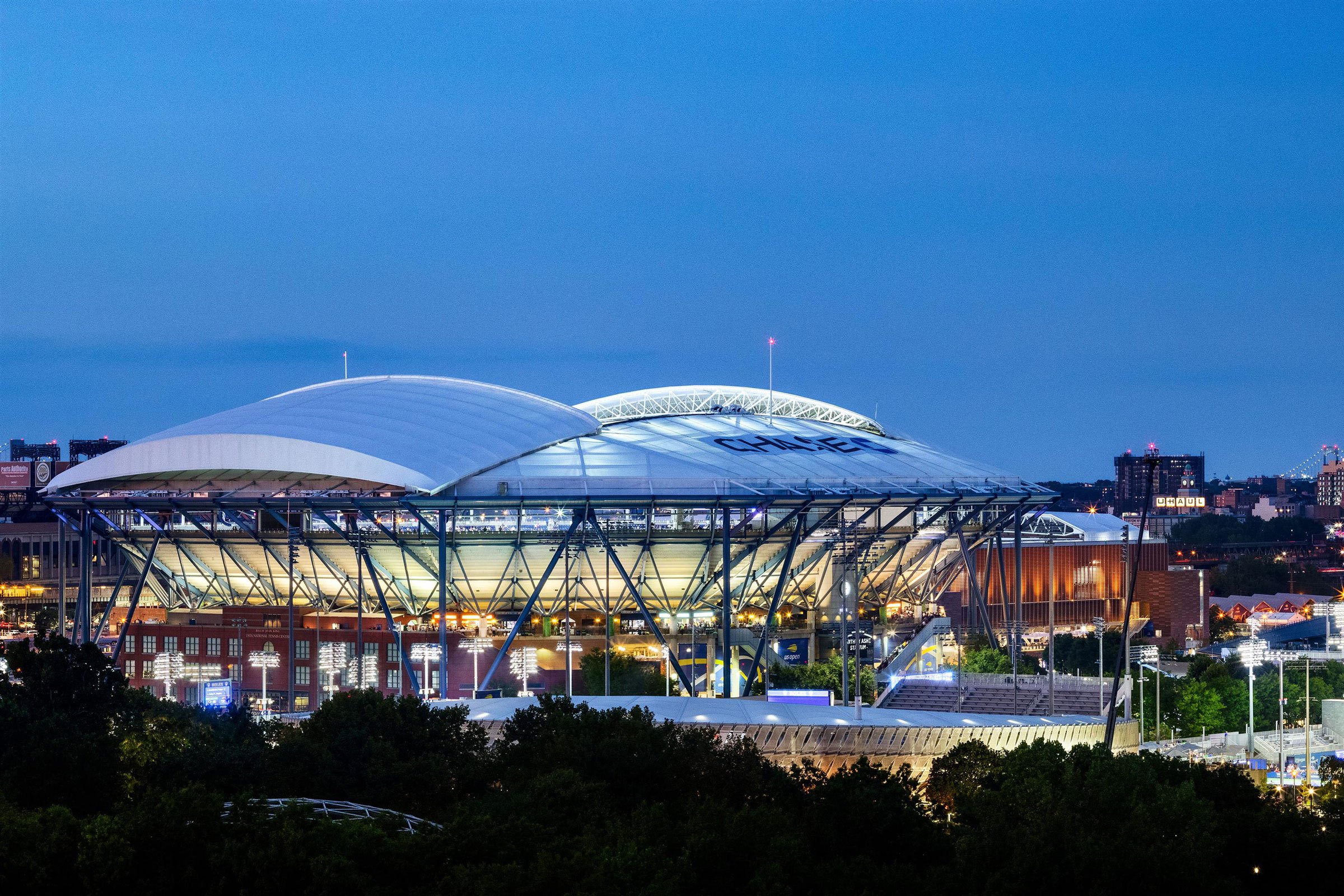
Arthur Ashe Stadium
Completed in 2016, the lightweight structure protects the court from rain while preserving the stadium’s recognizable silhouette. It also showed that Arthur Ashe Stadium didn’t have to be replaced to keep evolving.
A Campus Rebuilt Around the Tournament
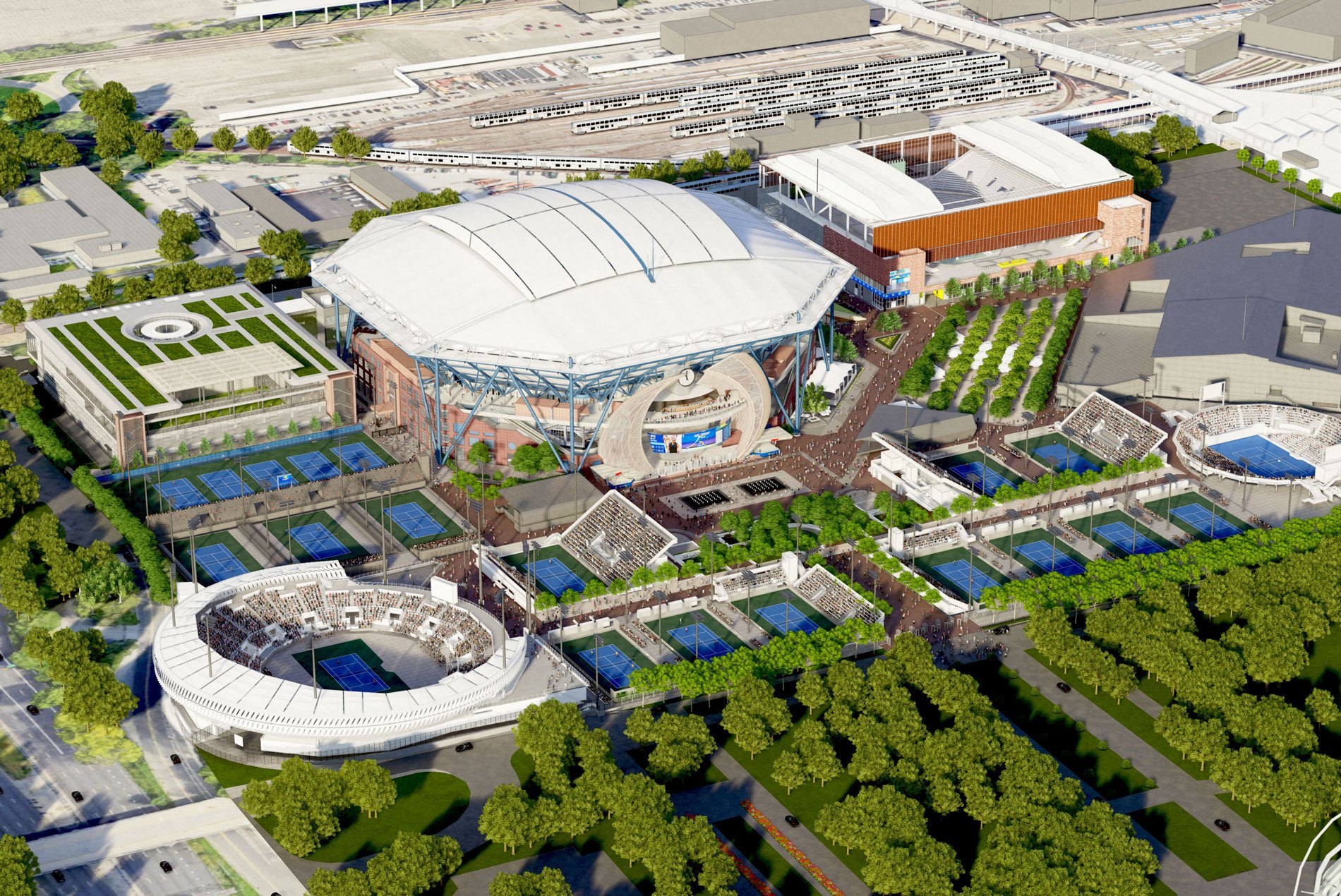
The long-range master plan remade more than 85% of the National Tennis Center and expanded the campus from 42 to 46 acres, reclaiming four acres that sat orphaned and unusable between the campus and the Grand Central Parkway.
The work introduced the rebuilt, LEED-certified Grandstand, a reconfigured court layout, and wider pedestrian corridors and public plazas. Louis Armstrong Stadium became the world’s first naturally ventilated tennis stadium with a retractable roof. Its passive design maintains airflow and the feel of an outdoor venue even when the roof is closed, eliminating the need for energy-intensive air conditioning.
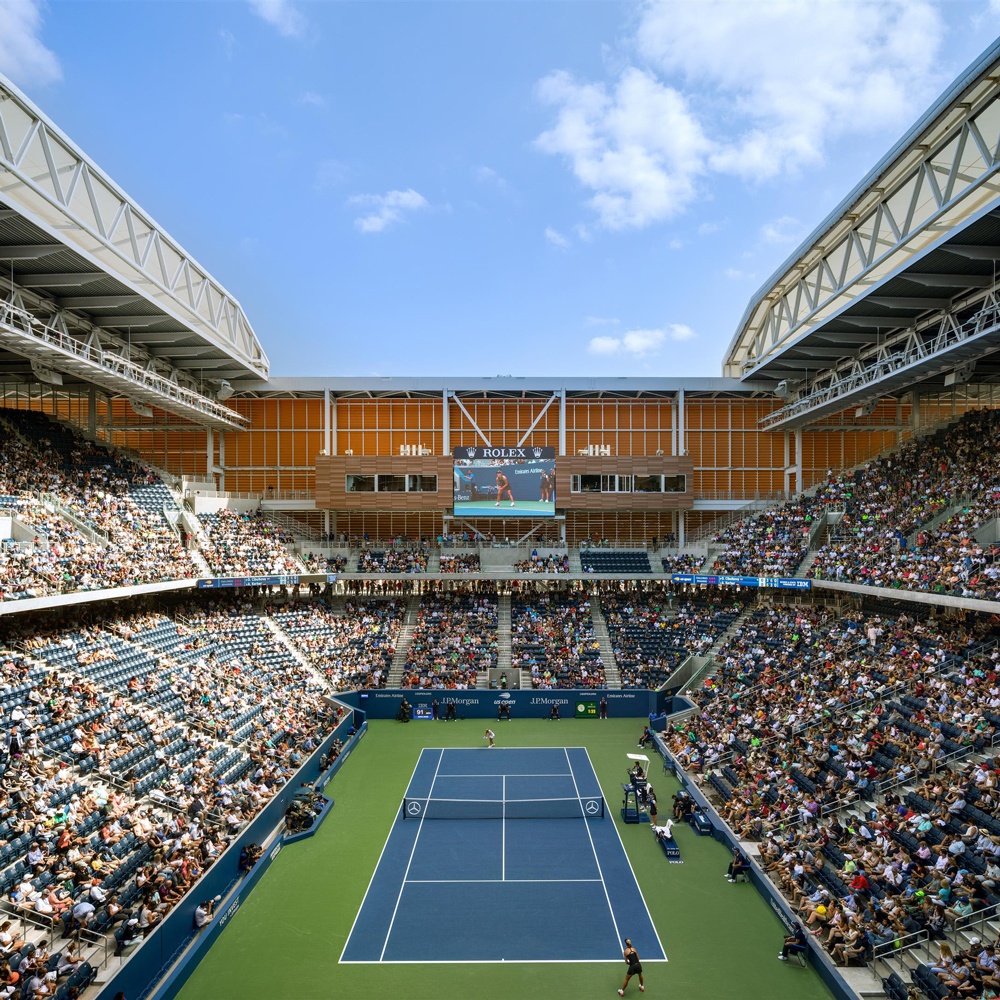
Louis Armstrong Stadium
The team sequenced a decade of construction around the US Open. Each phase had to work on its own during the tournament while contributing to the campus as a whole.
The rebuilt campus also changed how visitors experience the Open. What had been primarily a collection of courts and stadiums became an all-day destination, where dining, hospitality, retail and entertainment surround the tennis.
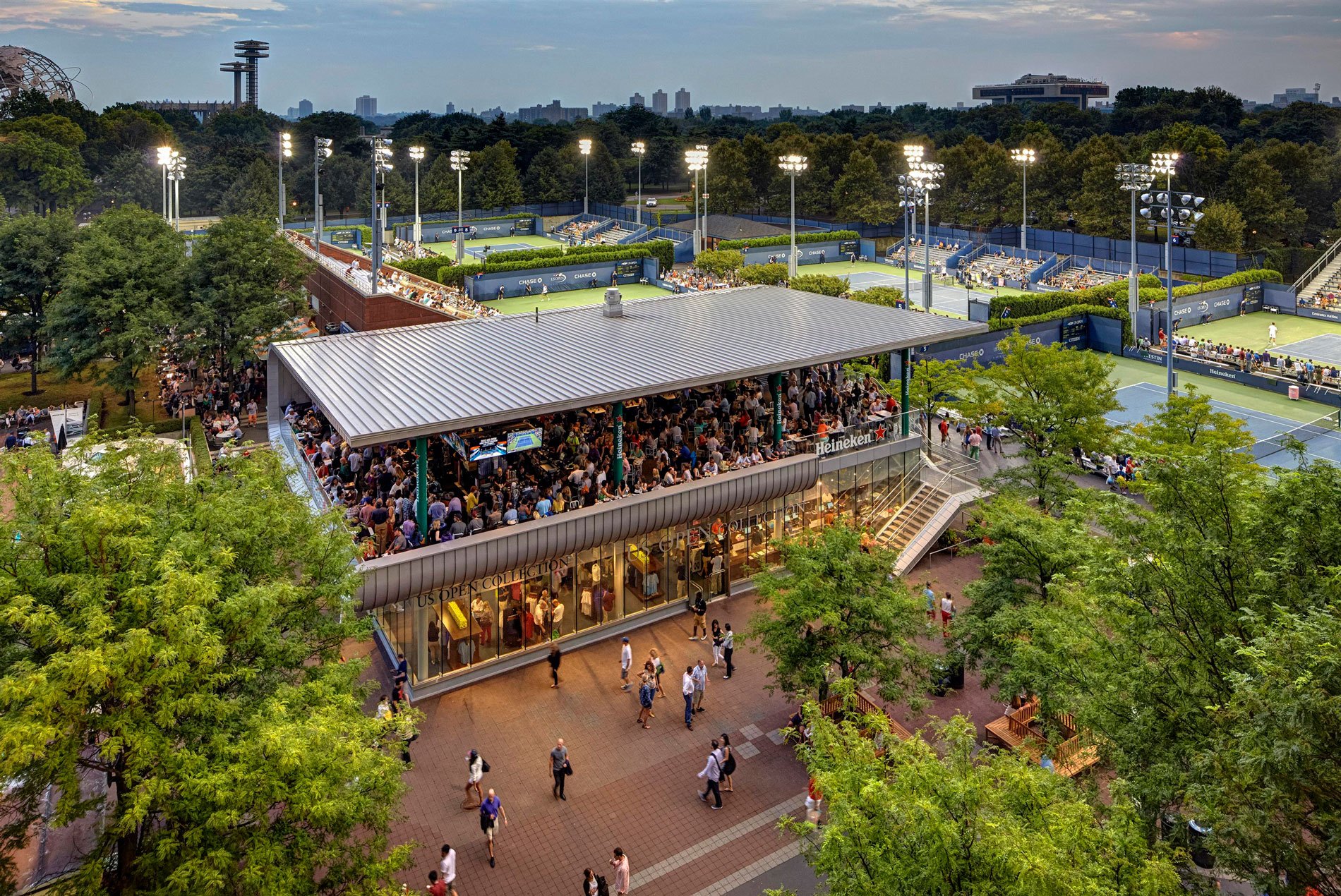
“When we teamed with ROSSETTI, we transformed the US Open into a sporting spectacle, securing our future success as a defining event, not only of tennis, but of the global sports and entertainment scene,” Zausner said.
In 2025, the US Open welcomed a record 1,144,562 fans over three weeks. That was a 9% increase from the previous year and the second straight year attendance surpassed one million.
Transforming Arthur Ashe Stadium in Place
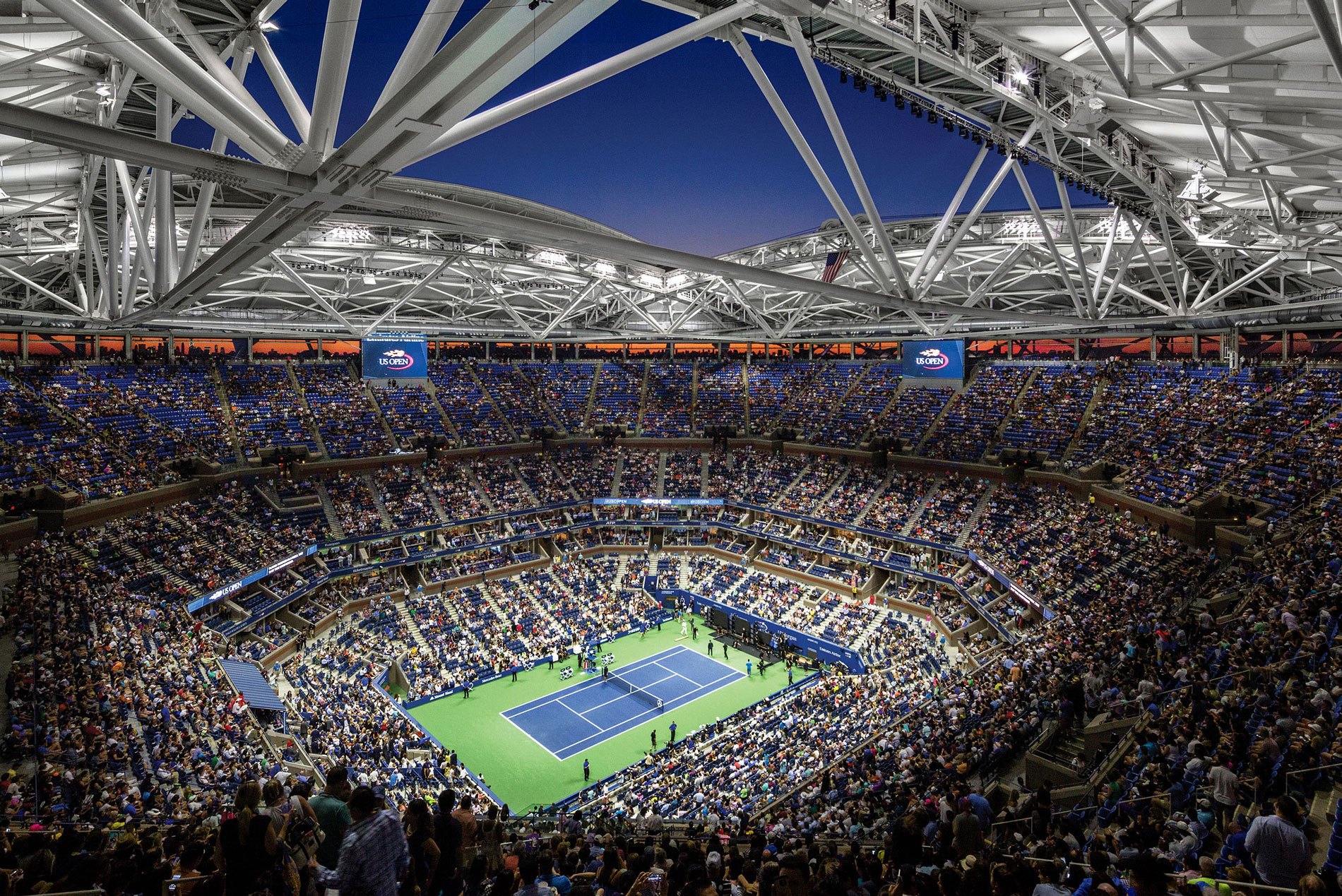 The current work applies that strategy to Arthur Ashe Stadium. Rather than demolishing the venue and starting over, the team is remaking it in place between tournaments, then returning it to use for each US Open. Rather than adding capacity, the project moves 2,000 seats down into the courtside bowl and introduces nine courtside clubs, two dedicated suite levels and a promenade concourse expanded by 40%. A new grand entrance is being designed in collaboration with Studio Libeskind.
Rossetti has described the work as “intense stadium surgery.” The construction team is rebuilding major portions of the venue within a compressed schedule, then preparing it to welcome hundreds of thousands of fans before work resumes after the tournament.
“The most sustainable building is the one that’s already built,” Frisen said. “We did a lot of work to maintain the building infrastructure that already existed.”
The USTA is funding the project entirely without public, taxpayer or government dollars. The three-week US Open generates more than $1.2 billion in annual economic impact for New York City.
A Purpose-Built Home for Players
Next to Arthur Ashe Stadium, the new $250 million Player Performance Center occupies the top two floors of a four-story building. It brings fitness, recovery, medical and training spaces, locker rooms, lounges and dining together under one roof.
“Other facilities have been pieced together over time, with lockers in one place, fitness in another and dining somewhere else,” Frisen said. “This is purpose-built. Players can move from dining to their lounge to the locker room without crossing paths with the public or media.”
Like the master plan before it, the Player Performance Center looks beyond the competition, this time by enhancing the player experience.
Completion of the work for the 2027 US Open will mark 37 years of a partnership that has produced a campus master plan, two rebuilt stadiums and the roof over Ashe. Through every phase, the tournament has played on.