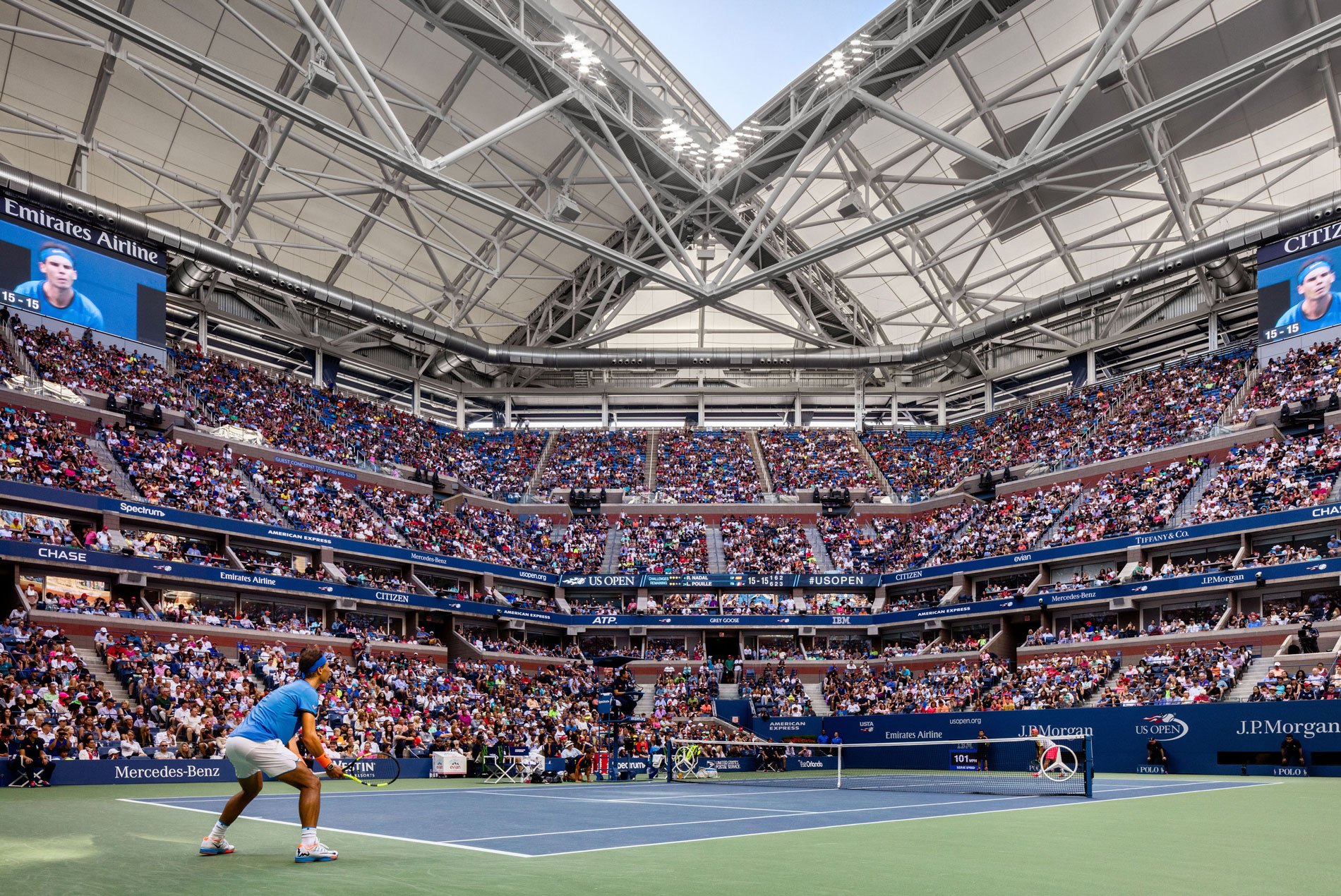
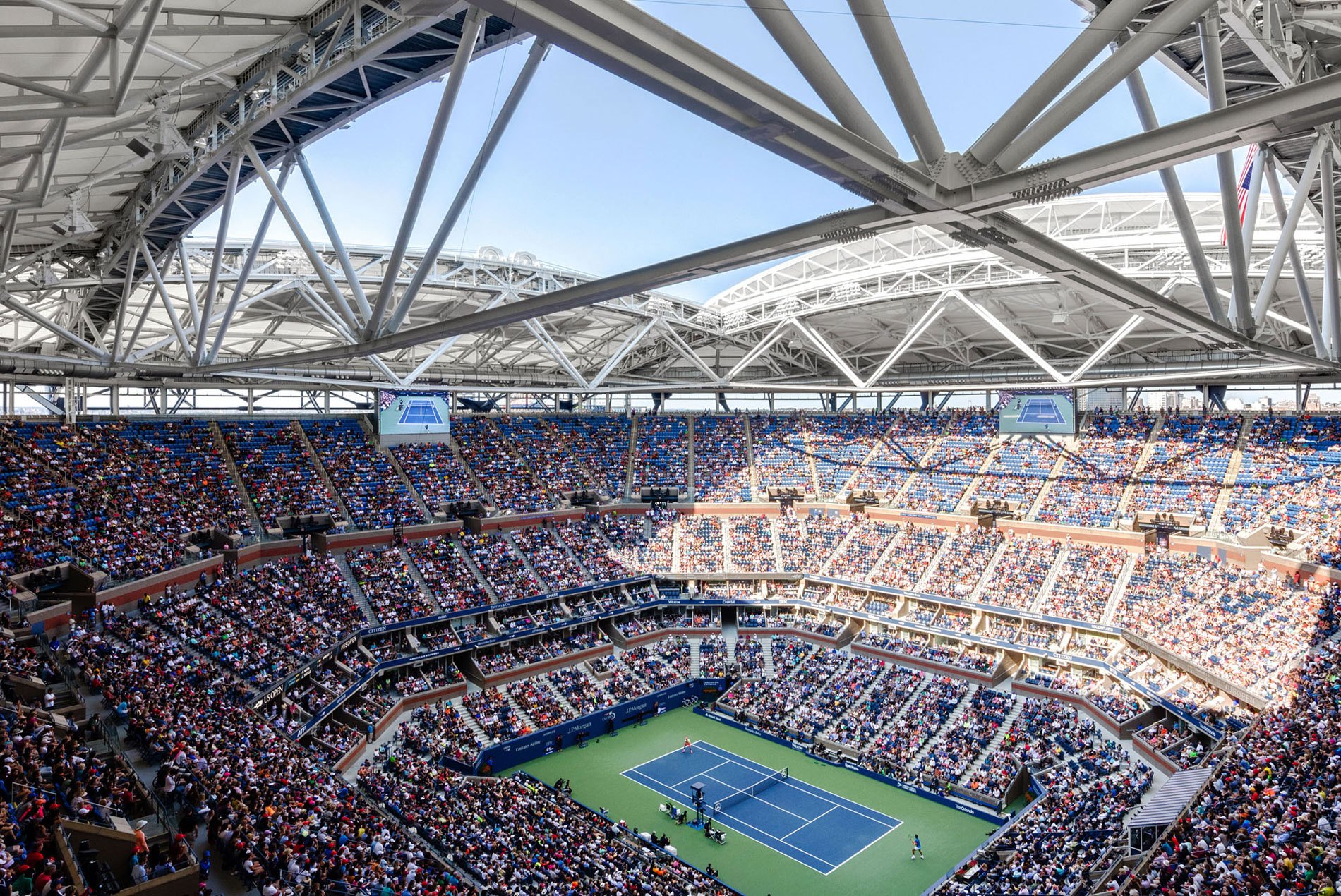
A new Financial Times report highlights how major sports venues—including the U.S. Open’s Arthur Ashe Stadium—are evolving to meet rising demand for high-value fan experiences while maximizing revenue.
The United States Tennis Association is nearing completion of an $800 million renovation of Arthur Ashe Stadium, the centerpiece of the Billie Jean King National Tennis Center in New York. The project will add approximately 2,000 courtside seats to its existing inventory, new hospitality clubs and luxury suites—while removing thousands of upper-tier seats—to expand the venue’s premium offerings.
Matt Rossetti, HOK’s director of Sports + Recreation + Entertainment and the project’s lead architect, described the transformation as “intense stadium surgery.” As he told the Financial Times, “We literally sliced out the whole middle belly of the stadium and replaced it.”
The overhaul reflects a broader shift across global sports and entertainment venues, where demand for premium hospitality has grown significantly since the pandemic. According to the article, Arthur Ashe Stadium will introduce nine new courtside clubs, expanded dining and bar amenities, and dedicated luxury suite levels as part of its reconfiguration. The project also includes a new $250 million player performance facility.
While overall capacity will decrease, the strategy is designed to increase value per seat—a model being adopted across major venues worldwide as organizers respond to rising costs and evolving fan expectations.
John Rhodes, HOK’s international director of Sports + Recreation + Entertainment, told the Financial Times the shift goes beyond traditional seating hierarchies: “The future will be about bespoke experiences … so that each individual has their own ultimate journey of that day.”
The Financial Times notes that all four Grand Slam tournaments are investing in upgraded infrastructure and expanded grounds, intensifying competition for premium audiences, sponsorships and media rights. As venues continue to evolve, the balance between accessibility and premium experience will remain a central challenge—one that is reshaping how sports facilities are designed, programmed and operated.
Read the Financial Times report.