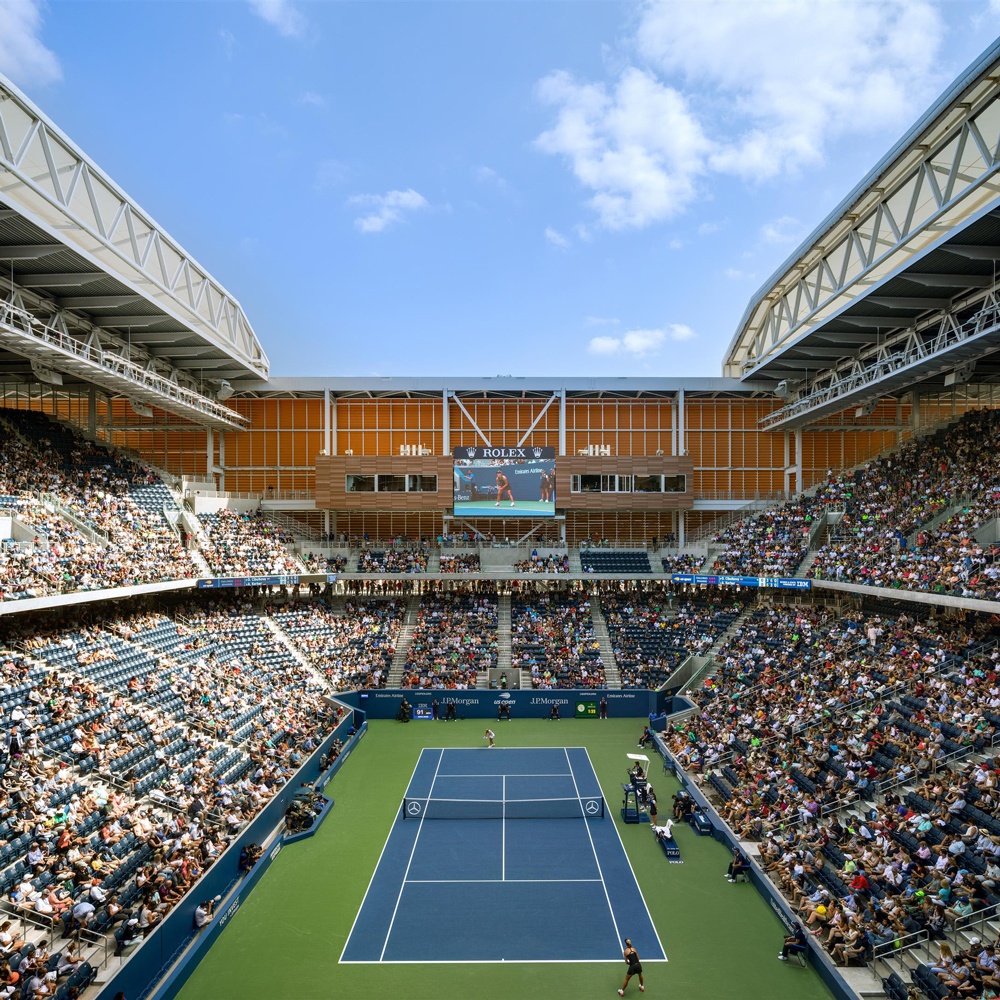
Nobody tailgates at the US Open. Fans walk through the gates expecting to spend six hours on the grounds, sometimes more, and many eat two meals before they leave.
Across sports, owners and operators now want some version of that day. Our stadium and arena clients keep telling us the same thing: get people in the building two hours before the event starts and give them reasons to stay after the final whistle. That changes the design brief. The seat still matters, but it’s just one part of a much longer visit.
Our team has worked with the United States Tennis Association since 1990 on a campus master plan, two rebuilt stadiums and the retractable roof over Arthur Ashe Stadium. Now we’re remaking Ashe, the stadium our team designed the first time around, and building a new home for the players alongside it. If all those years have taught us one lesson that travels beyond tennis, it’s to design the day, not just the seat.
A Day, Not a Game
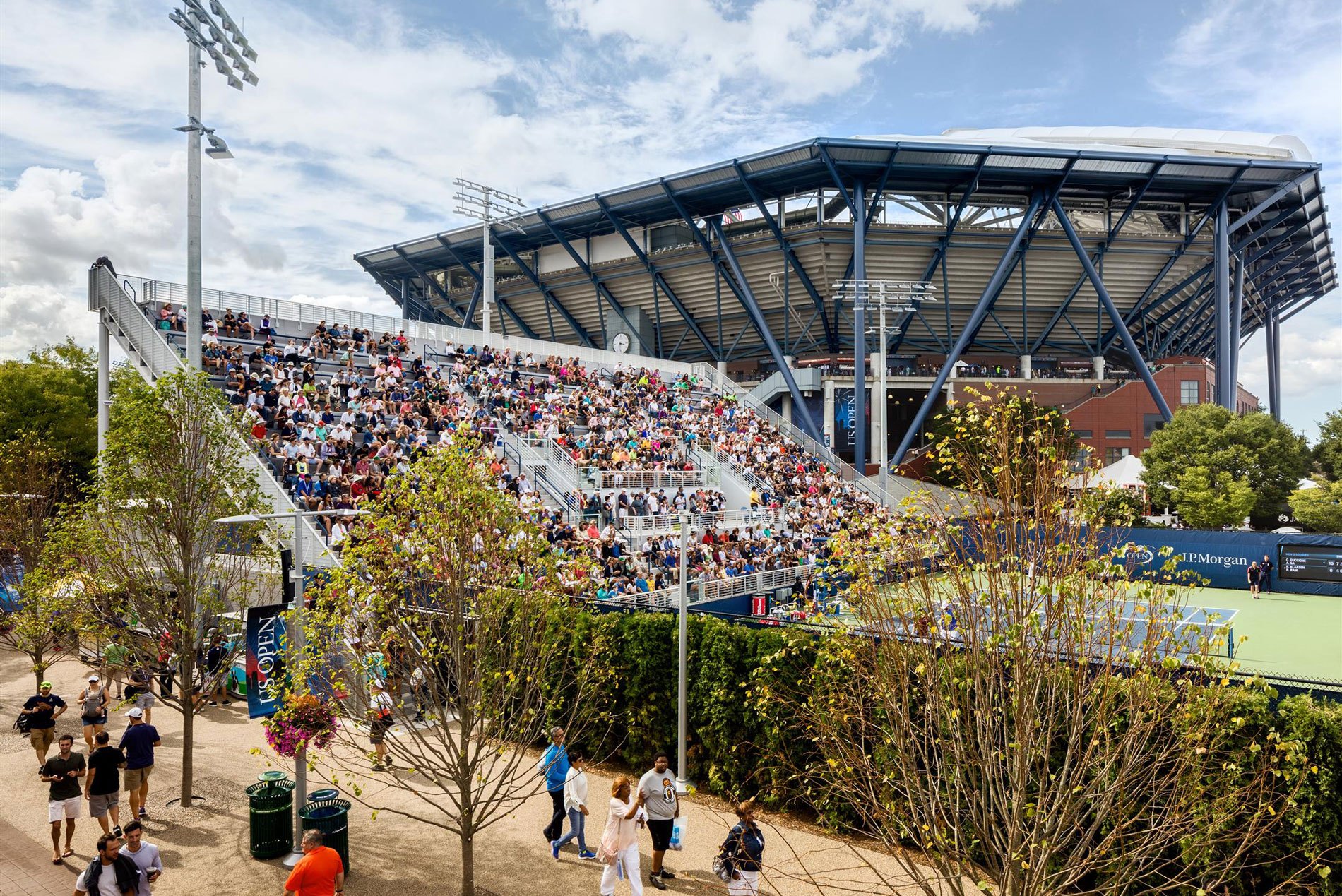
A US Open ticket doesn’t buy a predictable block of time. It opens the door to a day of competition spread across an entire campus.
Matches start in the morning and run into the night. On a session day, the grounds hold tens of thousands of people, and many of them aren’t sitting in reserved seats. They’re on grounds passes, moving between stadiums and outer courts, following one player and then discovering another. Where does it sound like there’s action? That’s where they go.
Tennis has no game clock. Nobody knows how long a match will run or which court will produce the day’s defining moment. The experience can’t hang on a single seat or sightline. That’s the design problem.
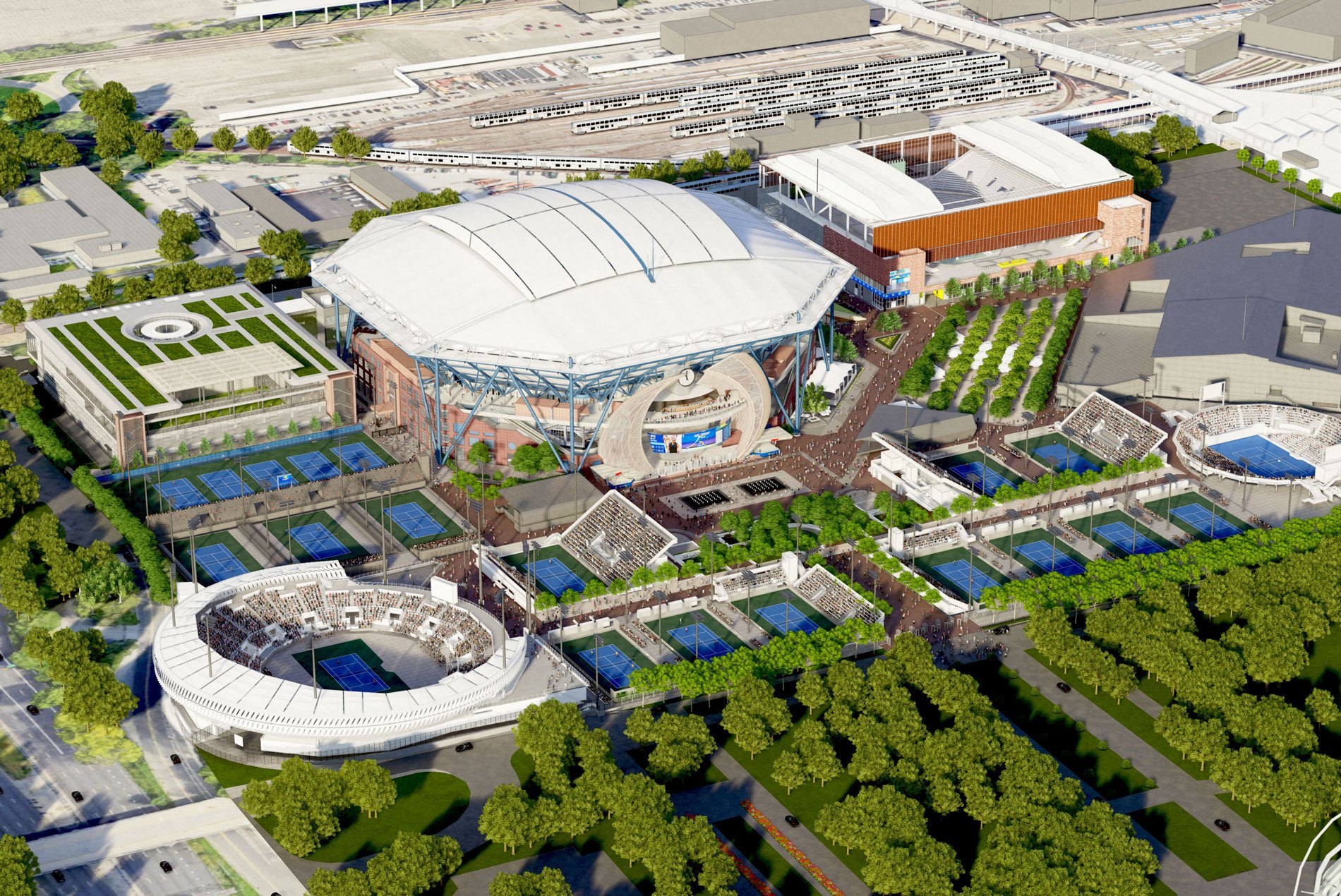
The long-range master plan started there. It expanded the campus from 42 to 46 acres, widened the pedestrian corridors and put public plazas along the routes fans actually walk. Dining, retail, sponsor areas and entertainment sit inside that circulation network instead of at its edges.
Longer visits open more room for hospitality and sponsorship. A guest who stays through the evening session sits down to a real dinner and spends accordingly. But people can tell when a campus is holding their interest and when it’s just holding them. You have to earn the extra hours.
Think Beyond the Bowl
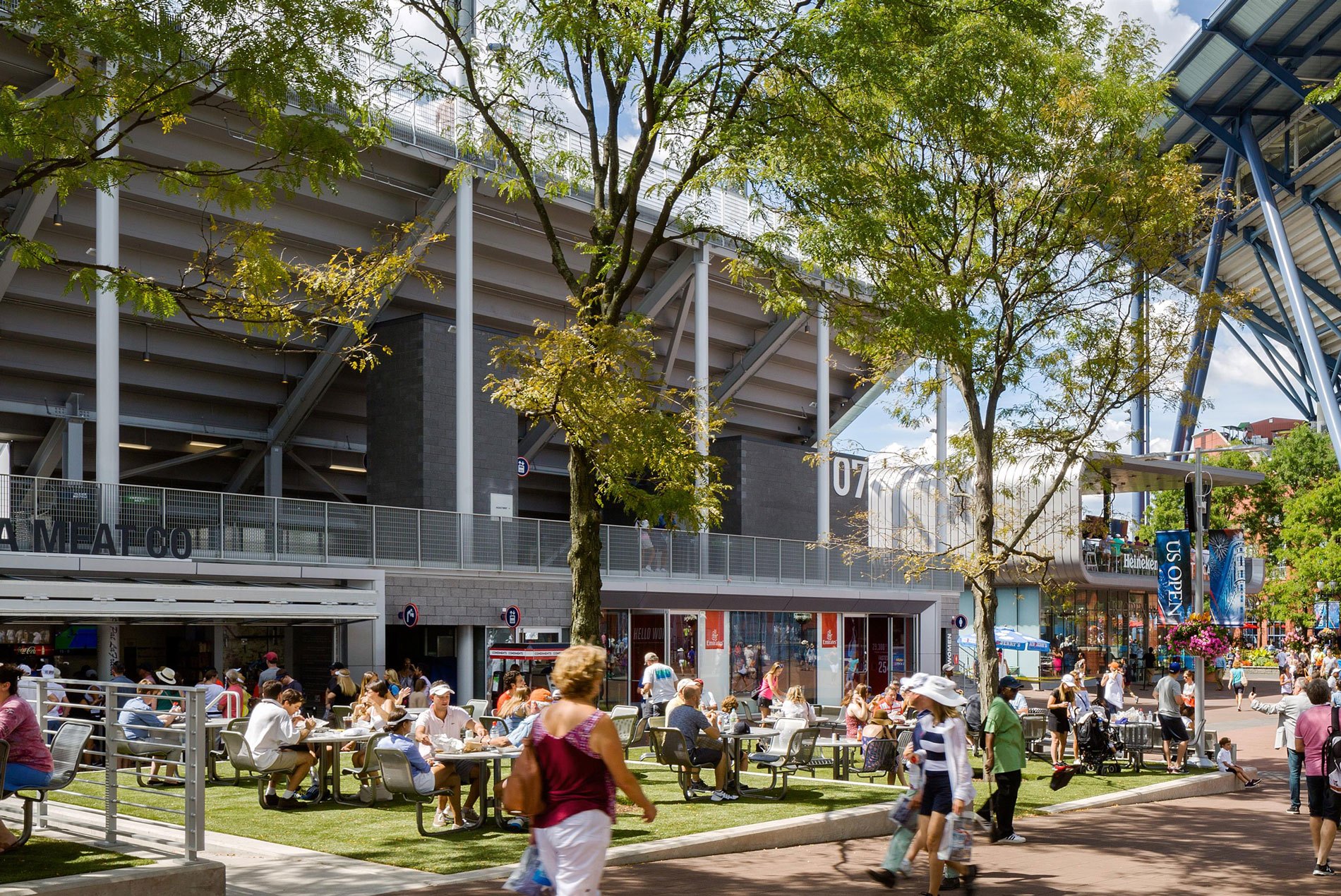
Stadium design has traditionally concentrated on the view from the seat, and that view remains fundamental. An all-day event asks designers to look past it.
The experience starts well before anyone sits down, with arrival, entry, circulation, food and places to gather. A crowded concourse or a 20-minute queue can undo the best seat in the building. We call the whole sequence the journey from street to seat.
Arthur Ashe Stadium, which opened in 1997, is getting that treatment now. Over the years, concessions had been squeezed in along the promenade concourse wherever they fit, and their queues spilled into a walkway that was already tight. The renovation lays those spaces out again, expands the concourse by 40% and opens the south side with a bar roughly 90 feet across looking out over the plaza. Walking the concourse should feel like part of the day out.
The same project brings more seats down to courtside and adds new clubs and a grand entrance designed with Studio Libeskind. Each audience is different, but the principle is the same: figure out how each guest actually moves through the venue, then make that path comfortable and connected to the action. Other venues don’t need our clubs or our entrance. What transfers is the habit of starting with the full sequence of a guest’s day instead of a list of rooms.
Design the Moments Around the Competition
Athletes deserve the same attention as the guests.
At the US Open, player facilities had been built up piecemeal, never planned as a whole. Players spent years watching money pour into the fan side of the campus, and they started asking: what about us? The new Player Performance Center next to Ashe is the answer. It brings training, recovery, dining and lounge spaces together in one purpose-built home. The USTA committed to it because moving the player spaces out of Ashe unlocked the stadium renovation, and if those spaces had to move, they deserved to be done right.
One detail came straight from the athletes. Many international players can’t stand sitting in air conditioning all day, so the building pairs its indoor amenities with generous outdoor fitness and recovery areas.
Then there’s the walk. Getting from the locker room to the court in Ashe used to take about 45 seconds through the back of house. Now that the locker rooms sit in the Player Performance Center next door, it will take closer to five and a half minutes, front of house the whole way, with spots for stand-up interviews and staged arrivals where the next player waits behind a curtain drop. The sequence starts at the new building’s own entrance: a covered drop-off leads into an open lobby with an LED screen, then an escalator up to where privacy begins.
Not everything backstage should become a show. Athletes need room to focus, away from cameras and crowds. Getting it right means finding where private preparation ends and the public event begins, and making that handoff deliberate.
Where Premium and Access Coexist
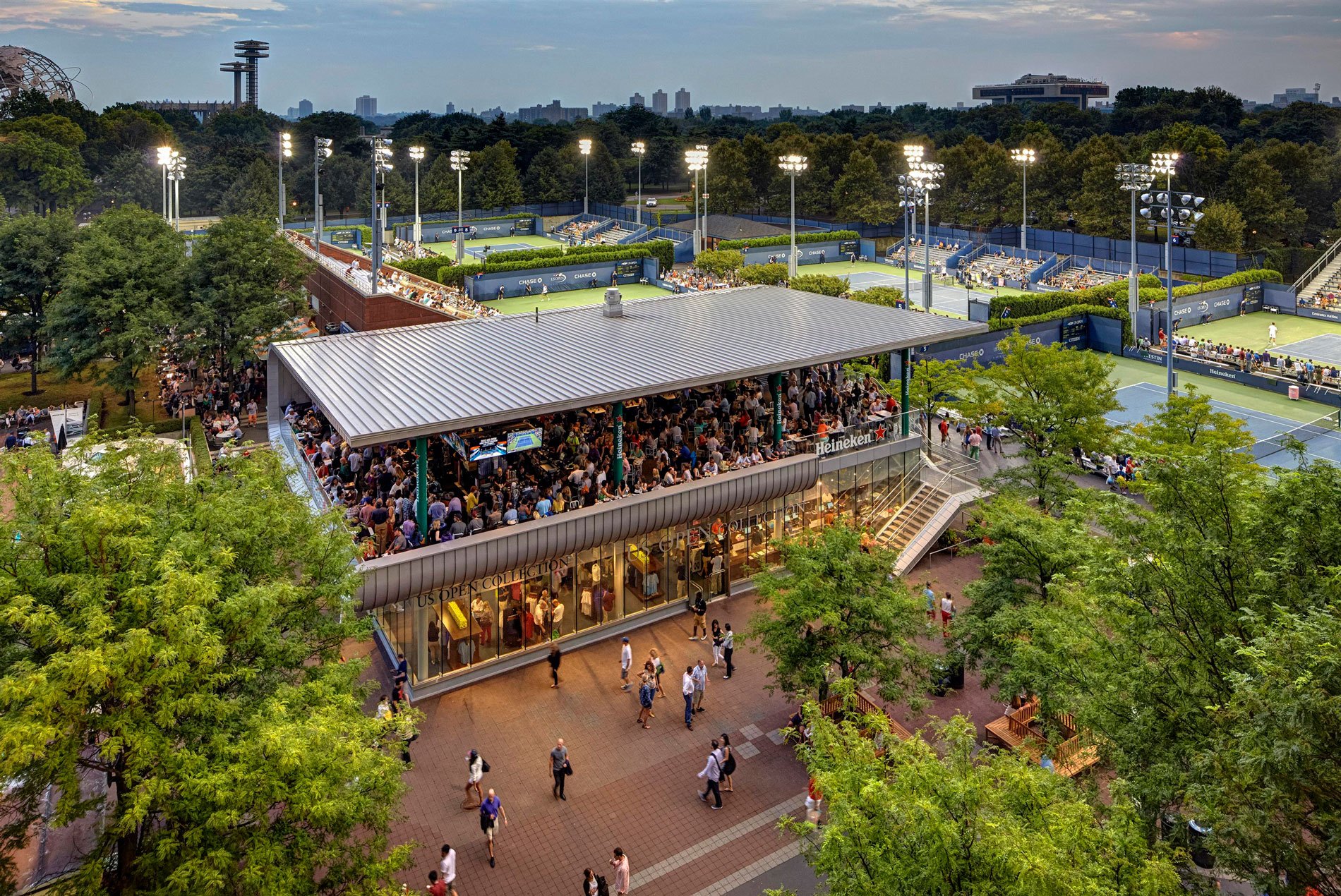
Every venue investing in premium hospitality runs into the same tension. How do you build higher-value experiences without draining the energy and accessibility that make live sport worth attending?
In our experience, tennis and Formula One carry some of the highest expectations for premium in sports. At the top of the US Open market, the day is curated from the hotel forward. These fans may take car service to the grounds, get an escort through the campus and sit at a club a few steps from a courtside seat. Every venue has multiple ladders of premium, and operators keep testing how high each rung can climb.
Yet the same campus offers some of the broadest access in major sports. A grounds pass gets you first-come seating at Louis Armstrong Stadium, the Grandstand and the outer courts. You can chase tennis all day, eat in most of the restaurants or spread out on the lawn with your kids for an afternoon.
Inside Ashe, the renovation gives premium guests dedicated elevators and club-level circulation, and gives general-admission guests their own express escalators to the bowl. Separate routes let each audience move faster, and the general-admission fan is never left as an afterthought.
Premium and access sometimes get framed as a trade-off. The US Open makes the case, year after year, that architecture can support both.
Design for the Whole Day
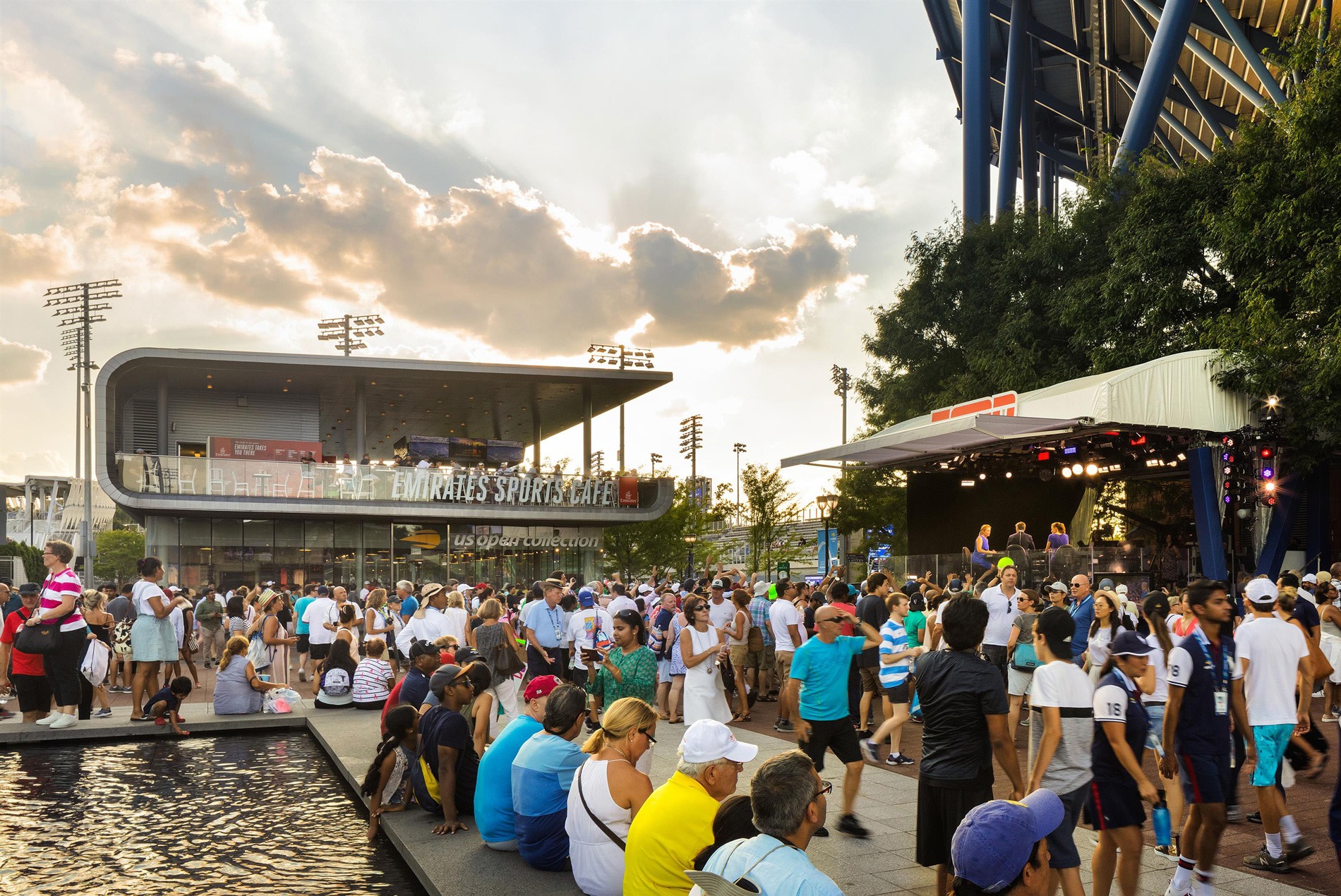
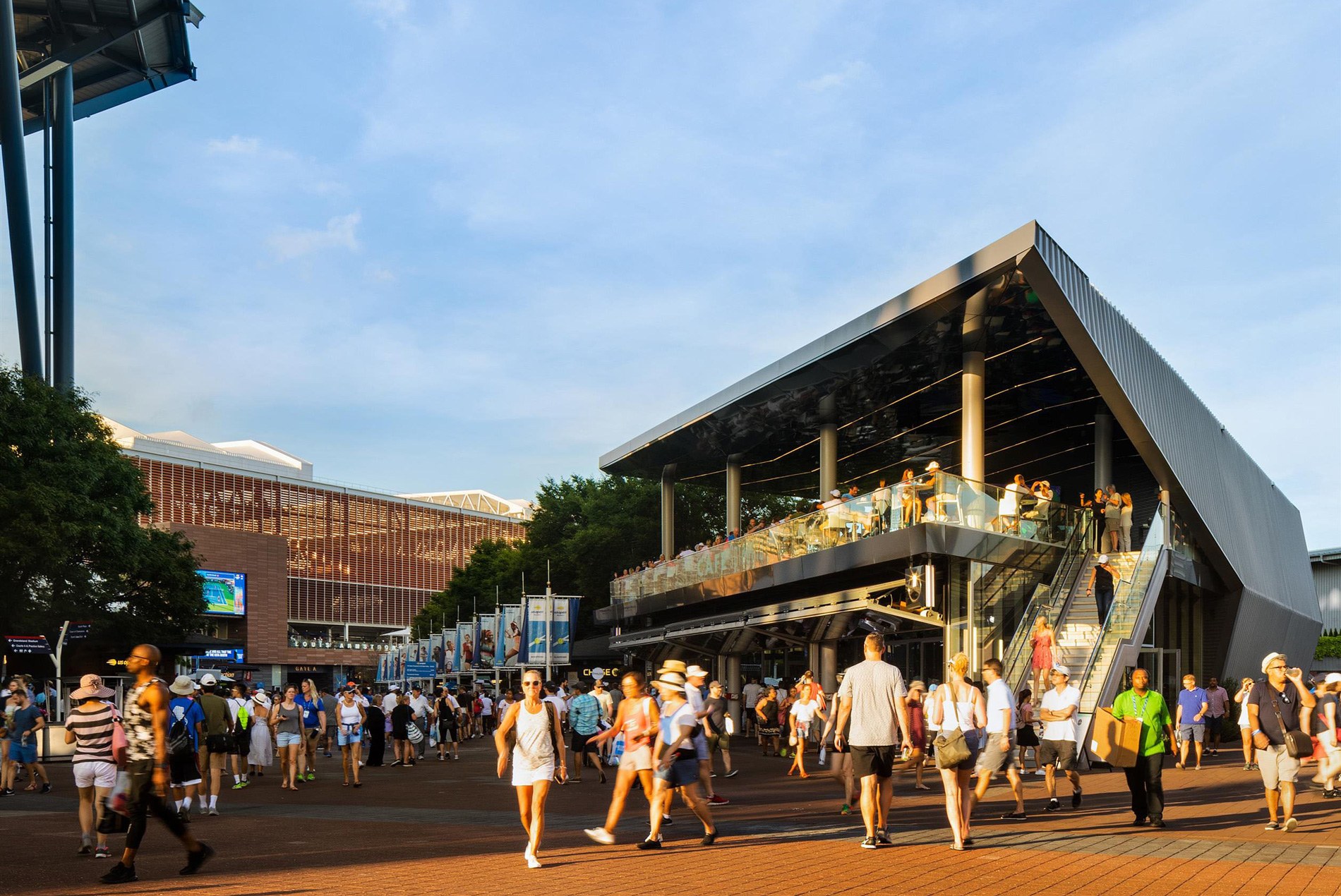
As stadiums and arenas stretch the experience around competition, they run into questions tennis venues have been working on for years. Start with food. How do you feed tens of thousands of people without sacrificing quality for speed? We once proposed self-checkout concessions to speed service on the promenade, and the USTA wasn’t sold—at least not yet. Their guests are buying lobster rolls and sitting down to dinner between matches, not grabbing food off a heat lamp, and they aren’t ready to trade that for turnover.
Then come the balancing acts, like building premium without shortchanging everything else and giving guests choices without making the place confusing. Some answers are architectural. Just as many live in what we call grease trap alley, the unglamorous world of loading docks, kitchens and utilities that keeps a tournament running.
No single feature solves the whole-day problem. Treating the day as one connected experience does. At its best, the campus feels like the city around it, alive from morning through night.
People buy tickets to the competition. They come back for the day.
Continue the Conversation
If your venue is working through the same questions, we’d welcome the conversation. Contact:
Matt Rossetti, Senior Principal and Director of Sports + Recreation + Entertainment, Detroit | matt.rossetti@hok.com
Sande Frisen, Principal and Senior Project Manager, Detroit | sande.frisen@hok.com