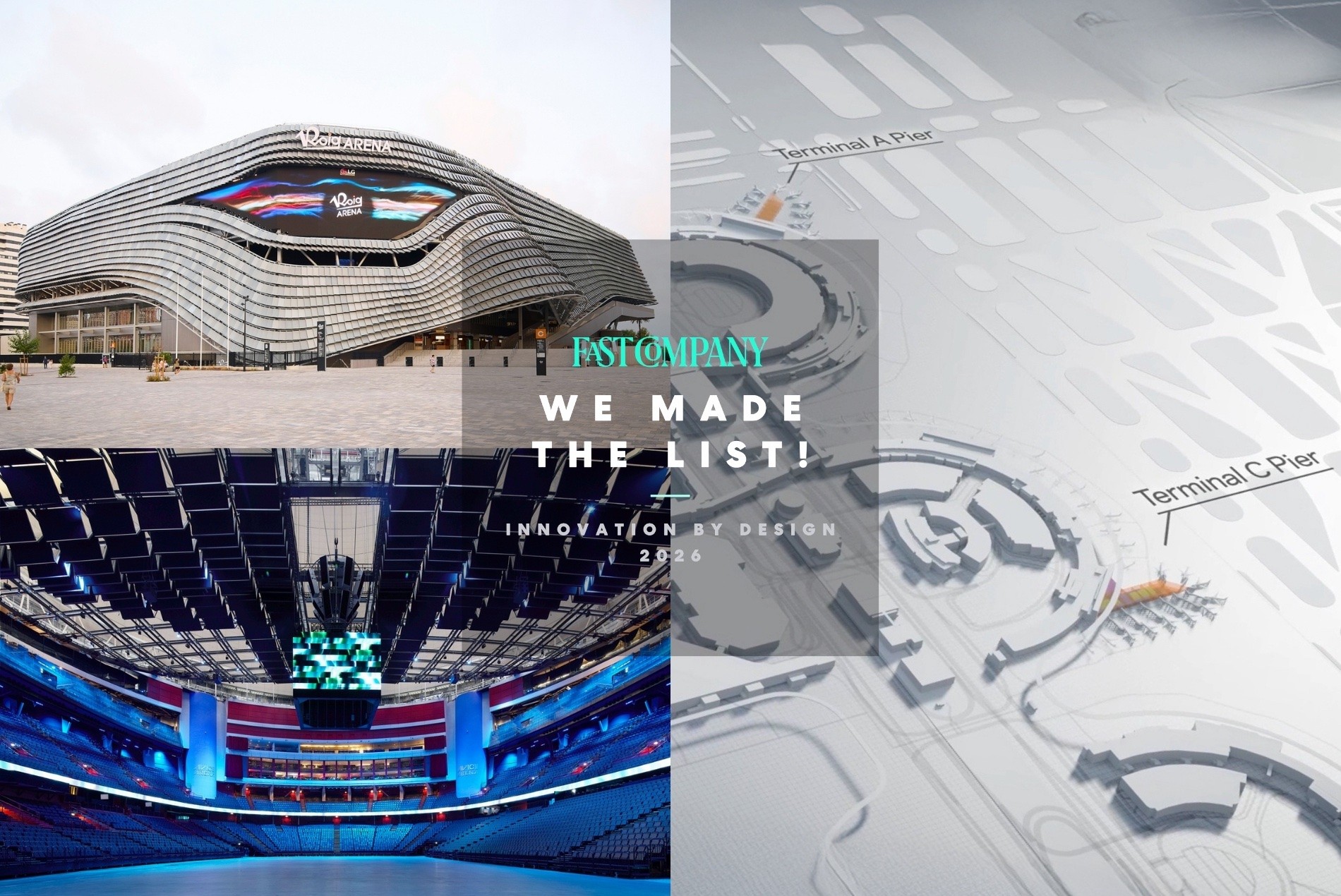
Dallas Fort Worth International Airport’s innovative modular construction was named a finalist in the Transportation category, while Avicii Arena and Roig Arena received honorable mentions in the Architectural Design category.
Three HOK projects have been recognized in Fast Company’s 2026 Innovation by Design Awards. Now in its 14th year, the competition honors designers and businesses solving the problems of today and tomorrow.
Dallas Fort Worth International Airport’s innovative modular construction on Terminals A and C was named a finalist in the Transportation category. Avicii Arena in Stockholm and Roig Arena in Valencia, Spain, received honorable mentions in the Architectural Design category. Together, the two arenas show different approaches to European venue design: modernizing a protected landmark from within and creating a new civic anchor for a growing district.
DFW’s modular design and delivery model enables major airport expansion while keeping one of the world’s busiest airports operational. The modernization of Avicii Arena solves decades-old acoustic problems through a retractable ceiling and gondola seating installed within the protected spherical building. Designed by HOK and ERRE, Roig Arena takes a climate-responsive, community-centered approach to transforming an underutilized district into a civic anchor for year-round activity.
“DFW, Avicii Arena and Roig Arena show how design innovation can solve very different challenges, from keeping a global airport operating during expansion to helping major venues better serve their cities,” said Eli Hoisington, co-CEO of HOK.
Dallas Fort Worth International Airport Modular Construction
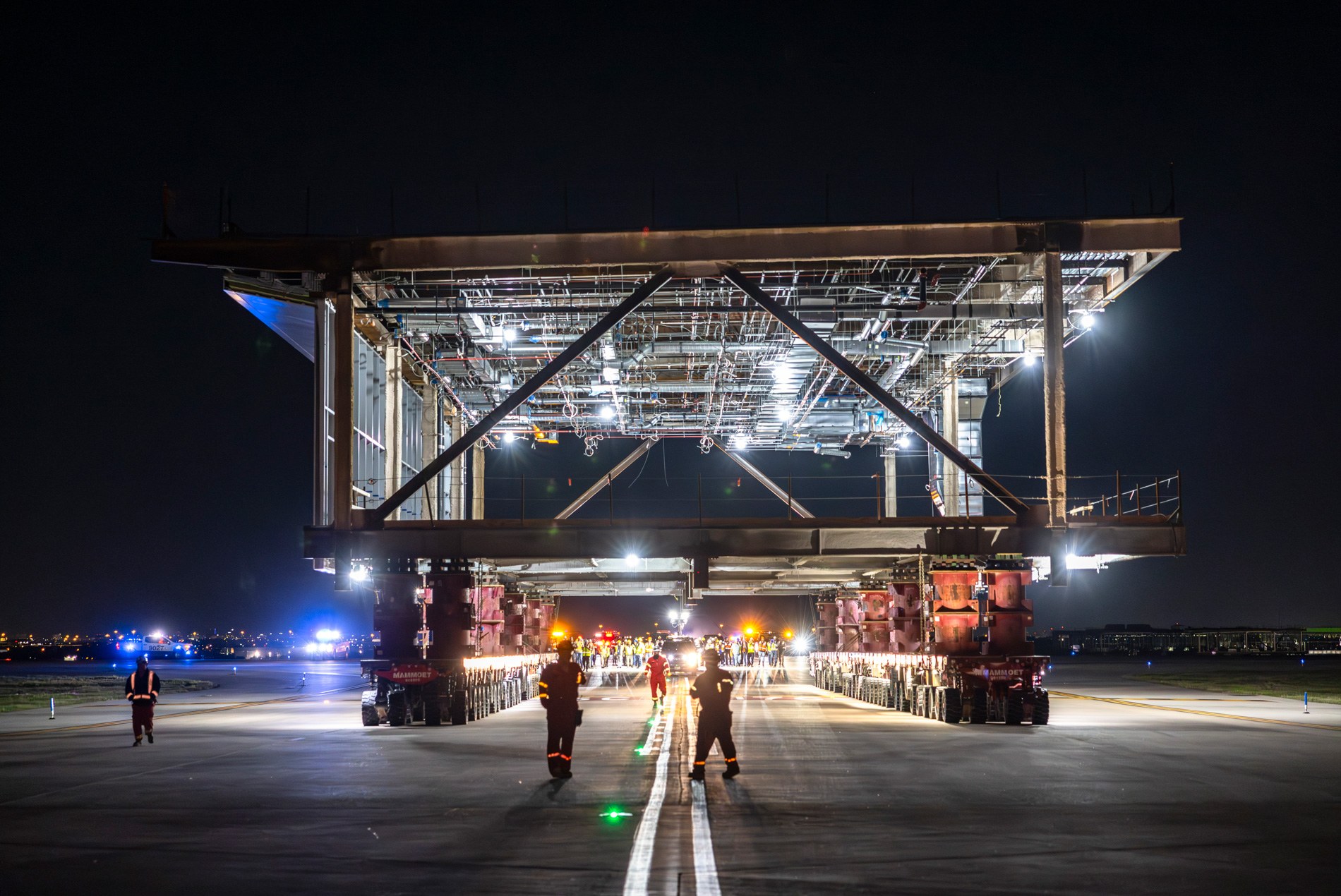
Image courtesy of Dallas Fort Worth International Airport
At one of the world’s busiest airports, construction can’t come at the expense of daily operations. HOK worked with joint venture partners Austin Commercial, Azteca Enterprises and Alpha & Omega, as well as GFT, to provide design and structural engineering leadership for new pier-style expansions at Terminals A and C.
HOK designed and engineered 13 oversized, systems-complete concourse modules that were fabricated at an off-site yard on airport property but outside the Air Operations Area perimeter. Mechanical, electrical, plumbing and fire protection systems could be installed before the modules entered the airfield. The approach minimized security constraints and allowed terminal construction to proceed while the airport remained fully operational.
The modules were twice the size of those used for DFW’s High C gates in 2022. The largest measured 204 feet long by 68 feet wide and weighed approximately 1,200 tons. In 2025, all 13 were transported overnight across active runways and positioned at Terminals A and C without closing a gate or delaying a flight.
The expansions are scheduled to add 19 gates at Terminals A and C in 2026. By decoupling construction from active terminals, the design allowed the airport to expand capacity while maintaining ongoing operations. The approach offers a repeatable model for other large airports.
View Fast Company’s 2026 Transportation category honorees.
Avicii Arena
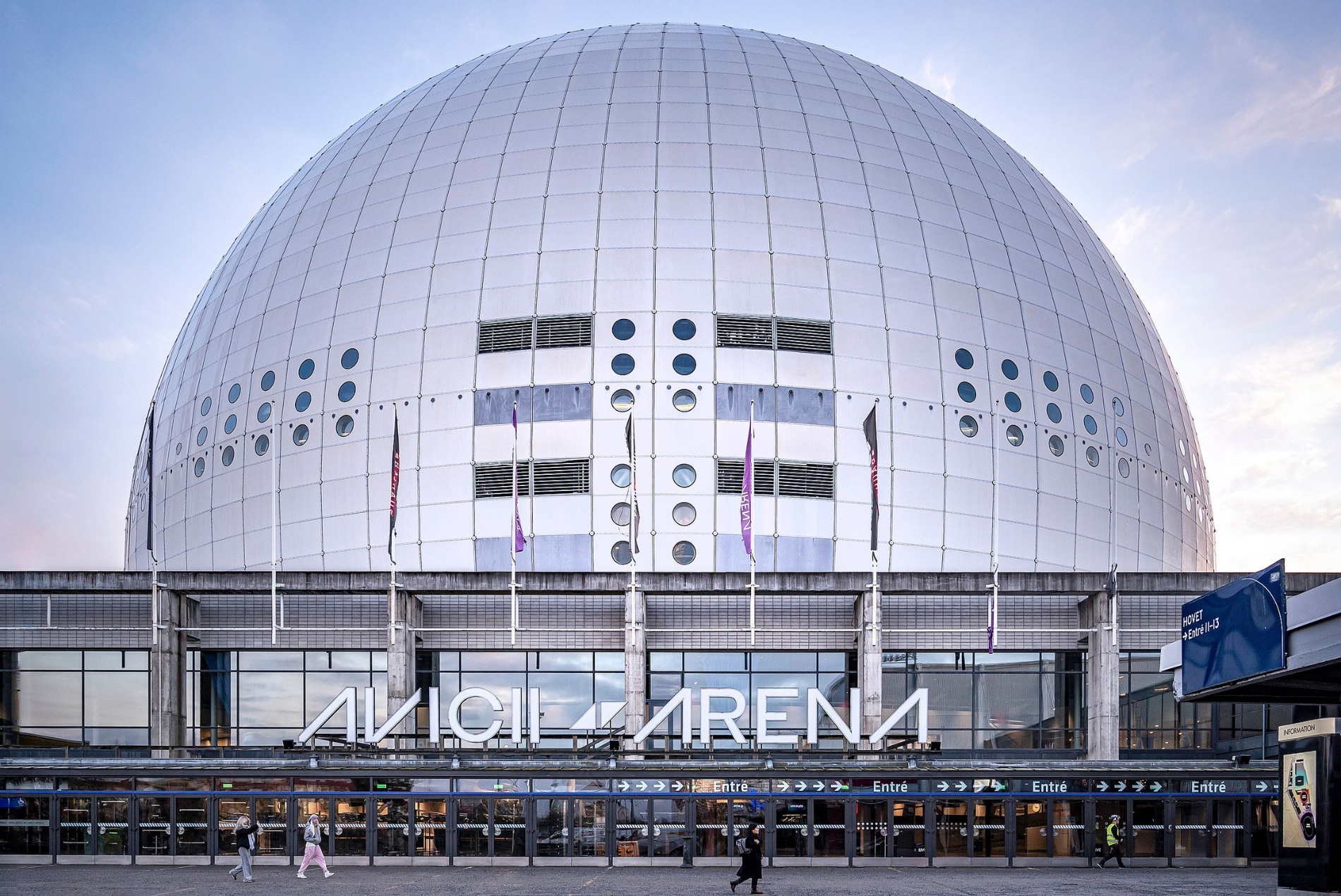 Avicii Arena opened in Stockholm in 1989 as the world’s largest spherical building. But its dome created persistent acoustic problems. Sound reflecting off hard surfaces muddied low frequencies, and the original roof could support only 60 tons of rigging, well short of the demands of many contemporary touring productions. Because the arena is protected as a heritage building, the exterior could not be altered.
HOK led the $92 million modernization for Stockholm Globe Arena Fastigheter in collaboration with C.F. Møller Architects and structural engineer schlaich bergermann partner. The team approached the modernization like building a ship in a bottle. A retractable acoustic ceiling composed of hybrid panels is suspended from a new curved ring inside the existing structure. When deployed, the panels reduce the arena’s effective volume and control reverberation, absorbing low frequencies on one side and reflecting higher frequencies on the other. Operators can adjust the space within minutes for hockey games, concerts and other events.
The team assembled the ceiling from theatrical rigging, tensioned cable nets and steel mesh. All components were brought through existing openings and constructed inside the dome without heavy crane access. The arena also incorporates Meyer Sound’s active acoustic technology, using 84 loudspeakers and 72 microphones to redistribute crowd sound across 12 zones.
New cantilevered gondola seating improves upper-tier views for 800 spectators. The gondolas, the first of their kind in Europe, also route ventilation to the event floor without introducing ductwork into the dome.
Since reopening in February 2025, Avicii Arena has hosted international touring acts, hockey and the 2025 IIHF Ice Hockey World Championship. Professional hockey, concerts and touring entertainment are scheduled through 2027. The modernization also received the 2025 Stadium Business Design & Development Award for Innovation and the Swedish Steel Construction Award.
View Fast Company’s 2026 Architectural Design category honorees.
Roig Arena
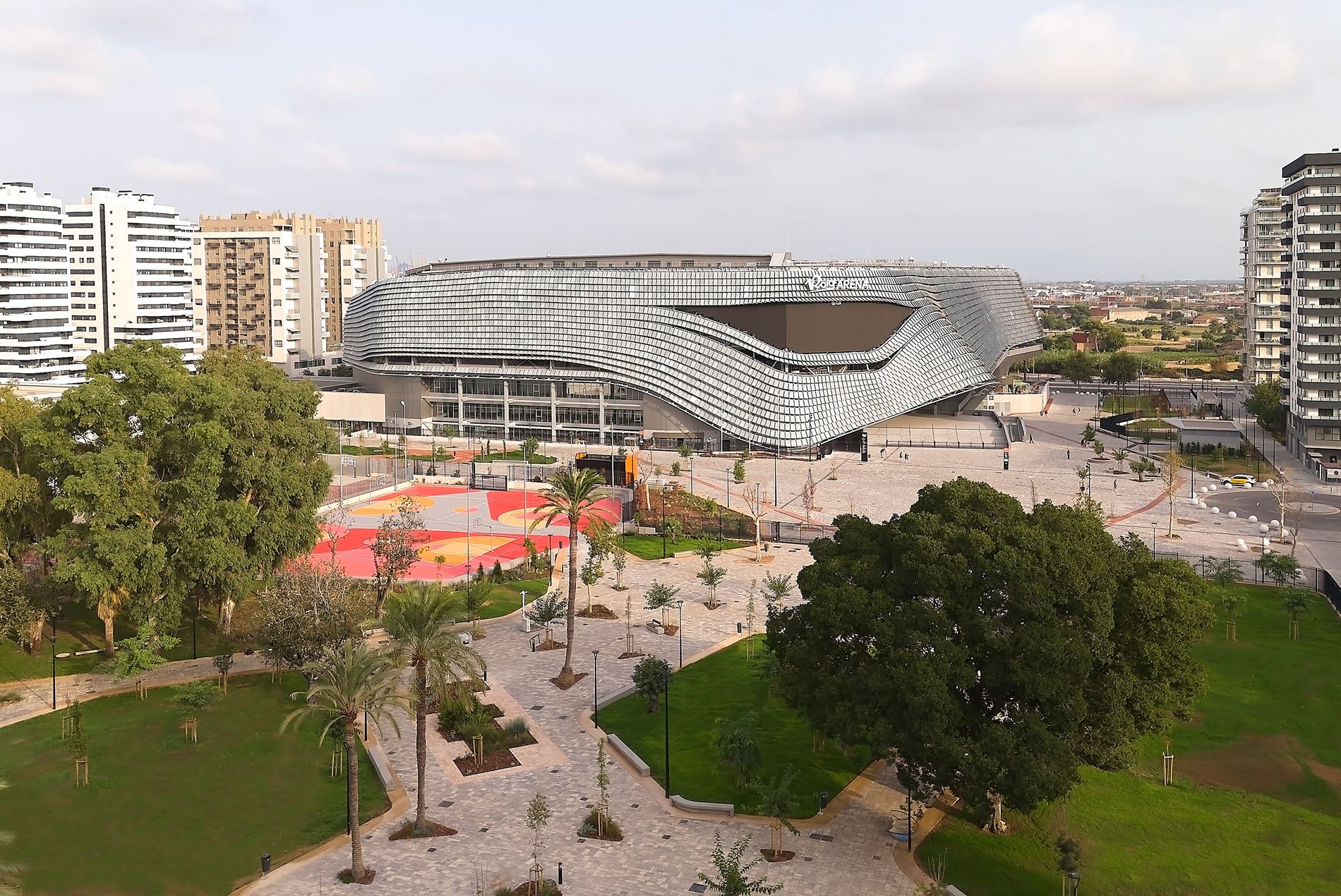 Most arenas disappear from urban life the moment the doors close. Roig Arena was designed to do the opposite.
The venue anchors a new two-hectare park and adjacent development in Valencia’s Quatre Carreres district. Stepped terraces extend the arena into the surrounding public realm, while a grand staircase leads to a daylit concourse anchored by a year-round food hall inspired by Europe’s historic markets. The arena and surrounding public spaces host sporting events, concerts and community activities throughout the year.
The climate-responsive envelope draws on Valencia’s ceramic tradition. Its 8,600 locally fabricated ceramic fins shade the open-air concourses and promote natural ventilation, reducing heat gain. Each fin is parametrically angled to reflect light, while integrated RGBW LED lighting translates crowd behavior and environmental inputs into real-time responses across the facade.
Inside, eight mega-trusses span 404 feet across the seating bowl, eliminating interior columns. The seating configuration expands from 15,600 seats for Valencia Basket games to 20,000 for concerts. A 2,000-capacity auditorium and conference facility can host simultaneous events.
Roig Arena opened in September 2025. During its first year, it hosted 310 events and welcomed more than 1.7 million attendees. Its program included Valencia Basket games, concerts, entertainment shows and corporate events, including international tours that previously bypassed the city.
View Fast Company’s complete list of 2026 Innovation by Design honorees.