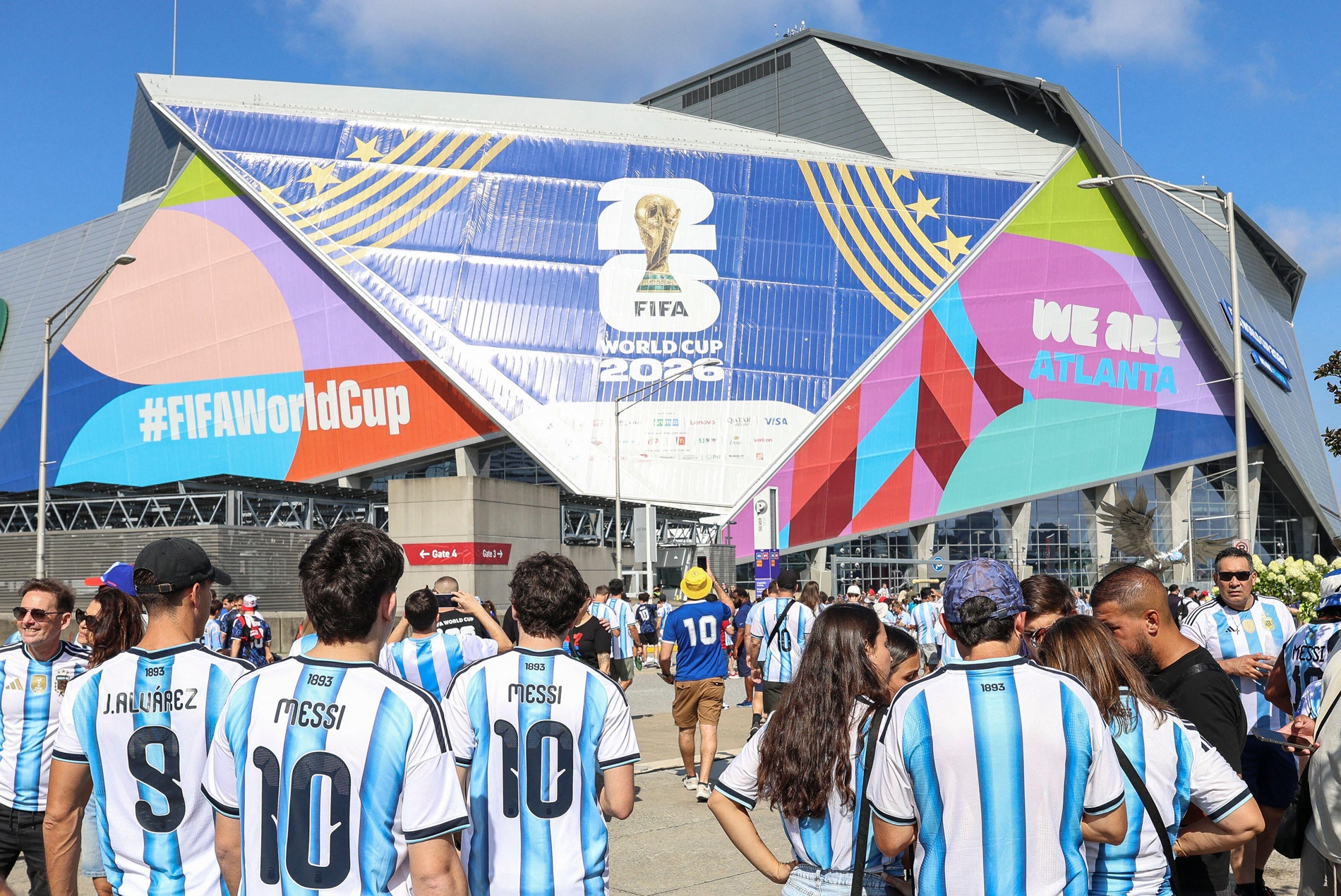
HOK sports architects and designers reflect on the lessons learned from the 2026 World Cup and what they could mean for future stadiums.
The 2026 FIFA World Cup drew more than six million fans to venues across the United States, Canada and Mexico, setting attendance and revenue records while showcasing the scale of North America’s sports infrastructure. For venue owners, operators and designers, the tournament also served as a real-world test of how stadiums perform when hosting a global event.
In a recent HOK Up Next panel, sports architects and designers reflected on the lessons learned from the tournament and what they could mean for future stadiums.
Moderated by HOK’s Stephanie Miller, the panel included:
- Rashed Singaby, Director of Sports, Recreation & Entertainment, HOK
- John Rhodes, Director of Sports, Recreation & Entertainment – International, HOK
- Dina Lamanna, Director of Hospitality Interior Design, HOK
From fan experience and hospitality to sponsorship and community integration, the conversation explored how stadiums can leverage flexibility to host global events.
View the full discussion below, then continue reading for key takeaways.
NFL Stadiums Pass a Global Test
Many of the tournament’s highest-profile matches took place in NFL venues originally designed for American football. While some questioned how these venues would accommodate international soccer, they needn’t have worried, said Singaby.
“The American venues pleasantly surprised the world,” he said. “The sheer scale gave fans the amplified atmospheres that exceeded their expectations.”
At the same time, the tournament highlighted opportunities for improvement. Soccer’s concentrated halftime break caused some congestion in concourses, concession areas and restrooms, while many NFL venues need to physically alter their lower seating bowls to accommodate the larger field required for soccer.
Those lessons reinforce the growing importance of designing for adaptability so venues can host multiple and varied events, said Singaby.
The Fan Journey Extends Beyond the Stadium
The panelists repeatedly returned to the idea that the fan experience begins far before kickoff and continues long after the final whistle.
Rhodes described this as the “street-to-seat” experience, which encompasses arrival, departure and more.
“It’s not just about the stadium experience. It’s about your movement through the campus. It’s about your transport plan getting there, and it’s even about just buying the ticket in the first place,” Rhodes said.
Creating a seamless experience increasingly depends on removing friction points, whether through digital ticketing, wayfinding, security screening or personalized technology. The goal is an experience that feels intuitive rather than transactional.
As Singaby noted, fans will increasingly expect “frictionless everything,” from ticket scanning and concession transactions to navigation throughout the venue.
Hospitality Becomes More Personalized
The tournament illustrated how hospitality continues to evolve.
“The sport entertainment world is not just about the game,” said Dina Lamanna. “It’s about the show within the show, the pre-show, the game while it’s going on and the after show.”
Rather than viewing hospitality as a collection of premium suites, venue owners are increasingly creating layered experiences with a variety of offerings, from social spaces and clubs to fine dining and specialized event programming.
The World Cup revealed the operational challenges that accompany elevated hospitality expectations. Supporting international service standards often requires flexible back-of-house space, adaptable circulation routes and temporary infrastructure that many venues were not originally designed to accommodate.
“We need flex for operational use,” said Lamanna. “We’re always looking for dual-functioning capabilities. Baking wiggle room into the design can allow a stadium to take on new and unforeseen uses.”
Rethinking Sponsorship for Global Events
One of the more visible examples of flexibility came through sponsorship and naming rights.
FIFA’s commercial partnerships required some venues to temporarily conceal existing naming-rights signage and sponsor branding, underscoring the challenges of relying on permanent messaging in facilities that host multiple major events.
“Is the future of partnership and sponsorship more digital than it is static?” asked Singaby.
Rather than relying exclusively on permanent signage, he suggested future venues may increasingly incorporate digital displays and flexible media platforms that can accommodate different branding requirements over time. Such approaches could provide owners, operators and event organizers with greater flexibility while reducing the need for temporary overlays and coverings.
Designing for Climate Resilience
Extreme heat, rain and air-quality concerns during the 2026 World Cup demonstrated the growing need for climate-responsive venue design.
“We have to build in resiliency to these stadiums,” Rhodes said. “The show has to go on.”
Singaby suggested that passive cooling strategies will become increasingly important.
“Passive cooling is going to be not just a ‘nice to have’ but a ‘must have,’” he said.
Future stadiums will need to consider everything from shade and airflow to field-of-play performance and spectator comfort as weather conditions become more unpredictable.
Stadiums as Community Assets
Many of the World Cup’s most memorable moments happened beyond the stadium gates. Fan festivals, public plazas and civic gathering spaces became destinations in their own right, demonstrating the value of integrating venues into larger districts.
“The future stadium is not a standalone venue,” said Singaby. “It’s a public realm generator, a cultural destination.”
For all three panelists, the broader lesson was clear: the most successful venues will no longer be defined solely by what happens inside the bowl. Instead, they will be measured by how effectively they connect people to the surrounding neighborhood, support daily activity and create memorable experiences before and after the game.
Looking Ahead
As stadium owners and designers look toward future World Cups and other global sporting events, flexibility remains the common thread running through nearly every lesson from 2026.
Whether through adaptable hospitality programs, more resilient infrastructure, flexible sponsorship strategies or frictionless fan experiences, tomorrow’s venues must respond to changing expectations more quickly than ever before.