This site uses cookiesMore Information.

Inside HOK’s Research Partnership With Syracuse University’s School of Architecture

For a second year in 2025-26, an HOK-sponsored research studio gave Syracuse students real-world projects to wrestle with, and gave the firm new ways to think about how buildings adapt over time.

Above: HOK's Francesca Oliveira and Syracuse's Daekwon Park (front), with HOK's Kathrin Brunner and the fifth-year studio cohort.

Adaptive Architecture in Practice

This spring, fifth-year students in a Syracuse University architecture studio spent the semester designing buildings that remain adaptable and resilient long after their completion. The students worked from two real HOK project sites with sharply different contexts: Paddington, a proposed clinical life sciences hub in central London next to St Mary’s Hospital, and a Tysons Corner mixed-use site in Northern Virginia. It was the second year HOK has sponsored a Directed Research studio at the school.

The studio grew out of HOK’s own work. HOK’s Design Board had been developing its in-house Resilient Buildings Design Guide, and the Syracuse studio became a way to test and extend that thinking.

The studio was led by Associate Professor Daekwon Park. Francesca Oliveira, technical principal in HOK’s Washington, D.C., office, coordinated HOK’s involvement. The semester moved along two tracks. On the design side, London Design Principal David Weatherhead and Houston Senior Principal, Design Kathrin Brunner built on the Design Board’s Resilient Buildings Design Guide, presenting case studies and assigning students research topics that would feed back into the next version of the guide. On the technical side, Ann Kosmal, HOK’s sustainable design leader for resiliency, and Anica Landreneau, director of sustainable design, led the resilience track, focused on how a building withstands and recovers from disruption as opposed to how it adapts to new uses.

“We brought in Ann and Anica to emphasize resilience as a complement to the original guidelines,” Oliveira said. “The original work was design-focused, and the students benefited from an additional layer of rigor to apply design thinking grounded in technical analysis.”

After the mid-review, Greg Sherman, HOK’s Houston-based director of engineering for MEP, and Oliveira added an MEP coordination primer for the students.

HOK’s team used the two sites to push students to test adaptive design in contrasting conditions: one dense, urban and tied to health and life sciences; the other suburban, mixed-use and shaped by car-dependent development. Weatherhead, who worked on Paddington, walked students through that site; Brunner did the same for Tysons. Then they stepped back.

“We never gave the students the answers we developed,” Oliveira said. “HOK presented the analysis of the location and what was important to consider, and then they took it from there.”

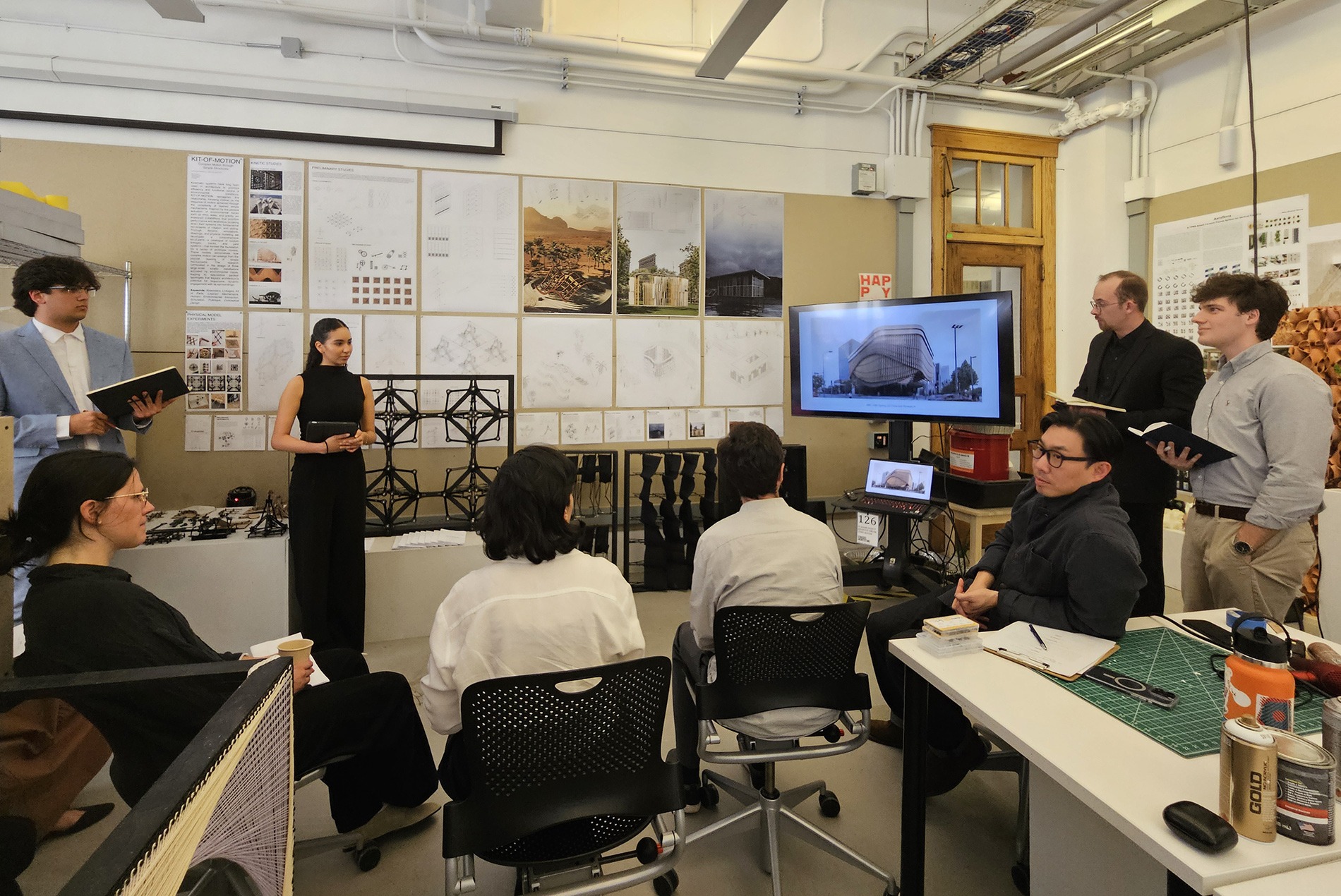
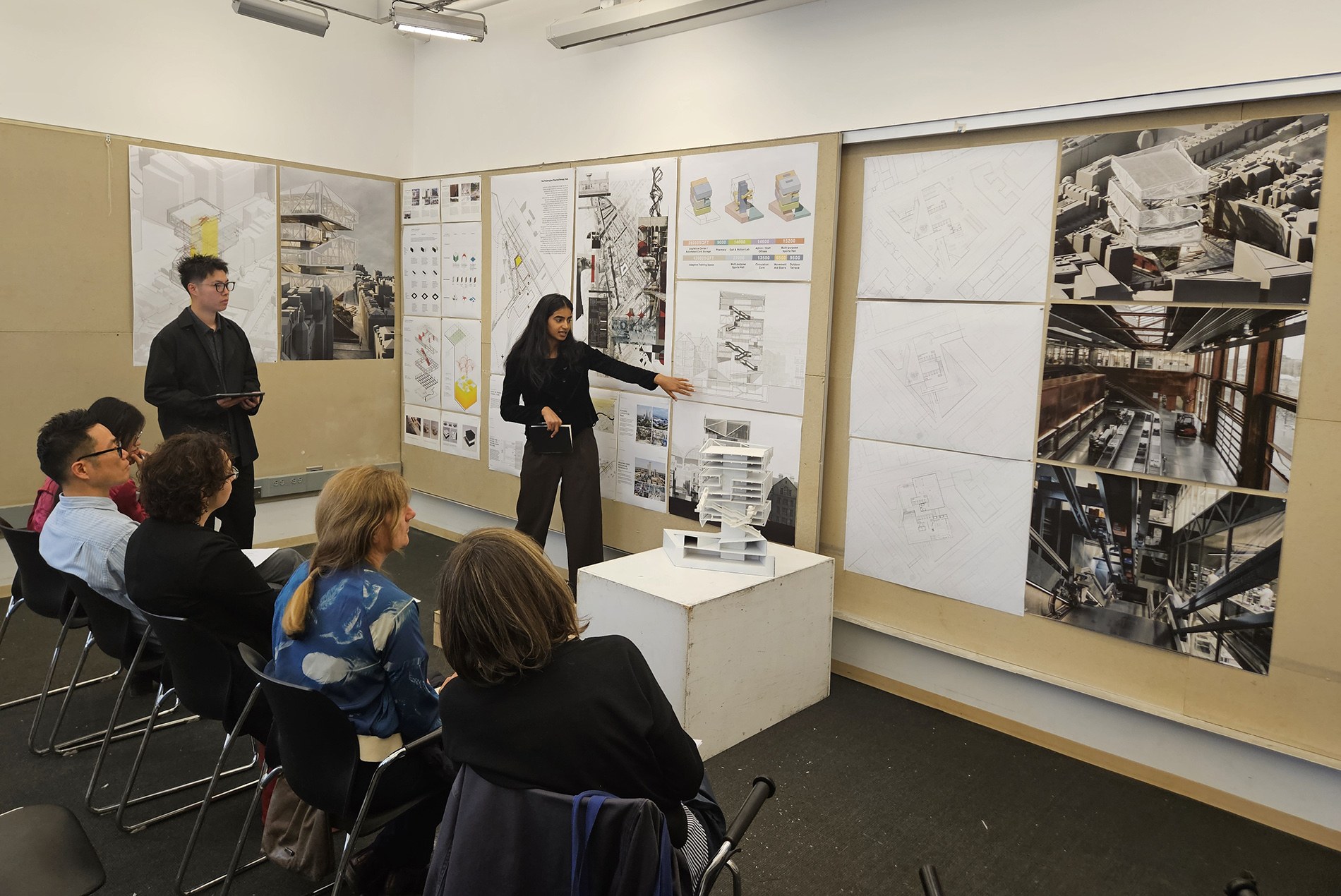
Syracuse University architectural student presenting final review to HOK's Francesca Oliveira and Kathrin Brunner.

Above: Jiahao Zheng and Arya Narang present at the spring 2026 final review in Syracuse.

The studio ran mostly online, with two exceptions. In early March, the cohort traveled to HOK’s New York office for the mid-review and an office tour. The semester closed at Syracuse on April 28 with the final review, which Oliveira and Brunner attended in person.

Separately, in mid-April, Kay Sargent, HOK’s director of thought leadership for Interiors, spent two days at Syracuse for a series of lectures and critiques. While there, she sat in with Park’s studio teams, who each gave her a brief overview of their research, and offered feedback in a guest crit.

Park paired the students into teams, each working from one of the two sites. Six projects came out of it, three on each. All three Paddington teams, unprompted, brought a health and wellness lens to their work.

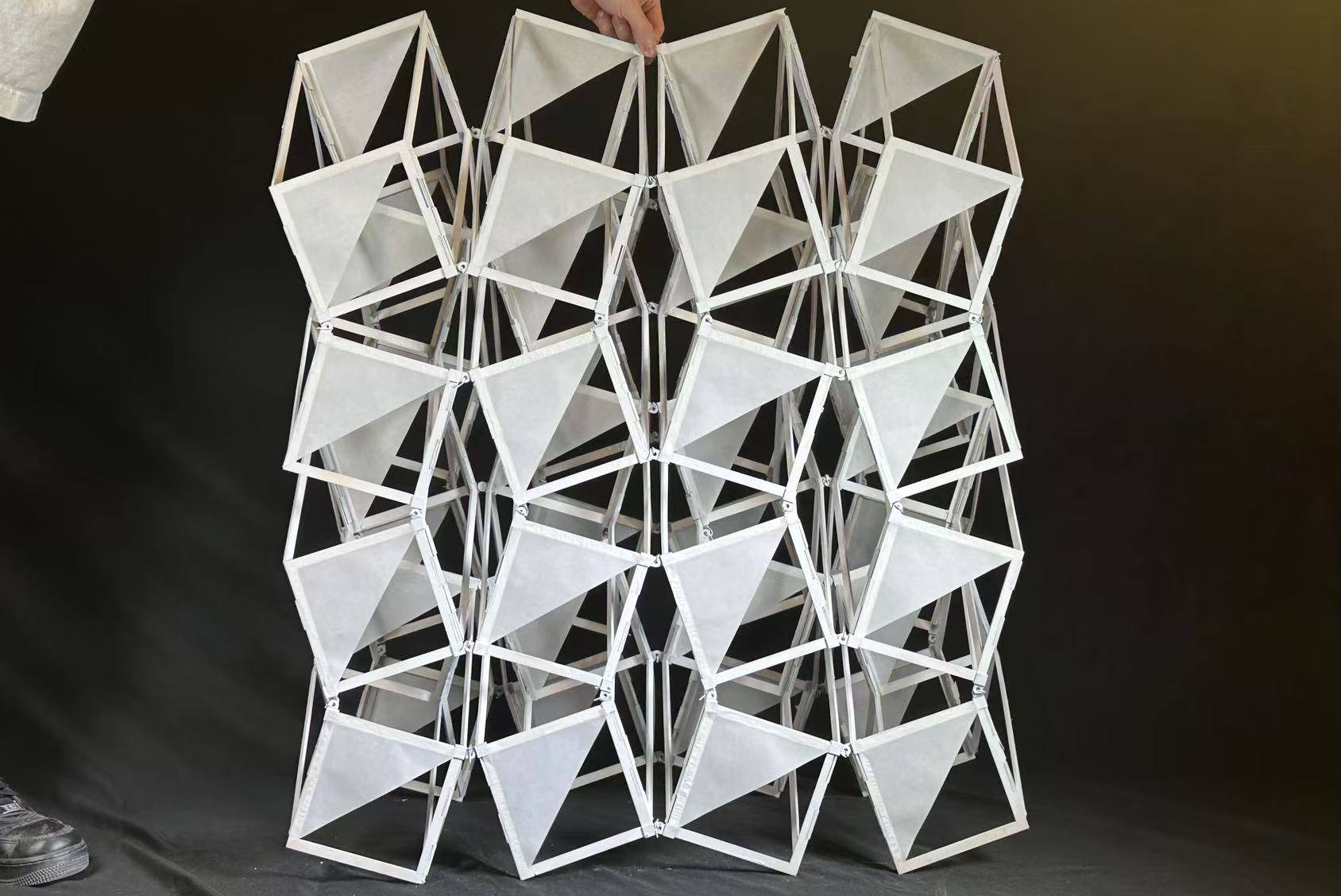
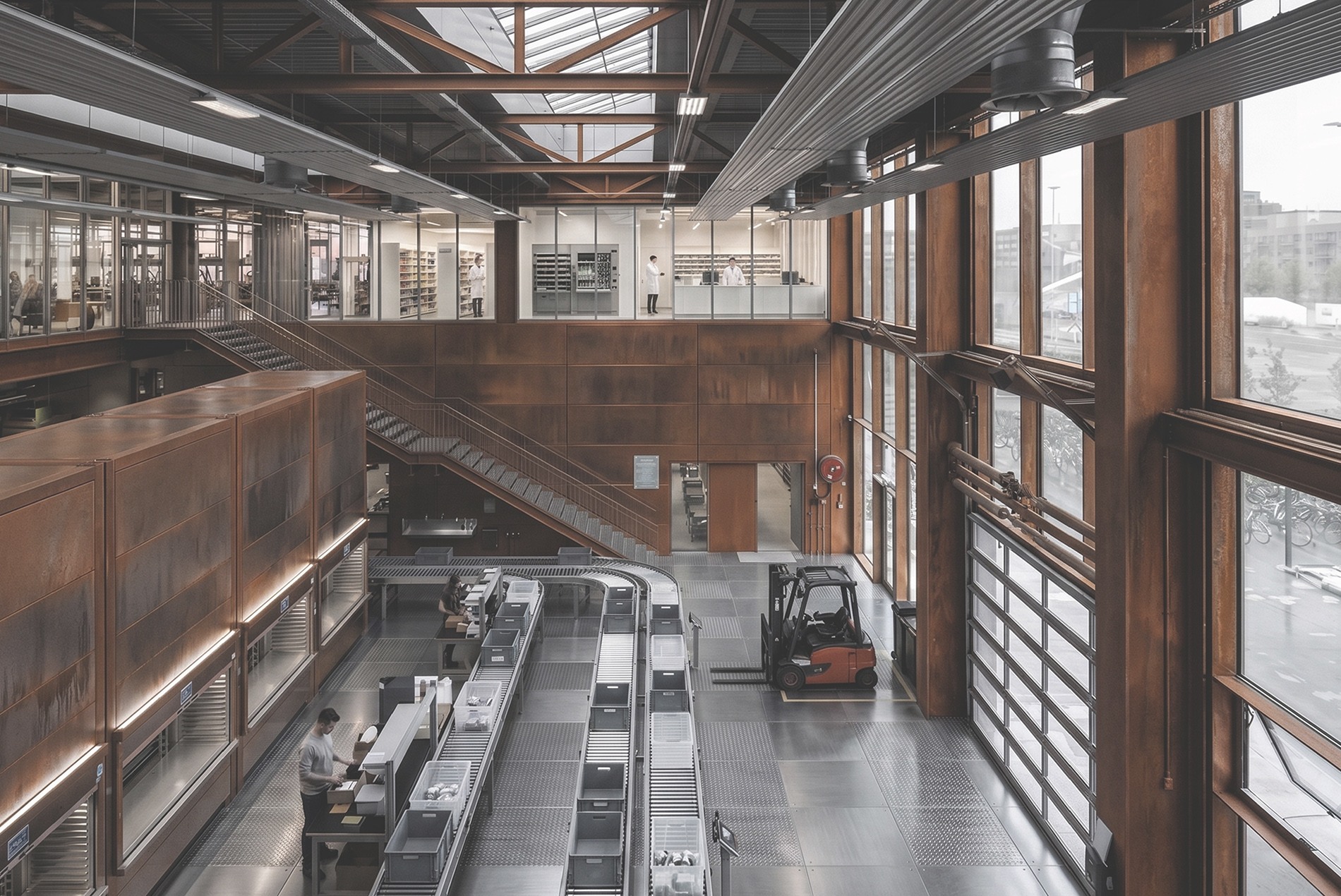
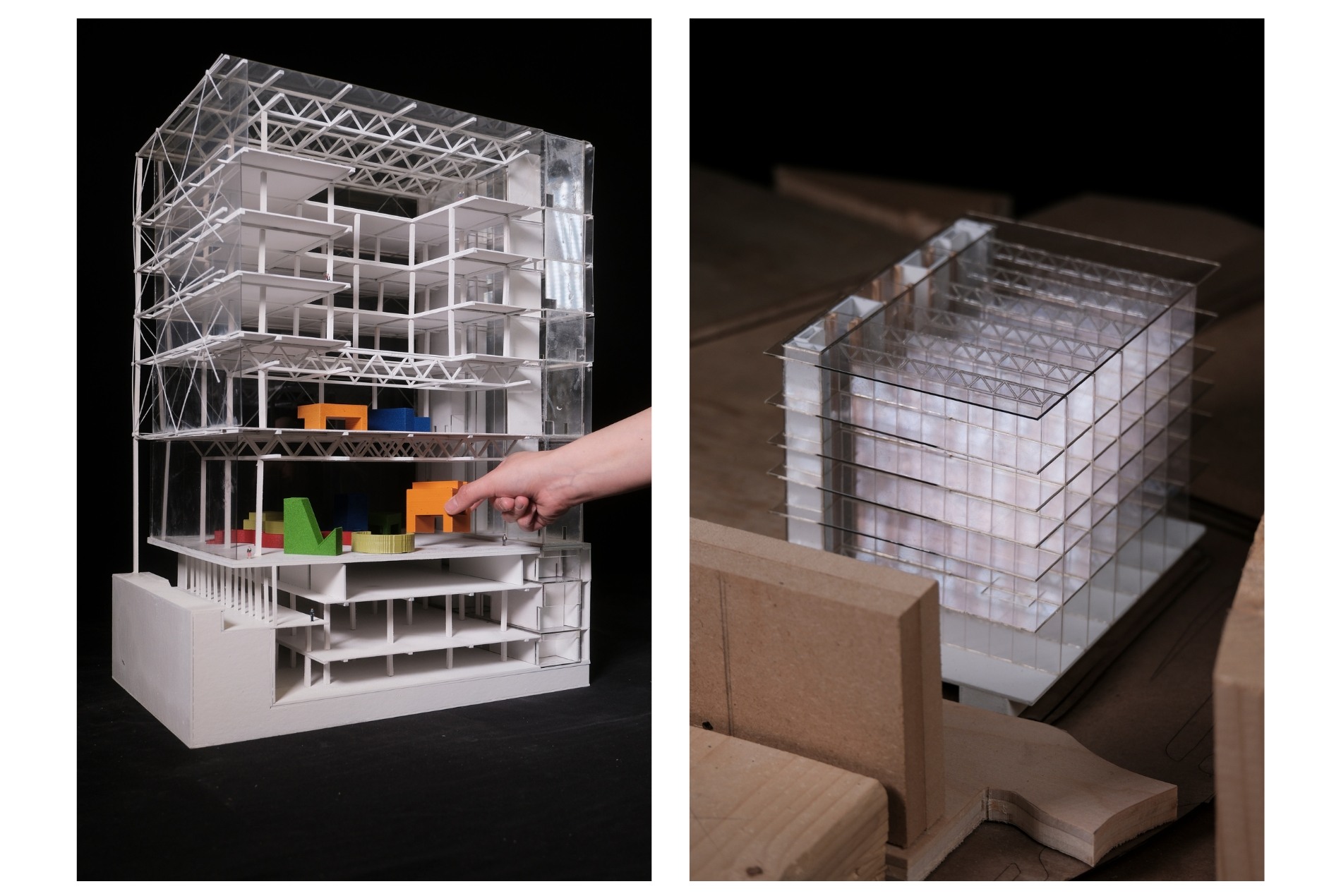
The strongest ideas translated adaptability into everyday experience: movement as therapy, modular systems for urban farming and flexible retail infrastructure for entrepreneurs. One Paddington team designed a rehab clinic organized around motion. The building moved, the materials moved and movement was the therapy (below left). Another built a vertical farm whose structural cores and infrastructure could carry different kinds of urban agriculture through plug-in modules. At Tysons, one team paired pop-up stores with maker spaces, letting small entrepreneurs prototype and sell in the same place, then graduate to a permanent store if a product caught on (below right).

“The students’ research considered the sociocultural dynamics around each site and identified gaps in community-serving offerings,” Brunner said. “Their proposals envisioned futures not currently present and showed how architecture can act as a catalyst for urban, social and environmental change. In the process, they challenged conventional assumptions and expanded what’s typically possible within professional practice.”

“It was impressive how much content the students were able to create in such a short period of time,” Oliveira said. “Their final crit represented about six weeks of design work—it was a really tremendous output.”

“While the students’ heads are in the clouds, practitioners function best when our feet are on the ground,” Oliveira added. “If we can provide the students with some bumper rails, not to constrain them but to enable them to be realistic, they go into practice with aspirations that are achievable.”

Paddington Pharmatherapy Hub: Adaptive Design in Kinetic and Agile Resilience rendering by Syracuse University student
In Continuous Making: A Circular System for Retail Transformation - concept and model of Tysons by Syracuse University student

Above left: “Paddington Pharmatherapy Hub: Adaptive Design in Kinetic and Agile Resilience” by Jiahao Zheng and Arya Narang

Above right: “In Continuous Making: A Circular System for Retail Transformation” by Jiayi Sheng and Yichi Zhang

How It Started

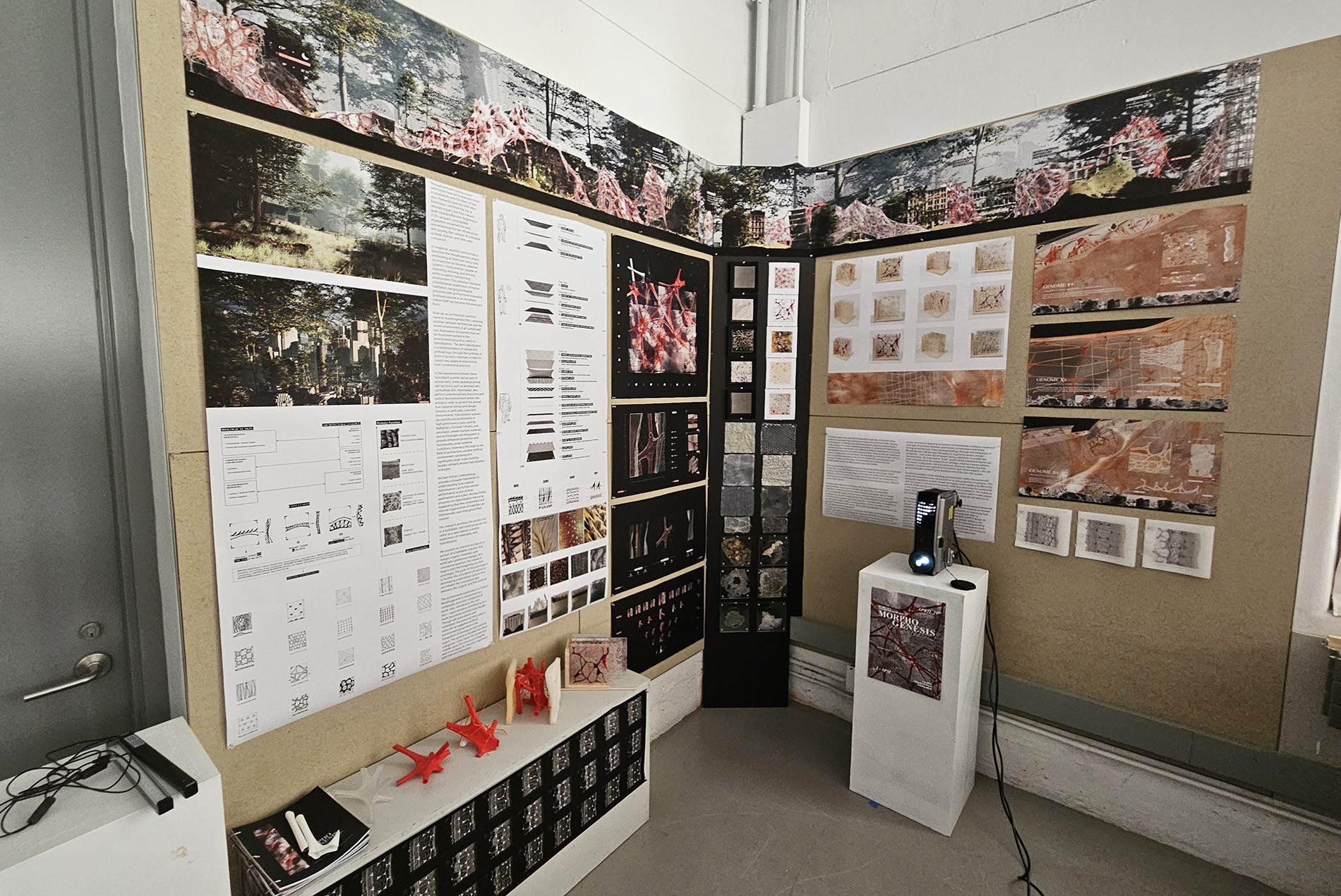
Work from 2024-2025 Syracuse University architectural research program with HOK

Above: Work from the 2024-25 facade studio’s final review

The formal partnership came together in early 2024. Eli Hoisington, HOK’s co-CEO and a Syracuse architecture graduate, connected the firm’s research program with Dean Michael Speaks and Assistant Dean Traci Washburn. Director of Engineering Matt Breidenthal, who led HOK’s research program at the time, met with Speaks and Washburn to explore what the firm and the school could do together. Breidenthal walked through HOK’s active research, from embodied carbon to airport electrification, and Speaks saw a fit between HOK’s facade research and Park’s work on adaptive systems. Breidenthal went on to help shape both years of the collaboration, forming the student teams and guiding key milestones along the way.

For Park, the school’s undergraduate chair and an associate professor, the studio extended a research agenda he had been developing through MATR LAB, the Material Archi-Tectonic Research Laboratory he directs at the Syracuse Center of Excellence.

“Over the past three years, our research has intentionally grown in scale,” he said, “from adaptive joints to adaptive facades and now to spatial, programmatic and systemic adaptability.”

Working with HOK, Park said, made that research feel less theoretical. “Designing buildings as flexible, living systems isn’t just an academic pursuit,” Park said. “It’s becoming a practical necessity for how our cities need to function.”

The students get something from it too, Park said. “Having HOK’s practitioners directly involved gives our students something a typical studio can’t: real accountability. Rather than treating architecture as a finished object, they’re pushed to think about how a building performs over time, testing their ideas against the demands of resilient design in practice.”

Syracuse University architectural student presenting to HOK's research team.

Above: A student presents at the 2025 final review in Syracuse.

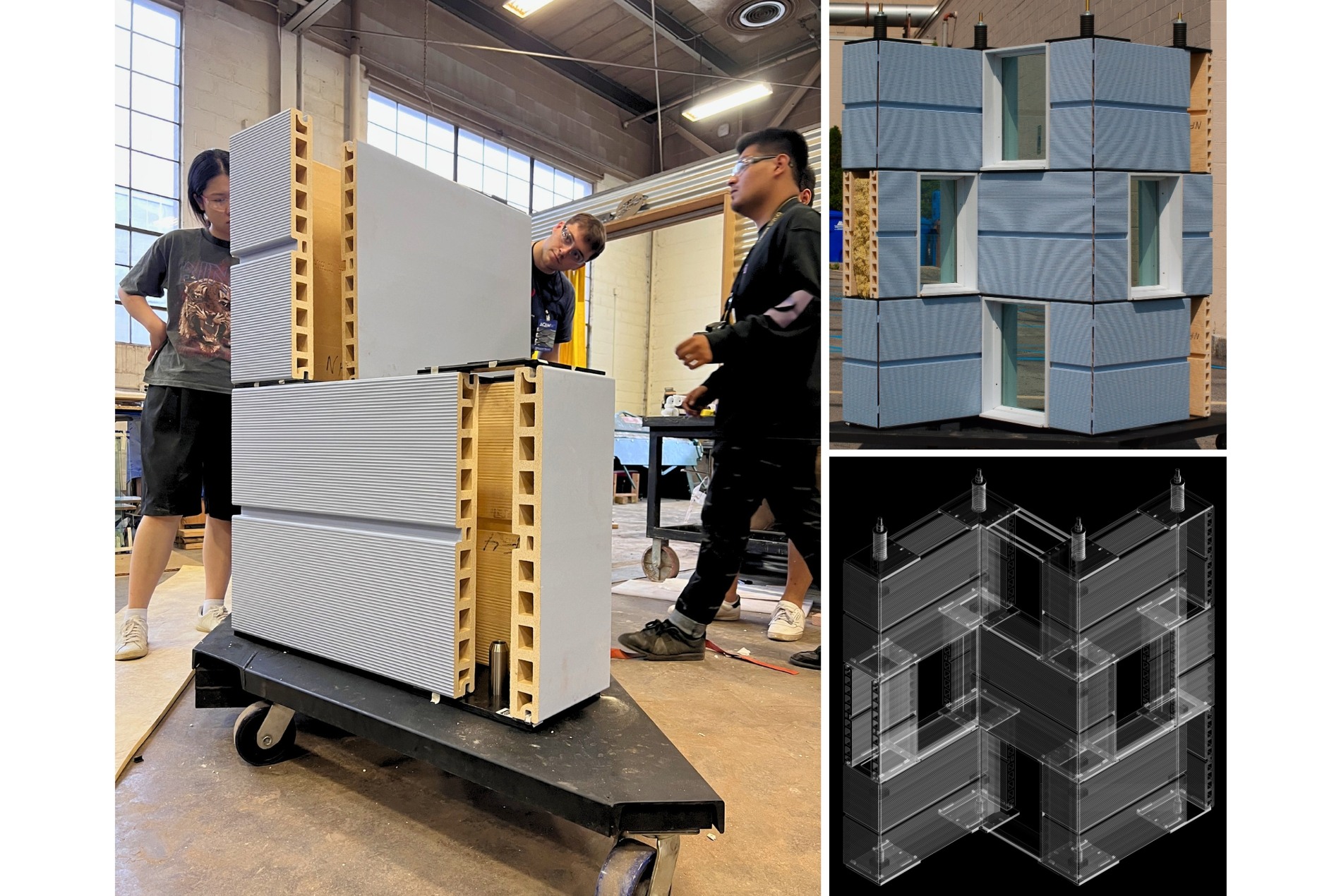
The first sponsored studio for fifth-year students, in 2024-25, took on adaptive facades, with Facade Practice Leader John Neary leading HOK’s involvement. Students worked in teams and produced a body of investigations, some recognizable as building enclosures, others more abstract. The cohort traveled to HOK’s New York office during the semester, meeting Neary and Senior Facade Specialist Blake Kurasek at the mid-review and Facade Specialist Deborah O’Connell at the final review.

Neary, who has taught in several settings, keeps coming back for what the work returns to him. “It’s a chance to clarify your own thinking on a subject, which isn’t always automatic when you’re working in the fray of projects,” he said.

He is candid about its limits. The kinetic, transformable ideas the studios explore don’t necessarily turn up on HOK buildings, he said. “It’s more a slowing down of a discussion relative to what’s typically happening, and it enriches the context we’re operating in.”

Kiri-tract adaptive facade design by Syracuse University students
"AeroTerra: A TPMS-Based Ceramic Module System for Urban Facade Farming" by Syracuse University students

Above left: “Kiri-tract” by Weixia Luo and Zhirun Huang

Above right: “AeroTerra: A TPMS-Based Ceramic Module System for Urban Facade Farming” by Max Zhaoyi Wang

Before the Research Studios

For several years, HOK architects have served as outside consultants to Syracuse’s fourth-year integrated design studio, a required course in which students develop a comprehensive project that integrates structural, enclosure and spatial systems, with working architects and engineers brought in to advise. HOK’s involvement started when Associate Professor Elizabeth Kamell, then its coordinator, needed consultants on building envelope and facade systems, and asked Paul Woolford, a former Cornell colleague and HOK’s design principal in San Francisco, for names. He suggested Neary, who has continued to advise the studio and was joined over time by HOK’s David Frey, technical principal; Stephen Weinryb, technical chair; and Claire Moore, director of engineering.

“Each one of the consultants brings experience and expertise and a willingness to listen to students and their aspirations,” Kamell said. “They teach students how to think critically about architectural ambitions in ways they have not before—as related to structural expression, material development and enclosure as a system that is both expressive and meets energy code requirements.”

The relationship went deeper than routine consulting and reviews. Early on, Neary showed Kamell a terra-cotta facade prototype he had developed with industry partners. The work resonated with a project she had been developing around Syracuse’s long ceramics history, from Syracuse China and the Everson Museum of Art’s ceramics collection to early-20th-century ceramist Adelaide Alsop Robineau.

Later, Kamell and six of her students joined the Architectural Ceramic Assemblies Workshop, an annual Boston Valley Terra Cotta event held in Buffalo, N.Y., as the only academic team designing its own original work: a load-bearing terra-cotta wall, waterproofed and insulated for cold climates.

Last year, Kamell said, several students were so taken with Neary’s facade system that they used it as the starting point for their own final designs.

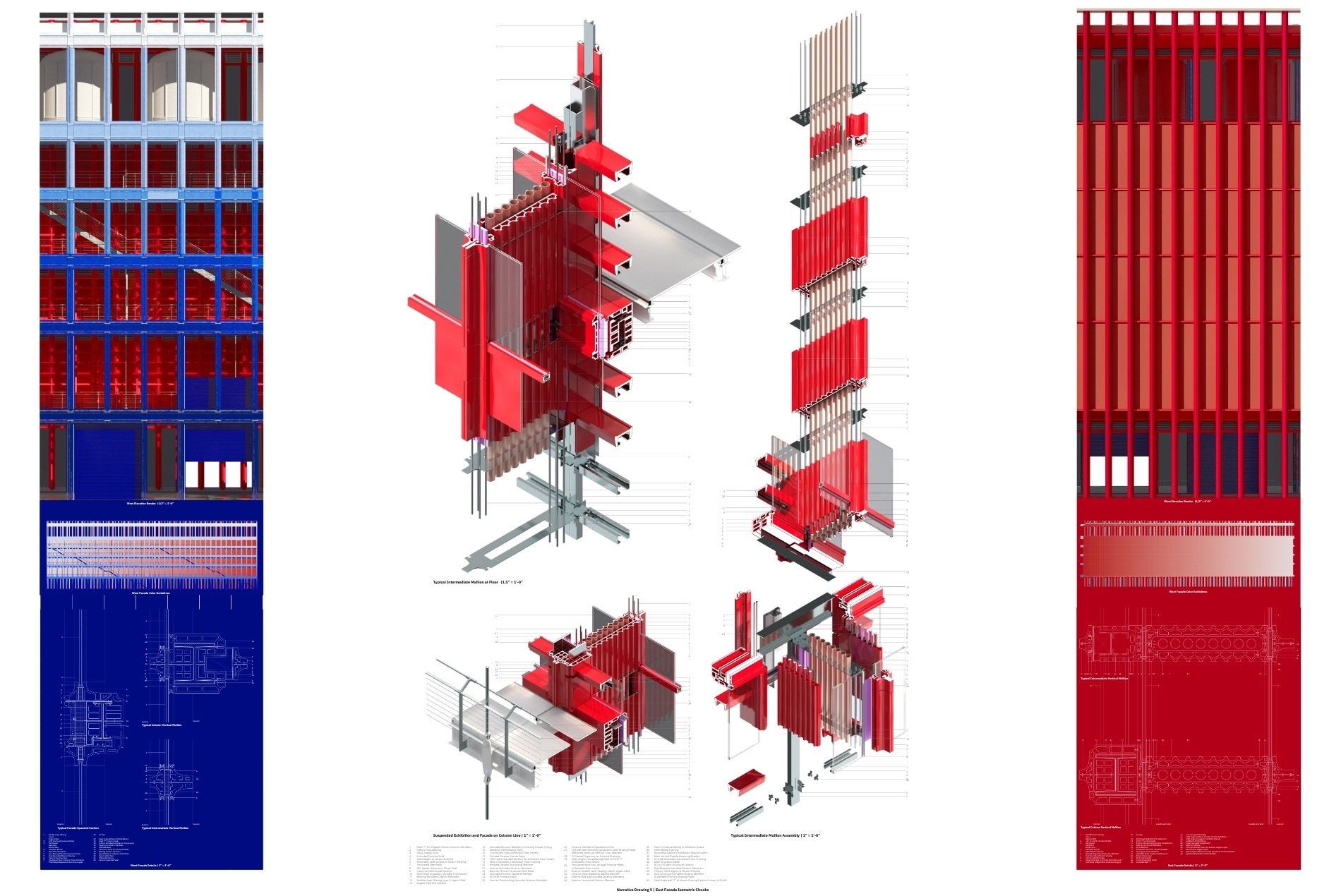
Below left: Student facade designs inspired by John Neary’s terra-cotta and stainless steel curtain wall research—terracotta compressive elements surrounding stainless steel tension rods—by Juinkye Chiang and A.J. Laucks

Below right: “The Structural Pleat,” a load-bearing terra-cotta wall built at the Architectural Ceramic Assemblies Workshop in Buffalo, N.Y.
Student facade designs inspired by John Neary’s terra-cotta and stainless steel curtain wall research—terracotta compressive elements surrounding stainless steel tension rods—by Juinkye Chiang and A.J. Laucks
“The Structural Pleat,” a load-bearing terra-cotta wall built at the Architectural Ceramic Assemblies Workshop in Buffalo, N.Y.
What Each Side Gets

“Syracuse helped make me the architect I am, so this partnership is personal,” said HOK Co-CEO Eli Hoisington. “What I wanted was for these students to work alongside our practitioners on real projects, the kind of experience that shaped me. Seeing that happen, and seeing what the students bring back to us, has been everything I hoped for and more.”

Syracuse is a real talent pipeline for HOK. Seventeen graduates of the School of Architecture work across the firm, from New York to San Francisco, Hoisington among them.

“Syracuse Architecture has deepened its relationship with HOK over the last several years in partnership with Eli Hoisington and brilliant teams of collaborators across the firm,” said Michael Speaks, dean of the School of Architecture. “Our students, led by Associate Professor and Undergraduate Program Chair Daekwon Park, have benefited enormously from working on real-world projects alongside HOK’s research, design and engineering experts. That exposure gives them not only the practical skills they’ll need after school but also a deeper understanding of design innovation and how to contribute to it. This kind of experiential learning is only possible when schools collaborate with world-class firms like HOK. We are enormously grateful for the opportunity and look forward to future collaborations.”

For Oliveira, recruiting high-performing students is a long-term benefit for the firm, but the nearer-term value is the exchange of ideas itself, which she sees as an important way to keep HOK relevant and innovative. Teaching has run through her career, and both her parents taught.

“More practitioners are needed in the classroom, because we bring a lens of reality to the work,” she said. “Students bring lofty ideals and research that stretch our collective minds toward things we don’t yet believe we can achieve, and architects bring those visions to reality in the field. The worst thing we could do as thought leaders is research and never apply that knowledge. If we continue to build the same way we did 30 years ago, we’ve missed that the world has changed—and that we must adapt with it.”

Your browser is out-of-date!

Update your browser to view this website correctly. Update my browser now

×