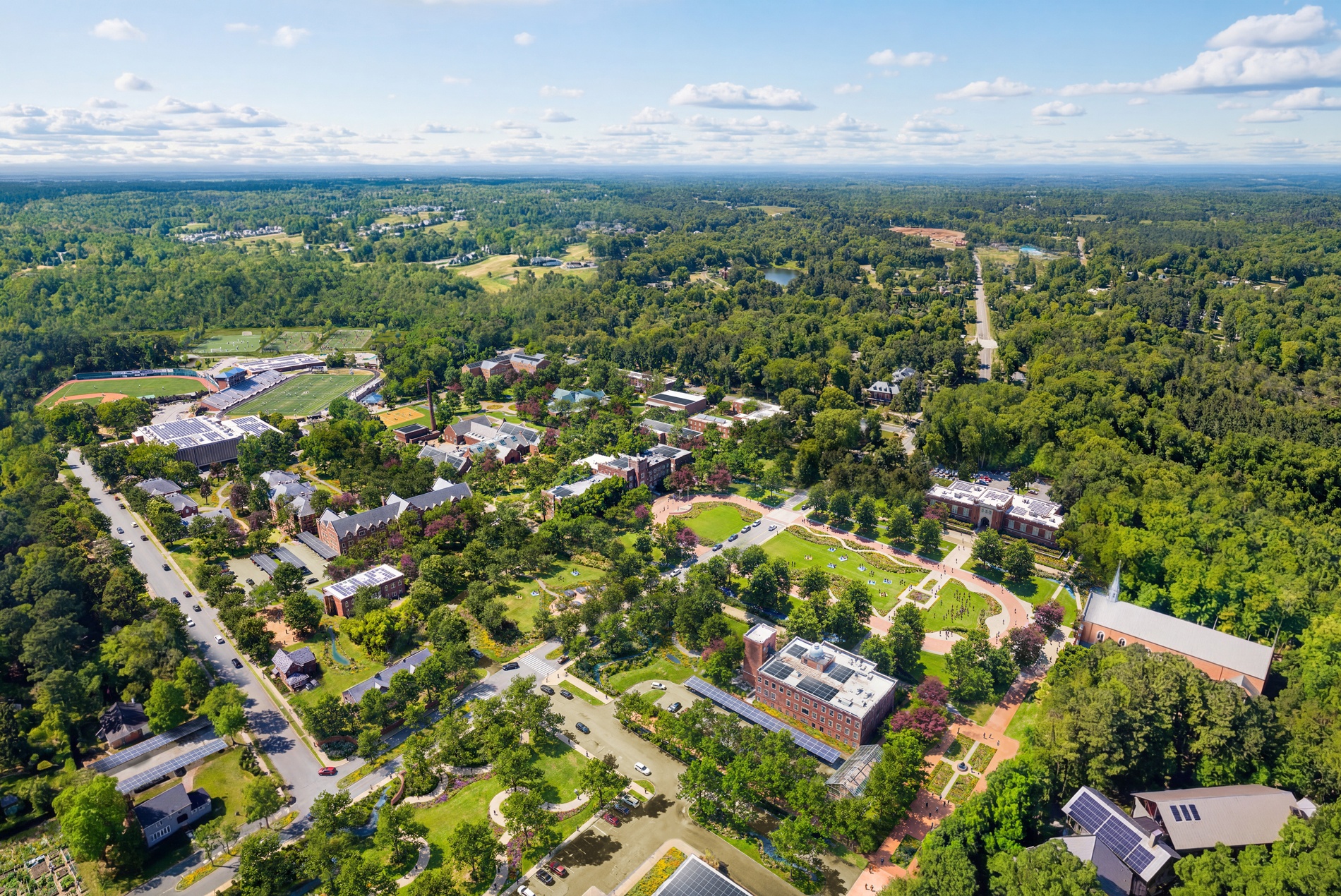
The North Carolina institution is charting a path beyond carbon neutrality toward a nature-positive campus that improves the health of people and the environment.
For years, colleges and universities have worked to reduce their carbon emissions. Catawba College is taking the next step: exploring how its campus can actively restore natural systems while enriching the lives of the people who learn, work and gather there.
Developed with HOK, Catawba College’s regenerative campus landscape plan is the first of its kind in higher education. The plan establishes a long-term framework for transforming the college’s 276-acre campus into a setting where ecological restoration, campus life and academic learning reinforce one another.
The plan looks beyond reducing the campus’s environmental impact to improving its health and resilience over time, with measurable goals for soil, water, air quality, biodiversity, human health and climate performance.
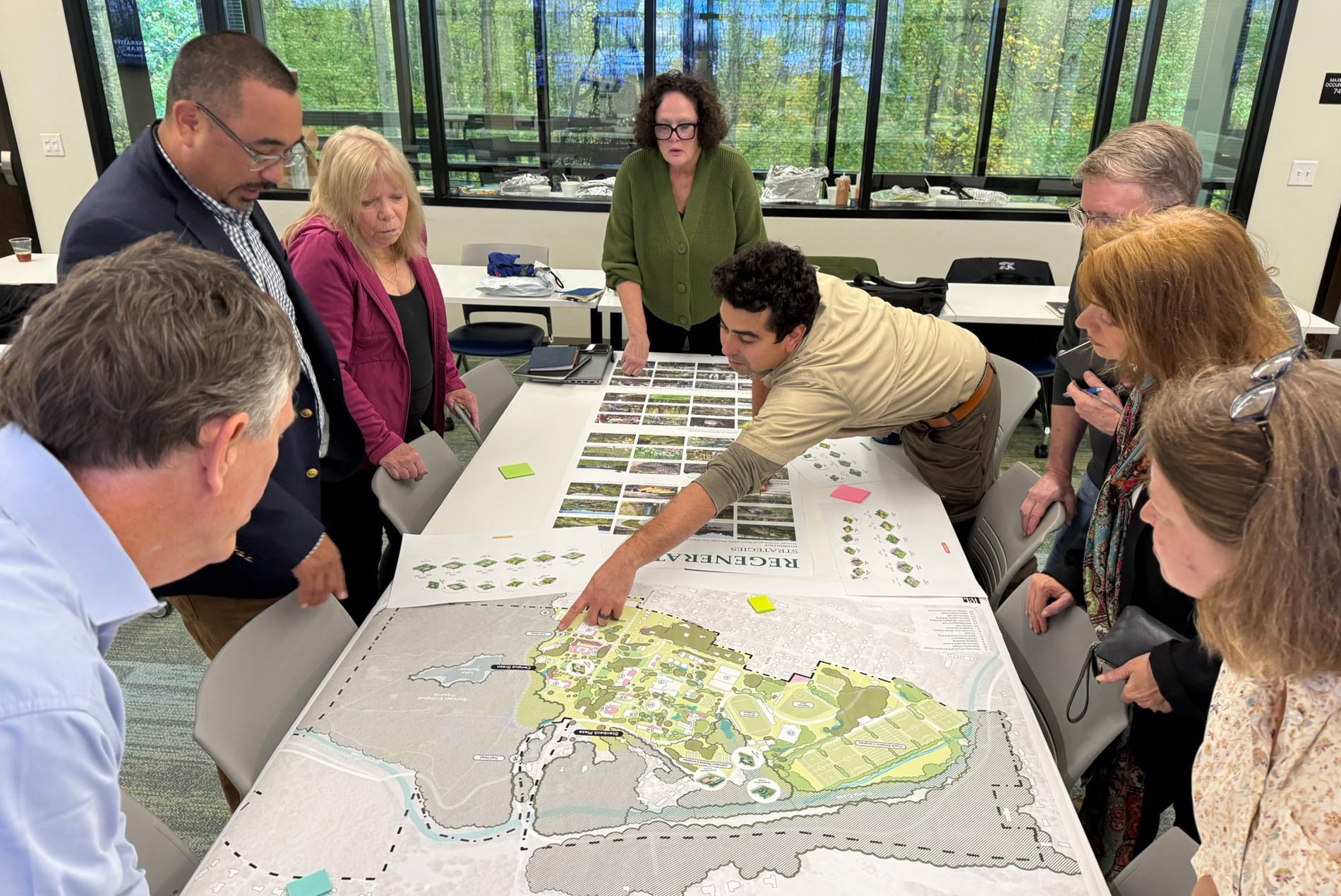
The Catawba College community participates in a visioning session in fall 2025.
Bringing the Campus as Forest Vision to Life
The regenerative campus landscape plan builds on Catawba’s decades-long commitment to environmental stewardship, most recently marked by the college achieving carbon neutrality in 2023.
Catawba’s Campus as Forest vision represents the next chapter in the college’s sustainability journey, reimagining how its campus can actively improve ecosystems, communities and relationships. The landscape plan offers a guide for turning that vision into reality, transitioning the campus from a collection of buildings, lawns and isolated sustainability projects to a cohesive living ecosystem. The design transforms the landscape into ecological infrastructure, a vital part of everyday campus life and a living laboratory for teaching and research.
“We are creating a regenerative model that showcases how integrated outdoor spaces can simultaneously support ecological and social communities,” said Lee Ball, executive director of Catawba College’s Center for the Environment. “Every student, staff and faculty member can meaningfully connect their individual disciplines to this work.”
The approach is rooted in the ecology of North Carolina’s Piedmont region and the campus’s Stanback Ecological Preserve. The plan seeks to extend the ecological functions of the preserve into the academic and athletic core, while extending campus life into the preserve through learning, research and environmental stewardship. Strategies include restoring native plant communities and hydrology, rewilding portions of the campus and expanding the existing tree canopy and habitat.
Students, faculty and local residents helped shape the plan through collaborative visioning workshops that reflect Catawba’s belief that the community should have an active role in the campus’s regenerative future.
“This plan grew from listening to the Catawba community and understanding the campus as a living system, where ecology, learning and everyday experience are interconnected,” said HOK’s Sean Quinn, HOK’s director of Regenerative Design. “Together, those perspectives created a first-of-its-kind regenerative roadmap for mutual support of both people and nature.”
Over time, the campus itself will become a hands-on living laboratory, allowing academic disciplines to engage with the landscape in different ways and giving students opportunities to experience regenerative design firsthand.
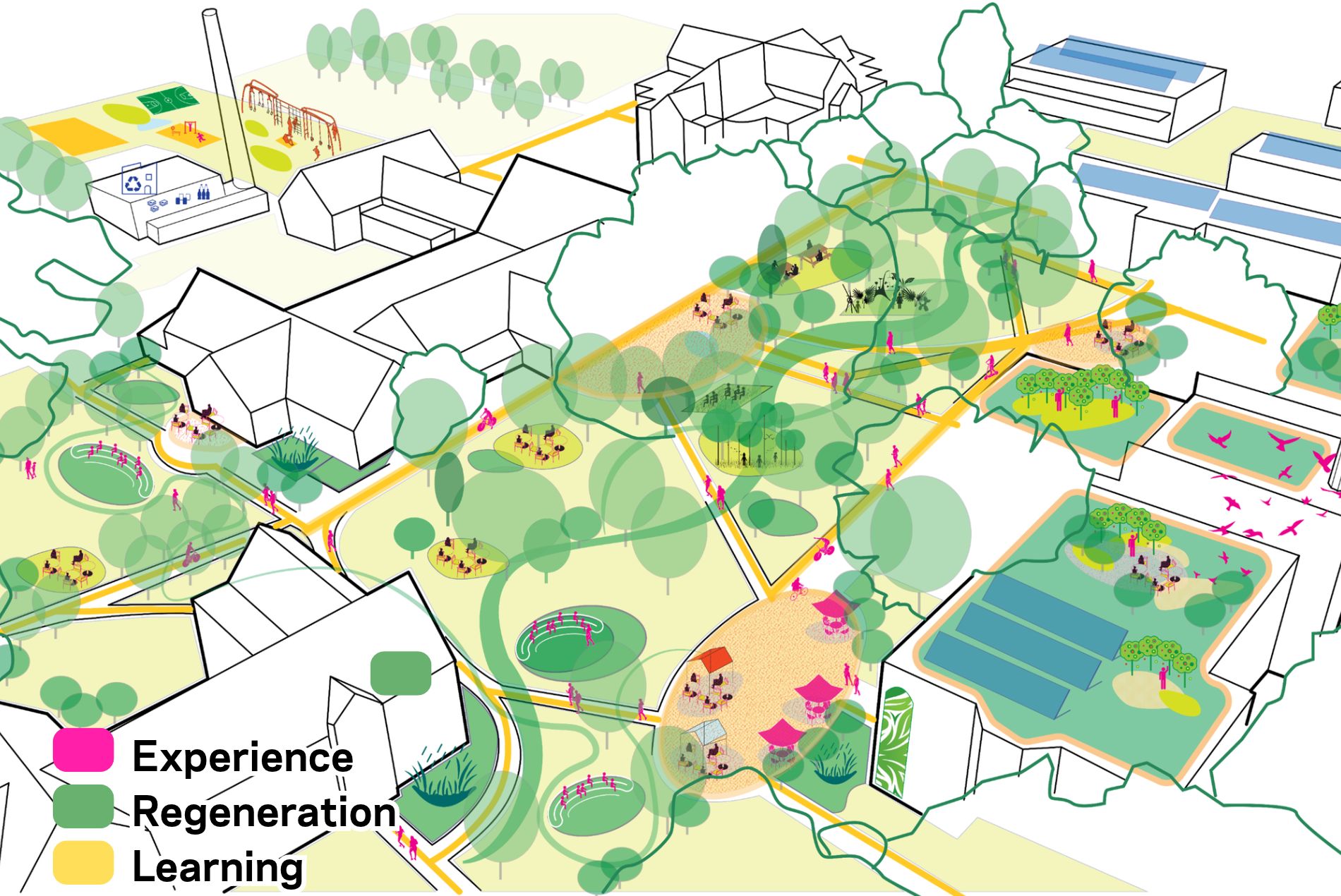
Catawba College’s landscape plan layers in three frameworks: experience, regeneration and learning.
Connecting Experience, Regeneration and Learning
The plan organizes this work through three interconnected frameworks:
- Experience considers how people move through and use the campus. The proposed Catawba Canopy would connect academic, residential and social destinations through accessible promenades, gardens, forests, outdoor classrooms and research spaces while linking the college to the regional greenway.
- Regeneration focuses on restoring the natural systems that support campus life. Native plantings, expanded habitat, improved water management and healthier soils would help the landscape perform more like the region’s forests.
- Learning integrates ecological systems into teaching, research and stewardship opportunities. Outdoor classrooms, monitoring stations and other research environments would allow students and faculty to observe change, test ideas and participate directly in the campus’s regeneration.
Together, the frameworks are intended to ensure that ecological improvements also create meaningful places for gathering, recreation, well-being and education.
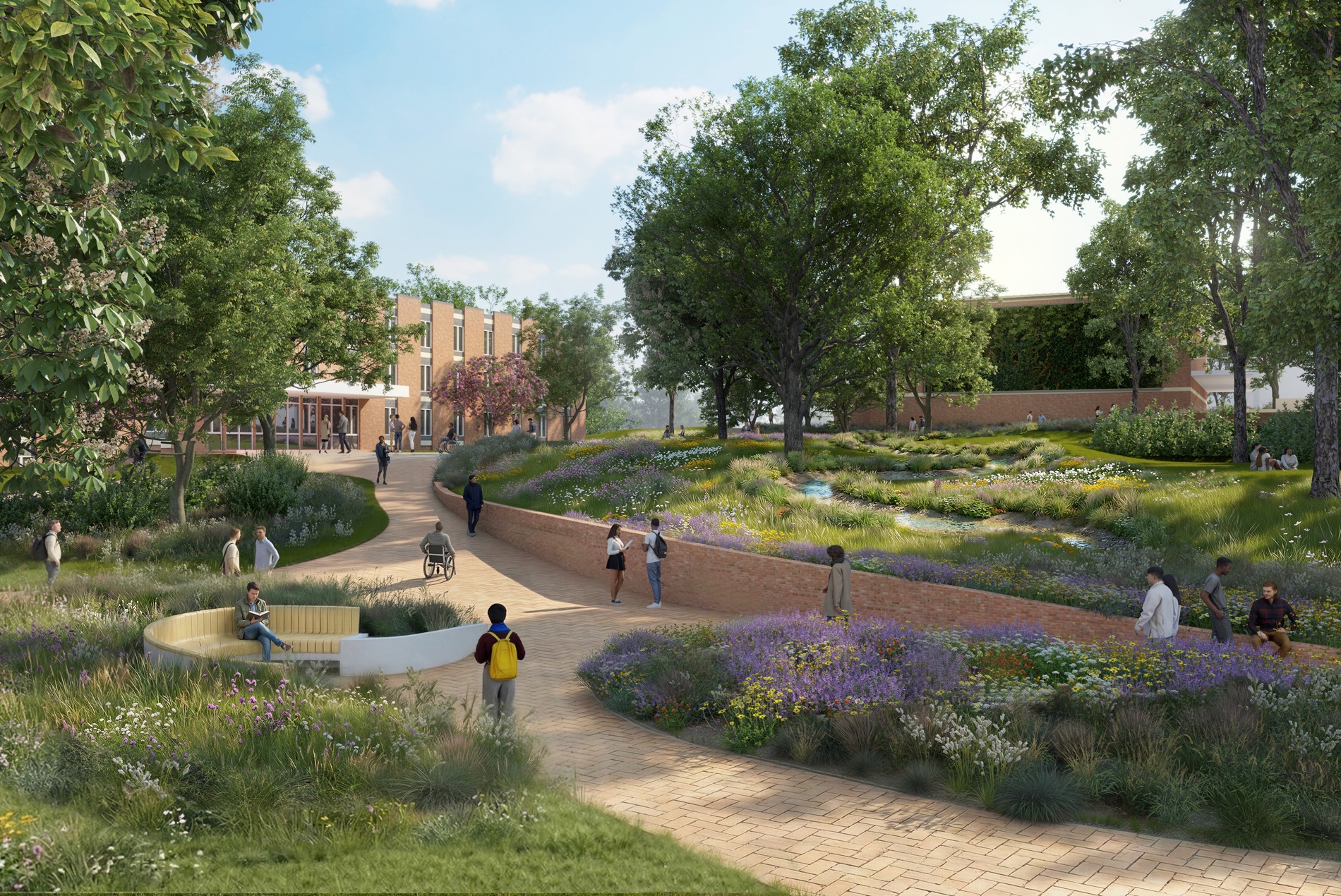
The regenerative campus landscape plan promotes accessibility and inclusion with the expansion of the native tree canopy and understory.
The plan envisions multiple new and improved campus destinations that put the frameworks into practice. For example:
- A new outdoor amphitheater would create a gathering place for artistic expression and learning, with native plantings, sculpted landforms and integrated water management prevent erosion and restore the grounds.
- A nature-rich landscape would knit together campus residence halls through community gardens, native plantings, rewilded understories and shaded courtyards where students can socialize, study, relax and recreate.
- An immersive campground along Grants Creek on the north end of campus would give the Catawba community a place to learn about and practice environmental stewardship.
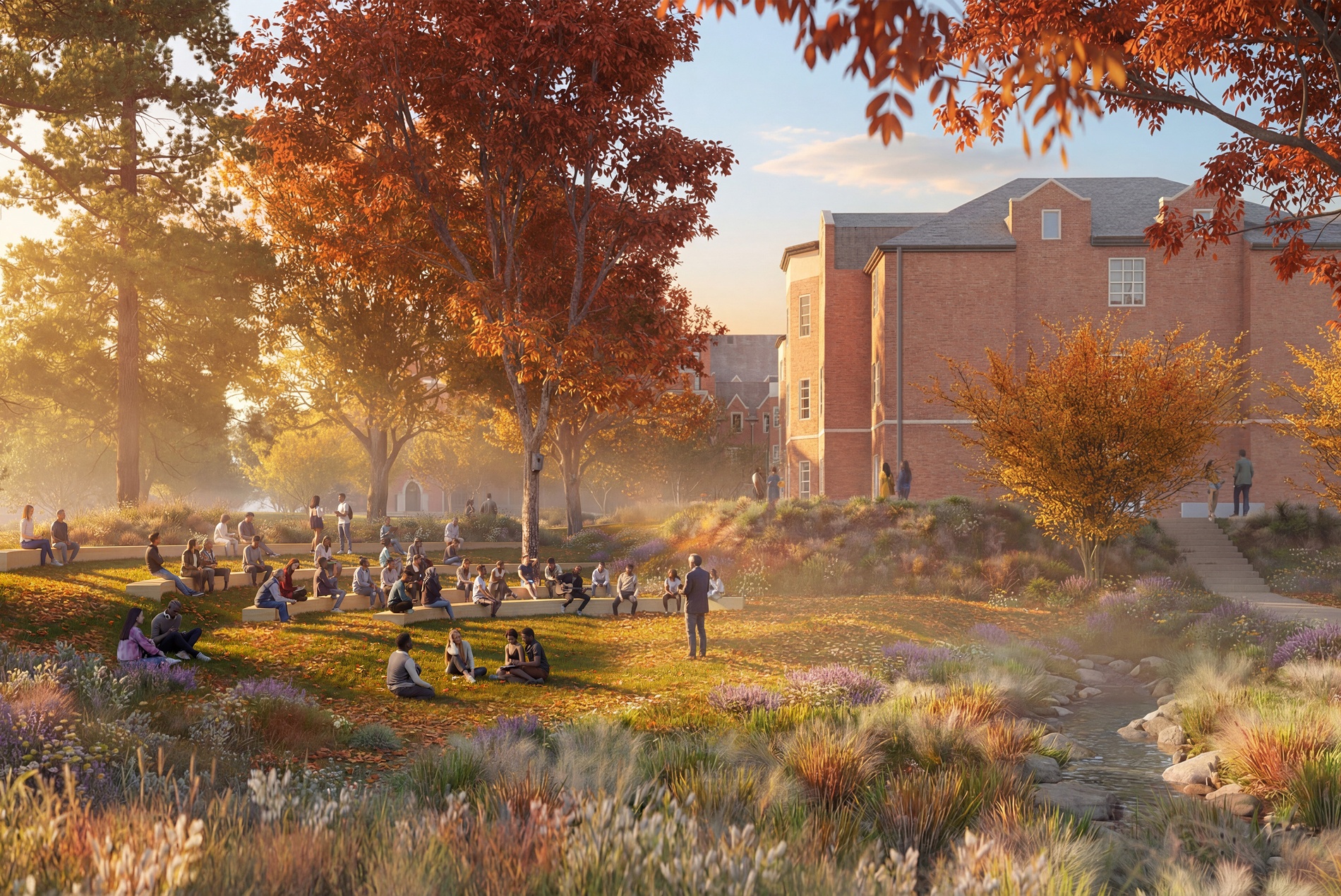
A new outdoor amphitheater would provide Catawba students with connections to nature while restoring the campus ecology.
Measuring Progress Toward a Nature-Positive Campus
A distinguishing feature of Catawba’s plan is that it gives the college a way to measure its progress toward regeneration.
Ecosystem-service analysis conducted during planning established science-based benchmarks for evaluating how well the campus provides the benefits of a healthy ecosystem, from clean air and water and healthy soils to biodiversity, human health and climate resilience. As the plan unfolds, comparing past, present and modeled future conditions will allow Catawba to gauge how its campus performs as compared to a healthy temperate broadleaf forest.
This framework forms a regenerative design roadmap, turning regeneration from an aspiration into a measurable pathway toward a healthier, more resilient and nature-positive campus.
HOK led regenerative design, campus planning and landscape design in collaboration with EcoMetrix Solutions Group for ecosystem-service analysis and Biomimicry 3.8 for ecological strategy.
Implementation of the plan will take place in phases, beginning with pilot projects and continuing through Catawba’s 2051 bicentennial as a more robust campus canopy takes root and expands.
Download: Catawba College’s Regenerative Campus Landscape Plan (Executive Summary)