Projects in Memphis and Chattanooga will expand learning and simulation spaces for future physicians, physician assistants and nurses.
HOK is designing two new health education buildings for the University of Tennessee System, one at the University of Tennessee Health Sciences in Memphis and the other at the University of Tennessee at Chattanooga.
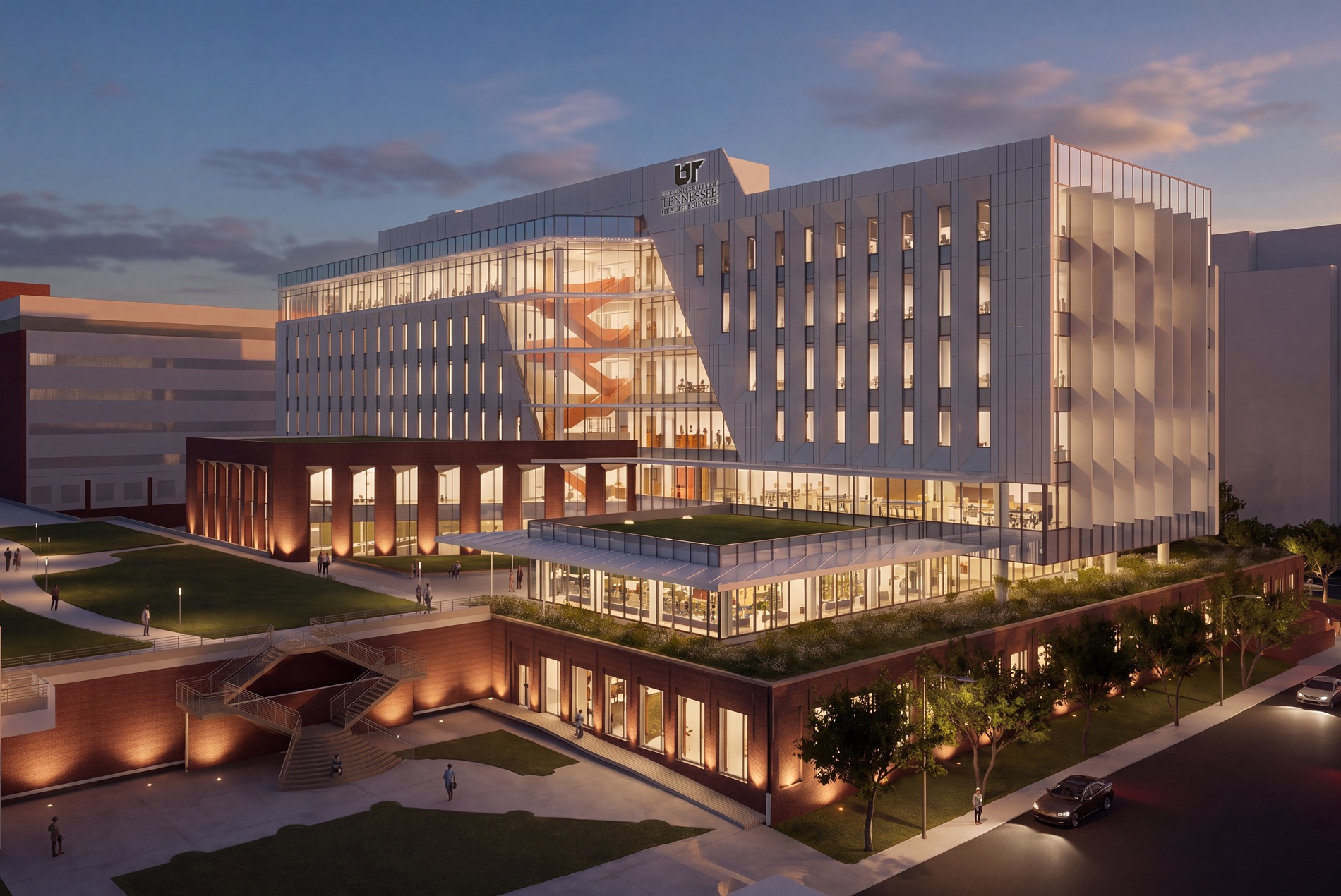
The College of Medicine Interdisciplinary Building in Memphis (above) will provide a new home for medical and physician assistant cohorts while fostering collaboration among future healthcare professionals. The Dorothy and Jim Kennedy Health Sciences Building in Chattanooga will become the new home of the College of Nursing.
“Health education is moving from passive instruction to active, experiential learning,” said Ami Shah, HOK’s health education practice leader. “These buildings will give students more opportunities to practice their skills, make decisions, work across disciplines and learn from their performance before they enter clinical settings.”
College of Medicine Interdisciplinary Building in Memphis
The seven-story, 300,000-sq.-ft. College of Medicine Interdisciplinary Building will be the first true home for the College of Medicine, the largest of UT Health Sciences’ six colleges. Medical students will begin their foundational training there before going on to complete their education in Memphis, Chattanooga, Knoxville or Nashville. The project will replace outdated facilities on the Memphis campus.
HOK conducted a strategic space inventory of the campus, programmed the building and is leading the design in collaboration with Memphis-based brg3s architects.
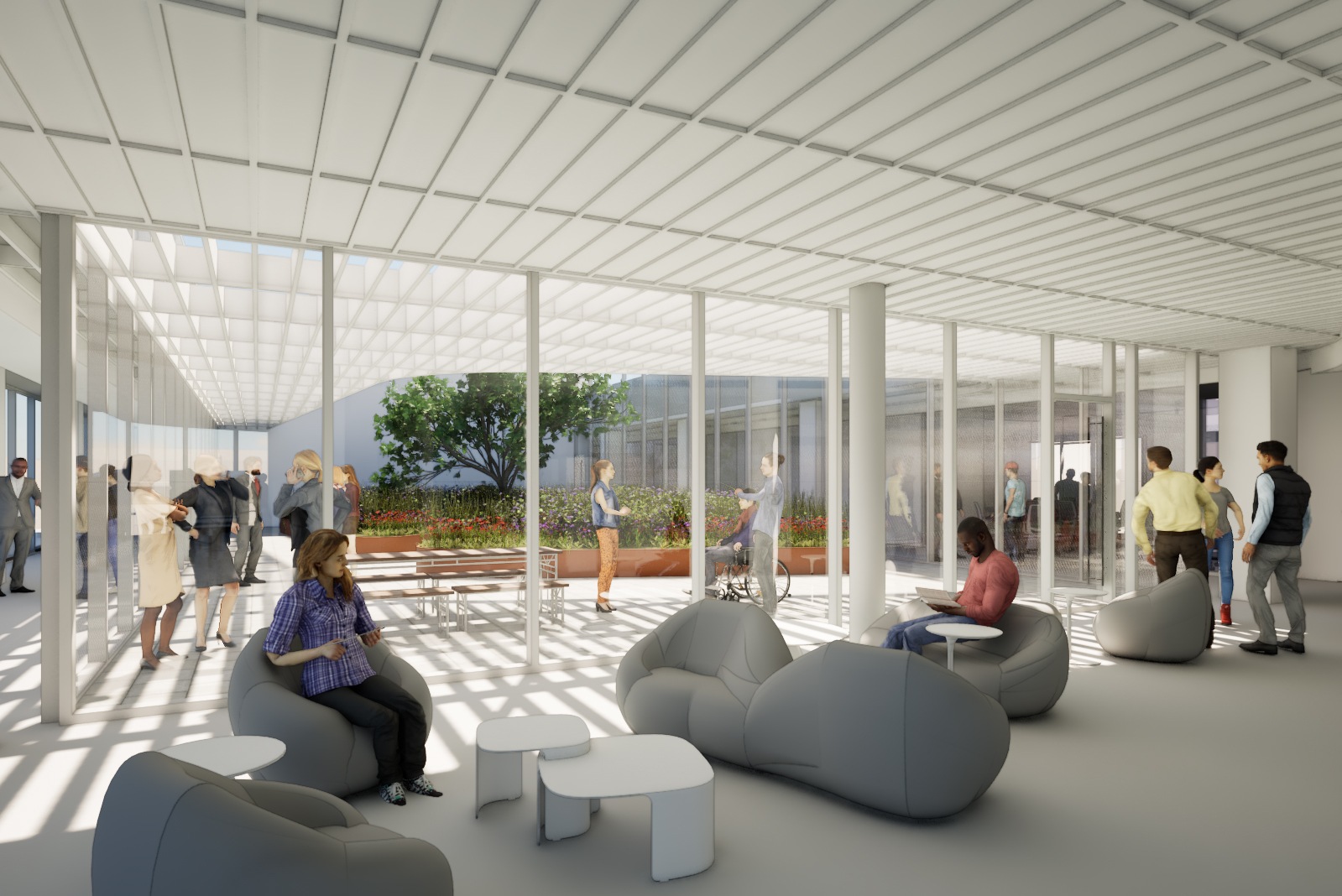
The project will include flexible academic and support spaces, an interdisciplinary commons, specialty simulation areas, a health incubator and dedicated spaces for digital health, technology innovation and external partnerships. A rooftop greenspace, event terrace, sky cloister and other student gathering spaces will give students unique places to study and connect.
The building also will support research, telehealth and online education. It will help UT Health Sciences address rural healthcare needs and reach students across Tennessee.
The added capacity will allow the medical school to expand its medicine class from 175 to 250 students per cohort and the Physician Assistant Program from 30 to 60 students annually. UT Health Sciences expects the building to enable the university to graduate an additional 1,450 healthcare professionals during its first five years.
“This is a transformative step for UT Health Sciences, as well as for health and health care of the people of Tennessee,” said Peter Buckley, MD, chancellor of UT Health Sciences. “We are grateful to Gov. Bill Lee and the General Assembly for their extraordinary support of our university and our statewide vision of Healthy Tennesseans. Thriving Communities.”
The Tennessee General Assembly appropriated $311 million for construction of the $350 million building. Construction is expected to begin in late 2026, with substantial completion anticipated in 2029 and full occupancy by 2030.
Dorothy and Jim Kennedy Health Sciences Building in Chattanooga
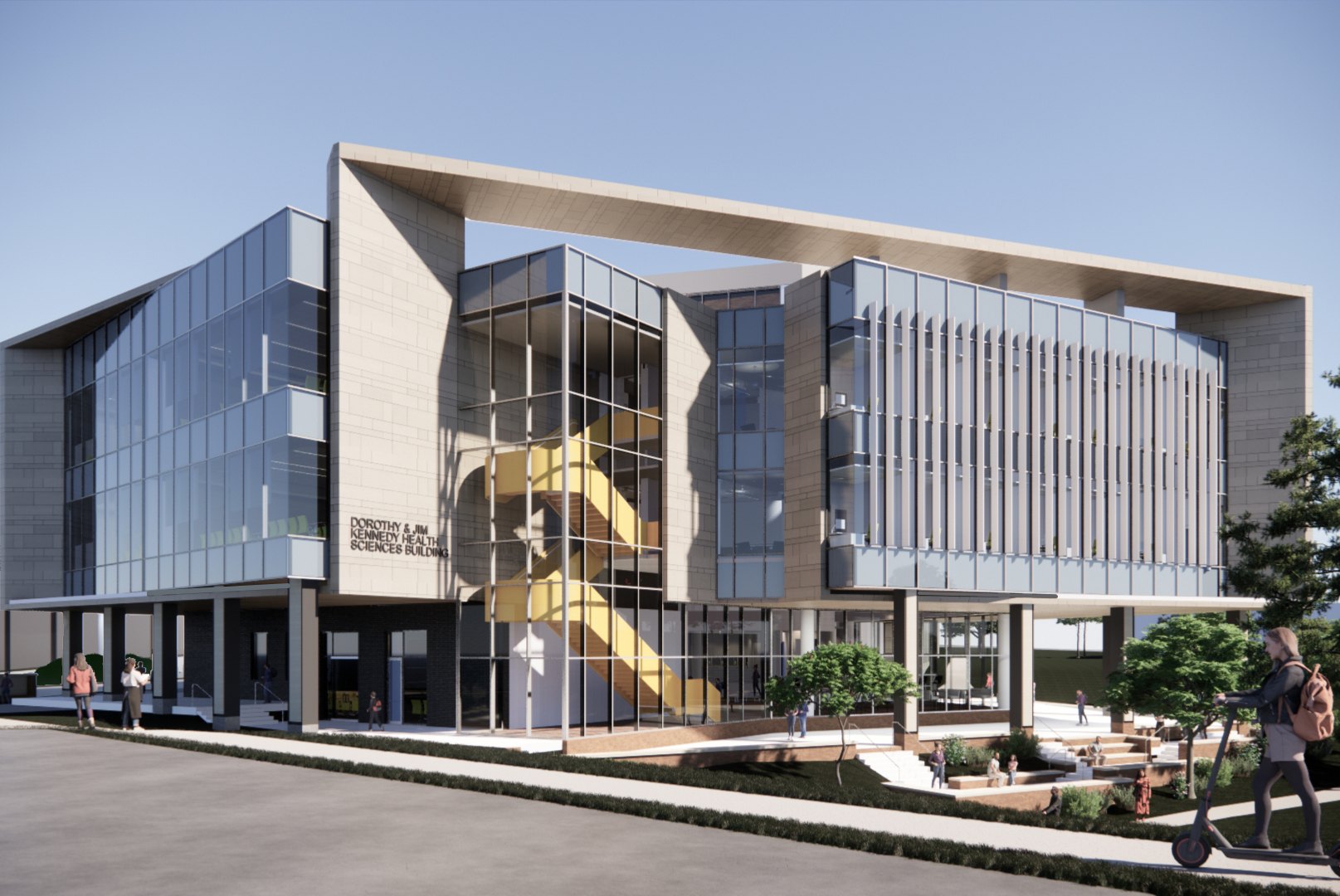 Designed by HOK in partnership with franklin|architects, the three-story, 90,000-sq.-ft. Dorothy and Jim Kennedy Health Sciences Building will expand the College of Nursing’s capacity for classroom instruction, clinical training and simulation. The Christman Company is the builder.
The building supports nursing education’s shift toward competency-based learning, which focuses on what students demonstrate they can do rather than hours spent in class.
The design includes flexible classrooms, standardized patient exam rooms, task-training spaces and simulated intensive care, emergency care and labor-and-delivery environments. Some classrooms can accommodate a stretcher or mannequin for procedural practice. Students and educators can use debriefing rooms to review recorded simulations and talk through the students’ decisions. A central atrium will serve as a gathering and study space.
“We focus on what students can do in practice rather than how many hours they spend in a class or skills lab,” said Chris Smith, dean of the UTC College of Nursing. “It emphasizes observable performance and allows the person who is hiring that student to actually understand how competent the individual is.”
The $77 million Kennedy Health Sciences Building broke ground in November 2024, topped out in April 2026 and is scheduled for completion in 2027.