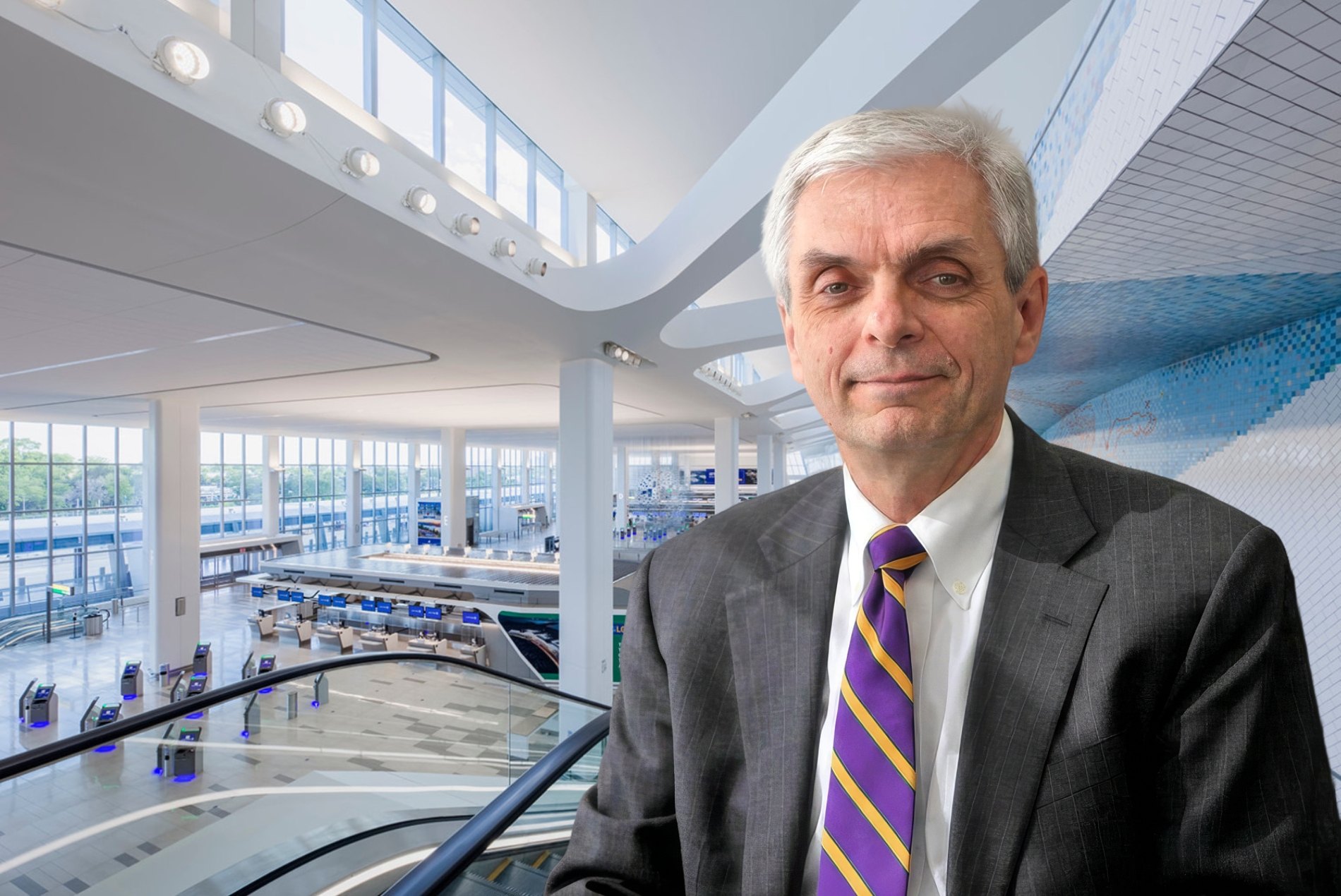
For nearly five decades, HOK’s president has been quietly shaping the city he grew up in: its airports, its towers, its hospitals. Now he’s helping reimagine Penn Station.
When Carl Galioto was a small boy, his grandmother—a garment worker near Washington Square—would take him uptown to Rockefeller Center for lunch at the automat, dropping coins into a slot and lifting food from behind a small glass door. He remembers it as a day out. What stayed with him were the buildings and the way they seemed to speak to him, of nobility, of equality, of optimism. He came away certain that buildings could change how a person feels, and wondering whether he might one day build one that did.
He has spent the rest of his life trying.
Galioto, FAIA, is the president of HOK and managing principal of its New York studio. Born in Brooklyn and trained at Pratt Institute, he grew up in Queens under the LaGuardia flight path, in a house close enough that the china cabinet rattled when the planes came in low, and he learned to tell the aircraft apart by their tail markings. His great-grandfathers had arrived from Sicily and Naples with nothing, and worked as laborers building the subways. Now, four generations on, he is helping reimagine the station above the tunnels their generation dug.
Galioto came into his twenties in the New York of the 1970s. This was the city of “The Bronx is Burning,” the 1977 blackout, the Deuce and the Minnesota Strip. It was the New York that Pete Hamill, one of his favorite authors, spent a lifetime chronicling—teetering on bankruptcy, its subway barely functioning. Galioto was angry about what the city had become and decided, he says, that he would do his part, however small, to bring it back.
We spoke with him in HOK’s New York studio, overlooking Bryant Park, on a humid June morning.
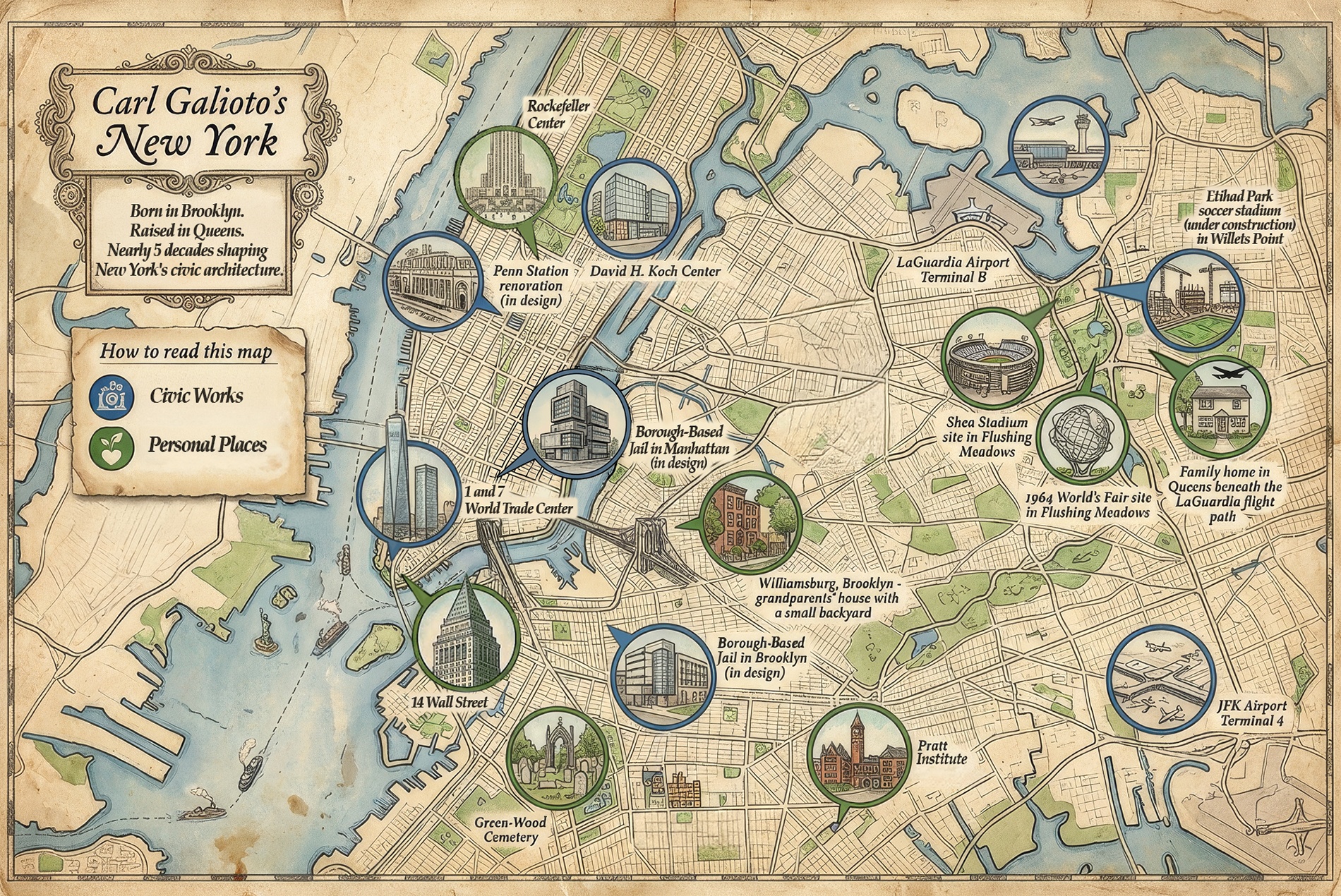
Carl Galioto’s New York. The places that shaped him. The projects he has shaped.
When did you know you wanted to be an architect?
I wanted to be an architect before I knew what an architect was. The backyard of my grandparents’ house in Williamsburg was an oddly shaped little patch, and I had an affection for it: its intimacy, its privacy, the way the volumes of the surrounding homes and a warehouse formed the back wall of the yard. It felt like one of the old jewel-box ballparks. I was six or seven, and I’d assemble structures there from whatever materials were at hand and dream about how I might change the buildings that faced it. Different shapes, sizes, colors.
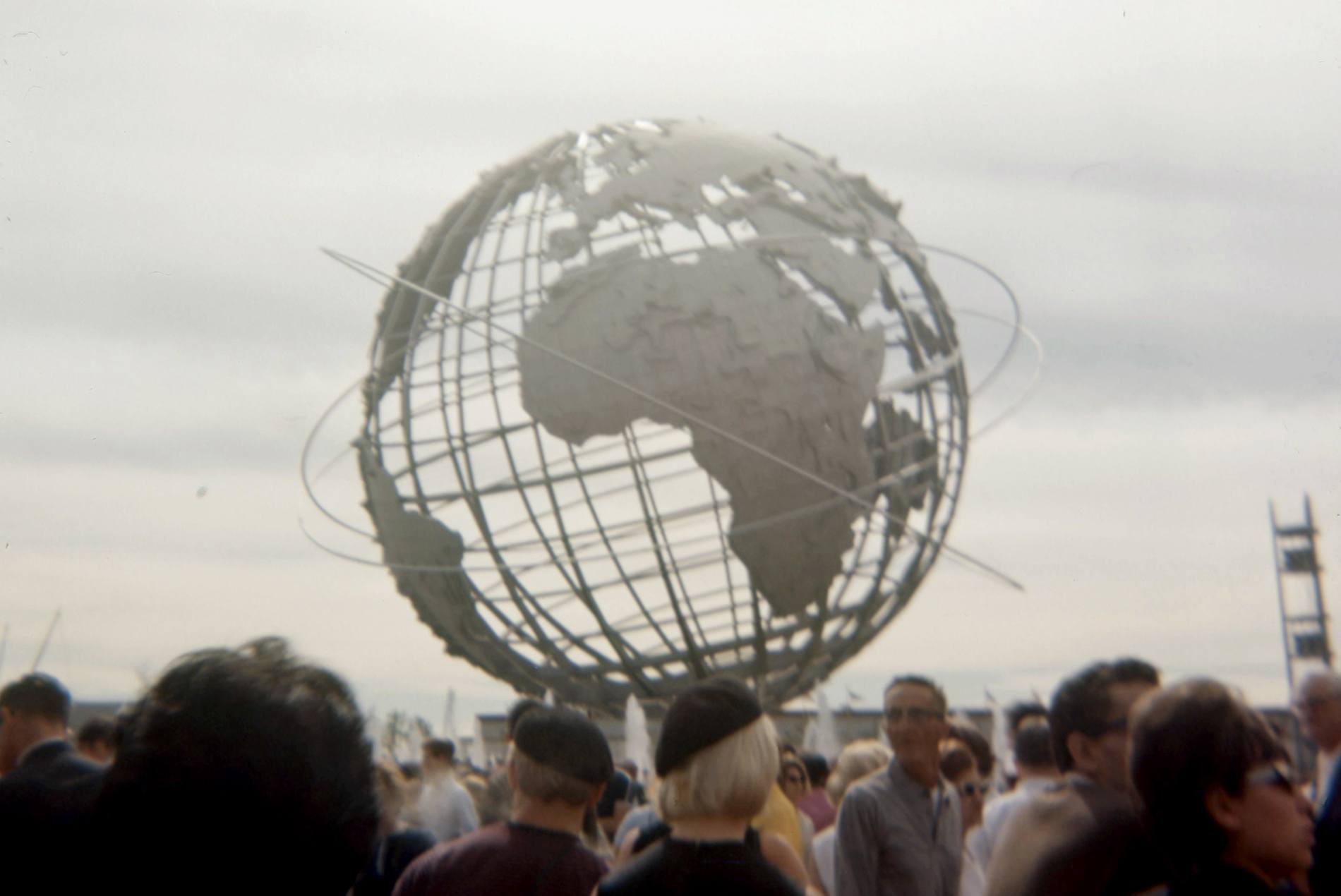
The Unisphere at the 1964 New York World’s Fair in Flushing Meadows, Queens—built a few blocks from Galioto’s boyhood home. (Photo: Dada1960 / Wikimedia Commons, CC BY-SA 4.0)
By the time I was 10, the World’s Fair was being built a few blocks from our house in Queens. I’d hear the piledrivers all day, deep piles, because the site was swampy. I kept a notebook of fanciful pavilions I thought were better than the ones being built. Around the same time, I had a baseball book with the layouts of all the old ballparks, like Forbes Field and Connie Mack Stadium. I’d lay tracing paper over them and redesign them.
My family didn’t exactly know what an architect was. I think they pictured the character from Mr. Blandings Builds His Dream House, tweed jacket, pipe. But I knew they expected me to become a professional. Doctor, priest, engineer, architect. Architect counted.
You spent a lot of time at Rockefeller Center as a kid. What was it about those buildings?
The RCA Building, the skating rink: they made me feel differently than I felt anywhere else. There was a sense of nobility, and a sense that even someone of modest means, someone like me, was welcome inside it. It was open to everyone. I wondered if I could ever make people feel that way.
You used to watch planes land at the old terminals at Idlewild and LaGuardia. What did your work on JFK Terminal 4 teach you about arrival?
My father and my uncle would take me to the observation decks at Idlewild, now JFK, and at LaGuardia, to watch the planes come in. I loved it. The irony is that I’m partially responsible for the demolition of both of those buildings. Over the years, I’ve worked on major projects at all three of the region’s airports: JFK, LaGuardia and Newark.
What JFK Terminal 4 taught me is that the arrival sequence at an airport should be ceremonial. In most airports, you depart in a ceremonial space and arrive in the basement. There’s something inherently wrong about that. At Terminal 4, which when it opened was primarily international, we created a space that had the ceremony of waiting, of greeting people, something special, not just arriving in the basement.
You were at 14 Wall Street on 9/11. Take me to that morning.
It was a Tuesday, so we had our partners’ meeting. We were in the middle of some banal discussion in an interior conference room, and suddenly the doors rattled. We didn’t know what it was. We walked out and looked through the windows. There were papers fluttering past the glass. Someone came in and said a plane had hit the World Trade Center.
We had a direct view of it all, right from our windows. The memories of that day will stay with me as long as I live.
You walked home through the dust to Brooklyn. When did you know you had to work on rebuilding downtown?
I walked from Wall Street into Brooklyn, as far as Green-Wood Cemetery. I was living in Bay Ridge then. I was wearing a dark pinstripe suit—very similar to the one I’m wearing now. By the end of the walk, my hair, my shoulders, everything was covered in dust. I trudged like a refugee, with an army of other people, over the Brooklyn Bridge.
There was a section where a tall fence blocked the walkway, and a woman couldn’t get over it. I told her not to worry. I lifted her up over my head, and a man on the other side leaned over and scooped her down. Then I climbed up and jumped over the fence myself, with an agility I didn’t know I had.
The moment I knew was a few days later, on the ferry back into Manhattan. Subway service was severely limited, so I took the boat from Brooklyn. Standing at the front as it approached the horribly disfigured skyline, I knew I would do everything I could to rebuild downtown. To make it beautiful again and to protect the people who worked there.
After 9/11, you sat down with the Fire Department, and you later led a delegation that rewrote New York City’s building code. Why was that the architect’s job?
It was incredibly fortunate that we were already working for Larry Silverstein, studying the existing buildings for upgrades. When we began on the new towers, public confidence in high-rise buildings needed to be restored. People were genuinely terrified.
I was given access to the investigation reports, and because of the loss of life among first responders, I dove into manuals on high-rise firefighting and books on human behavior in stairs during emergencies. I read the books Vincent Dunn, a former FDNY chief, had written on high-rise fires, so I could at least speak a little of the language. Then I met with representatives from the Fire Department, and I asked them: “You are my client. What do you need to do your job more effectively and safely?” They looked surprised. I don’t think they’d heard an architect speak that way.
The result, at One and Seven World Trade Center, was wider stairs designed for both ergonomics and counterflow by first responders. Redundant systems. Fire Service Elevators. I was asked later if I thought One World Trade Center was safe. I said I thought it was so safe that I would be comfortable if both my daughters worked there.
The code work came out of the same instinct. New York’s building code had been written in the 1960s, and it was out of touch. I led a delegation from AIA New York to meet with the buildings commissioner, Patricia Lancaster, and at first, she thought we were a little crazy. But we convinced her that New York deserved a better code, a bespoke version of a nationally accepted code that incorporated what we’d learned. The new code was signed into law by Mayor Bloomberg.
I came out of it understanding the architect’s role differently. The ultimate client is the public. I worked on those towers on behalf of New York City, not only the firm that paid the invoice.
NewYork-Presbyterian’s Koch Center is a hospital. Why call it civic architecture?
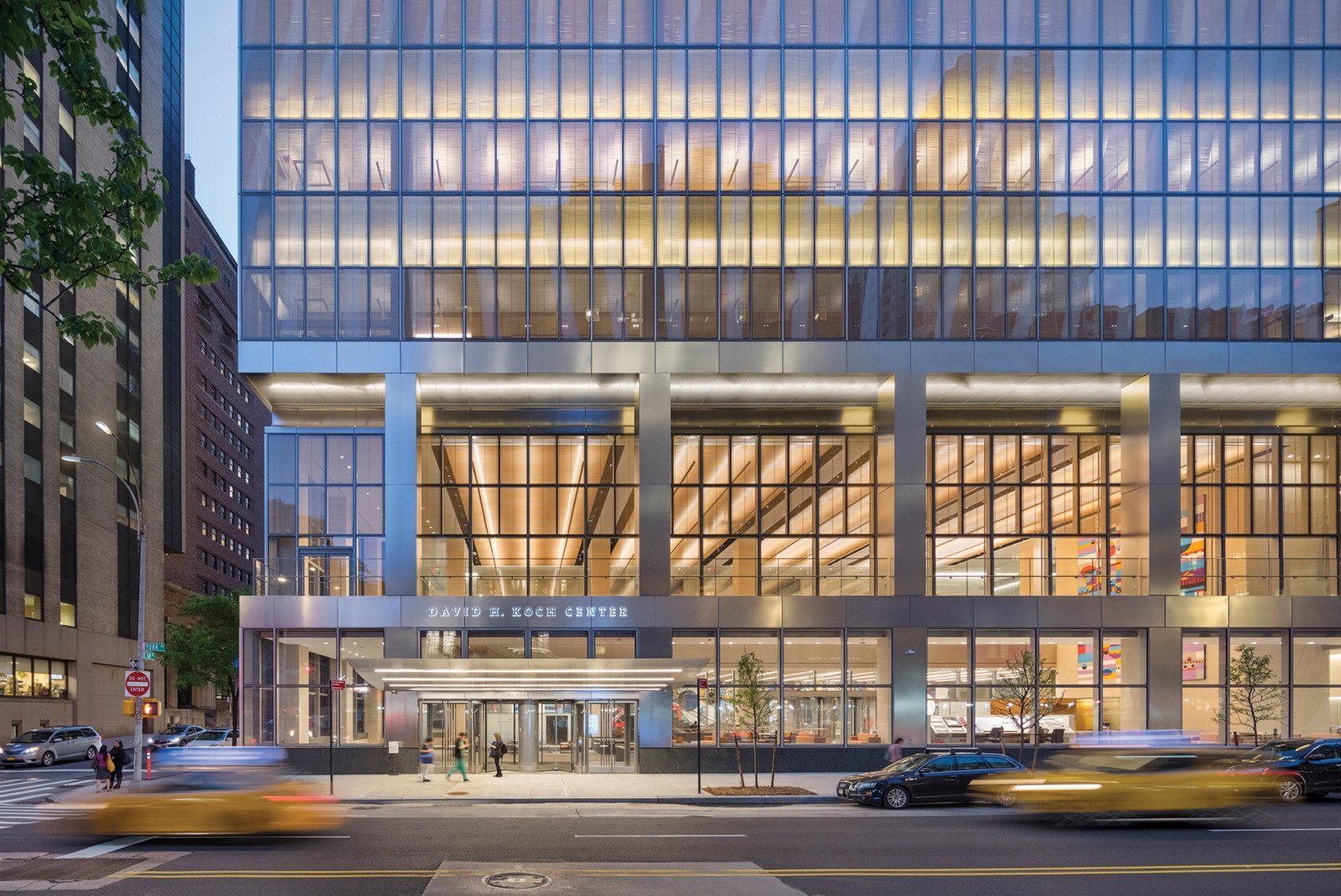
NewYork-Presbyterian’s David H. Koch Center on the Upper East Side. “A hospital should communicate to the people walking in that they are entering somewhere of substance,” Galioto says.
Because it is one. Healthcare isn’t often seen that way, but to someone walking in as a patient or a family member, a hospital is one of the most important buildings in a community. It’s not a freestanding box. It has a presence.
The primary mission is healing. But beyond that, there has to be an expression of welcome, and a sense of importance, even ceremony, in those spaces. Much like the feeling I had at Rockefeller Center as a child, a hospital should communicate to the people walking in that they are entering somewhere of substance, somewhere that takes them seriously.
HOK is designing Etihad Park, New York’s first soccer-specific stadium in Willets Point—near where you grew up in Queens. Why are sports venues civic architecture?
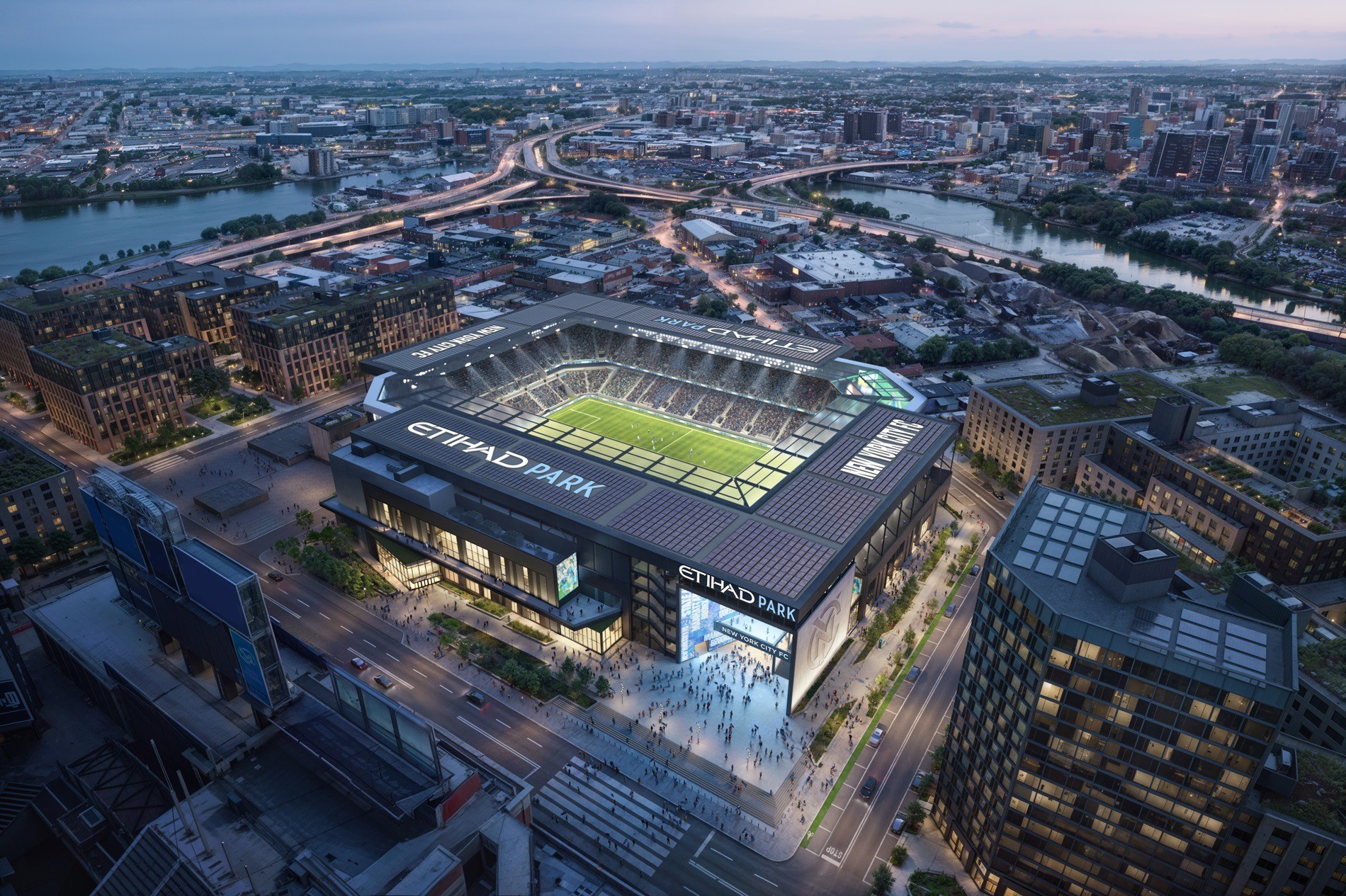
A rendering of Etihad Park, New York City FC’s future home in Willets Point, Queens—rising on a site Galioto knew as a kid as one of the city’s last industrial wastelands. The stadium will open for the 2027 MLS season.
At our interview for that project, I told the story of walking to baseball games at Shea Stadium, about a mile from my house, and crossing the Roosevelt Avenue Bridge over mountains of junked cars, old Long Island Rail Road siding cars waiting to be scrapped, abandoned coal bunkers. It wasn’t far from F. Scott Fitzgerald’s Valley of Ashes. One of those cars was mine, a Ford Falcon, a real hunk of junk that finally gave up. We pushed it into the junkyard right there, on the site where Etihad Park is now being built.
I look at urban sites as what they are, what they have been and what they could become. The Valley of Ashes became the Iron Triangle, and the Iron Triangle wasn’t everything that site could be. Now it’s becoming a new neighborhood of affordable housing, with a stadium at its center.
Sports facilities and airports are the cathedrals of today. What cathedrals were to the cities of the Middle Ages, our stadiums and our airports are to the cities of now. To be a part of building one in my home borough, on a piece of ground I knew as a kid, that’s meaningful to me.
HOK is designing two of the four jails replacing Rikers: one in Brooklyn and another in Manhattan. Why take that work on, and what does dignity by design actually look like inside one of those buildings?
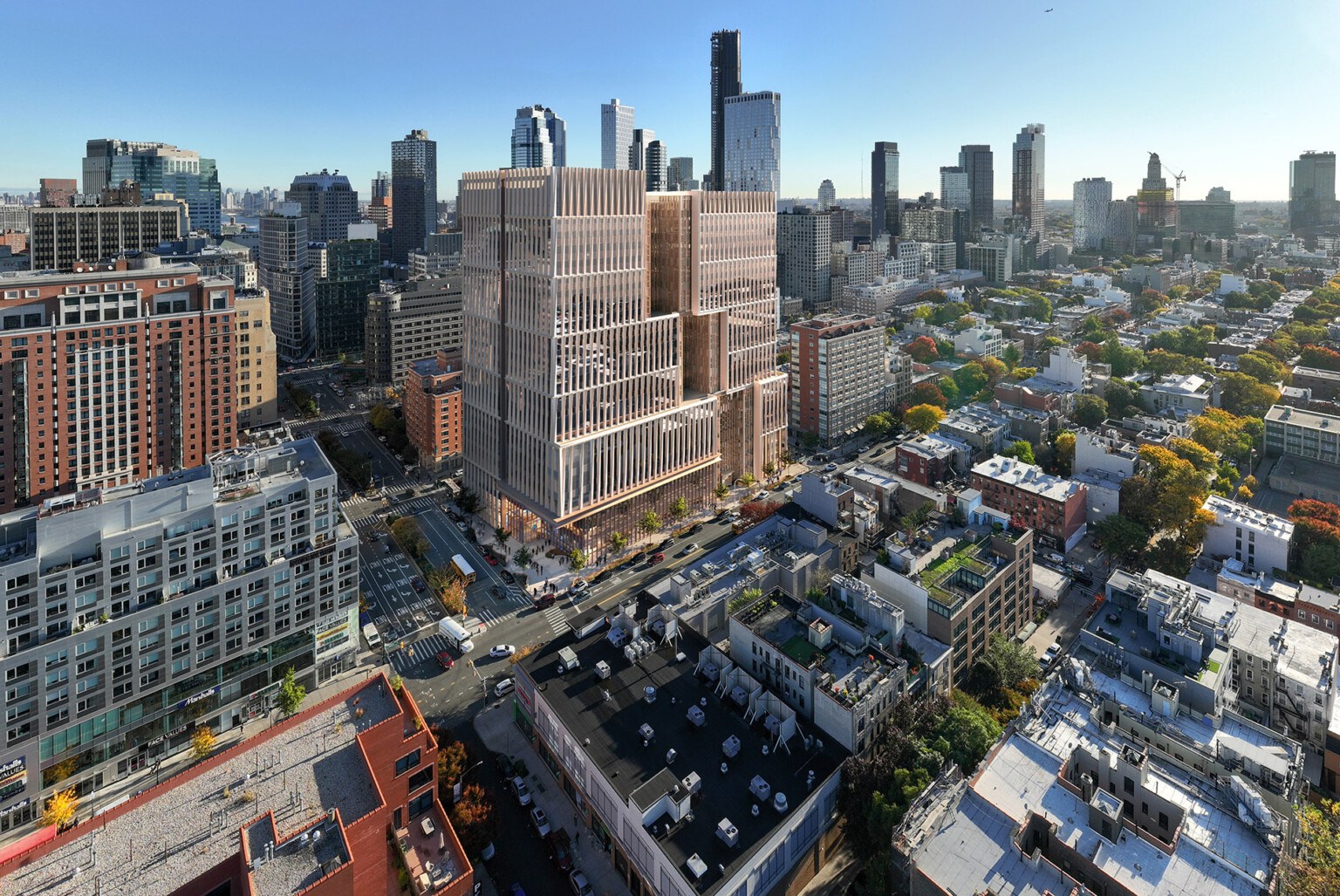
A rendering of the Brooklyn Borough-Based Jail, designed under a vision the team calls “sculpted by light.” The project is “a chance to contribute to changing the justice system in this city into something more humane,” Galioto says.
The architecture community in New York used to turn its nose up at projects like this. I once did too. But the more I learned about this program, the more I understood it as too important to walk away from.
Rikers Island is a place of horrors. Its isolation affects everyone: the people in custody, the corrections officers, and especially the families. A visit means multiple buses and subways across a causeway to a godforsaken island in the middle of the East River. A court appearance means being put on a Department of Corrections bus, driven into Brooklyn or Manhattan, reincarcerated for the day, then driven back. It’s brutal and it’s wasteful.
The city’s idea was to break that system down by borough, with a facility in proximity to the courts, the families and the lawyers. Each one is designed to be an asset to the streetscape. Inside, we’re designing for as much privacy as those circumstances allow: single-occupant cells, daylight, day rooms, space for exercise and facilities for education. Dignity for individuals.
It’s a New York City mission, like JFK was, like the World Trade Center was, like LaGuardia was and like Penn Station is now. It’s a chance to contribute to changing the justice system in this city into something more humane.
You’ve called LaGuardia Terminal B the high point of your career—so far. Why that one?
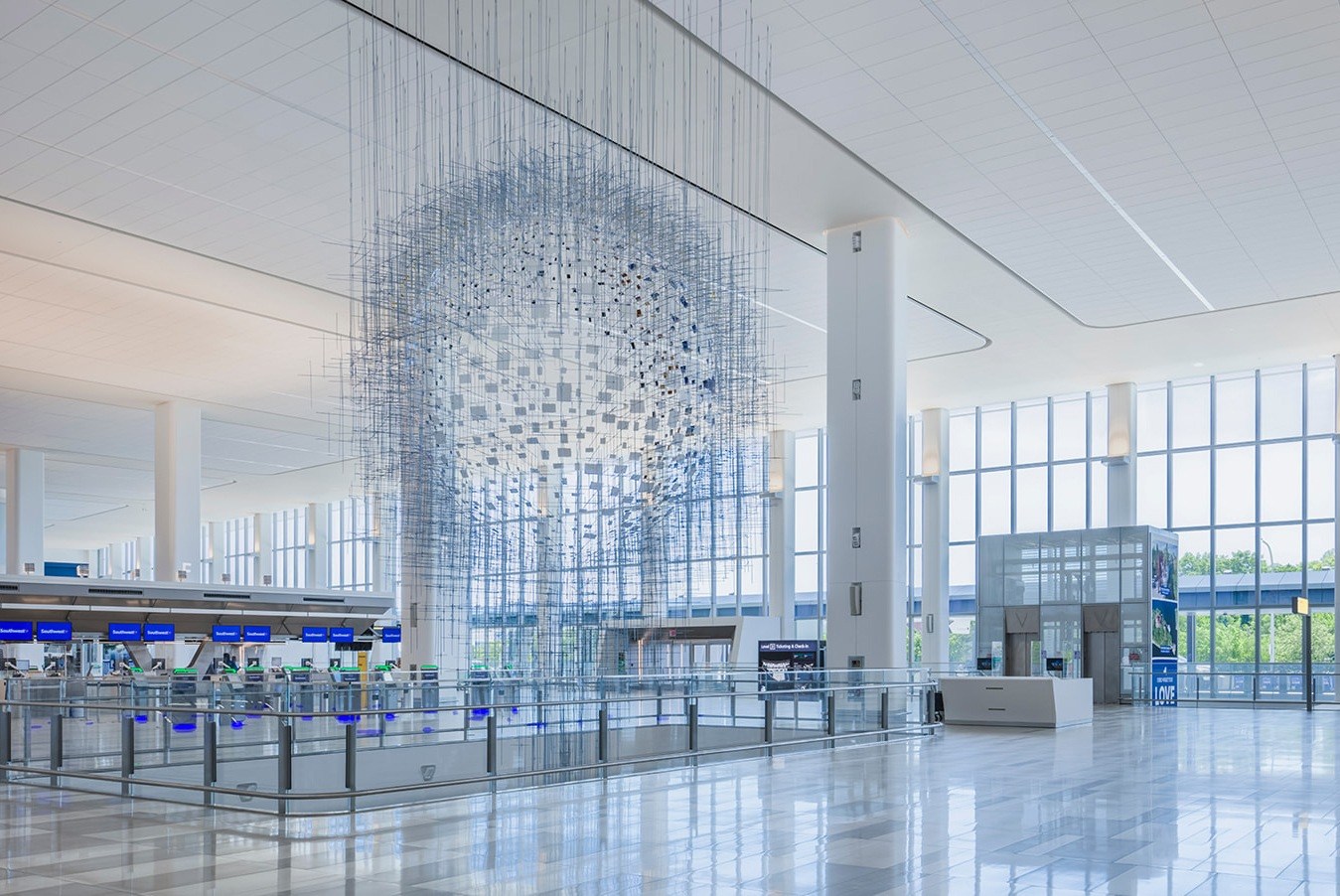
Inside the Arrivals and Departures Hall at LaGuardia Airport’s Terminal B, which Galioto calls the high point of his career—”so far.”
LaGuardia had been mocked for years, justifiably. It was a stain on New York’s reputation. We took it from that to being named the best airport terminal in the United States and one of the best in the world. For me, as a New Yorker, that’s what New York needs to be: best in class at everything.
It was also the largest public-private partnership in U.S. aviation history. If LaGuardia had failed, it would have set back the idea of that delivery model for public infrastructure in this country. Instead, it became an exemplar.
The other thing that crystallized for me there was a concept my colleague Eli Hoisington proposed: two island concourses connected to the headhouse by long pedestrian bridges. It was a great planning and phasing solution, but it was something more than that. It became a metaphor for the city itself. New York is a city of islands and bridges. The plan, the metaphor, the architecture and the engineering all came together as one idea.
You compared LaGuardia’s staging to pulling a tablecloth out from under a Thanksgiving dinner without spilling anything. What’s the Penn Station version?
Both projects are complex urban surgeries. They have huge daily volumes of travelers and transportation operations that can’t stop. But their scale and character are opposite.
LaGuardia was extroverted. We had the room to make big moves like taking down a parking garage, building a headhouse in its footprint and running the bridges over active roadways and the existing terminal. Terminal B is one of the few New York buildings that reads as a highway building. Its frontage is best experienced from a car on the Grand Central Parkway.
Penn Station has been claustrophobic. The objective is to liberate it from those confines. I think of the Prisoner’s Chorus from Beethoven’s Fidelio, the moment the prisoners emerge into the light. The phasing to get there is surgical rather than grand. You operate on one platform at a time. You close these stairs, build partitions here, shut down those HVAC systems, modify this junction. Each move is a project unto itself, involving tens of millions of dollars. It’s a long series of careful alterations building toward a final reveal.
Penn Station has been in your career orbit for decades. The architectural historian Vincent Scully wrote that travelers once “entered the city like a god” and now “scuttle in like a rat.” Is that still the right description?
It is. The demolition of the original Penn Station was an act of unforgivable vandalism. In a strange way, it was also an act of martyrdom. The public outrage over its loss led to New York’s 1965 Landmarks Preservation Law, which has since saved hundreds of buildings and entire neighborhoods. Penn Station has been an obsession for New Yorkers ever since. LaGuardia was a disgrace to the city, but Penn Station is something more. It’s a wound that must be healed.
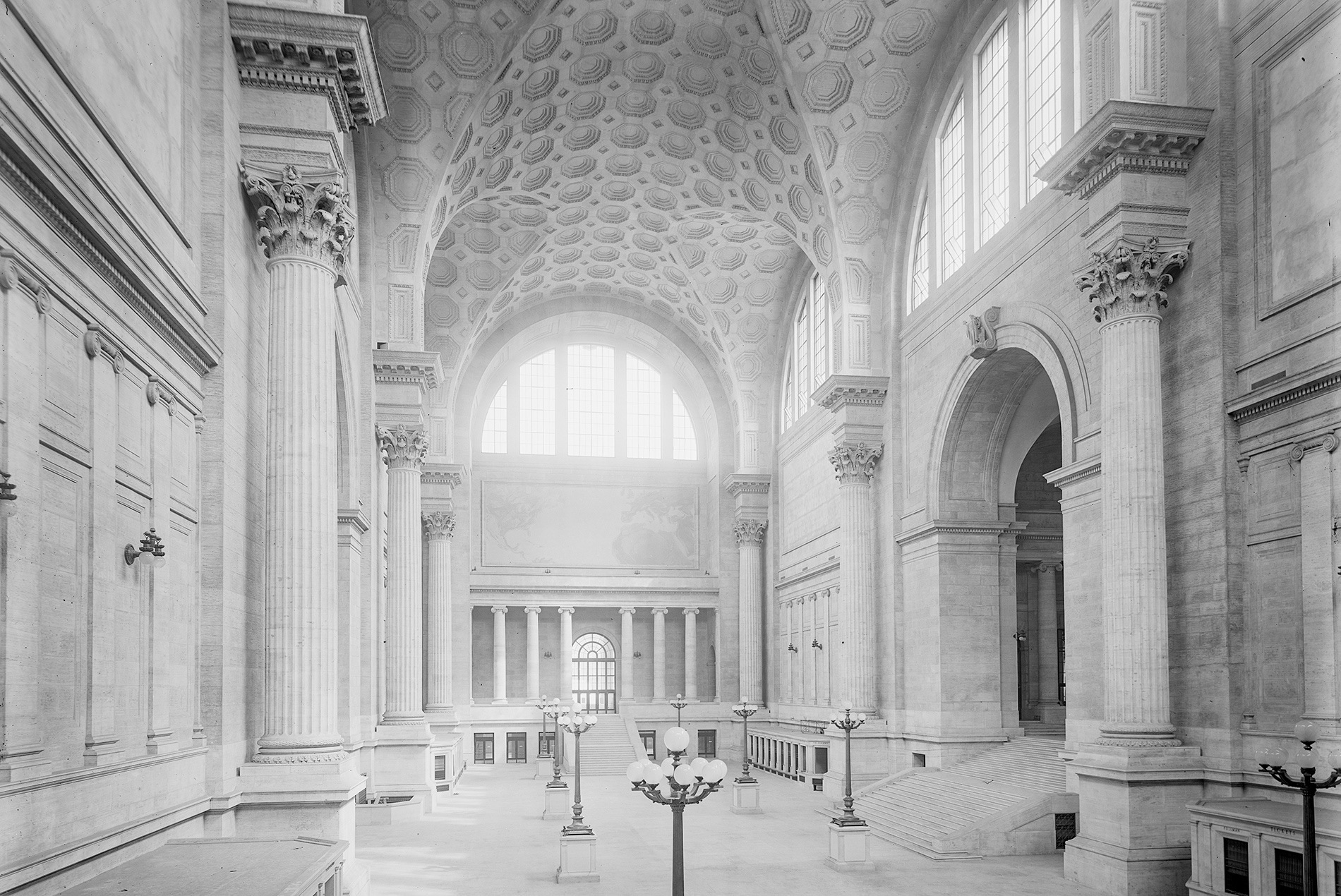
The main waiting room of the original Pennsylvania Station, circa 1910. McKim, Mead & White’s masterpiece was demolished in 1963. (Detroit Publishing Co. / Library of Congress, Prints & Photographs Division)
I’ve been around the area in different ways for a long time. I worked on three different Moynihan schemes in earlier years. I also worked on schematic design for Manhattan West, the Brookfield development just west of the station. The whole strip between 31st and 34th Streets, from Seventh Avenue to the river, has become a remaking of the center of the city. It now functions as a central business district the size and importance of a major American city in itself.
And in the middle of all that is Penn Station, still the carbuncle that’s left. The public sector tied itself in knots for years over federal, state, city and New Jersey disagreements, and the project couldn’t move. To be involved now, with the project actually moving forward, is the realization of a long-running dream.
Four generations of your family have made their lives in this city. What does it mean to be doing this work here now?
It means everything. My great-grandfathers came over from southern Italy and did what they could, working as a laborers building the subways. That’s what they were capable of. Each generation after them became part of the community, raised families, paid taxes and made their contributions at the scale they could. Hundreds of thousands of New York families have done the same.
My emotional connection to this city is so important to me. And it isn’t just mine. It belongs to everyone who came before me in my family, and to everyone who came before us in New York. I feel that I owe it to them. I feel we owe it to the city to do our best to make this a better place.
What does success at Penn Station look like?
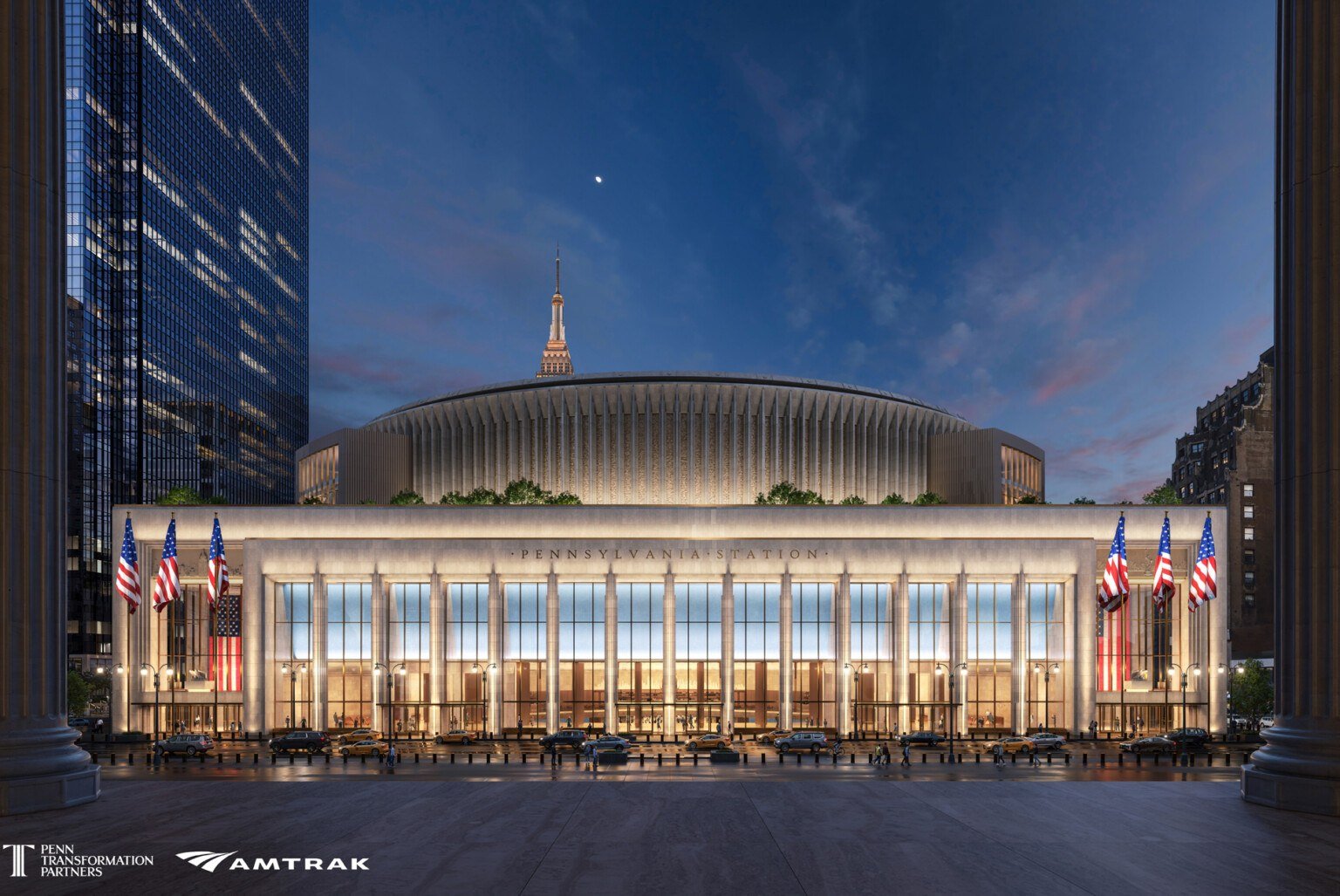
A rendering of the new Pennsylvania Station, viewed from Eighth Avenue. “To restore dignity, clarity and civic presence,” Galioto says, “to one of America’s most important gateways.” (Rendering: HNTB-HOK Joint Venture in association with PAU / Penn Transformation Partners / Amtrak)
For someone to say thank you. So many people have thanked me for the work we did at LaGuardia. They still do. I’d like the same thing for Penn Station, for people to feel that their day is a little better because of it.
More than 600,000 passengers move through Penn Station every weekday, more than all three of the region’s major airports combined. But the station won’t only be a place people walk into. It will also be experienced at the sidewalk, by everyone walking past it. The vocabulary of the new design draws directly on Rockefeller Center. Just as Rockefeller Center elevated my experience as a child, we are working to elevate the daily lives of the hundreds of thousands who pass through, or simply past, the station.
That’s the mission. It’s a chance to right a wrong, to heal a great wound to New York and to create something worthy of what this station is. To restore dignity, clarity and civic presence to one of America’s most important gateways. We feel the weight of that responsibility.
Why do you call New York the greatest city in the world?
I believe New York is the greatest city in the world because it is the global center of finance, the arts, and the professions. It is a crucible for the creation of opportunity, the opportunity to work with the best and to become one of the best. It is a meritocracy where results matter most.
It is a magnet for talent and ambition: for someone from another part of our beautiful nation who dreams of becoming a great doctor or attorney, or who wants to dance with American Ballet Theatre; for an immigrant who comes here seeking a better life for themselves and their family; and for a bridge-and-tunnel kid like me, who commuted to architecture school on the G train and found the opportunity to play a small role in making this great city just a little bit better.
My great-grandparents came here penniless. They made of it what they could. Their hope was that the next generation would do better, and that the generation after that would do even better. That is my story, and the story of millions of others. It is New York’s story.