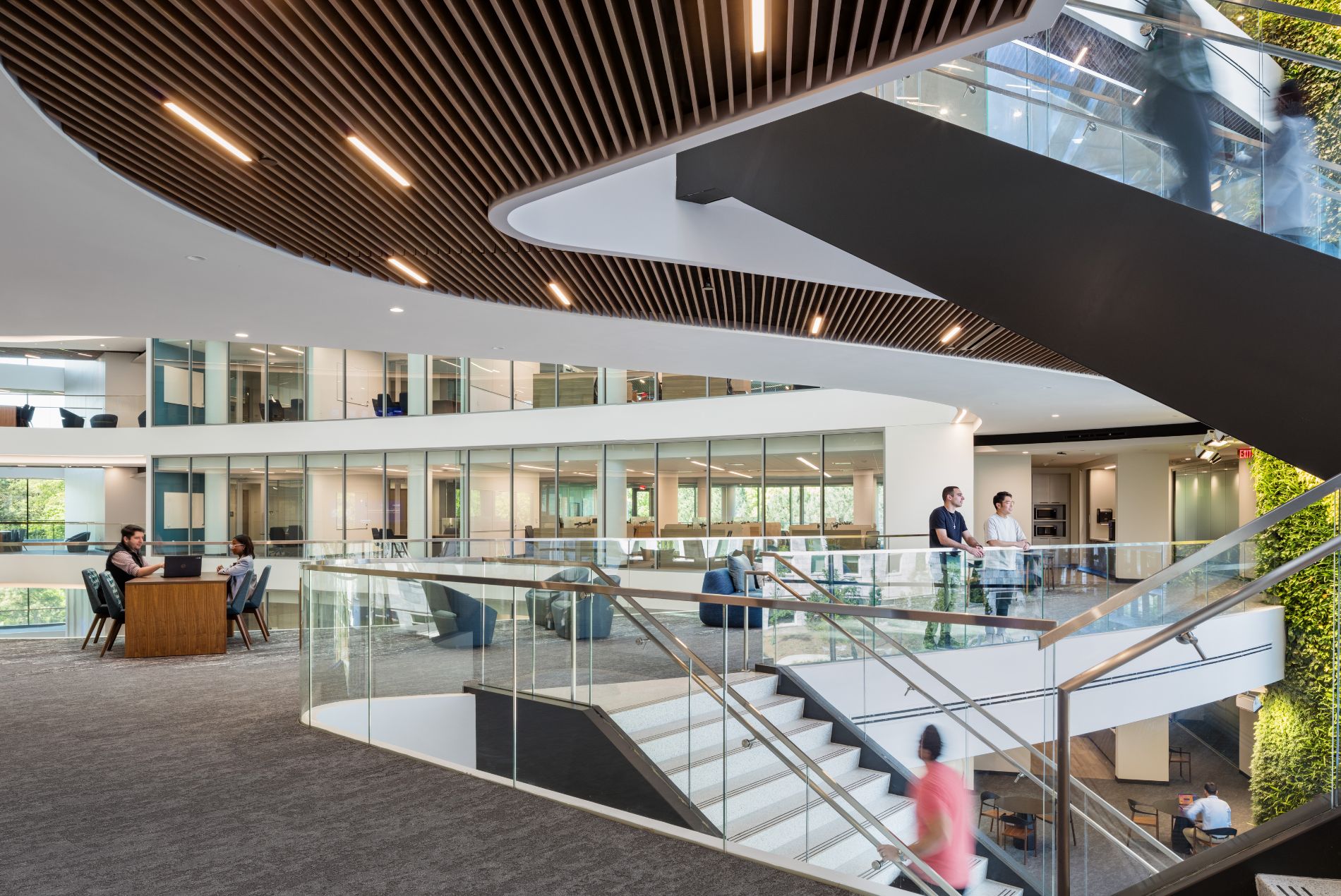
HOK’s Dan Seng and Blake Webber author a Seattle Daily Journal of Commerce article describing how co-locating laboratories and clinics in purpose-built facilities shortens the path from discovery to patient care.
As U.S. healthcare spending climbs to $4.9 trillion yet lags peer nations in life expectancy, translational medicine—where research, clinical trials and patient care share one space—offers measurable improvements. Projects such as the Francis Crick Institute in London, Emory University’s Health Sciences Research Building II in Atlanta and Cedars-Sinai’s Advanced Health Sciences Pavilion in Los Angeles demonstrate how architecture designed around collaboration, flexibility and innovation significantly improves outcomes.
Excerpted from the Seattle Daily Journal of Commerce:
“According to the American Medical Association, the U.S. spent $4.9 trillion on healthcare in 2023—$14,570 per person—but life expectancy remains low at 78.4 years. In comparison, other high-income countries with similarly advanced healthcare systems average 82.5 years.”
“Translational medicine puts that principle into practice. When laboratories and clinics share an address, discoveries reach patients sooner and clinicians can return real-time insight to scientists. Institutions from Mayo Clinic and Fred Hutchinson Cancer Center to Johns Hopkins have adopted the model, but the strongest evidence lives in the buildings that make it work.”
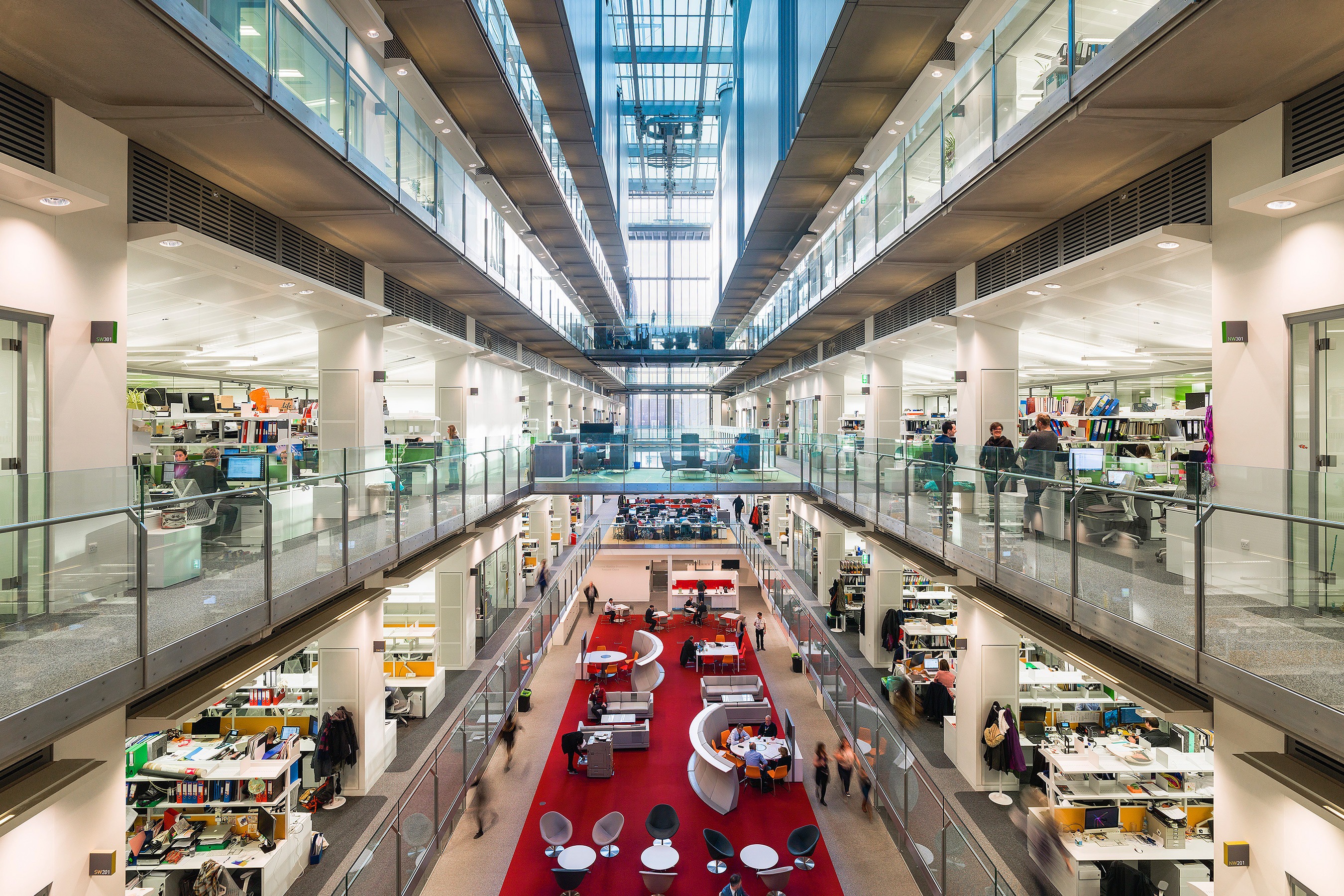 “London’s Francis Crick Institute—completed in 2016—offers a rare, decade-long case study in how building design can accelerate research. Conceived by the HOK-PLP Architecture team to break down institutional silos, the nearly 1 million-square-foot translational research center in the heart of London houses 1,500 scientists from six organizations under one roof, all connected by a daylit atrium and transparent lab neighborhoods.”
“Since opening, the Crick has tripled its research funding to £1.5 billion, tripled its publications, and launched more than 10 spinout companies advancing breakthroughs in cell therapy, vaccines, med tech and small-molecule therapeutics. With 600 postdocs and 32 new group leaders recruited, it’s one of the clearest architectural examples of the benefits co-located translational research can deliver.”
“Combined with the new Emory Empathetic AI for Health Institute (AI Health), [Emory University’s Health Sciences Research Building II] harnesses the power of machine learning and big data to transform how healthcare systems prevent, diagnose, treat and cure diseases. Designed to catalyze bold advances in biomedical research and human health, the HSRB II supports Emory’s vision of a collaborative environment where interdisciplinary teams can take on the toughest scientific challenges. A ground floor start-up accelerator helps move discoveries to therapies.”
“At the Jack & Sheryl Morris Cancer Center at Rutgers Cancer Institute and RWJBarnabas Health—New Jersey’s first and only freestanding cancer hospital—research and treatment are connected. Imaging suites and infusion bays are floors away from labs studying immunotherapy, cellular therapy and other basic research. Infrastructure for clinical trial area administration and faculty offices are steps away, enabling collaboration between researchers and patients. This layout supports an improved patient experience and better access to experimental therapies informed by real-time research.”
“After the Cedars-Sinai Medical Center opened its Advanced Health Sciences Pavilion in 2013, research projects and publications more than doubled and NIH funding jumped from $50 million to $158 million between 2015 and 2025. The University of Wisconsin saw similar gains following the completion of the first phase of its Institutes for Medical Research in Madison. There, NIH funding doubled in 10 years, and both the number of patents and publications tripled.”
Read the full Seattle Daily Journal of Commerce article.