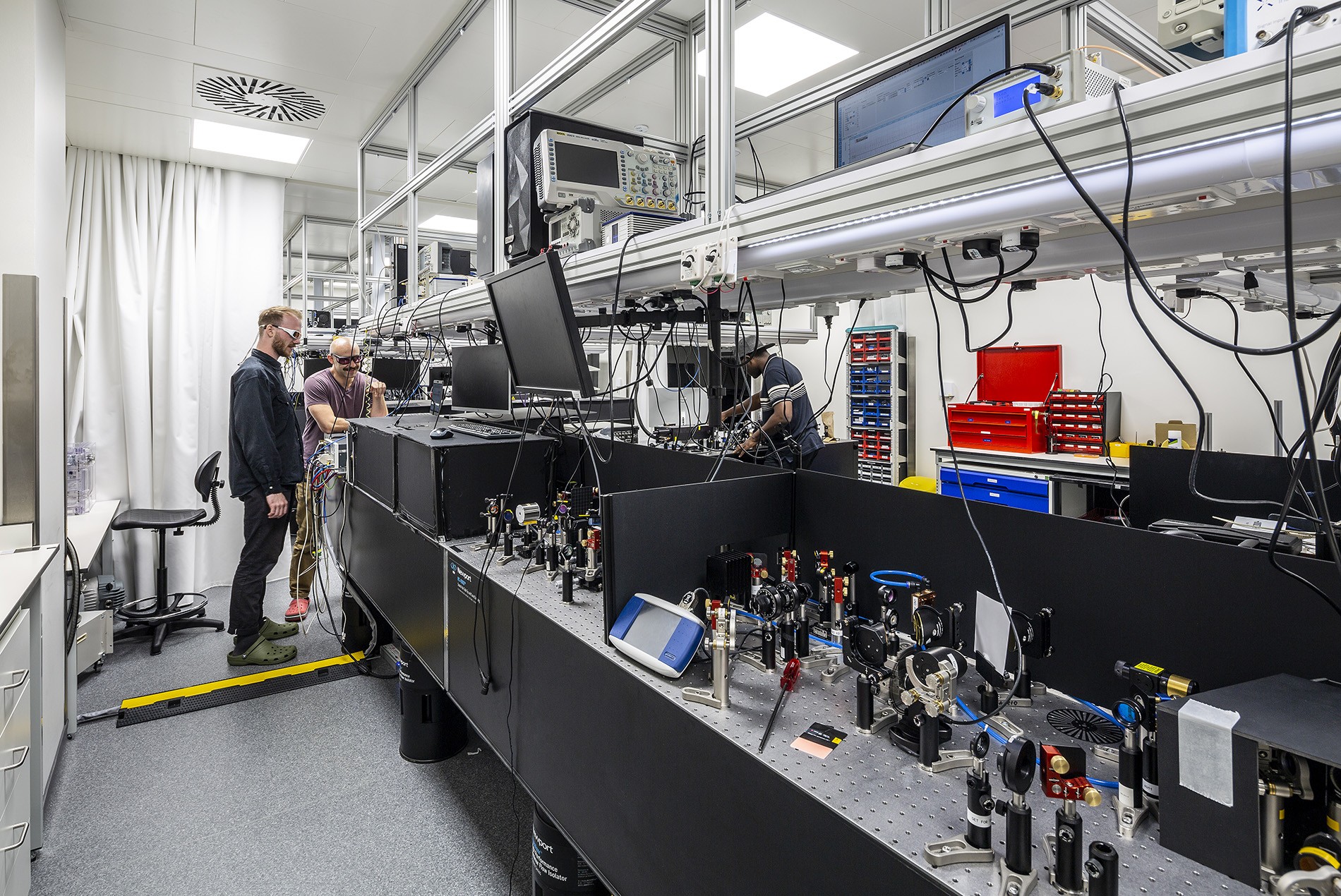
Every provost knows the math. A distinguished professor occupies a 5,000-sq.-ft. laboratory suite secured during the peak of their funding. Today, their grant portfolio has dwindled and only two postdocs remain on the team. Yet the space allocation is rarely revisited. Meanwhile, a junior hire with $5 million in NIH funding and a dozen researchers makes do with 1,500 square feet.
This is the legacy researcher problem, in which space is allocated based on historical entitlement rather than current need. Many institutions, citing tenure complexities and political sensitivities, treat this as unsolvable. It doesn’t have to be.
“In academic institutions, legacy researchers often have all kinds of space and equipment but their grant money hasn’t kept up,” says Tim O’Connell, director of HOK’s Science + Technology practice based in Washington, D.C. “They may expect to retain the same space, but no longer need all that space.”
HOK’s Research Phenotyping methodology—a higher-education adaptation of the Workforce Phenotyping approach previously described in the context of corporate R&D—is giving university leaders an objective basis for these decisions. Applied to higher education, it solves a different set of problems and works in fundamentally different ways than it does on the corporate side.
Why Academic Research Space Is Different
Academic research space is uniquely political because it is also revenue-generating. Faculty members who have brought in grant funding tend to have strong expectations about the space that funding entitles them to—even when their current funding has dropped off.
Academic research is also extraordinarily diverse. “Medical school research is very different from engineering school research, and both differ from social science fields like psychology,” says Chirag Mistry, director of HOK’s Science + Technology practice in Atlanta. “Even though it’s all research space, the needs are different and the funding streams are different, making it difficult to apply a consistent metric across disciplines.”
The U.S. funding system illustrates the challenge. Medical schools have NIH benchmarks tying square footage to research revenue. Engineering programs funded by NSF, NIST or DOD have less comparable benchmark data. Industry-partnered groups have no common benchmark at all. The pattern is similar in other parts of the world. As a result, no single lab allocation formula works across all of them.
HOK’s recommendation is what Mistry calls a hybrid activity-based phenotyping approach with discipline-appropriate metrics. The process is the same for everyone but the targets adjust by discipline.
The Funding Squeeze
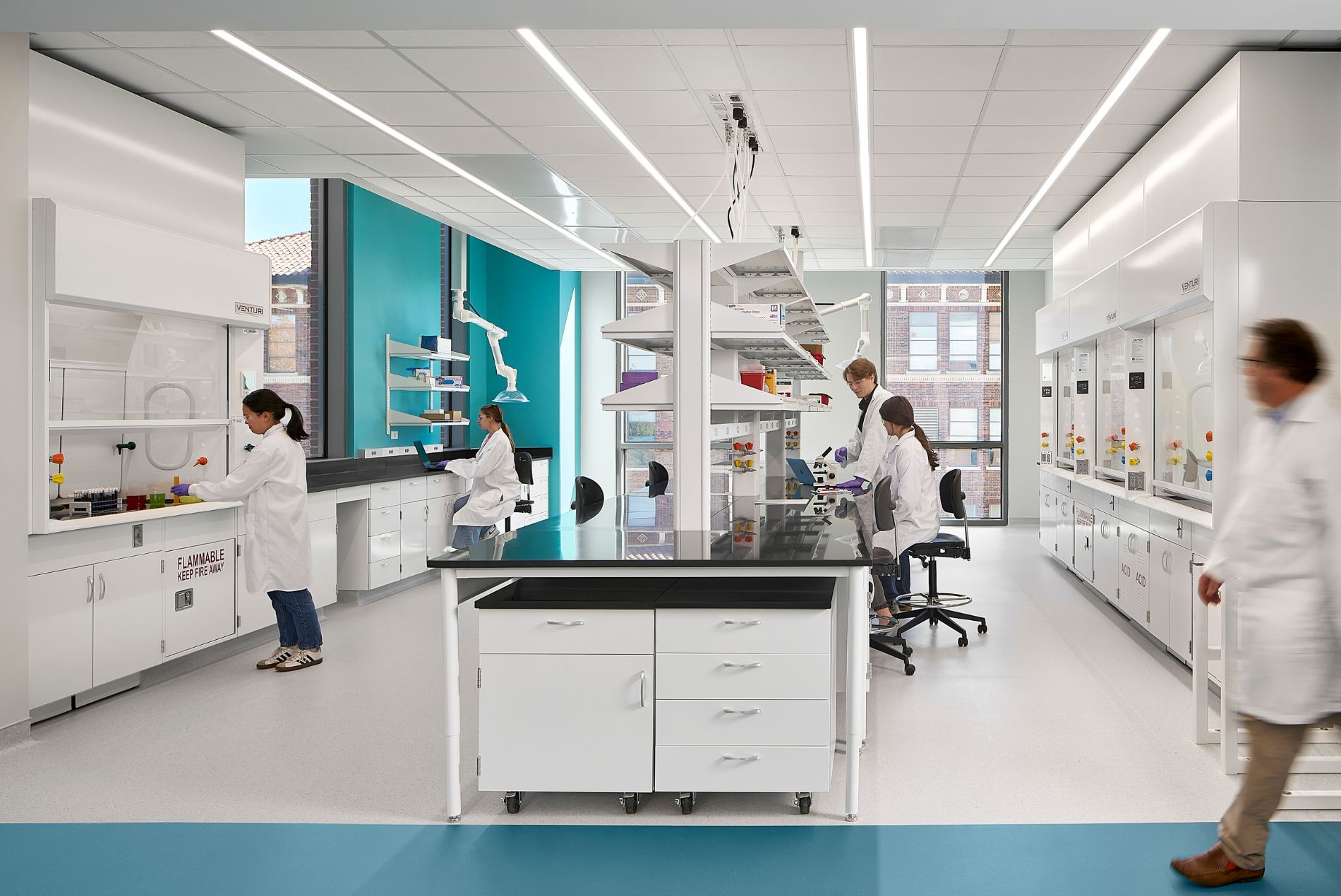
Across the U.S., Europe and Canada, the research funding environment has made efficient space use a strategic priority. In the U.S., the research community recently defeated a proposed 15% federal cap on indirect cost recovery, but the year-long legal battle was a wake-up call. Universities are under intense scrutiny to justify their facilities and administrative (F&A) costs. In Europe and Canada, rising construction costs and tight capital have placed similar pressure on institutions to deliver “best-in-class” research infrastructure without overspending. Universities everywhere can no longer afford to underuse the infrastructure their grants are paying for.
“What the government is cutting is not necessarily the research part—they’re cutting the administrative part,” says O’Connell. “So institutions need to make both sides as efficient as possible. We can use our phenotyping tool to allocate space by need, as opposed to by right.”
Allocation Based on Evidence
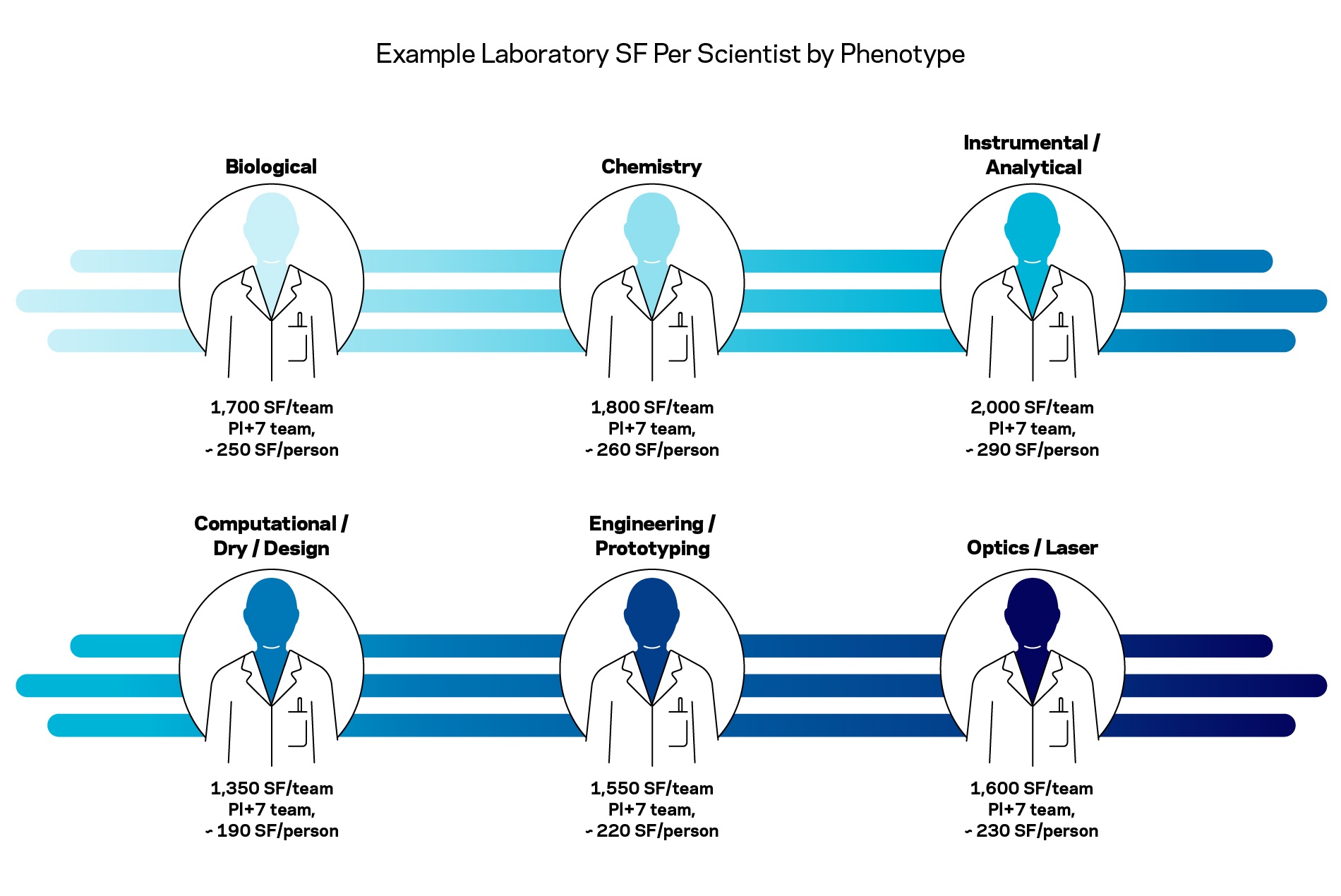
The methodology borrows its name from biology. Just as a biological phenotype describes observable characteristics, a research phenotype describes a researcher’s observable space needs: what tasks they perform, what equipment they require and how much time they spend at the bench versus the desk.
The unit of analysis differs from the corporate approach. “On the corporate side, we look at it on a per-FTE basis because a biologist is a biologist,” says Wayne Nickles, Science + Technology practice leader in HOK’s Washington, D.C., studio. “In a university, you’re looking at a principal investigator plus a team of researchers working under them. The unit changes, so the math changes.”
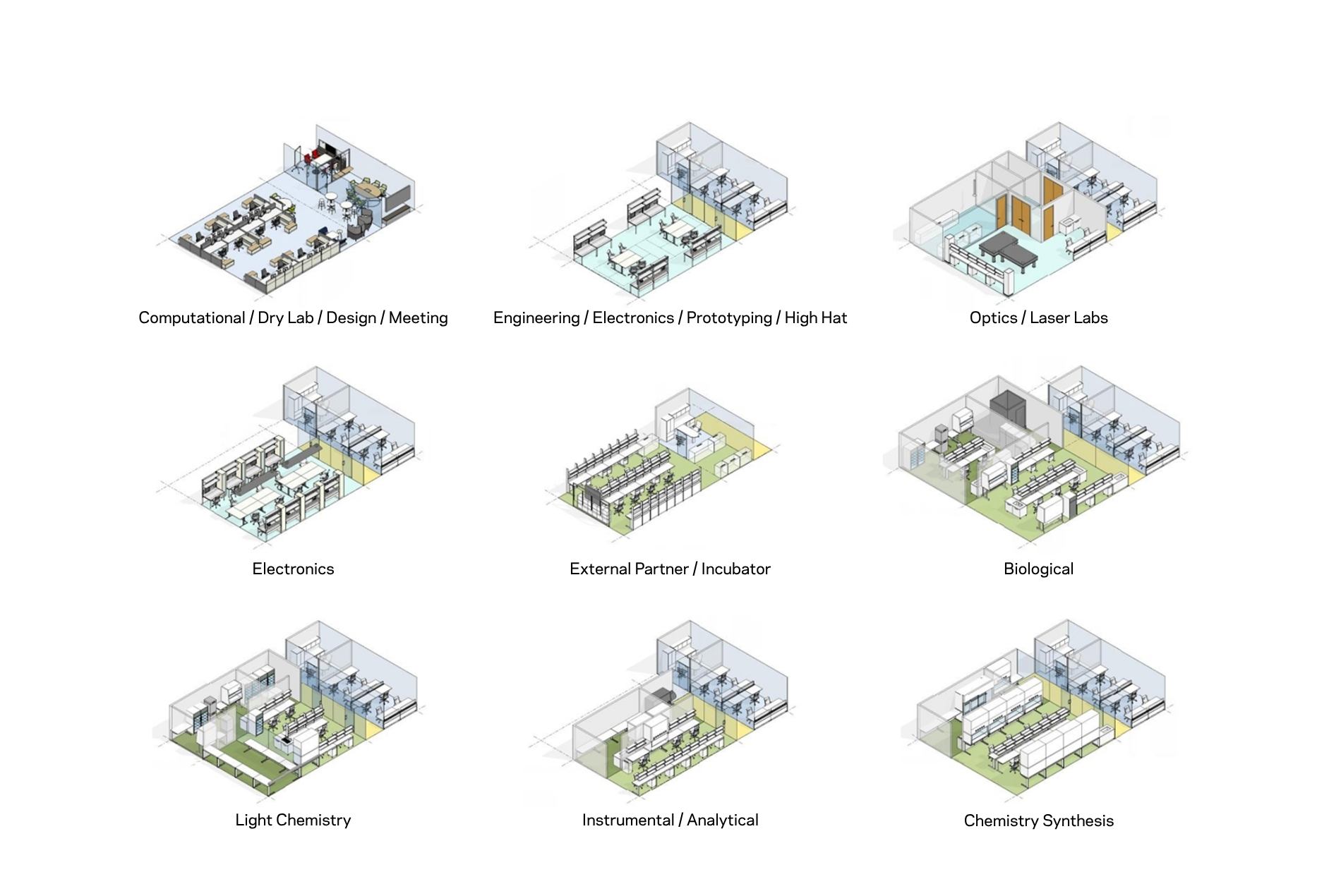
In HOK’s academic engagements, phenotypes are organized by PI type—experimental, hybrid, computational—and by team size. Each phenotype is paired with a kit of parts: the benches, fume hoods, tissue culture rooms, equipment zones and write-up space the work actually requires. Multiplied by team size, the kit translates into a defensible square-footage allocation.
That gives administrators a shared framework that applies across colleges. “It reframes the conversation away from saying department A wants this much space and department B wants that much,” Mistry says. “It moves the conversation to: as a scientist, what are the activities you’re doing? Then we attach to it the spaces you need to support that.”
It also supports a transition from discipline-specific teams to more integrated, interdisciplinary models increasingly common across research institutions. The resulting phenotypes establish a scalable kit of parts that, when viewed through an interdisciplinary lens, inform a more cohesive research strategy.
At Clemson University’s Advanced Materials Innovation Complex, this approach helped shift the conversation from discipline-based space needs to an interdisciplinary framework centered on energy, health and advanced manufacturing. “These conversations wouldn’t have been possible without reframing the discussion from space needs to activity-based drivers,” says Mistry.
Beyond the Wet Lab
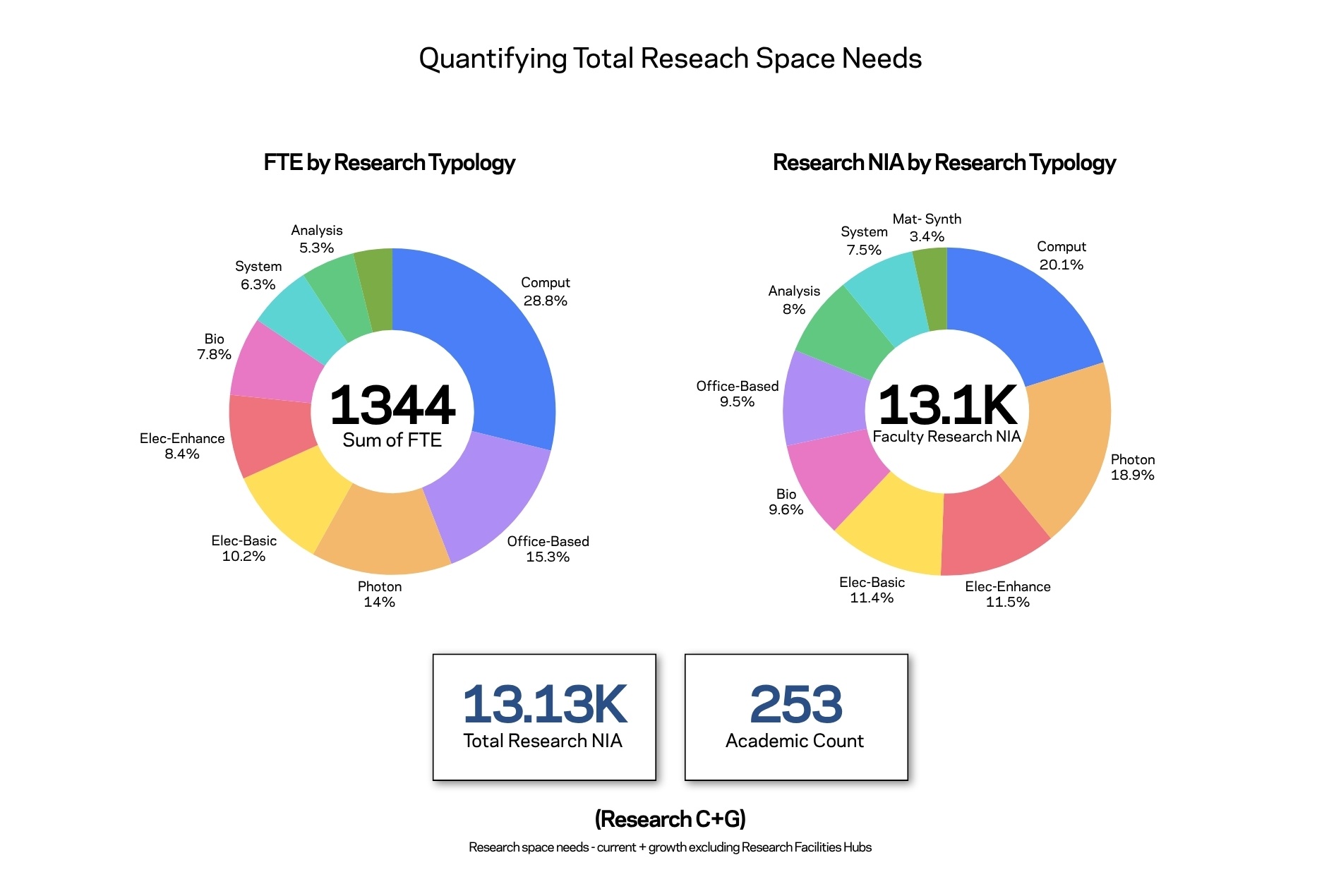
HOK applied this methodology at the University of Glasgow in Scotland, working with users to analyze more than 500 lab rooms across approximately 120,000 square feet, spanning three schools with very different research profiles.
The university framed the pilot as a way to develop space planning models for activity-based research environments aligned with its research strategy. These models would enable evidence-based, optimized planning of the estate while supporting growth.
“Generic labels like ‘wet lab’ don’t tell you what a space actually needs to do,” says Shem Sacewicz, a senior laboratory architect with HOK in London. “By tying area allocations to specific phenotypes, we can describe the real infrastructure requirements of the research happening there.”
The deliverable wasn’t a one-time report. It was a live dashboard giving the estates team a campus-wide view of lab typologies, quantities and costs. The university can now use this tool proactively rather than reacting to one project request at a time.
This project also illustrates what phenotyping prevents. Past experiments with “super-flexible” labs—facilities engineered to support the most intensive research on every floor—often cost significantly more than typical labs while leaving much of that flexibility unused.
“Not every lab needs to be engineered for the most demanding research,” Sacewicz notes. “Phenotyping helps organizations distinguish the spaces that genuinely require high-specification infrastructure from those that can perform just as well in simpler, more cost-effective settings.”
What the Data Shows
The phenotyping discovery phase routinely uncovers drift between how rooms were designed and how they’re actually used. At one major U.S. public research university, phenotyping revealed labs that had become offices, offices full of lab equipment and students studying next to active fume hoods.
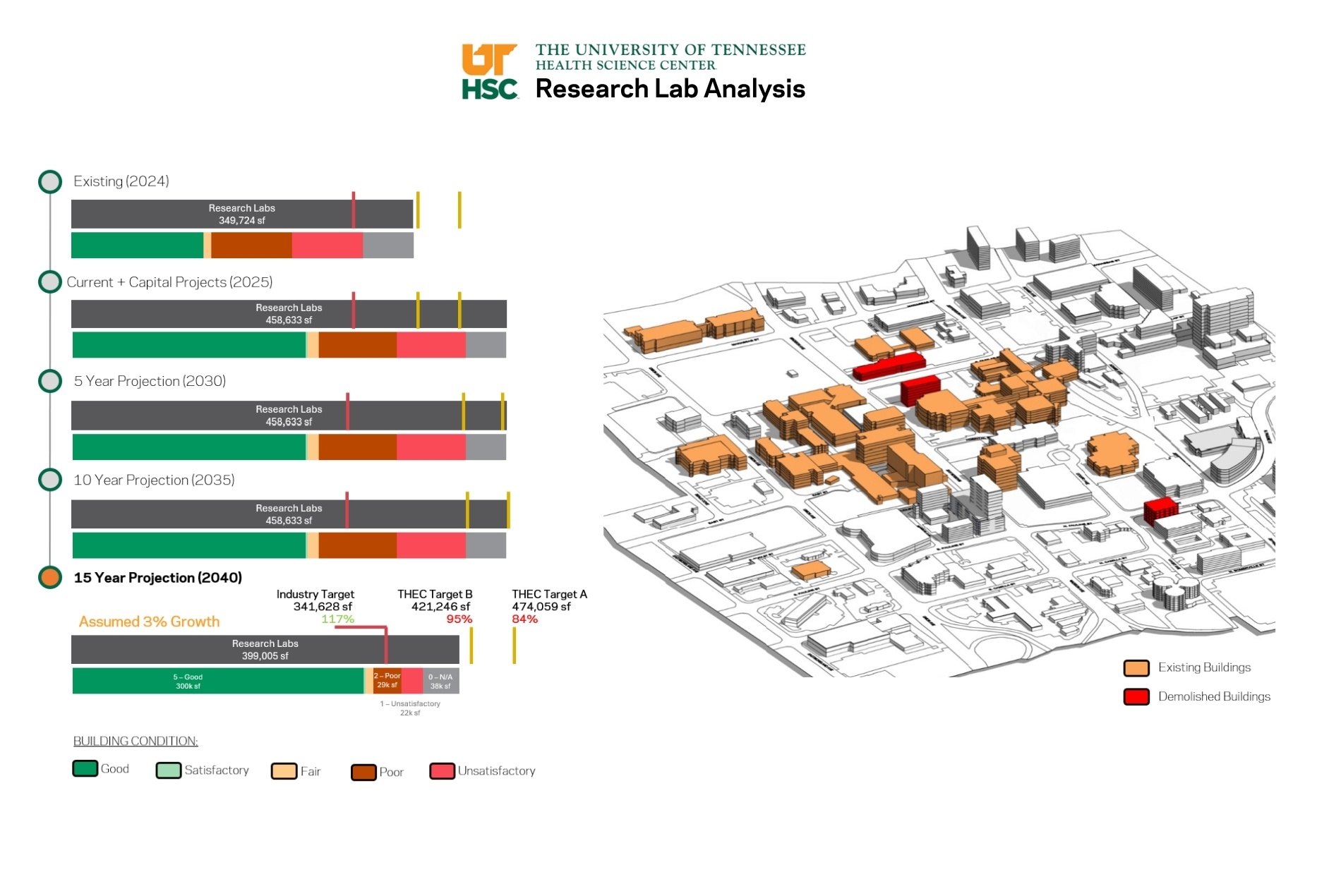
HOK has translated those findings into Power BI–based dashboards on engagements ranging from individual buildings to multi-million-square-foot campuses. At the University of Tennessee’s 2.9-million-sq.-ft. Health Sciences Center in Memphis, HOK’s assessment spanned 34 buildings across six colleges. Administrators can use the dashboard to see space utilization, allocation and condition side by side, then stress-test the portfolio against five-, 10- and 15-year scenarios. Conversations about new space on the campus now start with the data.
From Building Less to Building Smarter
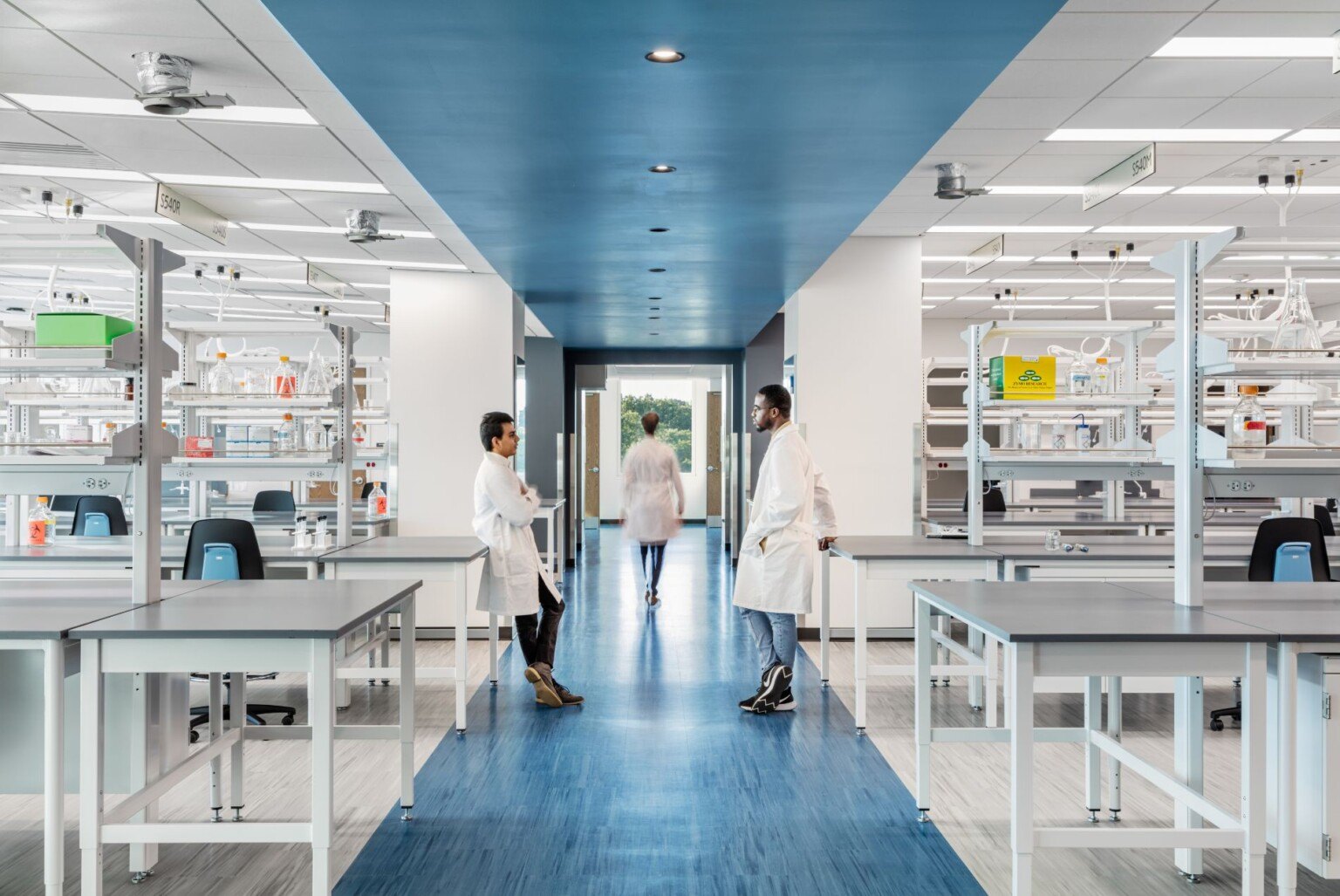
When allocation correlates with active grant funding and team demand, the math starts working in the institution’s favor. “What looks like a space shortage is often a utilization problem,” Nickles says. “Phenotyping often reveals that growth can be absorbed through targeted renovation or simple space re-allocation, rather than new construction.”
The framework also lets institutions associate construction cost, operational cost and energy use estimates with each phenotype. That gives capital planners a way to compare scenarios on a like-for-like basis: not just how much space a given research direction requires, but what it will cost to build, run and decarbonize.
It also surfaces overlap across departmental lines. Researchers who report to different deans and compete for different budgets often share similar work patterns and need access to the same core instrumentation. Phenotyping highlights those adjacencies, creating opportunities to consolidate shared cores rather than allow duplicative silos to proliferate. That’s increasingly valuable for universities as they lean further into interdisciplinary programs.
HOK is also exploring how phenotypes map to core facility requirements. The question is which combinations generate enough demand to justify a dedicated shared core and which are better served by access agreements with adjacent groups.
A Living Tool
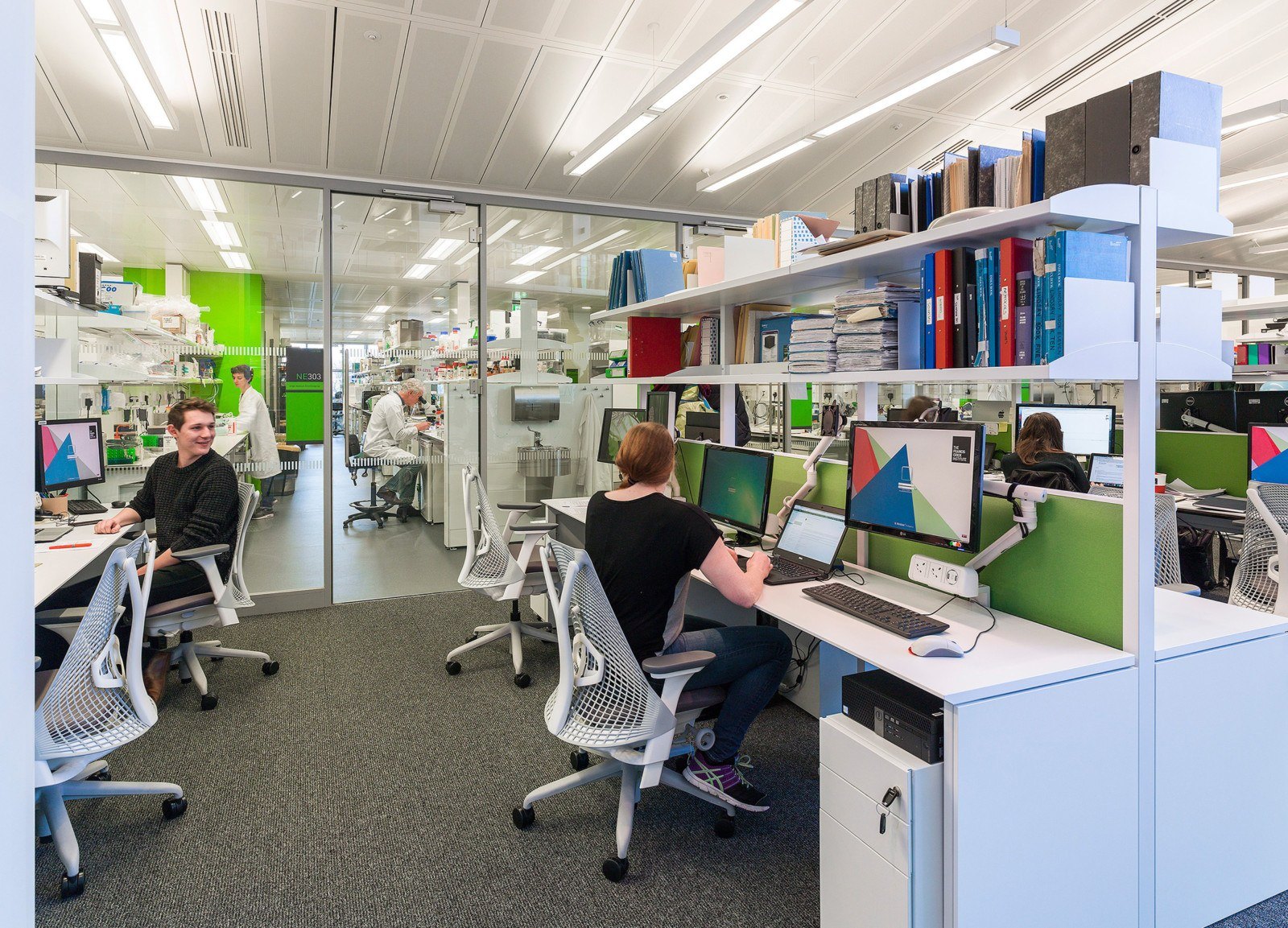
Because the framework lives on after any single engagement, institutions can use it to adjust their real estate strategy as research priorities evolve, funding landscapes shift and AI-based research grows alongside traditional bench science.
“It’s a process that can be tailored to align with the institution’s strategic objectives,” Mistry says. “We’re not coming with a predetermined notion of what you should get. We’re coming with a process that helps us talk through the right components to get to the end goal.”
With constrained funding, rising construction costs and intensifying competition for research talent, the universities that thrive won’t necessarily be the ones with the most space. They’ll be the ones that allocate space based on what their researchers actually need and have the data to prove it.
Continue the Conversation
To learn more about how Research Phenotyping can support your institution’s research space strategy, reach out to our team:
Chirag Mistry, Director of Science + Technology, Atlanta
Tim O’Connell, Director of Science + Technology, Washington, D.C.
Wayne Nickles, Regional Leader of Science + Technology, Washington, D.C.
Shem Sacewicz, Senior Laboratory Architect, London