Clemson University Allen N. Reeves Football Operations Complex
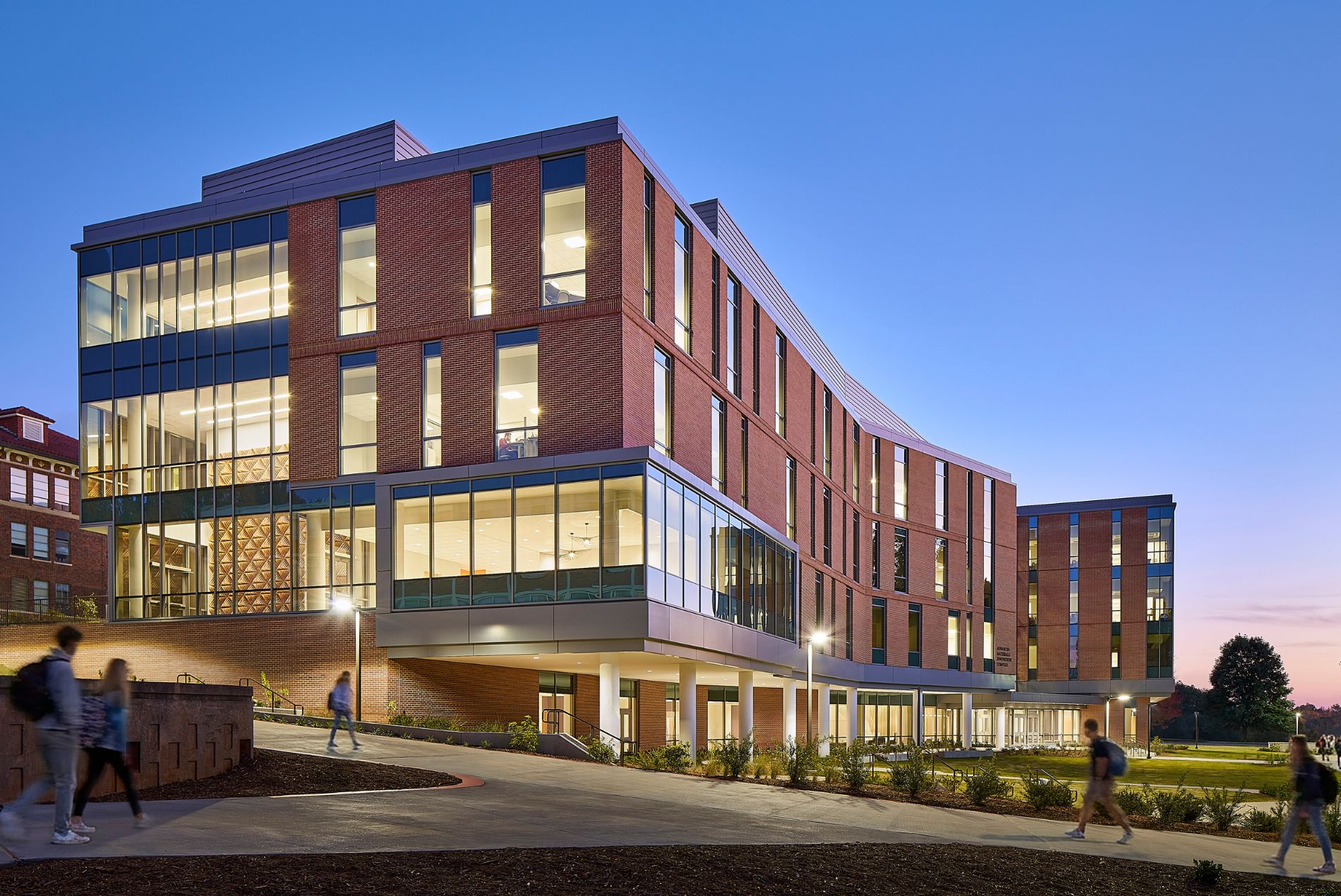

Clemson University’s Advanced Materials Innovation Complex (AMIC) was conceived as a convergence center for three of the university’s core advanced materials departments. Designed to propel each into the national top 20, the facility also reinforces Clemson’s Carnegie R1 research mission.
The marquee facility unites Materials Science and Engineering, Chemistry, and Chemical and Biomolecular Engineering, which had historically operated across two colleges and multiple buildings, with individual research groups dispersed across two campuses. AMIC dissolves that fragmentation, aligning physical and intellectual adjacency around three research thrusts: advanced manufacturing, energy and health innovation.
The facility supports Clemson Elevate, the university’s strategic plan to double research expenditures and grow research space. This initiative responds to the regional advanced materials economy, which is home to more than 960 companies and has generated more than $1.5 billion in capital investment and 5,200 jobs in the state over six years, according to South Carolina’s Department of Commerce.
Design Solutions
Sited atop a hill on Clemson’s main campus with adjacency to Memorial Stadium and a short walk to many of the university’s engineering, computing and science facilities, the $130-million, 143,000-sq.-ft., four-story AMIC consolidates classrooms, laboratories and offices that were previously scattered across multiple buildings and campuses. AMIC is the new home for the Department of Materials Science and Engineering and a cross-disciplinary hub for faculty and students in Chemistry and Chemical and Biomolecular Engineering. The building is organized as a welcoming front door for materials science and a shared research neighborhood for the broader advanced materials community.
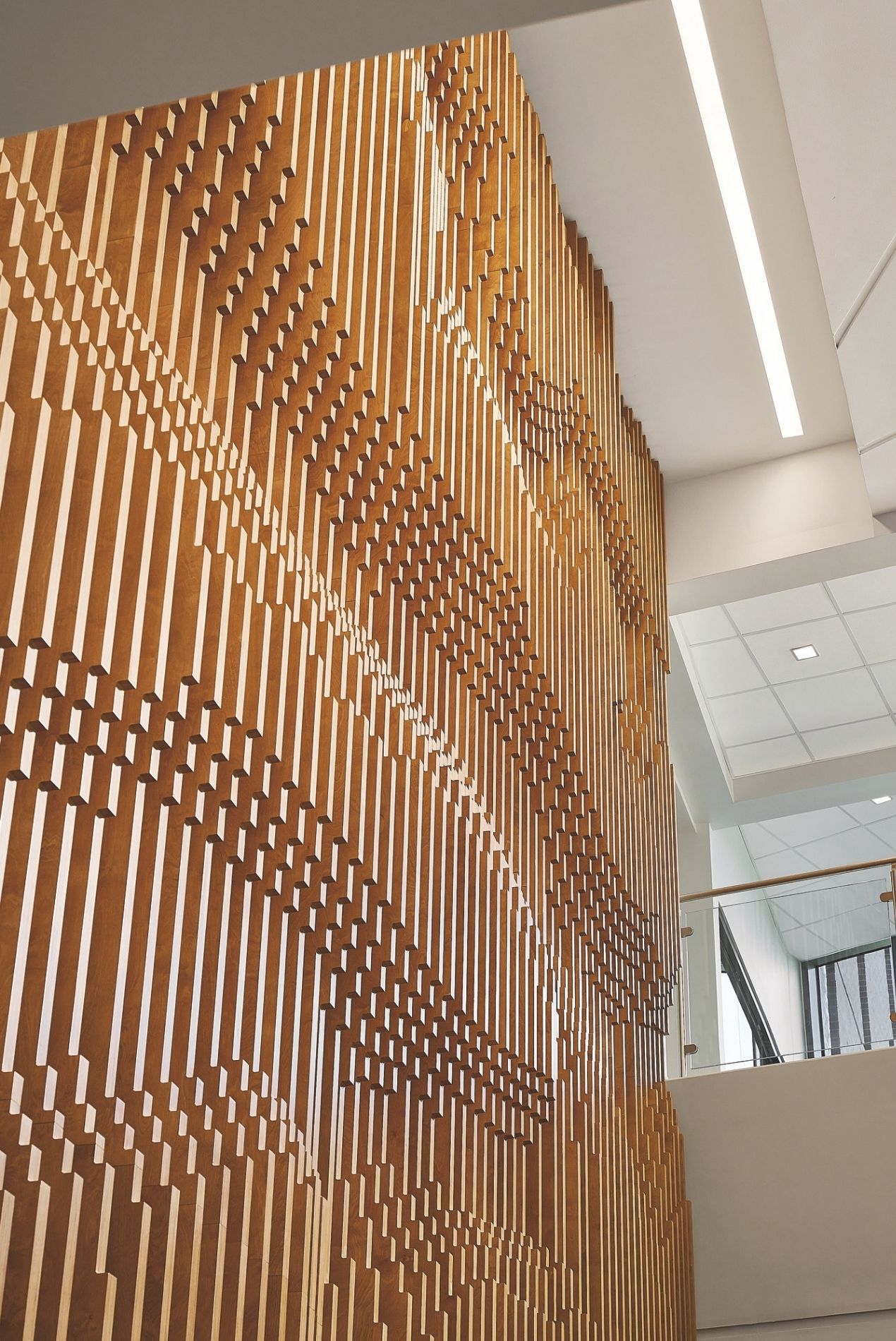
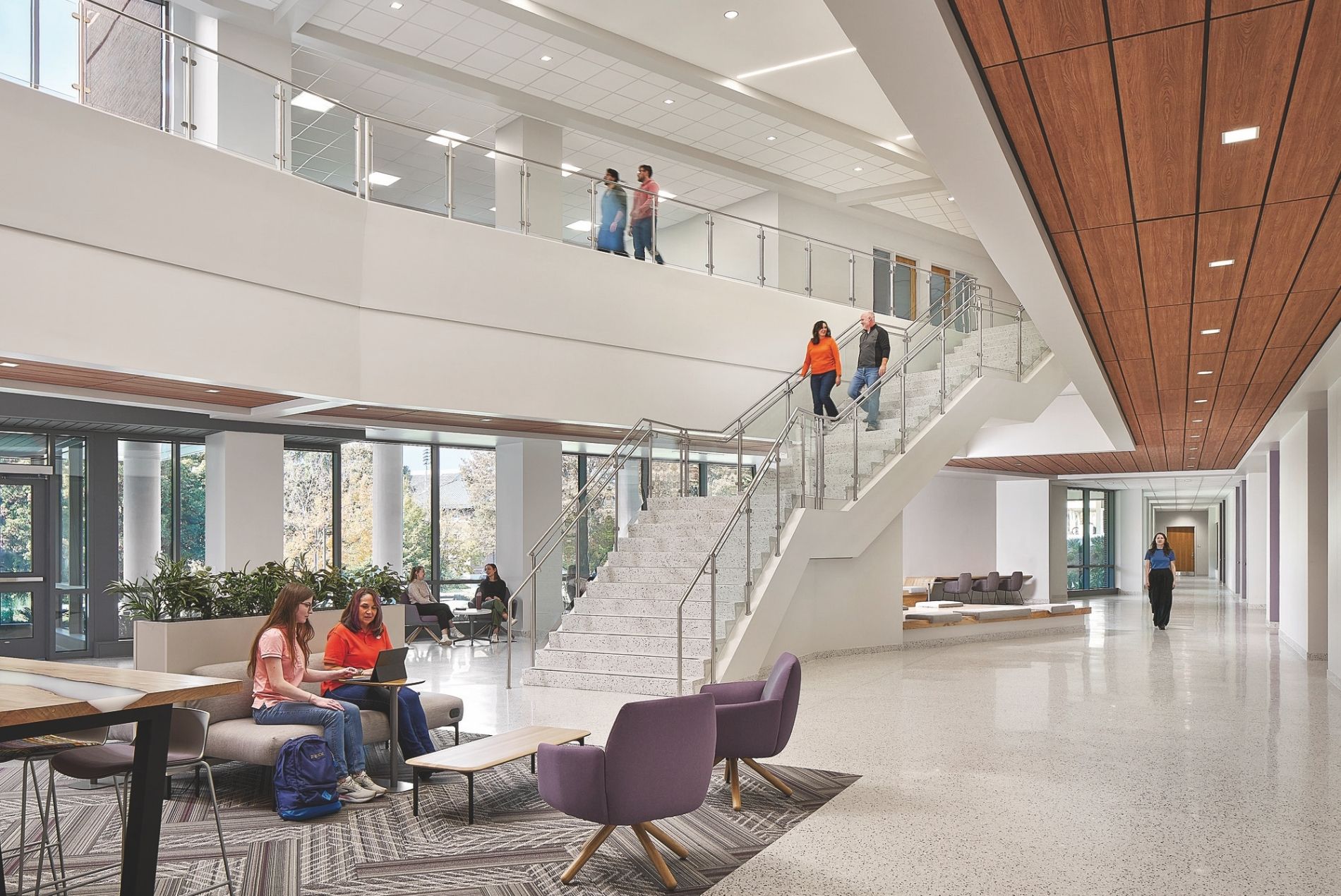
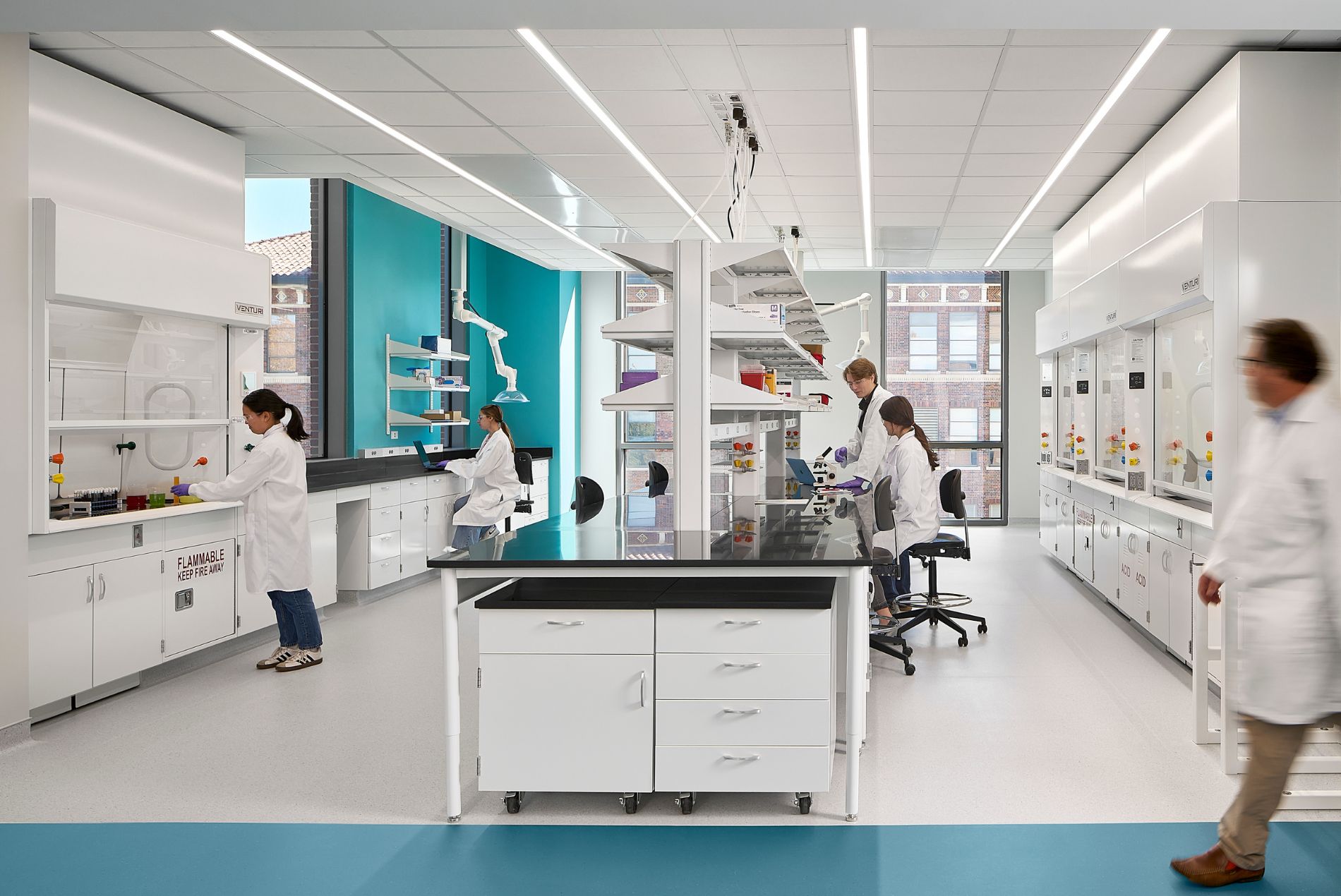
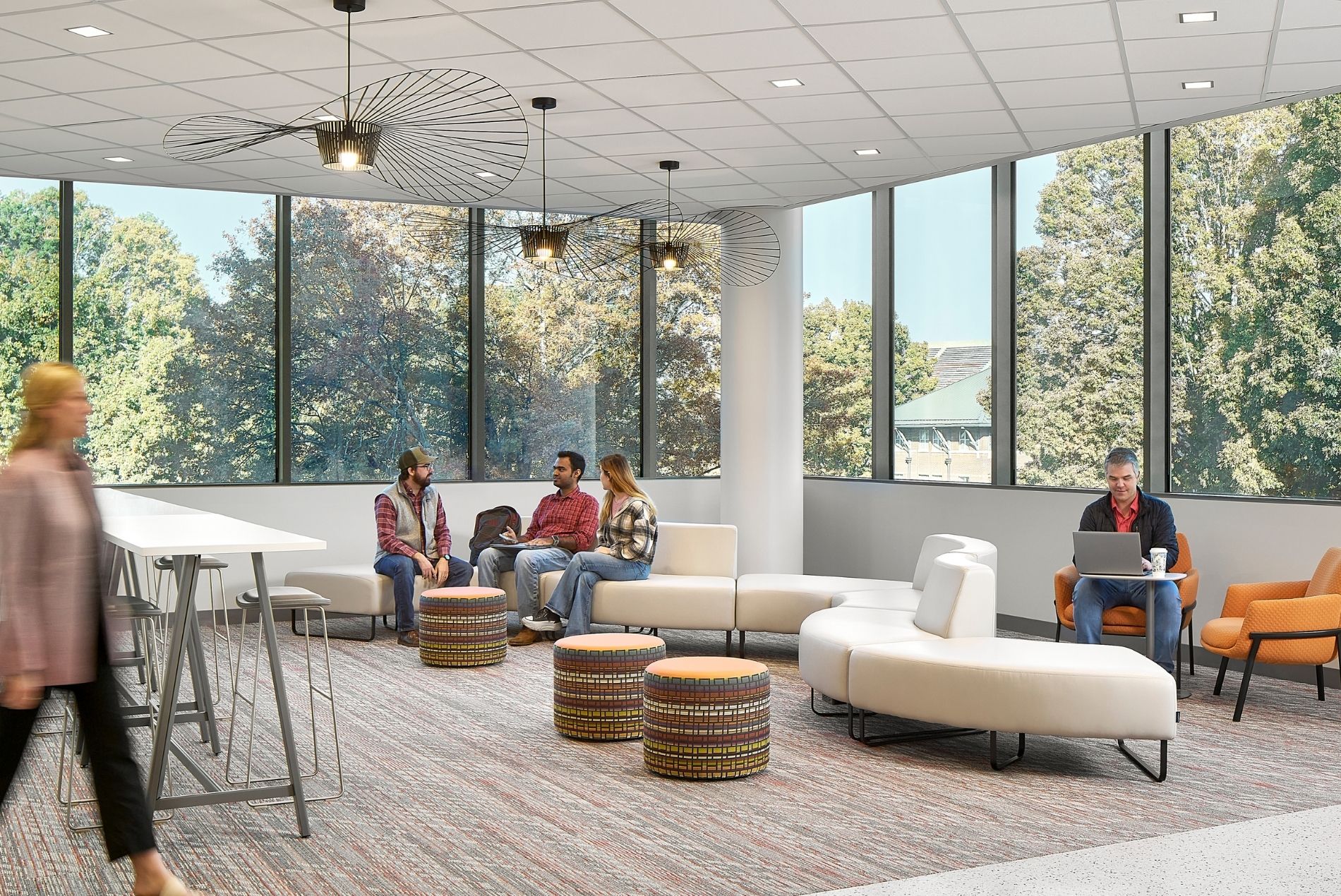
HOK’s design emphasizes flexible, high-performance research and learning environments that bridge theory and application. The design concept places research and teaching labs in close adjacency, with shared collaboration zones and core instrumentation positioned to promote collaboration. Adaptable wet and dry lab configurations allow the building to evolve as the field of materials science advances. Bright, open interiors, informal collaboration zones and a central two-story connector with a monumental stair are engineered to foster the unplanned encounters that drive convergent research.
The program is structured around three research thrusts that organize faculty work and student experience:
- Advanced manufacturing research includes smart and sustainable manufacturing, robotics, sensors, IoT, human-machine interface, AI and digital manufacturing.
- Energy research includes transportation technology, generation and distribution, grid control, renewable energy, green chemistry and bioinspired design.
- Health innovation research covers biomedical devices, biomaterials and regenerative and personalized medicine.
AMIC accommodates more than 300 research faculty and graduate students at a time, with more than 12,000 students using its labs annually.
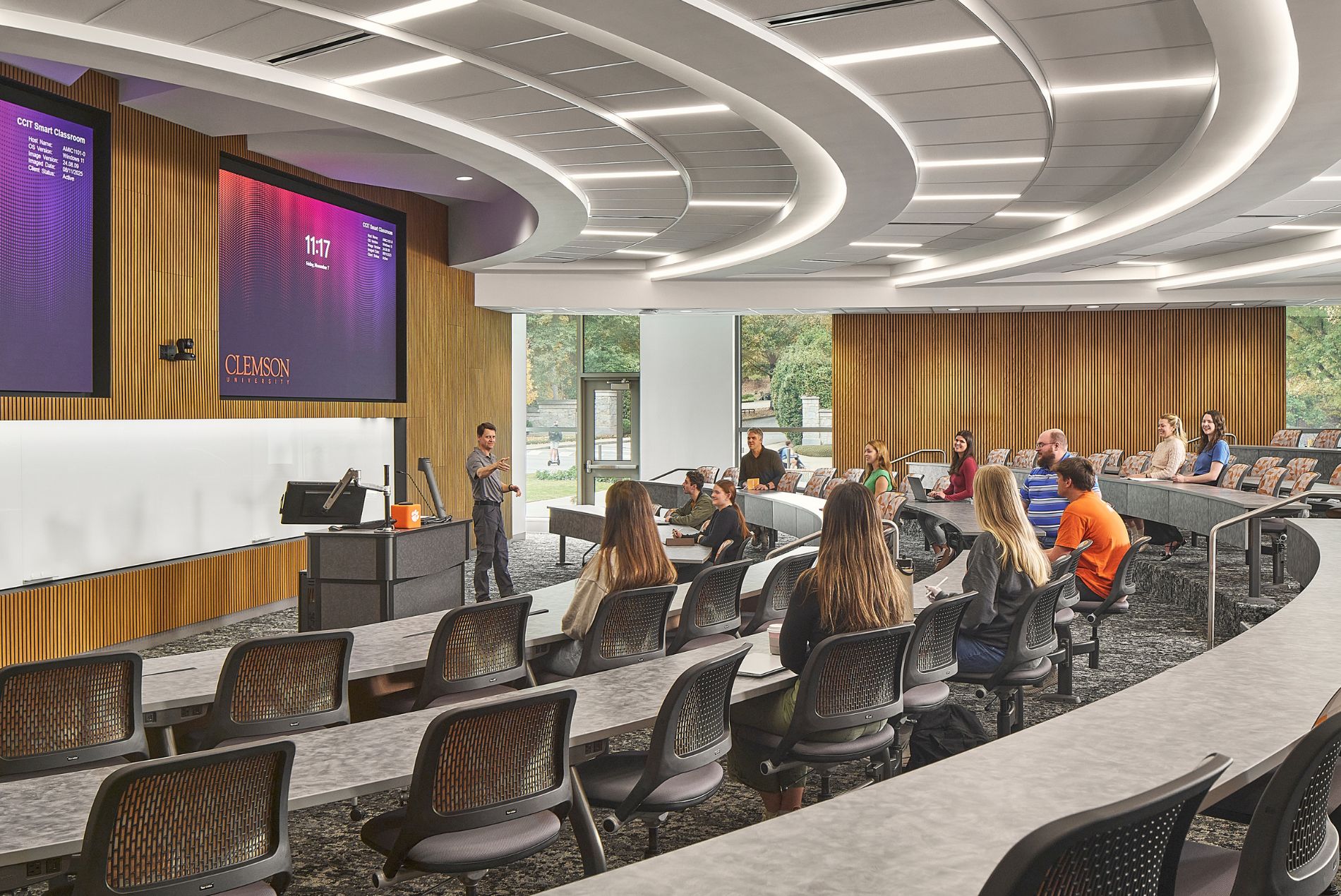
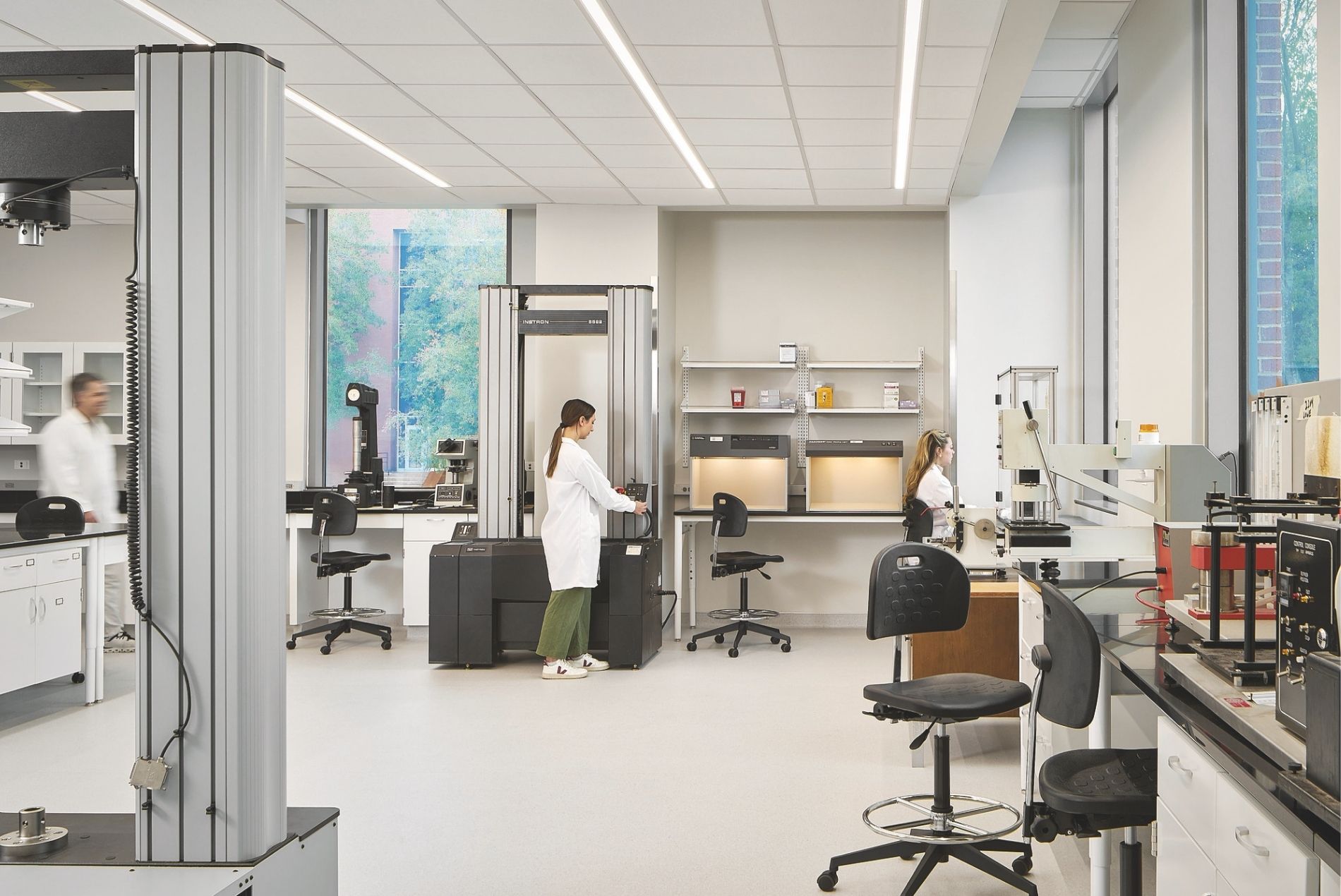
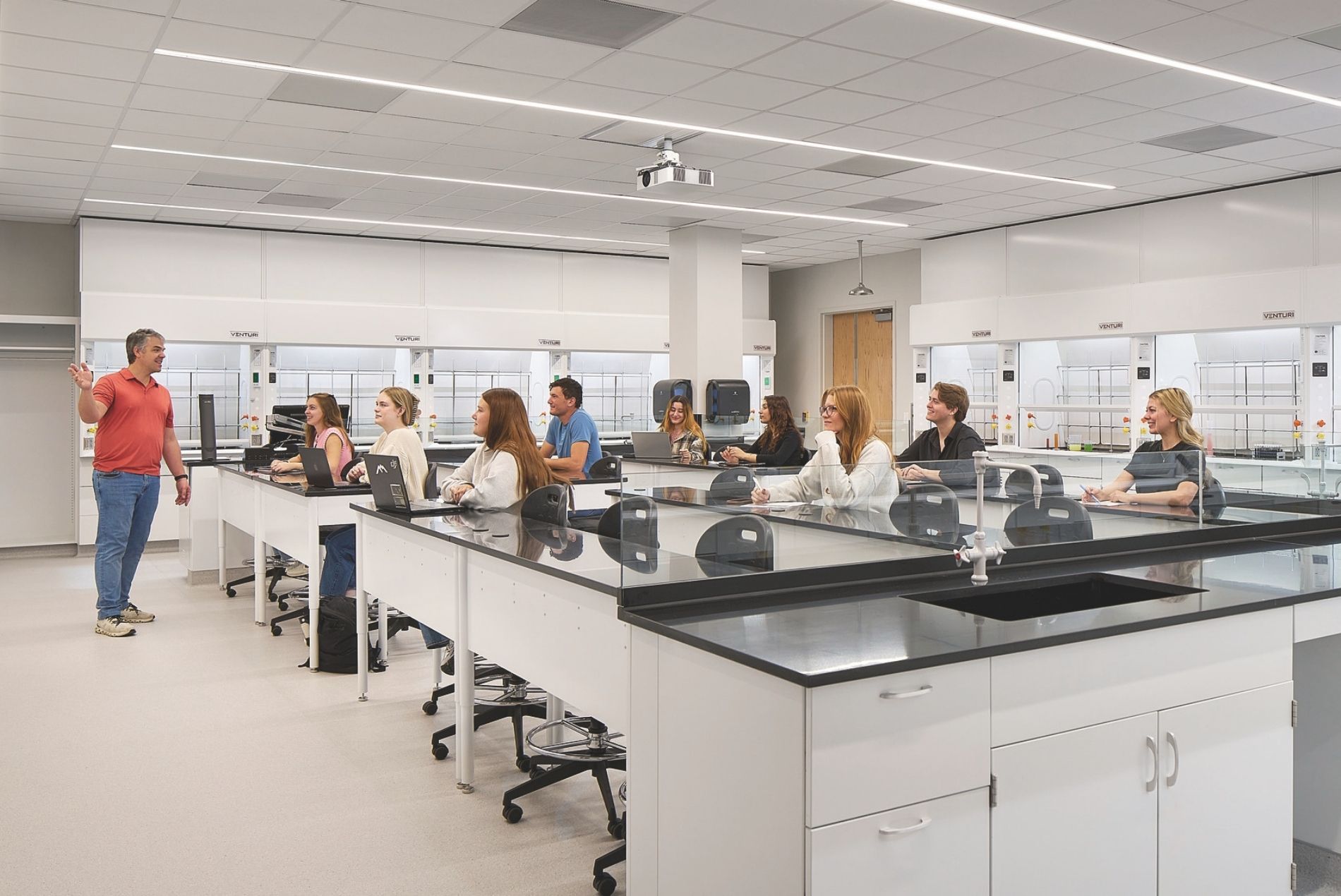
AMIC also embeds a pedagogical commitment: Every student in the building participates in research. Five undergraduate teaching laboratories support that model, including one dedicated to 3D prototyping with metal and ceramic printers. Advanced instrumentation typically reserved for graduate-level work, including a scanning-electron microscope, is accessible to undergraduates here. These amenities give students hands-on experience applicable to graduate school and careers in the industry.
Designed to achieve a Two Green Globes rating, AMIC integrates a concrete structure with a brick exterior and an electrochromic glass curtain wall. The dynamic-tinting glass modulates daylight and solar gain throughout the day, reducing cooling loads while maintaining views and visual connectivity. The concrete frame supports the vibration-sensitive instrumentation that high-resolution materials characterization demands. The exterior, anchored in brick to align with Clemson’s campus aesthetic, signals continuity with the institution’s land-grant heritage even as the interior advances a fundamentally different model for research and learning.
See inside Clemson’s Advanced Materials Innovation Complex here:
Impact
AMIC positions Clemson University and the state of South Carolina at the forefront of the advanced materials revolution. By dissolving the dispersion that previously constrained its three core departments and uniting them in a purpose-built convergence center, the facility accelerates the cross-disciplinary research and undergraduate engagement that define a top-tier R1 institution. It strengthens recruitment of faculty and students, reinforces partnerships with the more than 960 advanced materials companies operating across the state and supports industries such as advanced manufacturing, transportation, energy, health and computing.
CERTIFICATION
Two Green Globes anticipated
SIZE
143,000 sq. ft / 13,285 sq. m.
KEY FEATURES
Centralized campus location consolidates materials science research and supports interdisciplinary collaboration
Five undergraduate teaching labs with one dedicated to 3D prototyping
Advanced equipment attracts top scholars and equips students with hands-on experience
Adaptable lab configurations support future flexibility as the field evolves
Electrochromic glass curtainwall with brick exterior integrates with the campus aesthetic