Airport terminals are interconnected environments. Decisions about check-in, security, baggage handling, concessions, gates, building systems and aircraft operations ripple throughout a facility, influencing passenger flow, airport operations and the traveler experience.
Bringing architects, planners, designers and engineers together from the outset can help airport operators solve these interconnected challenges before they become costly problems. HOK’s experience spans terminals of dramatically different scales, from the five-gate Monterey Regional Airport replacement terminal to the award-winning redesign of LaGuardia Airport’s Terminal B and the 94-gate redevelopment of Salt Lake City International Airport.

Whether an airport is building five gates or 50, the core questions remain the same: How will construction affect operations? How can the terminal operate more efficiently? How can it adapt to future needs? And how can all this complexity translate into a seamless traveler experience?
This guide explores five considerations for airport operators planning a terminal replacement, expansion or redevelopment, with examples of how integrated design teams have addressed them.
1. Tackle Phasing Early
Airports cannot stop operating while major construction occurs. That makes phasing an essential part of airport planning and design.
HOK works with airport operators, airlines, contractors and other partners early in the process to establish operational requirements and understand site and schedule constraints.
Together, teams should explore questions that shape the project from day one:
- What must remain operational throughout construction?
- Can portions of the new terminal open independently?
- How will building systems work and transition between phases?
- How will passengers, employees, bags, goods and waste, and aircraft move safely and efficiently throughout construction?
These questions were central to the transformation of LaGuardia Airport’s 35-gate Terminal B. The project’s constrained site left little room for expansion between Flushing Bay and surrounding highways. Rather than designing the terminal and concourses separately, HOK developed an island-and-bridges concept that solved both challenges simultaneously. A central headhouse includes check-in, security and concessions, while pedestrian bridges above aircraft taxiways connect travelers to island concourses.
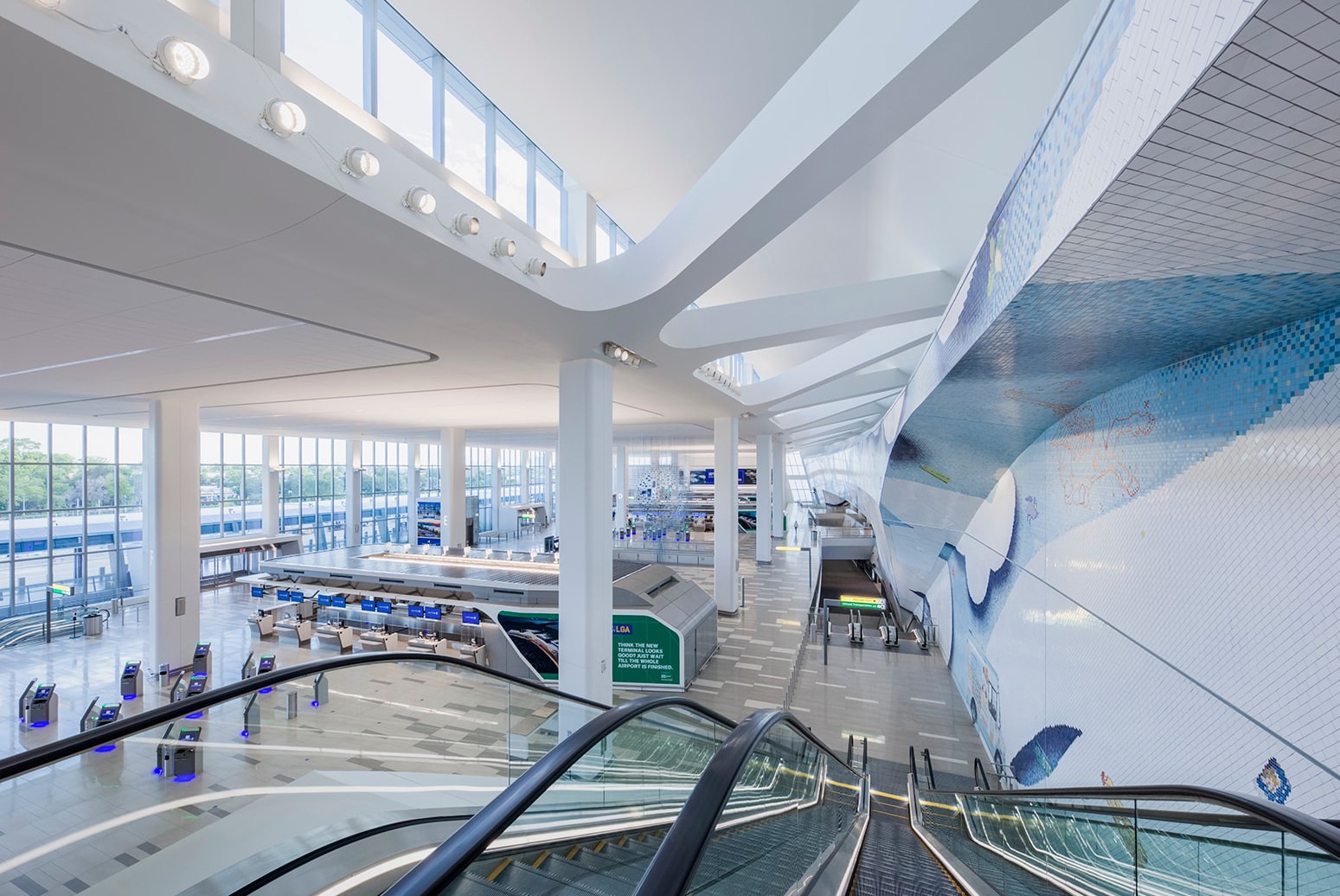
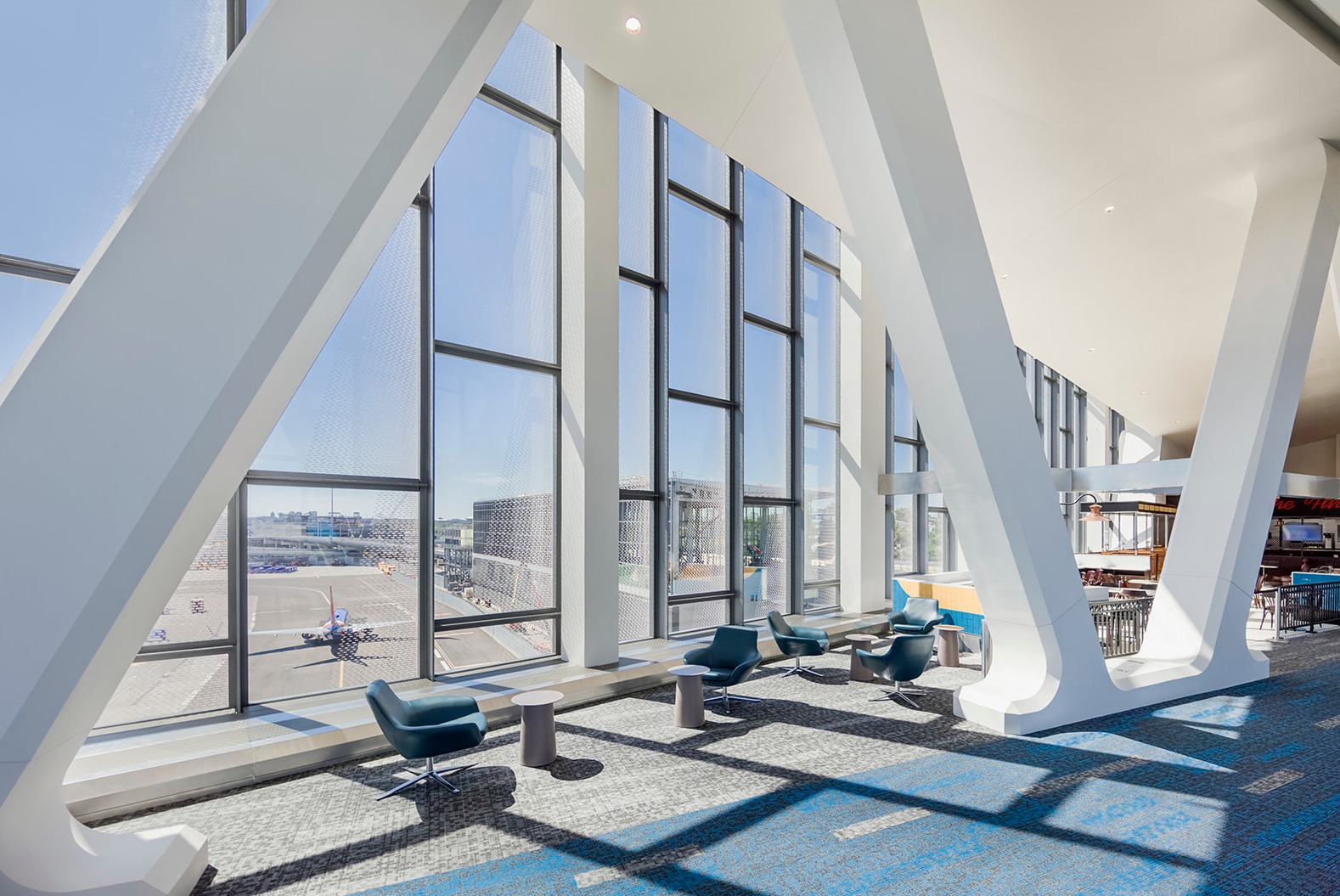
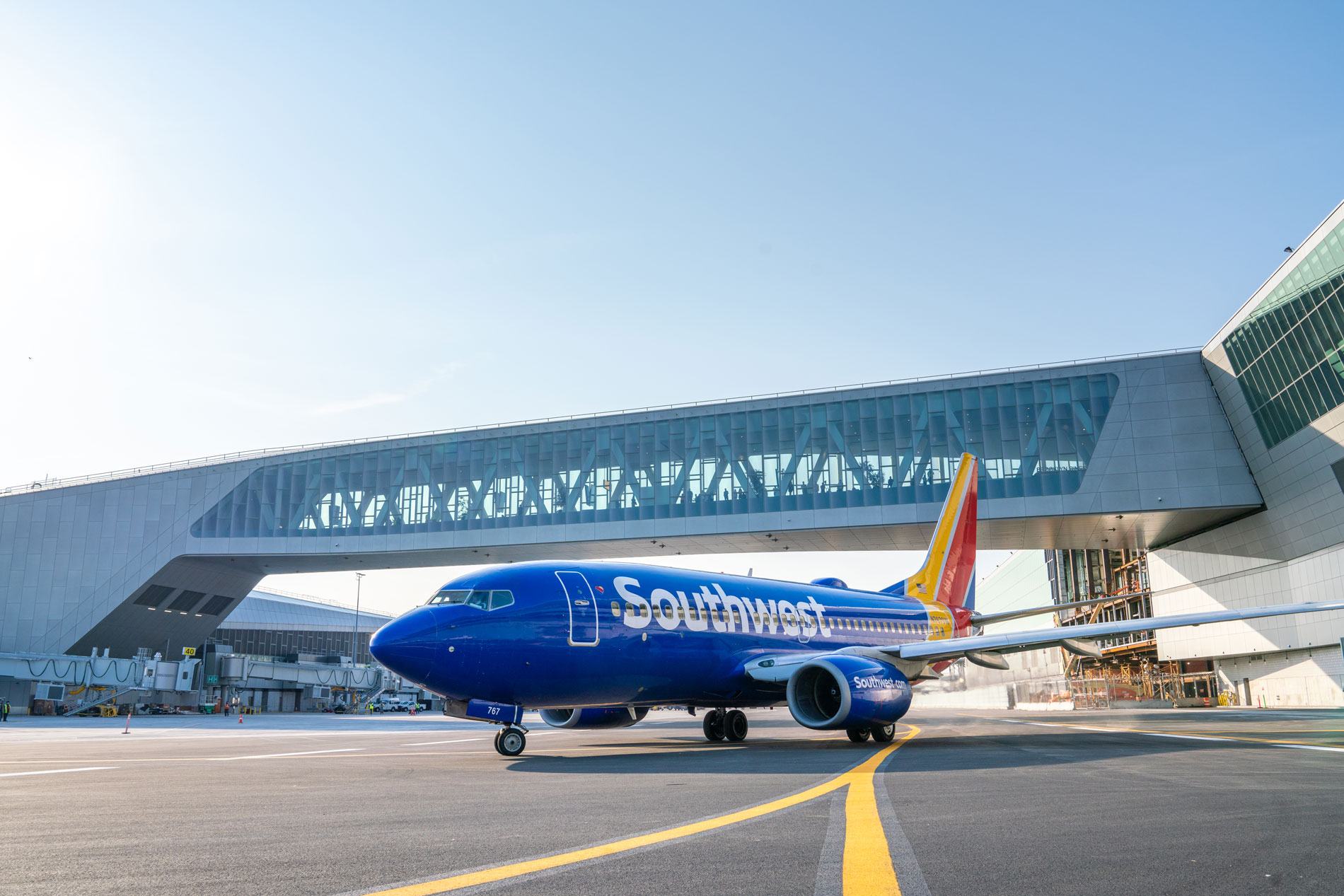
This approach increased airside capacity by 50%, recaptured 40 acres for airfield operations and allowed the new terminal to be built over the existing facility. Even at the peak of construction, Terminal B had to close only one of its 35 gates at a time. The simpler, faster construction phasing saved two years and $2 million in construction fees.

At Salt Lake City International Airport (SLC), phasing enabled the airport to replace aging terminals while maintaining operations. Over four construction phases, the airport progressively opened new terminal and concourse facilities while demolishing and replacing older infrastructure. Throughout the process, the airport maintained continuous operations and kept 72 gates open at all times. Now complete, the new HOK-designed Salt Lake City airport offers 94 gates.
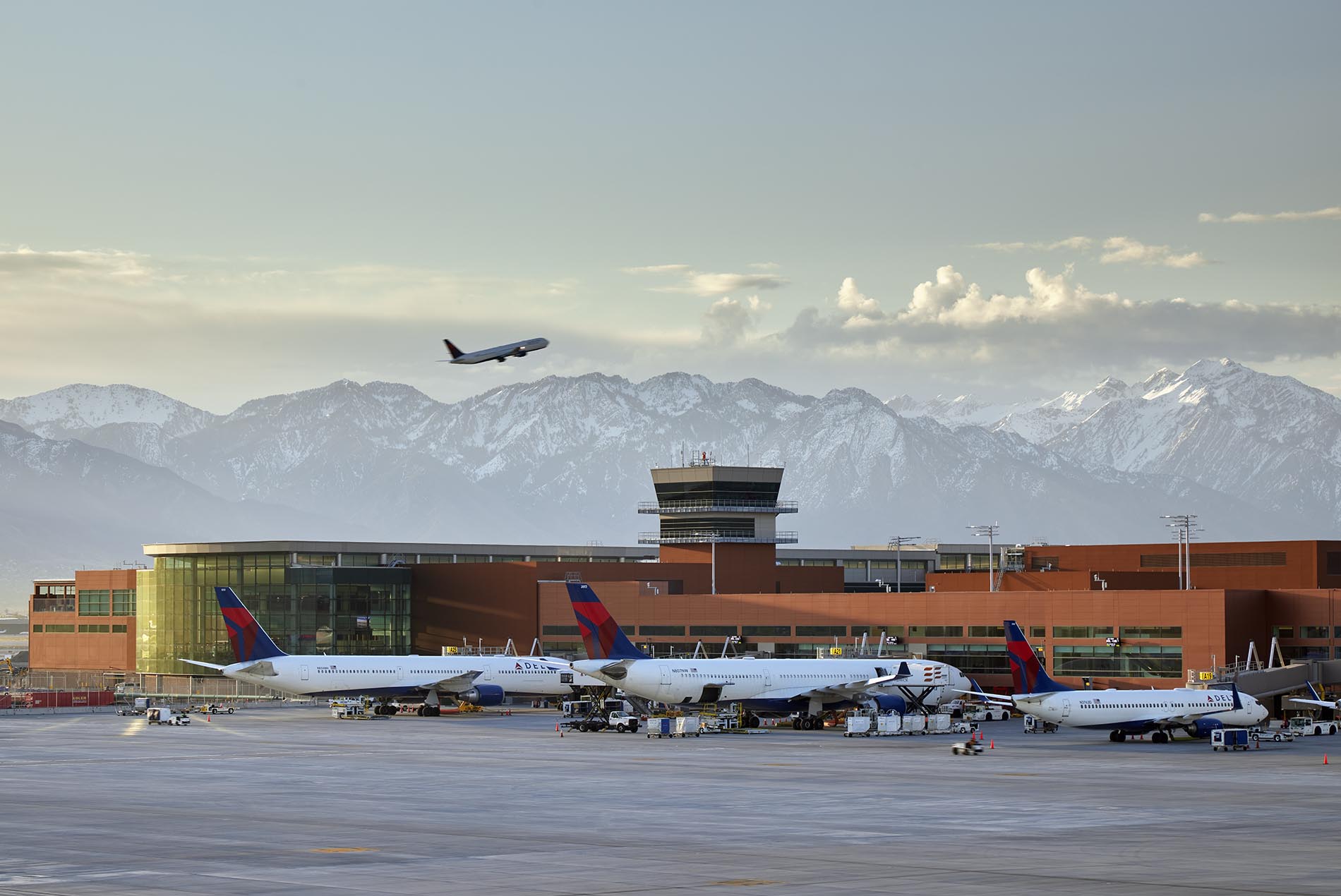
The key takeaway: Let phasing inform the design instead of designing first and figuring out construction later.
2. Design Around Operations, Not Square Footage
A bigger terminal isn’t necessarily a better one. Every square foot should support operational efficiency and the traveler journey.
Successful terminal planning considers the entire airport ecosystem:
- Passenger processing and circulation
- Baggage handling
- Airline operations
- Concessions and revenue opportunities
- Employee workflows
- Ground transportation and curbside access
- Aircraft operations
Airport operators and design teams should explore operational questions early in the process. Where are today’s operational bottlenecks? Are passengers traveling farther than necessary? Can spaces serve multiple functions? How can the terminal adapt to changing technologies and passenger volumes?
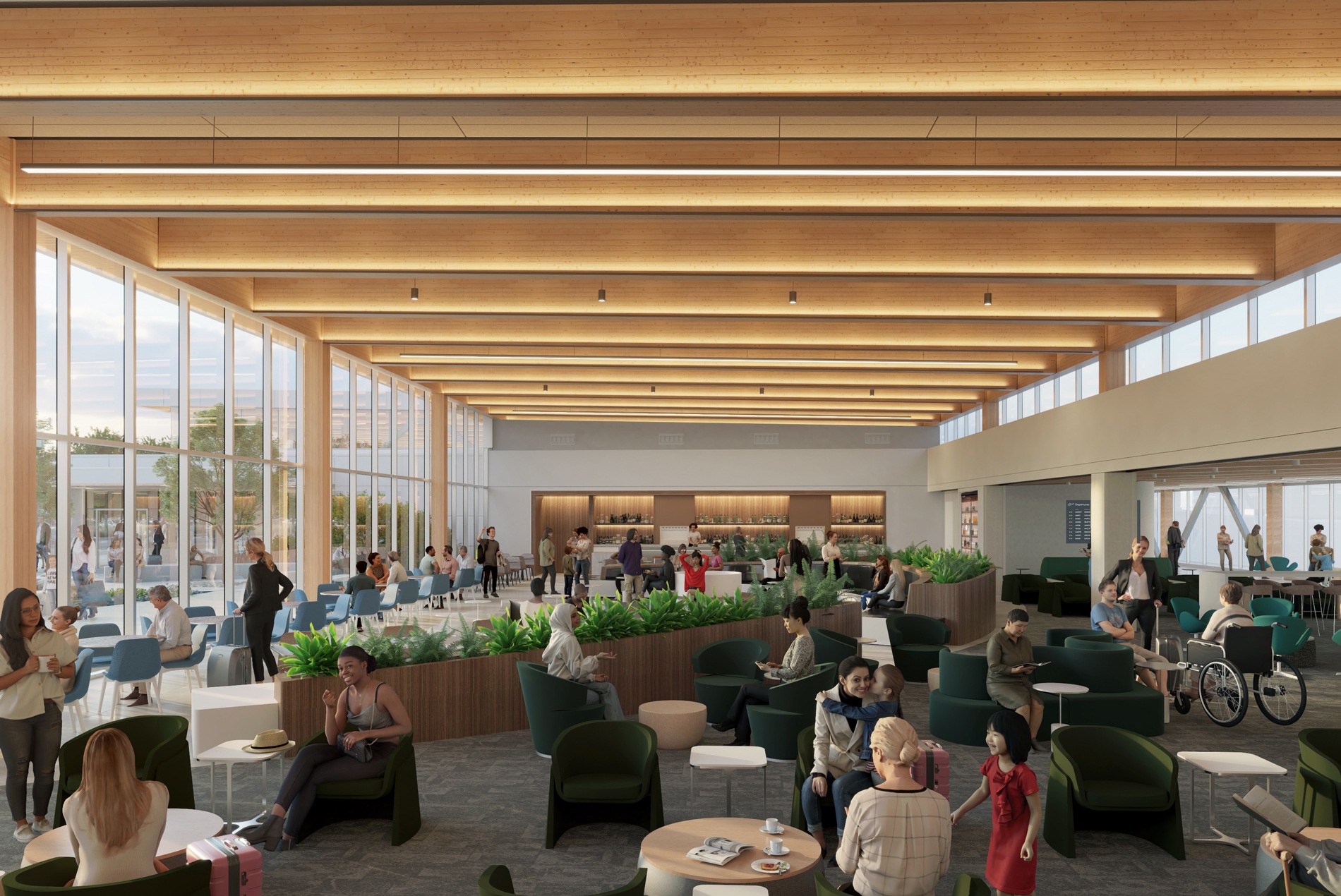
The new five-gate Monterey Regional Airport terminal demonstrates how these principles apply on a smaller scale. Instead of dispersing concessions and seating across multiple gates, the terminal is organized around a central bar and lounge that supports all gates. This right-sized approach improves operational efficiency, maximizes concession visibility and creates a more cohesive traveler experience.
The key takeaway: Start with how the airport needs to work, then design the terminal around those operational goals.
3. Build Resilience into the Design
Airport terminals are generational investments. They must perform well beyond opening day and respond to changing environmental conditions, traveler demand, technology and operations.
HOK collaborates with airport operators to understand their specific needs and create flexible design solutions that can adapt as technology, operations and climate risks evolve. We bring technology planning into the design process early, evaluating how automation, digital systems, data and future operating models may influence terminal operations, traveler experience and space needs over time. Durability, redundancy and recovery are all part of that planning process as well to help airports maintain operations and recover from disruptions.
Questions to address early include:
- Which local environmental hazards could disrupt operations?
- Where should critical systems be located or protected?
- How can the design support operational continuity and recovery?
- How will the terminal respond to changing demand, technology and airline needs?
At LaGuardia’s Terminal B, the design team addressed hurricane, storm and flood risks from nearby Flushing Bay by locating critical systems on upper levels or protecting them within underground concrete.
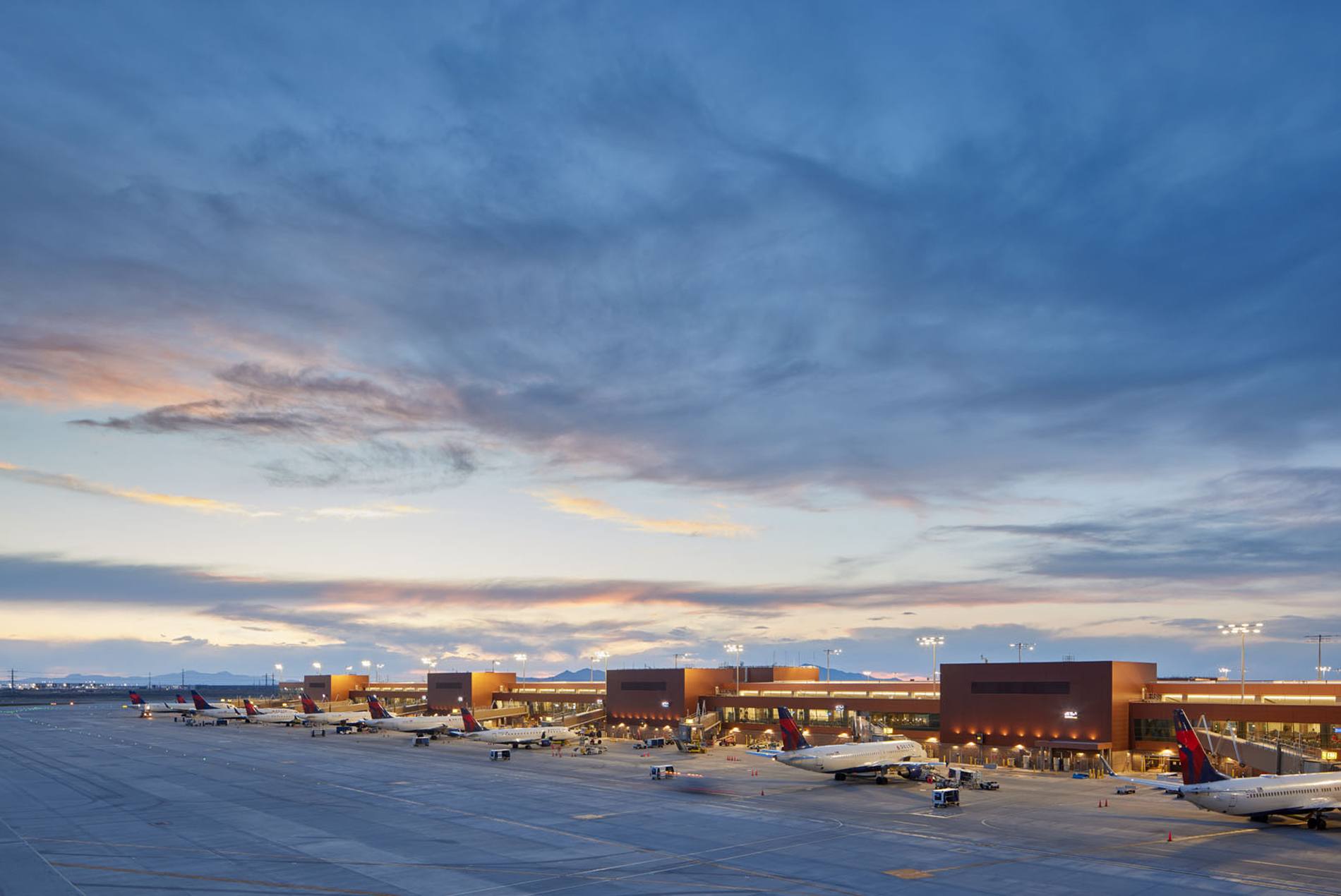
In Salt Lake City, extreme heat and potential earthquakes along the Wasatch Fault were concerns the team addressed when designing the new SLC airport. HOK’s structural engineering team created 29 structurally independent buildings that function as one cohesive terminal. This approach accommodates significant temperature fluctuations and helps protect the facility during seismic events.
The key takeaway: Design for opening day, but plan for decades of change.
4. Choose the Right Construction Strategy
The best construction strategy is the one that solves a specific operational challenge. Airport operators should evaluate site constraints, staging opportunities, secure-area access, construction windows, gate impacts and schedule requirements.
Questions to consider include:
- Where can construction or fabrication occur without disrupting airport operations?
- How will materials and completed building components reach the site?
- Which activities must occur during limited construction windows?
- How will the approach affect gate availability and the overall schedule?
Modular construction is one strategy to reduce operational disruptions and accelerate project delivery.
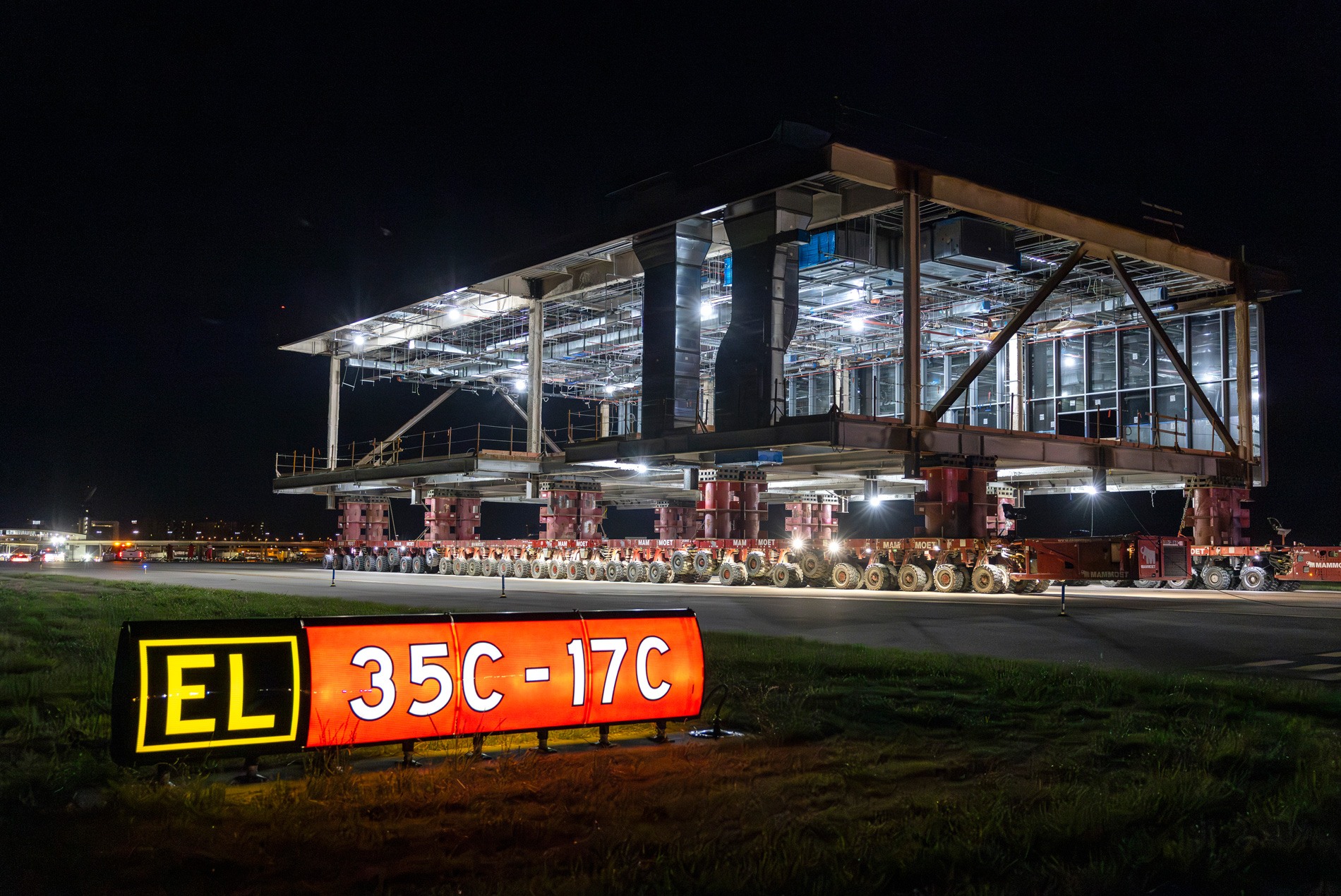
At Dallas Fort Worth International Airport (DFW), HOK designed pier expansion modules weighing up to approximately 1,200 tons each for Terminals A and C. The modules were fabricated with mechanical, electrical, plumbing, fire protection systems and exterior glazing outside the airport’s secure perimeter and then transported across taxiways overnight to their final locations. This modular approach maximized DFW’s existing gate count and decreased the construction timeline from an estimated 27 months to 18 months.
Curious to learn more about modular construction for your project? In this panel discussion, HOK’s structural engineers share practical guidance on the conditions that make modular construction most effective.
The key takeaway: Pursue the construction strategy that solves an operational or schedule challenge.
5. Never Lose Sight of the Human Experience
Airports are incredibly complex behind the scenes. To passengers, they should feel intuitive and effortless, while to employees, they should feel like great places to work.
Good design helps travelers and employees move confidently and feel comfortable in the terminal through:
- Clear sightlines
- Intuitive wayfinding
- Accessible circulation
- Air quality
- Daylight, views and connections to nature
- Comfortable places to wait or take a break
- Local identity and sense of place
These experience questions should inform planning decisions from the outset:
- Can travelers and employees understand where to go without relying entirely on signs?
- How do lighting, sightlines and spatial organization help people navigate?
- Where can people sit comfortably and connect with daylight or outdoor space?
- How can the terminal reflect its region rather than feel interchangeable with any other airport?
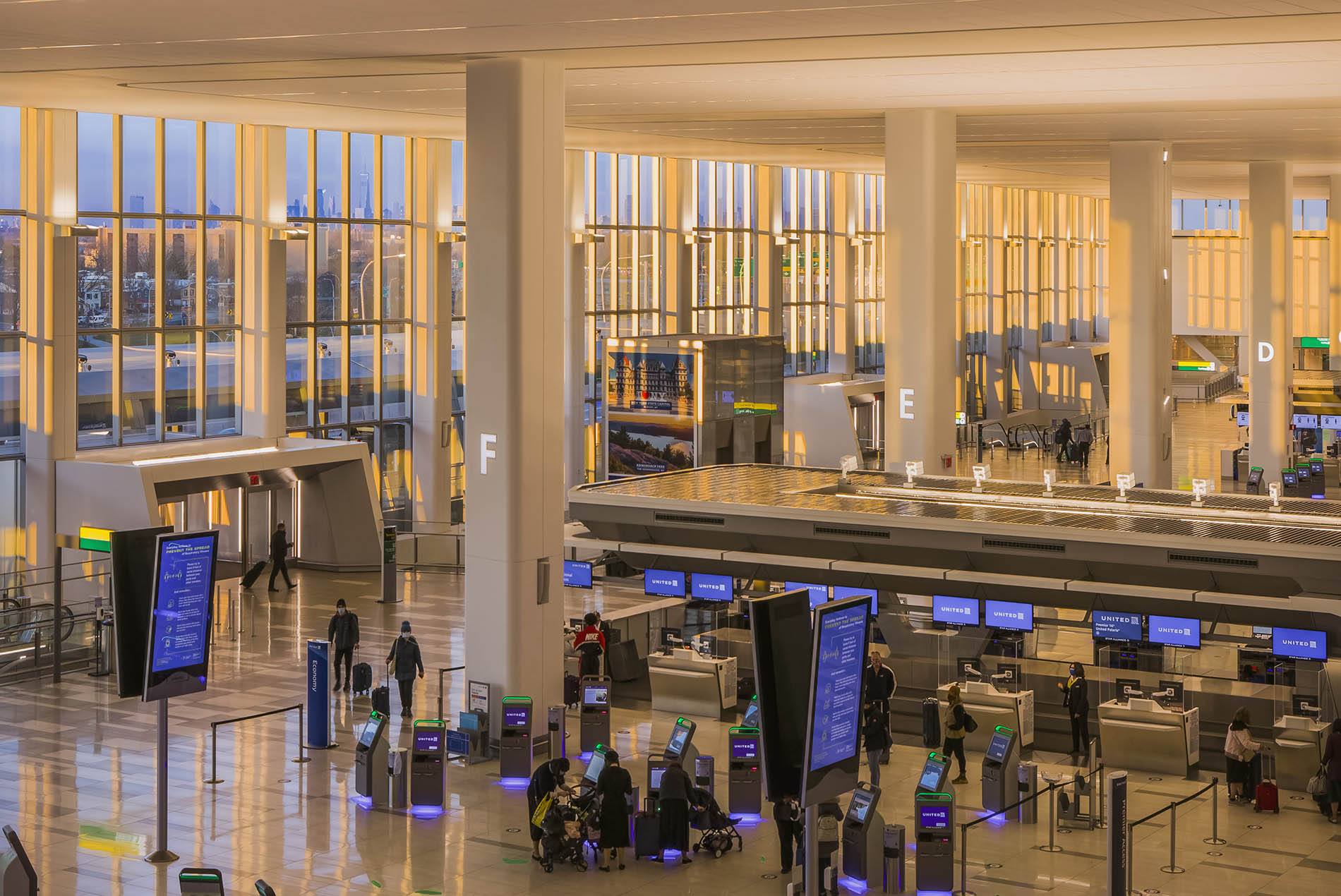
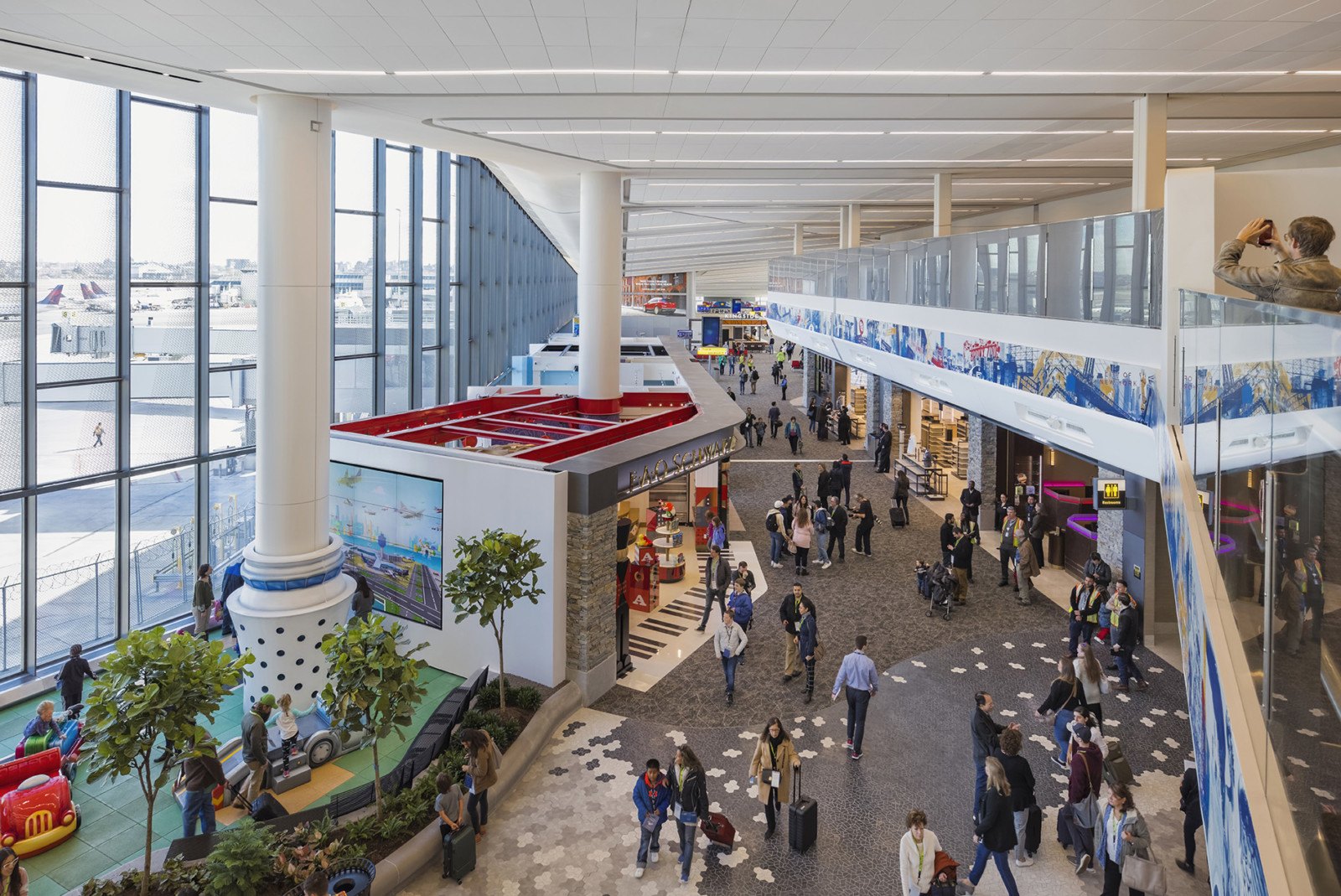
At LaGuardia’s Terminal B, the interior environment reflects New York City’s vibrancy. The terminal features pocket parks inspired by New York’s iconic parks and local favorites like Shake Shack, Brooklyn Diner, FAO Schwarz and Bowery Bay Shops. Glass walls draw daylight into the terminal and concourses and offer views of the New York skyline. In this Wall Street Journal video, HOK’s Peter Ruggiero explains how subtle moves like lighting, ceiling height changes and floor patterns intuitively guide travelers through airports like LaGuardia.
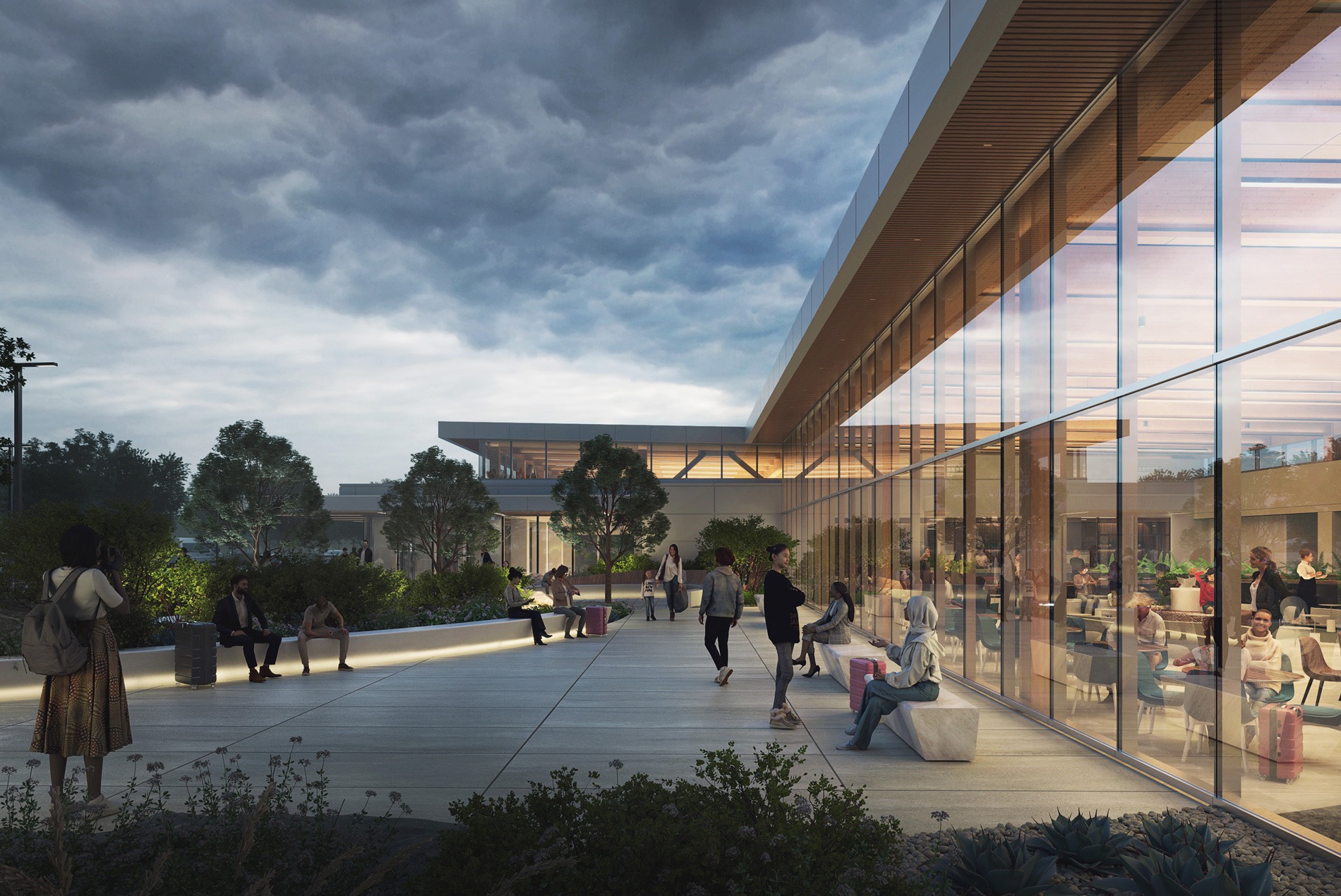
At the new Monterey Regional Airport, extensive mass timber, extensive glazing and a landscaped outdoor courtyard will bring travelers closer to the natural beauty of California’s Central Coast. Clerestory windows bring daylight further into the terminal, while a dedicated outdoor air system improves the building’s ventilation effectiveness.
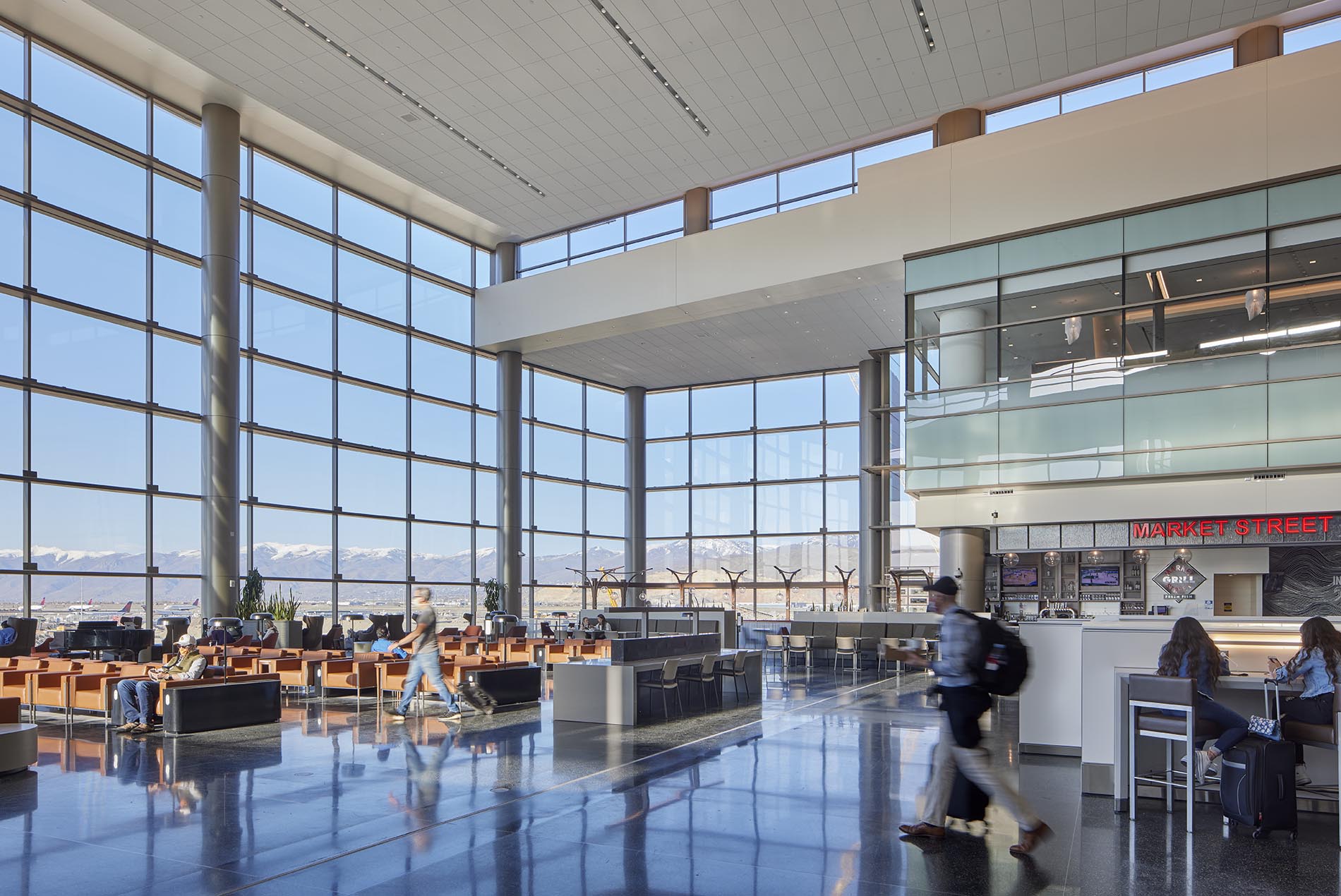
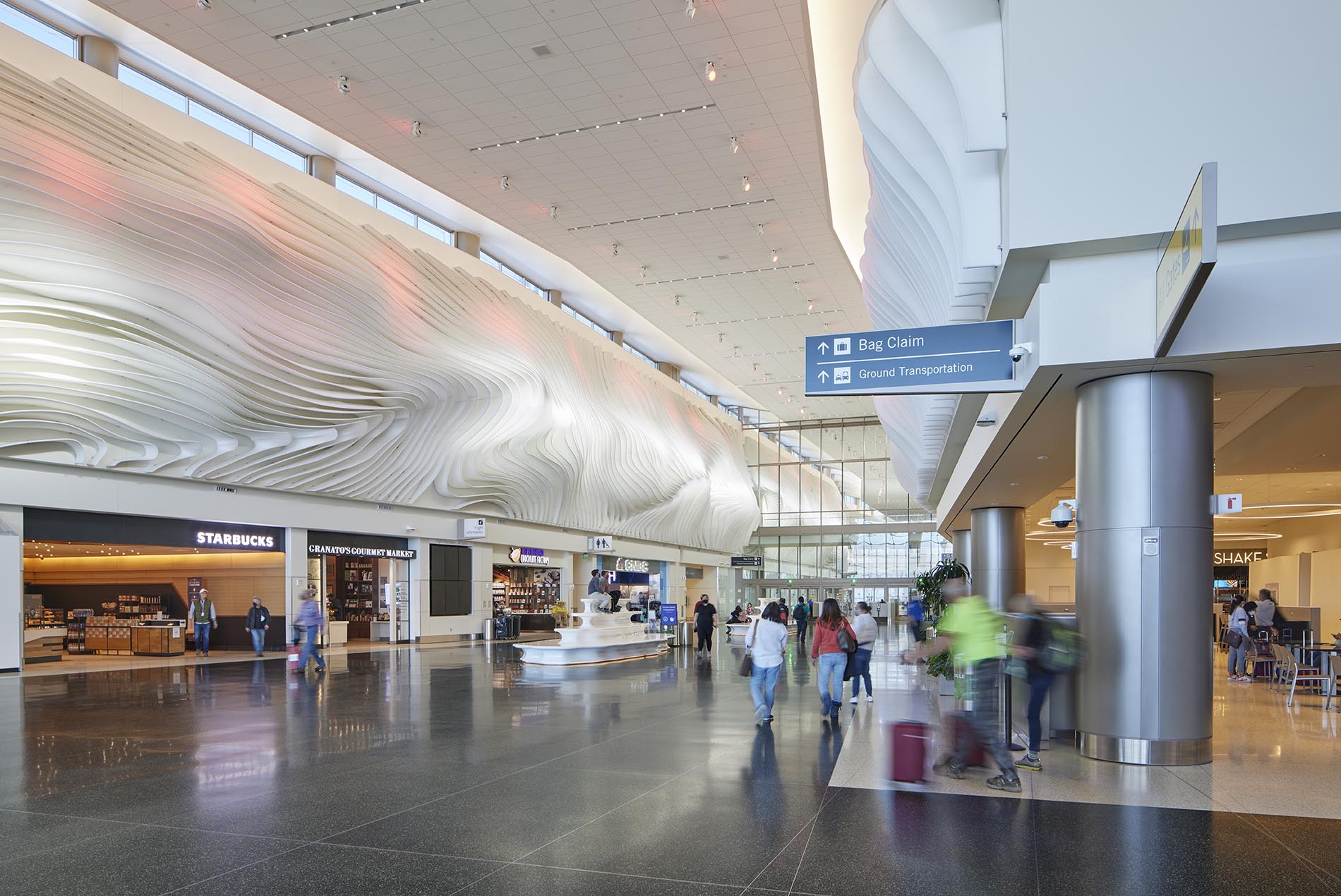
In Utah, the post-security Canyon space at SLC creates a dramatic civic hall filled with daylight, local dining, public art that evokes Utah’s landscapes and lounge seating with views of the Wasatch Mountains. In this panel discussion, HOK architects, designers and engineers discuss how they created this sense of place, as well as other lessons learned on phasing, operational efficiency, resilience and interdisciplinary collaboration when planning and delivering the new SLC.
The key takeaway: The most memorable terminals create meaningful connections to place while making the travel experience simpler and more enjoyable.
Integration Is Critical
HOK designs predictability into the world’s most complex projects, aligning people, technology, engineering and design around the outcomes that matter most to airports.
Delivering a successful terminal requires an integrated approach. HOK’s multidisciplinary team of architects, designers, planners and engineers helps airports see the complete picture, connecting decisions across every part of the terminal to deliver projects that are efficient to build, resilient to operate and intuitive for travelers.
By bringing those disciplines together early, airport operators can identify conflicts, uncover efficiencies and make informed decisions before construction begins. The scale may change from a five-gate regional airport to a 94-gate hub, but the principle remains the same: solve the terminal as a whole.
HOK designs airports, airport terminals, transit centers and other transportation environments that shape the passenger experience. Discover more on our Aviation + Transportation practice page, or contact HOK’s Matt Needham, director of Aviation + Transportation, at matt.needham@hok.com, and Jon Meier, HOK’s senior project manager, at jonathan.meier@hok.com.