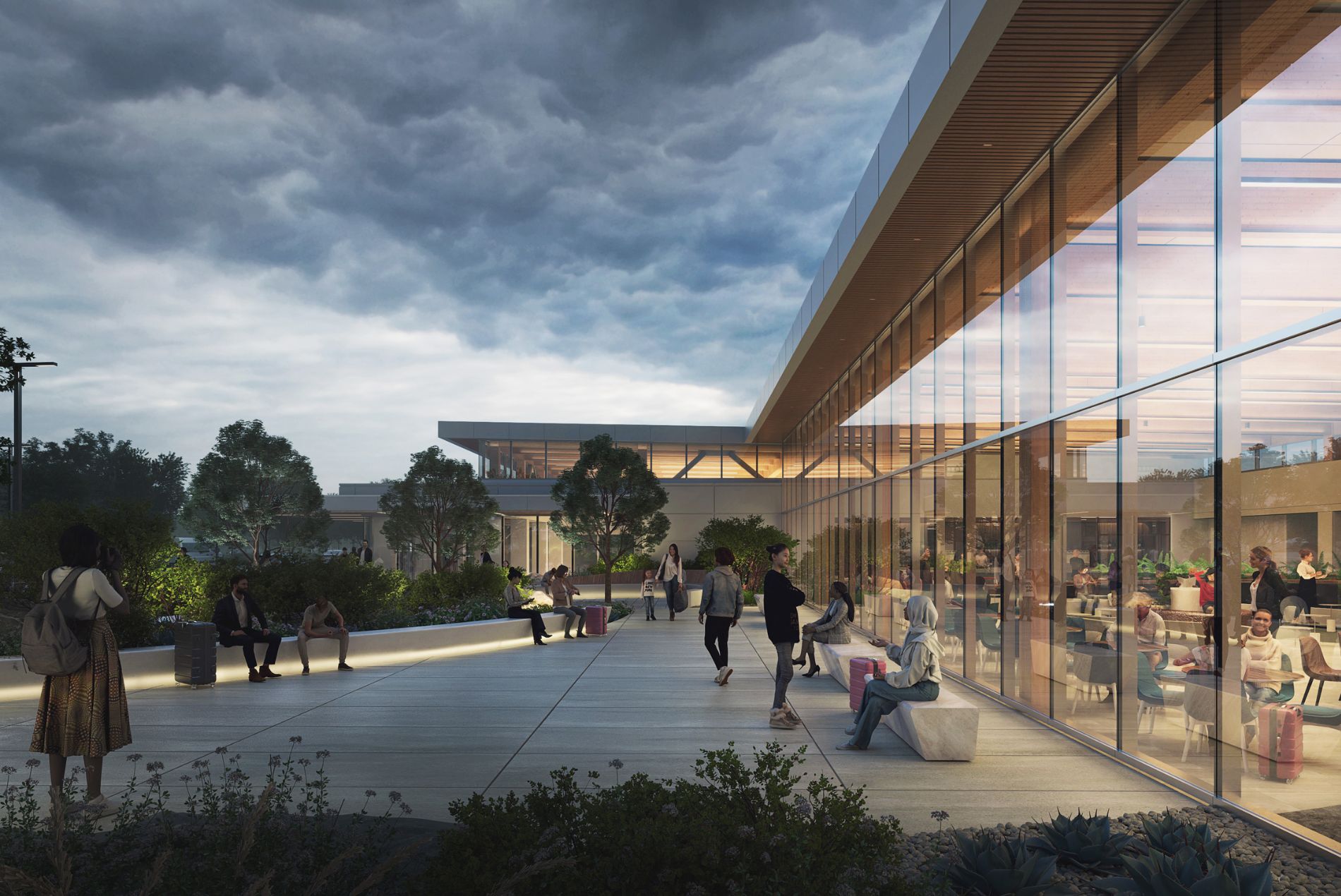
The Monterey Peninsula on California’s central coast is known for its striking natural beauty. Its aging airport—many visitors’ first impression of the region—did not embody its allure and deep sense of community. This new five-gate terminal changes that, transforming it into an all-electric, net-zero-energy-ready facility that brings the Peninsula’s natural beauty right to the gate.
Rather than mimic the scale and spectacle of major hubs, our design draws from what makes Monterey special: simplicity and restraint, connection to nature and a comfortable relationship with place. The result is a civic gateway that works as both travel hub and community anchor, authentically Monterey.
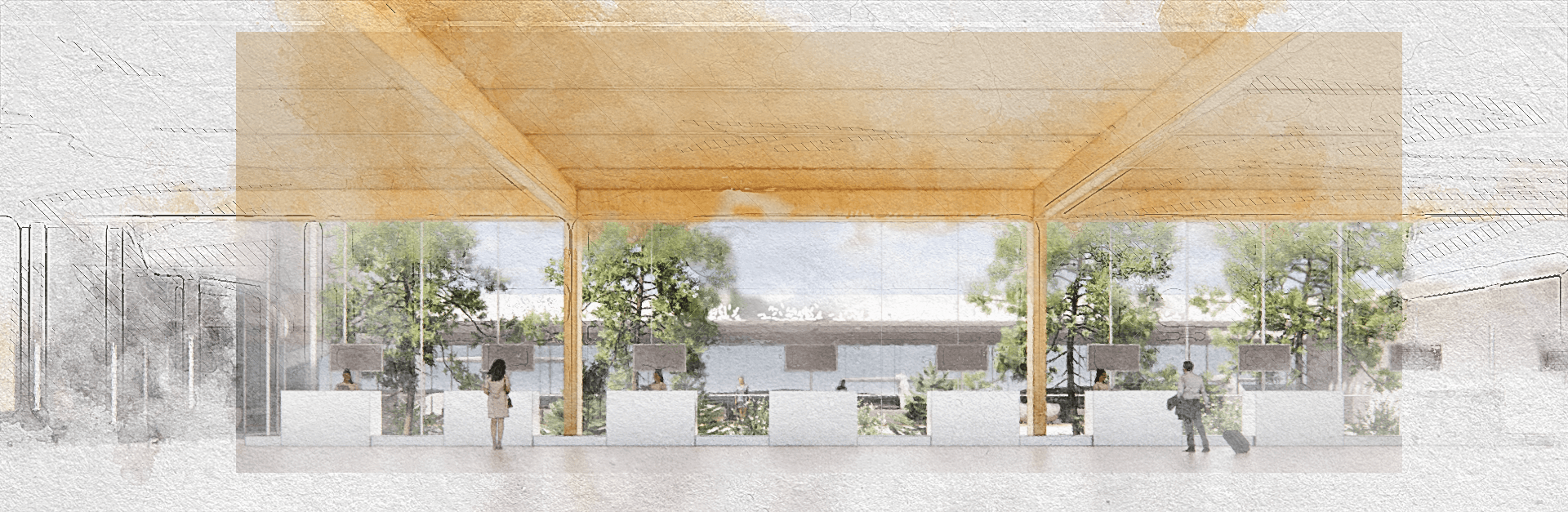
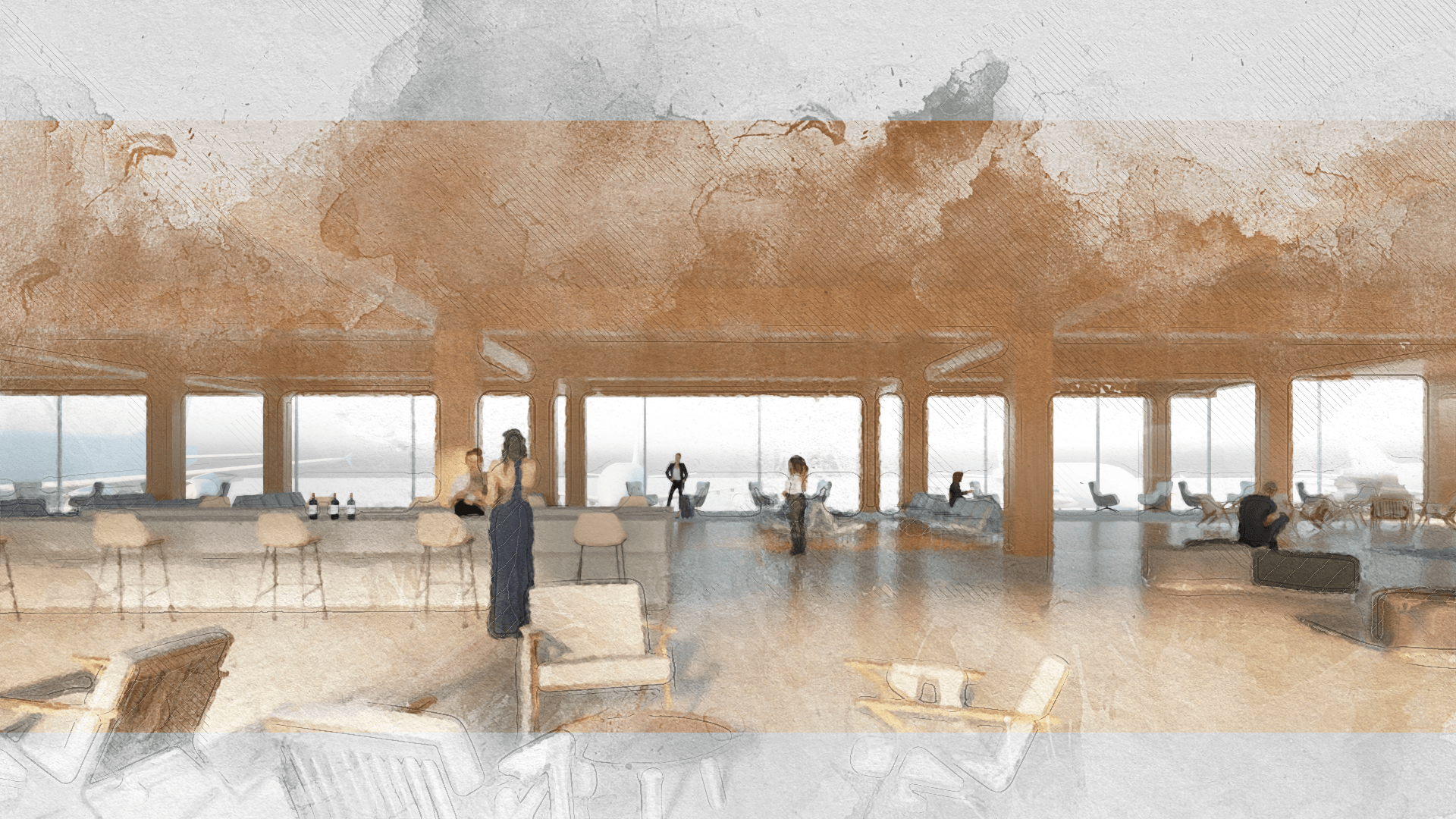
The experience is rooted in the Peninsula’s inland valleys, redwood canopy and ocean coves. That “treehouse and cove” idea shapes a light-filled pavilion and a palette of materials and colors that belongs here.
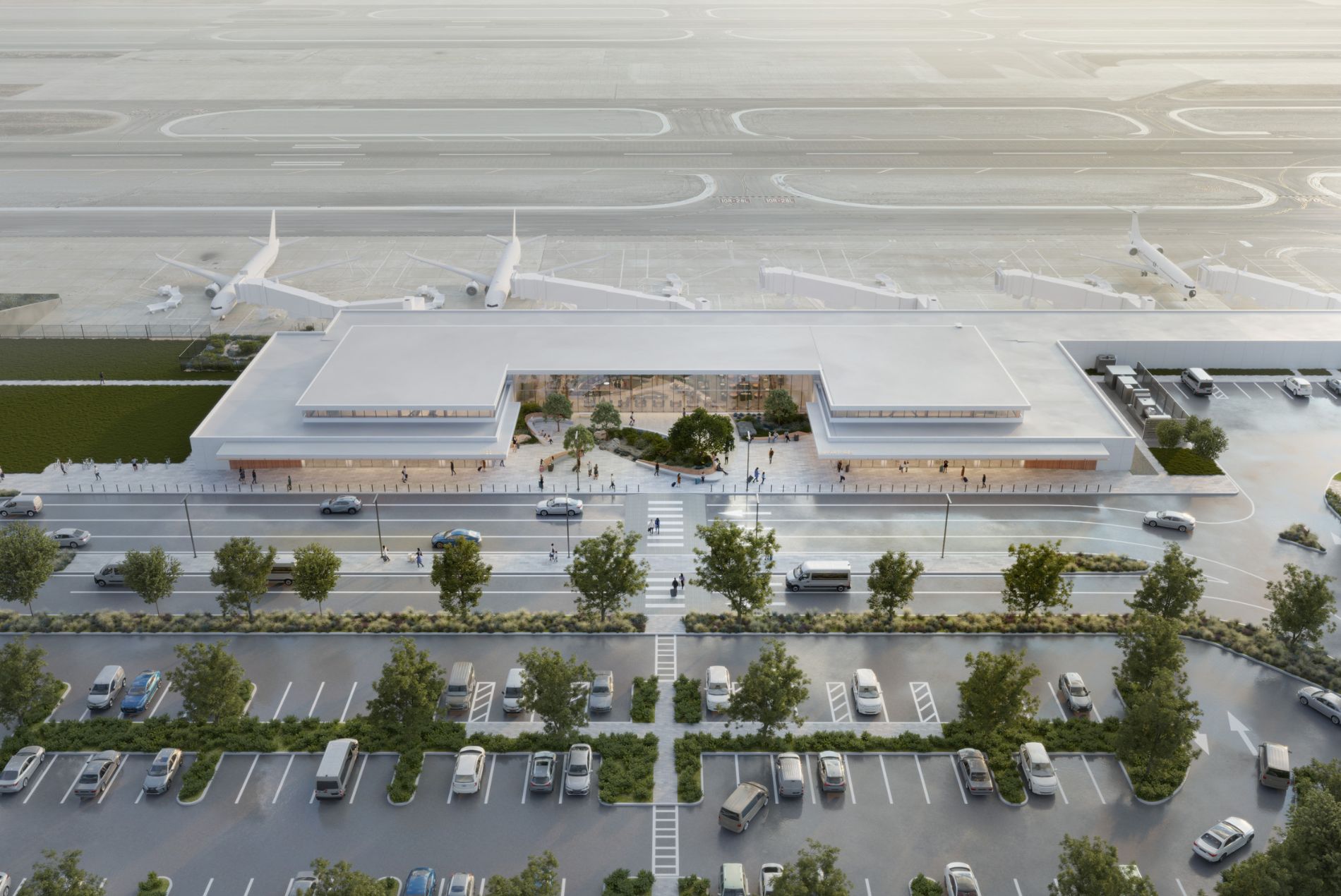
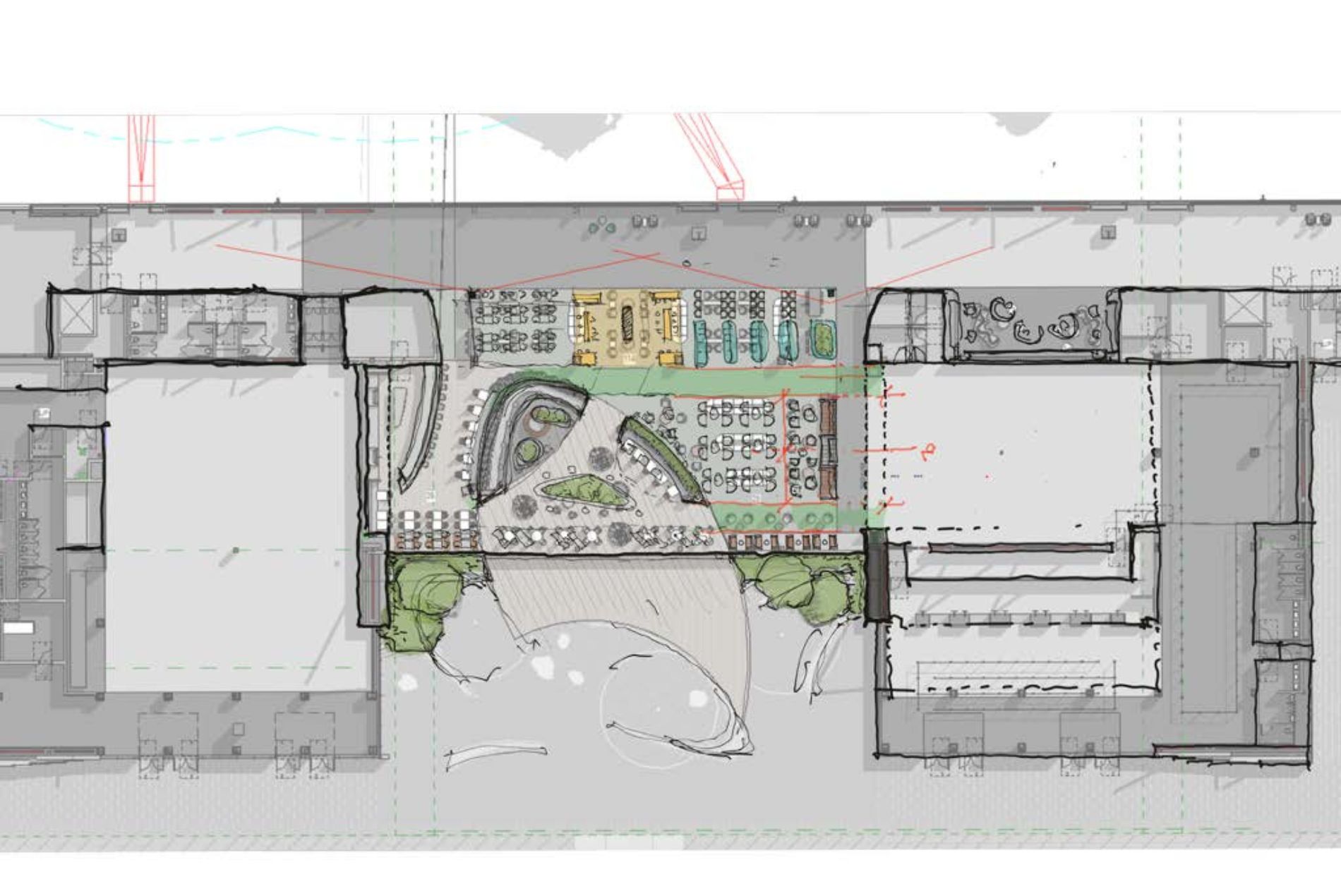
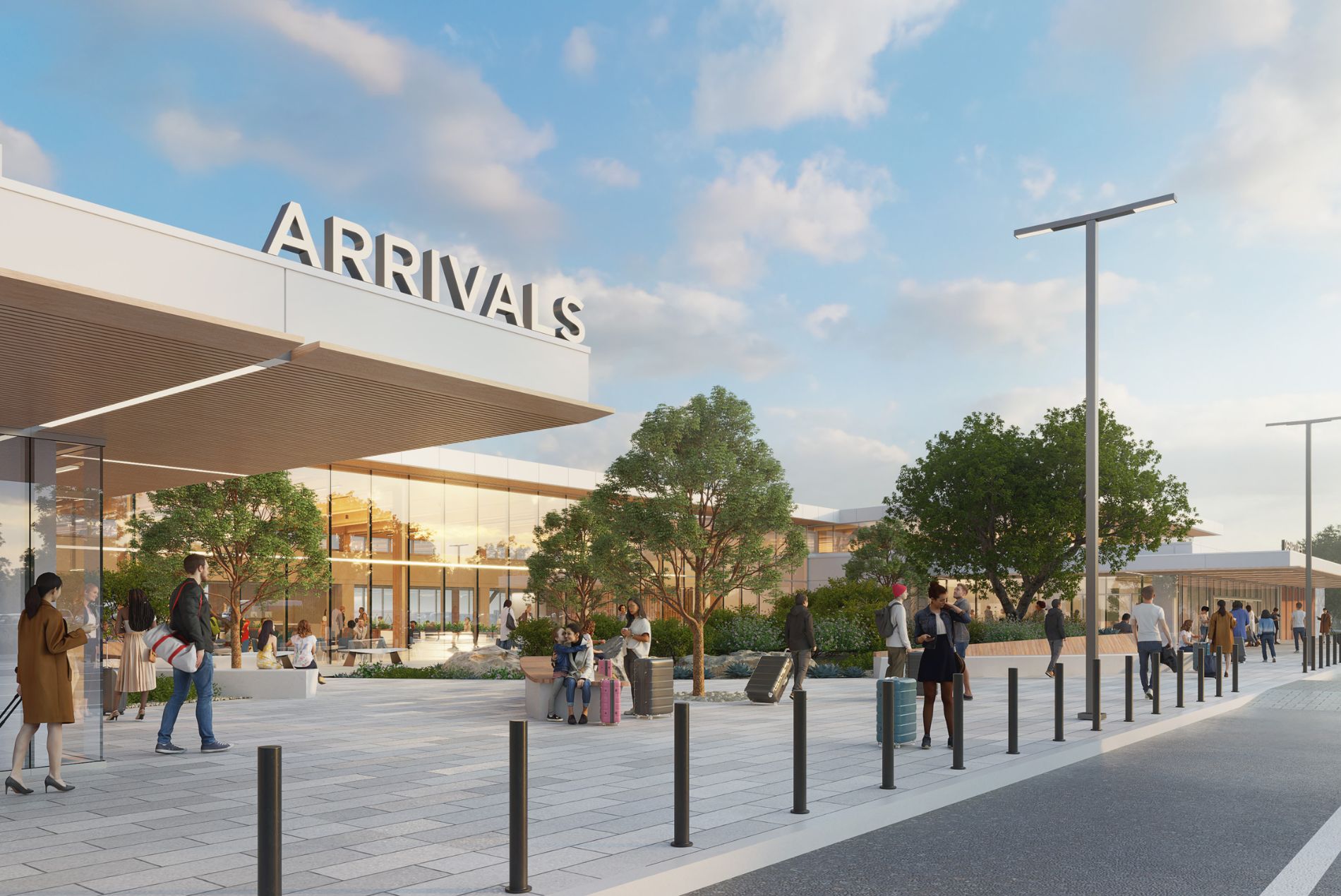
Landscape and regenerative design reshape access roads, parking and edges into nature-rich sequences. A central courtyard works as the civic square, with the building mass pinching at this point to open views to the forest, airfield and rolling hills.
Efficient systems do the rest. Heat-pump chillers and thermal energy storage handle conditioning. A dedicated outdoor air system improves ventilation and indoor air quality while controlling energy use. Controls are simple to read and set for daily operations, not just peak days.
We selected materials for their low embodied carbon and durability, and the site uses native planting and efficient water management. The result is a terminal that performs well and feels healthy while setting a clear standard for regional airports.
The brief was to make travel feel better. The team asked: How could passengers and staff gain some of the same physical, emotional and psychological benefits they find in Monterey’s landscapes? We organized the journey around three cues from place—the coast, agriculture and forested hills—so movement through the terminal feels legible and connected to nature.
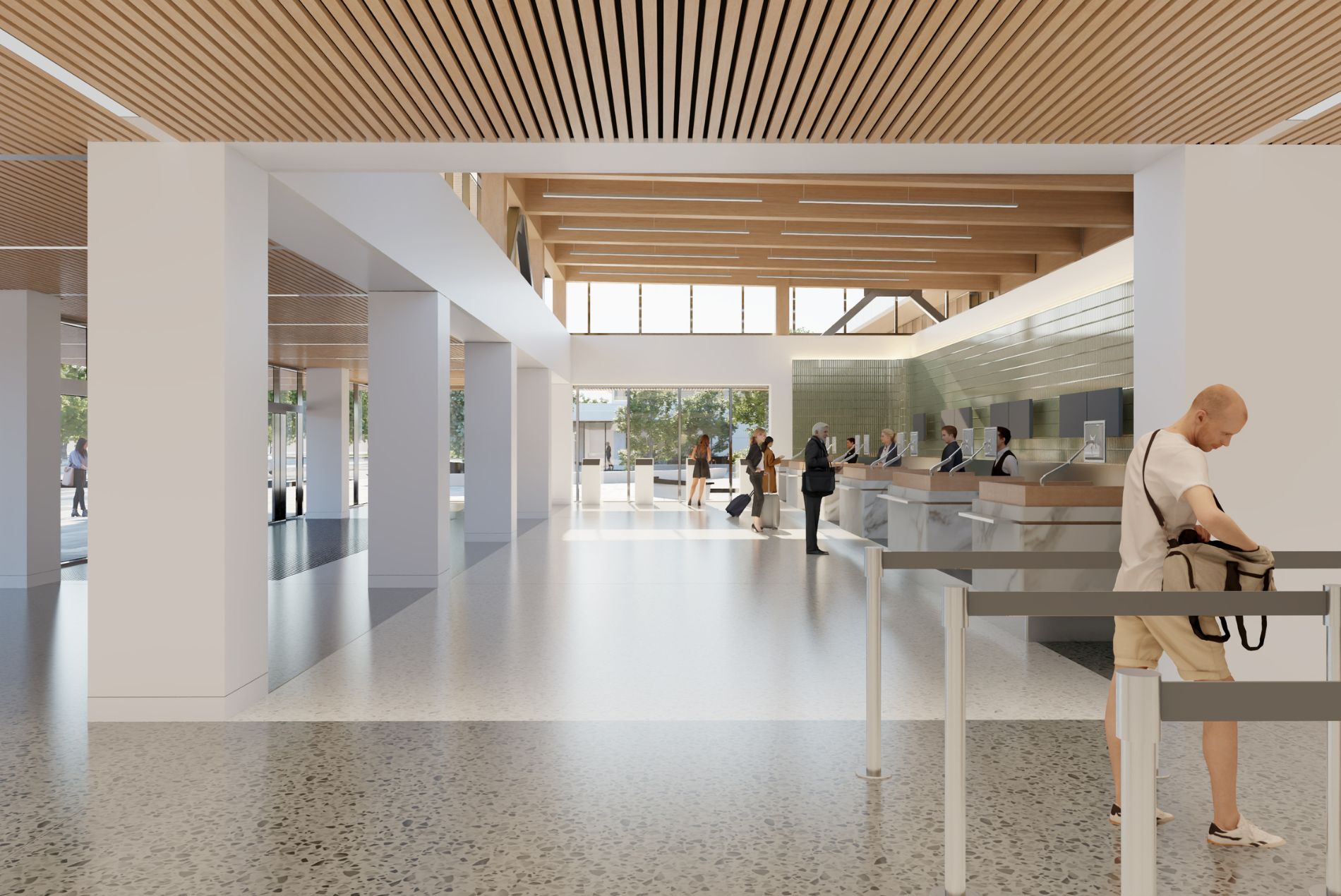
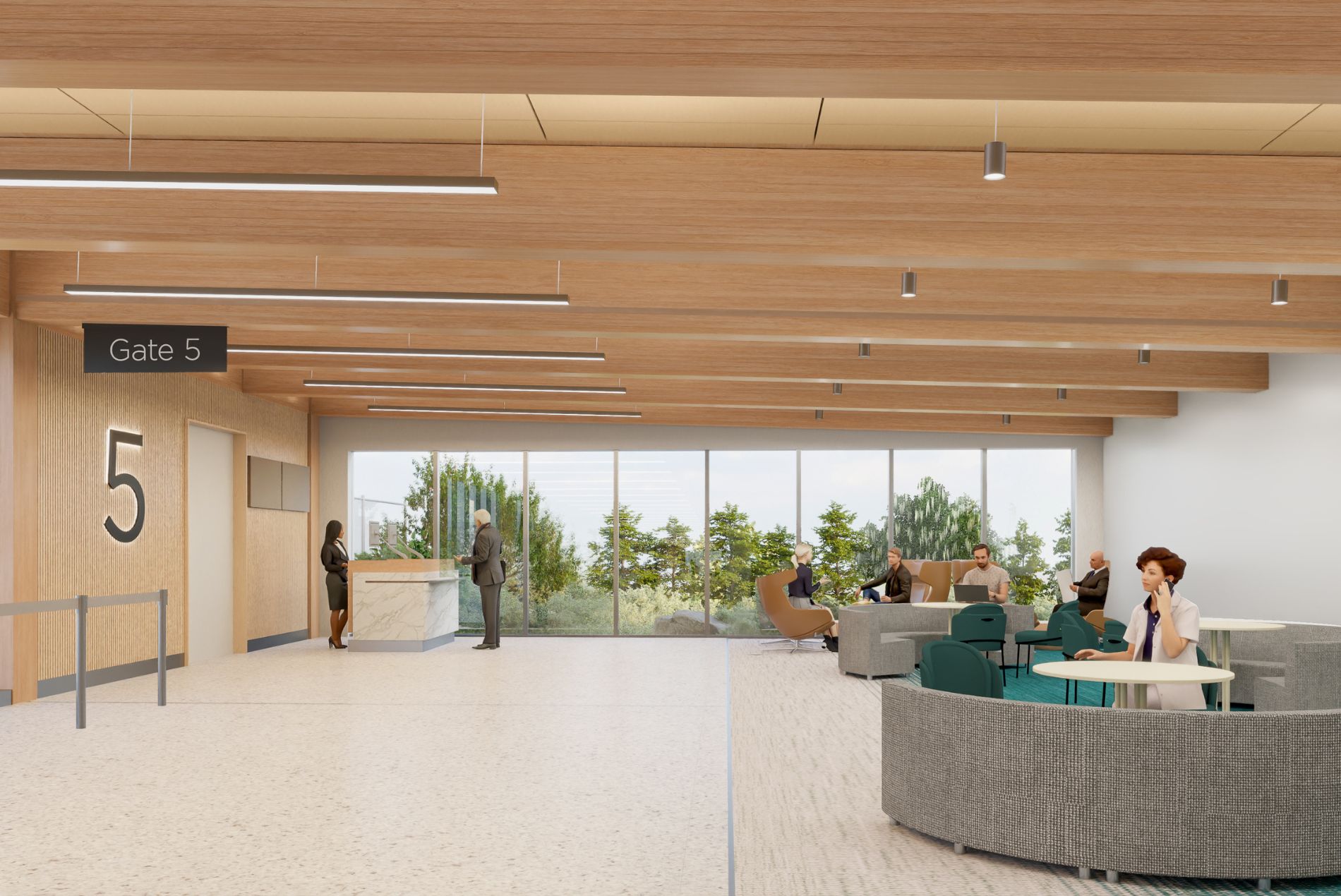
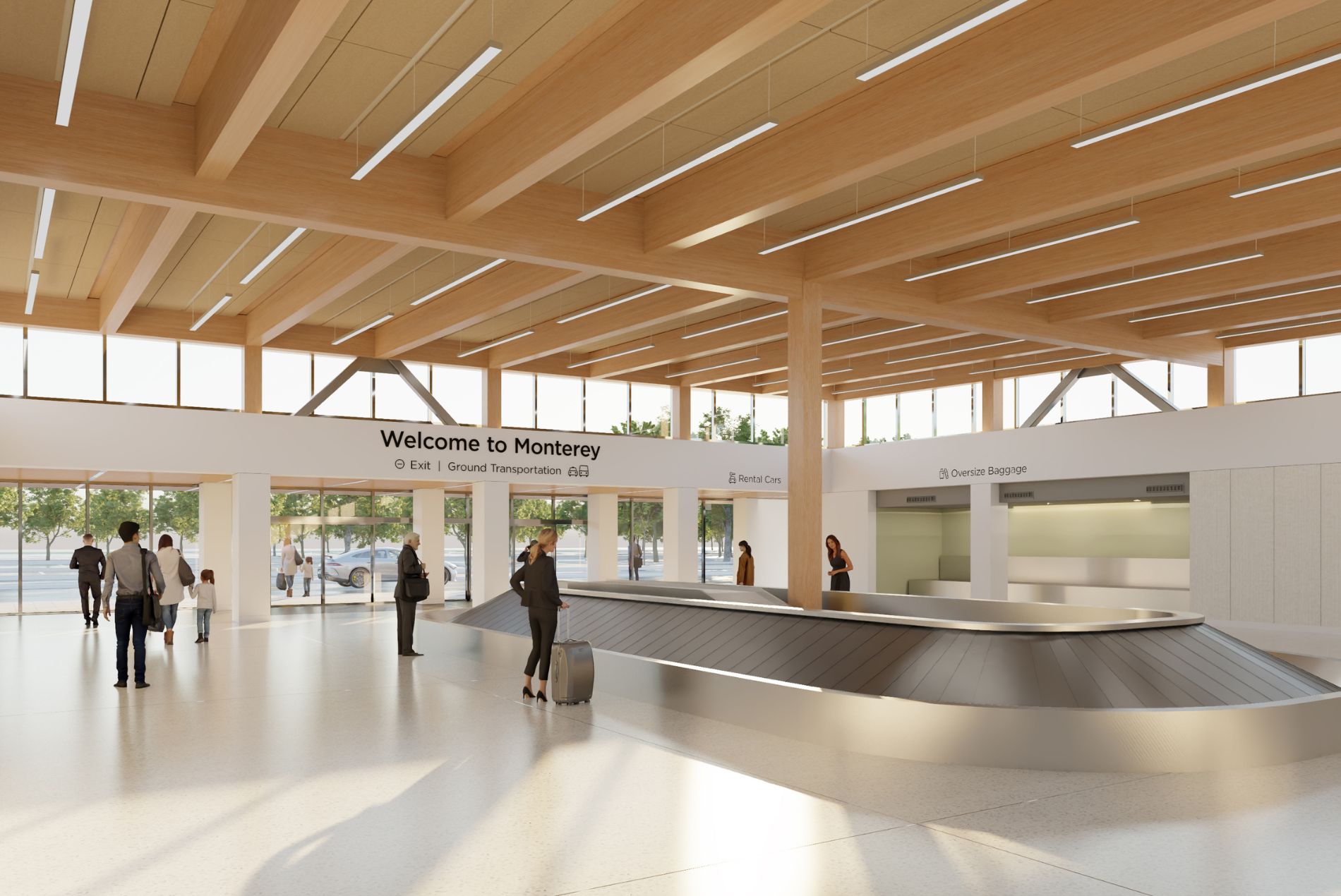
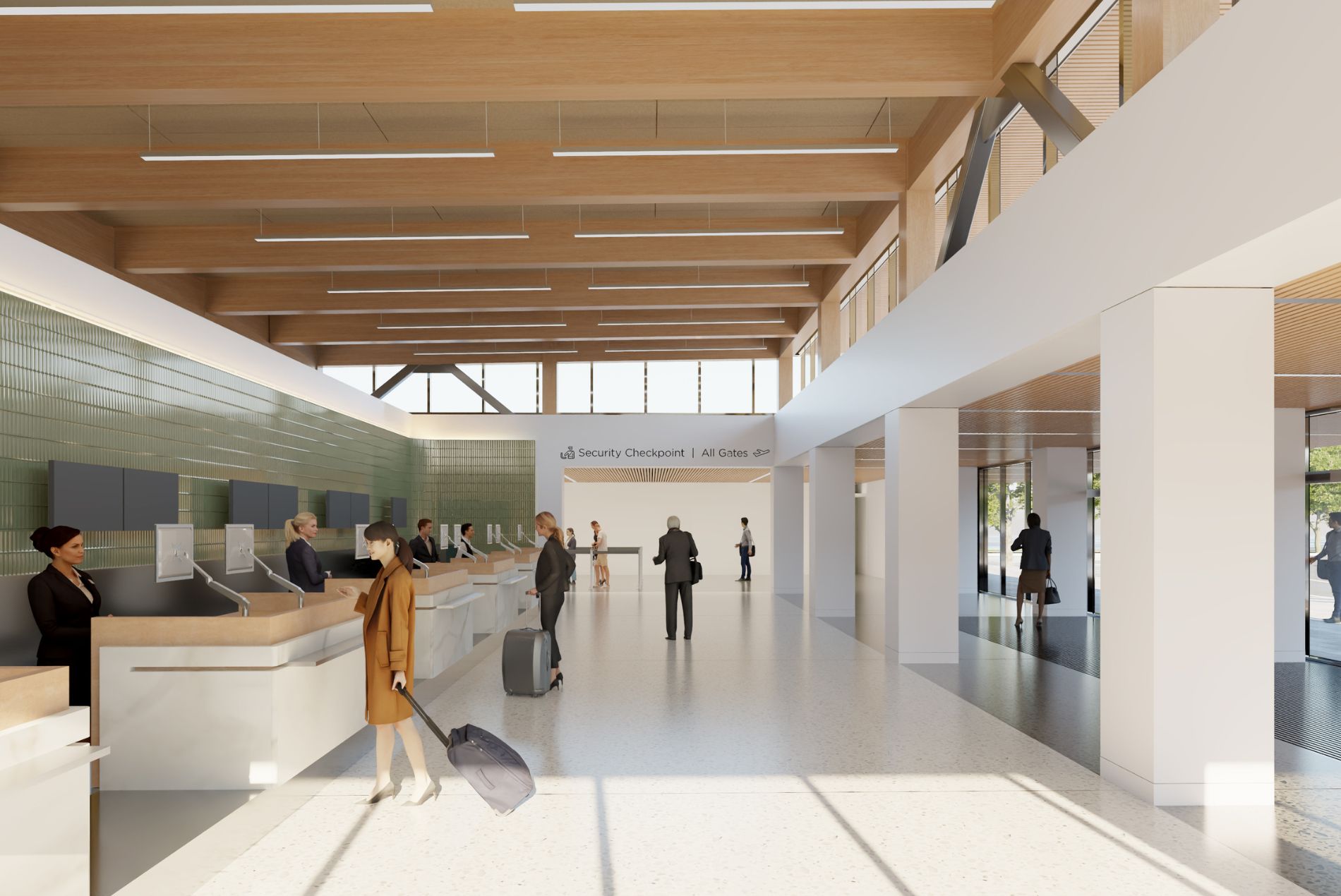
Inside, abundant daylight, transparency, natural materials and continuous views create a clear curb-to-gate sequence. Wayfinding is direct and stress is lower because entries, amenities and changes in space occur where people expect them. The biophilic approach shows how an airport can measure success beyond safety and efficiency by supporting the health and well-being of travelers.
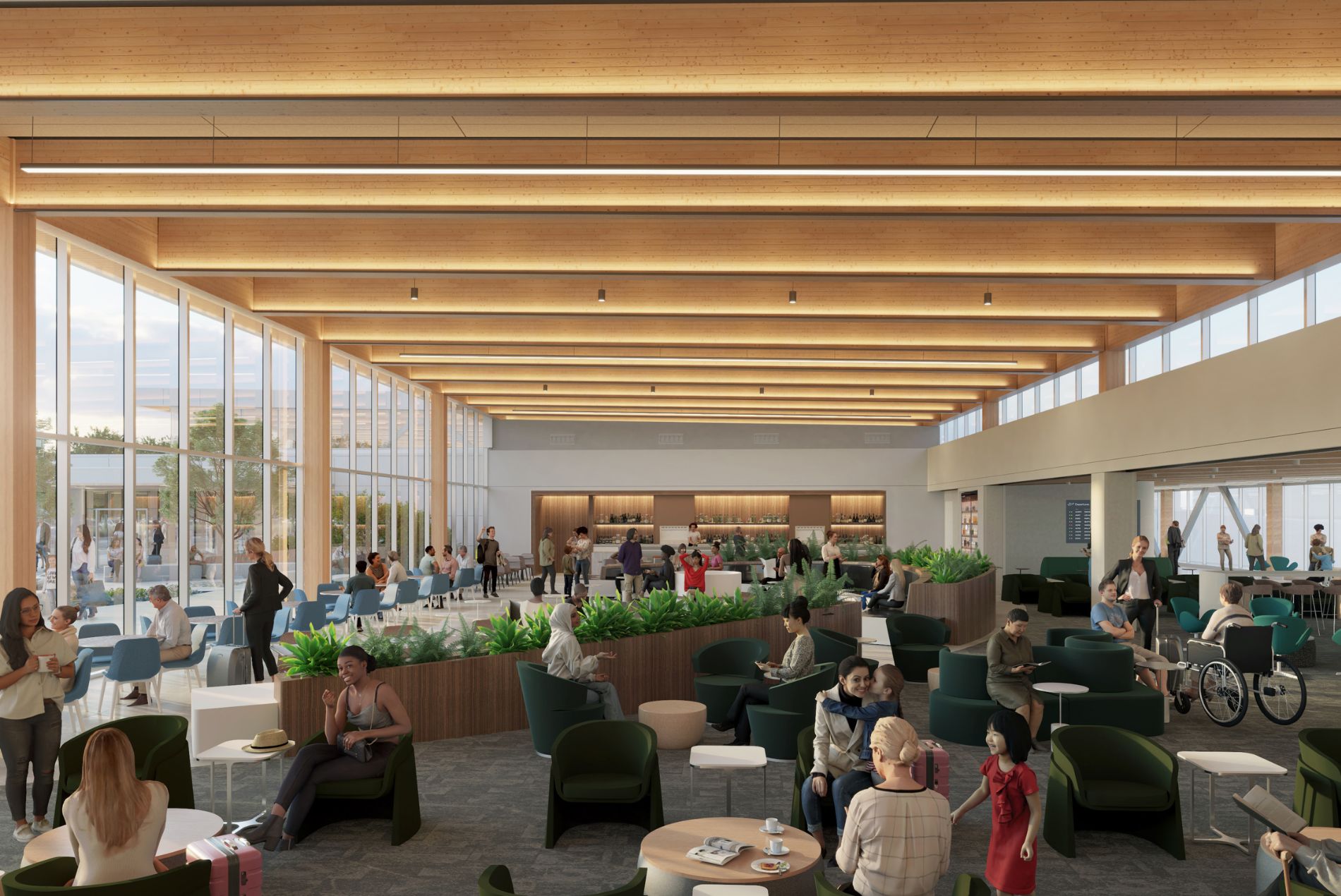
The terminal uses an innovative “call-to-board” model. Instead of waiting at isolated gates, travelers gather in a central lounge with clear views to the courtyard on one side and the airfield on the other. Boarding is announced and people walk short, direct paths to their gate.
This shift simplifies the building. Wayfinding is clearer, seating is shared and amenities sit where everyone can use them. Families can stay together, staff have better sightlines and peaks are easier to manage because space is flexible, not locked to a single flight.
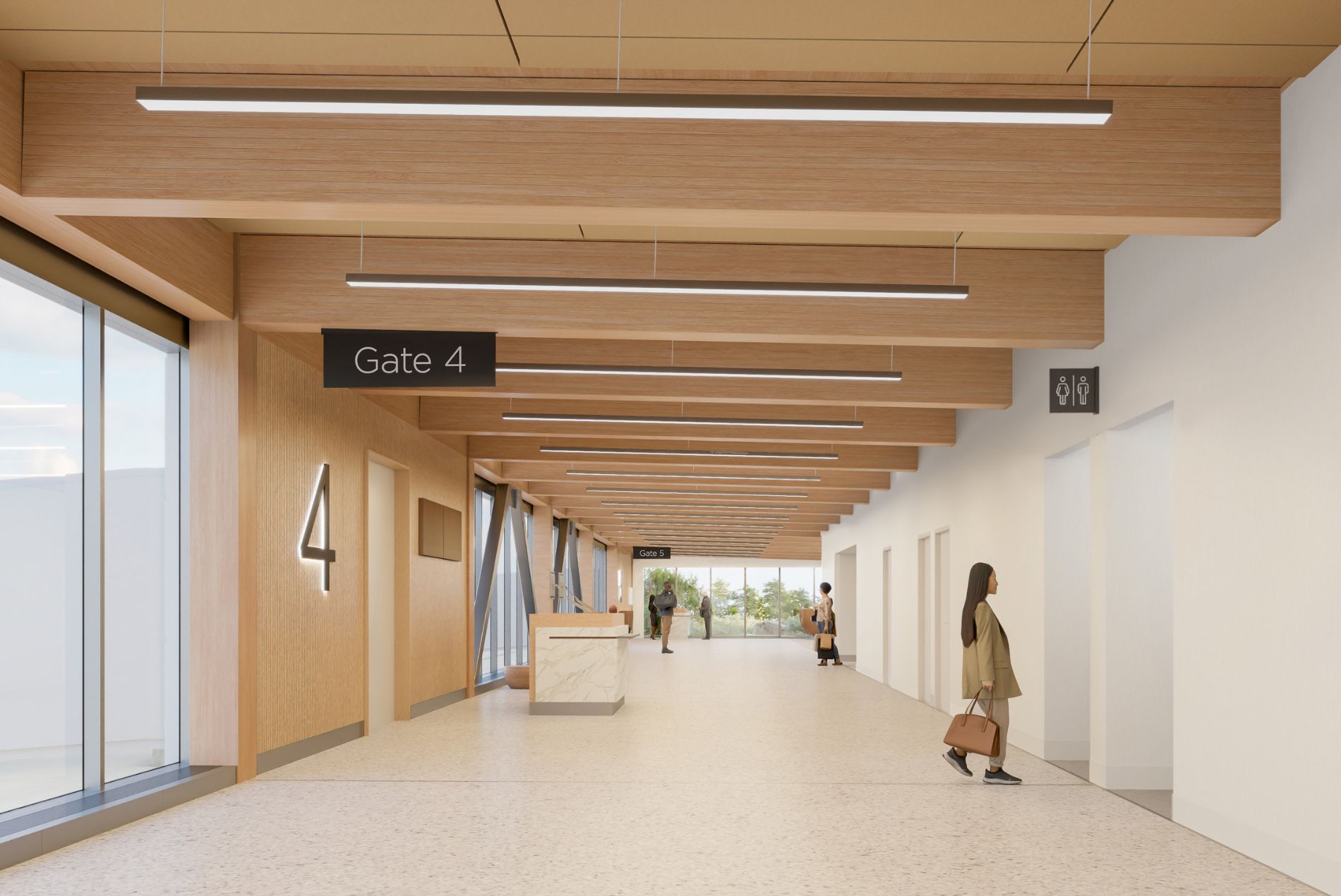
Gate areas become compact and purposeful. Queues form only when needed, then dissolve back into the lounge. The result is a calmer atmosphere with fewer bottlenecks and a more social core that feels like Monterey—open, connected and easy to read. The lounge and courtyard also welcome greeters and families, bringing back the simple act of meeting someone at the airport.
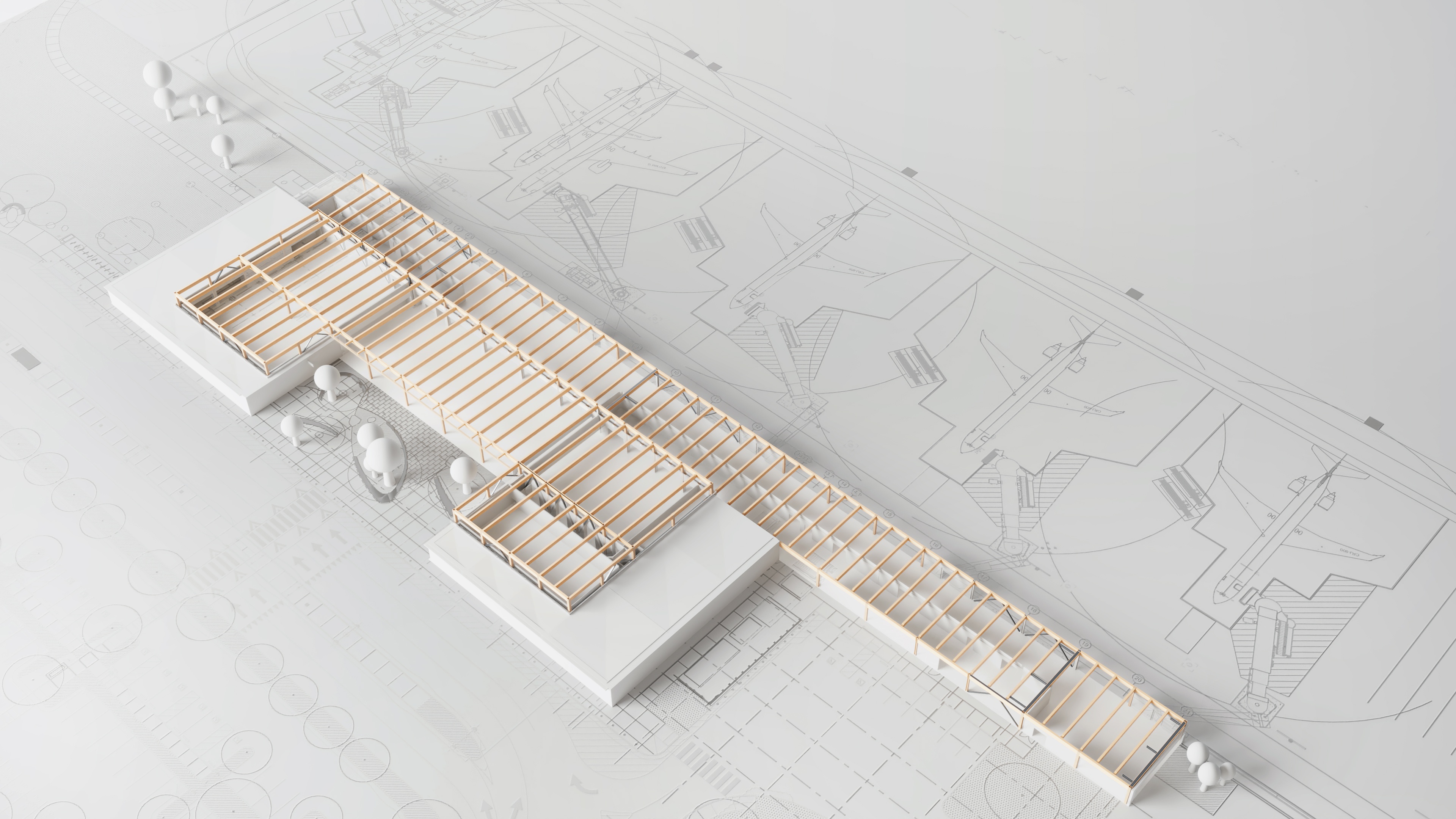
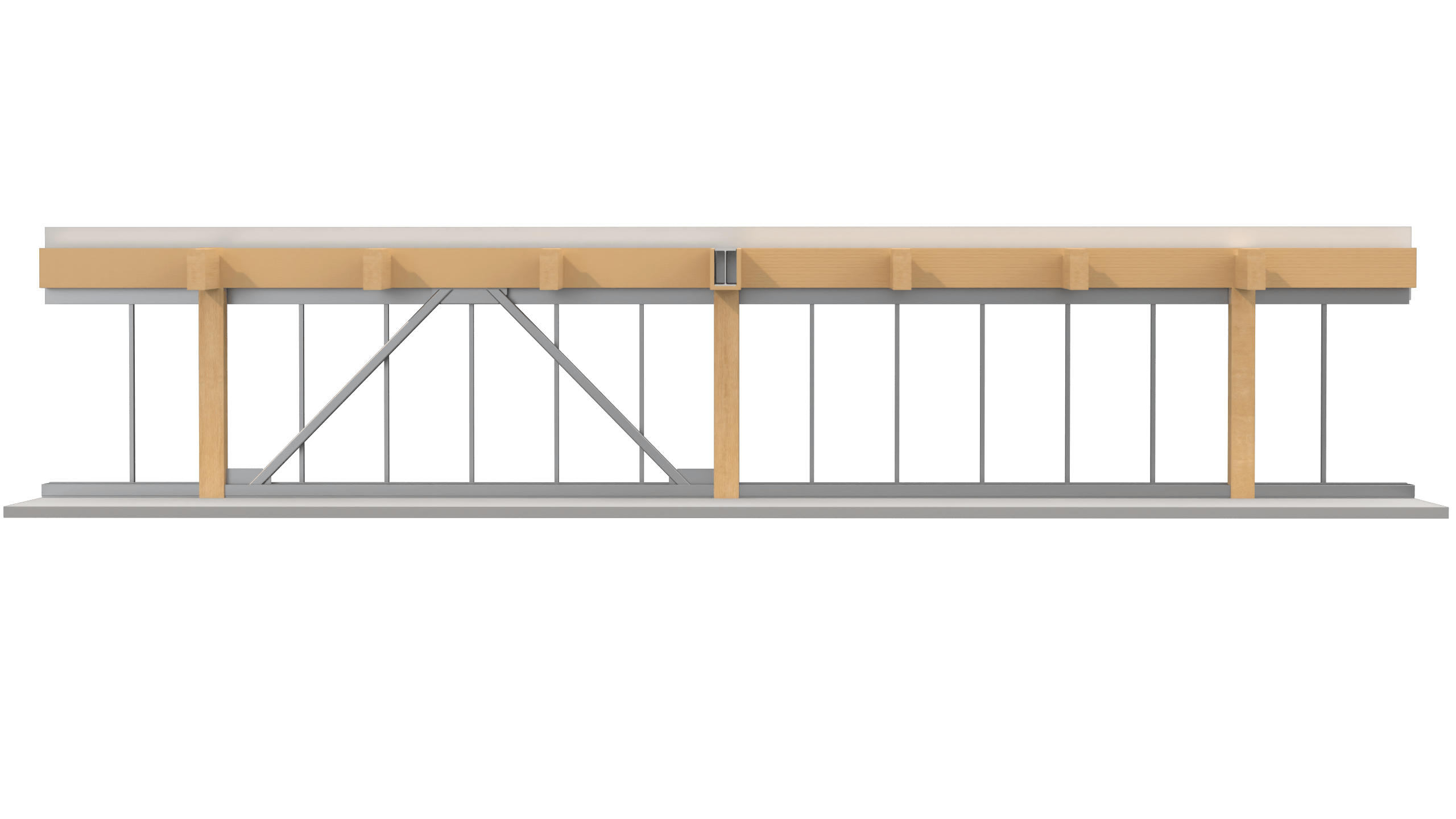
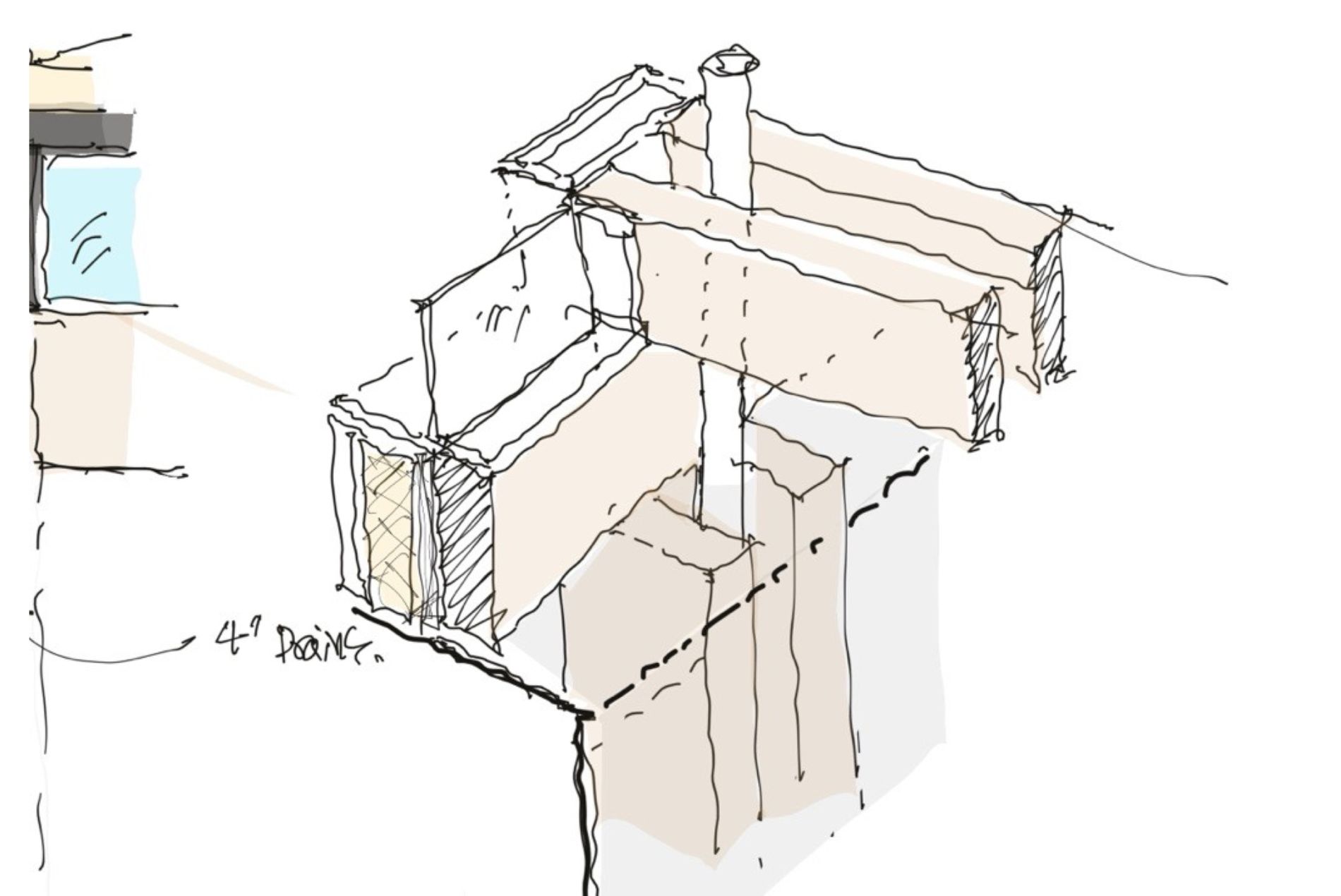
A hybrid mass timber and steel frame gives the terminal warmth and span. Exposed glulam beams and cross-laminated timber panels set the character of the hall and help reduce embodied carbon compared to an all-steel approach. In areas where steel is required, it carries the load but timber clads it so the interior reads as one continuous material palette.

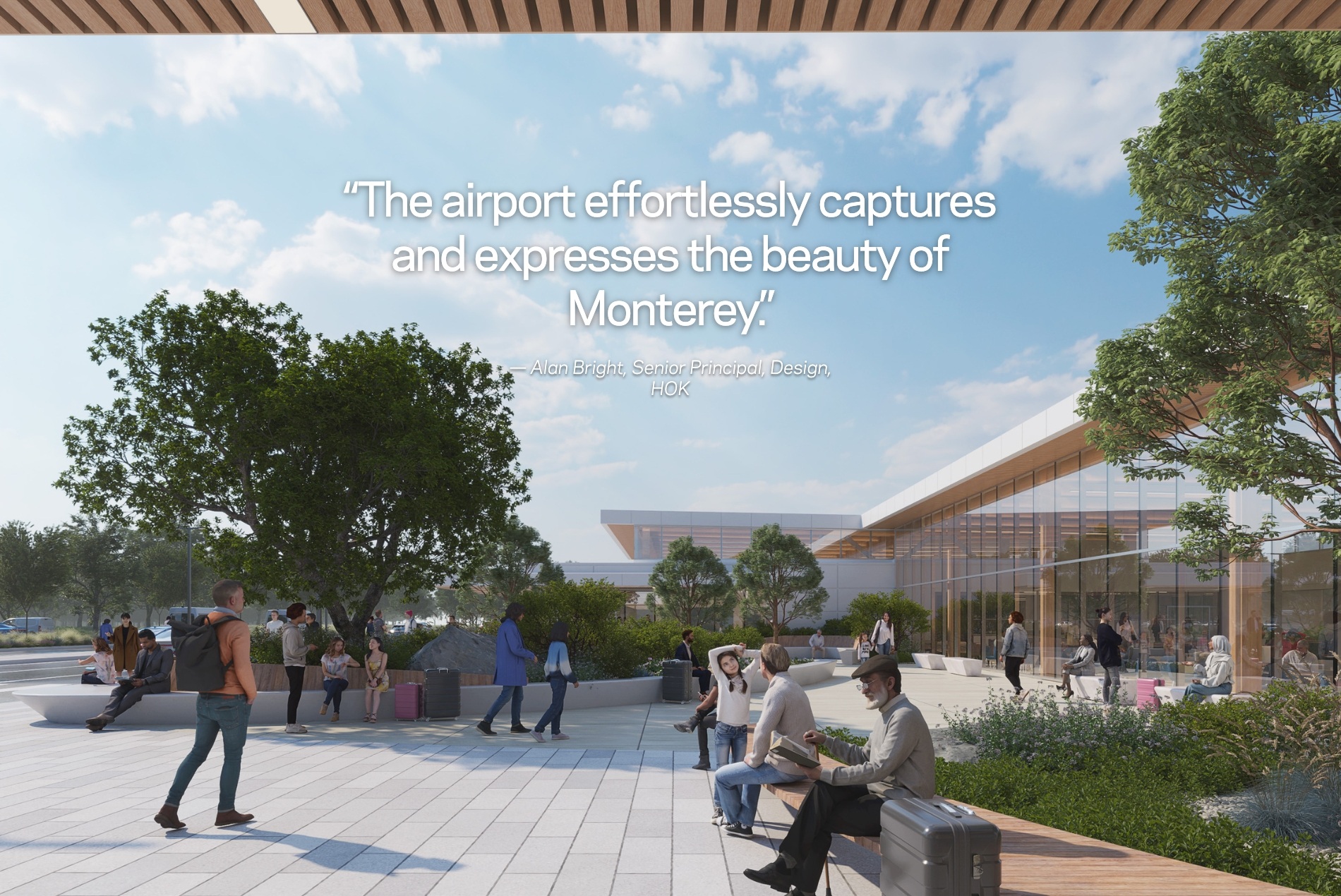
Monterey’s terminal is right scaled, all-electric and rooted in place. It is easy to navigate and open to the landscape, working as both gateway and public room.
Opening in 2027, the terminal shows how small airports can honor their place while achieving high performance.
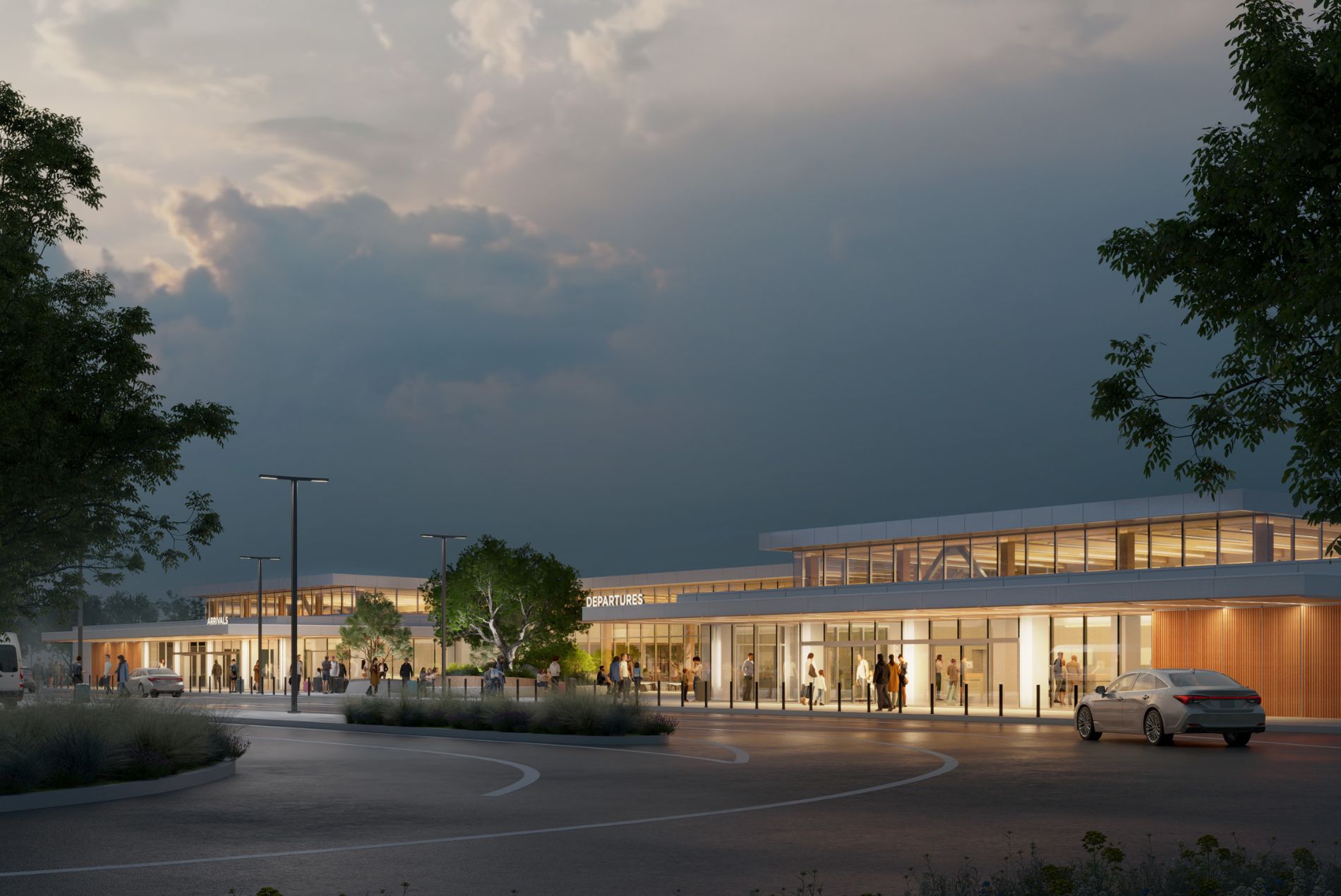
The Monterey Peninsula on California’s central coast is known for its striking natural beauty. Its aging airport—many visitors’ first impression of the region—did not embody its allure and deep sense of community. This new five-gate terminal changes that, transforming it into an all-electric, net-zero-energy-ready facility that brings the Peninsula’s natural beauty right to the gate.
Rather than mimic the scale and spectacle of major hubs, our design draws from what makes Monterey special: simplicity and restraint, connection to nature and a comfortable relationship with place. The result is a civic gateway that works as both travel hub and community anchor, authentically Monterey.
The experience is rooted in the Peninsula’s inland valleys, redwood canopy and ocean coves. That “treehouse and cove” idea shapes a light-filled pavilion and a palette of materials and colors that belongs here.
Landscape and regenerative design reshape access roads, parking and edges into nature-rich sequences. A central courtyard works as the civic square, with the building mass pinching at this point to open views to the forest, airfield and rolling hills.
We designed the terminal to be all-electric and net-zero-carbon ready, and it’s tracking LEED Platinum certification.
Our integrated design team aligned architecture, MEP, structural, lighting and IT from the start so performance targets shaped the plan, not the other way around. A high-performance envelope, exterior shading and passive cooling reduce loads before systems turn on. Daylight is used wherever possible to cut lighting demand and keep interiors comfortable.
Efficient systems do the rest. Heat-pump chillers and thermal energy storage handle conditioning. A dedicated outdoor air system improves ventilation and indoor air quality while controlling energy use. Controls are simple to read and set for daily operations, not just peak days.
We selected materials for their low embodied carbon and durability, and the site uses native planting and efficient water management. The result is a terminal that performs well and feels healthy while setting a clear standard for regional airports.
The brief was to make travel feel better. The team asked: How could passengers and staff gain some of the same physical, emotional and psychological benefits they find in Monterey’s landscapes? We organized the journey around three cues from place—the coast, agriculture and forested hills—so movement through the terminal feels legible and connected to nature.
Inside, abundant daylight, transparency, natural materials and continuous views create a clear curb-to-gate sequence. Wayfinding is direct and stress is lower because entries, amenities and changes in space occur where people expect them. The biophilic approach shows how an airport can measure success beyond safety and efficiency by supporting the health and well-being of travelers.
The terminal uses an innovative “call-to-board” model. Instead of waiting at isolated gates, travelers gather in a central lounge with clear views to the courtyard on one side and the airfield on the other. Boarding is announced and people walk short, direct paths to their gate.
This shift simplifies the building. Wayfinding is clearer, seating is shared and amenities sit where everyone can use them. Families can stay together, staff have better sightlines and peaks are easier to manage because space is flexible, not locked to a single flight.
Gate areas become compact and purposeful. Queues form only when needed, then dissolve back into the lounge. The result is a calmer atmosphere with fewer bottlenecks and a more social core that feels like Monterey—open, connected and easy to read. The lounge and courtyard also welcome greeters and families, bringing back the simple act of meeting someone at the airport.
A hybrid mass timber and steel frame gives the terminal warmth and span. Exposed glulam beams and cross-laminated timber panels set the character of the hall and help reduce embodied carbon compared to an all-steel approach. In areas where steel is required, it carries the load but timber clads it so the interior reads as one continuous material palette.
Monterey’s terminal is right scaled, all-electric and rooted in place. It is easy to navigate and open to the landscape, working as both gateway and public room.
Opening in 2027, the terminal shows how small airports can honor their place while achieving high performance.