When I entered the workforce four decades ago, I had no debt and a 30-year career ahead of me. Loyalty ran both ways, and when I needed a new skill, I learned it on the job. Today’s graduates may work for 50 or 60 years, often in jobs that don’t exist yet.
The first article in this series argues that the old script of school, work and retirement no longer fits how people live, and that life stage often tells us more about someone’s needs than the year they were born. That change is especially visible at work.
Living longer may mean working longer. But it doesn’t have to mean adding decades to the same model of full-time work. Longer careers will require more flexible ways to learn, work, provide care and remain valued contributors. The question for the workplace isn’t how to design for five generations at once. It’s how to support people whose needs will change many times over a long career.
Lyndsey Simpson, founder of 55/Redefined, a U.K.-based platform for people over 50, puts it bluntly: “If you don’t have an age strategy, you don’t have a growth strategy.” The same goes for space. An organization that plans only for the people it employs today is planning for a single moment in their lives.
One Career with Many Stages
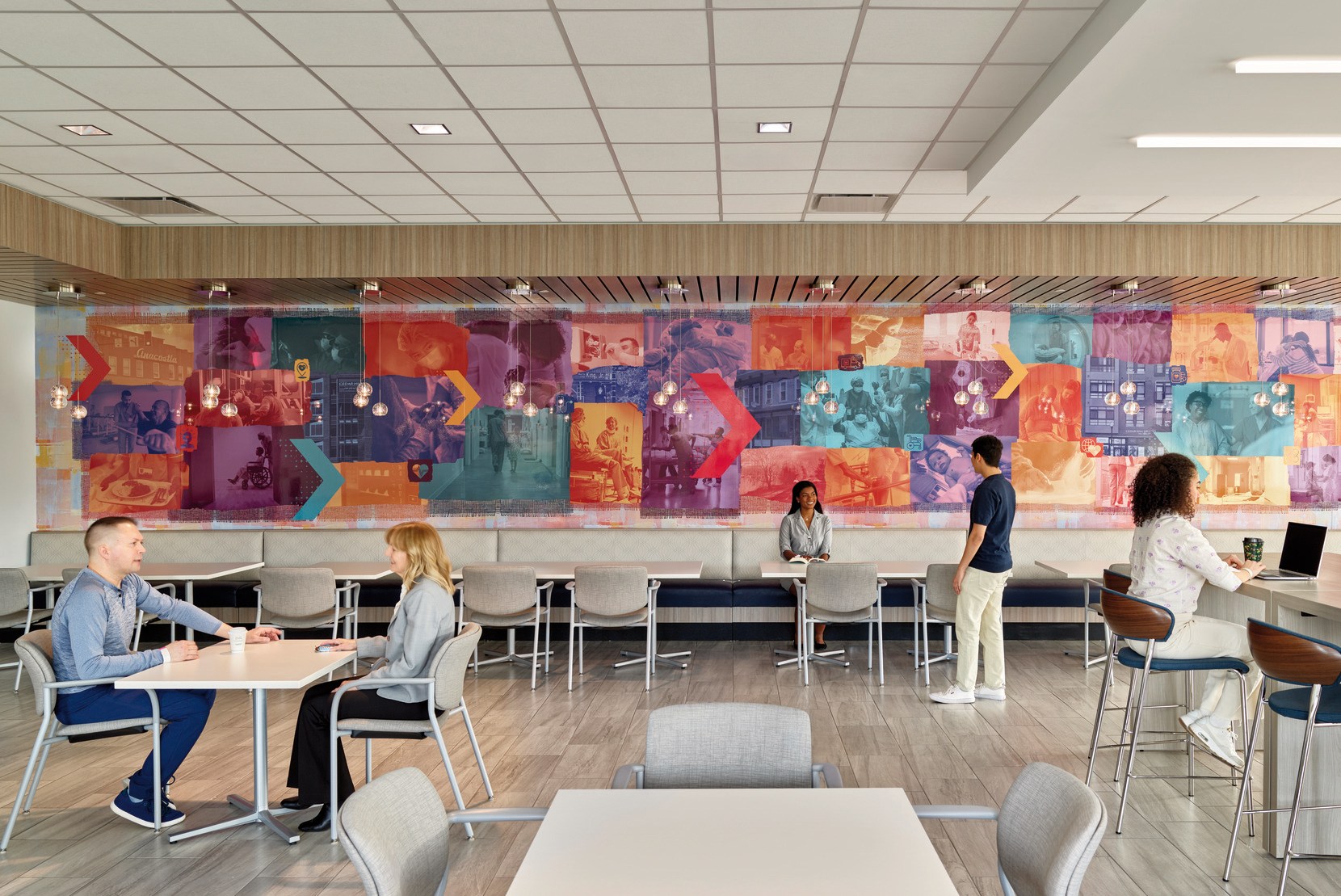
Over a long career, the same person will likely need many different things from the workplace. Age may offer a hint about what those needs are, but it can’t define them.
Our research found some broad patterns across career stages. Employees in the rising stage, generally under 30, tend to spend more time in group settings, using the office as a hub for learning and social connection. The professional core, roughly 30 to 60, spends more time in meetings and deep focus work and shows a greater need for places to recharge and counter burnout. Seasoned experts, 60 and older, lean toward autonomy and focus, often preferring settings that support independent work or targeted mentoring.
The point isn’t to assign a desk type to an age bracket. Any one person will move through several of these patterns, and not on a universal timetable. Early-career employees depend on the workplace for observation, feedback and access to experienced colleagues. Caregiving can increase the need to control when and where work happens. A career pivot or a return after time away may call for renewed access to learning, networks and mentorship. And changes in physical, sensory and cognitive abilities make acoustics, lighting, glare control, visual contrast, ergonomics and intuitive wayfinding more important.
None of these needs belongs to one age group or follows a fixed timetable. Work style, organizational structure and culture all shape how people use space, too. A 24-year-old with a migraine and a 64-year-old managing sensory overload may both need a low-stimulation room, for different reasons.
Designing for Variation, Not for the Average
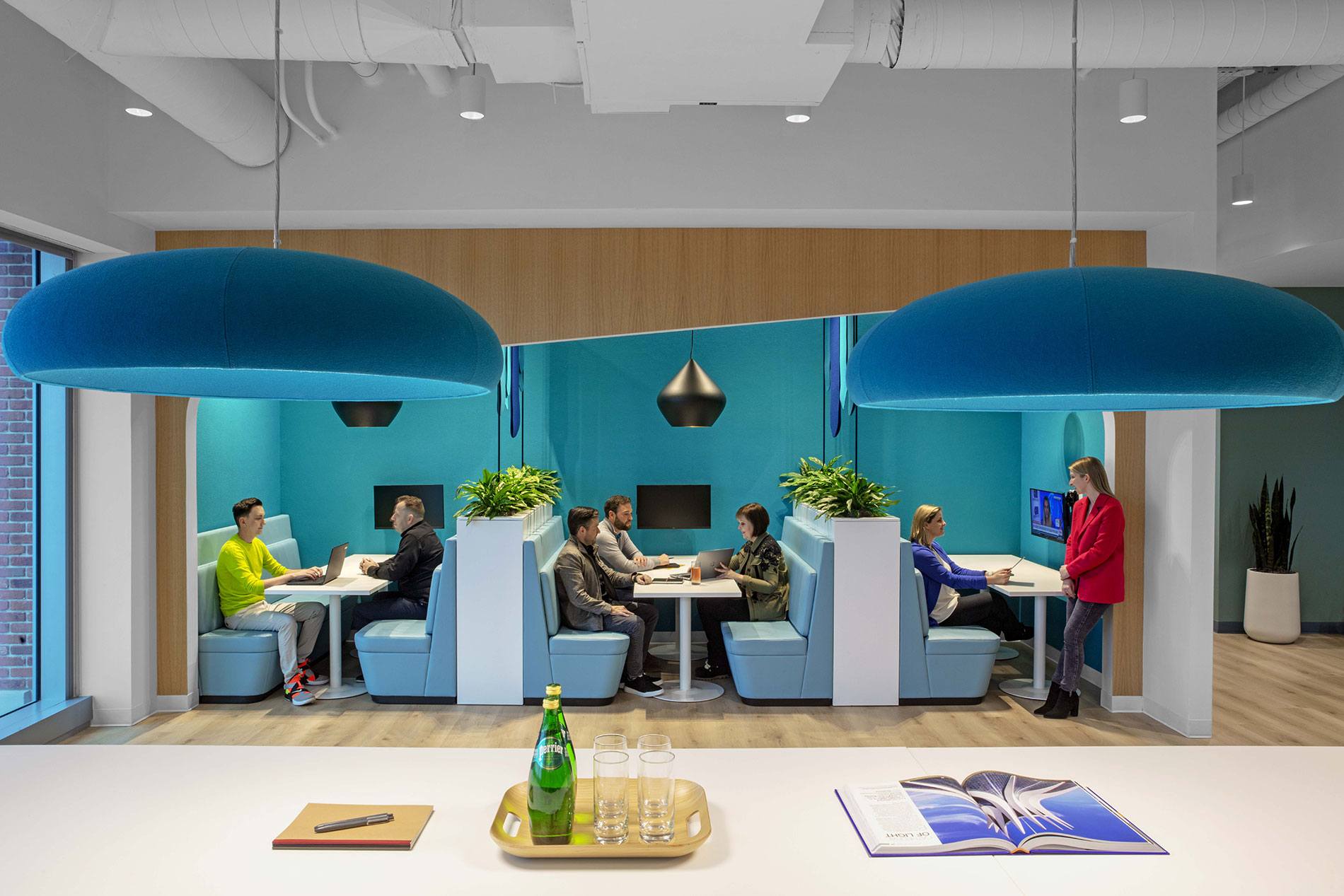
HOK’s neuroinclusive design work offers a framework built on choice, variety and control. Choice lets people pick the setting that supports their task and how they feel that day. Variety means offering meaningfully different settings: quiet focus rooms, active social spaces and environments with a range of stimulation. Control can mean adjustable lighting, ergonomic furniture and acoustic options, or simply the freedom to get up and move somewhere better.
Our research on neuroinclusion builds on this framework by helping us understand how light, sound, spatial relationships and materials affect the body and brain. Together, these approaches help us design workplaces that can respond as people and their needs change.
The goal isn’t to prescribe spaces by age. It’s to provide enough meaningful options to support human variation and change. HOK’s Seattle studio puts this framework to work. Our design team organized the floor along a sensory gradient: an active west side with reception, a break area, a lounge and conference rooms; a middle section with open workstations and reservable huddle rooms; and a quieter east side with workstations, private phone rooms and a wellness room. Varied ceiling heights create both open, expansive areas and lower, more sheltered spaces. Every workstation has a sit-stand desk. Employees now gravitate to the settings that suit them. Overall satisfaction with the workplace rose 24% over the old office.
What the Design Brief Should Cover
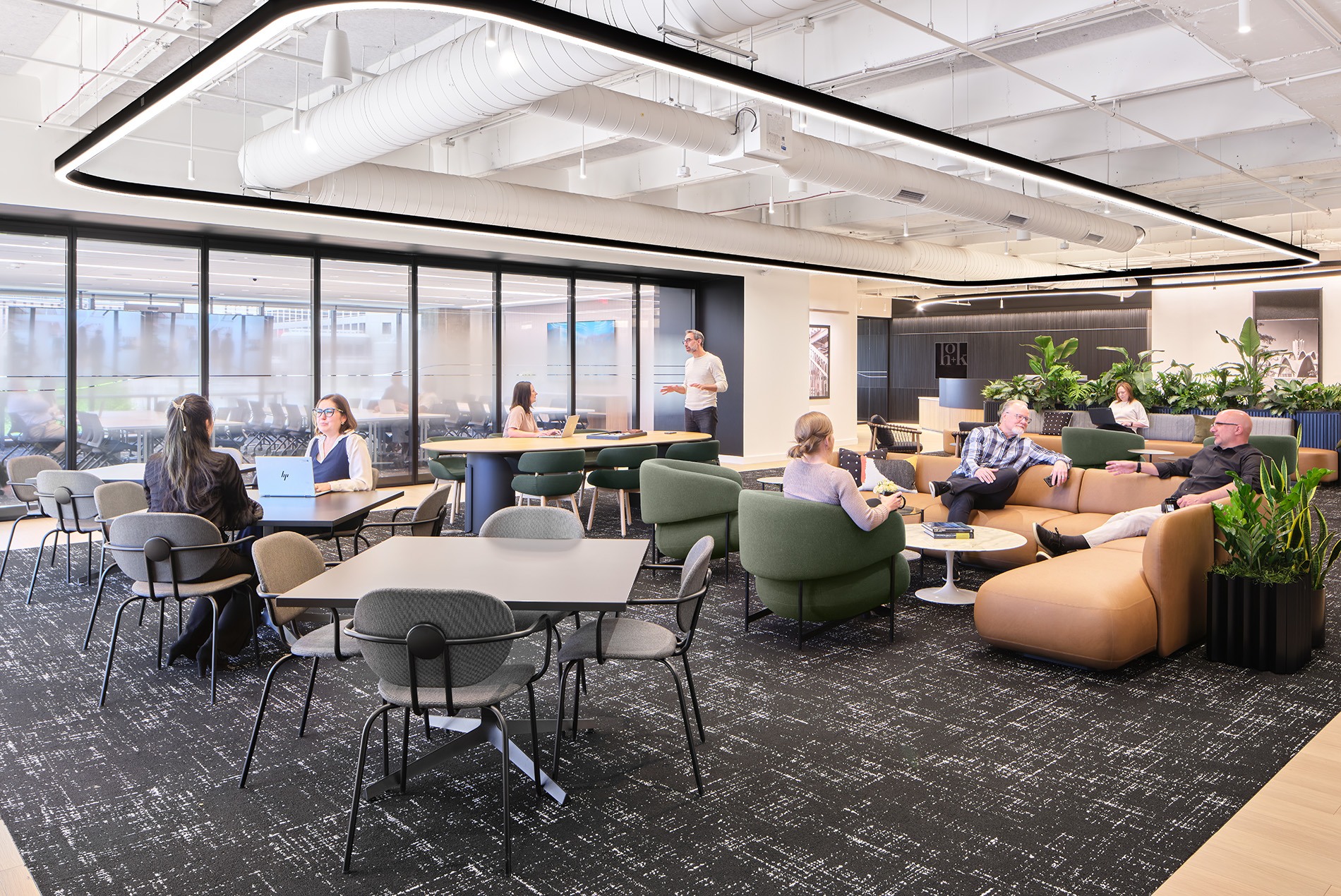
Designing for several generations at once isn’t about giving each cohort its own zone. It’s about building a workplace broad and adaptable enough to serve the full range of needs people bring to work, and the way those needs shift over a career. Here are several priorities:
Plan for change, not a fixed mix. The balance of focus, collaboration and restorative space will shift as teams and work patterns evolve. Loose-fit planning, movable furniture, demountable walls and modular infrastructure allow a workplace to change with them without a full renovation. Shifts in technology and organizational priorities will require it to keep adapting.
Make knowledge transfer visible and easy. Mentorship rarely happens by appointment. To enable cross-mentoring, seat people where they can see and talk with colleagues at other career stages. Provide side-by-side settings where two people can share a screen, along with small, informal spaces near team neighborhoods where a quick question can turn into a conversation.
Design for hearing and speech clarity. Hearing often changes so gradually that people don’t notice. Control reverberation, separate noisy and quiet activities, and provide assistive listening systems and good facial lighting in meeting rooms so everyone can follow the conversation, in person or on screen.
Give people more light and more control over it. Older eyes often need much more light to see the same detail and can be more sensitive to glare. Combine ambient lighting with adjustable task lighting, daylight and circadian-supportive strategies so each person can set the light they need.
Make technology intuitive for everyone. Consistent room controls, one-touch video conferencing and clear instructions make workplace technology easier to use. On-site support and spaces to learn from peers help people get comfortable with new tools, including AI.
Support life transitions as well as tasks. Caregivers, new parents and people managing health changes need private rooms for calls and appointments, wellness and lactation rooms, and restorative spaces where they can step away and reset. These rooms tell people the organization knows they have lives outside work.
Reduce physical friction. Softer flooring can ease joint strain, and adjustable-height workstations and perch seating let people sit, stand and lean. Shorter routes to restrooms, amenities and meeting spaces make the workplace easier to navigate. So do places to rest along longer routes, handrails and contrasting stair edges, and chairs with arms at a range of seat heights. Clear wayfinding and strong visual contrast help everyone find their way, especially as eyesight or memory changes.
Create a culture everyone can see themselves in. A workplace full of game rooms and lounge seating can signal that it was designed for one type of employee. Offer a range of aesthetics and energy levels, and celebrate the organization’s history as well as innovation so people at every career stage feel they belong.
Engage the full workforce in the process. Include people across career stages, abilities and life circumstances in visioning, pilot programs and post-occupancy evaluations. Then measure how well the space supports them, not how closely it fits a demographic average.
Physical design can’t do this alone. It needs policies, day-to-day practices and leaders who give people choice, variety and control throughout their careers.
Balancing Flexibility and Access
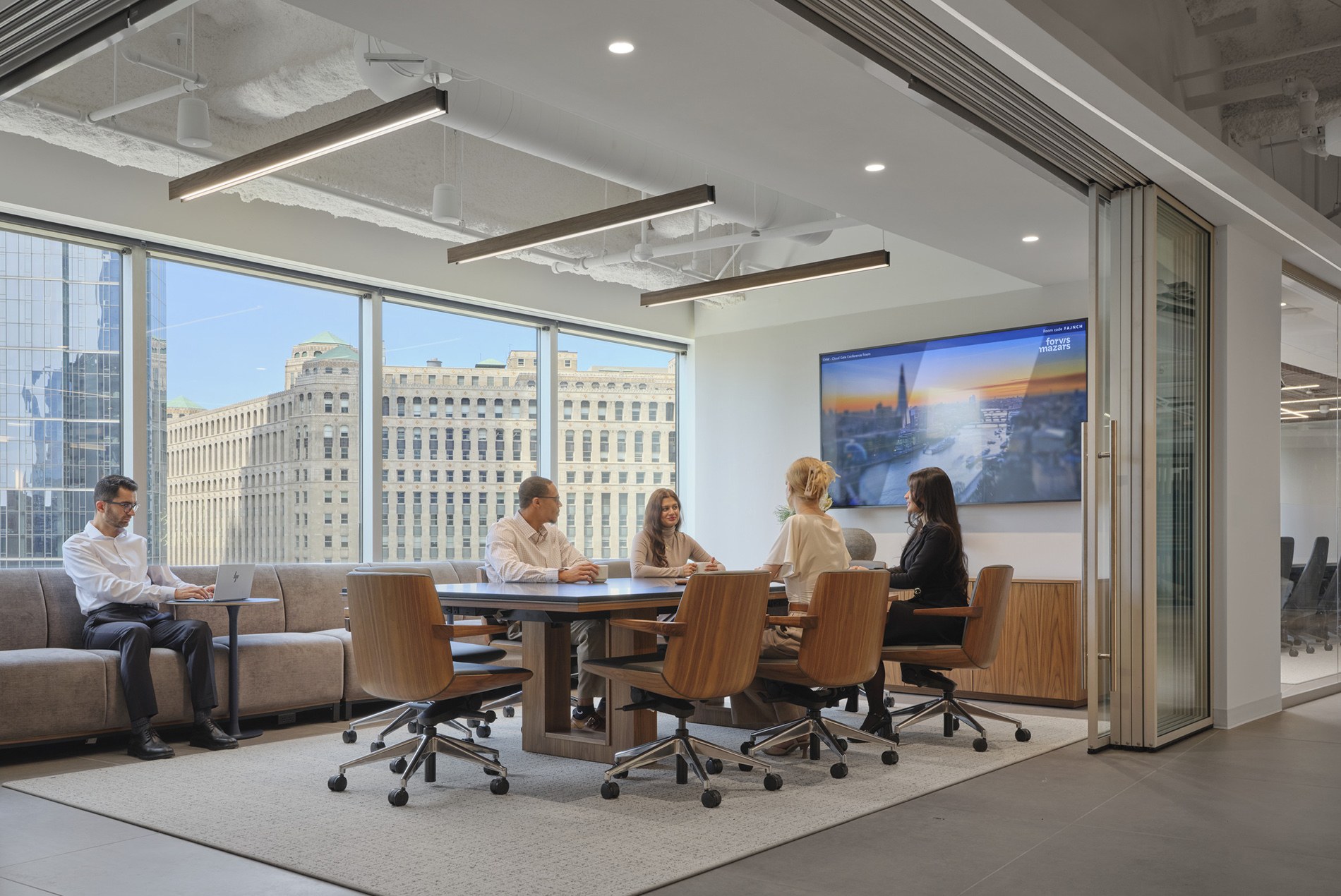
In the third quarter of life, beginning around age 50, many workers want a new social contract. After decades of commuting, they want more control over their schedules. Many also have deep tenure and social capital within their organizations and can work more independently. Caregiving adds to the need for flexibility, and not just for children. Many are caring for partners, aging parents or grandchildren, and some employers, including Cisco, Fannie Mae and Booking.com, now offer grandparent leave.
The pressure is hardest on the sandwich generation: people in their 40s and 50s raising children and caring for aging parents at the same time, often at the peak of their careers.
Younger workers want flexibility, too, for their own reasons. Many are starting families and managing student debt and high housing costs, and some are already helping to care for parents or grandparents while establishing their careers. They are also reluctant to accept burnout as the price of getting ahead. The post-pandemic resistance to returning to the office signaled a desire for more control over their time. Leaders who called that resistance laziness, or thought better office amenities would solve it, missed the bigger shift. We can’t expect people to thrive through a 50- or 60-year career if they’re burning out in their 20s.
Flexibility helps organizations keep experienced people through career and life transitions. But reduced schedules and remote work can make them less available to colleagues. If we ask early-career employees to come to the office to learn, they need access to experienced colleagues who can help them develop. That access becomes more important as AI absorbs the routine tasks that once served as on-the-job training for entry-level roles.
For many experienced workers, staying on the job longer is as much about community and purpose as income. Early-career employees often look to work for mentorship and a sense of belonging. A workplace that quietly pushes its most experienced people to the margins takes something away from both. Experienced workers lose their sense of purpose and place, while those earlier in their careers lose people they could learn from and connect with.
Forcing everyone back to assigned desks five days a week won’t fix this. Organizations need to support both agency and access. Teams need clear agreements about when and why they meet in person, and the office should be worth coming to, both for planned mentoring and casual conversations. Cross-mentoring lets people share their expertise and learn from one another across roles, career stages and skill sets. Flexibility and mentorship don’t have to compete.
Rethinking the Career Path
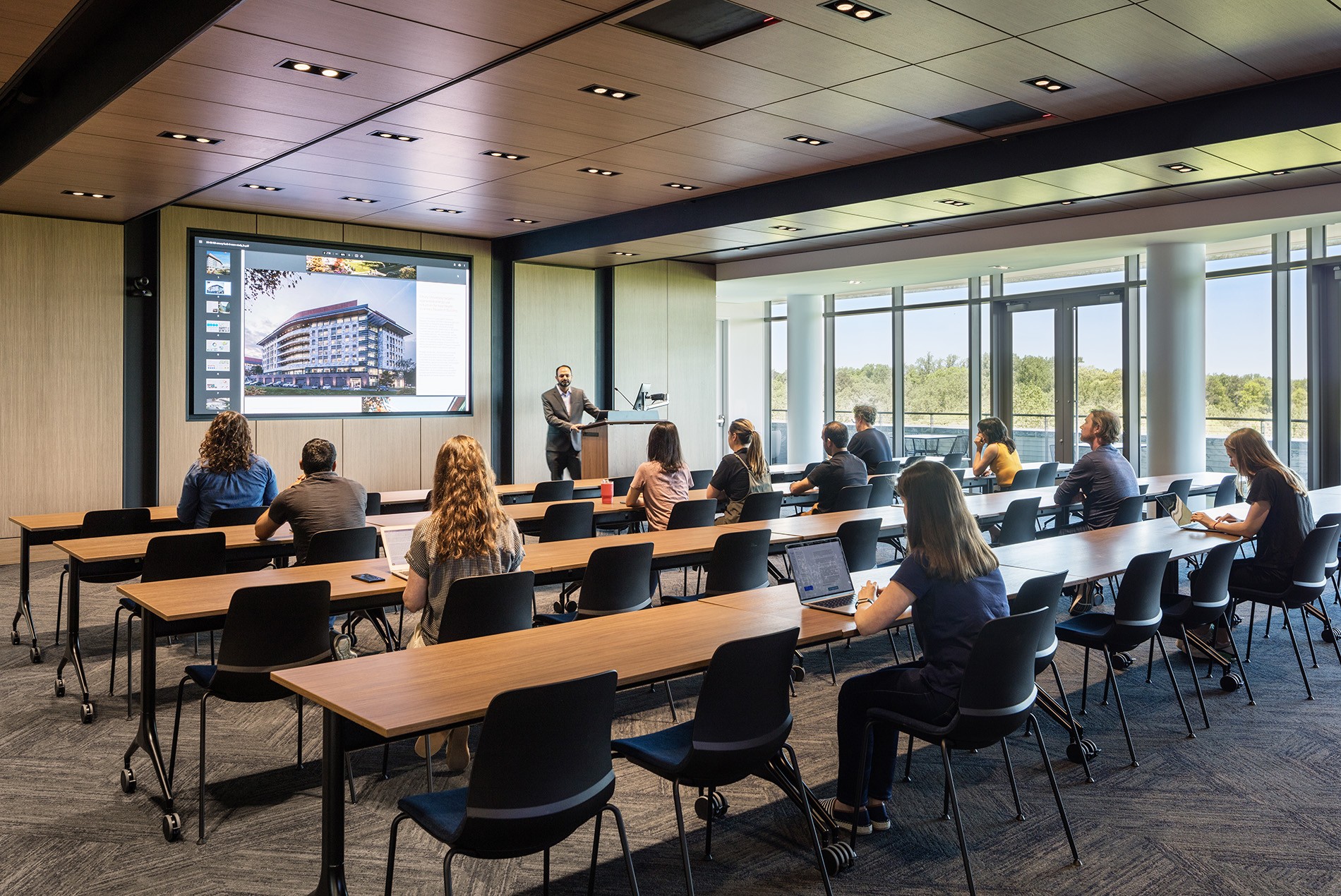
A four-year degree can’t sustain a 50- or 60-year career. Continual learning has to be part of the job, not something employees squeeze in at night and on weekends. We’ve seen what happens when it isn’t. When computer-aided design (CAD) became the industry standard, many architects and designers made the leap, but others left the profession because they couldn’t, or wouldn’t, make the switch.
AI is bringing the same kind of test, and many veteran workers are asking, “Do I really want to go through this again?” AI may already be shortening some careers. Research from Boston College’s Center for Retirement Research found that since ChatGPT’s launch, workers 55 and older in jobs highly exposed to AI experienced a relative increase in transitions to unemployment. No one should be pushed out of a career by a lack of training.
Career structures need the same flexibility. Deep specialization can be an asset until it traps someone in a single role. Over a longer career, people need work that places less strain on the body, skills that can keep adapting as technology changes and roles they still care about. Heavy physical labor, grueling travel and long commutes get harder to sustain over time. This makes the paths between roles as important as the roles themselves.
Lateral moves and job rotation give people new ways to contribute as their abilities and interests change, and job rotation can ease repetitive strain. Phased retirement, consulting, part-time work and retainer arrangements keep experienced people in the mix without requiring the same range of responsibilities or schedule. Unilever’s U Work, for example, pays participants a monthly retainer and core benefits such as pension and healthcare while letting them choose whether to accept short-term assignments. Reentry programs can help people come back after caregiving or other time away.
Though none of this means everyone should work indefinitely, people who want to keep contributing should be able to. In a McKinsey Health Institute survey of more than 21,000 adults 55 and older in 21 countries, 19% to 25% of respondents across different economies said they wanted to work but weren’t, most often because they couldn’t find a job they wanted or couldn’t get hired. Fixing that will require HR, technology, operations and design to work together.
Room to Grow at Every Stage

Experienced employees bring institutional knowledge, judgment, professional networks and mentorship. In the book From Strength to Strength, Arthur Brooks, building on the work of psychologist Raymond Cattell, describes two kinds of intelligence. Fluid intelligence, the ability to reason through new problems, peaks earlier in life. Crystallized intelligence, the ability to use what you know and connect ideas, grows through middle age and stays high late into life. Aging at work is less a story of decline than a shift from one kind of strength to another.
Yet older workers still face assumptions that they are tech-averse, set in their ways or coasting toward retirement. Those stereotypes ignore that no generation owns technological fluency. Many of today’s senior designers led their firms through the move to CAD, Millennials navigated the move from analog to the hyperconnected web, and Gen Z is refining today’s tools into intuitive extensions of work. Innovation isn’t a modern invention. It’s a relay race, and every generation carries it forward.
For women, the scrutiny is sharper and follows them through every stage. In a 2024 Women of Influence+ survey of more than 1,250 women in 46 countries, 78% reported facing age-related discrimination at work. Many described a no-win cycle of being too young to be taken seriously, being seen as a risk because they might have children and then being considered too old to matter. Older men, by contrast, were more often seen as distinguished. Treating experience as a competitive advantage means dismantling those stereotypes at every stage, not just the last one.
Keeping experienced people can’t come at the expense of employees coming up behind them. As more people delay retirement, those next in line can run into a “gray ceiling” that slows their path to promotion. One study of Italy’s 2011 pension reform found that an average retirement delay of about one year was linked to a 50% decrease in younger workers’ promotions to management. The exception was fast-growing firms, likely because they could add management positions. Organizations have to keep their experienced people without blocking everyone else. That means letting roles evolve, opening new pathways to leadership and treating knowledge transfer as a two-way exchange rather than a model in which older employees teach and younger ones receive.
An older, active workforce continues to contribute to economic output, adds tax revenue that helps fund the retirement systems supporting those who have left work and offers mentorship and specialized knowledge that younger colleagues are still acquiring. But it isn’t simply about keeping people employed longer. It’s enabling continued contribution, learning and advancement at every career stage. The workplaces that get this right will be places where people can stay connected and valued while they continue to change.
A 30-year career asked the workplace to fit one version of us. A 50- or 60-year career asks it to fit many. The longevity dividend will go to the organizations that design for all of them.
This is the second in a series on how longer lives are reshaping the places we design. Related: