Chhatrapati Shivaji International Airport Air Traffic Control Tower
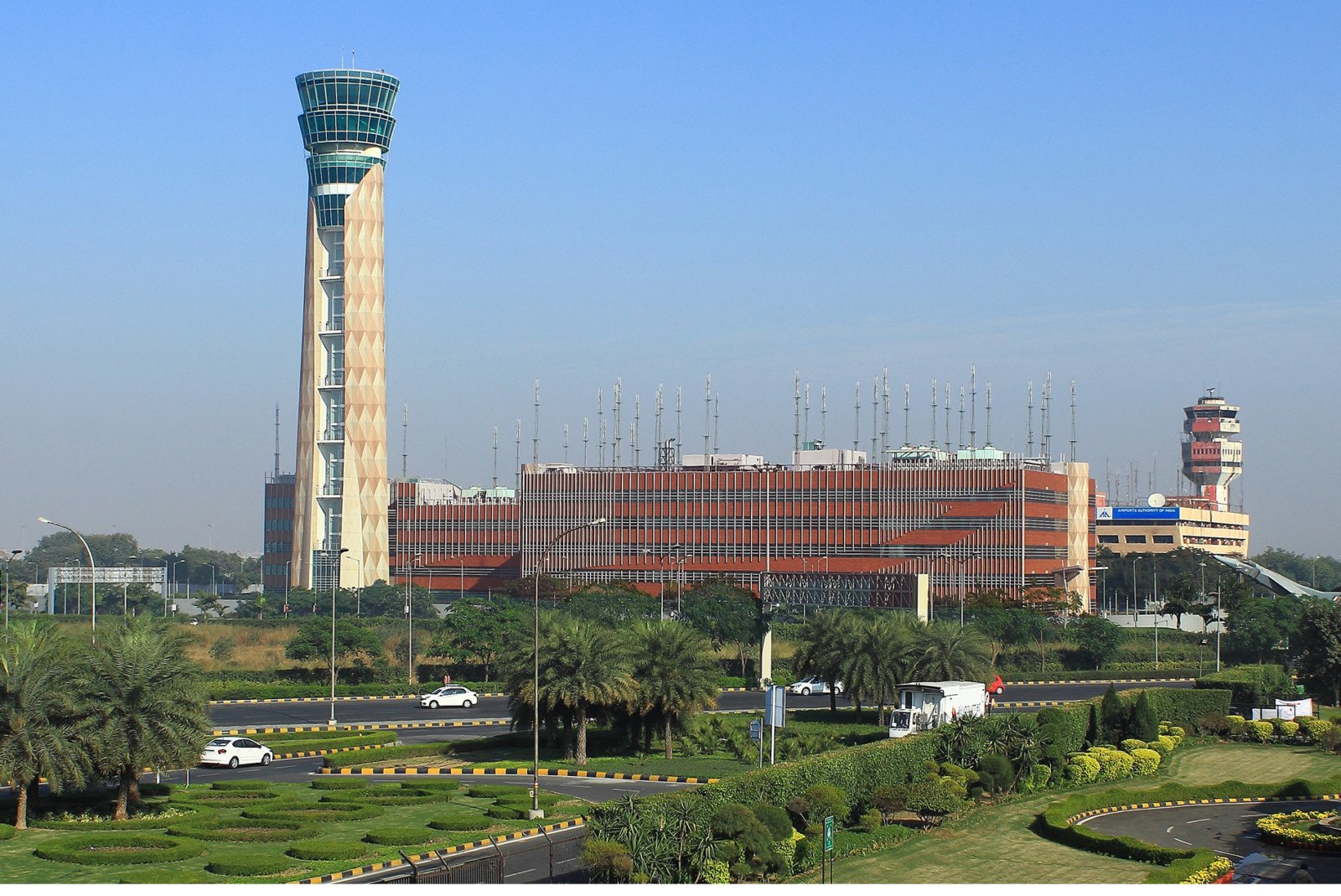
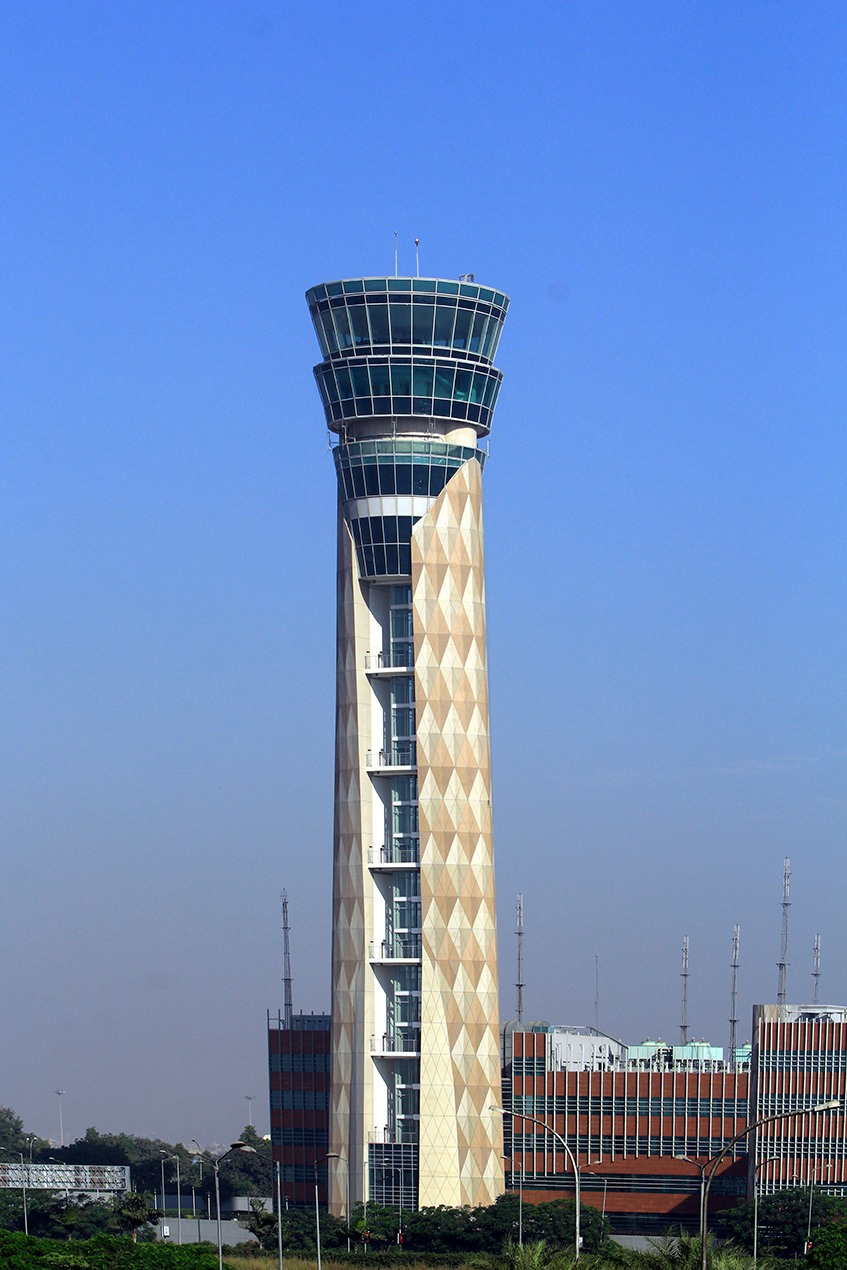
Controllers at Indira Gandhi International Airport needed clear sightlines to manage operations across three runways, taxiways and apron areas at one of Asia’s major hubs. HOK and Buro Happold designed a 102-meter tower that gives 21 controllers unobstructed 360-degree views and positions the facility to support planned future expansions.
Design Solutions
The tower’s slender, sculptural form responds directly to structural and operational needs. Rising 335 feet (102 meters), the profile narrows along one axis while simultaneously widening along the perpendicular, creating a continuously shifting geometry.
This aerodynamic shape integrates with a tuned mass damper near the top—the first installation of its kind at an Indian airport—to mitigate wind-induced sway and increase occupant comfort. Engineered for resilience, the tower is designed to withstand seismic forces up to magnitude 8.0. A central glass elevator provides panoramic views during ascent.
To improve operational clarity, the facility separates functions across three specialized buildings. The aerodrome control tower accommodates 21 controller positions at the visual control room level and 12 ground controller positions one level below, providing commanding views of runway thresholds and taxiway intersections.
An adjacent technical block consolidates area control, approach control and air traffic flow management systems, reducing the workload for individual controllers. A separate administrative block supports Airports Authority of India staff and nationwide training functions.
Impact
The tower opened in 2019. Advanced voice communication systems improve coverage across the airport’s control zones, while radar feeds from five regional airports integrate with electronic flight strips that replace paper-based tracking.
The 360-degree sightlines and expanded controller positions support operational efficiency. The team designed the tower to accommodate a planned fourth runway, which opened in 2023, and expanded taxiway infrastructure.
SIZE
118,405 sq. ft. / 11,000 sq. m.
335 feet / 102 meters high
SERVICES
Design Consultancy
CAPACITY
21 controller positions (visual control room)
12 ground controller positions (operations level)
KEY FEATURES
First tuned mass damper at an Indian airport
Continuously shifting tower geometry
360-degree runway and taxiway views
Seismic design for magnitude 8.0 forces
Three-building configuration for operational clarity