Hard Rock Stadium Modernization
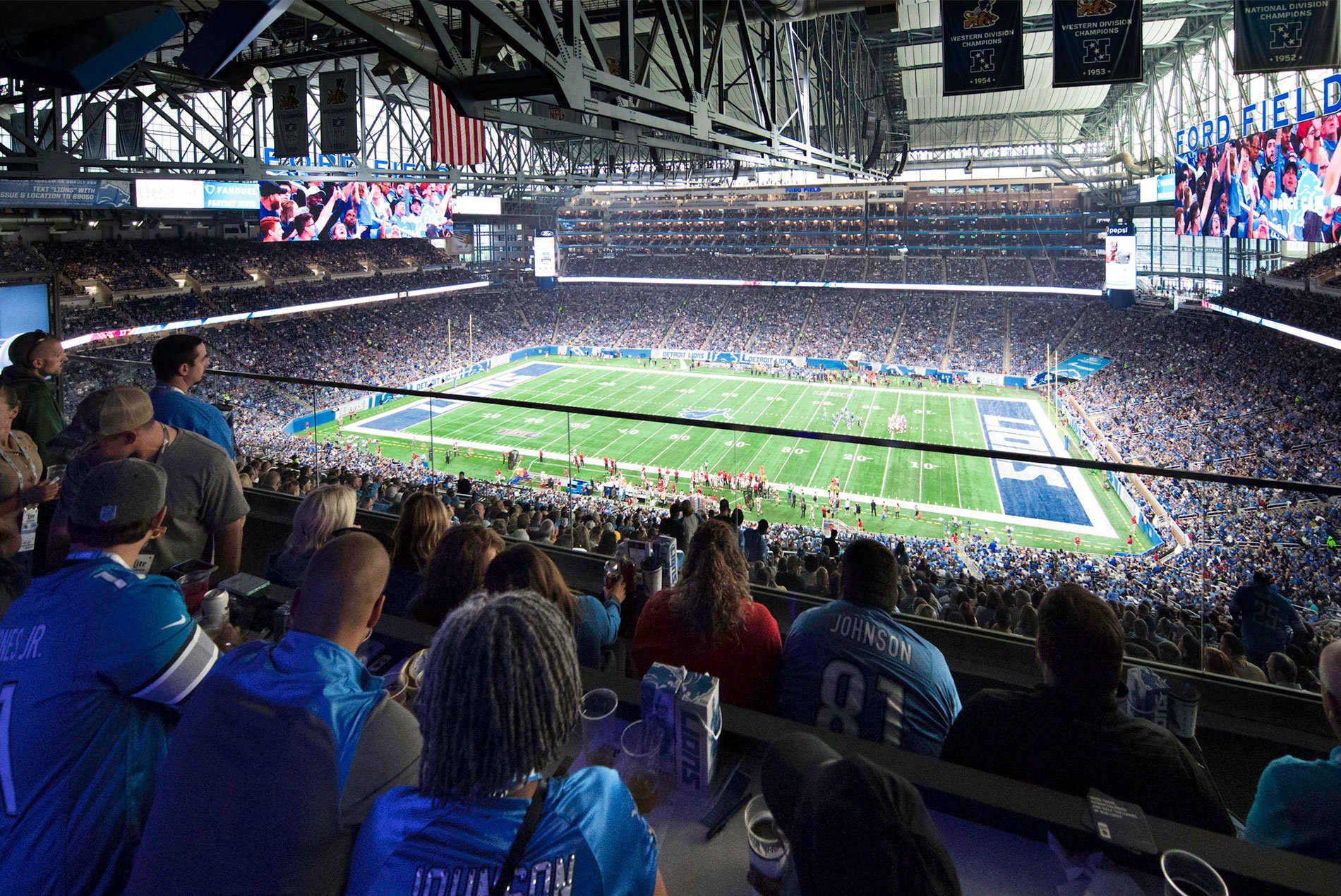
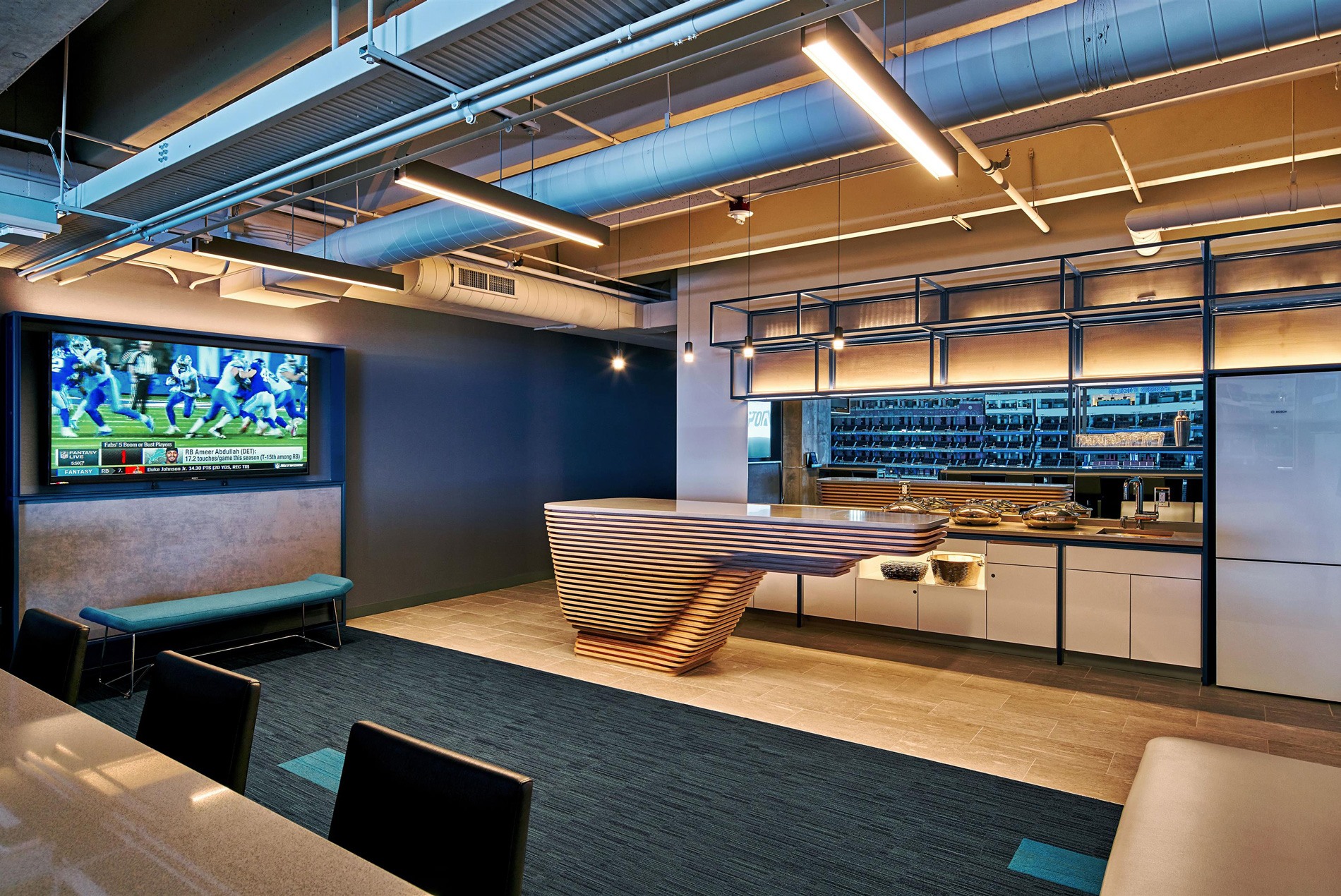
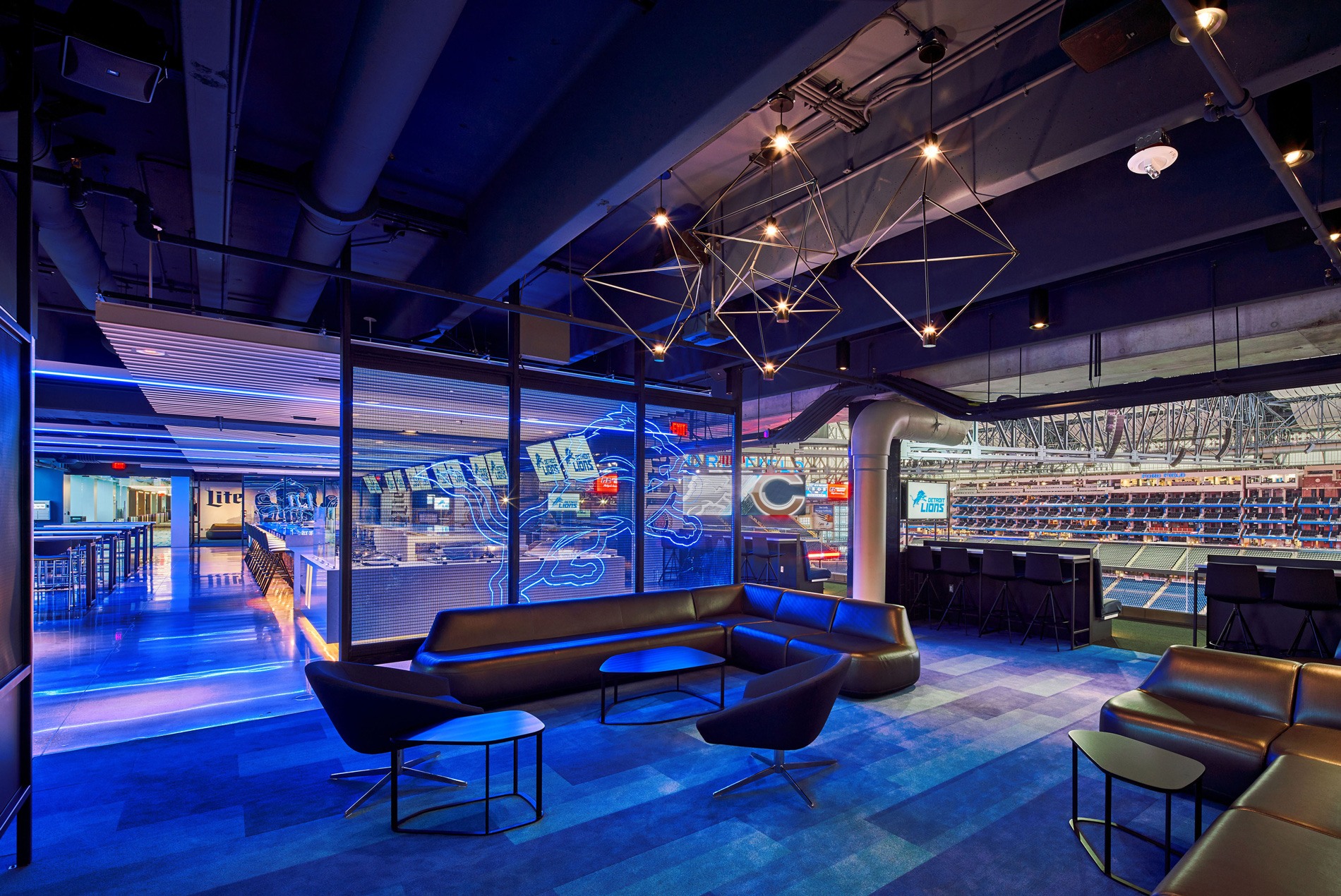
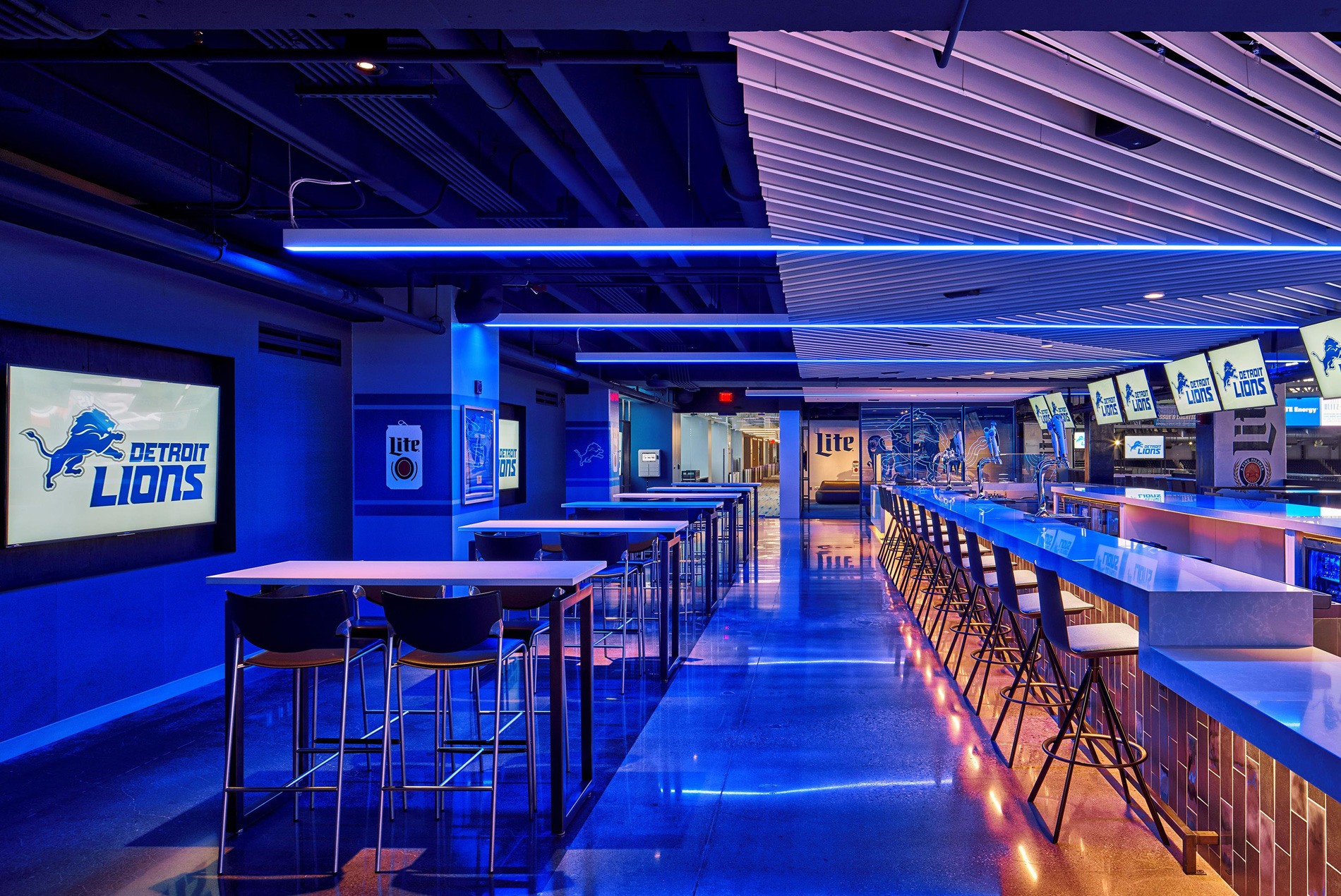
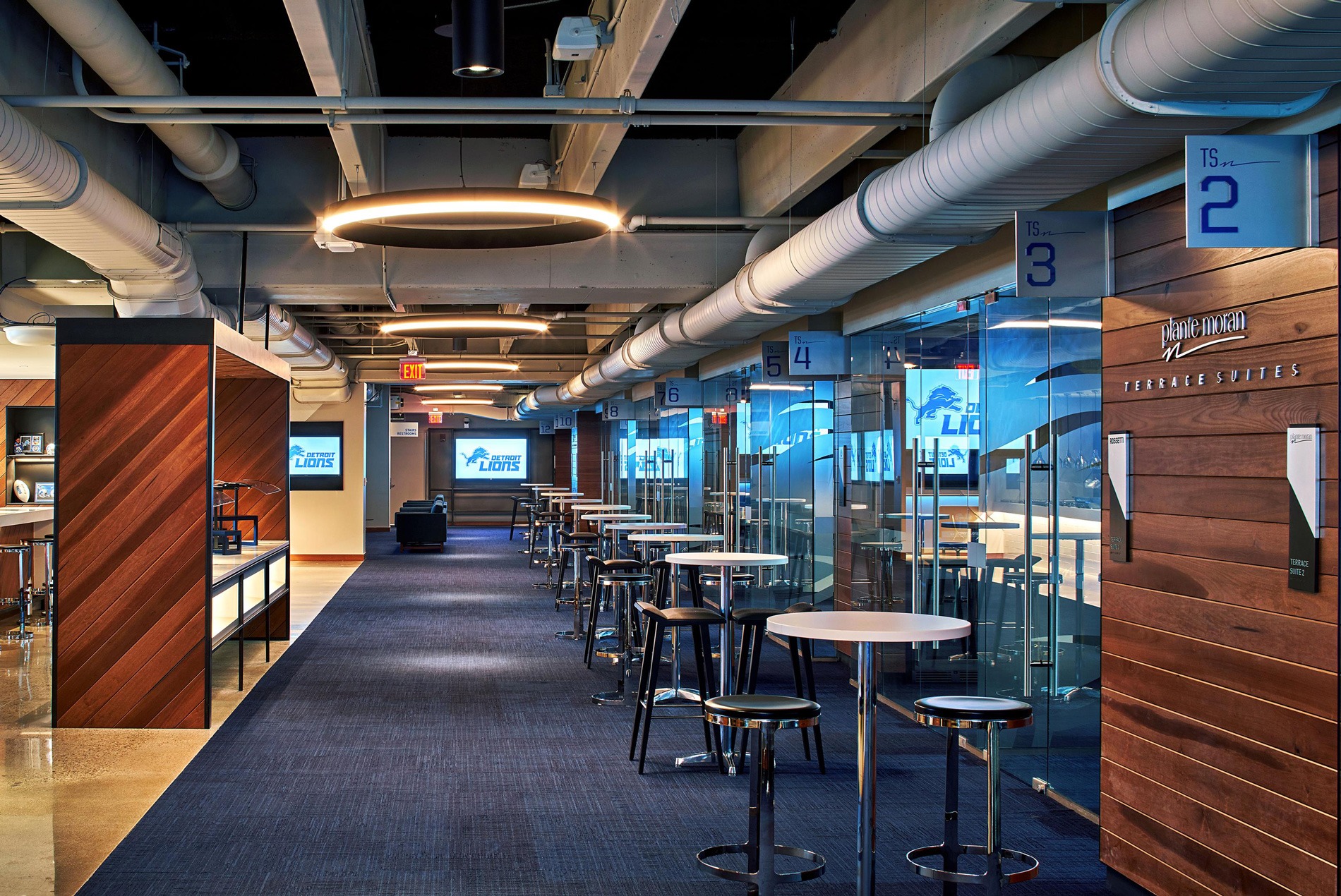
The Detroit Lions set out to modernize Ford Field to meet evolving NFL expectations and fan demand. The iconic stadium, which opened in 2002, is recognized for its adaptive reuse and integration of the historic Hudson’s warehouse and its strong connection to Detroit’s architectural character. ROSSETTI, now part of HOK, designed the original building. The Lions brought the same team back for the 2017 renovation.
As premium hospitality expectations shifted toward more social, flexible and varied experiences, the Lions sought to expand and diversify premium offerings, improve functionality and unlock underperforming areas while preserving the venue’s character and deep ties to downtown Detroit and the team’s brand.
Design Solutions
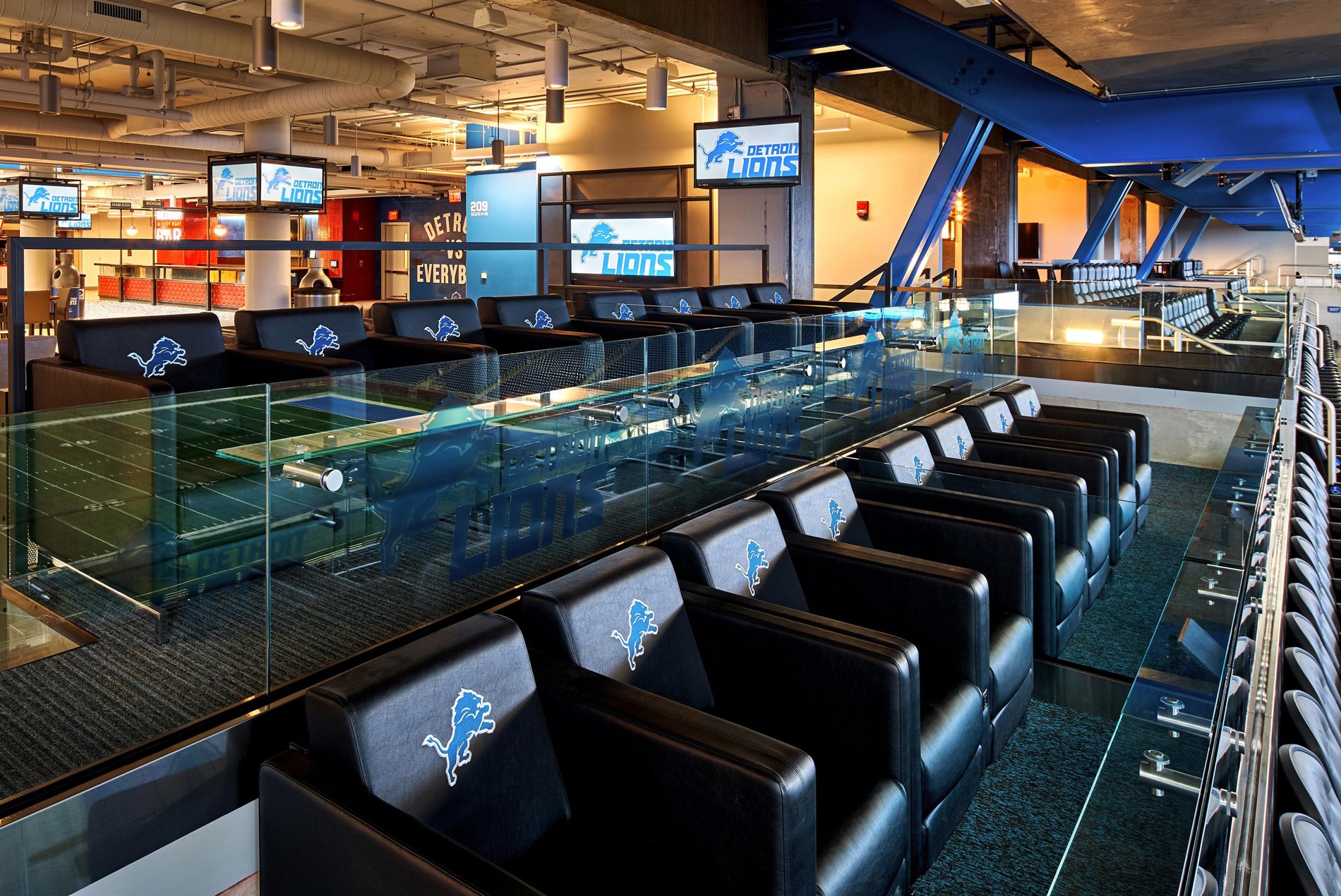
Guided by a comprehensive master plan, the project team infilled existing floor openings to increase usable square footage and support upgraded amenities. Simplified layouts improve circulation, visibility and service efficiency, while select suites were renovated, resized or removed to create larger club environments. These moves improved yield and better aligned premium products with a range of corporate partnership needs. At the south end of the stadium, removing suites at the club level opened viewing onto the field and made room for loge box seating with in-suite food and beverage service.
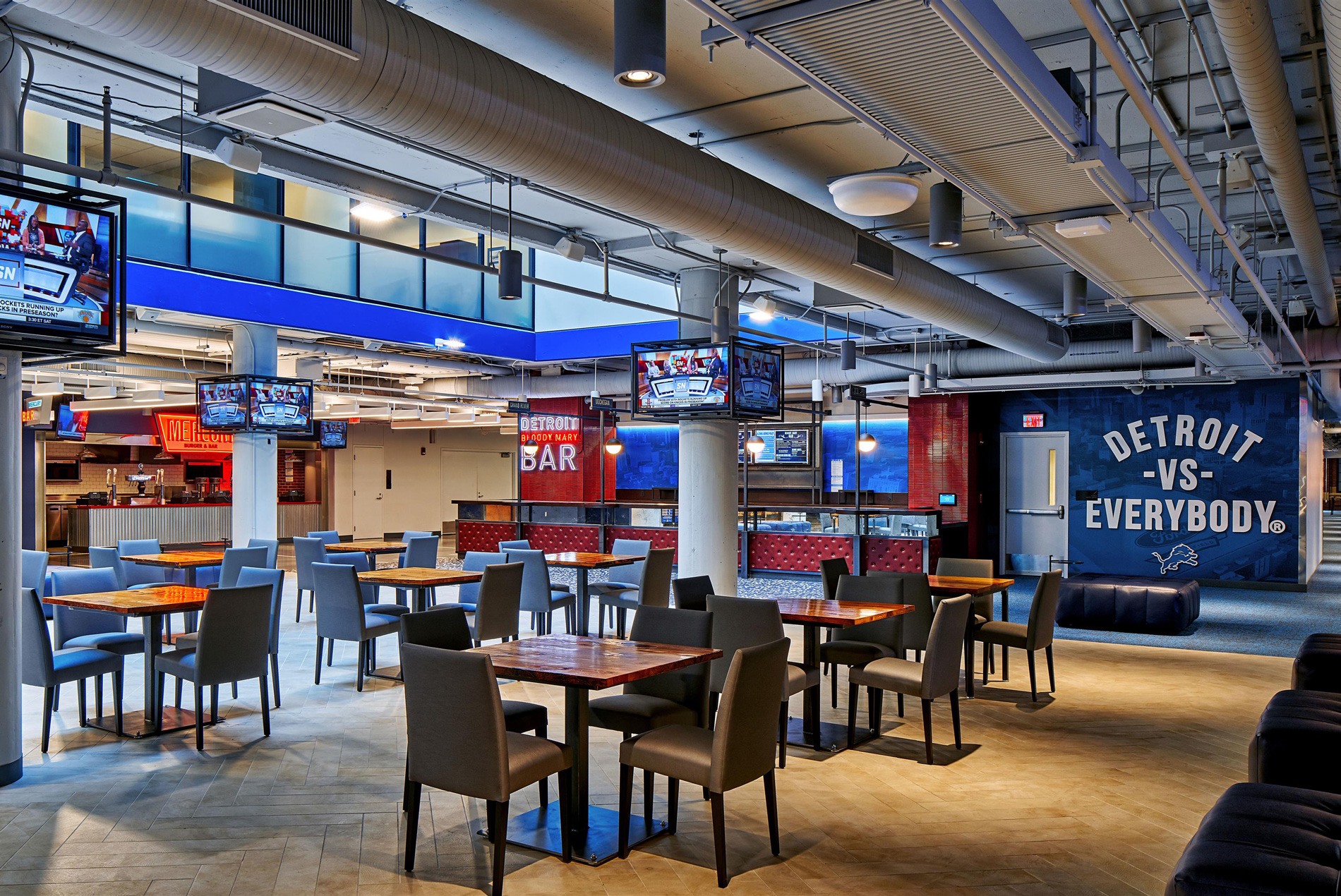
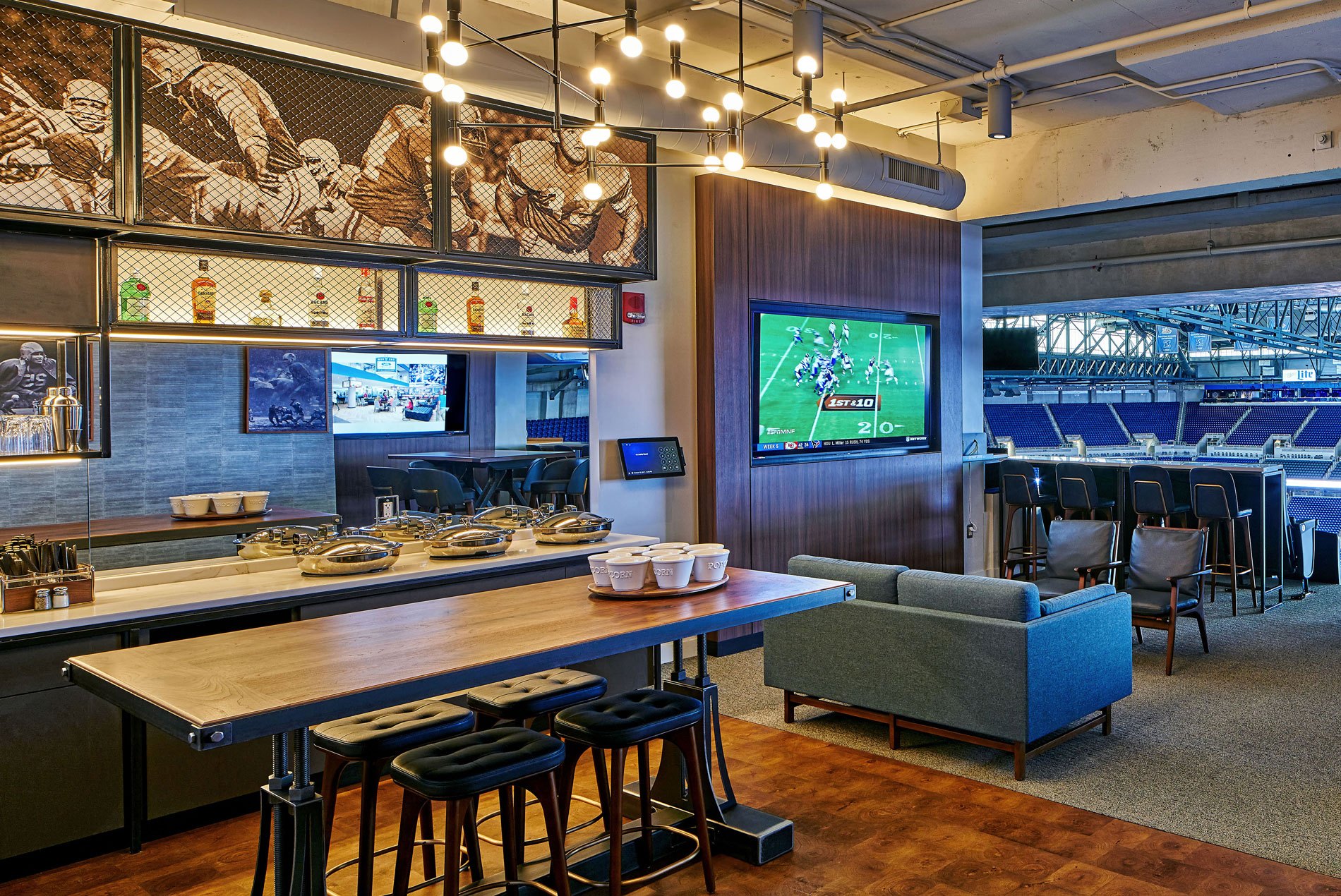
The design drew inspiration from both the Lions and the city itself. On the south side, the renovation preserved the base programming familiar to existing ticket holders while updating the design aesthetic. Clubs and suites express Detroit’s craftsmanship and grit through wood, dark metals and warm tones, anchored by the Comerica Gridiron Club, which leans into the city’s growing culinary scene with four Detroit-centric concessions and a variety of social spaces that support pre- and post-game socializing and encourage movement throughout the club. Innovative use of materials, lighting and custom furniture gives the Gridiron Club a distinct identity within the broader south-side palette. On the north side, lighter palettes, steel detailing and automotive references reflect Detroit’s industrial innovation and appeal to a younger fan base.
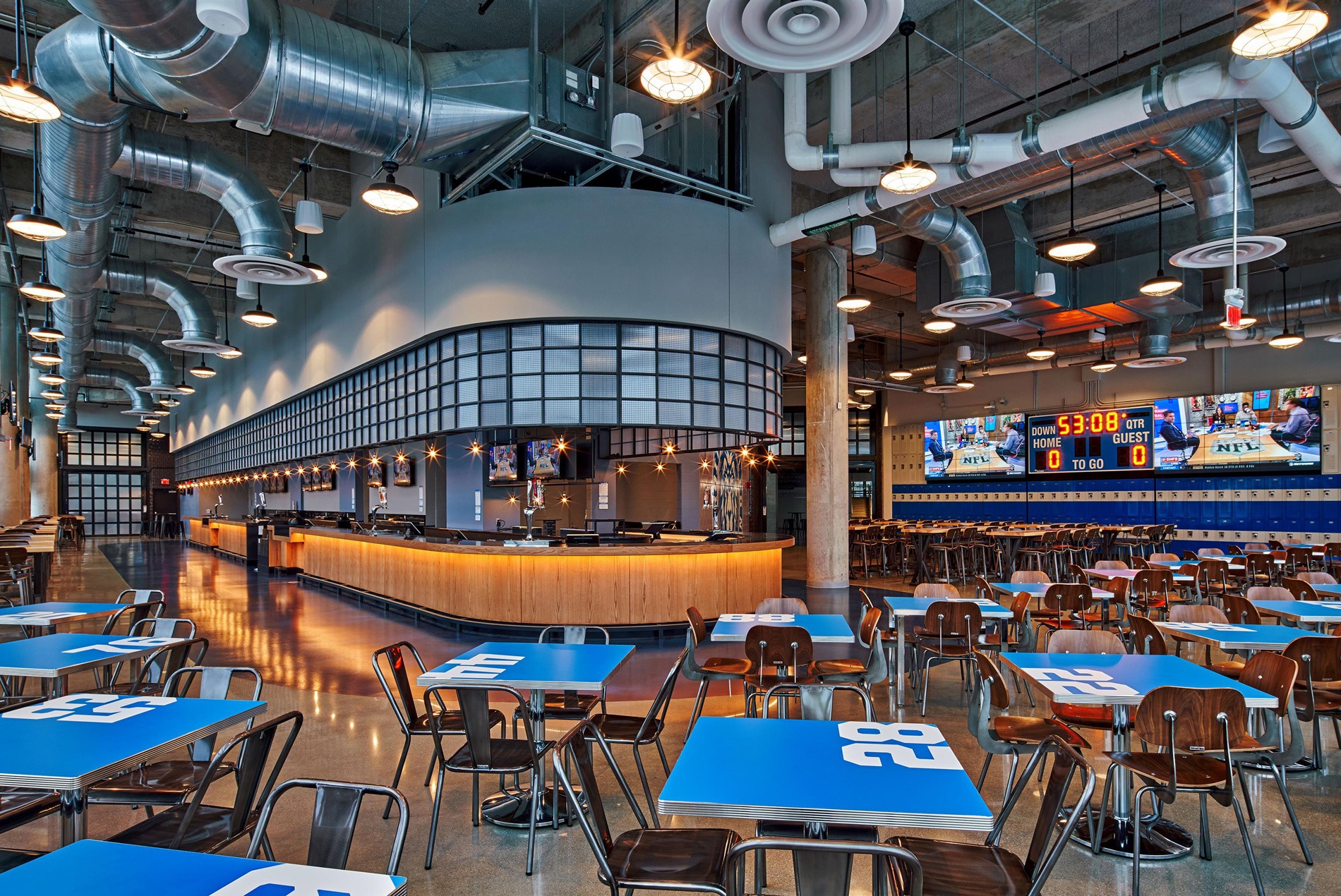
The renovation introduced a range of named premium spaces. The Plante Moran Terrace Club and Suites centers on 12 theater box-style mini-suites that seat groups of 10 while keeping access to a shared club environment just outside the suite. The Miller Lite Taproom, five levels above the field, lines its edge with lounge seating that encourages socializing and movement with open views below. A separate Corktown-inspired sports bar pays tribute to the era when the Lions and Tigers shared the Corktown ballpark — first Briggs Stadium, later Tiger Stadium — where the Lions played for nearly four decades. A 150-foot bar of oak, blackened steel and old factory glass anchors the space, with a wall of vintage lockers and a scoreboard framing a multi-screen video wall and LED statistic board.
Throughout the renovated venue, custom furniture, curated displays and integrated graphic design strengthen brand identity and create a cohesive premium experience. A comprehensive signage and environmental graphics package extends the architecture and interior story throughout the premium spaces. ADA-compliant room signage, overhead wayfinding and custom environmental graphics create a cohesive branded experience, with corporate partner identities integrated into the signage design and additional graphic elements drawing on Lions history and the spirit of Detroit’s neighborhoods.
Impact
The $100 million renovation was delivered on a compressed schedule of just a single year — significantly faster than comparable NFL stadium renovations, which often span multiple seasons. The accelerated timeline allowed the Lions to improve the fan experience while realizing immediate revenue gains and avoiding the costs and disruption of a multi-year construction timeline.
In the season following the renovation, a financial analysis confirmed the renovation’s direct impact on premium performance and revenue growth. Results included:
- The largest percentage increase in year-over-year ticket sales in the NFL, with all premium products, including reimagined suites and clubs, selling out before the season began
- New premium offerings replaced previously unsold inventory, generating five times more revenue than the prior year
- New multi-year partnership and sponsorship agreements with brands including Comerica Bank, Plante Moran and Miller Lite, each tied directly to premium environments
- Flexibility and amenities that positioned Ford Field to host major events, including the 2024 NFL Draft and the 2027 NCAA Men’s Final Four
Originally designed by ROSSETTI, which joined HOK in 2026.
SIZE
210,000 sq. ft. / 19,510 sq. m. renovated
Plante Moran Terrace Club and Suites: 6,950 sq. ft.
Miller Lite Taproom: 7,750 sq. ft.
CAPACITY
1,960 seats renovated
KEY FEATURES
Upgraded hospitality amenities responsive to NFL premium trends
Seating and social spaces designed for diverse fan demographics
Simplified layouts that improve circulation, visibility and service efficiency
Wayfinding that supports accessibility and corporate partnership integration
Deepened connections to Detroit history, culture and architecture
Measurable increases in ticket sales and revenue
Delivered on a compressed schedule
Awards
ALSD Spotlight Award, Suites Category, 2018
ALSD Spotlight Award, Theater/Loge/Mini Suite Category, 2017