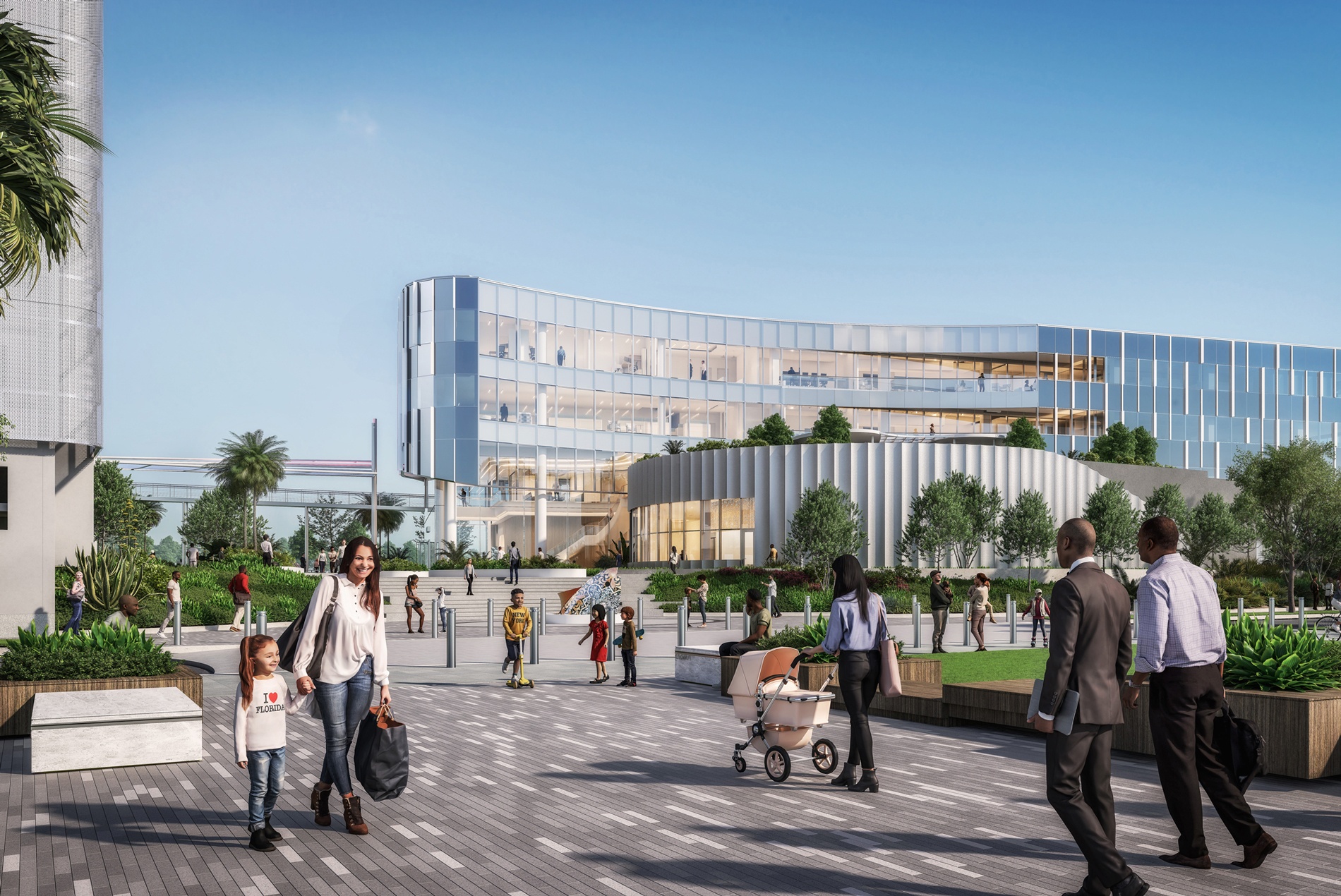
Real estate, planning and development experts share tips for local governments wanting to improve their property holdings for ROI and community impact.
Local governments across the U.S. are grappling with aging buildings, changing workplace expectations and growing pressure to improve constituent services. A recent HOK Up Next explored how cities and counties can turn those challenges into an opportunity to create stronger civic assets.
Moderated by Kristine Bishop Johnson, director of HOK’s Civic + Justice practice, the panel featured:
- Lee Ann Korst, executive vice president with CBRE and leader of the firm’s Southeast government practice.
- Phil Mays, principal with the real estate investment and development firm RocaPoint Partners.
- Steven Burgos, director of design, interiors, for HOK’s Miami studio.
The panel discussed how public buildings and campuses can support operations, attract talent and deliver broader value to the communities they serve.
Below: Watch a video of the conversation and read key takeaways.
Use data to determine the true costs of real estate
Any major real estate decision starts with a clear picture of the full cost of staying put or moving. Older buildings may look economical because they are debt-free, warned Korst, but they often carry high operating costs, deferred maintenance and inefficient space use. Her advice: weigh capital needs, operating expenses and utilization in a stay-vs.-move model. “You put those all into a financial model, and you have empirical data to help make that decision,” she said.
Design around service delivery, flexibility and workforce needs
A new government facility should improve how government works for employees and the public. Burgos noted that many civic buildings no longer support current expectations. “These facilities are places where our officials are conducting the work of the people,” he said. “They are also in the war for talent.” His comments point to a broader set of priorities for planners, including workplace recruitment and retention and ease of use for employees and constituents. Burgos highlighted strategies such as one-stop lobbies, intuitive wayfinding and shared amenities that streamline service and reduce stress for visitors and staff.
Choose sites based on future population and access patterns
Where a building sits can be as important as what it contains. As populations shift, facilities that once made sense may no longer align with where residents live or how they access services. Location should be an early consideration, said Korst. She pointed to location intelligence and growth projections as tools for identifying more convenient future sites.
Leverage civic investment to spark mixed-use growth
The panel examined how civic buildings can anchor mixed-use districts that broaden the tax base and strengthen community life. Mays described the “old way” as a standalone facility built. A better approach, he noted, is to “activate the land around it” so the public investment can “become an anchor to a much more valuable and interesting environment for that community.” He pointed to food and beverage, housing, hotel and office uses arranged in a compact pattern around the civic component.
Build buy-in early and rely on strong partnerships
Leadership, communication and trust can determine whether a project gains traction or stalls. Johnson stressed the need for a “champion” on the government side to lead the process and build support. Mays added that close collaboration among local leaders, advisors, designers, developers is critical, especially when planning a mixed-use civic campus. “All the entities have to work together.”
As a whole, the panel’s insights point to a broader shift in how cities and counties can rethink public buildings to improve operations, create better employee and resident experiences, strengthen the tax base and shape a more active, connected civic environment. For planners and public leaders, the challenge is to align real estate decisions with service delivery and long-term community goals.
Want to continue the conversation? Reach out to Kristine Bishop Johnson, Lee Ann Korst, Phil Mays or Steven Burgos.