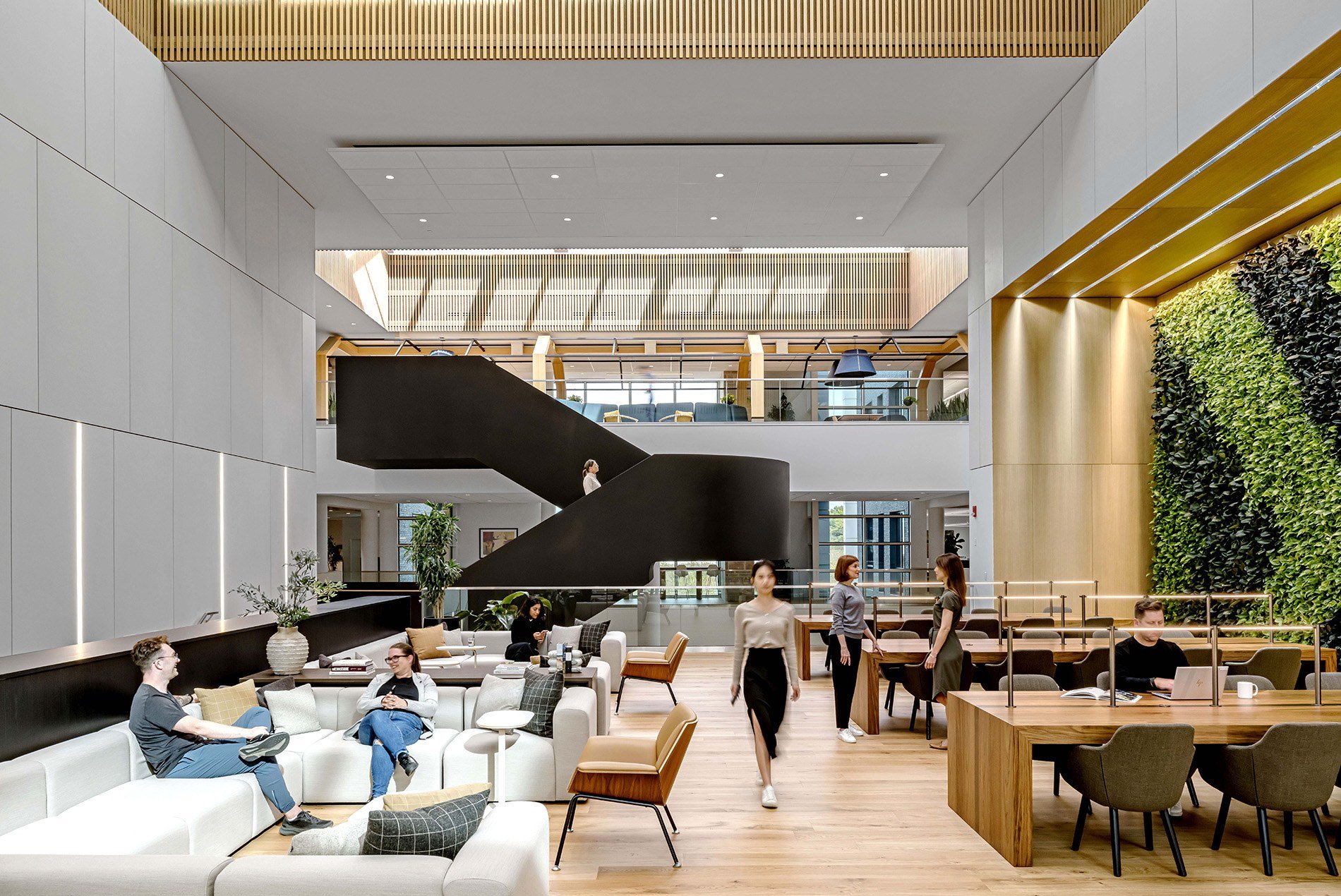
HOK designers share seven strategies for choosing healthy, durable and sustainable materials that align with design intent, performance needs and client goals.
Material and product choices do more than finish a building—they determine how it looks, feels and performs. They influence occupant health and safety, environmental impact and long-term maintenance needs.
Selecting the right materials and products can ensure a project achieves its goals for years—even decades—while a poor choice can lead to premature failure, replacement costs and negative health effects.
To explore how designers and clients can make more informed material and product choices, HOK hosted an Up Next panel with Steven Burgos, director of design for Interiors in HOK’s Miami studio; Kristina Kamenar, director of design for Interiors in HOK’s Toronto studio; and Candon Murphy, HOK’s firmwide Materials Resource Manager.
Murphy’s role is rare in the design profession. Acting as a liaison between HOK interior designers and the firm’s network of product and material vendors, she helps teams around the world select materials and products for a wide variety of building types, ranging from airports and civic centers to stadiums, universities and corporate headquarters.
Check out the full conversation in the video below and continue on for seven key takeaways that designers and clients can use to make better, more cost-effective choices when it comes to products and finish materials.
1. Use Data to Forecast Long-Term Material and Product Needs
Design decisions shouldn’t be based solely on today’s preferences. They should anticipate how spaces will be used years from now. Murphy uses tools such as generational trend surveys, workplace behavior studies and neuroscience research to predict evolving needs, especially for clients making long-term investments.
“For example, we can use neuroscience research to show our clients how biophilic design elements—such as organic patterns—can lower employee blood pressure,” noted Murphy.
By grounding product specifications in measurable data, design teams can select healthy, resilient materials that adapt to technological change, shifting demographics and evolving user expectations.
2. Balance Design Intent with Real-World Performance
Material that looks good on paper may fail under real-world conditions. The panel emphasized embedding performance testing and quality checks into the specification process, particularly for high-use environments such as stadiums and transportation hubs.
Murphy and Burgos discussed how a stadium client they worked with wanted an open-air space to have a high-end hospitality aesthetic. The team had to choose upholstery and finishes that felt luxurious yet could withstand heavy traffic, potential spills and outdoor weather.
“It’s about looking at what is going to fulfill design intent while meeting the performance needs of the space,” Murphy said.
Selecting materials with both visual appeal and proven durability ensures spaces remain functional and beautiful for years.

Will Rogers World Airport Terminal Expansion | Oklahoma City
3. Incorporate Supply Chain Resilience into Product Specifications
Global supply chains can be disrupted by politics, weather events and economic shifts. Designers can mitigate these risks by understanding where materials are made and anticipating vulnerabilities.
“Knowing where products and materials come from and what is occurring in those places is crucial,” said Murphy. “It allows you to anticipate disruptions and pivot to other options when needed.”
Mapping supply origins and identifying alternate manufacturers early helps keep projects on schedule and within budget.
4. Strengthen Vendor and Manufacturer Partnerships for Better Outcomes
Strong relationships with vendors and manufacturers create transparency and early-warning systems for price changes, lead time issues or product availability challenges. Murphy works closely with suppliers to align upcoming project needs with production schedules.
“If I know we’re looking at a potential cost increase, I’ll take that to my team so they can get an order in now and save the client money,” she said.
Treating suppliers as strategic partners supports smoother delivery and more reliable material performance.
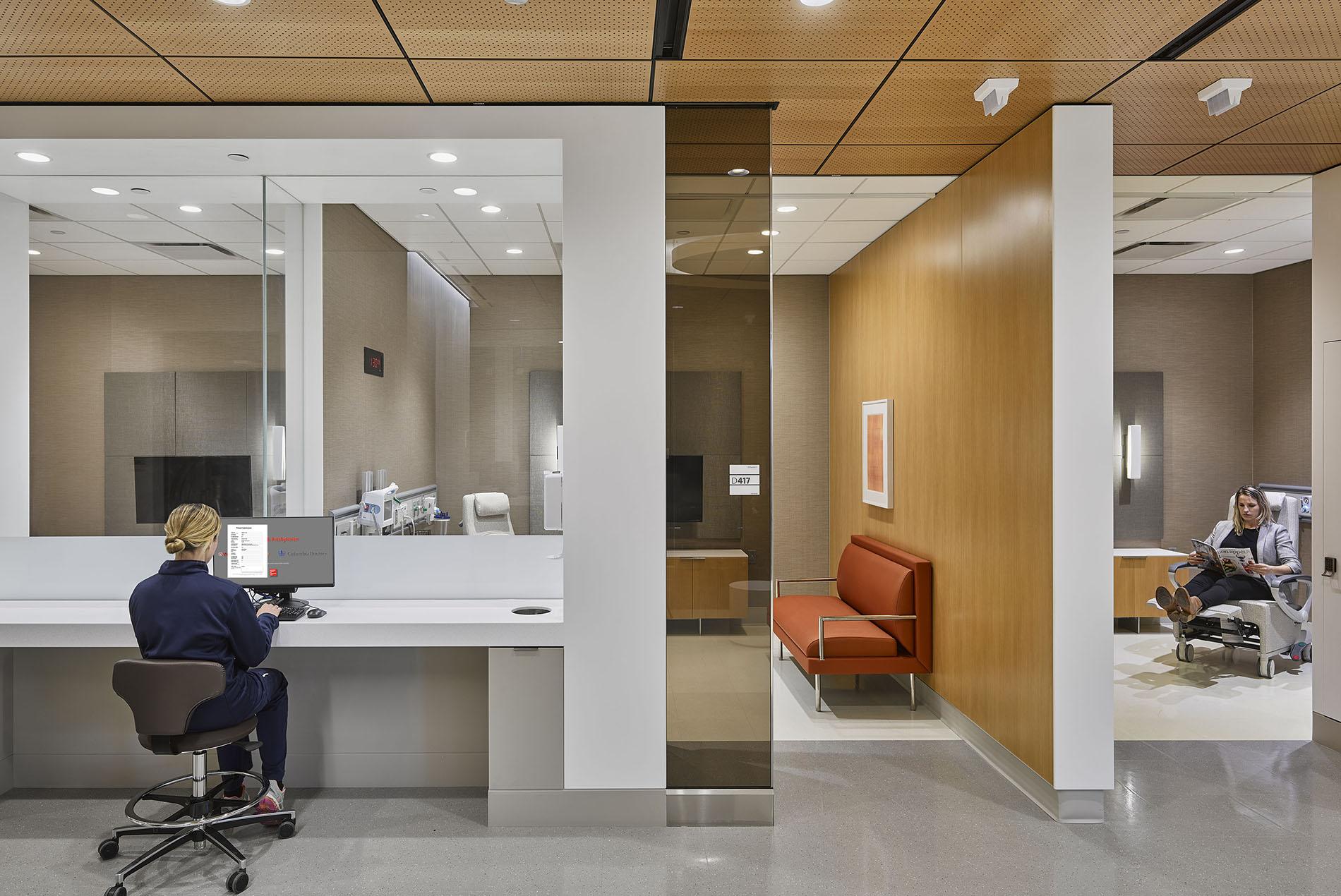
NewYork-Presbyterian David H. Koch Center | New York
5. Integrate Sustainability and Wellness Criteria from Project Kickoff
At HOK, evaluating environmental impact and occupant health is part of every project. The firm’s material tracking initiative teaches designers to consider durability, wellness, carbon impact, cost and lead times together when specifying products.
“Sustainability and wellness are never outside of our consideration. It’s durability first and then health,” said Murphy. “A material isn’t sustainable if it doesn’t last.”
Embedding sustainable material selection early avoids last-minute compromises and ensures healthier environments for occupants.
6. Use Design Advocacy to Influence the Development of Better Materials
Design teams can shape the marketplace by requesting healthier, more sustainable products and pushing manufacturers to solve performance challenges. Murphy noted how she is currently helping a vendor with an alternative leather made from fungus roots, also known as mycelium.
“I’m always telling designers to send me their ideas and let’s make them real,” said Murphy. “Let’s figure out how to make problem material sustainable. Let’s challenge the manufacturers to create these things.”
When clients and designers ask for better, the industry responds—accelerating innovation and raising the standard for sustainable building products.
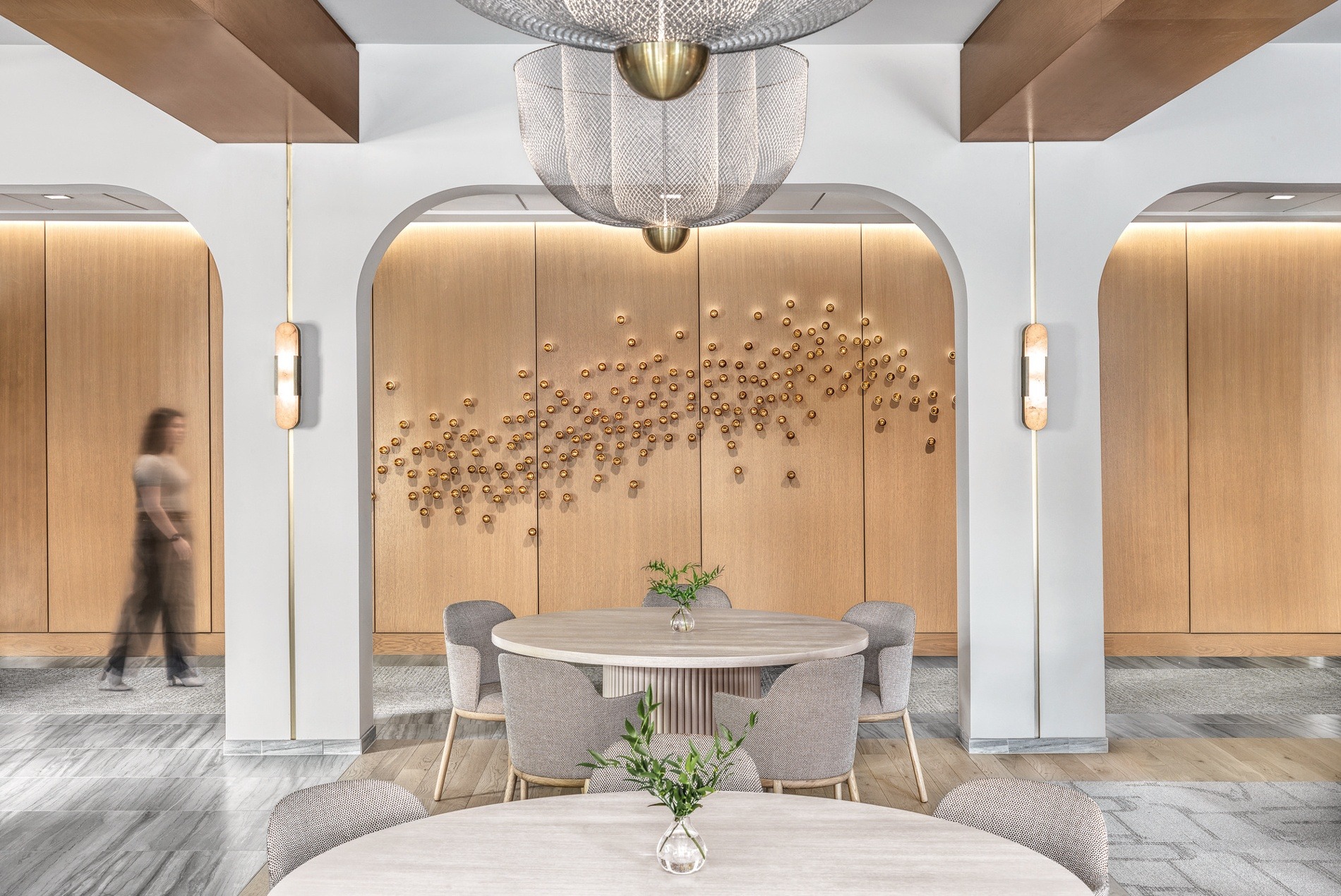
The Clover at Olive Crossing | St. Louis
7. Prioritize In-Person Evaluation of Products and Materials
While online research is useful for shortlisting options, nothing replaces the insights gained from handling materials directly. Murphy encourages visiting trade shows and manufacturer showrooms to assess products firsthand.
“We are humans that create spaces for humans. We need to experience things in real life,” she said. “You can’t feel texture on a screen. You don’t know what something is going to smell like on a screen.”
Direct sensory engagement builds confidence in selections and often inspires design ideas that wouldn’t emerge from a screen.
Key Takeaways for Designers and Clients
- Base material selection on data to ensure long-term relevance.
- Test performance early to align design intent with durability.
- Plan for supply chain risks before they disrupt a project.
- Build strong vendor relationships for transparency and flexibility.
- Integrate sustainability and wellness into the earliest design phases.
- Advocate for better products to drive market innovation.
- See materials in person to make more confident, informed choices.
Want to know more about material and product selection? Continue the conversation by reaching out to the panelists at the emails below.
Candon Murphy: candon.murphy@hok.com
Kristina Kamenar: kristina.kamenar@hok.com
Steven Burgos: steven.burgos@hok.com