Driven by a convergence of economic, operational and environmental factors, team owners and venue operators across professional and collegiate sports are increasingly choosing large-scale retrofits over new construction. These massive renovations allow franchises and cities to reposition existing buildings, modernizing the fan experience, unlocking new revenue streams and extending the life of their aging facilities. With much of the infrastructure already in place, teams can prioritize what fans can see, touch and feel – while encouraging regenerative development – rather than spending money on the hidden mechanical, electrical and plumbing infrastructure that are hidden within the building fabric.
This shift is driven in part by the rising cost of construction across every market, which jumped more than 7% on non-residential projects in 2025. At the same time, the scale and expectations of new sports venues have escalated dramatically, with new NFL stadiums now routinely exceeding $2 billion. For many owners, building new might not make financial and operational sense.
Reframing Existing Buildings as Assets
Deep retrofits begin with a different mindset. Rather than viewing older venues as obsolete, teams and cities increasingly recognize the value embedded in their location, infrastructure and identity.
Most stadiums and arenas occupy strategic sites in the urban core and are seamlessly connected to existing transportation networks, entertainment districts, park and trail systems and surrounding development. Over time, these venues become deeply woven into the identity of a city and a team’s culture. Replacing them often means starting fresh, creating disruption associated with large-scale construction and broader impacts on surrounding infrastructure needed to support a new venue. Retrofitting allows organizations to preserve existing connectivity while fundamentally reimagining the building’s interior.
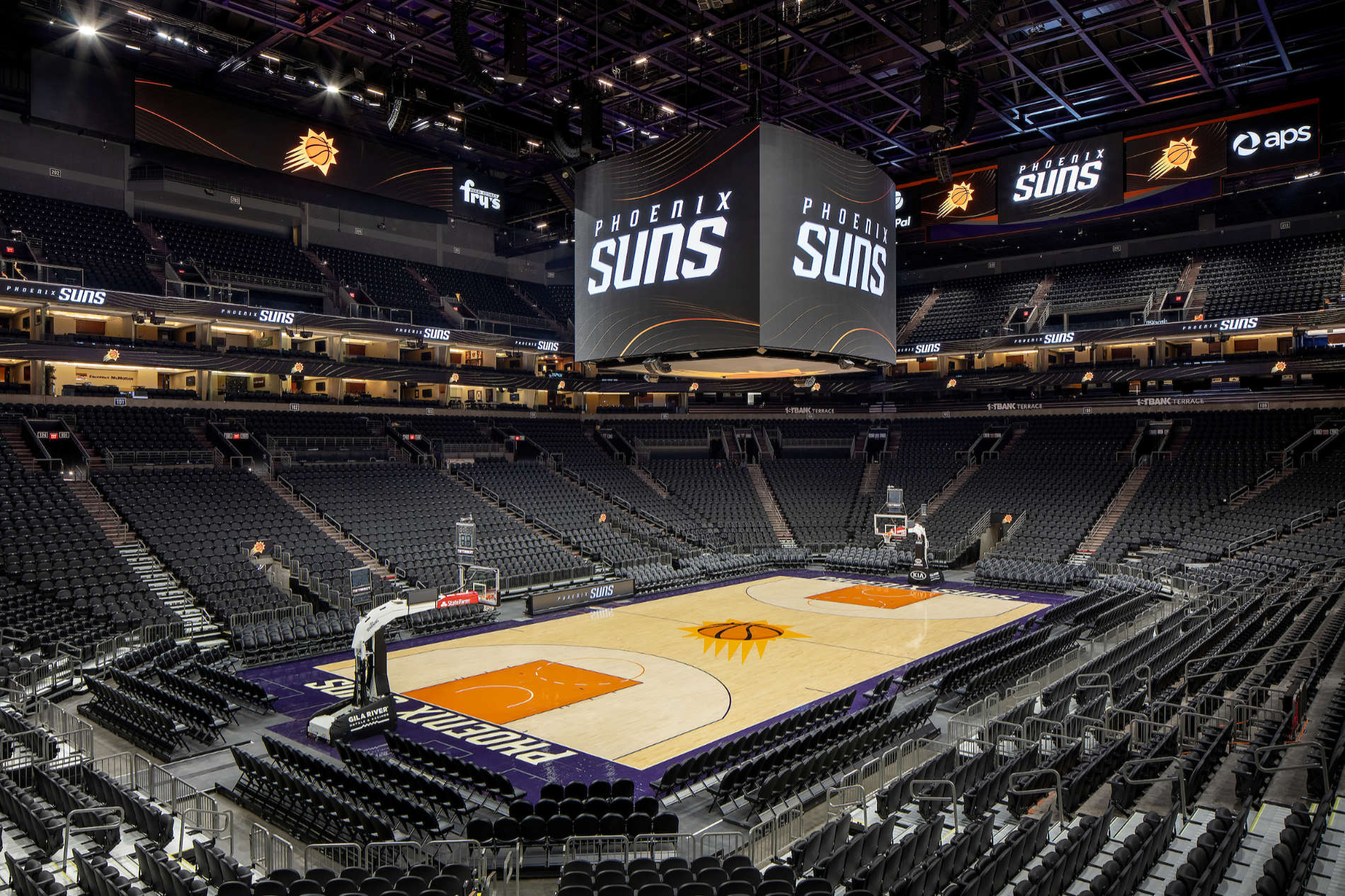
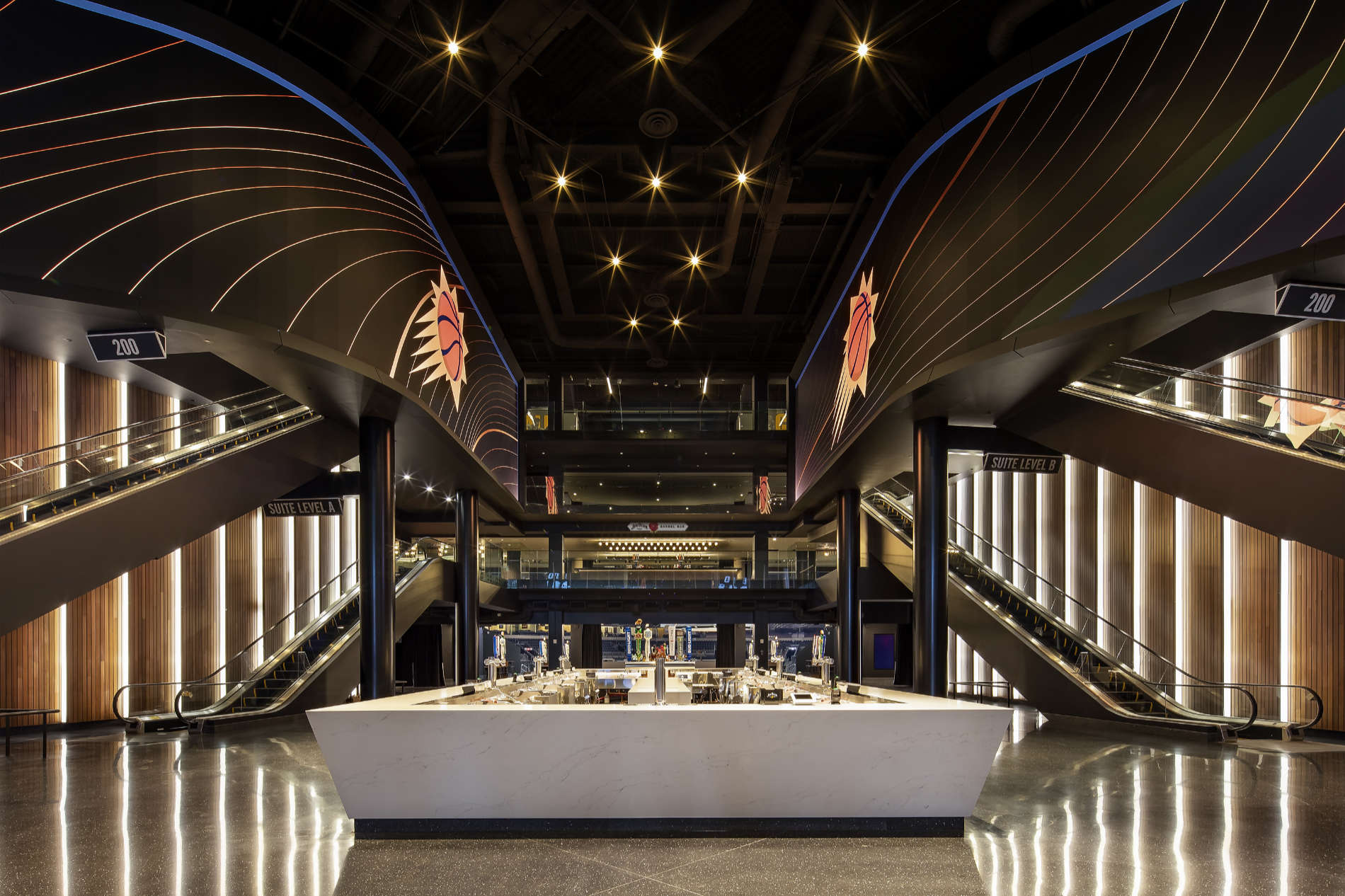
In Phoenix, HOK’s large-scale renovations to the Mortgage Matchup Center (home of the NBA’s Suns and WNBA’s Mercury) reimagined an aging, compact facility in a prime location into an intimate, amenity-rich venue with a distinct home-court advantage. The team preserved its central location and delivered the project for $230 million—a fraction of the cost of building new.
Projects like this also create opportunities to phase investment. Unlike a new venue, which typically requires a massive upfront capital commitment, deep retrofits can be sequenced over time, allowing owners to align improvements with operational needs, off season, game schedules and revenue generation strategies. At Chicago’s United Center, home of the NBA’s Bulls and NHL’s Blackhawks, HOK-led renovations have been paced over many seasons. This has allowed the teams to test seating products and see how they perform, informing their strategy season to season and ensuring economic viability. As venue economics evolve, this approach provides greater certainty in decision-making around new spaces or seating concepts—and ensures fans get to experience something new each season.
The Premium Experience Arms Race
Deep retrofits and new builds alike are being fueled by changing expectations around hospitality and premium experiences.
Many venues built in the 1990s and early 2000s were designed around a relatively narrow premium model dominated by traditional suites. These suites helped venues secure financing, as they carried a known dollar value. However, today’s fans and corporate partners expect something more varied, social and experiential.
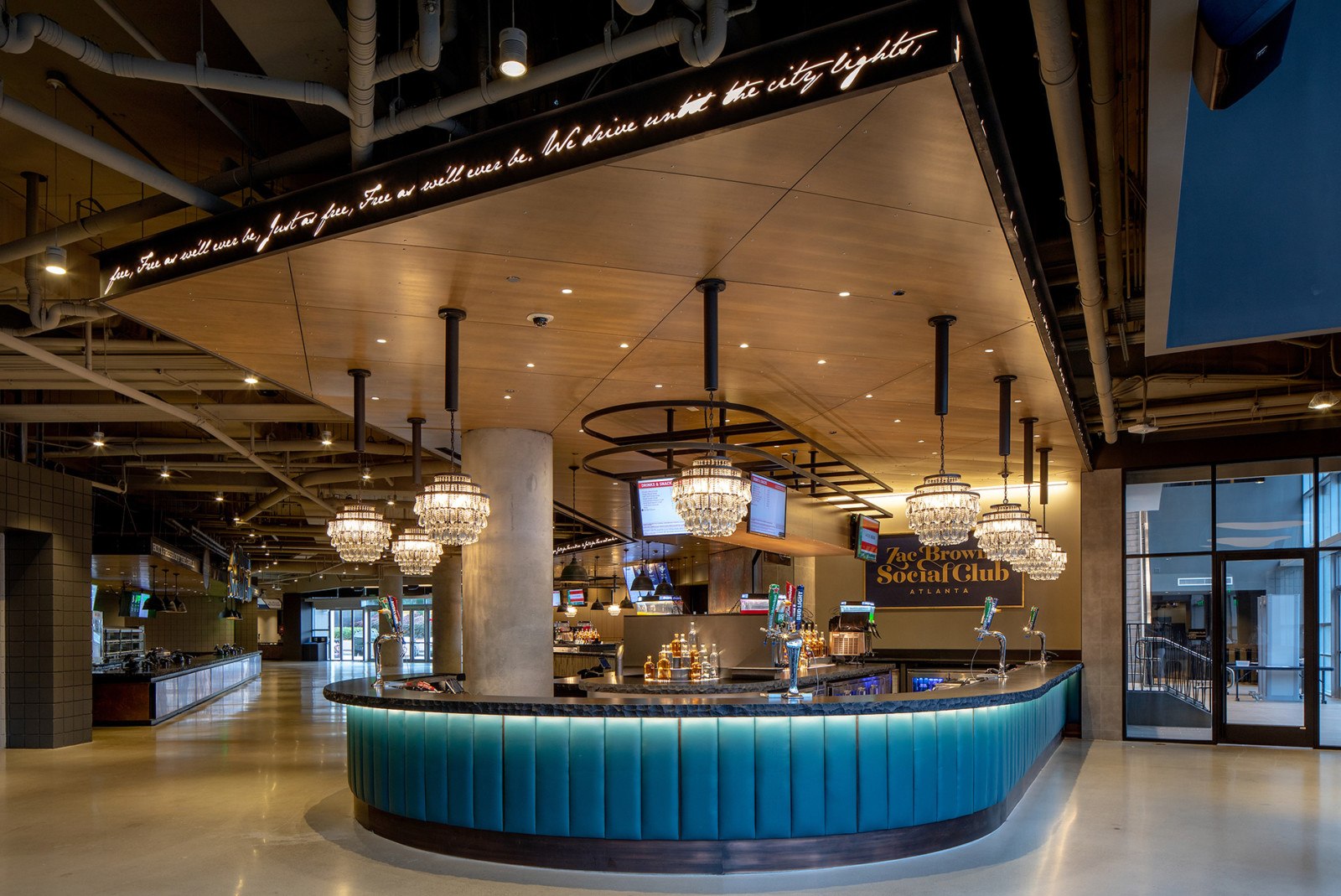
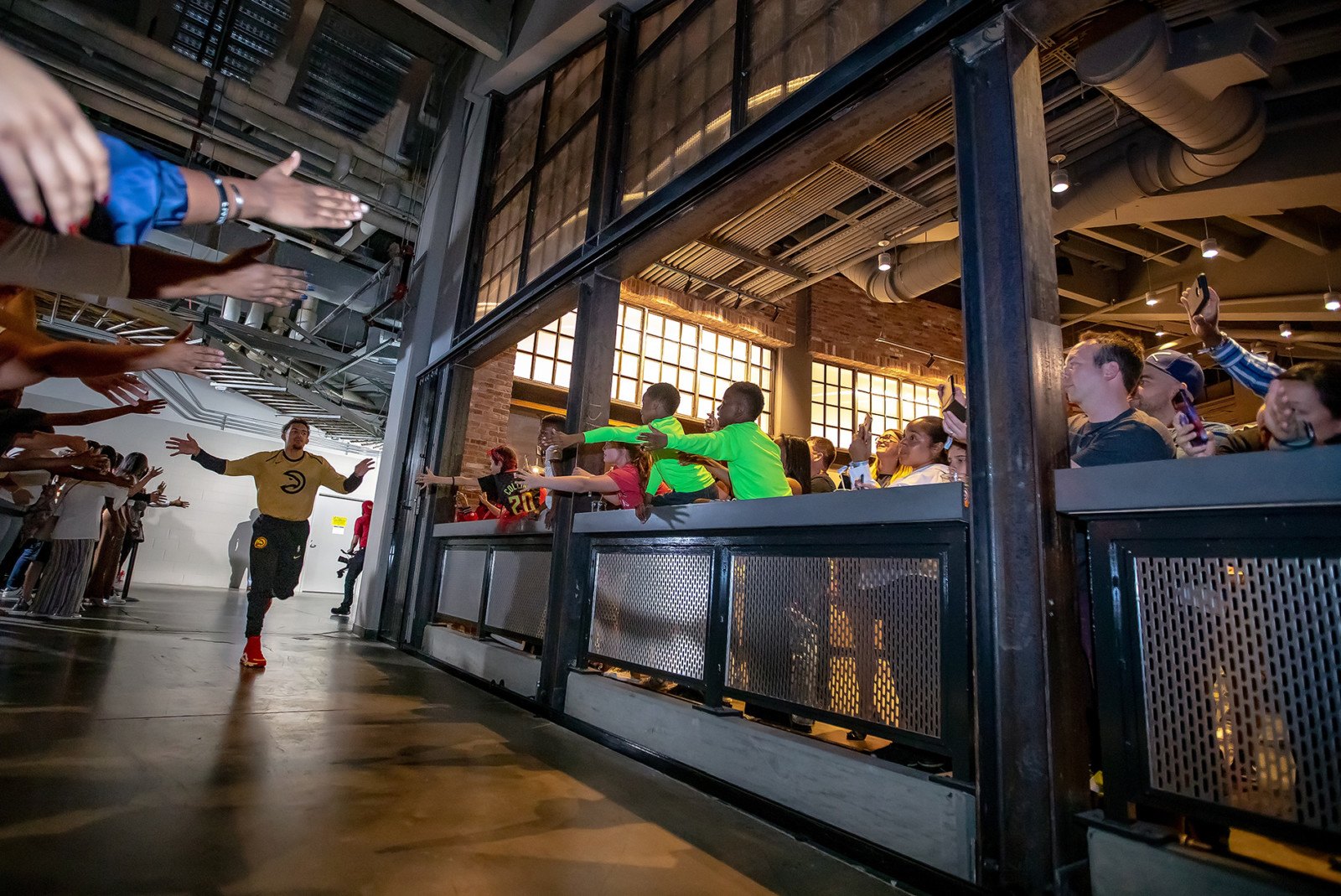
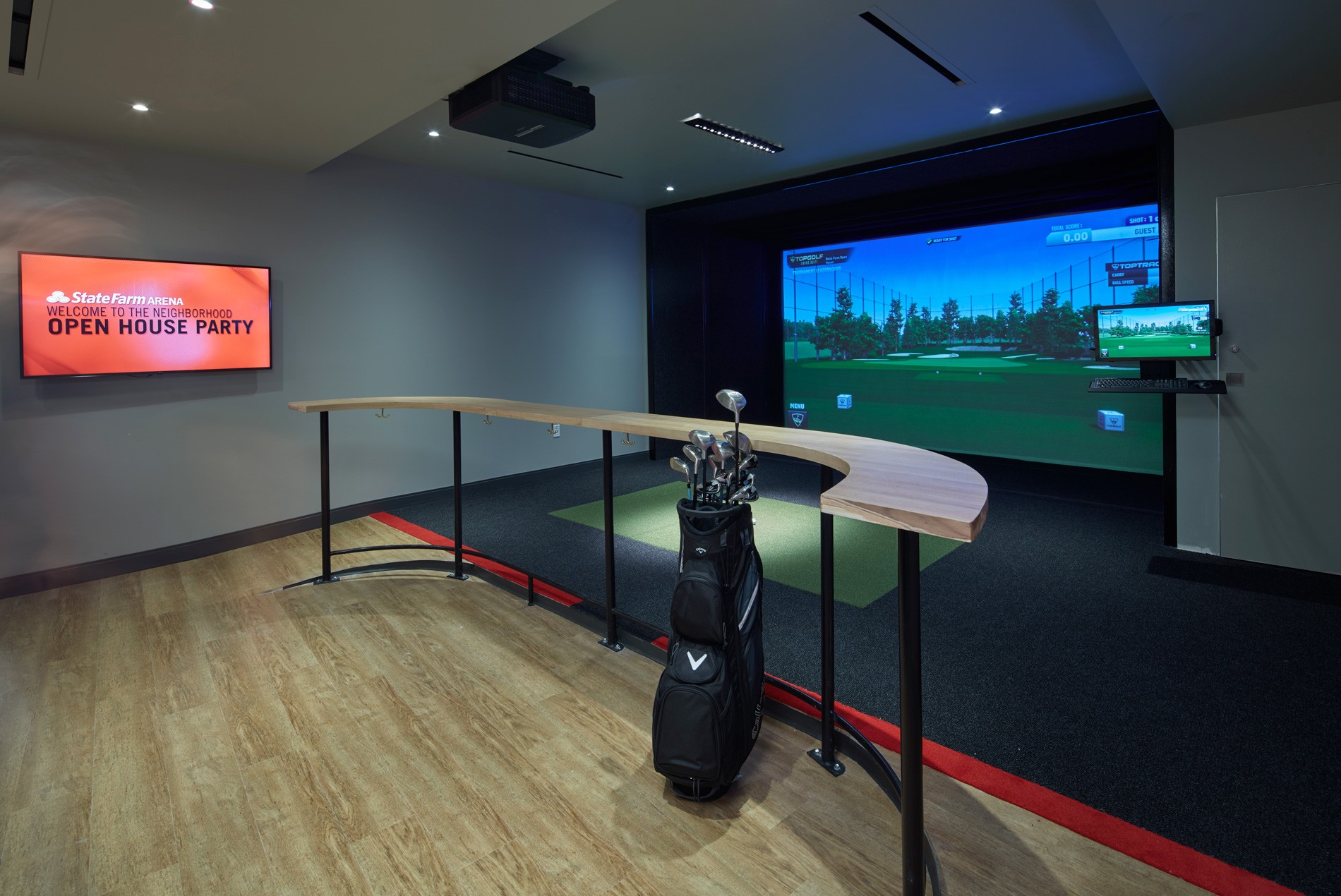
That has led to a new generation of clubs, lounges, loge boxes, social seating and hospitality spaces designed around flexibility and choice. Owners are replacing traditional premium inventory with layered, flexible offerings that appeal to different demographics and price points, from all-inclusive social clubs to immersive field-level experiences. Some offer access to athletes as they enter and exit the playing surface, or experiences within the experience, like the Topgolf Swing Suites at HOK’s renovation of State Farm Arena in Atlanta (home of the NBA’s Hawks).
In many cases, deep retrofits allow teams to increase revenue without increasing overall capacity by introducing new hospitality experiences. HOK and ROSSETI’s renovation of the USTA’s Arthur Ashe Stadium, the world’s largest tennis stadium, will add approximately 2,000 courtside seats, new hospitality clubs and luxury suites while removing thousands of upper-tier seats. The strategy reflects a broader shift across sports venues: creating greater value per seat rather than simply maximizing attendance.
That dynamic is reshaping venue planning. Several recent renovations across collegiate and professional sports have intentionally reduced capacity to prioritize wider concourses, upgraded hospitality spaces and premium seating options. The economics increasingly favor experience quality over maximum capacity.
In Jacksonville, HOK’s Stadium of the Future project for the NFL’s Jaguars illustrates this shift. It will reduce capacity at EverBank Stadium from nearly 68,000 seats to 63,000 in the renovated venue, with the ability to expand to 71,500 for signature college games. The capacity trade-off comes with more dynamic hospitality experiences.
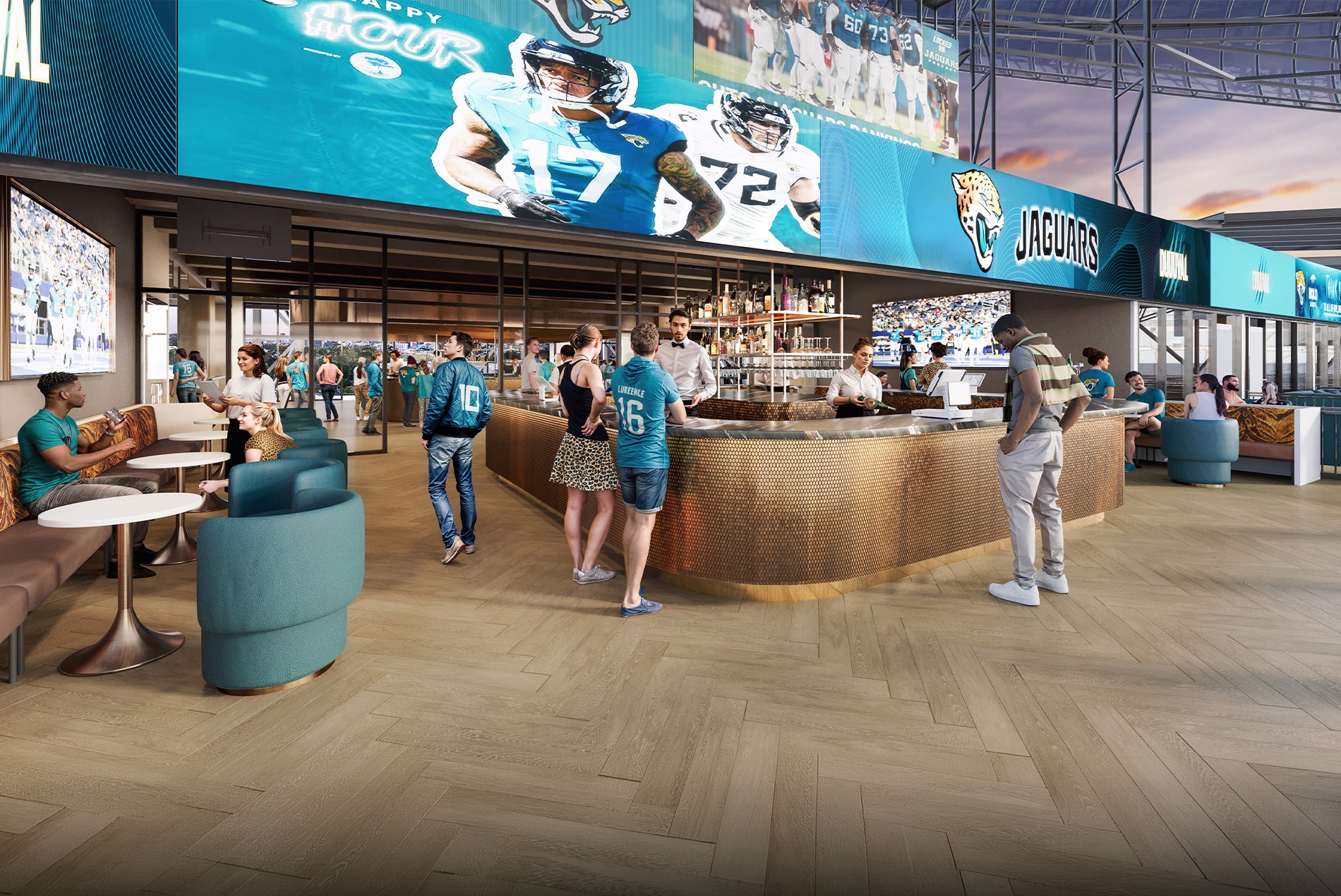
This reflects a broader shift in how sports venues generate value. Stadiums and arenas are no longer solely dependent on ticket sales. They are year-round community assets expected to attract events, drive sponsorships and capitalize on mixed-use development revenue.
Building While the Games Go On
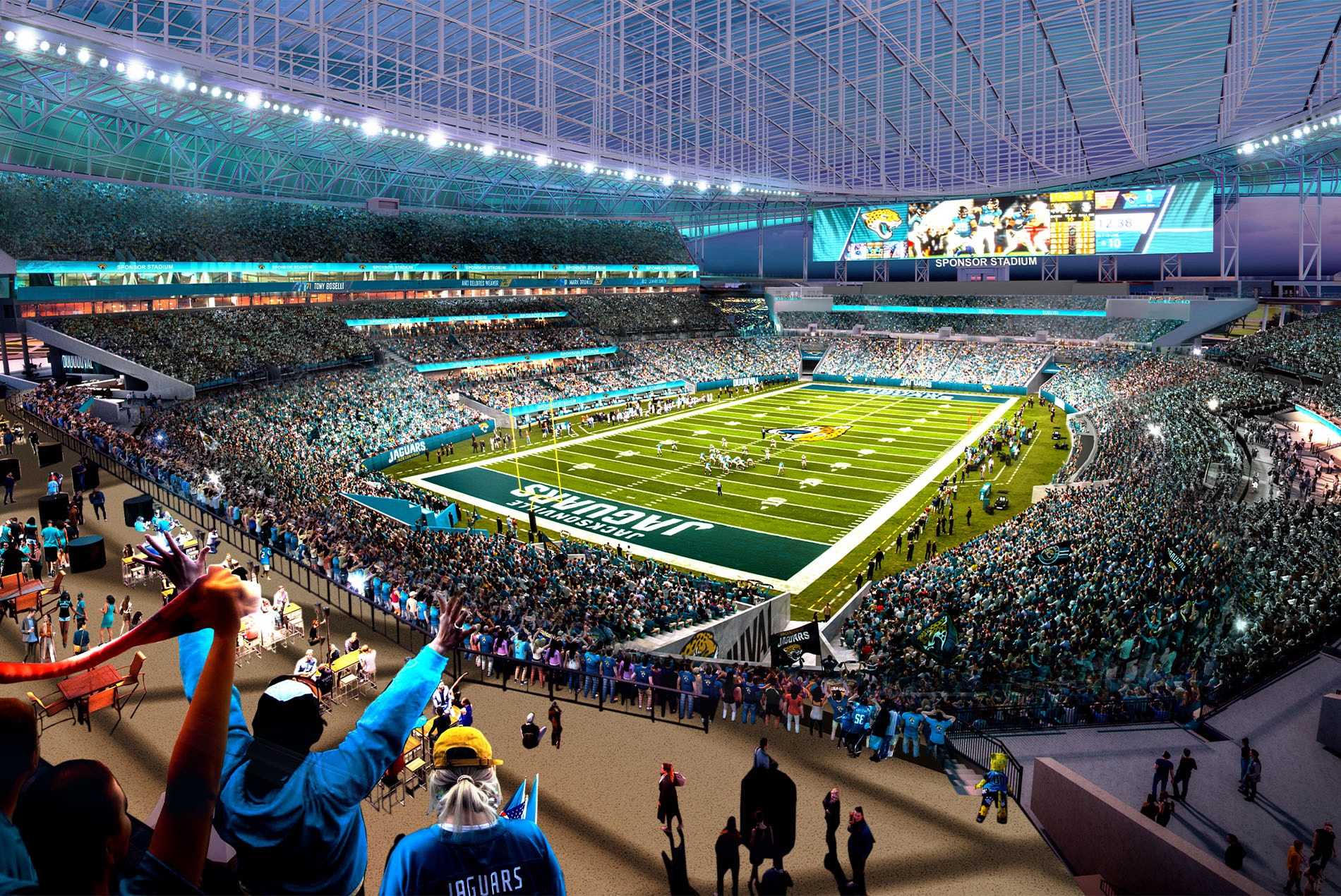
Unlike new construction, deep retrofits don’t happen on an empty site. These projects unfold while teams continue to play games, host concerts, corporate and community events—all while operating year-round. This creates a distinct design and operational challenge for architects and contractors.
These projects must be carefully phased, aligning construction with crucial offseason windows. In Jacksonville, the Jaguars will operate at a capacity of 42,507 this 2026 season, allowing construction on the non-operational upper seating bowl and several premium spaces while the season is underway. This phased approach changes the nature of the design process itself, as designers must consider the experience fans will have season by season rather than simply the end result.
This phased approach also allows owners to respond more dynamically to market conditions. Instead of committing to a fixed vision years in advance, teams can adapt future renovation phases based on evolving fan behavior and market demand.
Technology Is Extending Venue Lifespans
Technology is also redefining what existing venues can become. Digital infrastructure, including large-scale LED systems and integrated venue controls, allows buildings to transform more fluidly between events and create more immersive fan experiences without major structural changes.
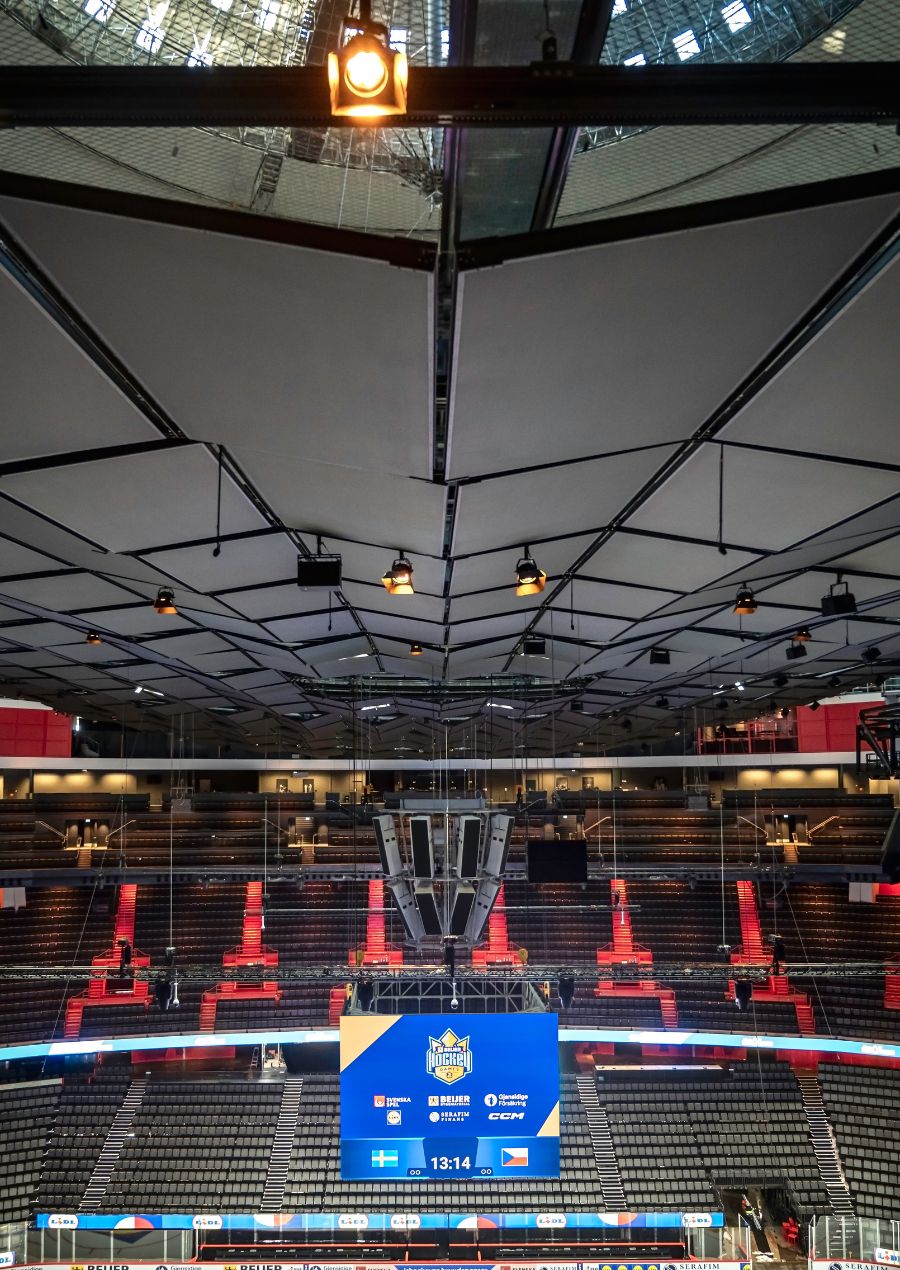
In Stockholm, the building now known as Avicii Arena opened in 1989 as then the world’s largest spherical building. Over time, the building became underutilized because of its challenging acoustics. To further complicate matters, the arena was also a listed heritage building, meaning the existing envelope couldn’t be changed.
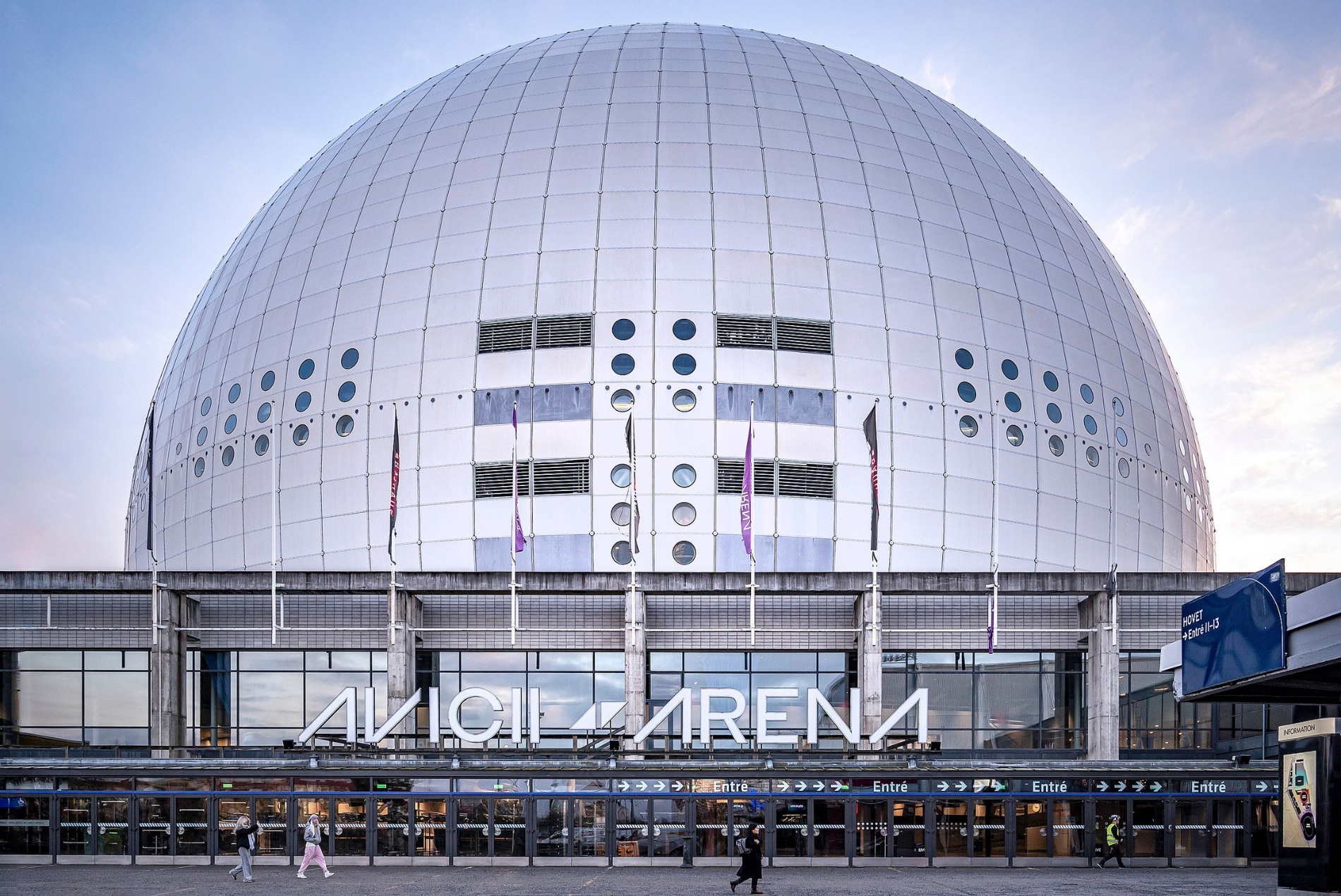
The team designed a retractable acoustic ceiling, engineered to fit the constraints of the spherical structure. The reflective panels open and close with the push of a button, reducing the building’s volume to optimize acoustics for events while still maintaining the spectacle of the venue’s architecture.
This kind of adaptability is especially important as venues host increasingly diverse programming. Today’s arenas routinely support professional sports, concerts, conferences, corporate and community events within the same month. Retrofitting allows owners to build flexibility and additional revenue streams into existing structures.
At the same time, operational technologies are helping venues run more efficiently. Upgraded building systems, smarter energy management and enhanced back-of-house infrastructure significantly improve performance while reducing long-term operating costs.
A More Sustainable Future
Environmental performance is another major driver behind deep retrofits. Preserving and upgrading an existing structure can significantly reduce embodied carbon. Research from the American Institute of Architects and the National Trust for Historic Preservation shows building reuse avoids 50% to 75% of embodied carbon compared with new construction. As sustainability targets become more ambitious across the industry, adaptive reuse is a practical way to reduce environmental impact while extending the venue’s life. Projects like Avicii Arena and State Farm Arena avoid the environmental and financial costs of replacement while delivering a meaningful improvement in the fan experience – and greater connectivity to the surrounding, established district.
Deep retrofits also offer financial advantages. Escalating material costs, labor shortages and supply chain issues put pressure on large-scale construction budgets and create volatility. While deep retrofits aren’t immune to these challenges, the ability to maintain existing structural and even mechanical, electrical and plumbing systems helps minimize cost exposure.
A New Model for Venue Evolution
For decades, large buildings and increasingly ambitious capital projects seemed to be the norm in the sports industry. But the recent rise of deep retrofits signals a broader shift in stadium and arena development. While there will always be a place for new construction, economic, scheduling and sustainability pressures remind us that innovation doesn’t have to mean starting over.
Existing venues can evolve to meet fan expectations around flexibility, hospitality, technology and sustainability, all while preserving the identity and emotional connection that made them meaningful in the first place.
Continue the Conversation
To learn more about how to apply these insights to your venue, reach out to the authors:
Peter Broeder, Design Principal, Kansas City | peter.broeder@hok.com
Kirsty Mitchell, Regional Leader of Sports + Recreation + Entertainment, London | kirsty.mitchell@hok.com