Aviation’s carbon challenge is most often framed around aircraft emissions. But planes are only part of the equation. Airports themselves are vast, energy-intensive buildings constructed with carbon-heavy materials. Reducing their environmental impact could provide the aviation sector an opportunity to make an immediate impact.
At Monterey Regional Airport (MRY), HOK is helping to lead that shift, designing an all-electric airport that demonstrates how planning, systems integration and material choices can significantly reduce an airport’s environmental footprint. This article outlines six interconnected design strategies HOK used to meet Monterey Regional Airport’s sustainability goals while also examining the market realities that complicate efforts to deliver low-carbon buildings.
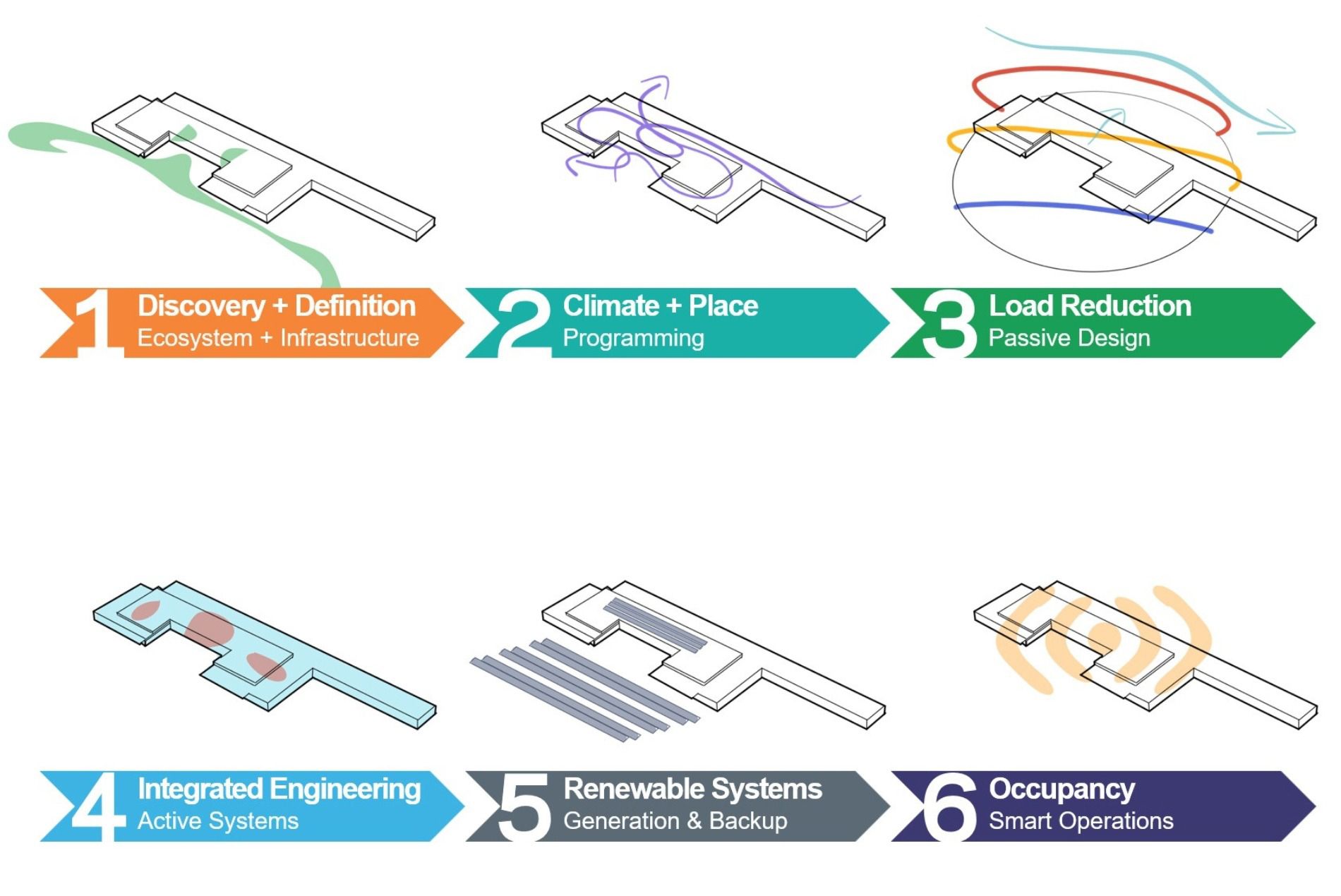
1. Discovery + Definition
From the outset, Monterey Regional Airport set ambitious and clearly defined goals for its five-gate, 60,000-sq.-ft. replacement terminal. The airport charged the project team with delivering a facility that would achieve a minimum of LEED Platinum certification, reduce energy use by at least 20% below code and exceed California’s CALGreen requirements.
Beyond performance metrics, the airport sought a terminal that would be cost-effective to operate and maintain, express a strong sense of place rooted in coastal California and prioritize durable, high-quality materials with lower environmental impact. These objectives informed decisions across disciplines, from programming and structure to systems and finishes.
The resulting design is shaped by a shared understanding that sustainability, passenger experience and long-term operational efficiency must be addressed together.
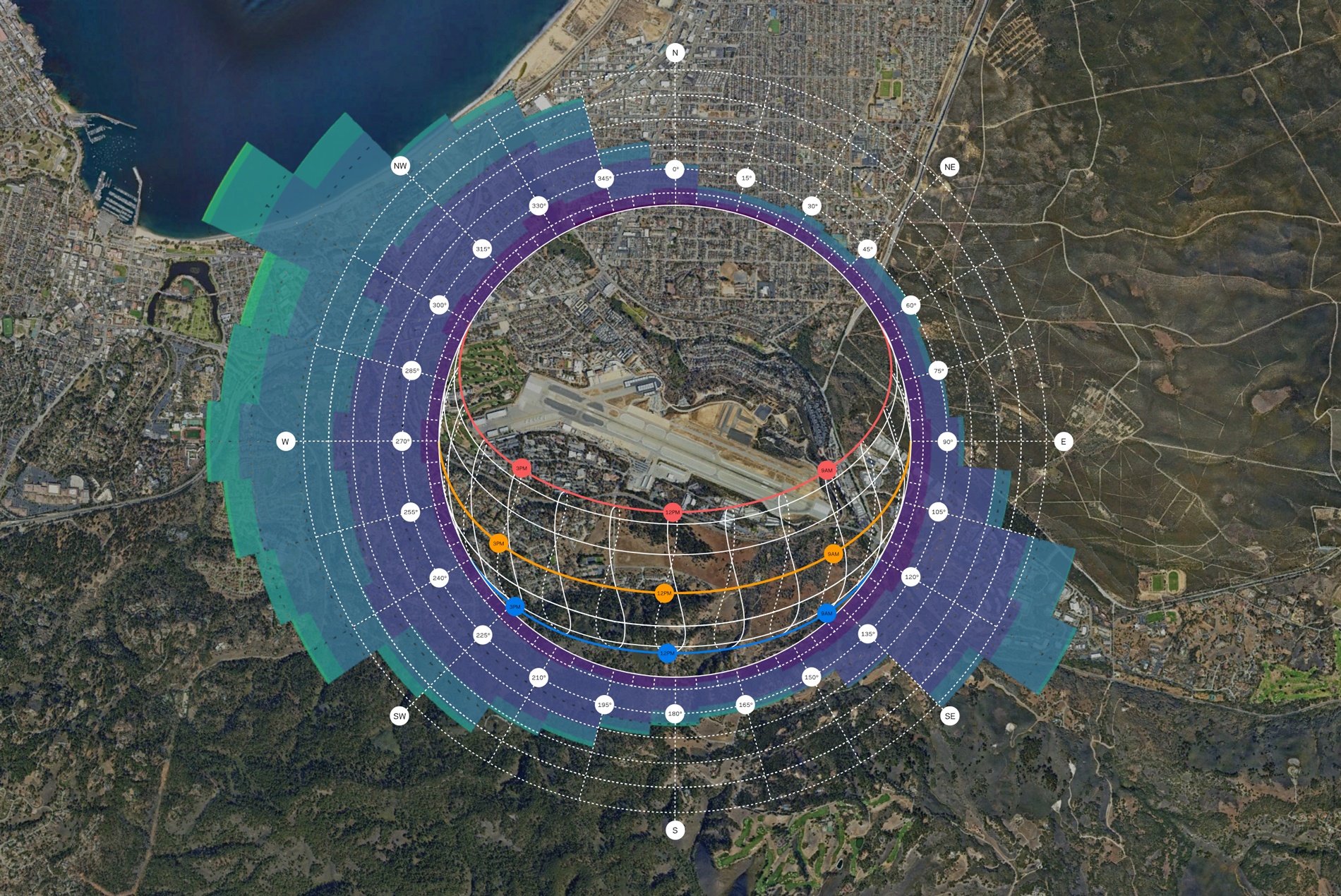
2. Climate + Place
Monterey is defined by its natural beauty and mild climate. Early in the design process, HOK’s Aviation + Transportation practice engaged the firm’s Regenerative Design team to explore how environmental context could inform both the terminal’s character and its performance.
Situated approximately a mile inland between the coast and the Santa Lucia Mountains, the airport experiences low annual rainfall and humidity, a high number of sunny days and mild year-round temperatures between 43 and 69 degrees Fahrenheit. Low mountains and foothills, chaparral and oak woodlands, dunes and beaches define the surrounding ecosystem.
Drawing on these characteristics, the team developed design concepts that celebrate nature through integrated gardens and expansive views while also embedding it into the building itself. The use of mass timber and other low-carbon materials reinforces a connection to place and supports reductions in both energy demand and embodied carbon.
3. Energy Load Reduction
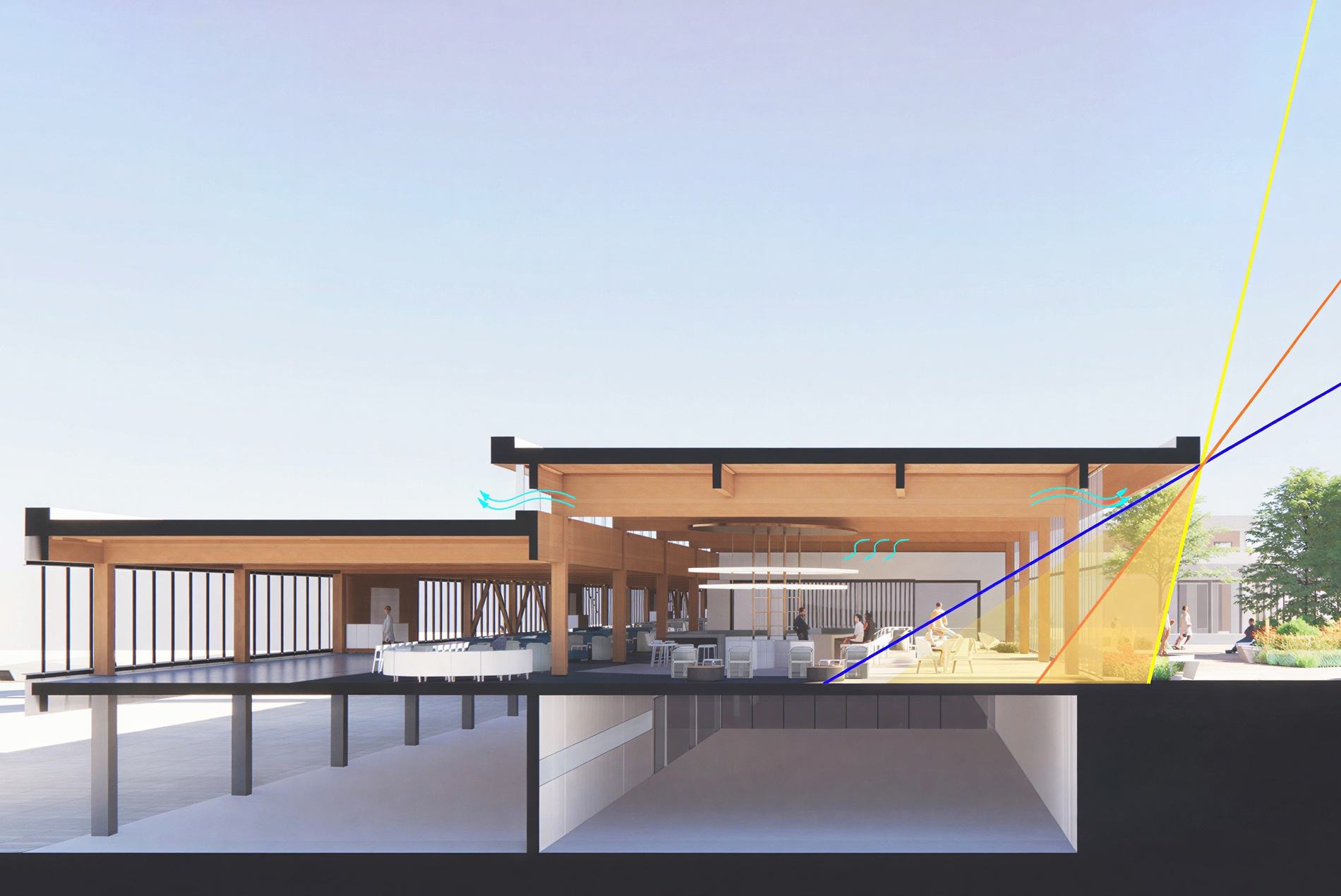
Reducing energy demand was a central focus across the design, particularly given the long operating hours and high occupancy typical of airport terminals. Rather than relying on mechanical systems alone, the team emphasized strategies that reduce loads through form, orientation and passive design.
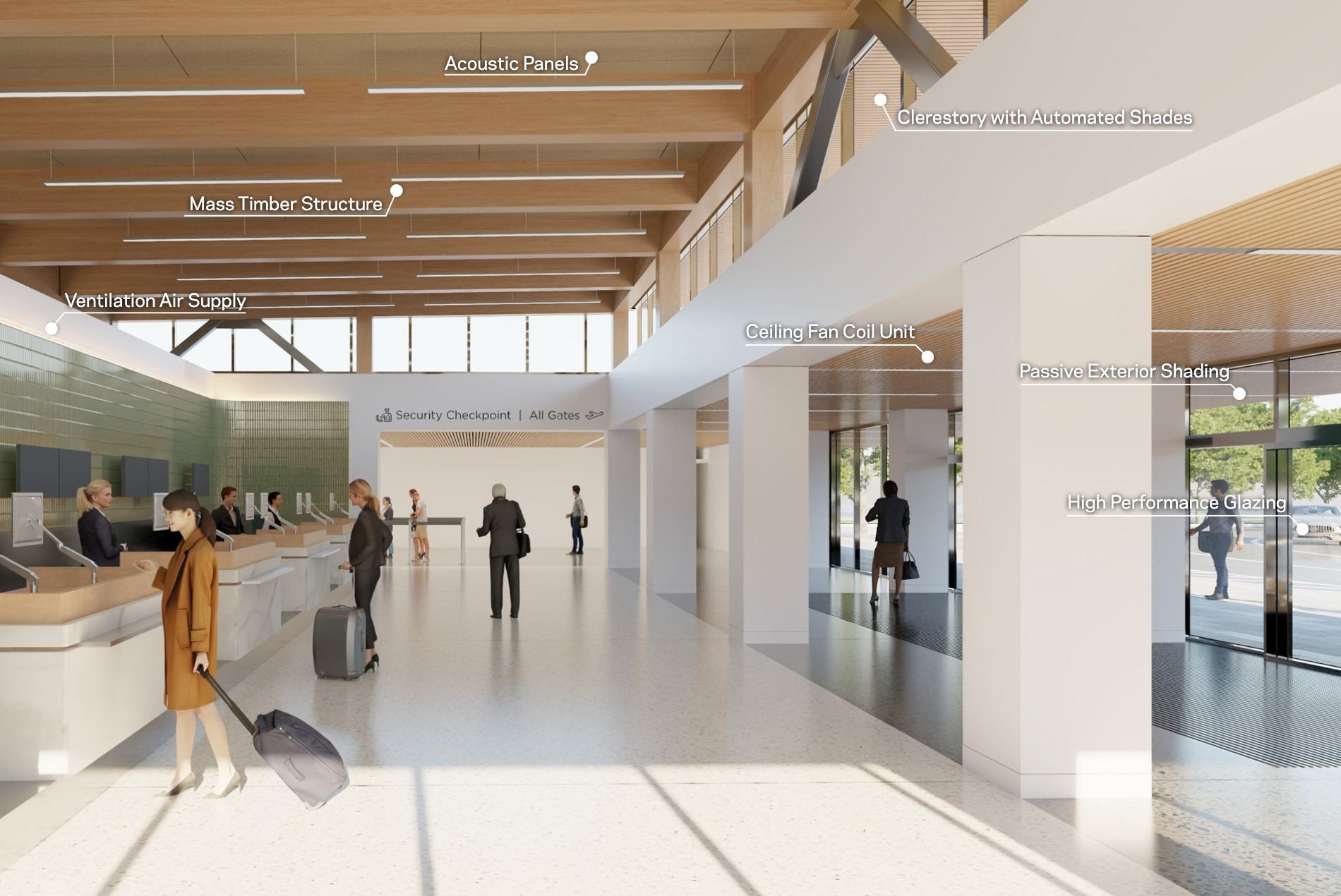
Program optimization minimized unnecessary conditioned space, while exterior shading, high-performance glazing and a carefully tuned envelope limited heat gain and glare.
Extensive daylight modeling informed the placement of clerestory glazing, bringing natural light deep into the terminal and reducing reliance on electric lighting. These strategies work together to lower peak loads, improve visual comfort and support intuitive wayfinding, aligning passenger experience with energy performance.
4. Integrated Engineering
HOK’s integrated design team developed mechanical, electrical and architectural systems as a coordinated whole, with performance targets guiding decisions across disciplines. Instead of relying on a single signature system, the design layers multiple efficient solutions to support resilience, flexibility and long-term performance.
The terminal’s exposed mass timber ceiling is part of a hybrid mass timber and steel structural system that reduced embodied carbon compared with a conventional all-steel approach. Beyond its environmental benefits, the mass timber structure contributes to a warm, grounded interior that reinforces the airport’s connection to place. The team also pursued low-embodied-carbon concrete to further reduce embodied carbon, though material availability ultimately constrained the extent of those reductions.
unmutemute
Click the play button above to view a short video on Monterey’s sustainable design.
A dedicated outdoor air system paired with fan coil units reduces fan energy while improving ventilation effectiveness. Heat pump chillers with heat recovery significantly cut heating demand, while thermal energy storage shifts peak energy use and allows equipment to operate more efficiently. Lighting power density is reduced, and automated interior shading and controls respond dynamically to changing conditions.
These systems are fully integrated with structural and architectural elements, ensuring that performance enhancements support acoustics, ceiling heights and spatial clarity. The integrated engineering and distributed HVAC system of the project led to large reductions in MEP embodied carbon compared to a traditional airport HVAC system design.
5. Renewable Systems
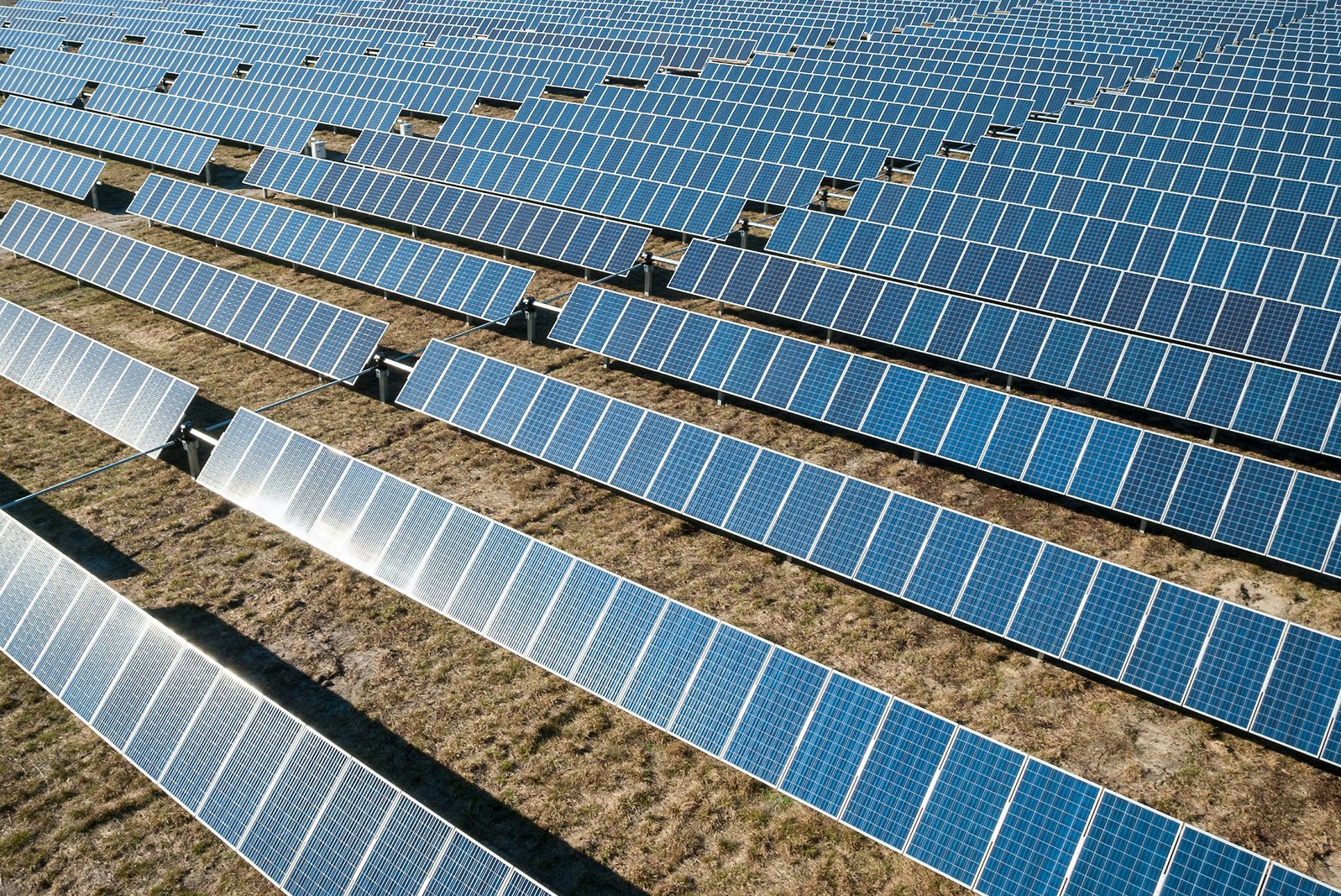
The terminal’s all-electric design allows operational energy needs to be met entirely through renewable sources. On-site photovoltaic generation plays a critical role, with an existing 862-kilowatt solar array producing approximately 1,500 megawatt-hours annually. On a site basis, this production is sufficient to offset the new terminal’s projected energy use.
By aligning energy demand reduction with renewable capacity, the project demonstrates how airports can achieve net-zero-energy operation without overbuilding infrastructure. This approach supports long-term adaptability as technologies evolve and energy grids continue to decarbonize.
6. Occupancy
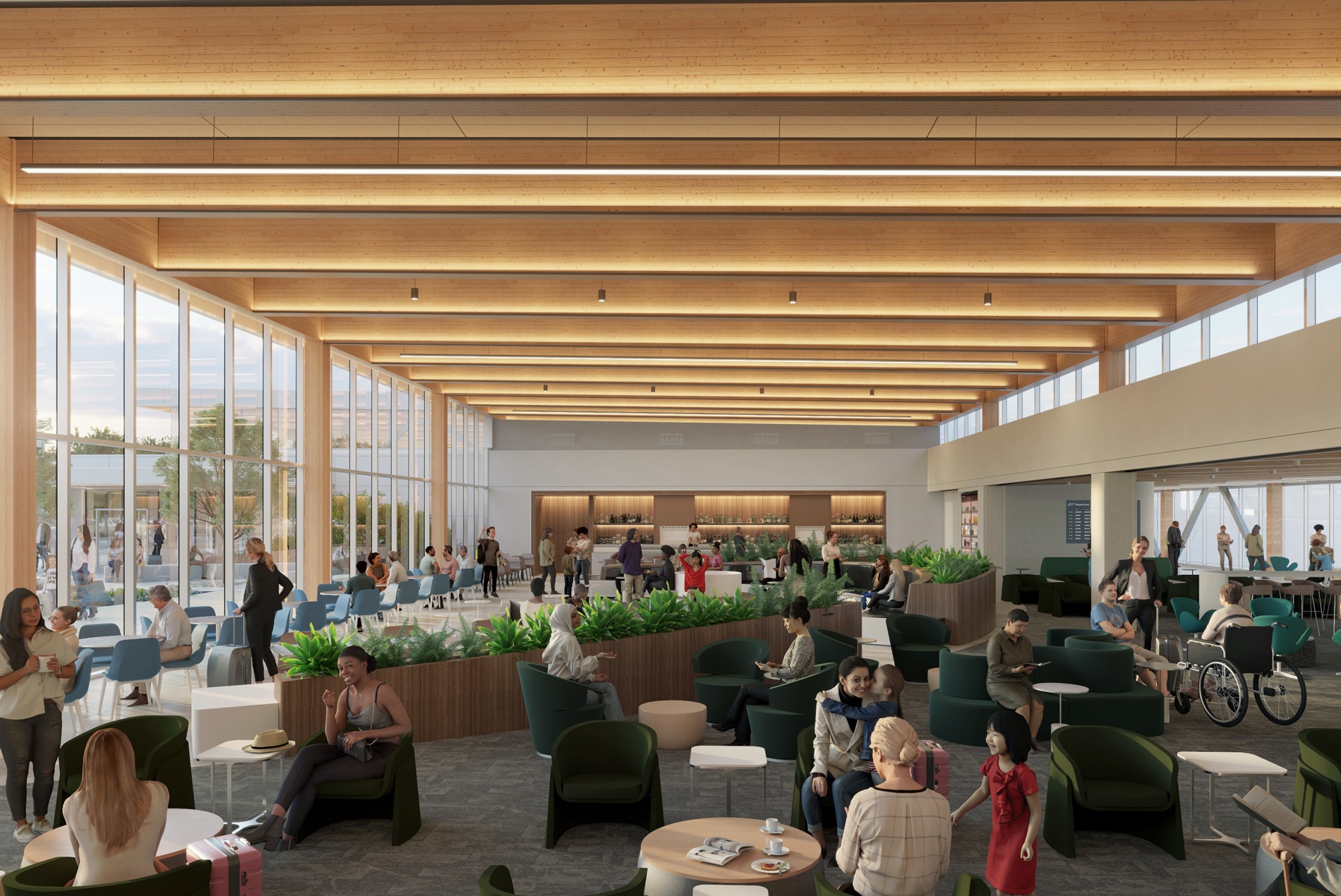
Performance verification does not end at occupancy. The terminal incorporates expanded commissioning and monitoring strategies to ensure systems operate as intended and continue to perform over time.
Enhanced and ongoing commissioning, monitoring-based commissioning and building envelope commissioning help validate performance across seasons and usage patterns. Advanced energy metering enables operators to track and optimize systems ranging from lighting and HVAC to ground support equipment charging and baggage handling.
The building is also designed to support future participation in demand response programs, reinforcing its ability to adapt within a changing energy landscape.
Results
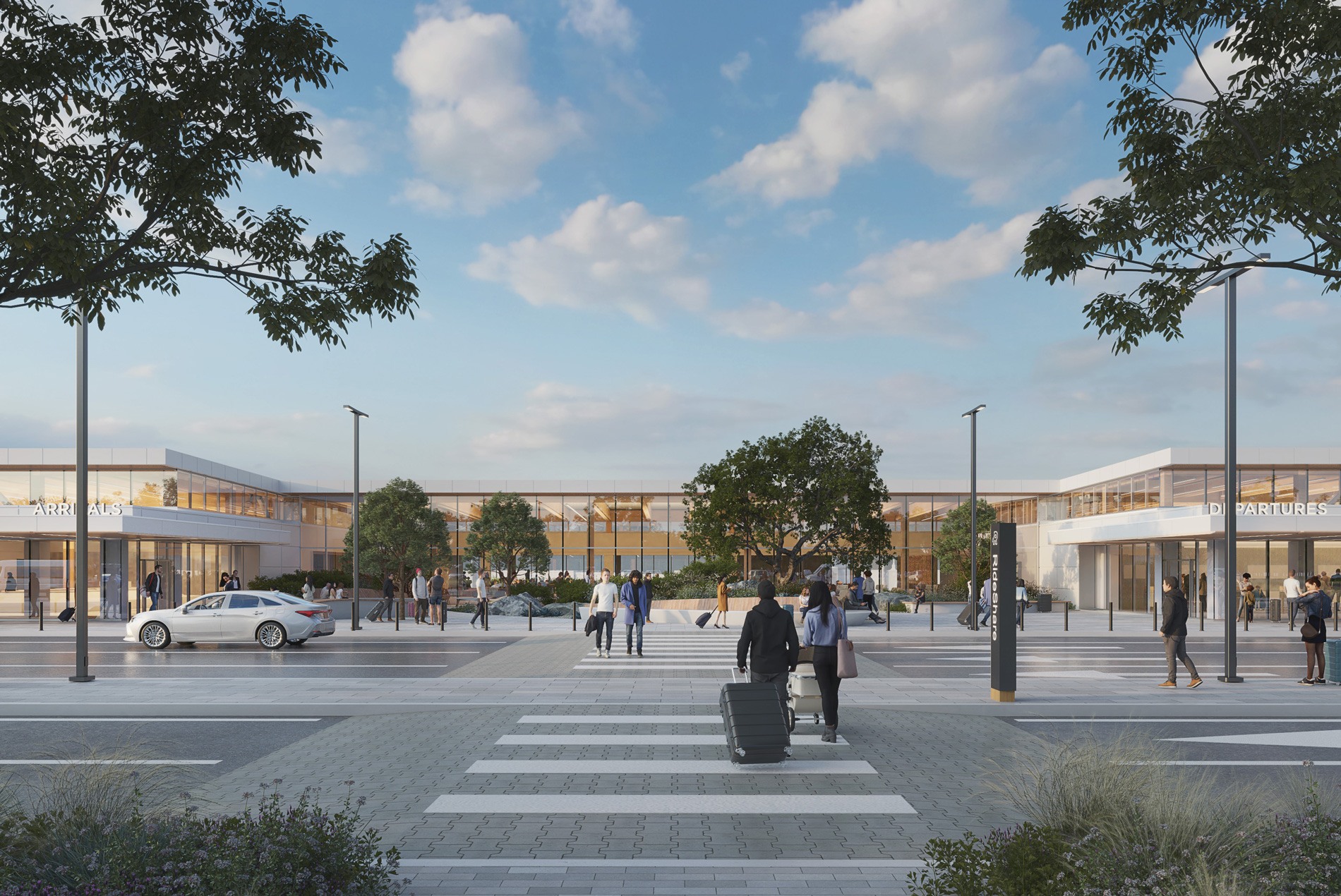
Together, Monterey Regional Airport’s integrated strategies deliver measurable performance outcomes, particularly in the building’s operational energy.
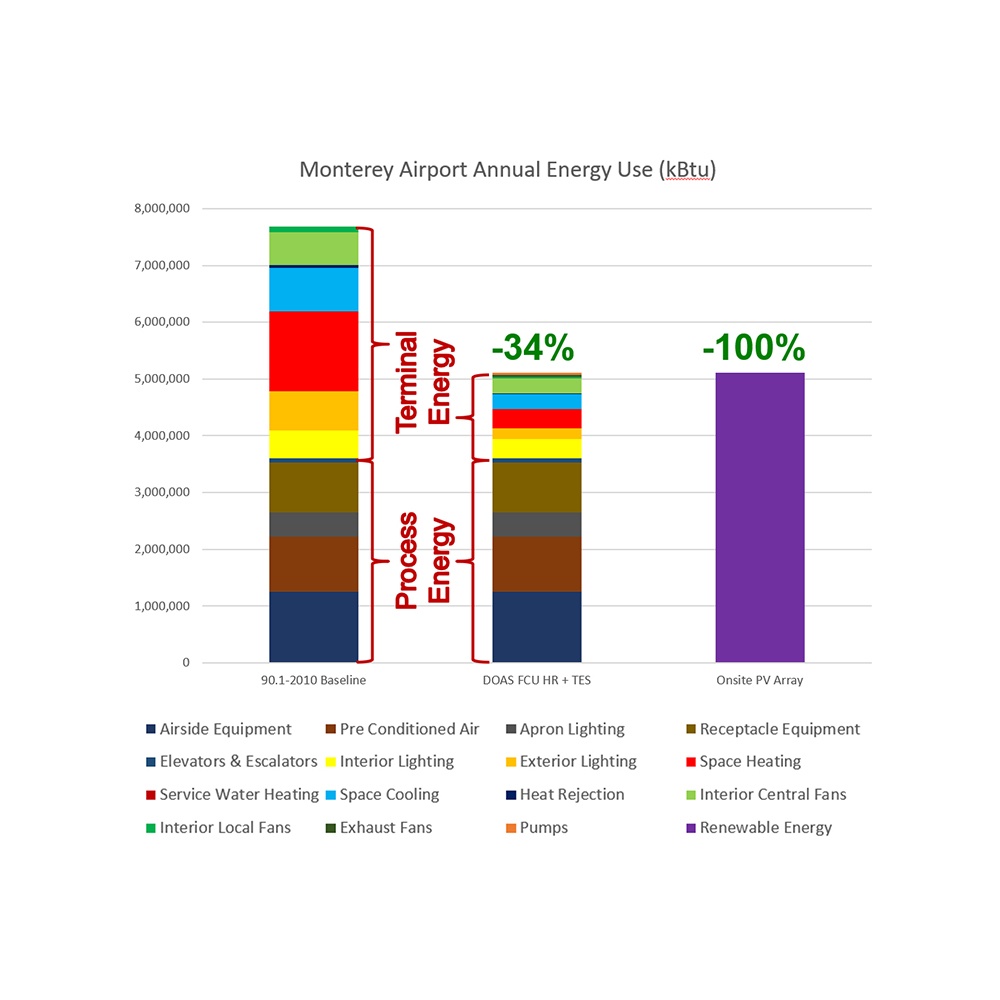
Energy-efficient systems and passive design measures reduced the terminal’s projected energy demand by approximately 34% compared to a LEED v4 baseline.
By pairing an all-electric design with an existing 862-kilowatt on-site photovoltaic array, the terminal is designed to operate at net-zero energy on a site basis, significantly reducing ongoing operational carbon emissions.
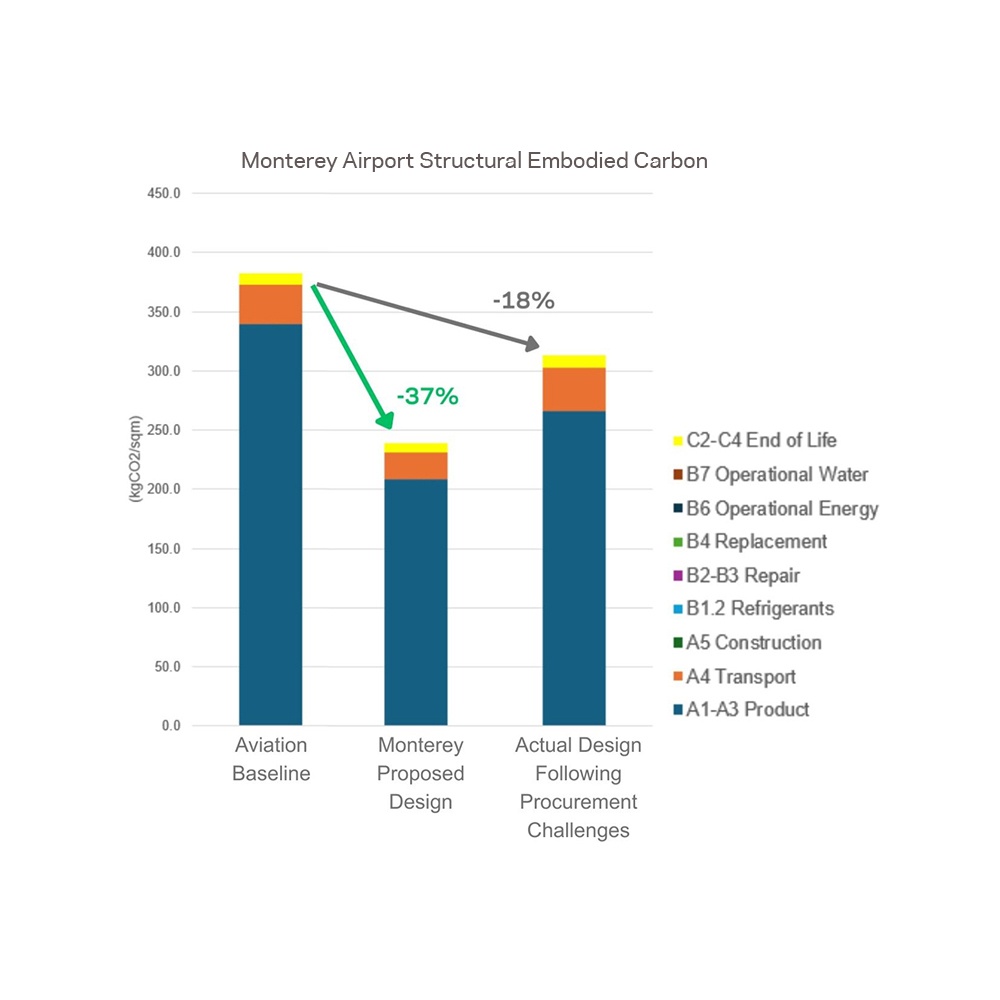
Progress on embodied carbon was more constrained. The original design for Monterey’s hybrid mass timber and steel structural system targeted a 37% reduction in embodied carbon compared to a conventional airport terminal. Achieving those reductions depended on access to low-embodied-carbon concrete and other low global-warming-potential (GWP) materials that the project team was ultimately unable to secure through the public procurement process.
As the chart here indicates, the final design achieved an approximately 18% reduction in embodied carbon compared with a conventional airport terminal. While that fell short of the original 37% reduction target, it demonstrates measurable progress—and clarifies where procurement practices and supply chain development must catch up.
What Monterey Airport Makes Possible
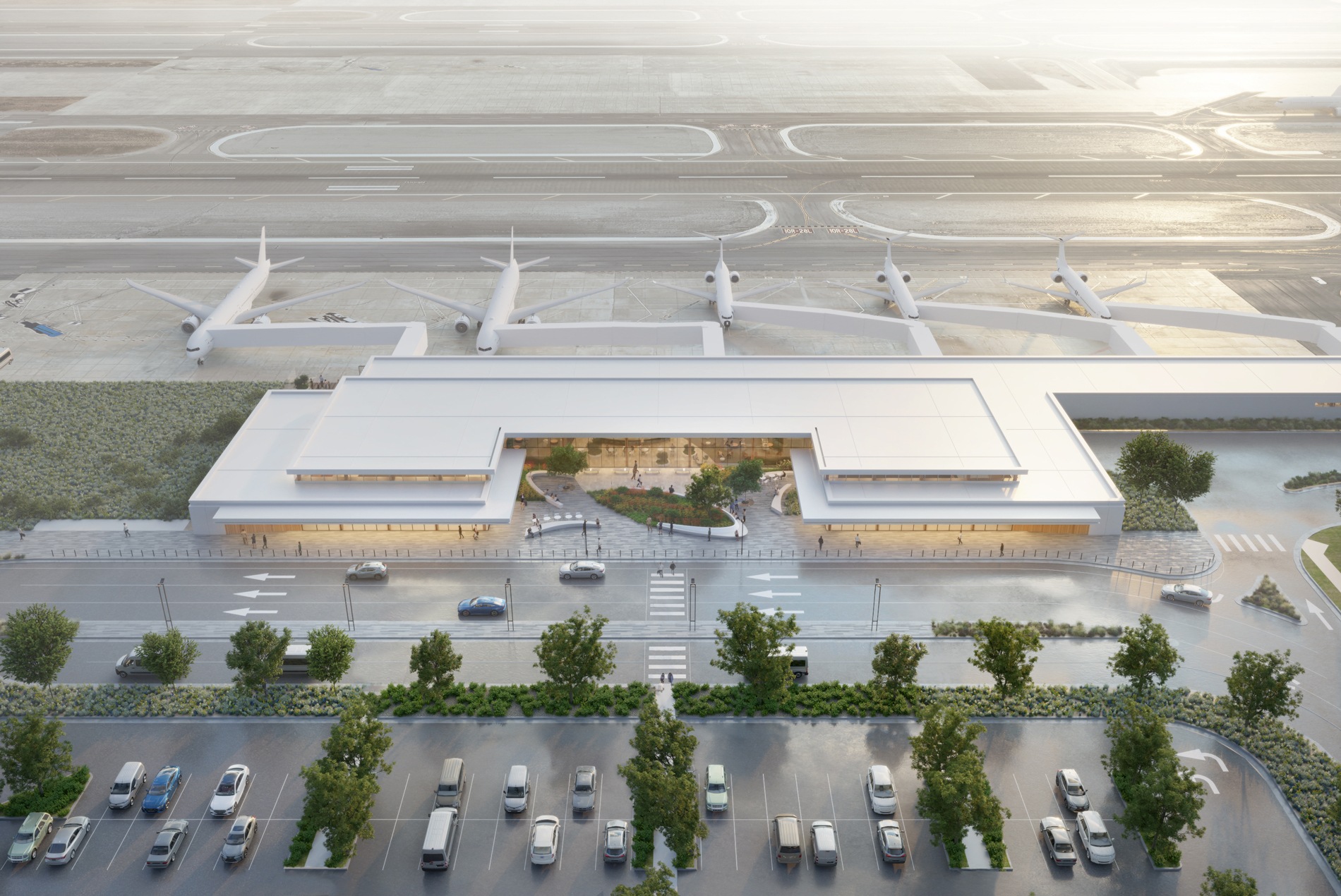
Monterey Regional Airport’s new terminal illustrates what is possible when sustainability is treated as an integrated design challenge rather than a single objective. By addressing climate, form, systems, materials and operations together, the project achieves meaningful reductions in operational energy use while delivering a welcoming, intuitive passenger experience.
Equally instructive are the lessons learned beyond design. Procurement played a critical role in advancing sustainability objectives, particularly in material selection. While mass timber benefited from a more unified supply chain and experienced builders, low-embodied-carbon concrete proved more difficult to source. These realities highlight the importance of early engagement across designers, contractors, manufacturers and public agencies, especially on publicly bid projects.
As airports worldwide confront growth, climate responsibility and evolving traveler expectations, Monterey offers a credible and replicable model. With integrated design thinking, informed material choices and coordinated procurement strategies, net-zero-energy airport terminals with low whole life carbon emissions are not theoretical. They are within reach.
Meet the contributors:
Katie Bowman, CID, LEED AP, WELL AP, senior sustainable design leader.
Brian Johnson, PE, LEED AP, WELL AP, BEMP, CDP, senior project engineer and leader of HOK’s building energy modeling group.
Jaclyn Lee, LEED GA, structural engineer.
Patrick Riddle, DBIA, LEED AP BC+C, project manager for the Monterey Regional Airport replacement terminal.
Bart van Vliet, AIA, DBIA, LEED AP BD+C, WELL AP, practice leader for HOK’s Aviation + Transportation group.
Related content:
Monterey Regional Airport in the 2026 HOK Design Annual
Designing Airports with Mass Timber: 6 Things to Know Before You Build