New York City is replacing Rikers Island, a remote complex long criticized for inhumane conditions. The Borough-Based Jails (BBJ) program establishes a citywide network of four modern, humane and neighborhood facilities—one each in Brooklyn, the Bronx, Manhattan and Queens—located near courts, counsel and services.
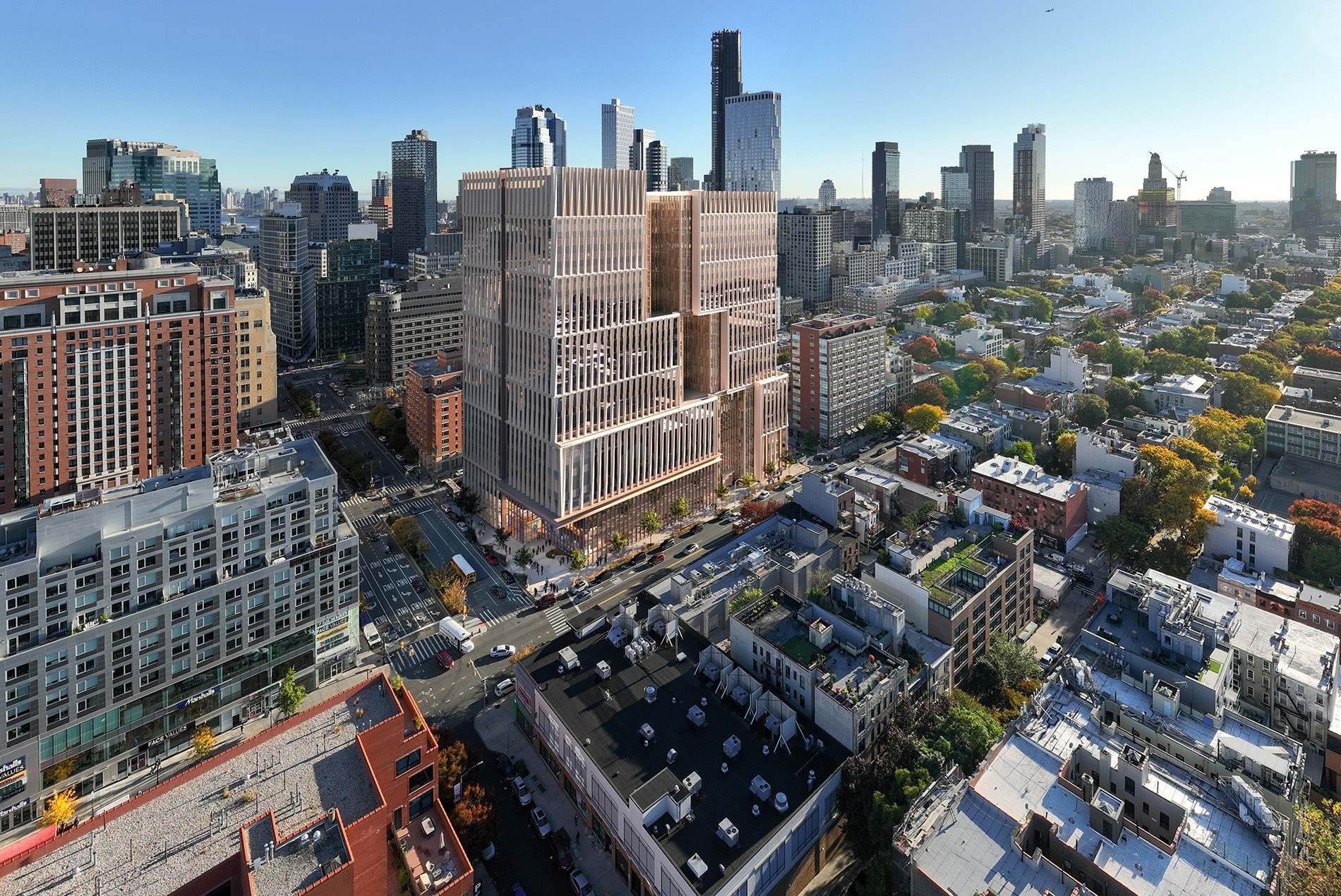
In Brooklyn, that mandate takes the form of a 15-story, 712,150-sq.-ft. and 1,040-bed, facility designed to be smaller in footprint, safer in daily operation and fairer in access. Guided by a design vision the team calls ‘sculpted by light,’ our response conceives it as an exemplary civic building that contributes to its public realm. This approach, part of HOK’s ‘Justice and Dignity by Design’ philosophy, evaluated every decision for its ability to uphold dignity and lower stress. The result is a facility that serves the city while belonging to it.
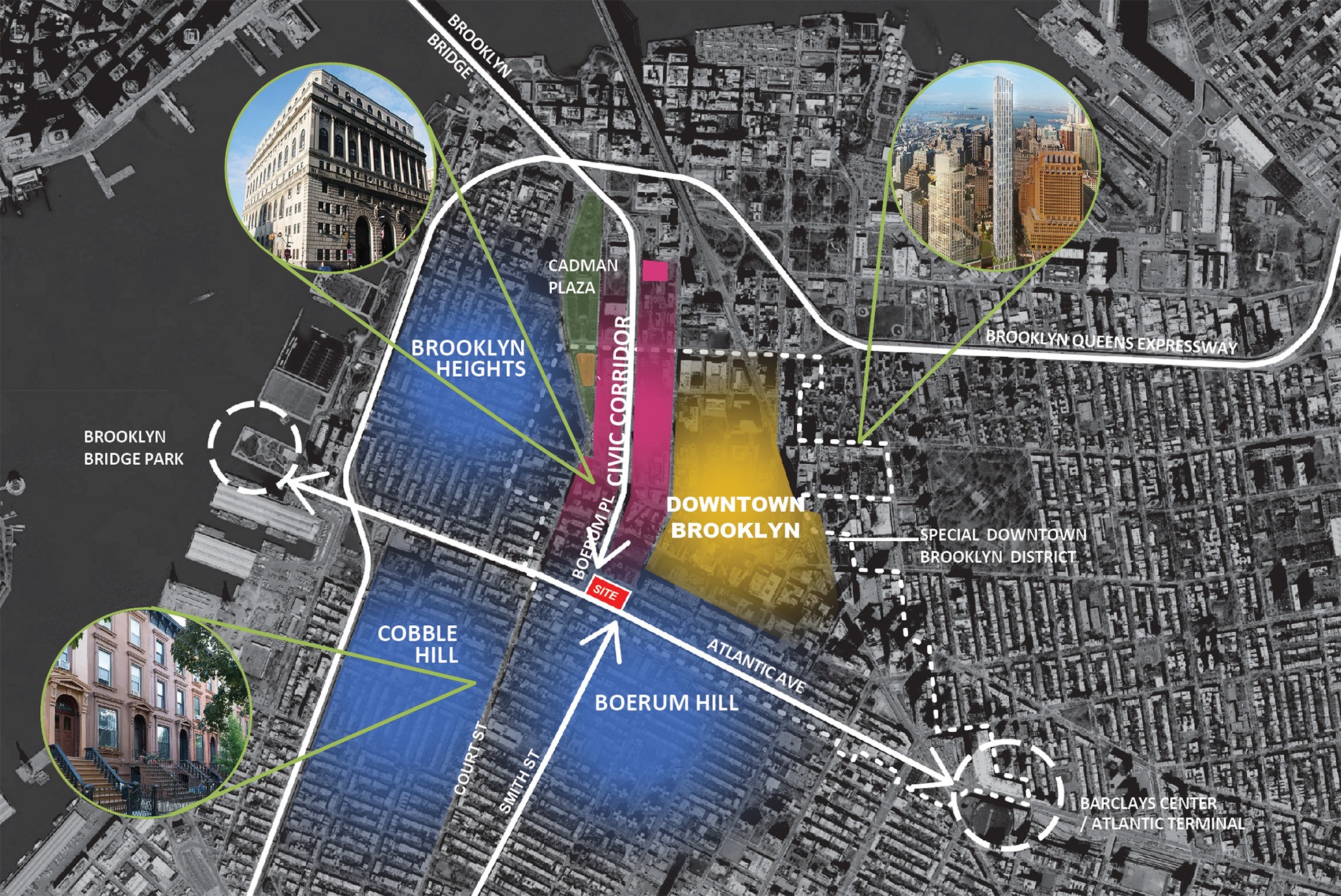
The facility negotiates its dual role as civic institution and neighborhood component at Atlantic Avenue and Boerum Place at the southern edge of Brooklyn’s Civic Center. It anchors a public plaza activated by 30,000 square feet of community facility space, while its massing steps down to meet the neighborhood’s brownstone scale—a form resolved through an iterative public process.
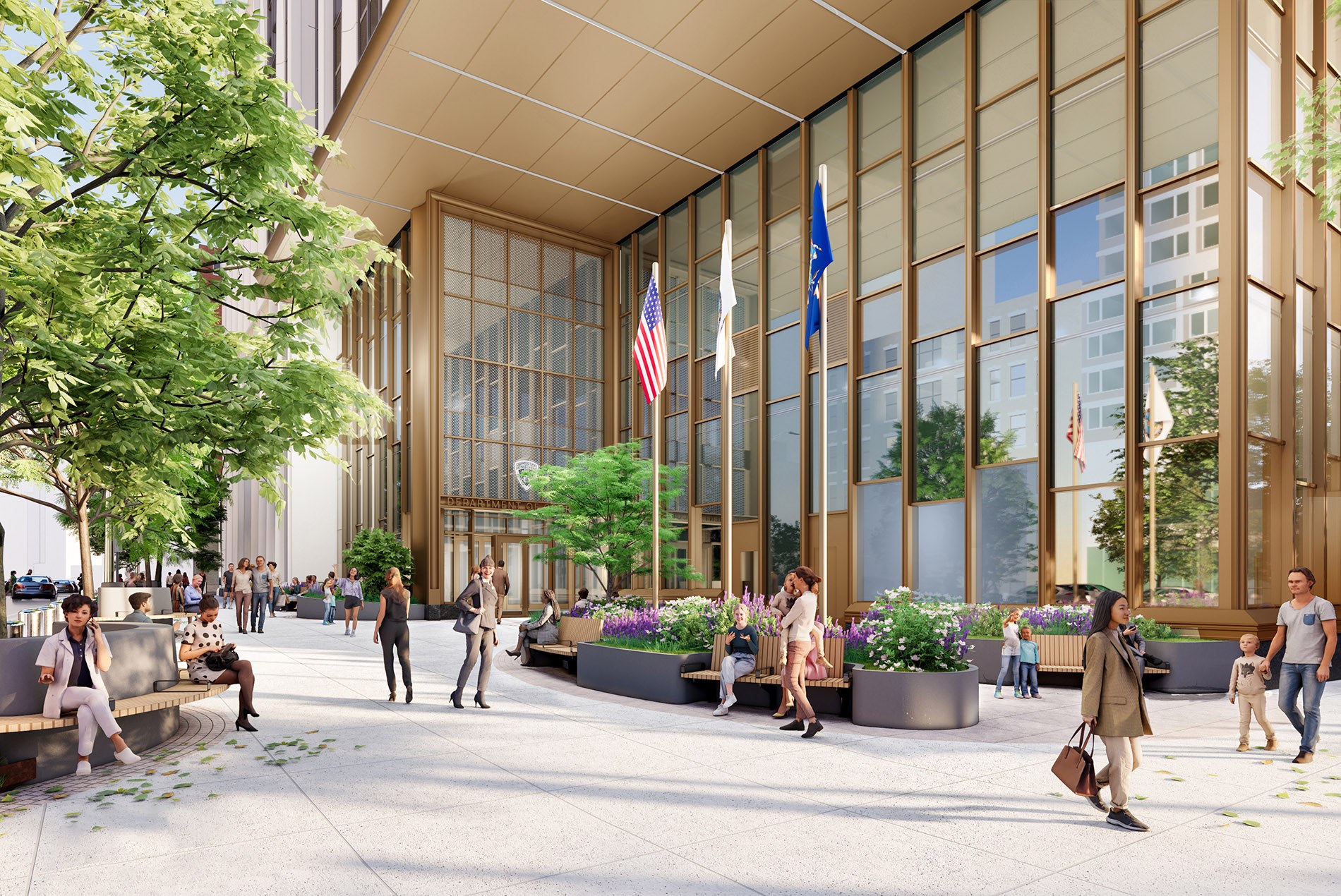
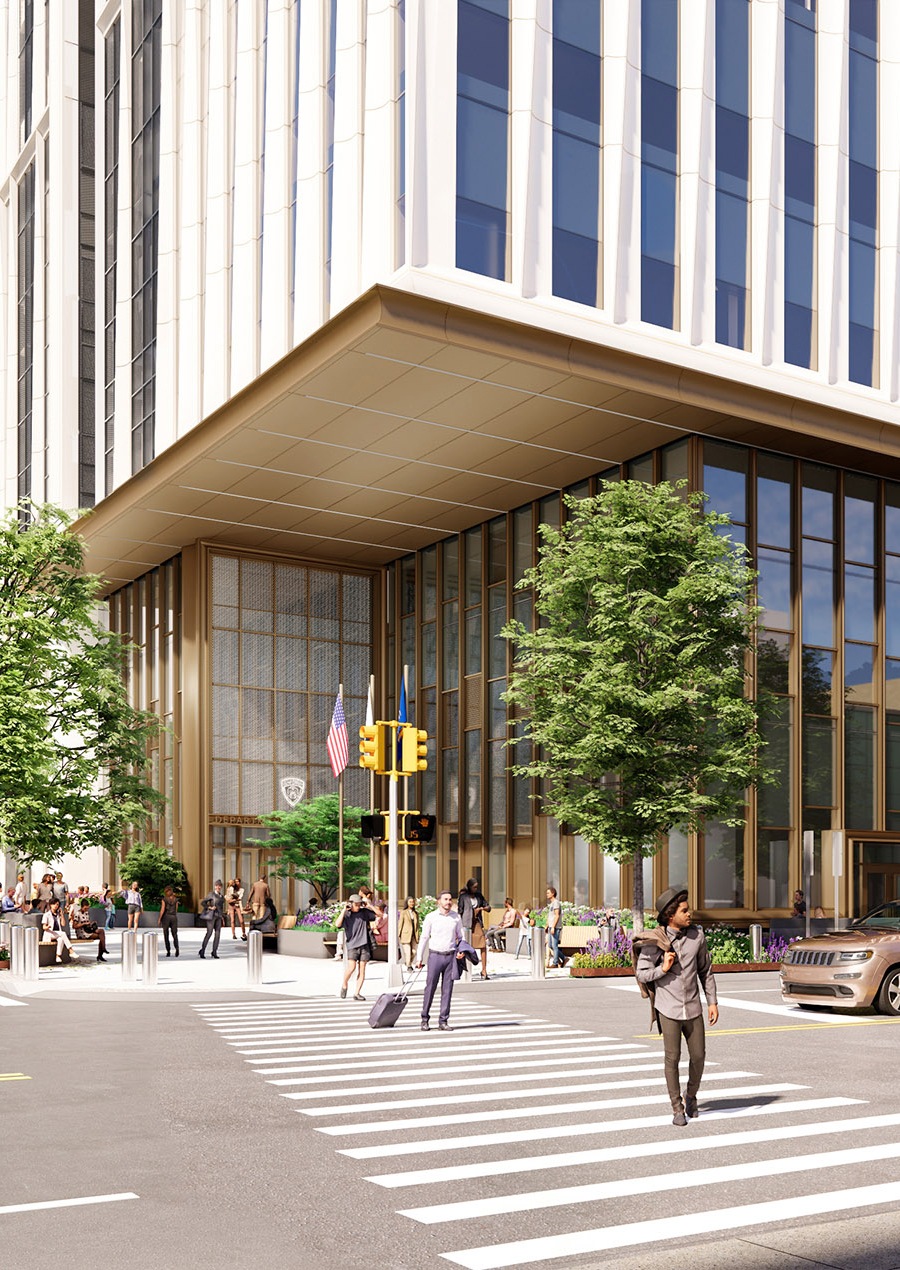
A transparent ground floor reveals a calm lobby, keeping the street edge engaged with neighborhood life. An underground tunnel provides a direct, dignified connection to the adjacent courthouse and keeps transfers off local streets.
Conceived as a therapeutic landscape, the public realm does double duty. Its amenities—seating, shade and new trees—are designed to benefit all who interact with the site: the public passing by, families visiting the facility, staff members and even those in custody, who experience some visual relief. Security features like bollards and crash-rated walls are seamlessly integrated into planters and benches.
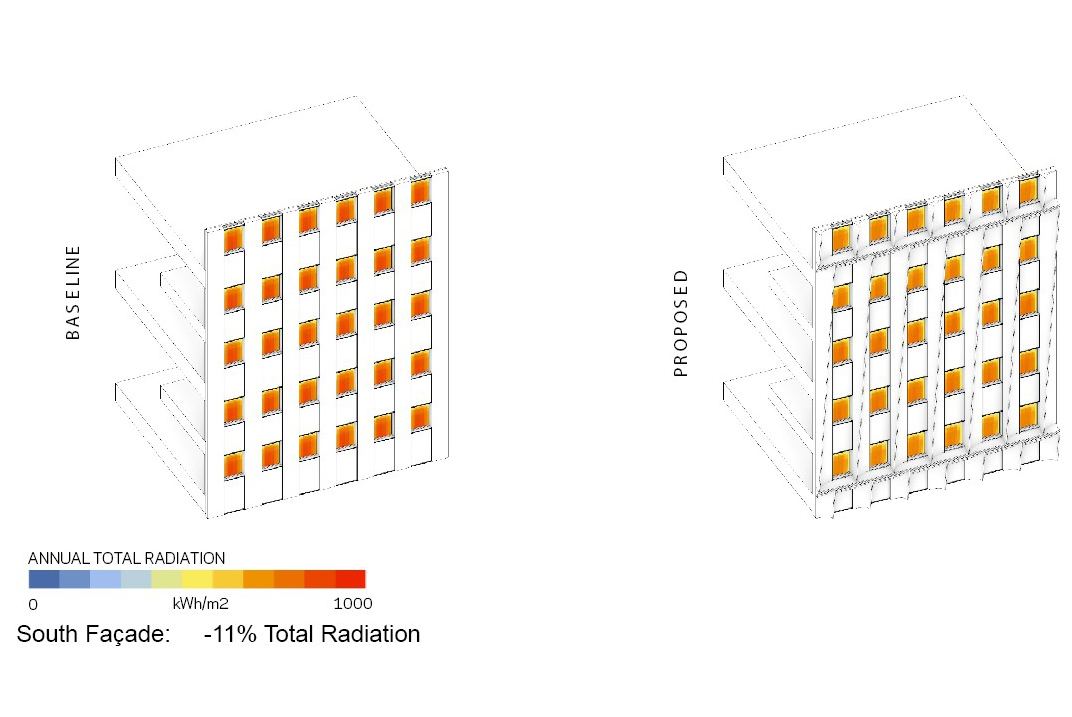
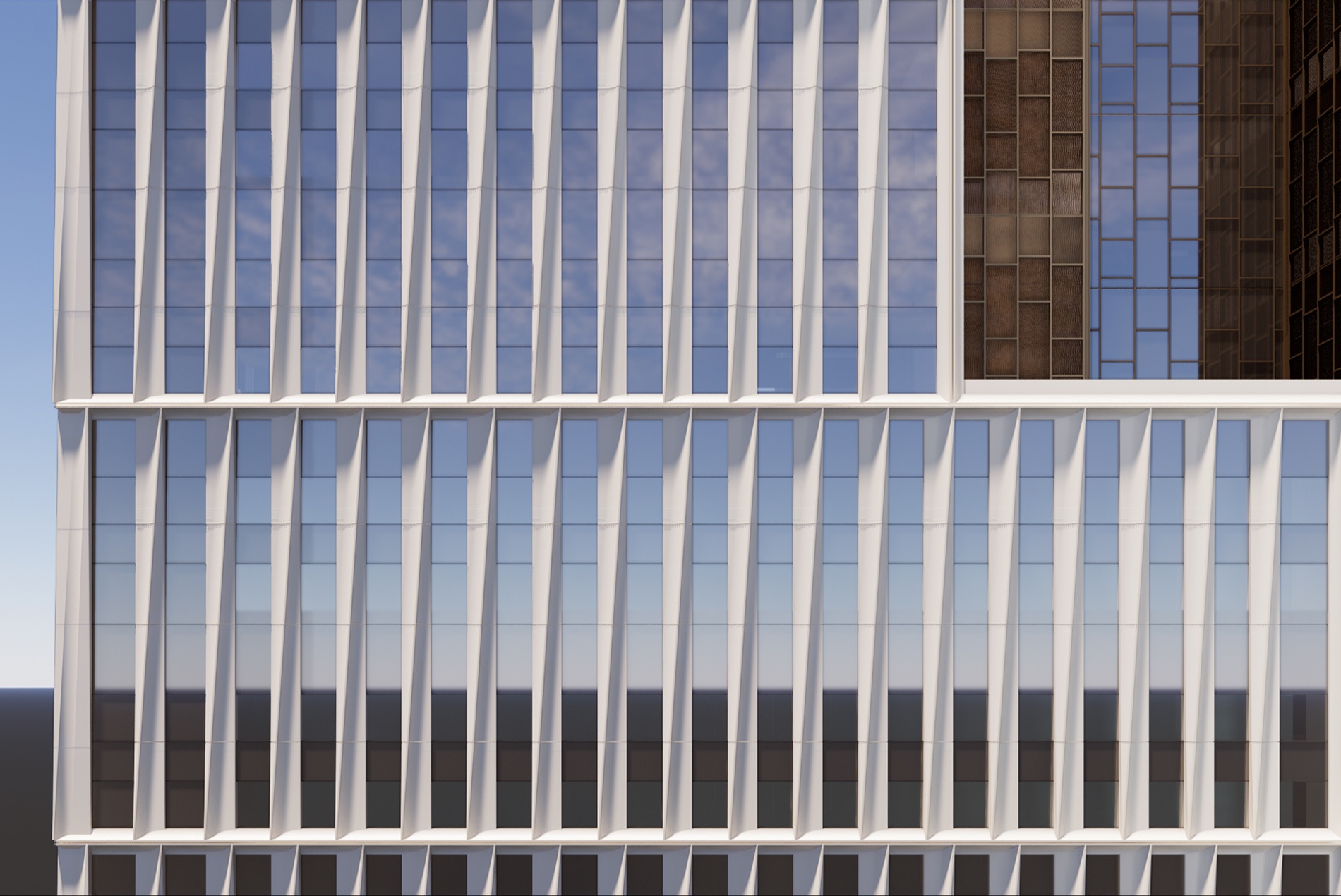
Daylight is the backbone of our plan. Carved massing increases the perimeter so light reaches cells, dayrooms, program areas and circulation throughout the day.
The most prominent of these carved forms is a large vertical cutout—the ‘central reveal’—that creates protected space for secure outdoor recreation yards. Fixed fins temper summer sun and invite winter sun deeper into housing. The result is lower cooling demand and less daytime reliance on electric light. Regular light cues support circadian rhythms so people can keep track of time and maintain a more regular daily routine.
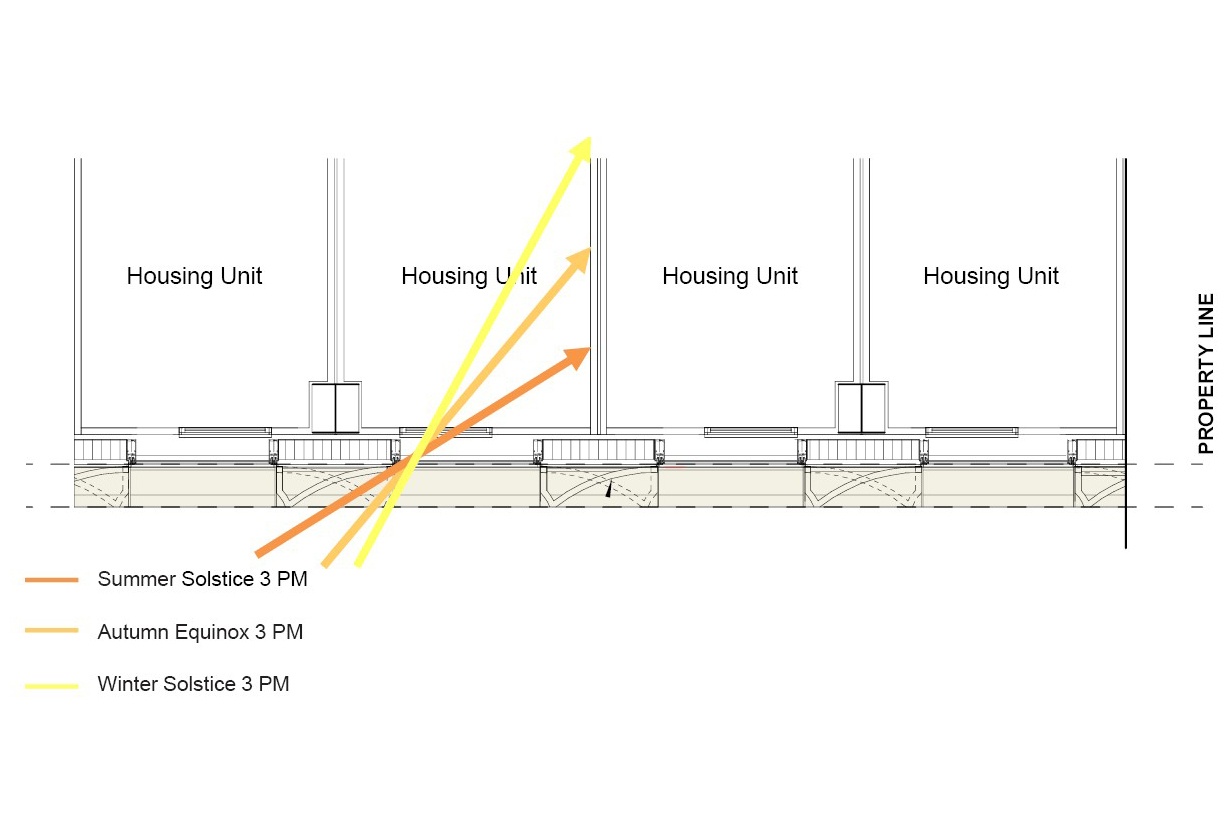
A high-performance envelope and exterior shading cut loads year-round. Our energy modeling shows 69% lower energy use than the AIA 2030 baseline and 17.9% below ASHRAE 90.1-2010.
The design-build team integrated performance and wellness from the project’s start. Daylight and even lighting support calmer routines. Durable, healthy materials reduce both embodied and operational carbon.
The project is pursuing LEED BD+C Gold as required by NYC Local Law 32 (2016), mixing LEED v4 and v4.1 credits to improve indoor air quality, water use and materials—not just energy.
Critical systems have redundancy to maintain operations when city infrastructure is strained.
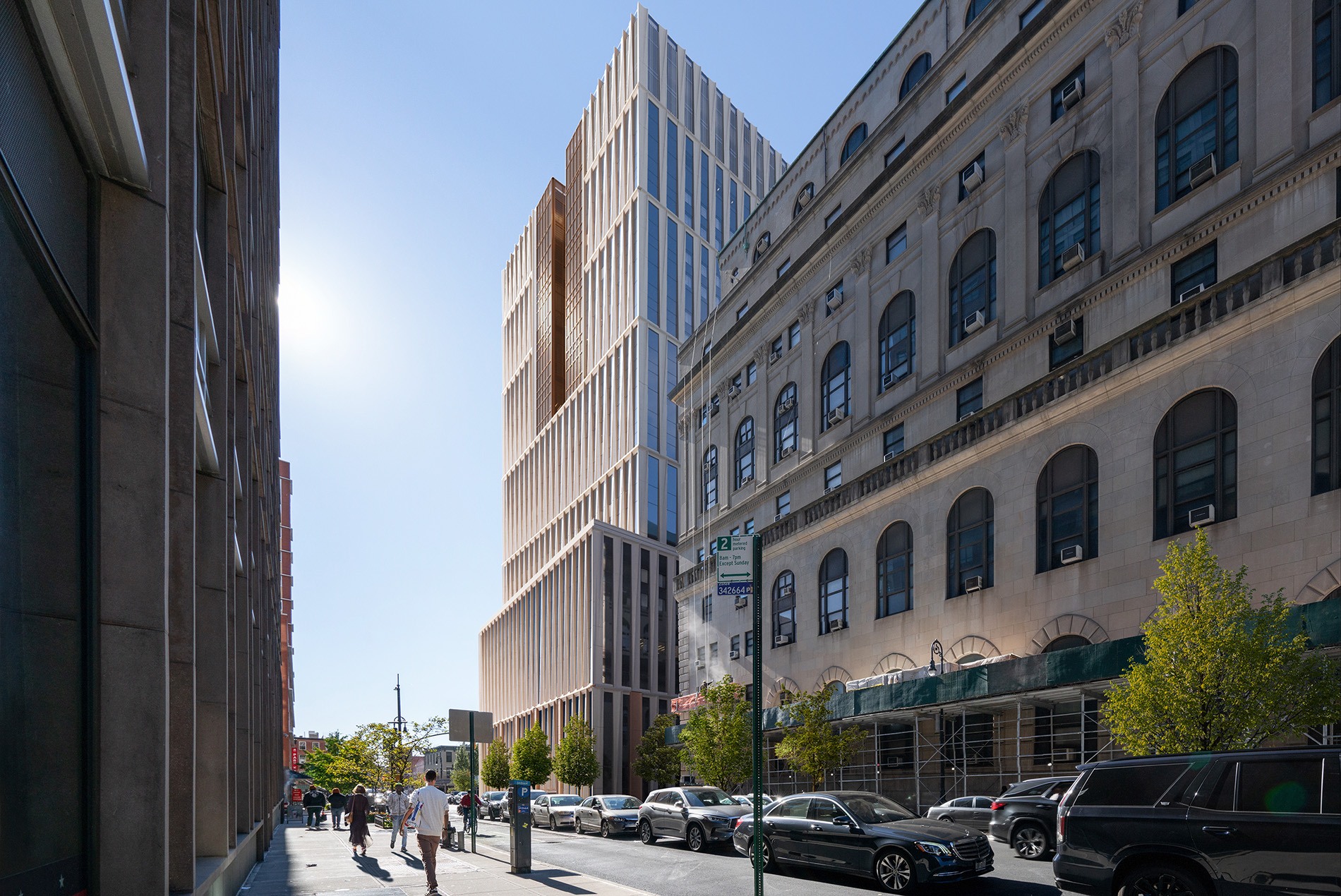
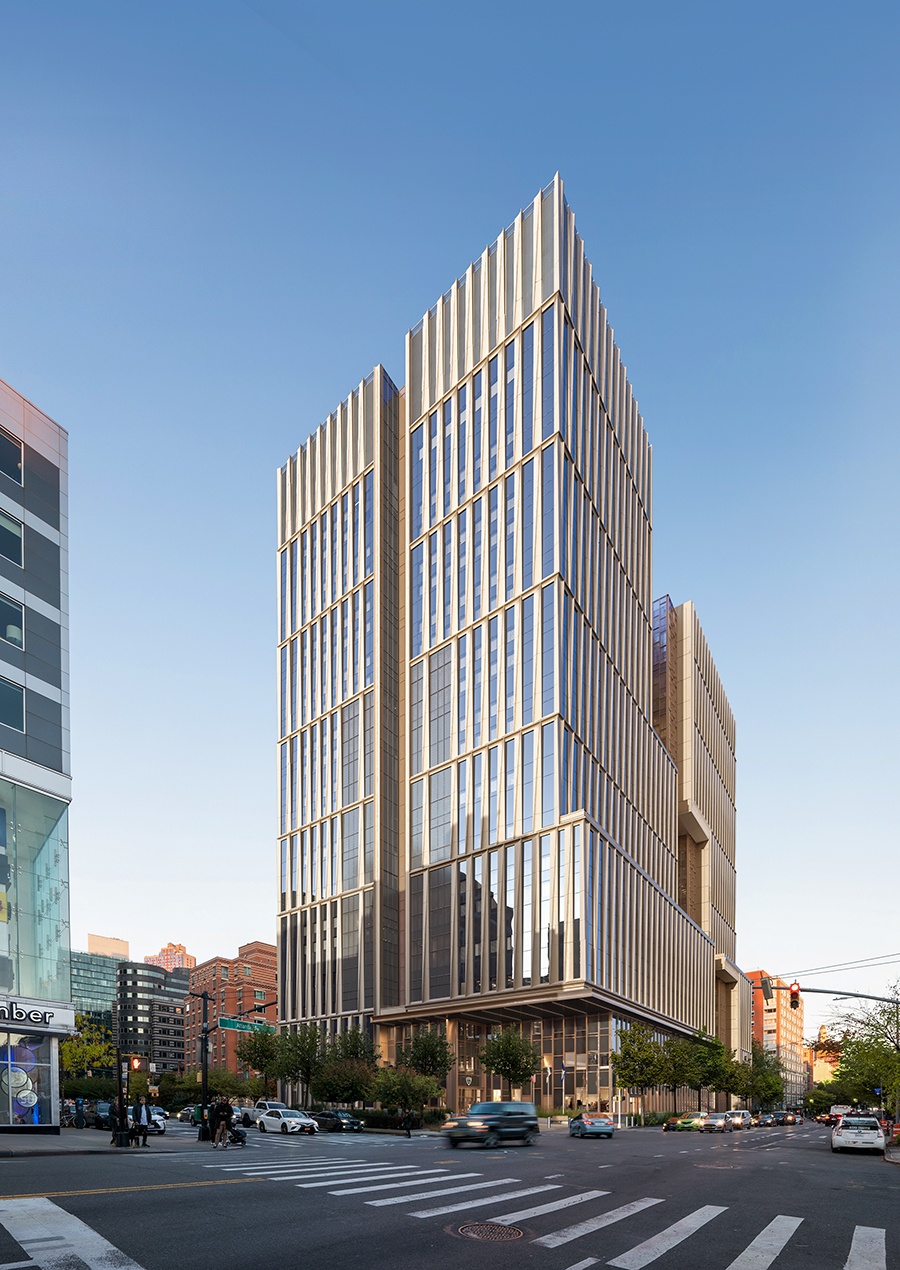
This is a contemporary civic building that belongs to Brooklyn. Sculpted vertical piers alternate with continuous bands of glass to make a clear street rhythm. The piers modulate in depth and angle, catching light differently through the day while the glass reveals or screens activity as programs require. A double-floor expression keeps the tower slender and civic while recalling the horizontal lines of neighborhood brownstones. Proportions step from civic to neighborhood scale so the tower meets Boerum Place with presence, then settles toward Smith and State with a quieter cadence.
In direct response to community feedback, HOK’s team chose materials for their warmth and durability. Terra cotta complements the area’s historic brick and brownstone character and adds depth to the facade. This warmth is balanced with transparency at the base, so the ground floor feels open and engaging. The pattern of solid and glass balances openness with the privacy needed for both people inside and their neighbors outside.
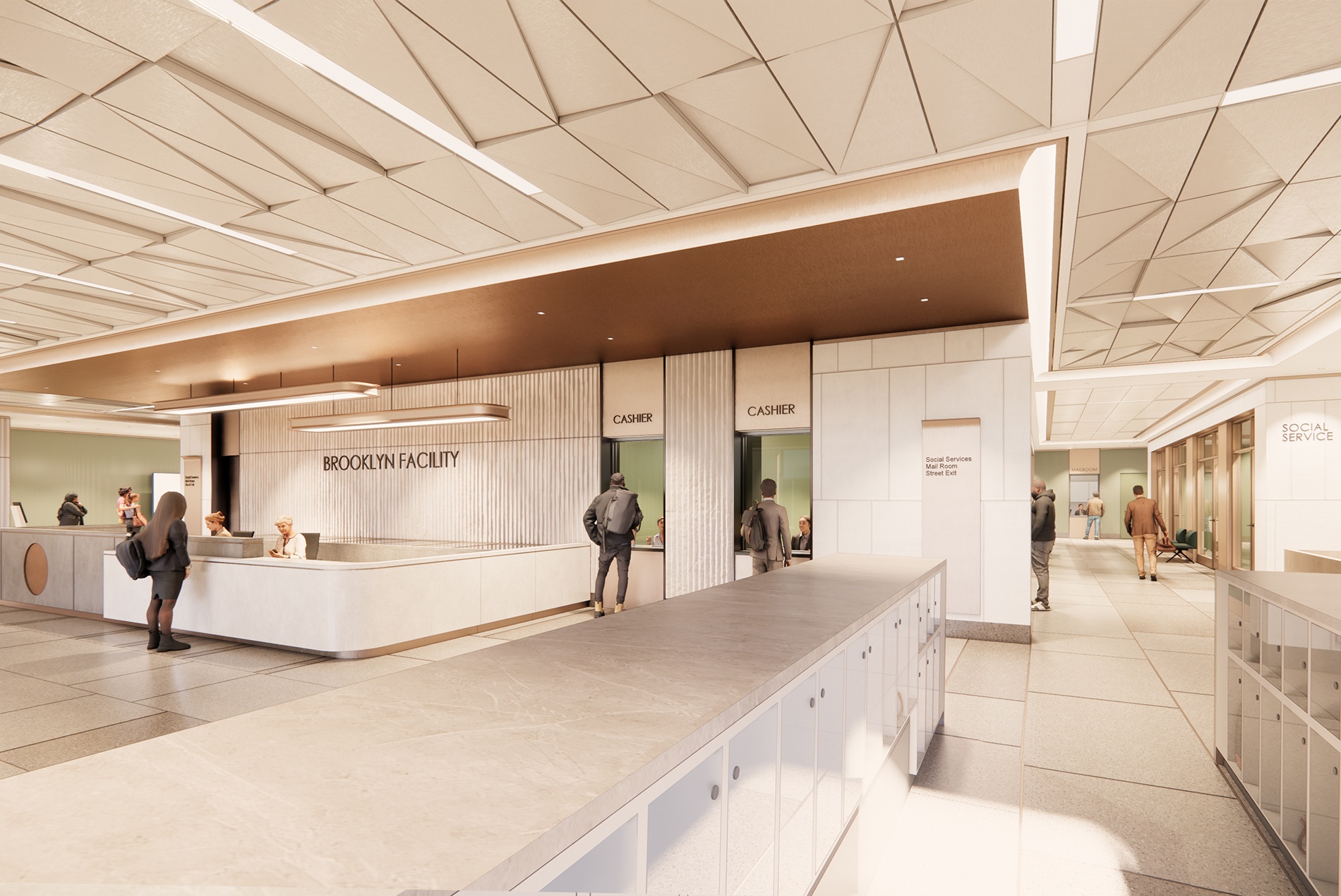
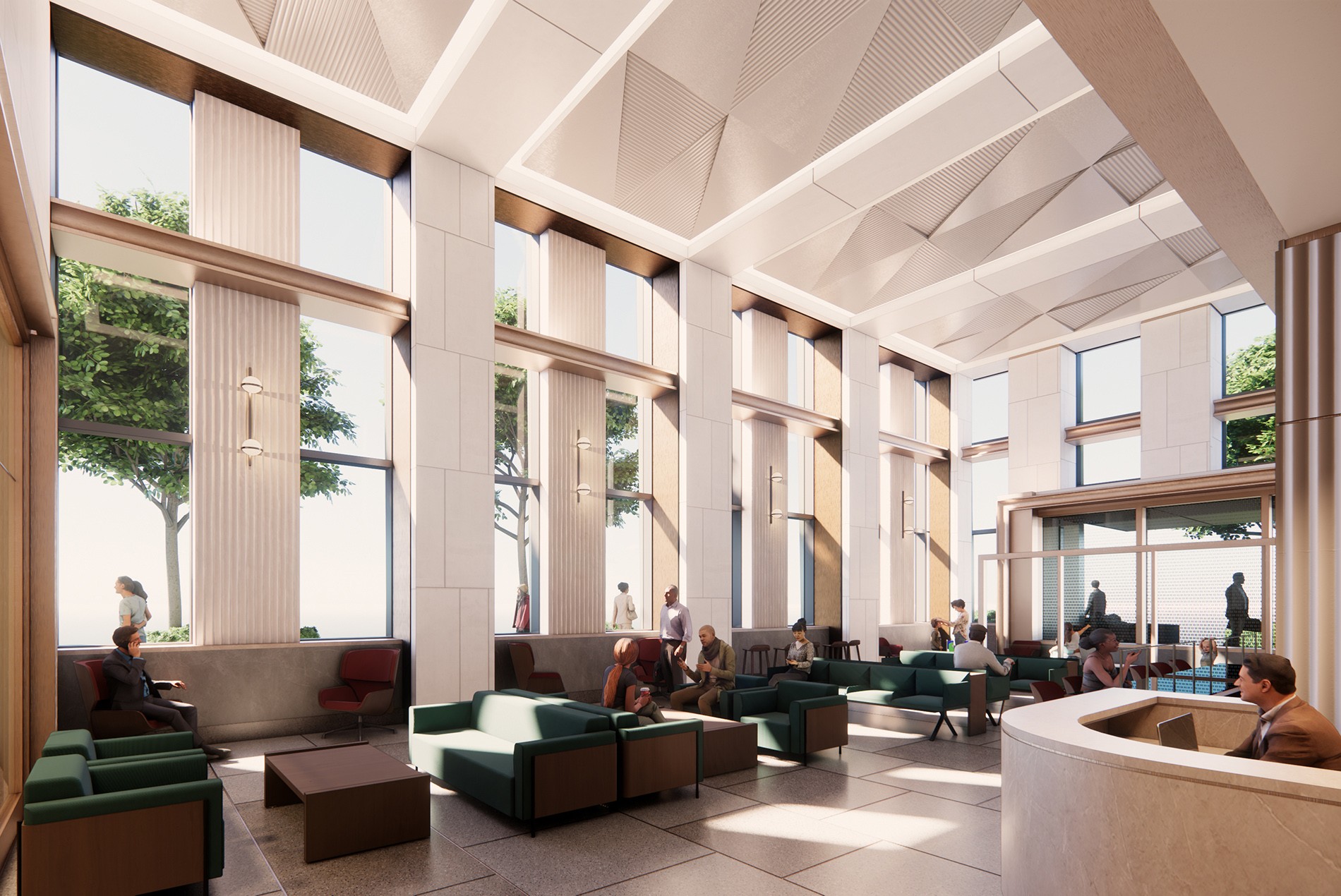
A humane day starts with clarity. Arrival is direct, wayfinding is simple and public, staff and secure movements stay distinct. Housing uses direct supervision to encourage conversation and proactive care. On-unit recreation keeps routines steady. Routes were mapped with operators so movements stay clear and safe.
Services sit close to where they are needed. Healthcare, counseling and legal support are easy to reach. Materials feel familiar and durable, and lighting stays even so faces are easy to read. For staff, daylit dining, locker and fitness areas are grouped for quick access and privacy to reset between shifts, with clear back-of-house routes that lower stress.
Families are part of the plan, too. Visitation is designed for calmness with clear entries, places to pause before and after a visit, dedicated areas for children of different ages and rooms sized for conversation. Increasing engagement helps people move forward.
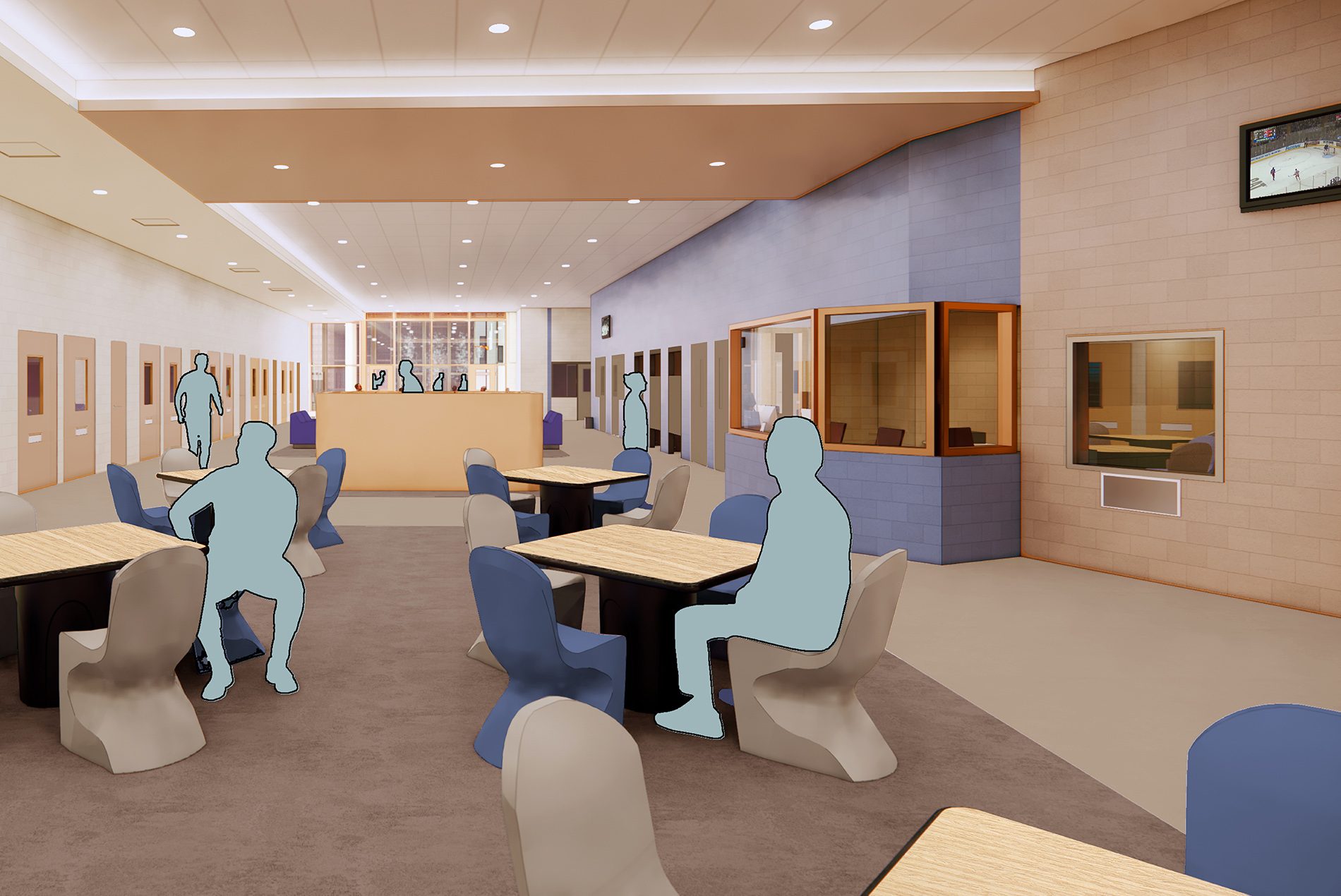
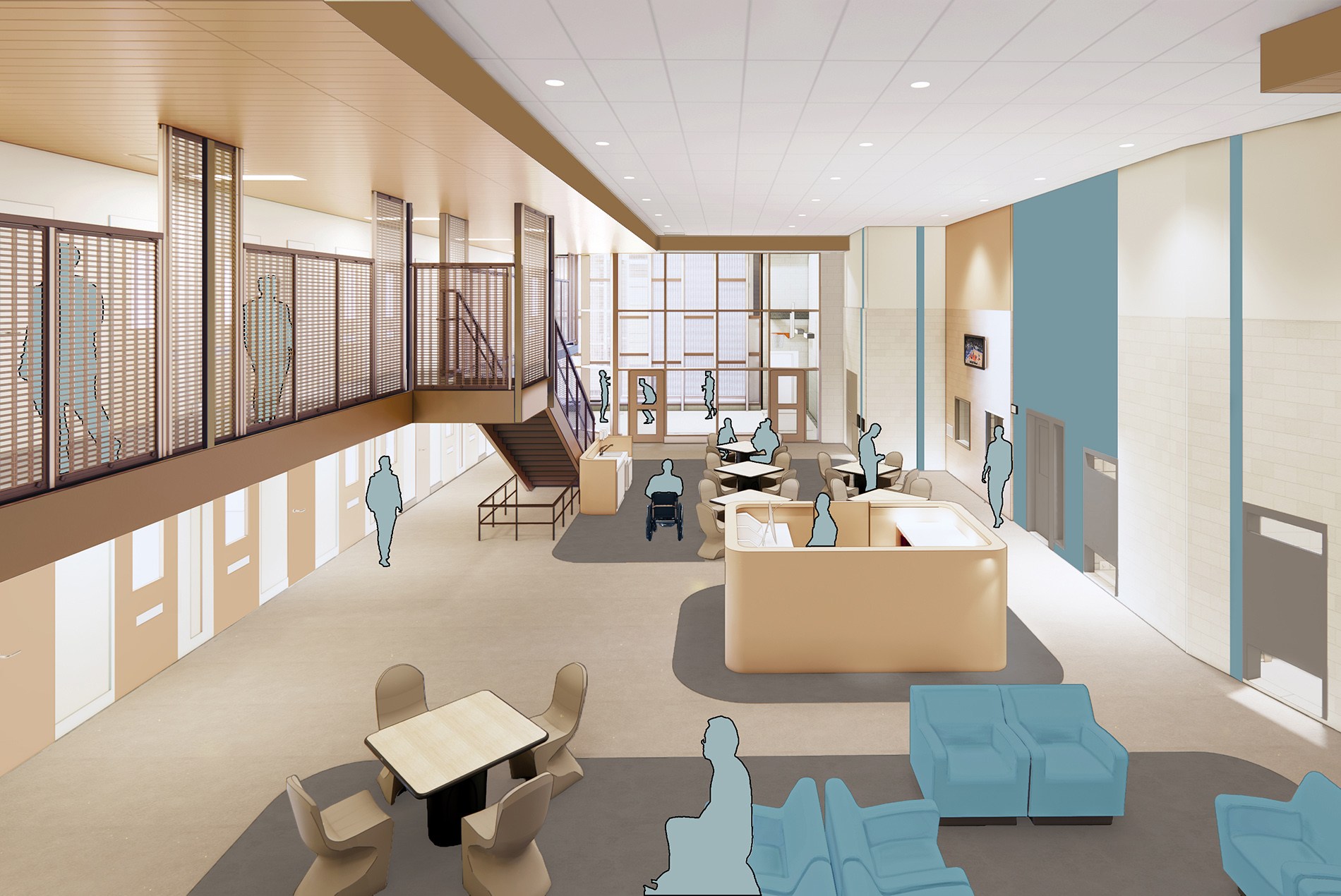
The facility’s mission depends on the quality of its housing units—the spaces where daily life unfolds. The design moves away from intermittent surveillance toward a normative residential model that lowers stress and supports behavior change.
Staff stations sit open and central on each floor rather than enclosed behind glass. Removing physical barriers encourages the proactive care and conversation that create a safe environment.
Materials are familiar and durable: wood-grain ceiling finishes, acoustic treatments, soft seating and warm floor patterning that breaks down the scale of dayrooms. Cove lighting and downlights are an improvement over harsh institutional fixtures.
Large, residential-scaled windows bring daylight deep into living quarters. This supports circadian rhythms, letting occupants track the passage of time. Every unit connects directly to outdoor recreation spaces that offer daily access to fresh air and sky.
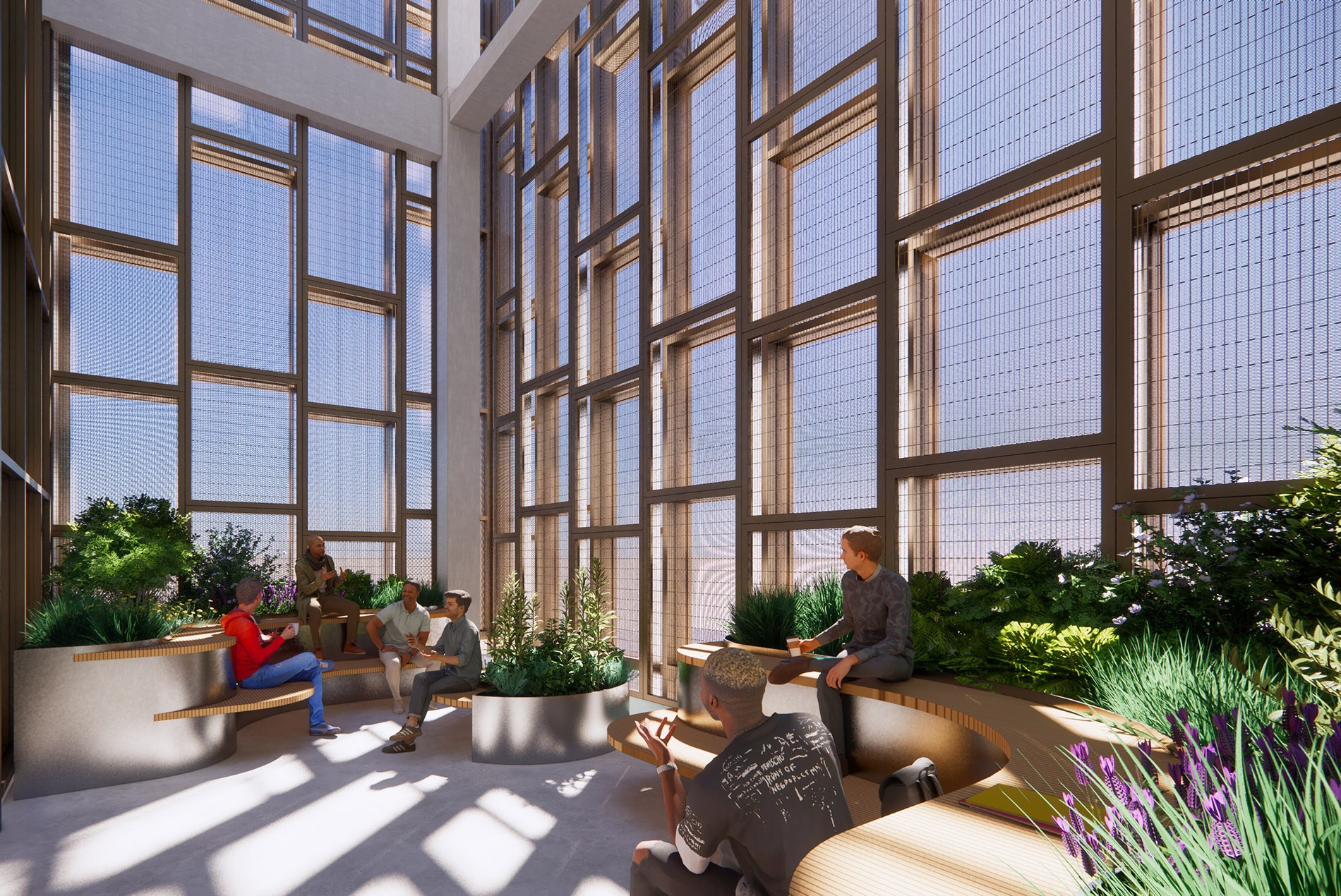
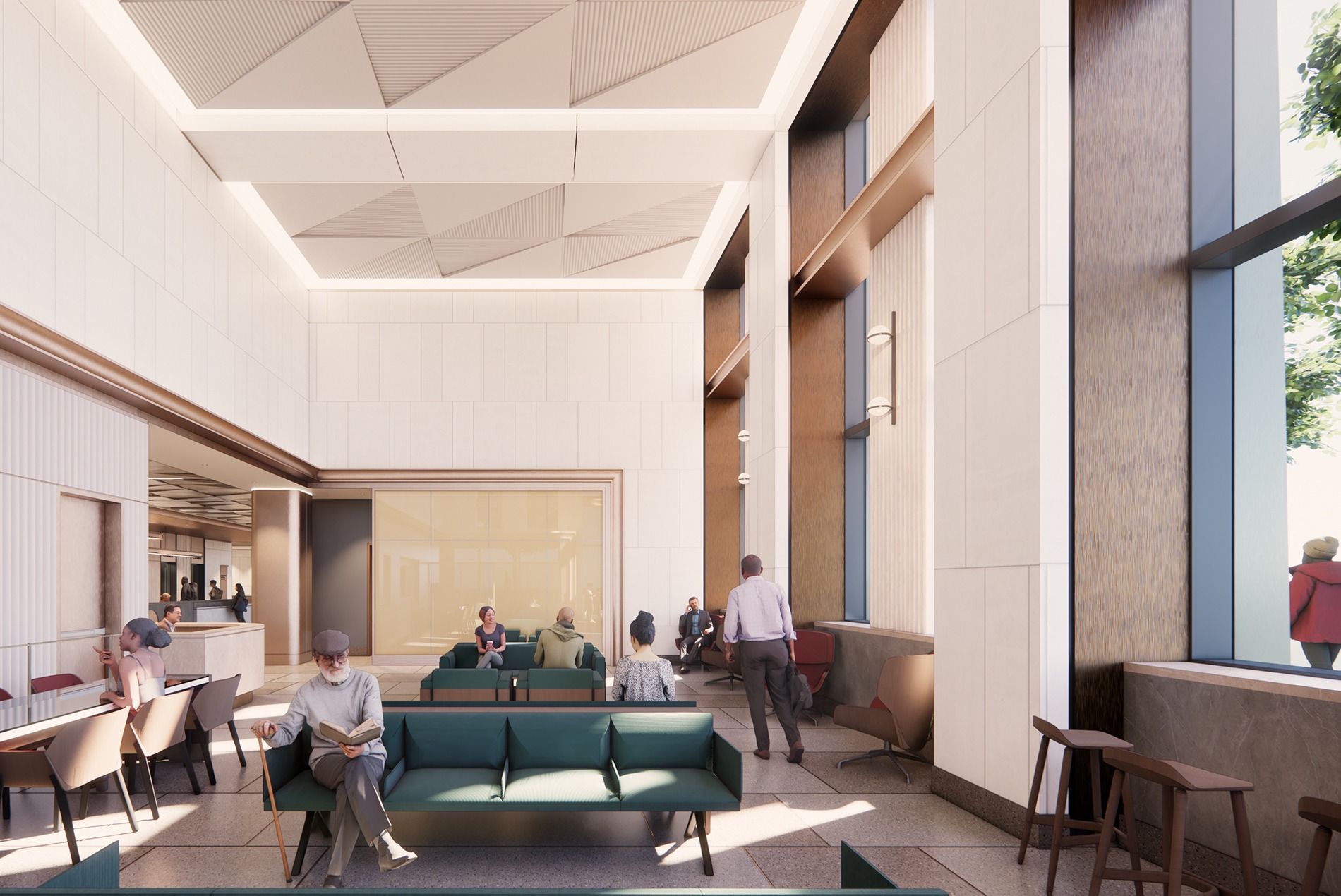
Programs are easily accessible and visible within daily routines. Education spaces signal learning as part of everyday life. Health and mental health suites are close at hand with clear entries and waiting areas that feel calm. Legal support is straightforward to access so time is spent in appointments, not in corridors. Program spaces are designed to be visible and welcoming, encouraging use by both residents and the community-based organizations that serve them.
Spaces are scaled and finished to feel normal. Doors and thresholds are simple, sightlines remain open and rooms allow private conversation without feeling on display. Vocational training rooms for programs like culinary arts provide hands-on paths to practical skills. Horticulture classrooms at the top of the building pair indoor instruction with outdoor components to connect effort with visible growth.
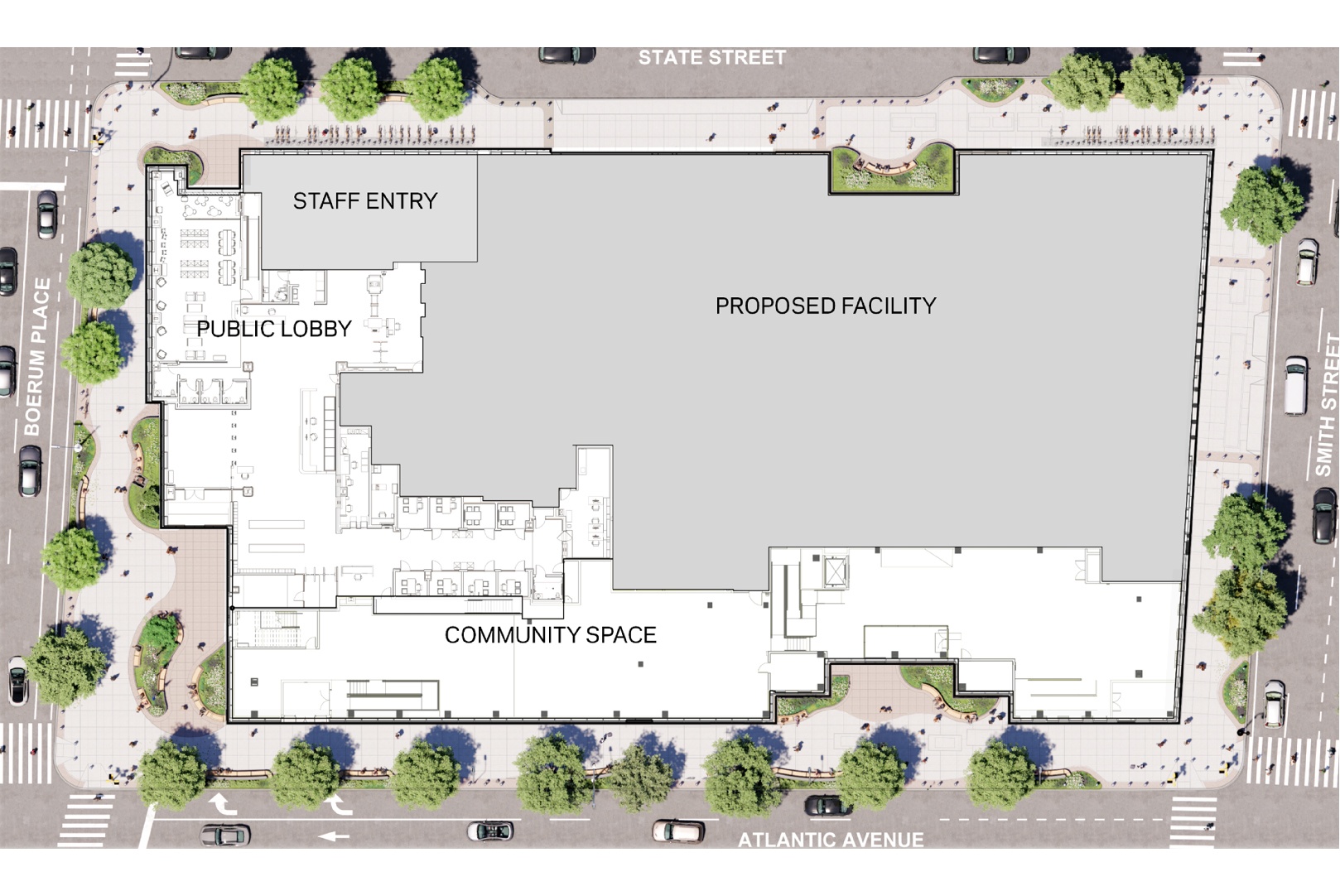
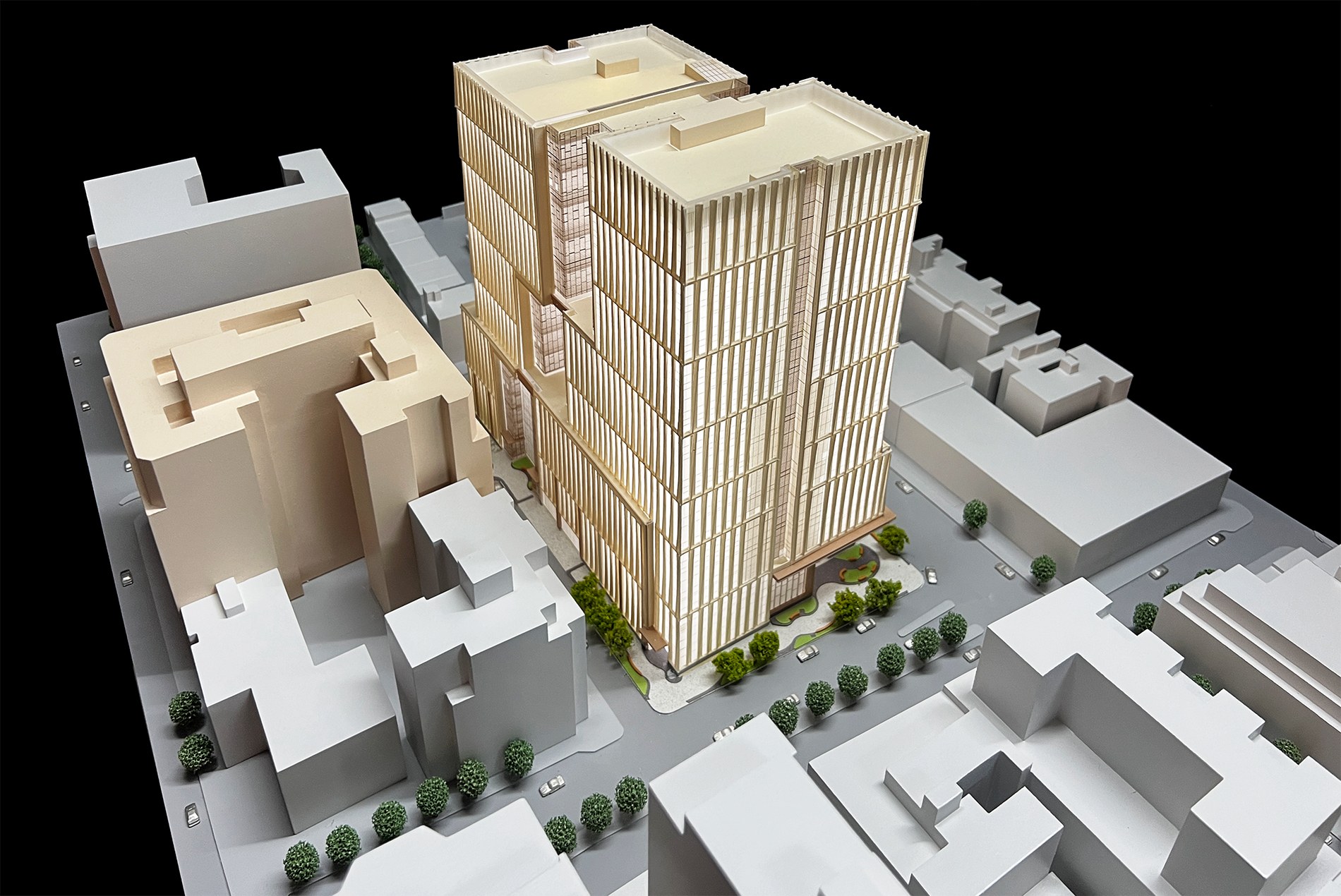
Our design-build partnership with Tutor Perini on the $2.95 billion facility, scheduled for completion in 2029, brought constructability into design decisions from the start. The integrated team’s discipline protected the core of the architectural vision—daylight access, clear circulation and the public realm—while keeping the design intact through value engineering.
The success of this partnership led to the team being selected for the even larger Manhattan jail project.
Guided by civic responsibility to engage in complex social issues, our design provides a response to a deep-seated societal crisis. Proximity to families and counsel, along with clarity through a calm lobby, clear routes and daylit rooms, lowers stress and keeps people connected to support. It serves Brooklyn as a civic presence while meeting the neighborhood at the scale of daily life.
The building proves that a justice facility can strengthen rather than burden its neighborhood. The public plaza is a genuine gathering space. Ground-floor transparency keeps the street active. Scale modulation from Boerum Place to State Street knits a large civic program into Brooklyn’s finer grain, showing that necessary infrastructure can enhance urban life.
Beyond Brooklyn, this offers a model for dense cities. Daylight as organizer, direct supervision and accessible programs show how design can support dignity and safer operations. This is a replicable approach for communities replacing outdated jails with buildings that serve people and the city.
New York City is replacing Rikers Island, a remote complex long criticized for inhumane conditions. The Borough-Based Jails (BBJ) program establishes a citywide network of four modern, humane and neighborhood facilities—one each in Brooklyn, the Bronx, Manhattan and Queens—located near courts, counsel and services.
In Brooklyn, that mandate takes the form of a 15-story, 712,150-sq.-ft. and 1,040-bed, facility designed to be smaller in footprint, safer in daily operation and fairer in access. Guided by a design vision the team calls ‘sculpted by light,’ our response conceives it as an exemplary civic building that contributes to its public realm. This approach, part of HOK’s ‘Justice and Dignity by Design’ philosophy, evaluated every decision for its ability to uphold dignity and lower stress. The result is a facility that serves the city while belonging to it.
The facility negotiates its dual role as civic institution and neighborhood component at Atlantic Avenue and Boerum Place at the southern edge of Brooklyn’s Civic Center. It anchors a public plaza activated by 30,000 square feet of community facility space, while its massing steps down to meet the neighborhood’s brownstone scale—a form resolved through an iterative public process.
A transparent ground floor reveals a calm lobby, keeping the street edge engaged with neighborhood life. An underground tunnel provides a direct, dignified connection to the adjacent courthouse and keeps transfers off local streets.
Conceived as a therapeutic landscape, the public realm does double duty. Its amenities—seating, shade and new trees—are designed to benefit all who interact with the site: the public passing by, families visiting the facility, staff members and even those in custody, who experience some visual relief. Security features like bollards and crash-rated walls are seamlessly integrated into planters and benches.
Daylight is the backbone of our plan. Carved massing increases the perimeter so light reaches cells, dayrooms, program areas and circulation throughout the day.
The most prominent of these carved forms is a large vertical cutout—the ‘central reveal’—that creates protected space for secure outdoor recreation yards. Fixed fins temper summer sun and invite winter sun deeper into housing. The result is lower cooling demand and less daytime reliance on electric light. Regular light cues support circadian rhythms so people can keep track of time and maintain a more regular daily routine.
A high-performance envelope and exterior shading cut loads year-round. Our energy modeling shows 69% lower energy use than the AIA 2030 baseline and 17.9% below ASHRAE 90.1-2010.
The design-build team integrated performance and wellness from the project’s start. Daylight and even lighting support calmer routines. Durable, healthy materials reduce both embodied and operational carbon.
The project is pursuing LEED BD+C Gold as required by NYC Local Law 32 (2016), mixing LEED v4 and v4.1 credits to improve indoor air quality, water use and materials—not just energy.
Critical systems have redundancy to maintain operations when city infrastructure is strained.
This is a contemporary civic building that belongs to Brooklyn. Sculpted vertical piers alternate with continuous bands of glass to make a clear street rhythm. The piers modulate in depth and angle, catching light differently through the day while the glass reveals or screens activity as programs require. A double-floor expression keeps the tower slender and civic while recalling the horizontal lines of neighborhood brownstones. Proportions step from civic to neighborhood scale so the tower meets Boerum Place with presence, then settles toward Smith and State with a quieter cadence.
In direct response to community feedback, HOK’s team chose materials for their warmth and durability. Terra cotta complements the area’s historic brick and brownstone character and adds depth to the facade. This warmth is balanced with transparency at the base, so the ground floor feels open and engaging. The pattern of solid and glass balances openness with the privacy needed for both people inside and their neighbors outside.
A humane day starts with clarity. Arrival is direct, wayfinding is simple and public, staff and secure movements stay distinct. Housing uses direct supervision to encourage conversation and proactive care. On-unit recreation keeps routines steady. Routes were mapped with operators so movements stay clear and safe.
Services sit close to where they are needed. Healthcare, counseling and legal support are easy to reach. Materials feel familiar and durable, and lighting stays even so faces are easy to read. For staff, daylit dining, locker and fitness areas are grouped for quick access and privacy to reset between shifts, with clear back-of-house routes that lower stress.
Families are part of the plan, too. Visitation is designed for calmness with clear entries, places to pause before and after a visit, dedicated areas for children of different ages and rooms sized for conversation. Increasing engagement helps people move forward.
The facility’s mission depends on the quality of its housing units—the spaces where daily life unfolds. The design moves away from intermittent surveillance toward a normative residential model that lowers stress and supports behavior change.
Staff stations sit open and central on each floor rather than enclosed behind glass. Removing physical barriers encourages the proactive care and conversation that create a safe environment.
Materials are familiar and durable: wood-grain ceiling finishes, acoustic treatments, soft seating and warm floor patterning that breaks down the scale of dayrooms. Cove lighting and downlights are an improvement over harsh institutional fixtures.
Large, residential-scaled windows bring daylight deep into living quarters. This supports circadian rhythms, letting occupants track the passage of time. Every unit connects directly to outdoor recreation spaces that offer daily access to fresh air and sky.
Programs are easily accessible and visible within daily routines. Education spaces signal learning as part of everyday life. Health and mental health suites are close at hand with clear entries and waiting areas that feel calm. Legal support is straightforward to access so time is spent in appointments, not in corridors. Program spaces are designed to be visible and welcoming, encouraging use by both residents and the community-based organizations that serve them.
Spaces are scaled and finished to feel normal. Doors and thresholds are simple, sightlines remain open and rooms allow private conversation without feeling on display. Vocational training rooms for programs like culinary arts provide hands-on paths to practical skills. Horticulture classrooms at the top of the building pair indoor instruction with outdoor components to connect effort with visible growth.
Our design-build partnership with Tutor Perini on the $2.95 billion facility, scheduled for completion in 2029, brought constructability into design decisions from the start. The integrated team’s discipline protected the core of the architectural vision—daylight access, clear circulation and the public realm—while keeping the design intact through value engineering.
The success of this partnership led to the team being selected for the even larger Manhattan jail project.
Guided by civic responsibility to engage in complex social issues, our design provides a response to a deep-seated societal crisis. Proximity to families and counsel, along with clarity through a calm lobby, clear routes and daylit rooms, lowers stress and keeps people connected to support. It serves Brooklyn as a civic presence while meeting the neighborhood at the scale of daily life.
The building proves that a justice facility can strengthen rather than burden its neighborhood. The public plaza is a genuine gathering space. Ground-floor transparency keeps the street active. Scale modulation from Boerum Place to State Street knits a large civic program into Brooklyn’s finer grain, showing that necessary infrastructure can enhance urban life.
Beyond Brooklyn, this offers a model for dense cities. Daylight as organizer, direct supervision and accessible programs show how design can support dignity and safer operations. This is a replicable approach for communities replacing outdated jails with buildings that serve people and the city.