Royal London Hospital
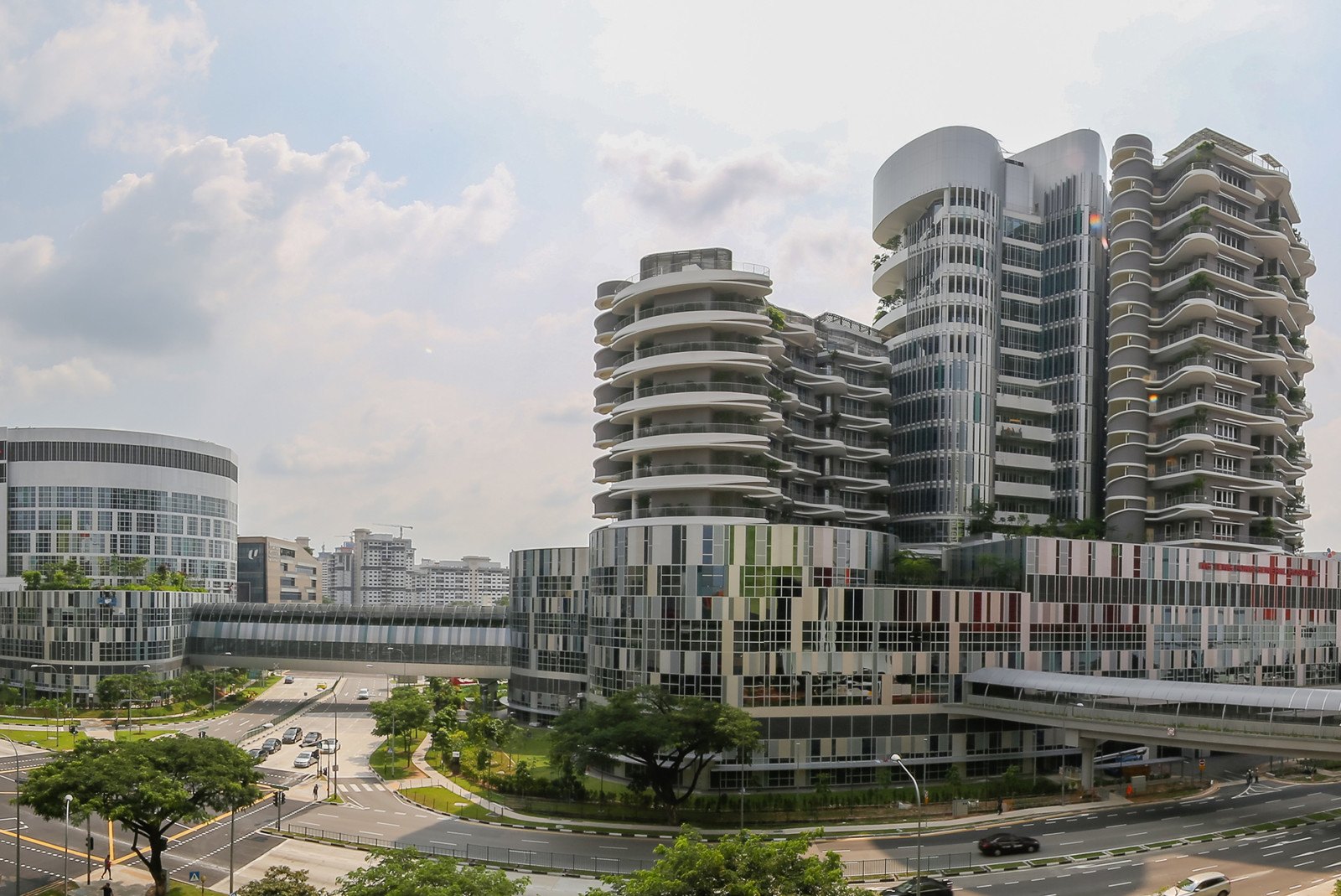
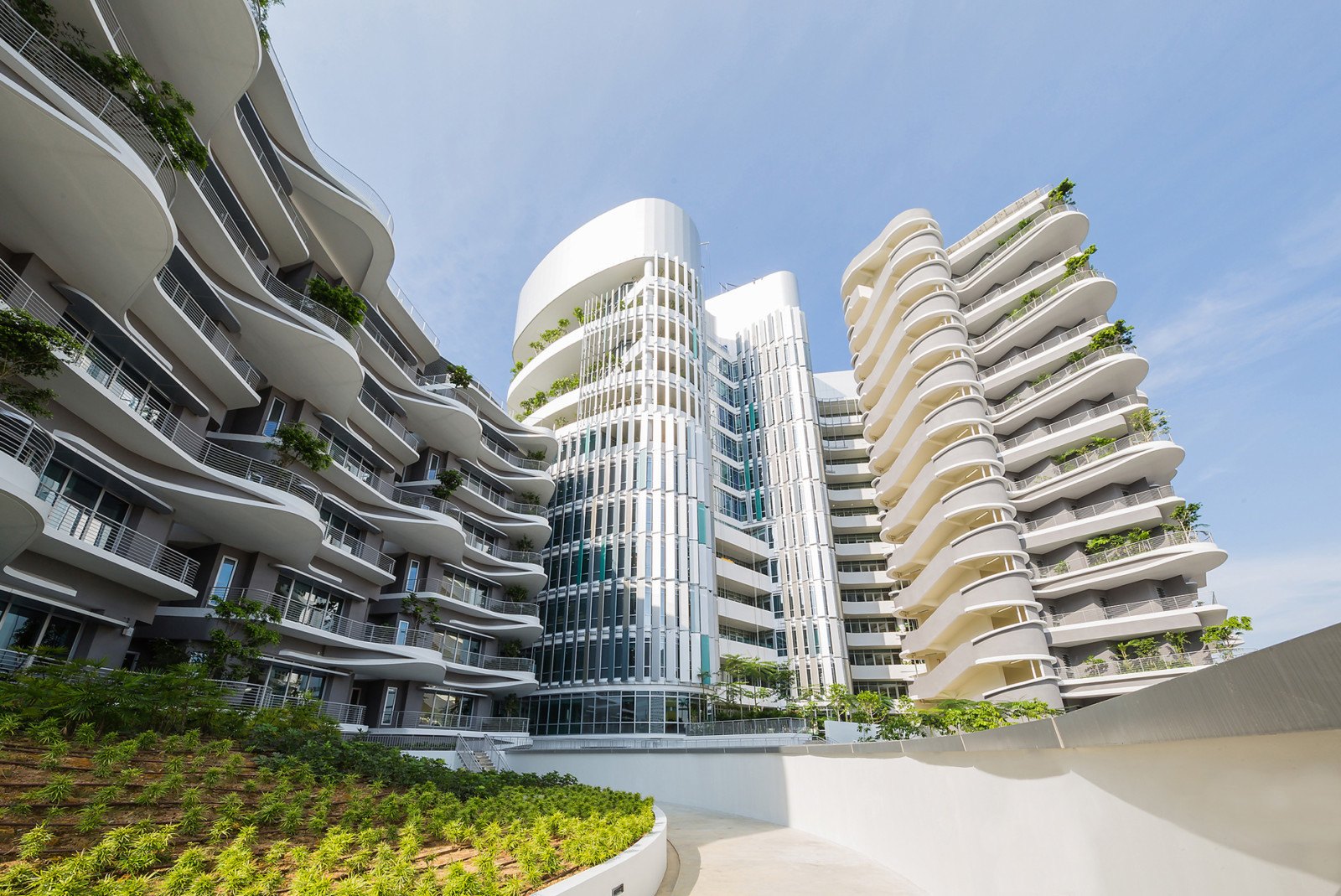
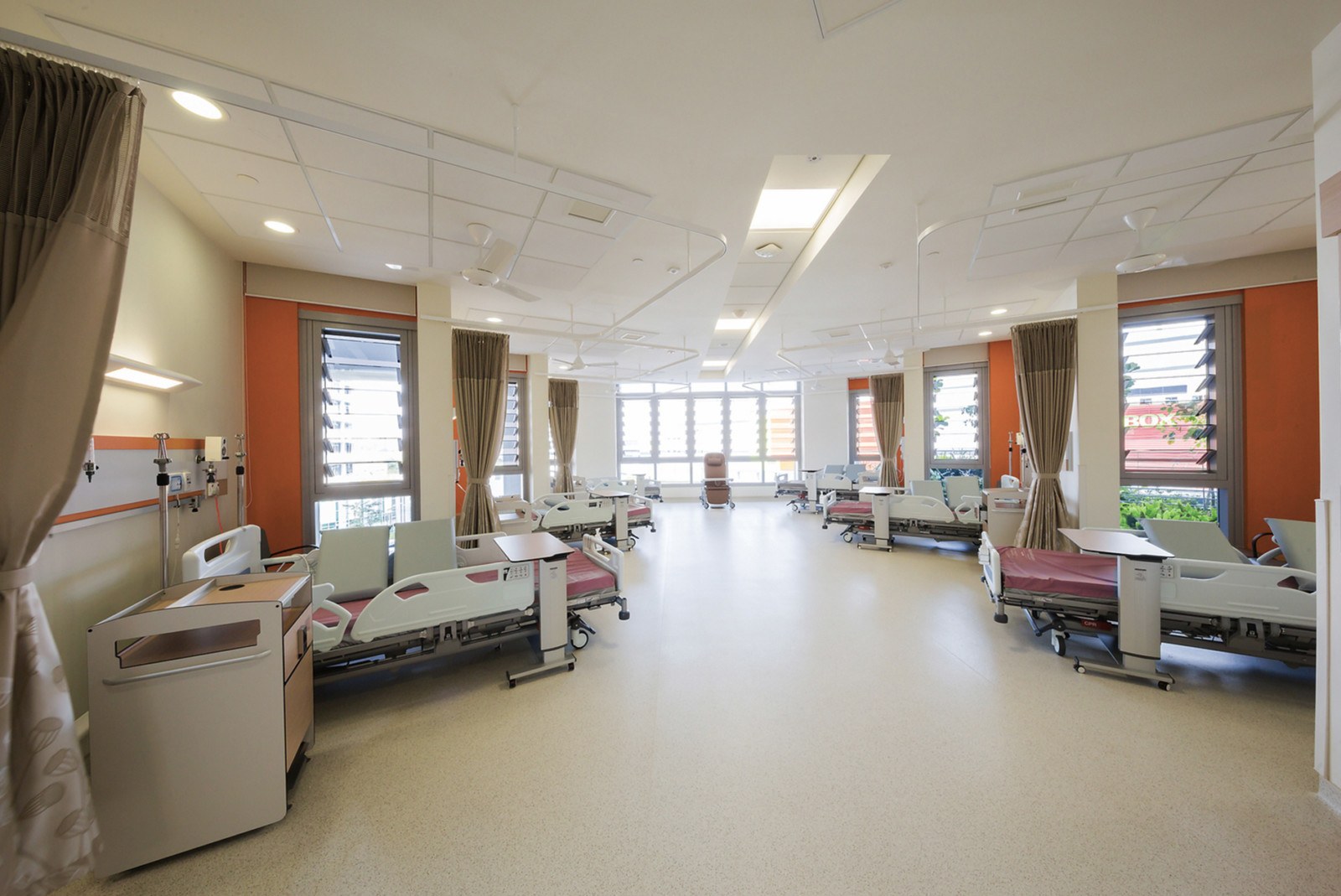
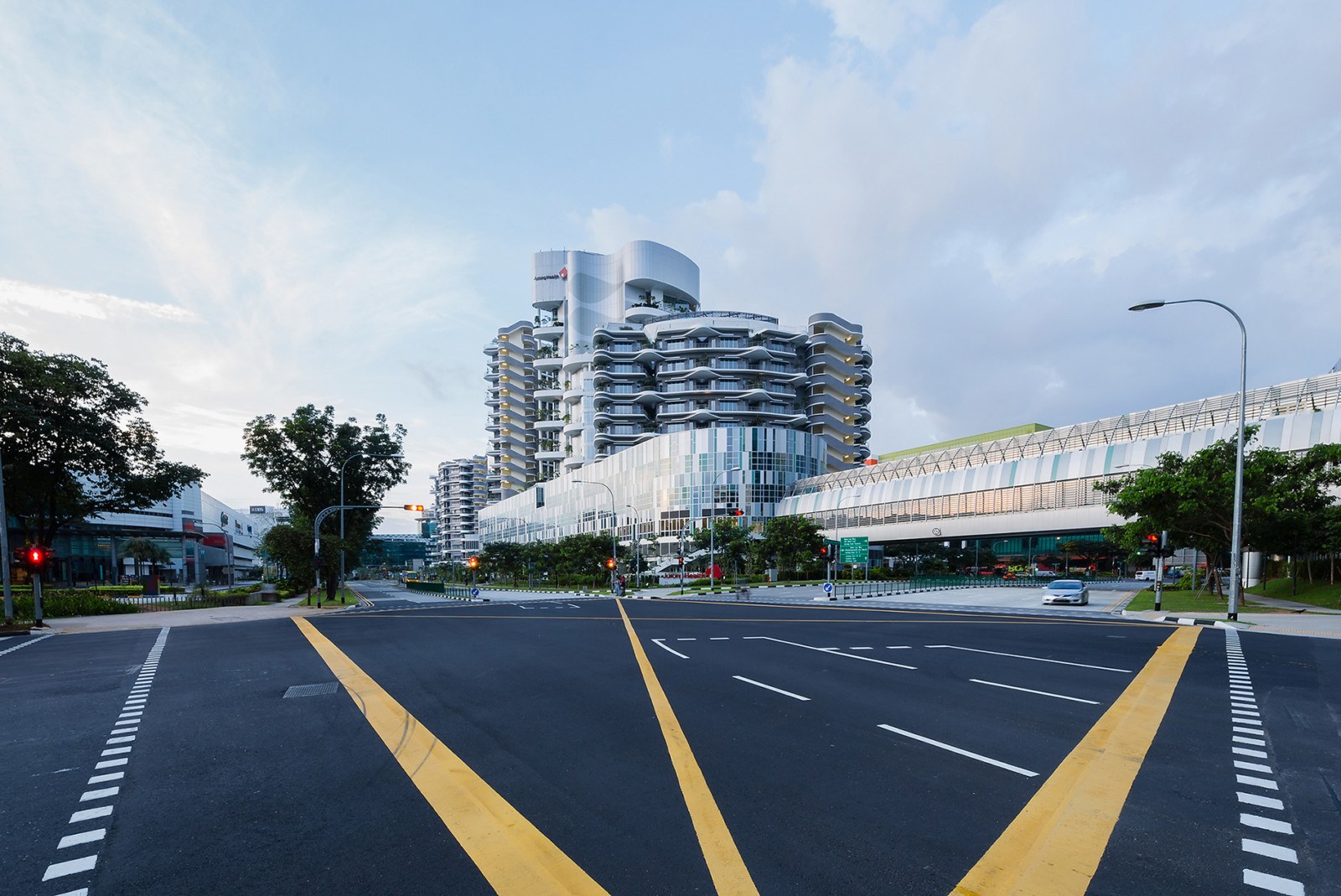
Singapore’s western region needed a new model for delivering high-quality, affordable healthcare across the continuum of care. Ng Teng Fong General Hospital and Jurong Community Hospital form the city-state’s first medical campus to combine an outpatient clinic, community hospital and acute care general hospital on a single site, advancing the Ministry of Health’s goal of accessible care for all.
Design Solutions
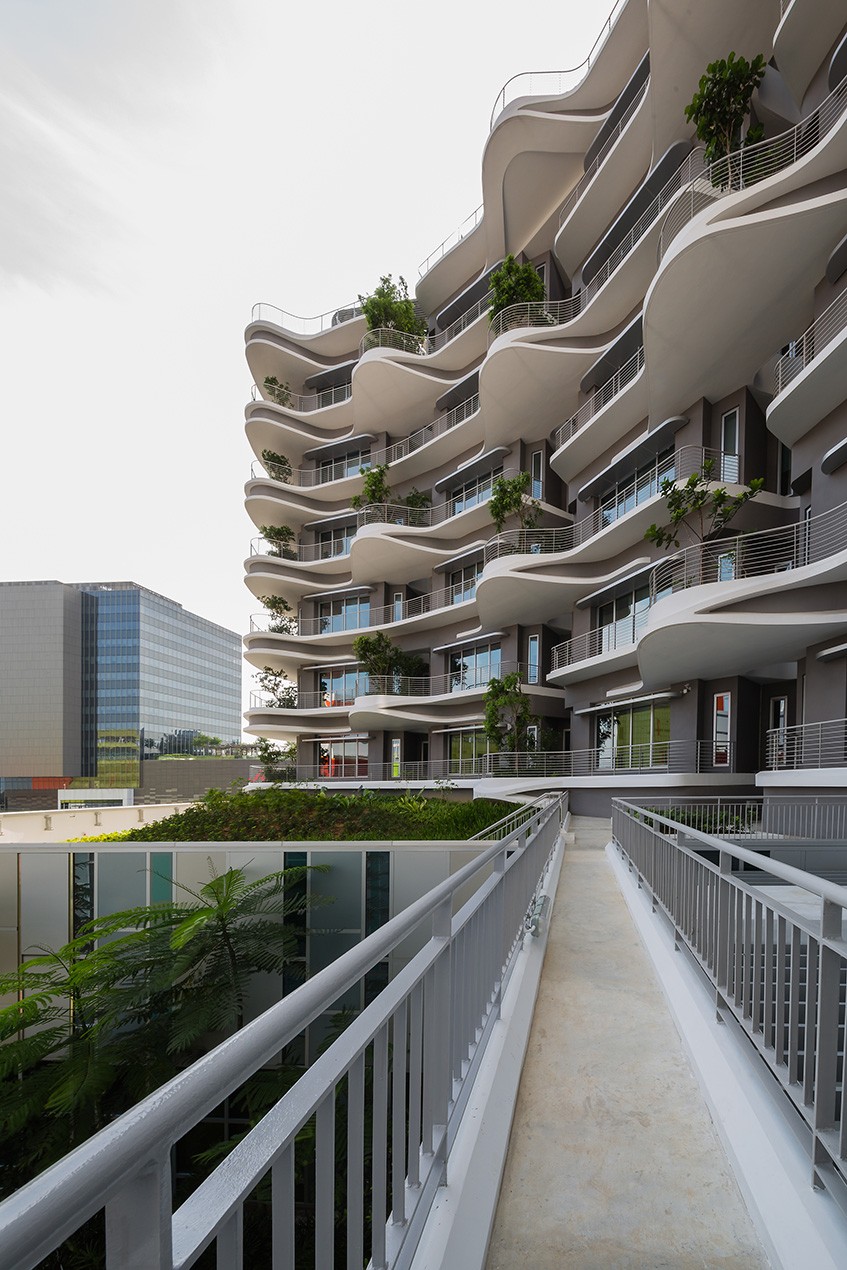
The sawtooth plan orients every patient room toward daylight and prevailing breezes, fulfilling a mandate to “create a hospital without walls.” Each of the 1,100 rooms features an operational window, giving patients control over fresh air and a direct connection to the outdoors—an approach that supports healing while reducing reliance on mechanical systems. The layout of staggered beds and garden clusters accessible to all is distinctive in global healthcare design.
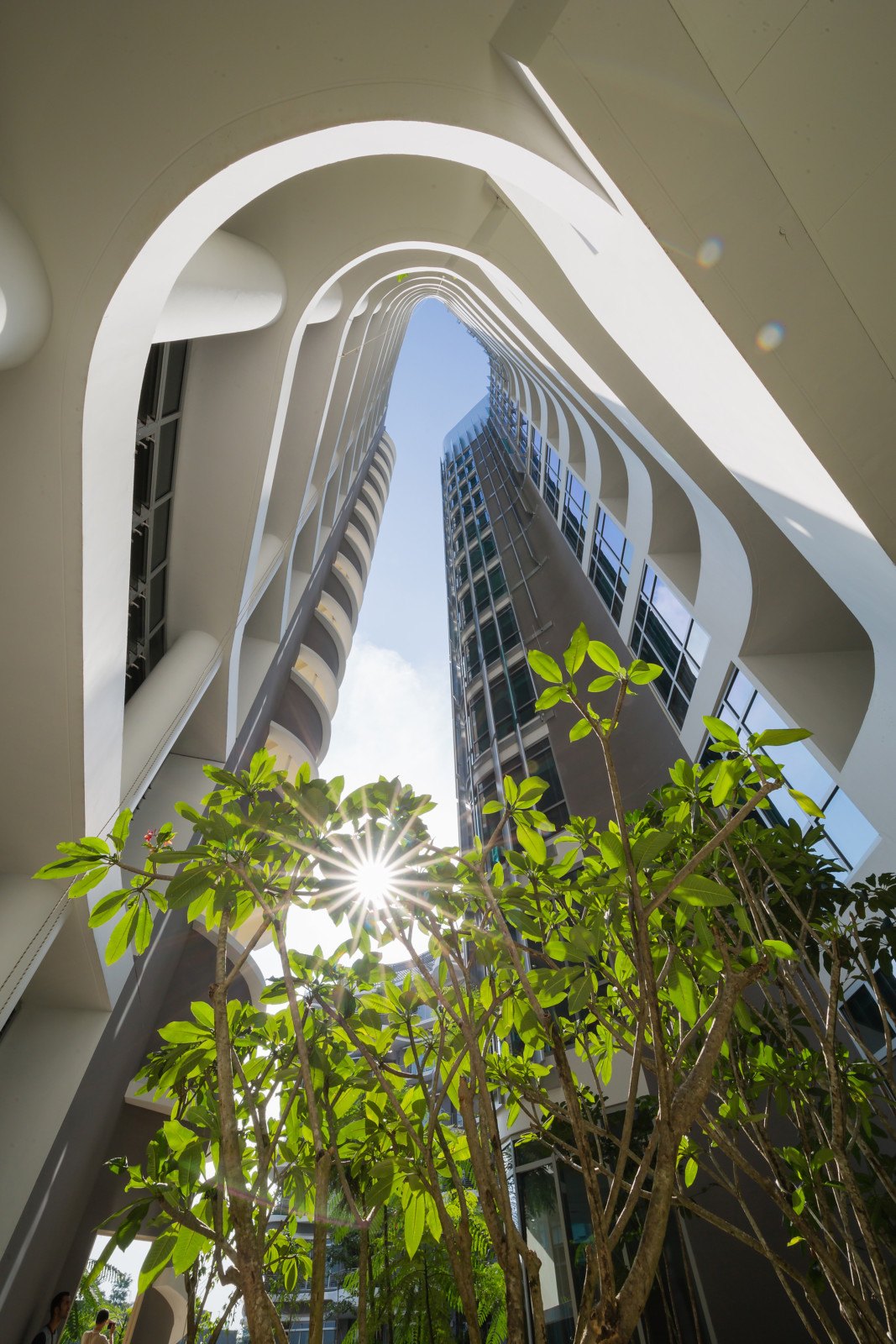
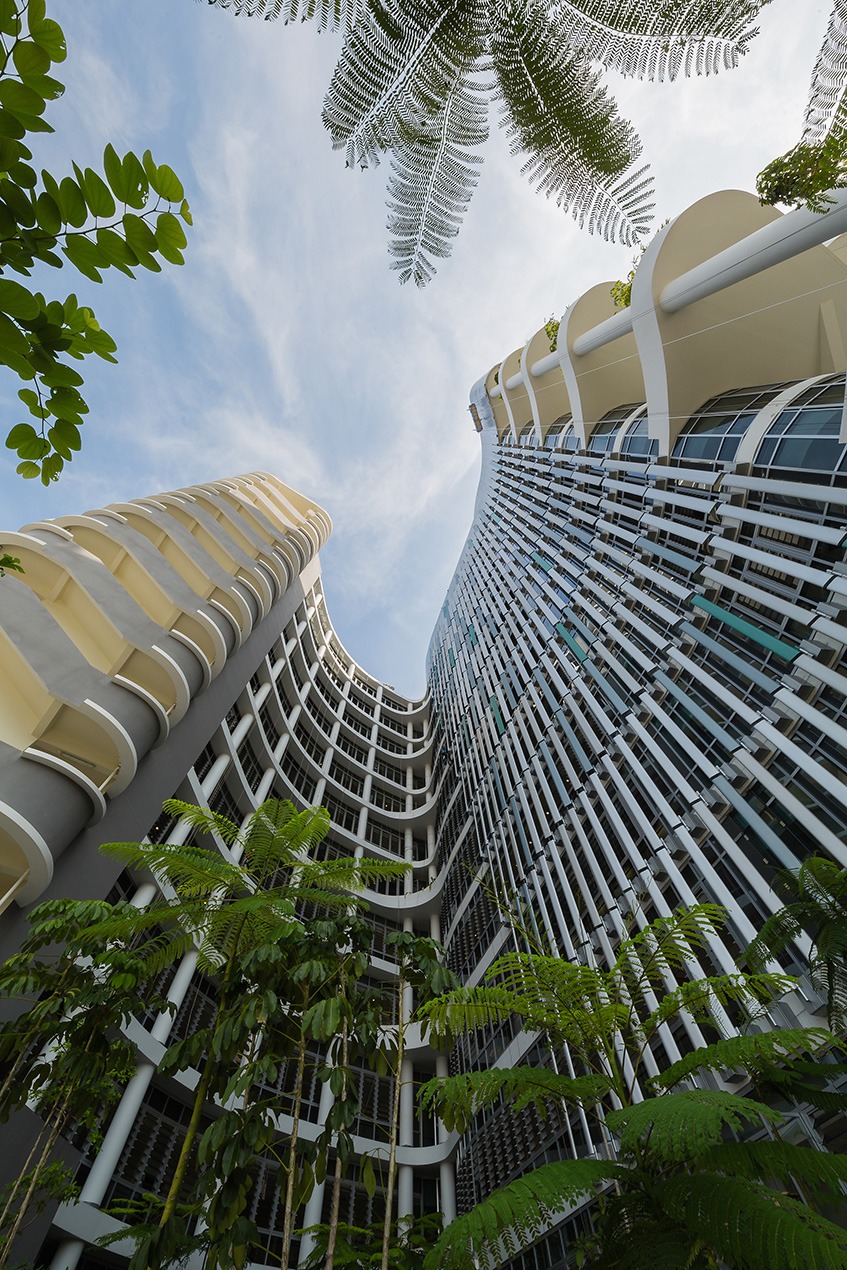
Passive design principles drive comfort throughout the campus. Thermal mass, ceiling fans, cross ventilation and exterior shading maintain comfortable temperatures, delivering ventilation rates that are higher than in a standard U.S. patient room. The unique floor arrangement allows for double the amount of natural ventilation compared to a conventional hospital plan, and 82% of inpatient areas are passively cooled and naturally ventilated.
Operating suites, imaging areas and isolation rooms retain full mechanical ventilation where clinical requirements demand it. The team used computational fluid dynamics models, shading analysis, climate analysis, daylight modeling and energy modeling to optimize efficiency and the patient experience.
Dense vegetation covers low roofs and much of the site, creating healing gardens, staff respite areas and community park space. A mobility park adjacent to Jurong Community Hospital—the first of its kind in Singapore—incorporates mock-ups of public transportation, multi-terrain walkways, a sensory garden and a pedestrian crossing. Vertical planting climbs the façades, offering patients direct views of greenery despite the hospital’s urban setting. Solar thermal hot water heating and a large photovoltaic array further reduce energy demand; the building uses 38% less energy than a typical Singaporean hospital and 69% less than a typical U.S. hospital. The project achieved Green Mark Platinum certification.
The two hospitals share service facilities including digital imaging, pharmacy, catering, medical records, storage and training. This enables a coordinated approach to staffing, patient records and care plans that translates into more cost-effective and affordable quality healthcare.
HOK served as design and medical planning consultant, collaborating with the Singapore Ministry of Health and a team that included CPG Corporation as prime architect and architect of record and Studio 505 as design collaborator focusing on building envelope development.
Impact
In selecting the project as an AIA Committee on the Environment Top Ten winner, the jury commented that “this project is an extraordinary model for hospitals to behave as healing environments” and “the passive strategies demonstrated here are a model for hospitals around the world.”
Additional recognition includes the International Academy for Design & Health awards for Salutogenic Design and Sustainable Urban & Built Environment, Building Better Healthcare Awards for Sustainable Development and International Design, an AIA Hong Kong Honor Award in Architecture, a European Healthcare Design Honorable Mention and a FuturArc Journal Green Leadership Award of Merit.
CERTIFICATION
Green Mark Platinum
SIZE
1.84 million sq. ft. / 171,300 sq. m.
BEDS
707 (general hospital); 396 (community hospital)
POPULATION SERVED
1.2 million
KEY FEATURES
Sawtooth plan providing every patient room with an operational window
82% of inpatient areas passively cooled and naturally ventilated
69% less energy use than a typical U.S. hospital
Healing gardens, vertical planting and Singapore’s first mobility park
Shared service facilities across both hospitals
Awards
Int. Academy for Design & Health – Salutogenic Design | Sustainable Urban & Built Environment, 2017
FuturArc Journal Green Leadership Award – Award of Merit, 2016
European Healthcare Design – Honorable Mention, 2016
Building Better Healthcare Awards – Sustainable Development | International Design, 2017
AIA Hong Kong Honor Award in Architecture, 2016
AIA COTE – Top 10 Green Projects, 2017