LaGuardia Airport Terminal B
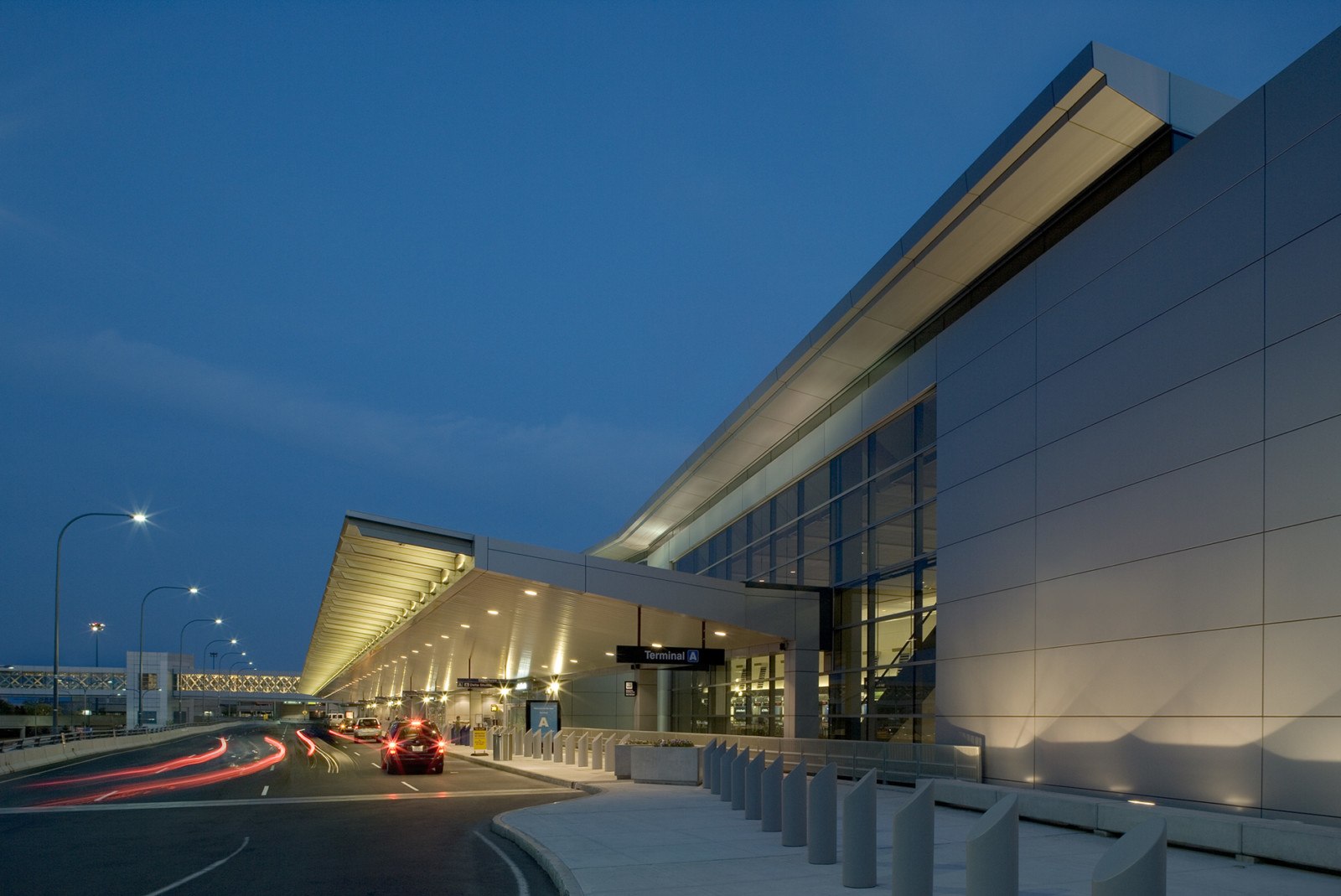
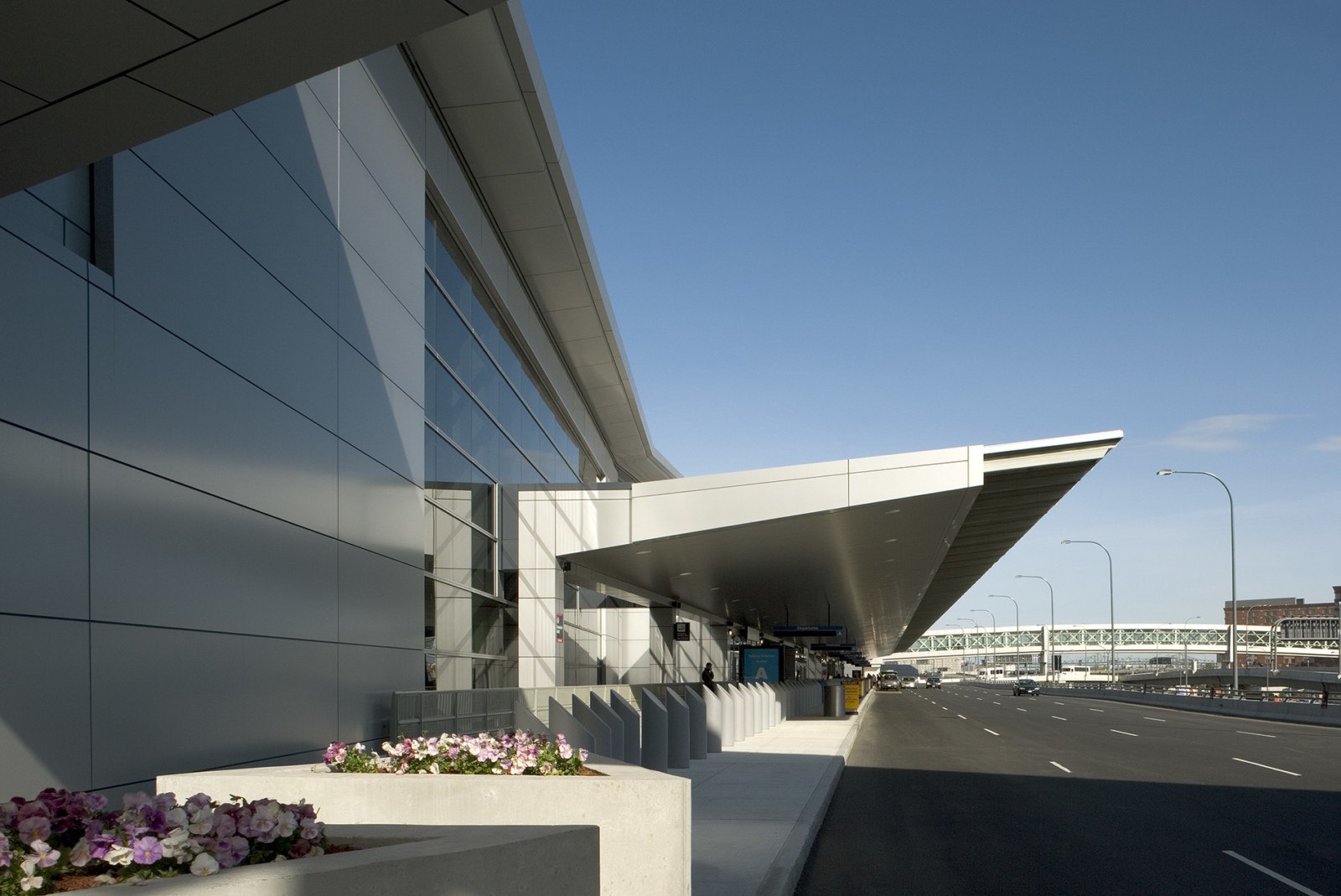
Air travel at Boston Logan International Airport required a more cohesive and efficient experience for Delta Air Lines travelers and airport workers, with operations spread across multiple facilities. The HOK-designed Terminal A creates a connected environment that improves clarity, comfort and movement throughout the airport journey.
Design Solutions
The terminal organizes Delta’s operations into a main terminal and a satellite concourse linked by an underground pedestrian tunnel with moving sidewalks. This linear arrangement simplifies wayfinding and reduces walking time, helping travelers move more intuitively between check-in, security and gates.
As the first major U.S. terminal built after 9/11, the design incorporates updated security requirements into the overall layout. Screening and circulation are planned together so travelers move more efficiently through the building without the bottlenecks common to terminals retrofitted for post-9/11 protocols.
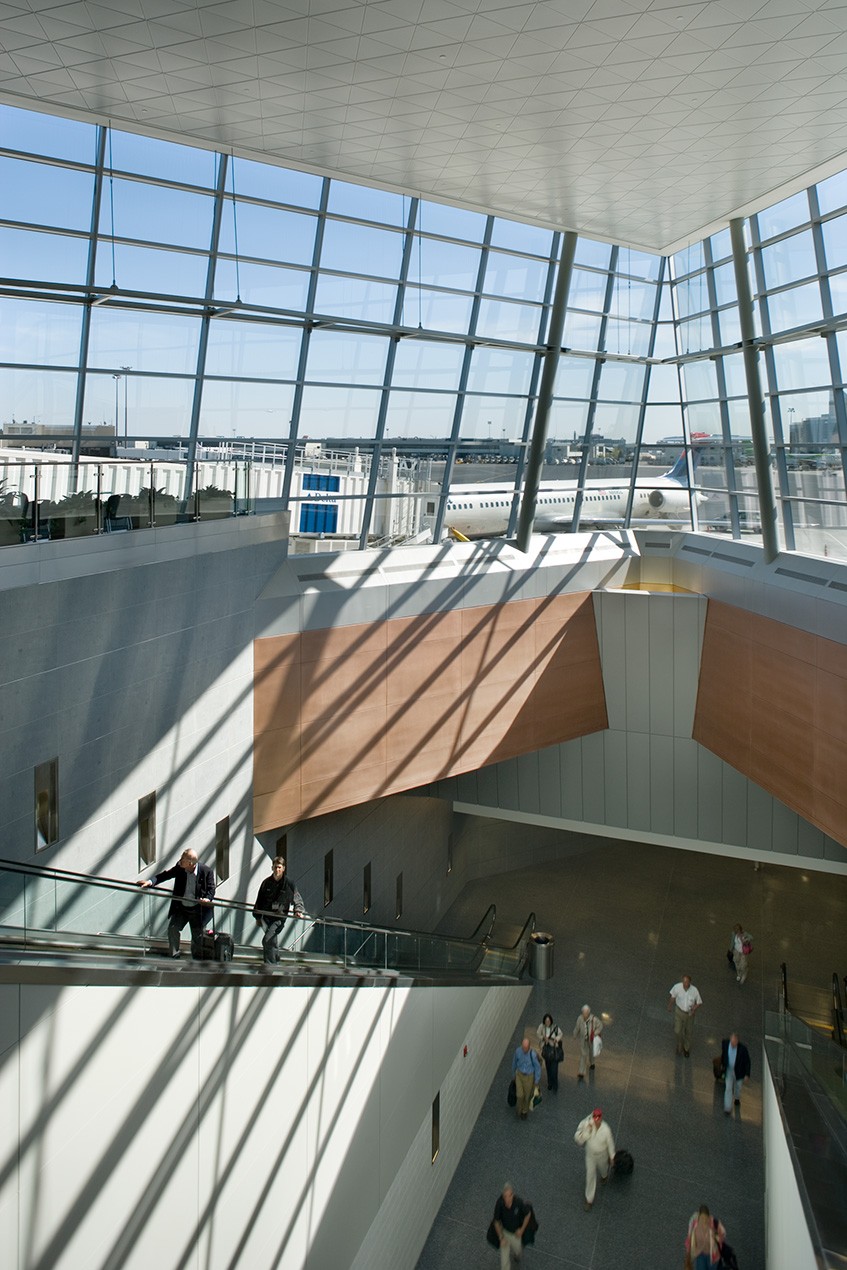
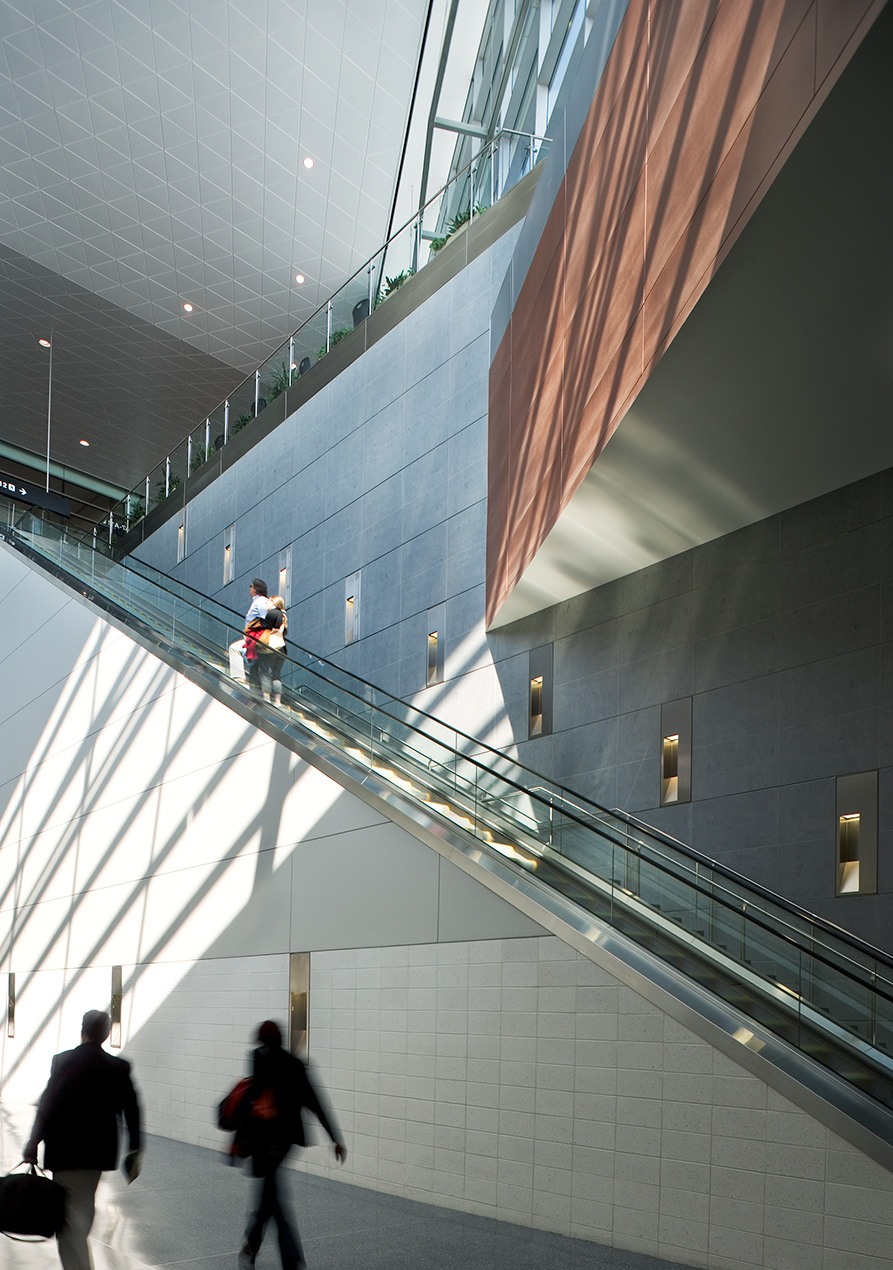
Daylighting shapes the traveler experience, bringing in ample natural light while controlling glare. The result is a brighter, more comfortable space for travelers navigating the terminal.
Terminal A was the world’s first LEED-certified air terminal, with multiple sustainable design strategies incorporated into the project. A reflective roofing membrane and paving reduce solar heat gain, improving indoor comfort and lowering cooling demand. Stormwater management systems, including filtration devices that remove suspended solids and phosphorus, protect the surrounding watershed.
Impact
Boston Logan International Airport serves more than 43 million travelers annually, with Terminal A handling much of Delta’s domestic service.
The project received the Jay Hollingsworth Speas Airport Award co-sponsored by the AIAA, AAE and ACC, recognizing its contributions to improving the relationship between airports, the local community and the environment.
CERTIFICATION
LEED-NC Certified
SIZE
646,000 sq. ft. / 60,000 sq. m.
GATES
21
KEY FEATURES
World’s first LEED-certified air terminal
Consolidated Delta operations improve clarity and efficiency
Integrated post-9/11 security design maintains flow without disrupting experience
Underground connector with moving walkways speeds traveler circulation
Daylighting strategy enhances comfort while controlling glare and eye strain
Reflective roof and paving reduce heat gain and energy demand