Hartsfield-Jackson Atlanta International Airport
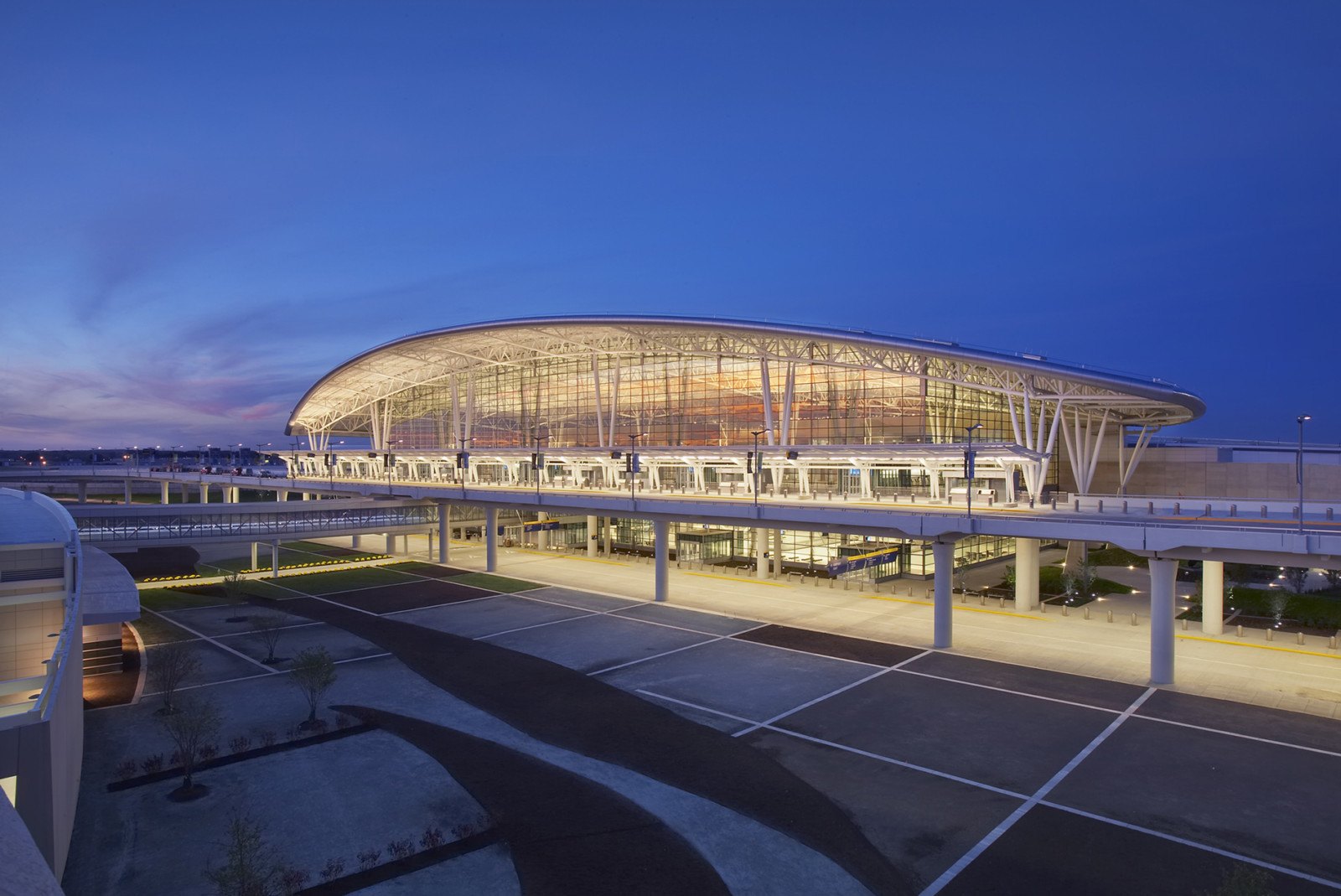
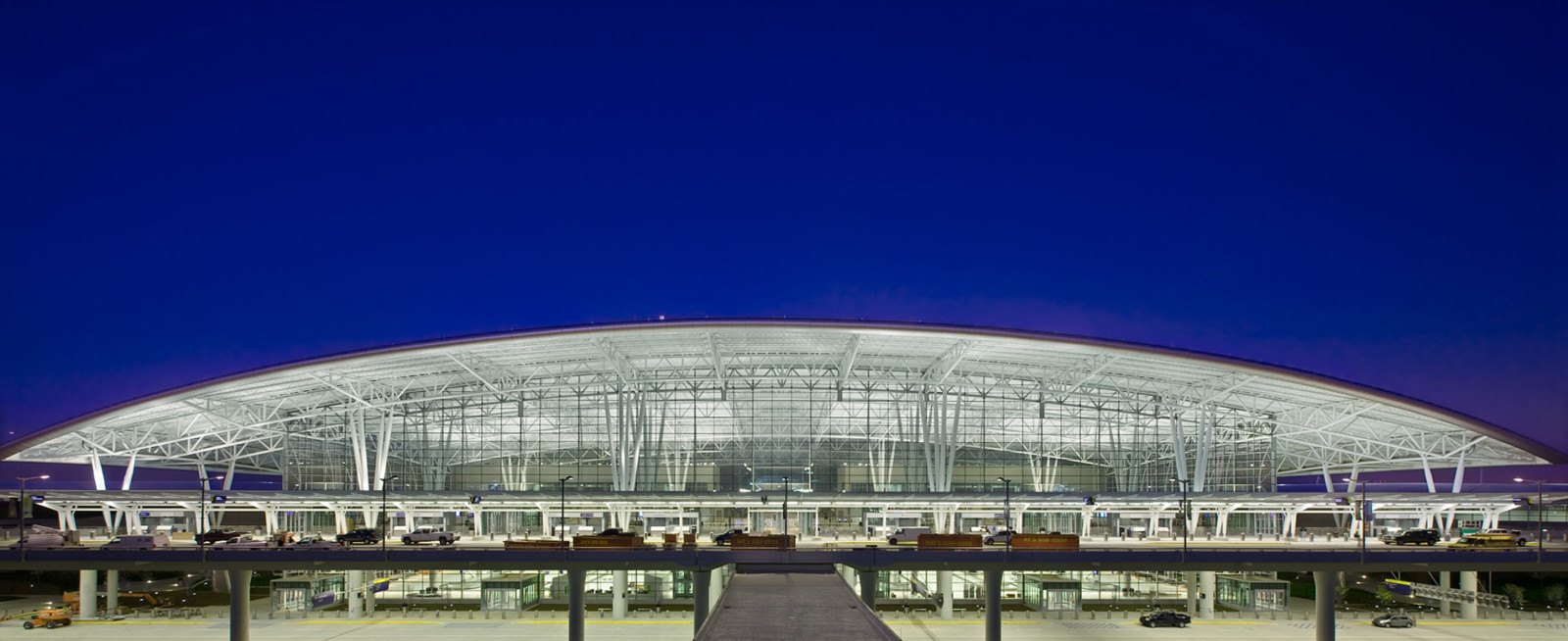
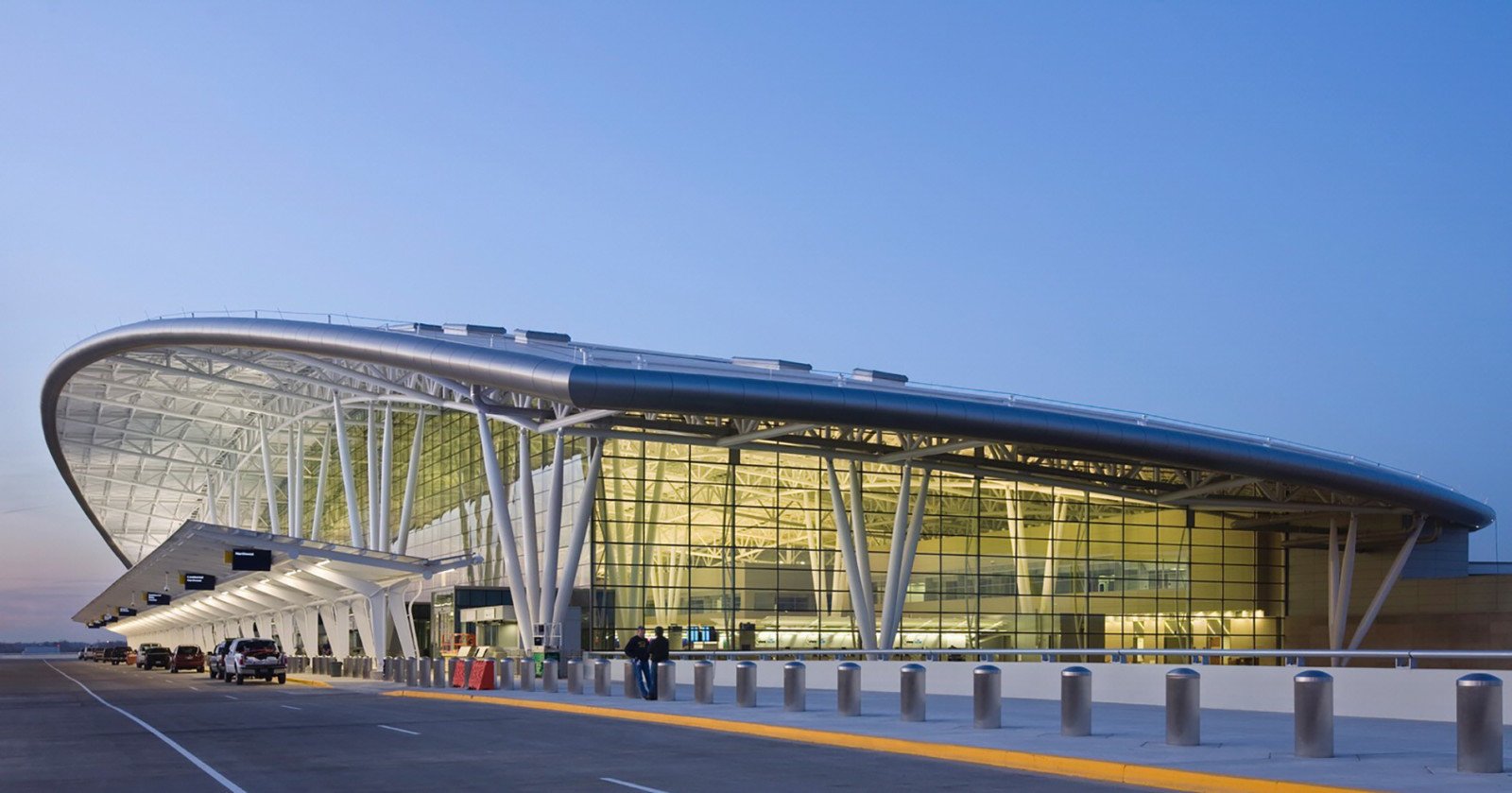
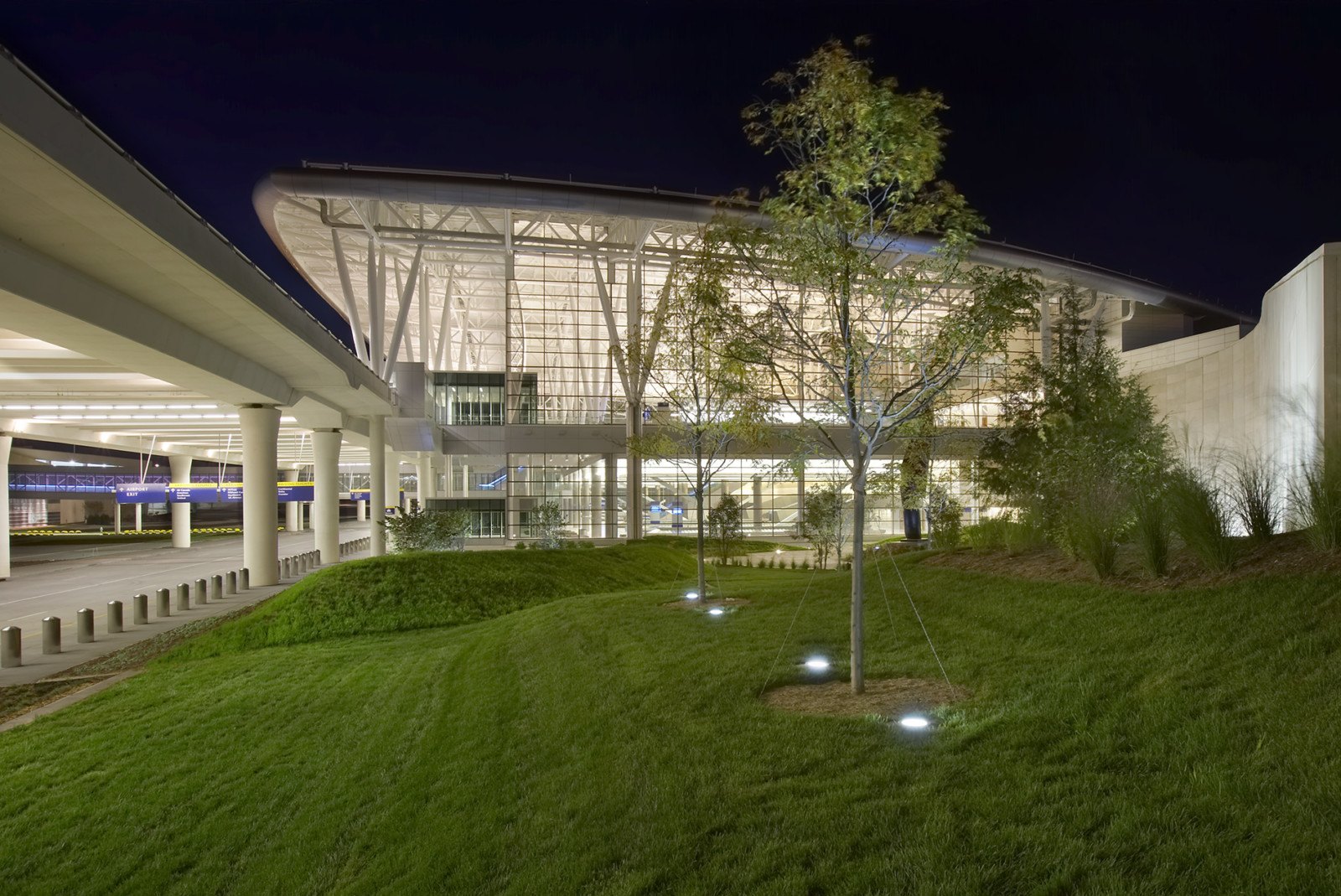
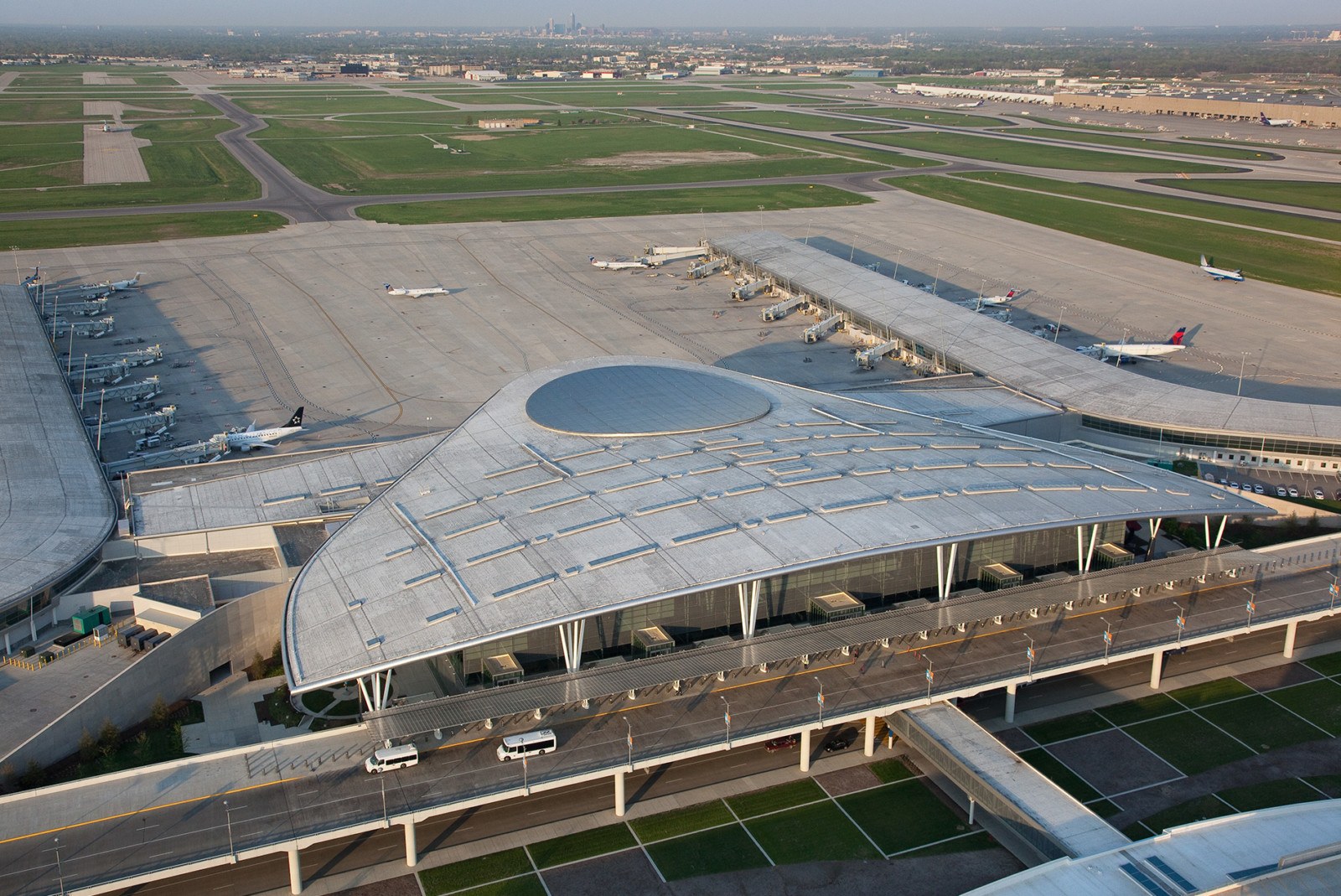
Airports built before contemporary security requirements often struggle to provide clear, comfortable journeys through aging infrastructure. As master architect and terminal designer, HOK reimagined the Indianapolis International Airport’s Colonel H. Weir Cook Terminal as a cohesive campus. The design creates an intuitive, light-filled environment that supports efficient movement from curb to gate.
Design Solutions
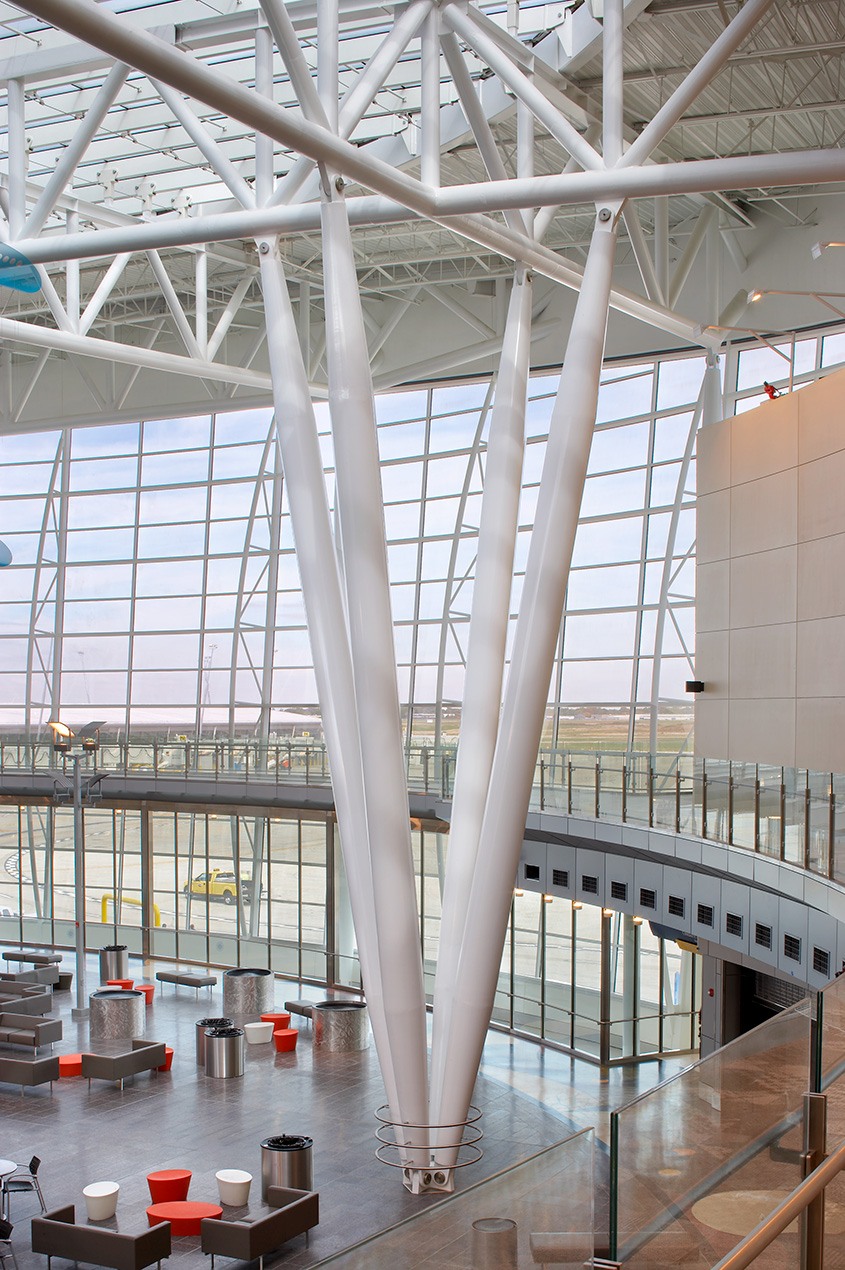
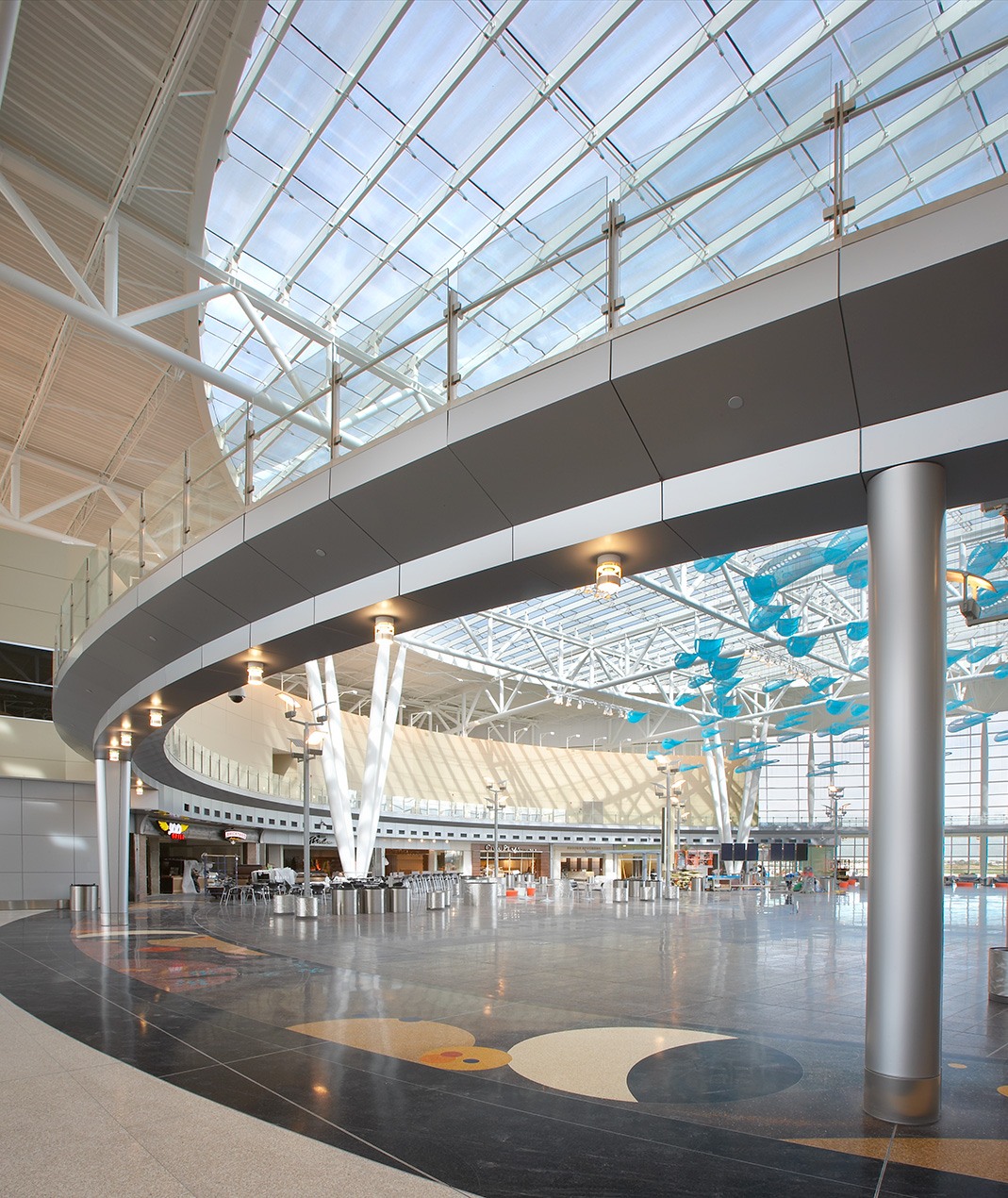
The 40-gate terminal is organized around a central civic hall that brings together retail, dining, artwork and social activities in one clear space. With direct circulation and 35-foot ceilings, the hall helps travelers quickly understand where to go while offering places to pause. A 200-foot-diameter hyperbolic glass and steel skylight and five-story window wall fill the hall with daylight, reducing reliance on artificial lighting and providing views toward downtown Indianapolis.
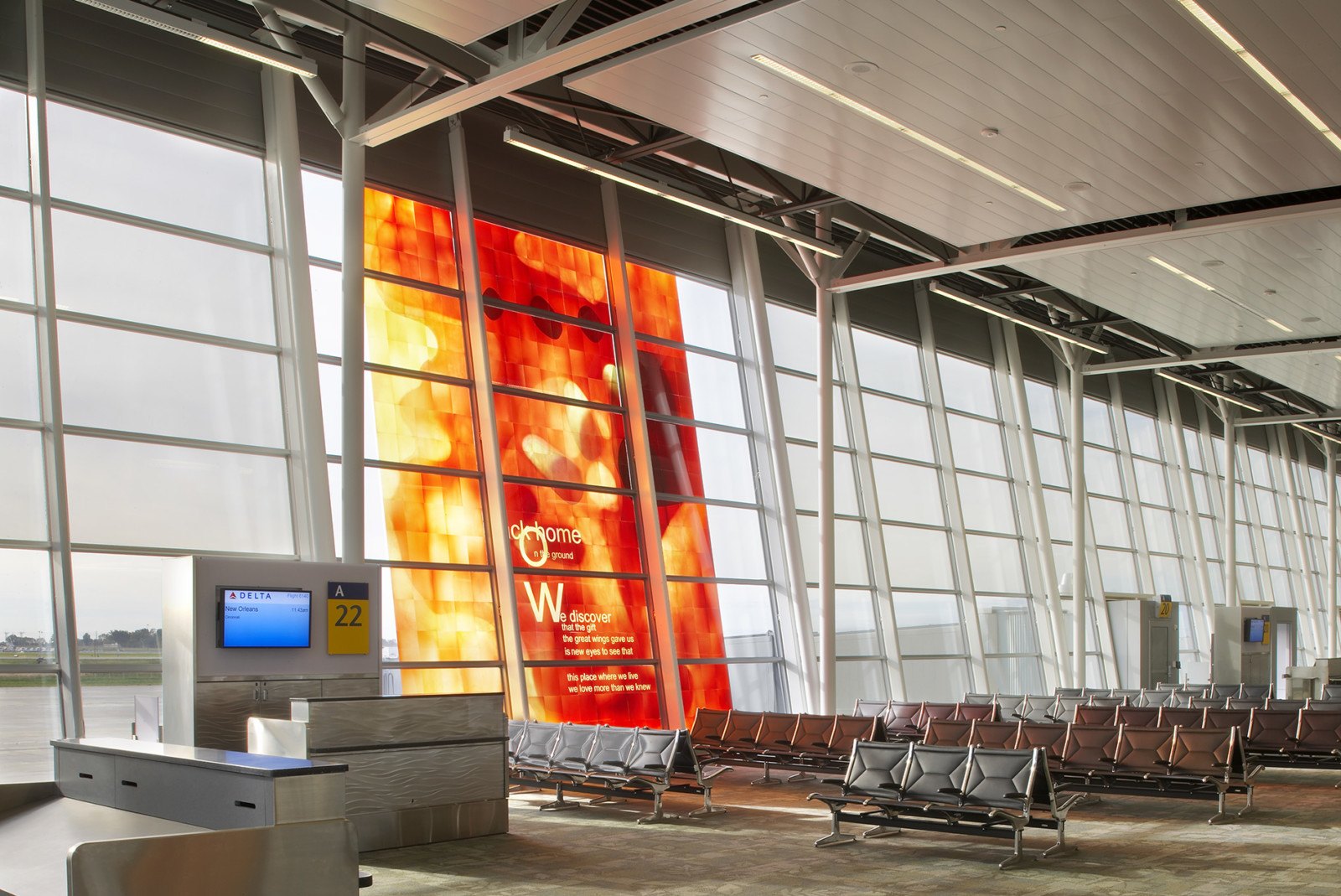
Beyond the civic hall, the building’s form guides the passenger journey. A sweeping roof traces the route from landside to airside, moving travelers through the terminal with minimal reliance on signage. Expansive glass walls in the ticketing hall, civic hall and concourses draw daylight deep into the building and reinforce intuitive wayfinding.
High-performance systems support comfort and operational efficiency. The roof’s overhang shades the curtain wall, reducing solar heat gain while maintaining open views and a strong connection to the surrounding city. The combination of skylight, roof form and curtain wall allows the departure level to operate primarily with daylight, lowering energy use. Radiant floors paired with stratified ventilation heat or cool occupied zones only, improving thermal comfort for travelers and staff while reducing unnecessary energy consumption.
Impact
The Colonel H. Weir Cook Terminal was the first post-9/11 greenfield airport terminal constructed in the United States. It establishes a clear and cohesive traveler experience, improving wayfinding, comfort and operational performance.
Indianapolis International Airport was the world’s first complete aviation campus to earn LEED certification.
The airport has received multiple honors for its excellent customer experience from Travel + Leisure and Condé Nast Traveler, as well as repeated recognition from Airports Council International as best airport in North America.
The airport generates an estimated $7.5 billion in annual economic impact for Indiana without relying on state or local tax support.
CERTIFICATION
LEED Certified
SIZE
1.25 million sq. ft. / 116,100 sq. m.
KEY FEATURES
40 gates
Central civic hall improves wayfinding and passenger orientation
Daylight-filled terminal reduces energy use and enhances traveler comfort
Roof geometry guides traveler flow from curb to gate
High-performance systems improve comfort while lowering operating costs
Integrated retail and amenities enhance dwell time and experience
Awards
Travel + Leisure World’s Best Awards – Top Domestic Airport, 2026
Airports Council International, Best Airport in North America, Easiest Airport Journey, 2025
Airports Council International, Best Airport in North America at Departures, 2025
Airports Council International, Best Airport in North America, 2024
Airports Council International, Best Airport in North America, 2023
Airports Council International, Best Airport in North America, 2022
Airports Council International, Best Airport in North America, 2021
Travel + Leisure World’s Best Awards – Top Domestic Airport, 2020
Airports Council International, Best Airport in North America, 2019
Airports Council International, Best Airport in North America, 2018
Airports Council International, Best Airport in North America, 2017
Condé Nast Traveler Readers’ Choice Award – Best U.S. Airport, 2017
Airports Council International, Best Airport in North America, 2016
Airports Council International, Director General’s Roll of Excellence, 2015
Airports Council International, Best Airport in North America, 2015
Airports Council International, Best Airport in North America, 2014
Airports Council International, Best Airport in North America, 2013
Airports Council International, Best Airport in North America, 2012