Indira Gandhi International Airport Air Traffic Control Tower
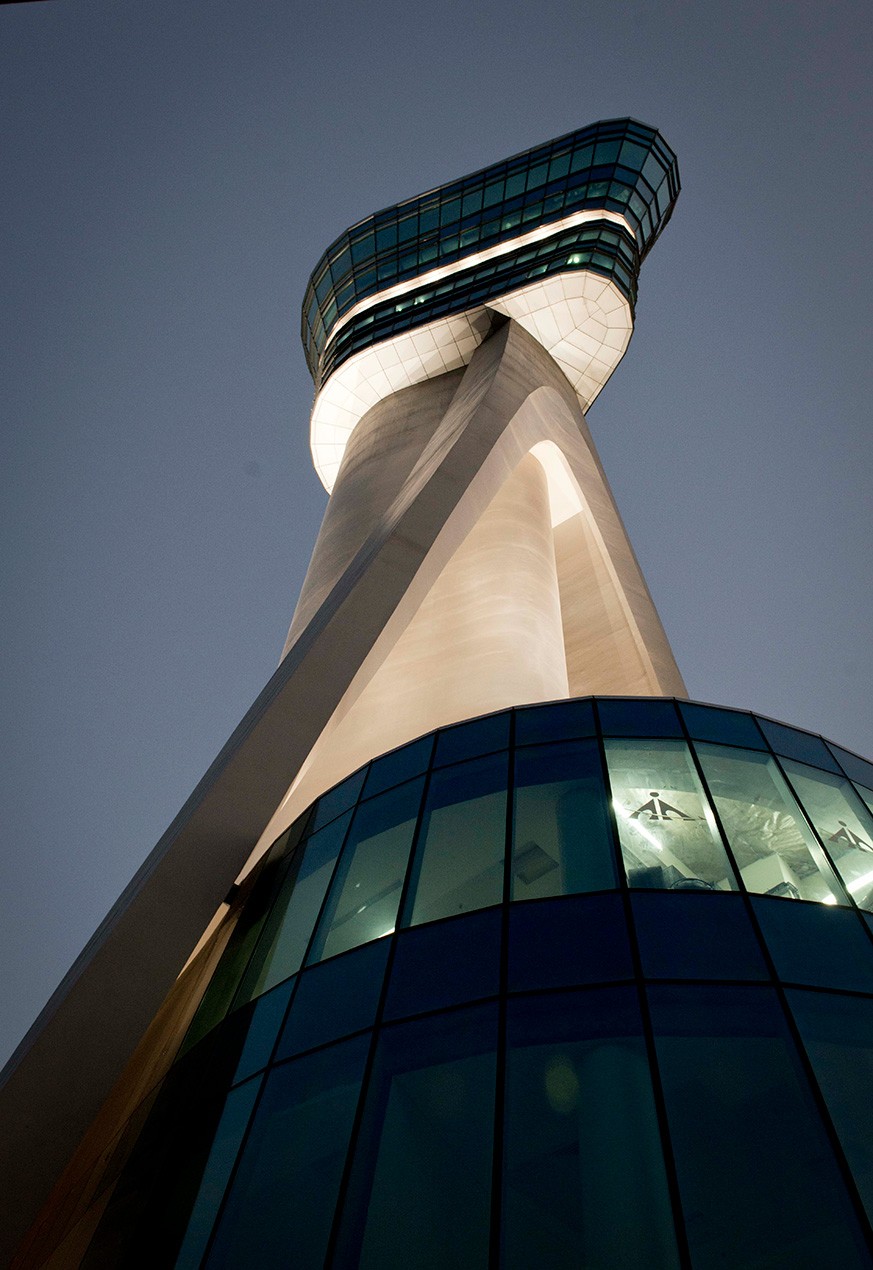
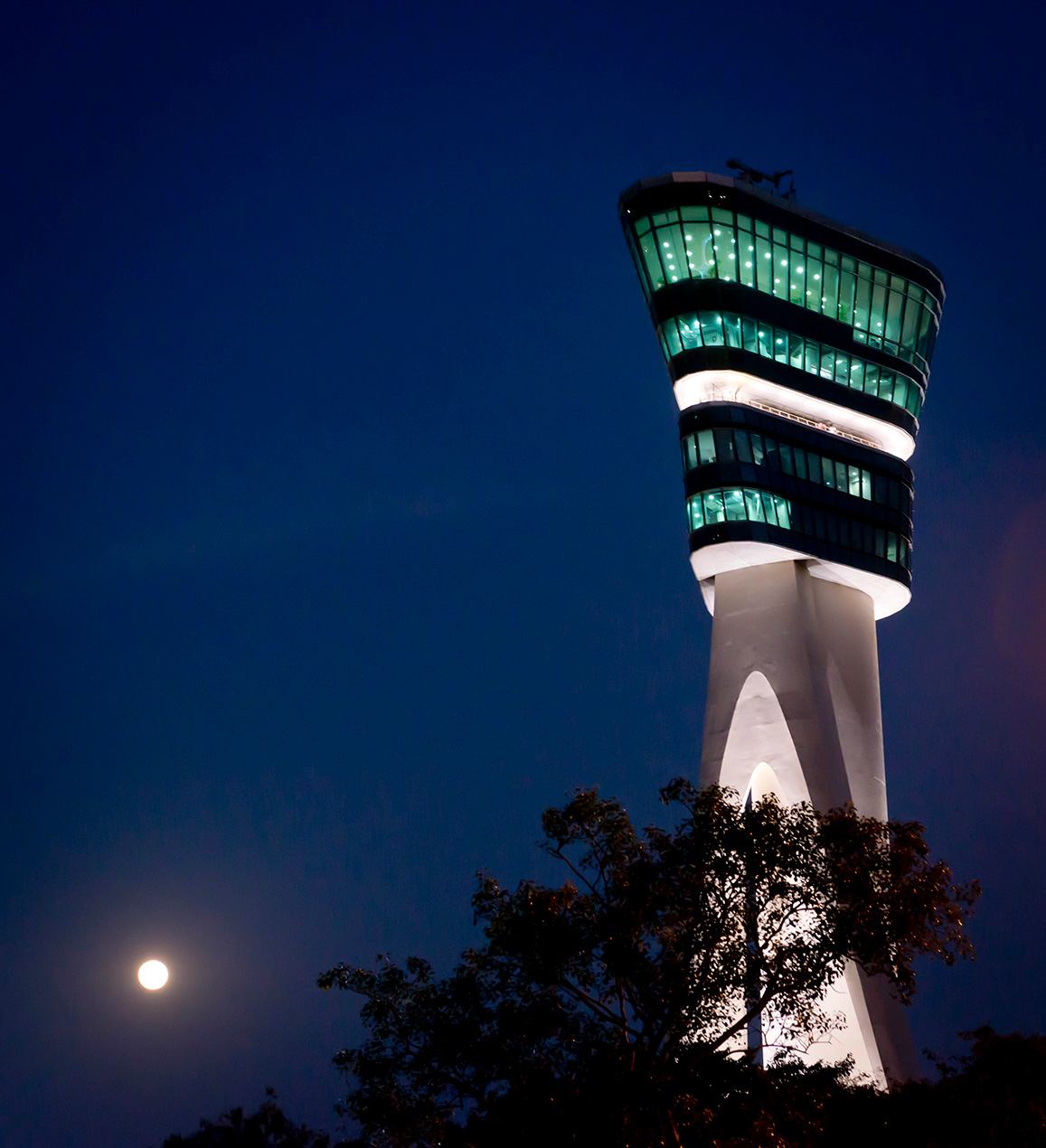
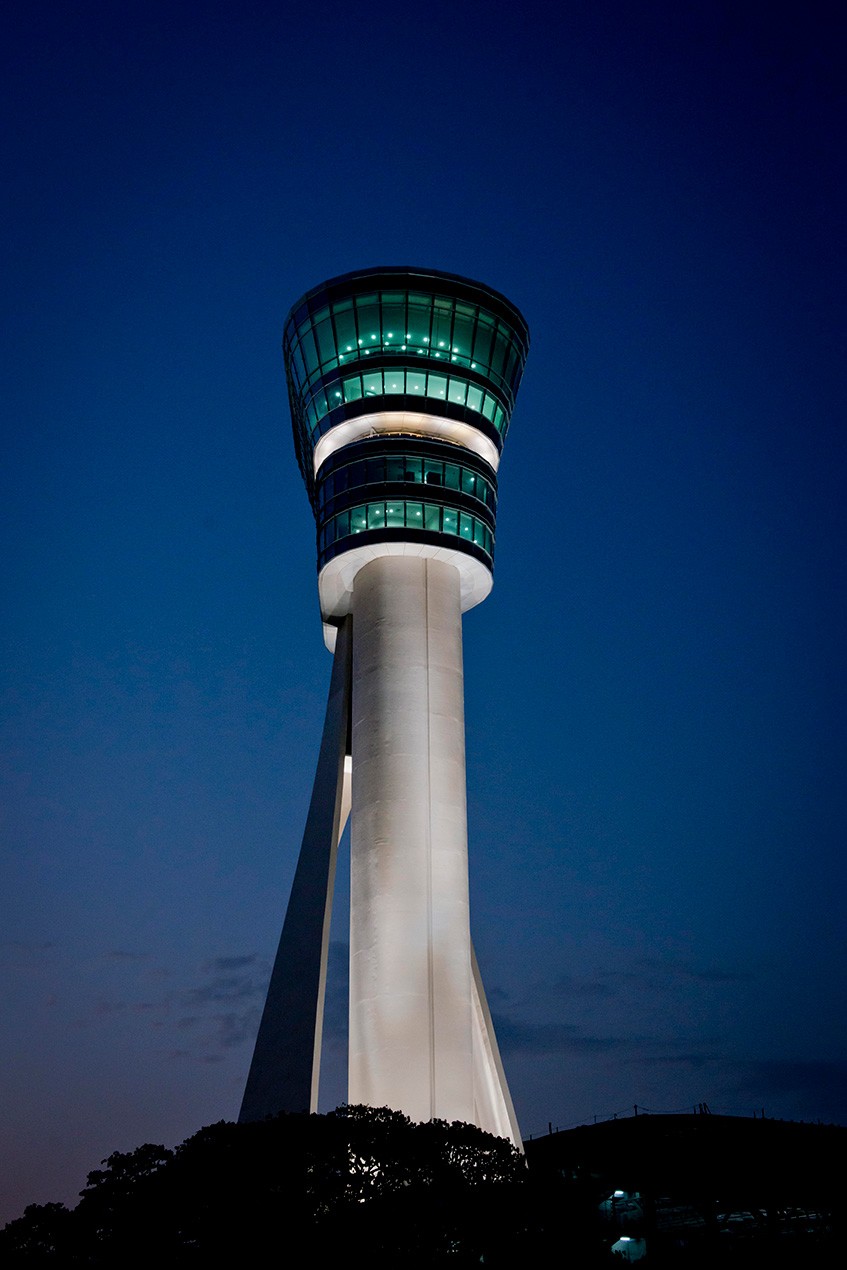
Mumbai’s international airport had grown into a sprawling complex, with terminals and operational facilities spread across a sizeable geographic area. The airport needed a landmark that would visually unify these fragmented parcels while providing controllers with unobstructed views of the entire operational area.
Design Solutions
HOK collaborated with Arup on the project, which began as an international design competition. The team used building information modeling to manage the technical complexities of the tower while creating a memorable architectural form.
Standing 275 feet (83.8 meters) high, the tower is one of the tallest structures in Mumbai and was the tallest air traffic control tower in India at the time of completion. A master planning study ensured the tower would fit harmoniously into the site and respond to surrounding buildings.
Positioned on the landside rather than within the operational area, the tower anchors the arrival sequence for visitors approaching Terminal 1 and serves as a visual landmark connecting facilities from Terminal 1 on the west to Terminal 2 on the east.
The sleek, tapered form evokes images of flight and the adventure of travel. Sloping skirts on either side of the main column enhance the aerodynamic appearance while disrupting airflow and reducing wind-induced vibrations. The cab’s glazing angles downward, away from direct sunlight, to reduce glare and ensure optimal views for controllers.
Inside, the semicircular cab layout accommodates 36 consoles arranged to provide nearly 360-degree coverage of the airfield. Controllers have unobstructed sightlines extending five miles beyond the thresholds of both runways. A custom acoustic curtain wall system minimizes transmission of external noise, and electronic flight strips reduce controller workload while enhancing safety and capacity.
Impact
The tower was designed to handle current and future air traffic movements at one of India’s busiest airports.
SIZE
43,050 sq. ft. / 4,000 sq. m.
SERVICES
Design Consultancy
KEY FEATURES
Tallest ATC tower in India at time of completion
36-console cab with nearly 360-degree airfield coverage
Five-mile visibility beyond runway thresholds
Aerodynamic skirts reduce wind-induced vibrations
Acoustic curtain wall system