Houston Metro Light Rail
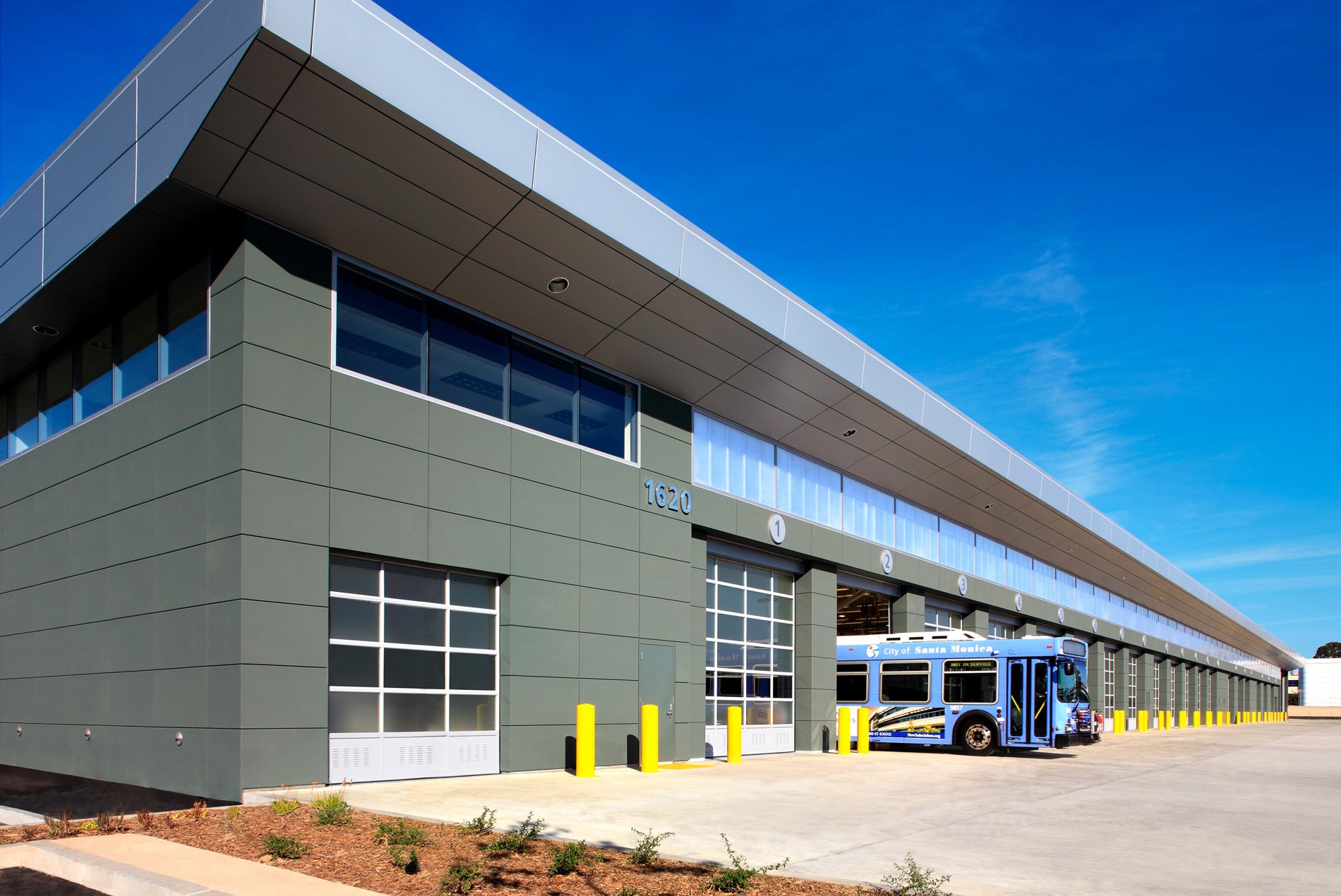
The Big Blue Bus system provides more than 10 million transit rides each year across Santa Monica and the greater Los Angeles area, placing constant pressure on operations to keep buses moving reliably. HOK designed the transit agency’s maintenance facility and service yard to expand fleet capacity, streamline maintenance and support faster service turnarounds while remaining a good neighbor in a dense urban setting.
Design Solutions
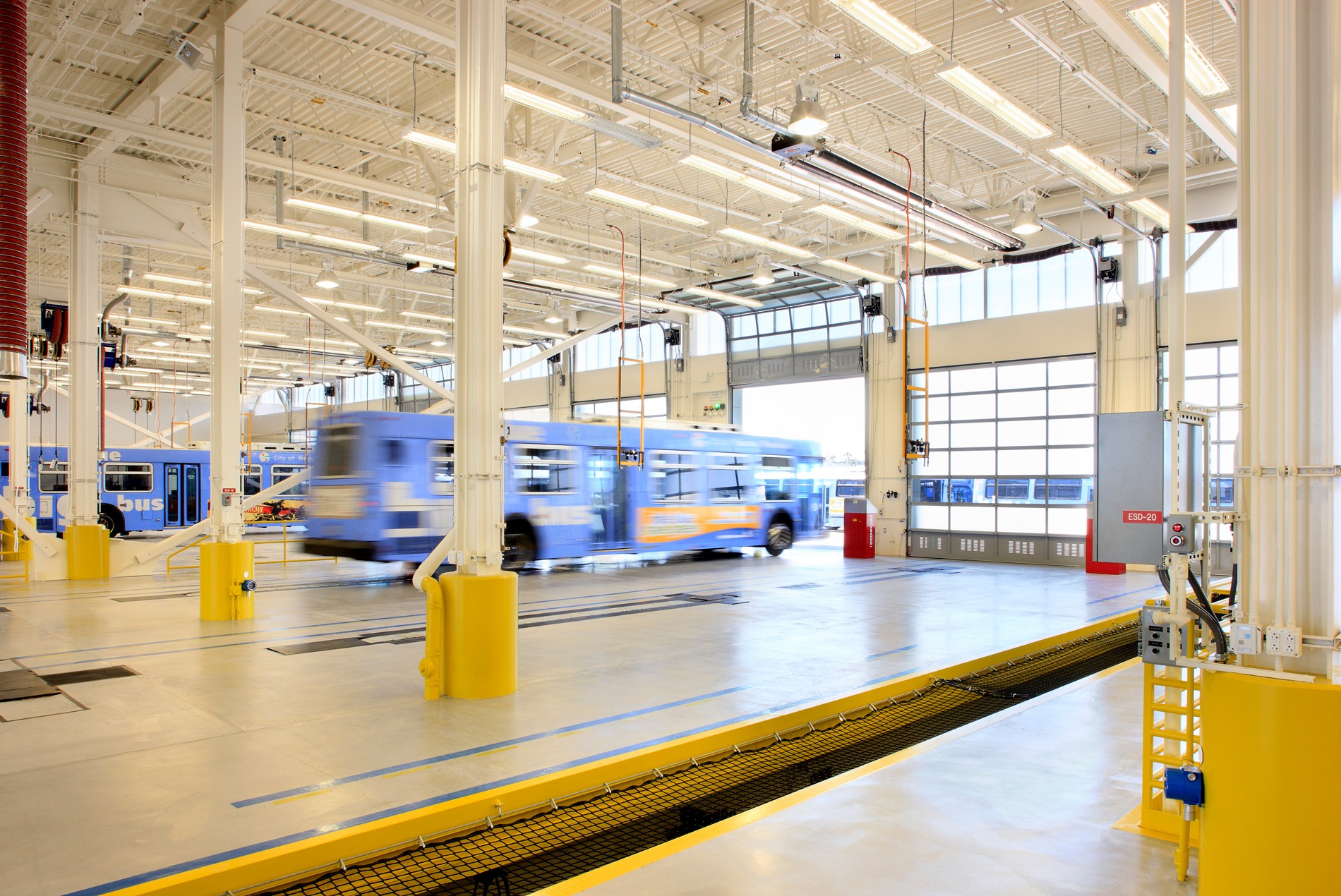
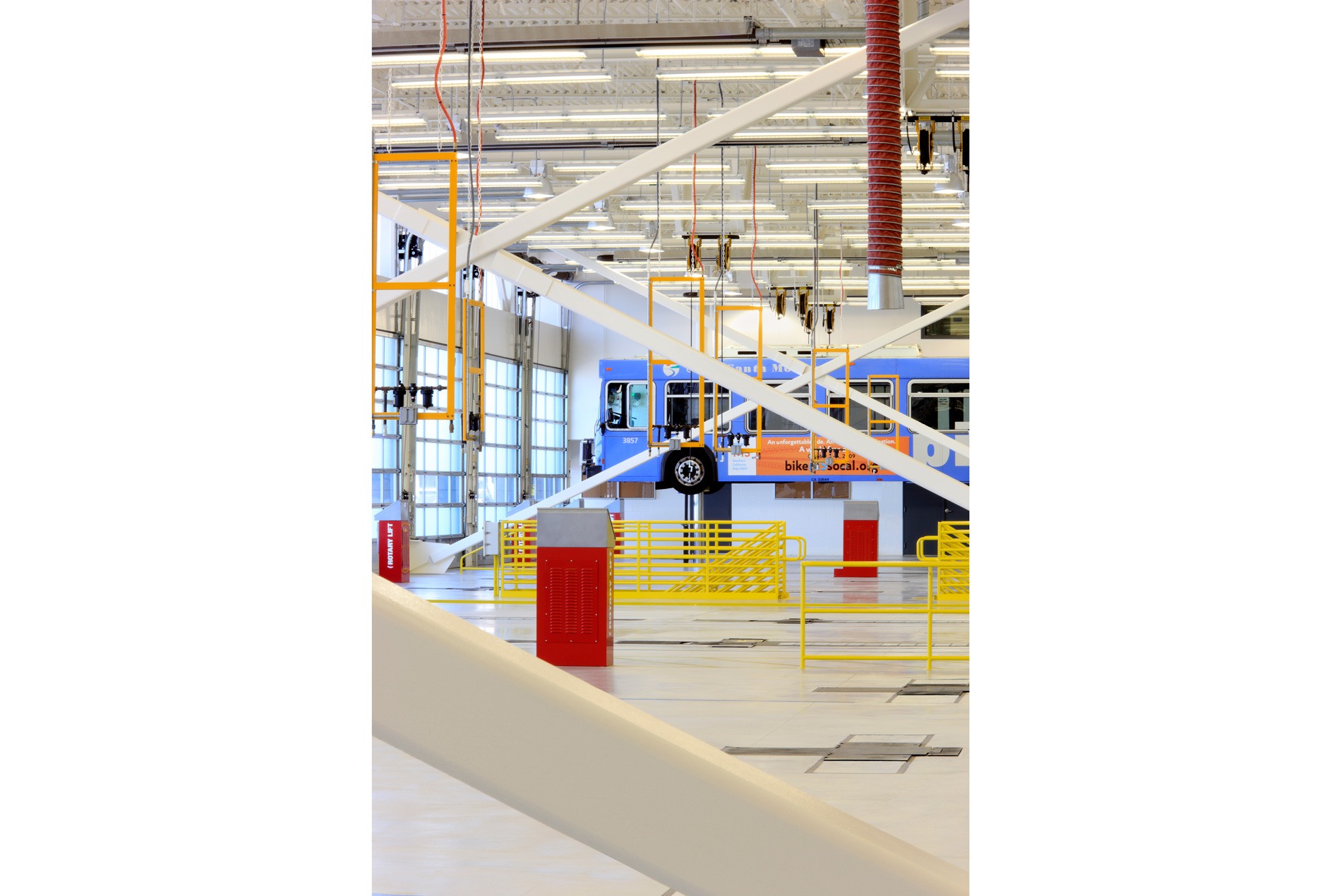
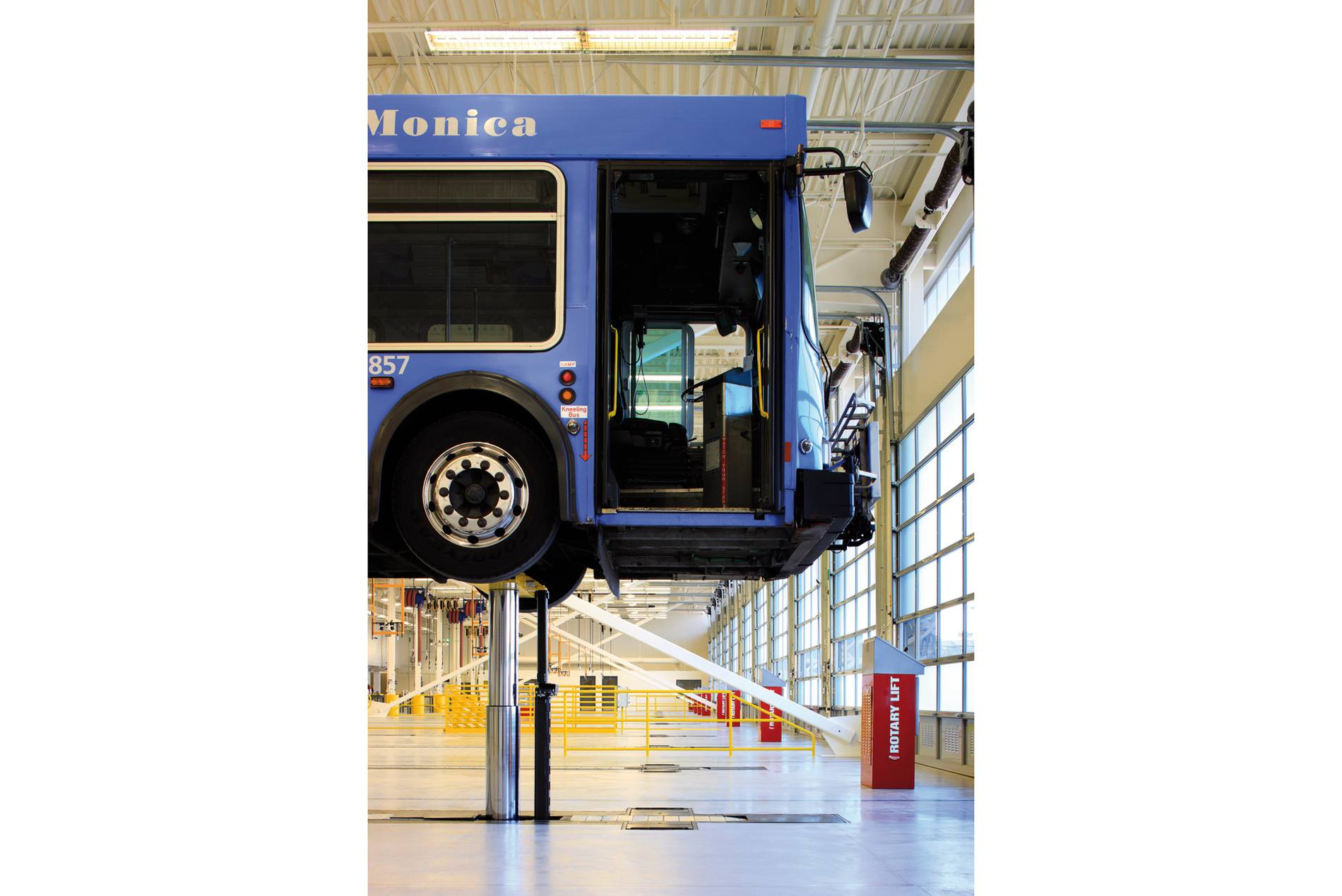
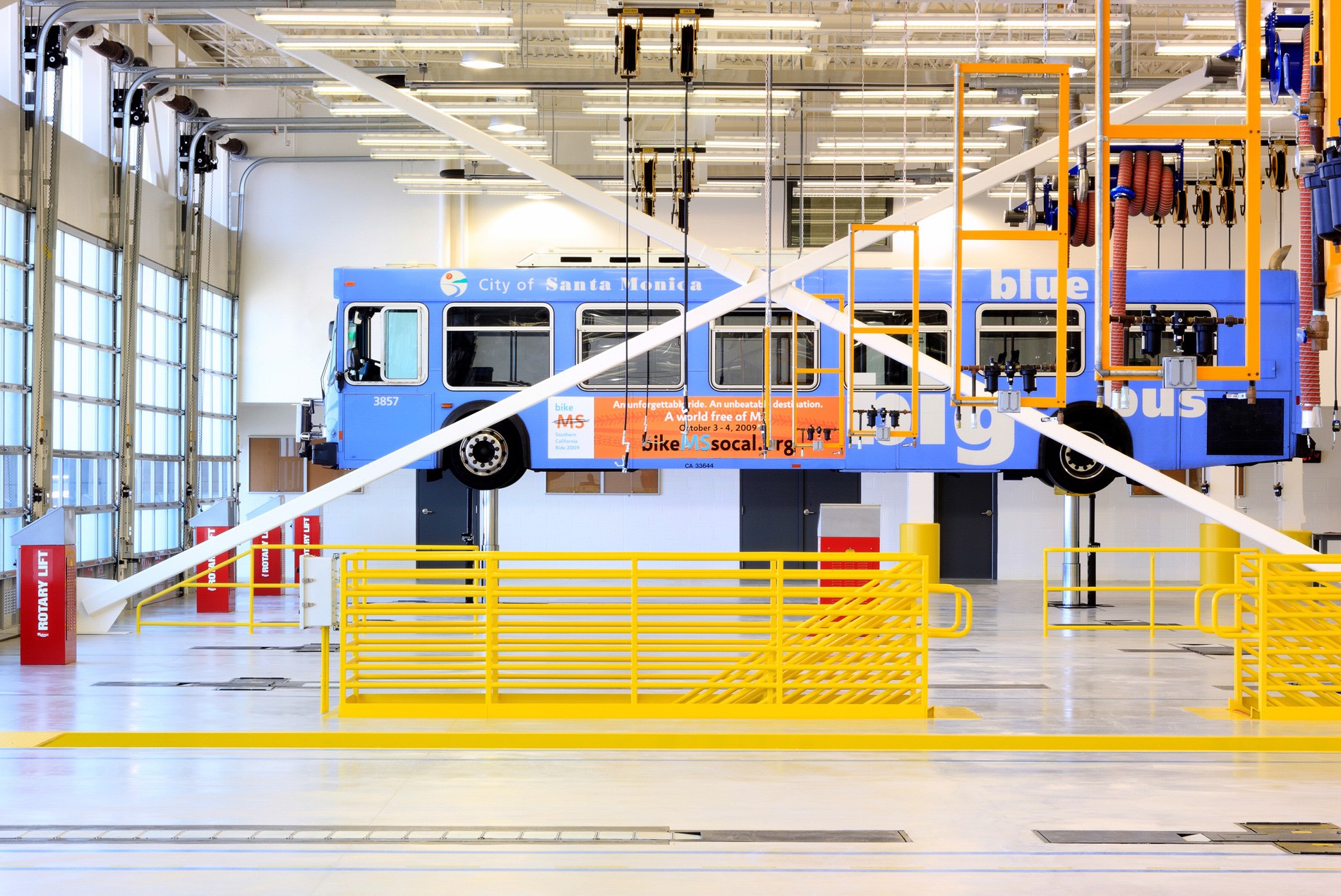
The downtown complex accommodates nearly 200 conventional and articulated buses. Service bays and fueling areas are positioned to minimize travel distances within the yard, helping maintenance teams return buses to service more quickly and keep routes running on schedule. Space is reserved for a future administration building, allowing the facility to adapt as operational needs evolve.
Phasing was central to the design approach, enabling construction to occur without interrupting daily transit operations. A multiphase master plan allowed the agency to maintain continuous service, ensuring riders experienced no disruption while the facility was upgraded around them.
The architecture reinforces the civic role of public transit in Santa Monica. A prominent entrance canopy with Big Blue Bus signage welcomes drivers and staff on site. The facility’s scale and massing are calibrated to fit within the surrounding neighborhood, balancing operational demands with community context.
Sustainable systems support long-term performance. Recycled building materials, energy-efficient plumbing and lighting fixtures, on-site solar panels and EV charging infrastructure reduce environmental impact. A stormwater management system and reclaimed water for irrigation decrease potable water demand. Inside, abundant windows and glass-front garage doors bring daylight deep into the maintenance areas, reducing energy needs.
Impact
The facility increases operational capacity for a transit system that serves more than 10 million transit rides annually while improving efficiency, flexibility and working conditions for staff. Its phased delivery maintained uninterrupted service throughout construction, supporting reliable transit for the community. The project aligns with the agency’s long-term goal of transitioning to a fully electric fleet by 2031, supported by on-site charging infrastructure and systems designed for future adaptation.
The project advances equity and community support beyond transit operations. In coordination with local stakeholders, the team relocated the Ocean Park Community Center to a new adjacent facility, ensuring continued services for underserved populations while allowing both projects to move forward.
SIZE
65,300 sq. ft. / 6,065 sq. m.
CAPACITY
Nearly 200 buses accommodated
KEY FEATURES
Phased construction keeps transit service running during facility expansion
Optimized service bays reduce maintenance time and fleet downtime
Efficient yard layout improves bus circulation and operational flow
Flexible master plan supports future fleet growth and electrification
Recycled materials, efficient plumbing systems, on-site EV charging and solar panels cut operating costs and emissions
Services