UW-Madison Nicholas Recreation Center
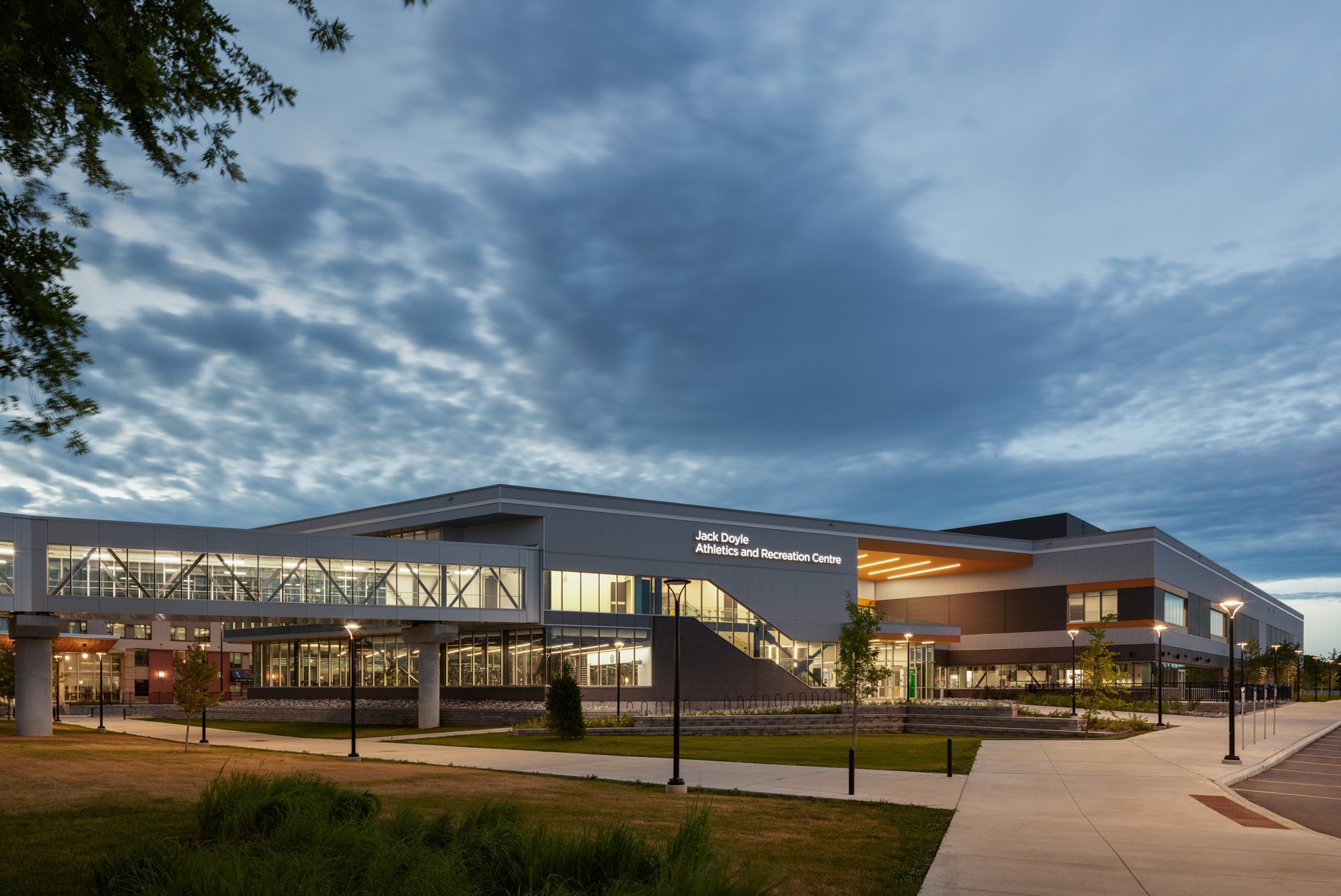
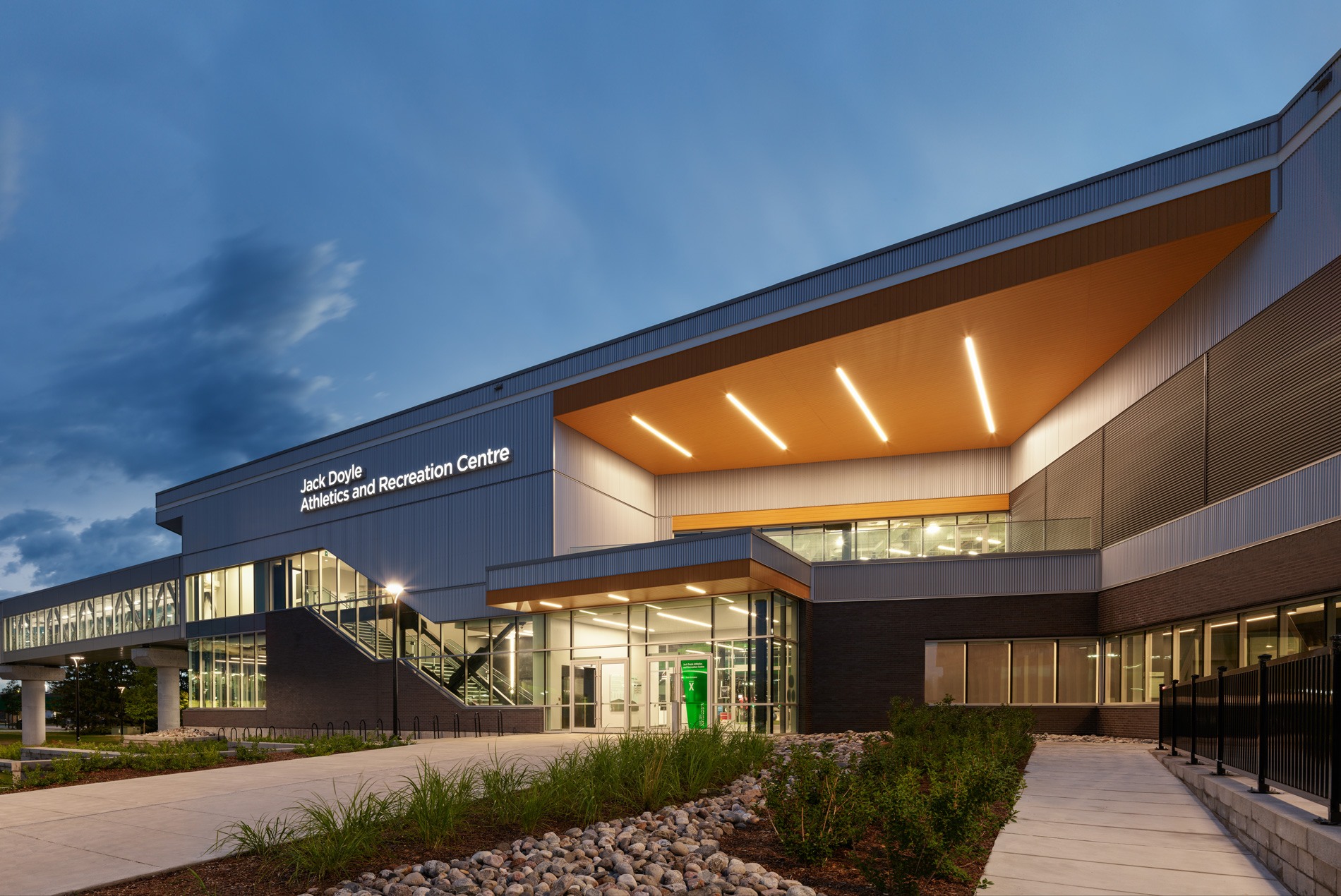
Algonquin College of Applied Arts and Technology wanted a place on its Ottawa campus where students could feel at home. The building had to bring students together, support well-being and welcome users of all fitness levels and backgrounds.
The Jack Doyle Athletics and Recreation Centre, planned over a decade by the College’s Students’ Association, brings varsity athletics, recreation and student social life together near the existing Student Commons. The building extends the College’s effort to consolidate non-academic student life in one area of campus.
Design Solutions
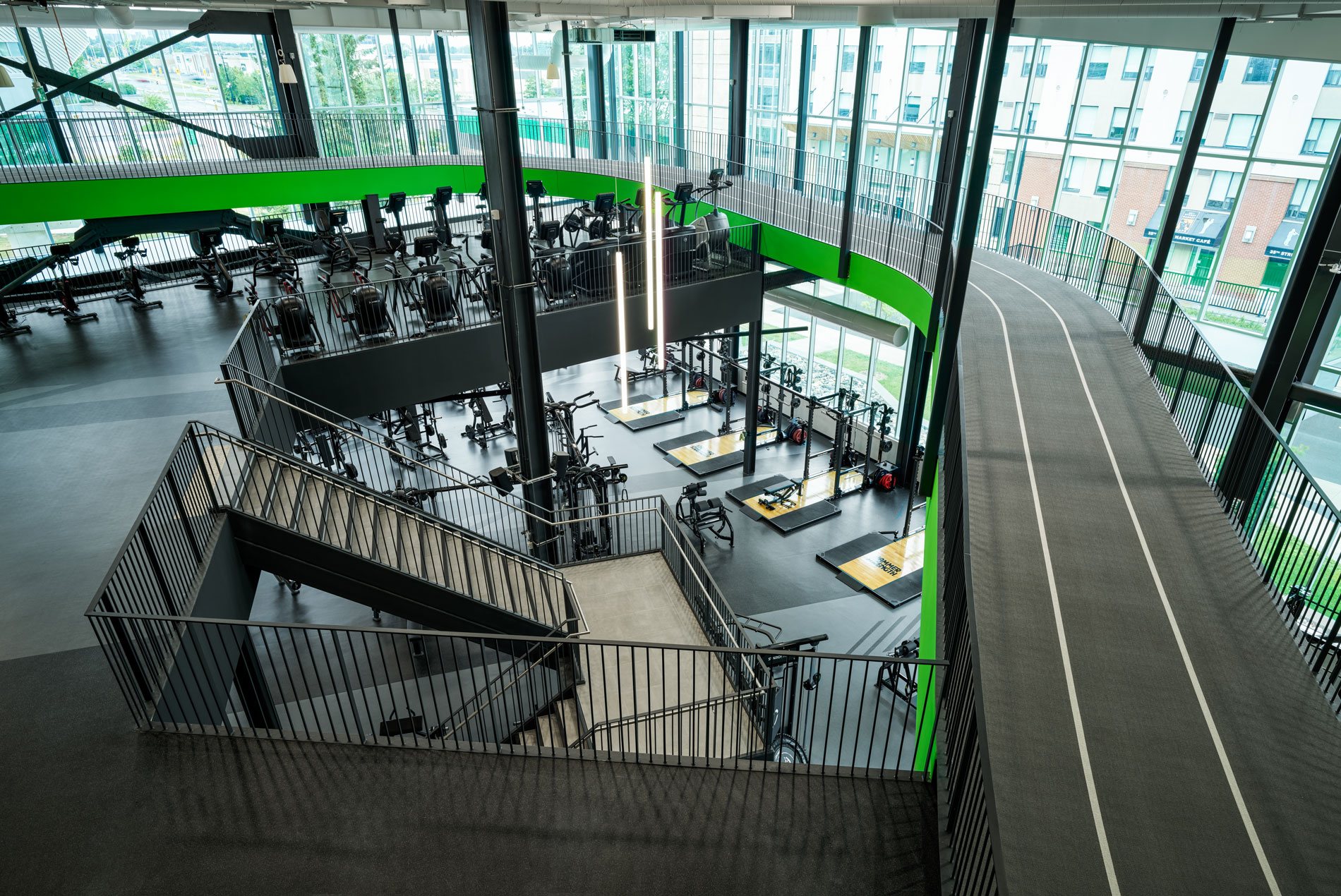
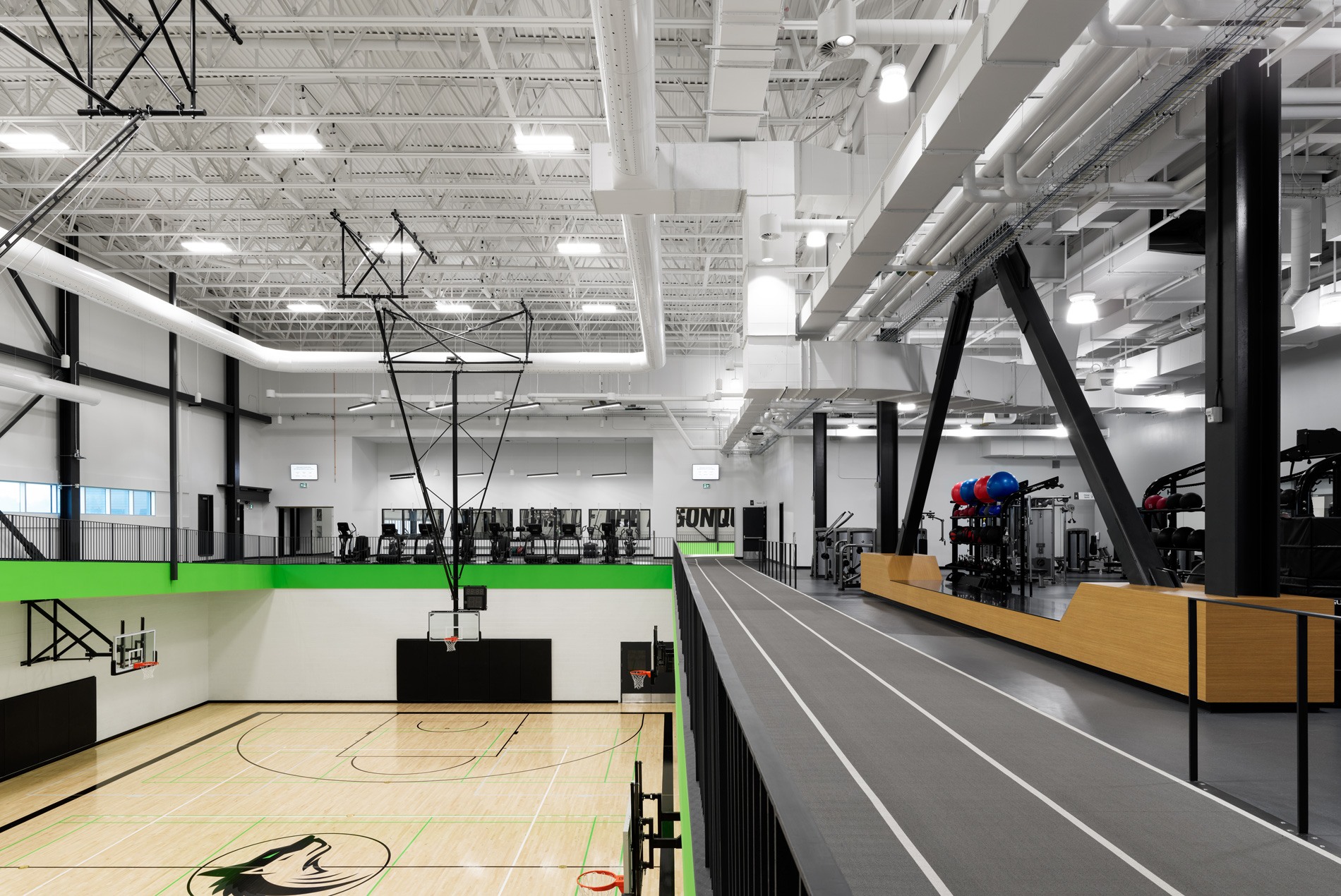
HOK won a design competition with a scheme organized around an elevated figure-eight running track. The plan serves two audiences at once: varsity athletes and the wider student population.
HOK based the design on four principles: sparking participation, motivating students to take ownership of their health, anticipating future growth and innovation, and using design to drive engagement. Those ideas shaped everything from the program mix to the building’s look and feel.
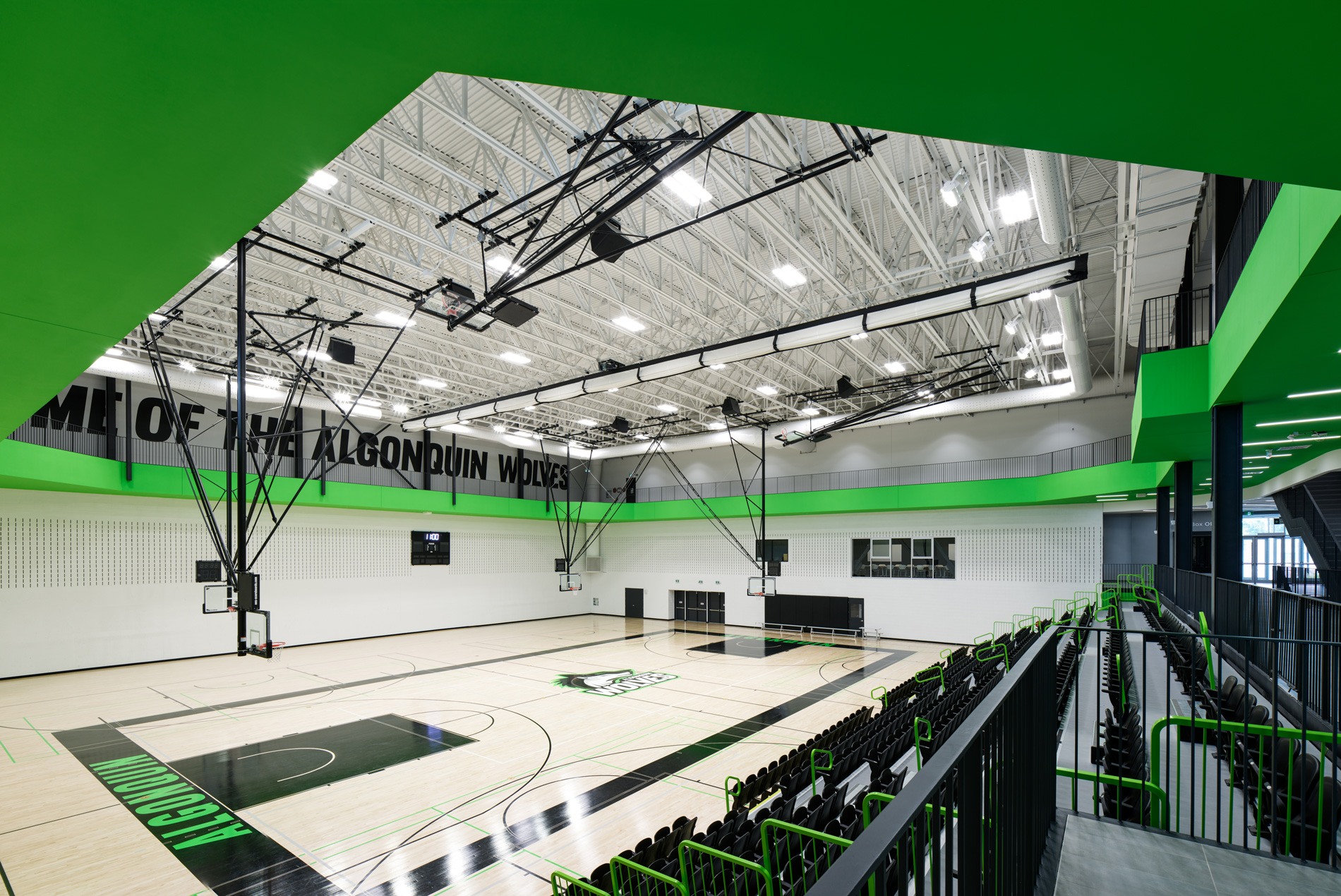
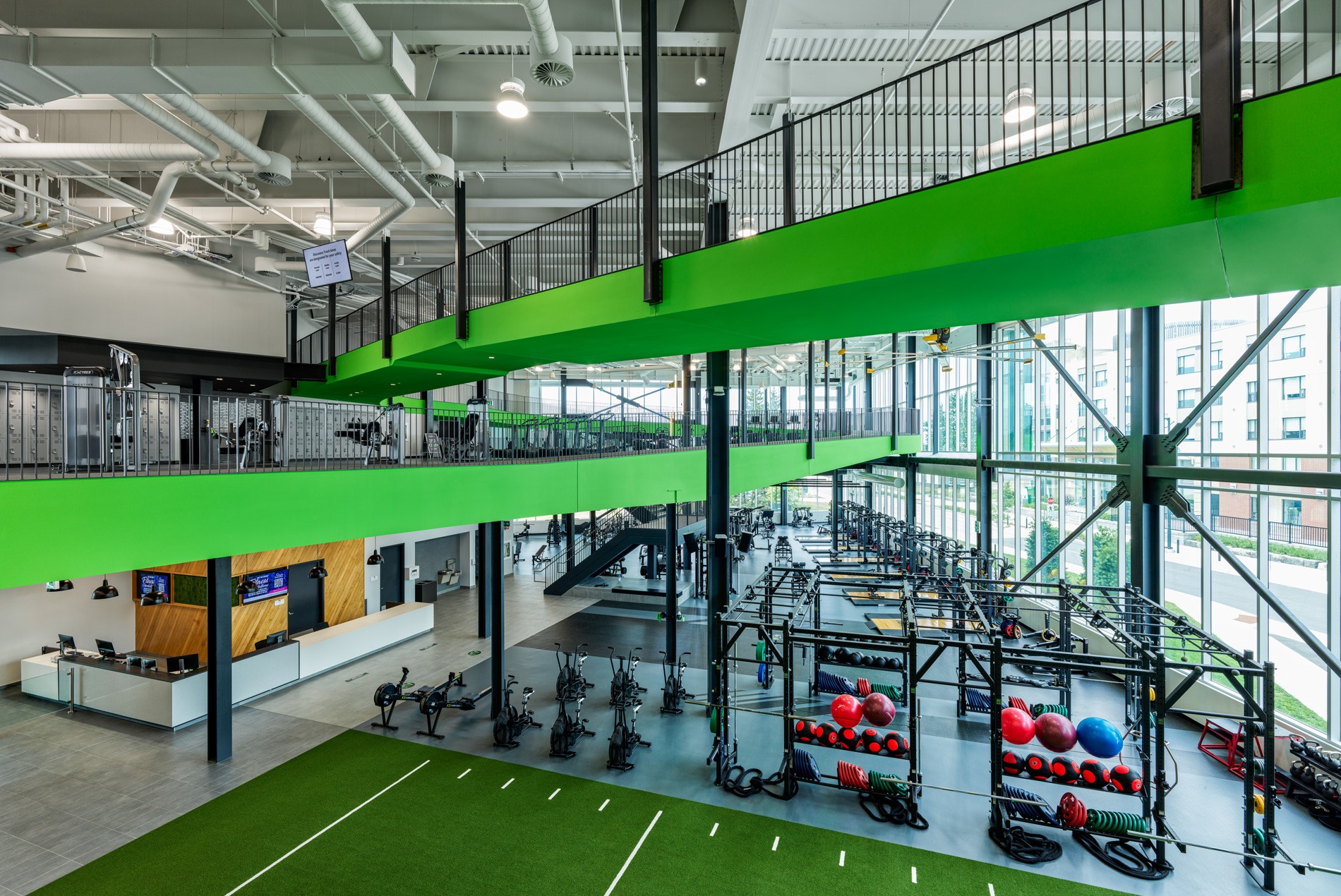
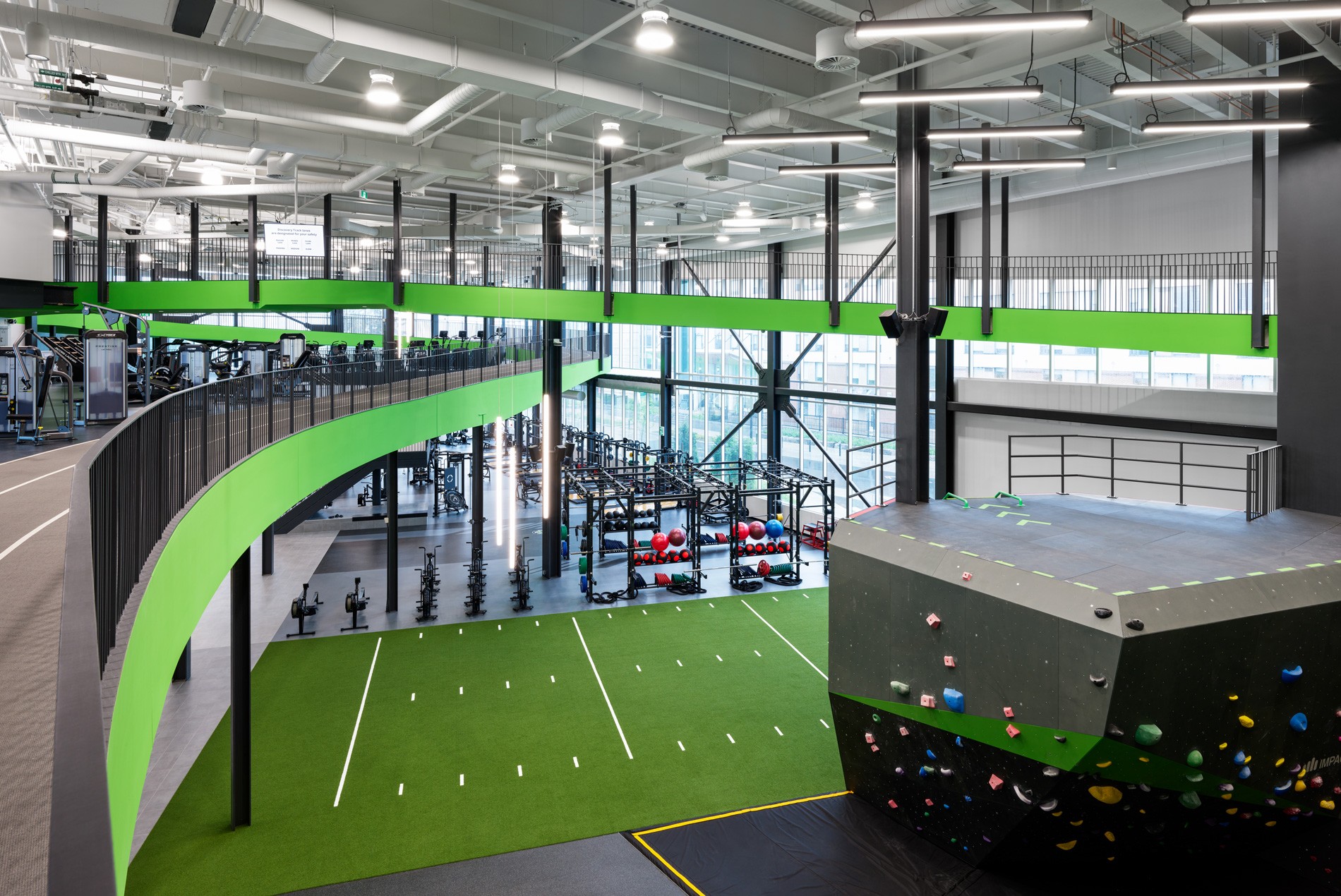
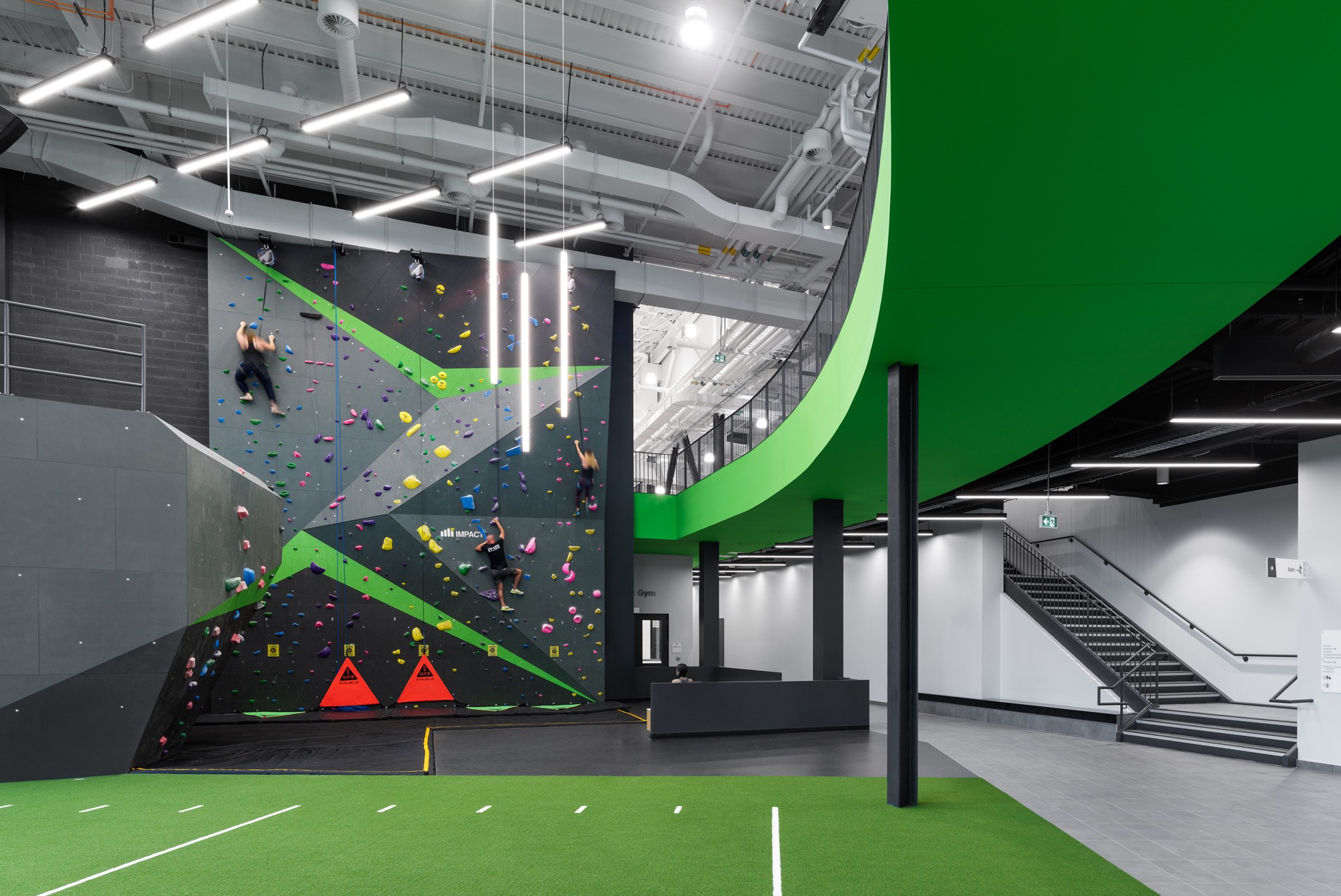
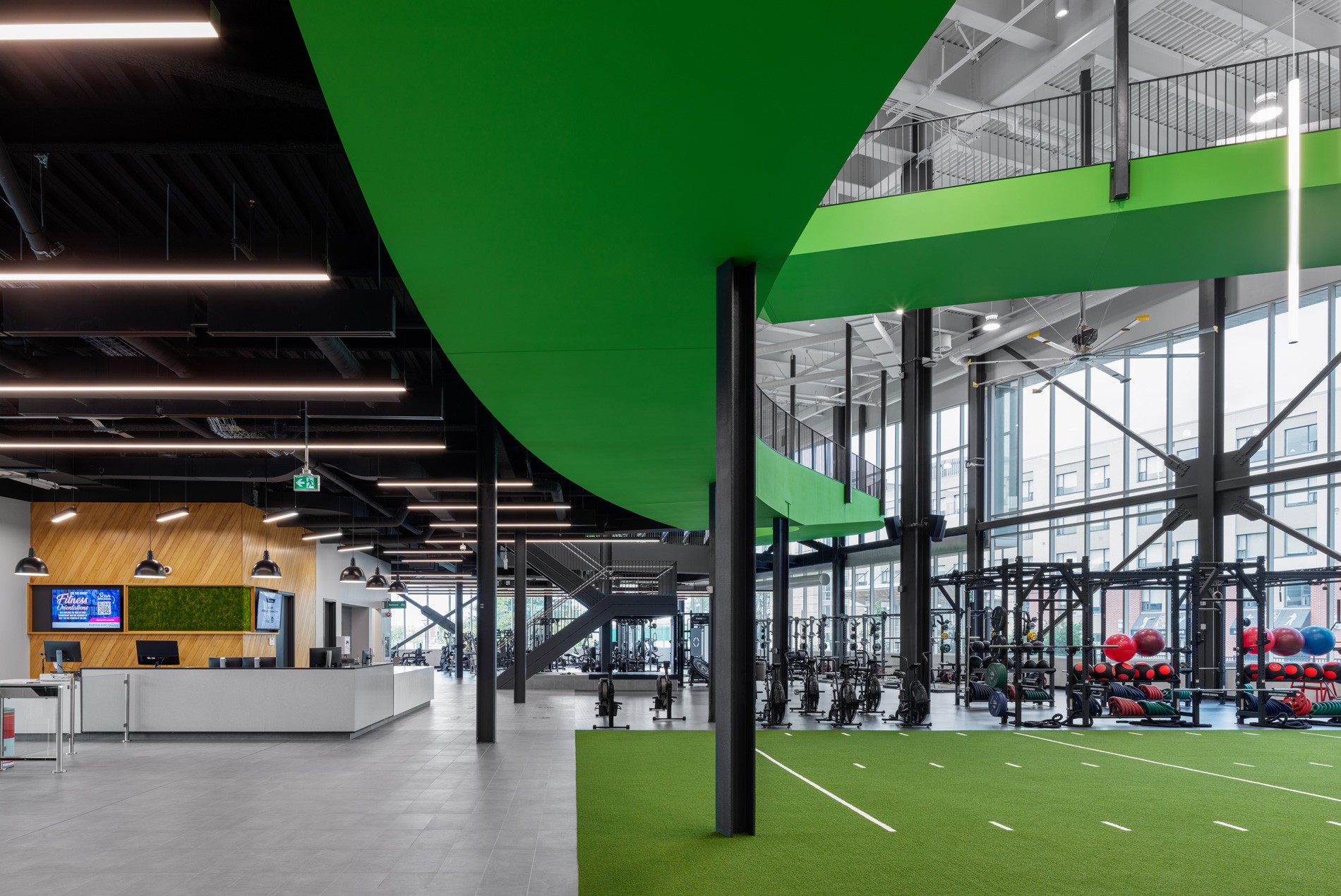
A double gymnasium hosts varsity basketball and volleyball competitions. A separate recreation gym accommodates students playing intramural sports or just dropping in. A 34-foot climbing wall and 15-foot bouldering wall sit near bowling lanes, a golf simulator, billiards, a gaming lounge and multipurpose rooms for group classes. Workout spaces are organized into smaller “fitness neighborhoods,” including a 10,000-sq.-ft. free-weight area and a turf training zone. A 346-meter figure-eight track links all the program elements, winding through the building for walking, running and wheelchair use.
Massage and therapy rooms, training and coaching facilities, locker rooms for home and visiting teams, and gender-inclusive changing areas support both varsity athletes and general students.
The project is LEED Silver certified and earned Rick Hansen Foundation Accessibility Gold Certification, underscoring the College’s commitment to human-centered design.
Impact
The center gives all students a reason to visit. By combining competitive athletics with recreational programming, the building helps reduce the barriers that can keep some students away from traditional athletic facilities.
The second-level track lets users look down at the full program below, turning circulation into part of the experience and drawing people toward new activities. The smaller, more intimate fitness neighborhoods make the building’s scale feel more approachable.
The Wolves Den, a restaurant and games room, gives students a reason to stay after their workout and hosts informal interactions that build school spirit. All-gender washrooms, three locker room options and individual changing spaces make it clear the building is for everyone.
Students planned, funded and own the center through their Association—an investment in their well-being and in campus life.
SIZE
125,000 sq. ft. / 11,615 sq. m.
CERTIFICATIONS
LEED Silver; Rick Hansen Foundation Accessibility Gold
KEY FEATURES
Gymnasiums: 1 double competition, 1 recreation
346-meter figure-eight track with full accessibility
Fitness neighborhoods
34-foot climbing wall
Wolves Den restaurant and games room
Gender-inclusive facilities
Services