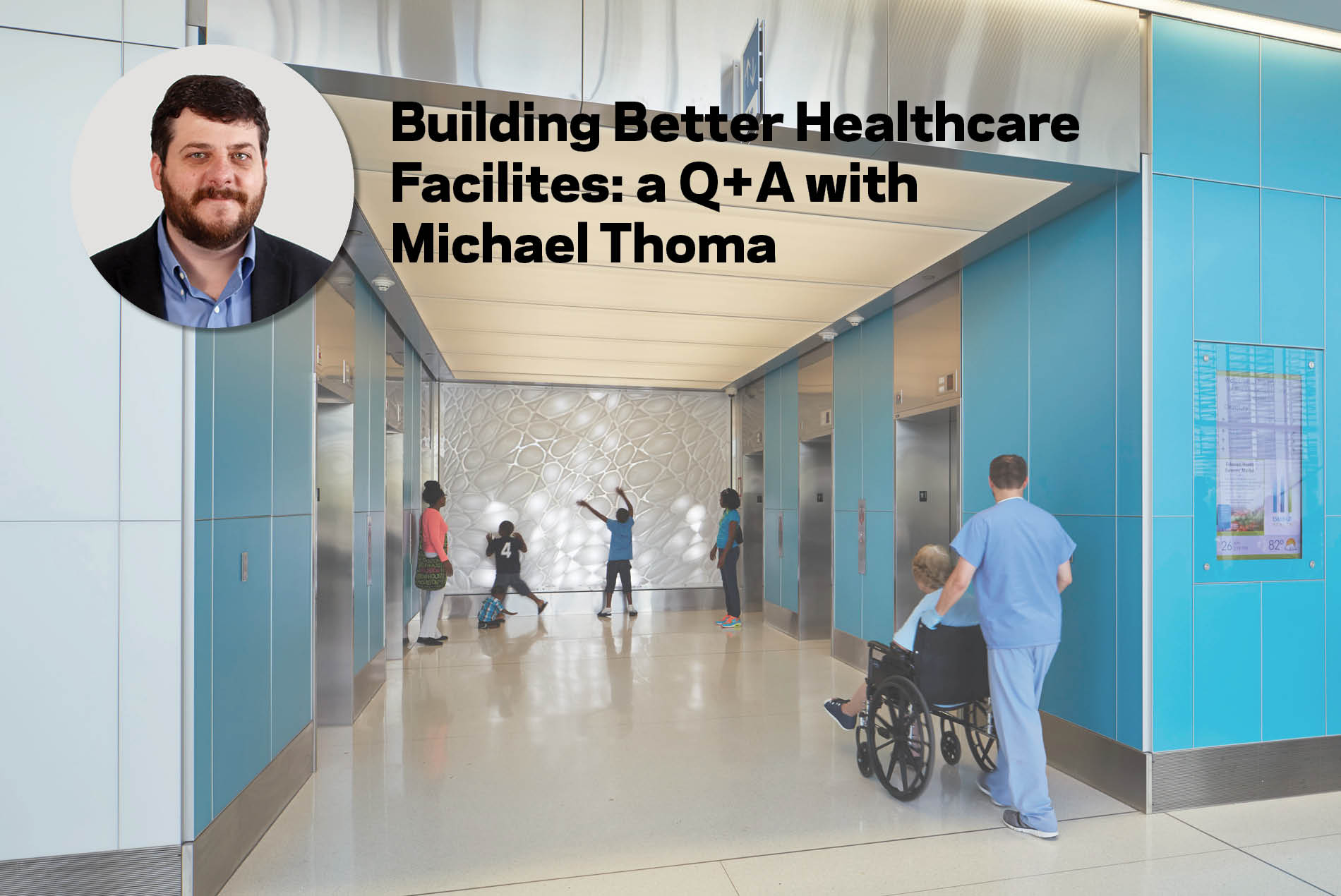
Healthcare Practice Leader Michael Thoma shares how collaboration drives success for large-scale healthcare projects.
Michael Thoma is no stranger to complex projects. Recently promoted to Healthcare practice leader in HOK’s St. Louis studio, he builds highly collaborative project teams to deliver medical projects that meet client needs. In this Q+A, Thoma discusses current projects, his passion for project delivery and his commitment to creating environments that support patients, families and caregivers.
Can you describe the projects you’re leading with the Saint Francis Health System in Oklahoma?
We’re working across multiple Saint Francis campuses. At Saint Francis South Hospital in Tulsa, we’re designing a bed tower, expanding their surgical platform, updating several existing departments and built a new central utility plant, all while keeping the hospital fully operational.
We are also renovating and expanding the Laureate Psychiatric Clinic and Hospital in Tulsa, which includes a nationally recognized program for residential treatment of eating disorders. HOK was tasked with designing new spaces for treatment, residences and food service. We are also working at their 1,112-bed Saint Francis Hospital where we are renovating both the central sterile processing and the imaging departments.
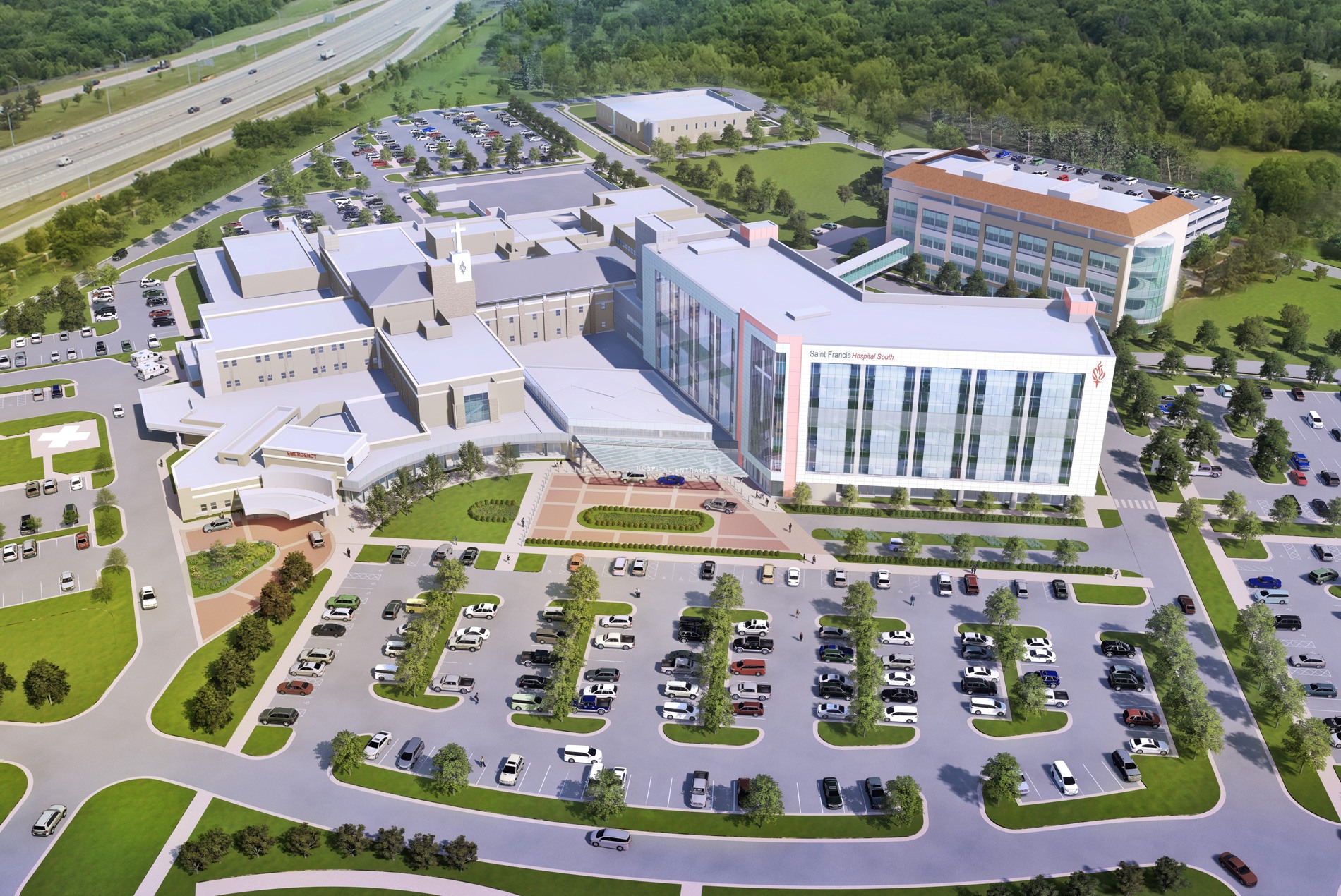
Rendering of the new Saint Francis Hospital South Tower
How will these new and renovated spaces improve the experience for patients, families and caregivers?
We’re designing each project to optimize efficiency and enhance care delivery. We work closely with the hospital’s team to understand their goals and plan for both current and future needs. That collaboration led to patient-focused design decisions such as larger rooms, dedicated family zones and thoughtful finishes, all aimed at creating a more welcoming, healing environment.
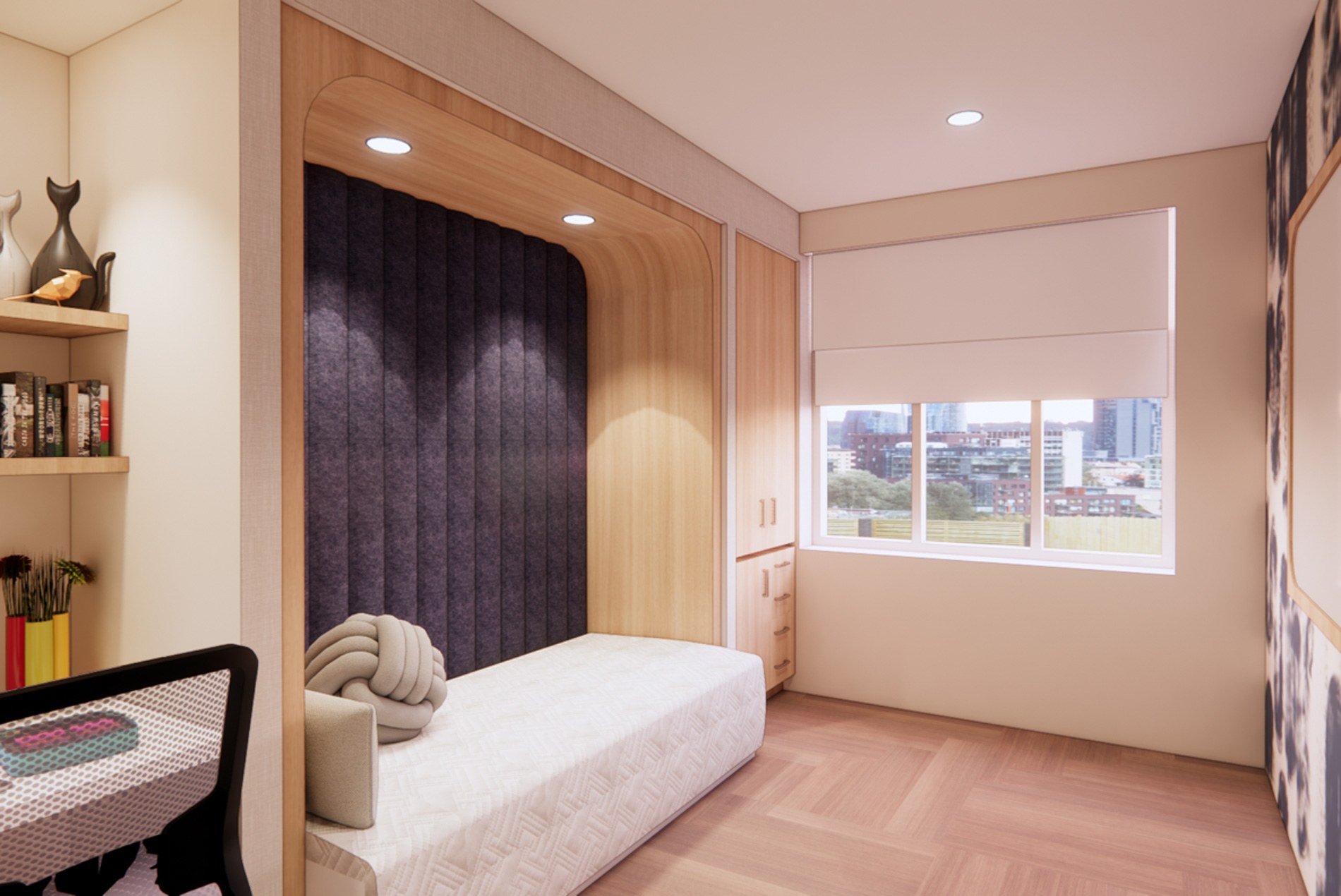
Patient room at the Laureate Psychiatric Clinic and Hospital
How do you collaborate with clients to identify design solutions that optimize their operations and long-term performance?
Collaboration is key to our approach at HOK. In addition to architects and planners, we also have a healthcare consulting group that focuses on clinical operations, data analysis and finance. We can assemble a team to support our owners in developing their long-term goals and focus on their entire operation. We can bring the right resources to the table to develop ideas that are then made into design solutions. By working side by side with our owners, we can align design strategies with their long-term vision for care delivery.
How do you keep complex projects like these on track, balancing schedule, budget, phasing and client expectations?
At Saint Francis, we’ve started each project with a very detailed ‘concept design’ phase. We work with an intentionally small group of stakeholders to test different layouts and strategies, which helps us understand scope, cost and phasing from the start. We then get early involvement from a construction manager to help refine those strategies by estimating costs early. This allows us to keep projects aligned with budget expectations and sets the project up for success.
Communication is just as important. Managing the design schedule and holding open conversations with hospital leadership ensures everyone understands when their input is needed and helps mitigate risk.
What challenges come with expanding or renovating hospitals that must stay operational, and what lessons can other health systems take from your experience?
Keeping hospitals operational during construction is a challenge, especially minimizing disruptions and keeping dozens of departments available throughout the process.
We work closely with clients to pre-plan around critical operations and minimize disruptions. One key lesson for planning a large renovation or expansion is to review the plans and study the things that may have been viewed as the “unmovable objects” like adjacent buildings or parking constraints that may have limited past projects. Taking a fresh look at these conditions can uncover new opportunities and lead to smarter solutions.
Looking ahead, what do you see as the biggest opportunities for healthcare architecture and design to support evolving models of care?
Flexibility is key. Healthcare organizations must adapt to rapid clinical, operational and technological shifts. The pandemic made it clear that adaptability isn’t optional—it’s essential. Designing spaces that can be repurposed quickly or scaled as needs change will be critical to supporting the next generation of care models.
After 25 years in healthcare architecture, what continues to inspire you about this work?
The pace of innovation in healthcare design is remarkable. Every project builds on what we’ve learned, and each patient space improves. I’m inspired by how far we’ve come in technology, amenities and the quality of environments we create for patients, families and staff.