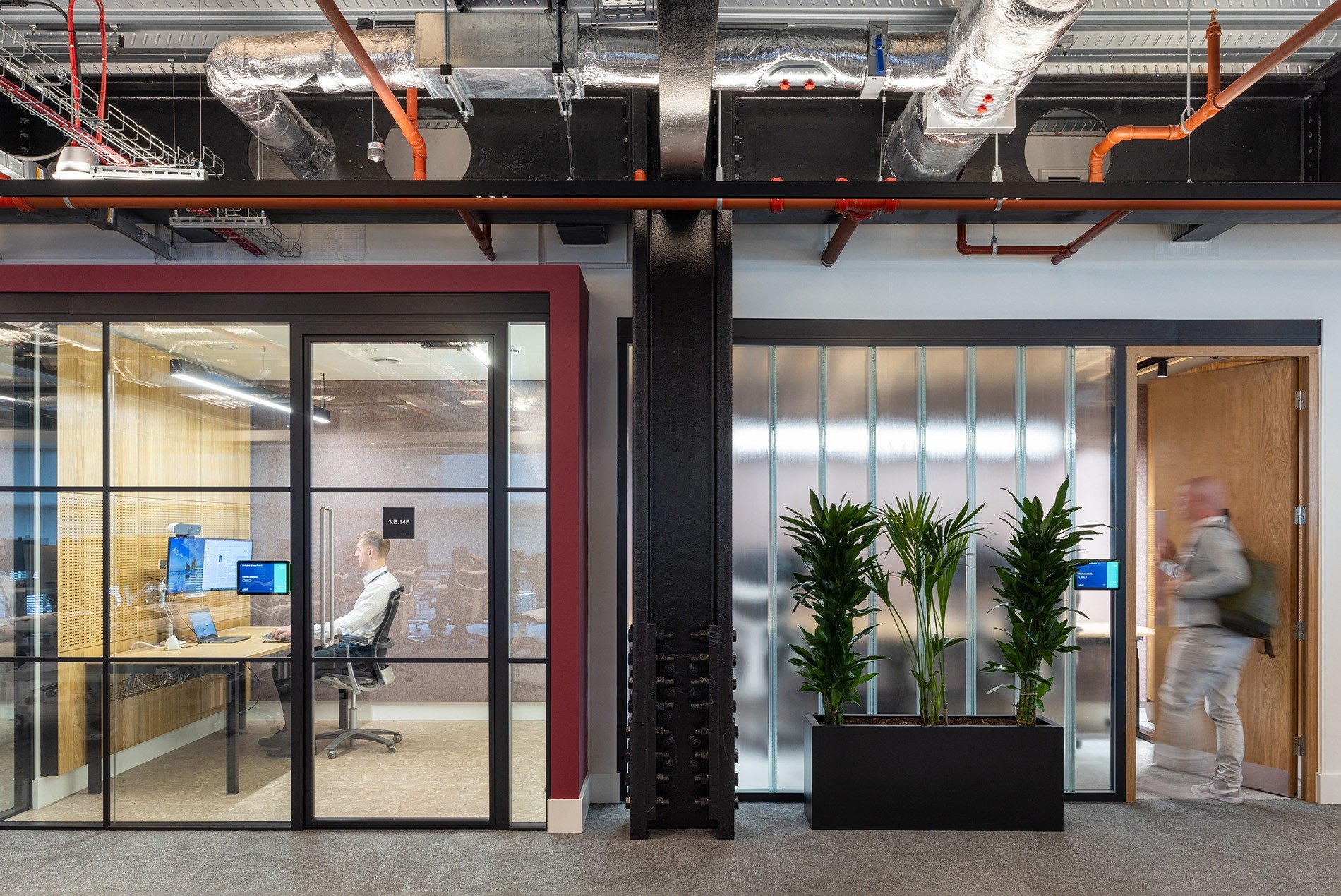
“The sun moves and so should we”: HOK’s Kay Sargent discusses why the future of the office depends on offering layers, tiers and choice for every employee.
As organizations continue to navigate the return to the office, a new priority is reshaping the built environment: neurodiversity. In a recent feature, the Financial Times explores how forward-thinking companies are moving away from rigid open-plan layouts in favor of spaces that offer “choice and control” to accommodate the estimated one in seven people who are neurodivergent.
The article, titled “What does the future workspace look like? It depends where you sit,” examines how leading global firms are redesigning their headquarters to support different working styles. The piece features insights from Kay Sargent, HOK’s director of thought leadership for Interiors, who emphasizes that designing for neuroinclusivity—such as considering sensory stimulation, lighting and acoustics—ultimately benefits the entire workforce.
“It’s not just people who are neurodivergent,” Sargent tells the Financial Times. “Every single one of us is affected by this.”
Sargent advocates for environments that provide “layers and tiers,” allowing employees to migrate to the setting that best suits their current task or mood. Rather than seeking a static, one-size-fits-all perfection, the goal is dynamic flexibility.
“I cannot design a space that is the perfect temperature for everyone,” Sargent explains in the article. “But the sun moves and so should we. In any given building at any given time there are warmer areas and cooler areas, there are louder areas and quieter areas.”
The article highlights several HOK clients that are pioneering these concepts. Engineering firm Arup is noted for its Birmingham office, which features adjustable lighting and recreational rooms, while advertising giant WPP is recognized for its Manhattan campus that offers a variety of workbenches, huddle areas and focus rooms.
By moving toward an ecosystem of spaces—from high-stimulation collaboration zones to “library-like” quiet areas—companies like Cisco, also profiled in the piece, are finding that adaptations necessary for some employees end up improving the experience for all.
Read the full article at the Financial Times.