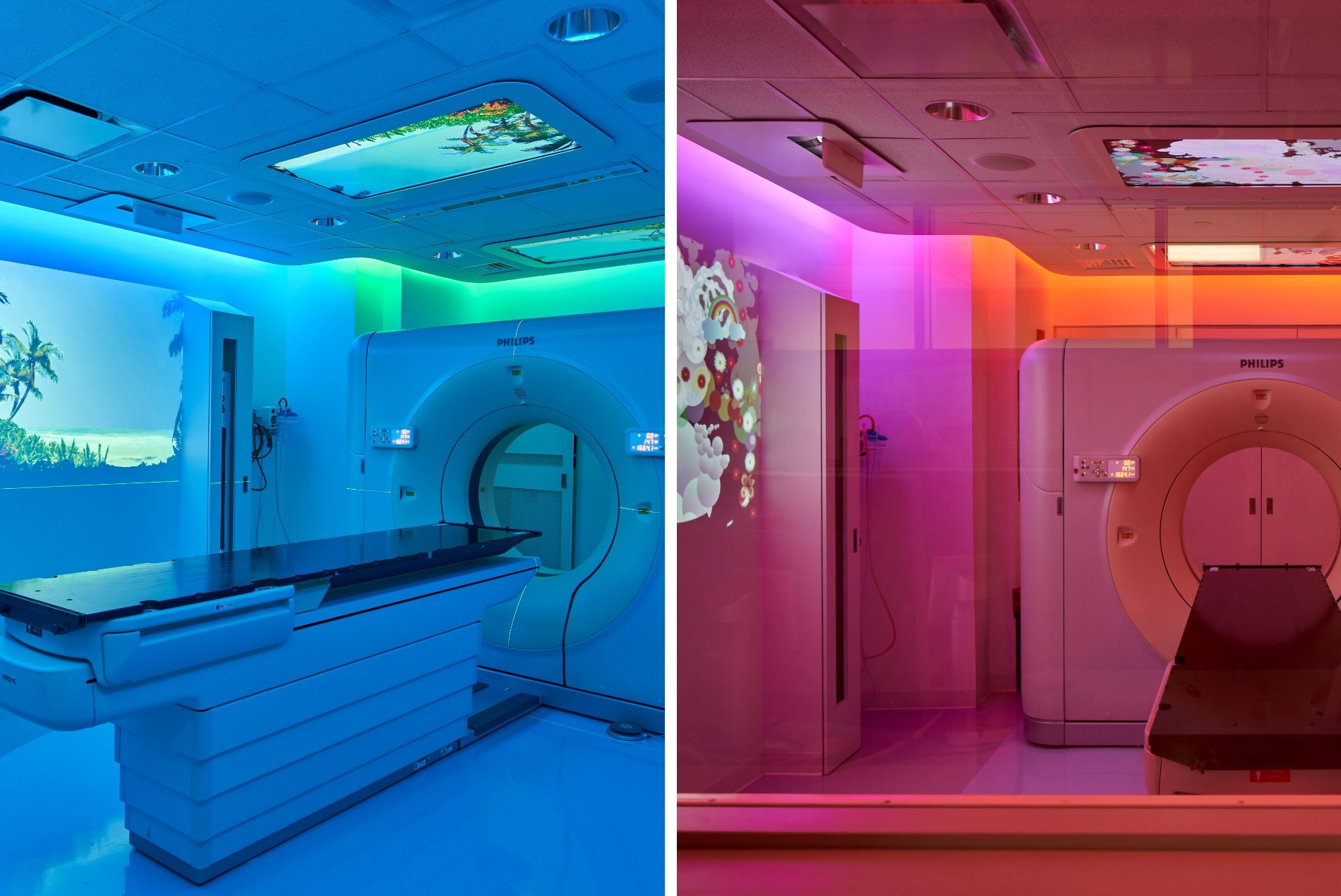
Kathleen Schwarz of HOK’s Healthcare group shares why she’s passionate about designing oncology spaces and how planning and design can improve the experiences of patients and staff.
The world is rapidly changing. So, too, is cancer care. Today’s oncology centers must keep pace with evolving technologies and medical advancements while also integrating new healthcare protocols and restrictions. In this Q+A, Senior Healthcare Consultant Kathleen Schwarz shares her thoughts on designing cancer care facilities with flexibility to accommodate unforeseen challenges like COVID-19.
What excites you about cancer care design?
We’re seeing an evolution in cancer care. It used to be more of a one-size-fits-all approach to care delivery. Today it is targeted and personalized and constantly changing. Many patients are now living for 10, 15, 20 years and longer following their initial diagnosis. Meeting those patients along the care continuum is important. Cancer care is increasingly delivered outside the four walls of the hospital. Thinking about how to provide service and treatment in a variety of environments is exciting.
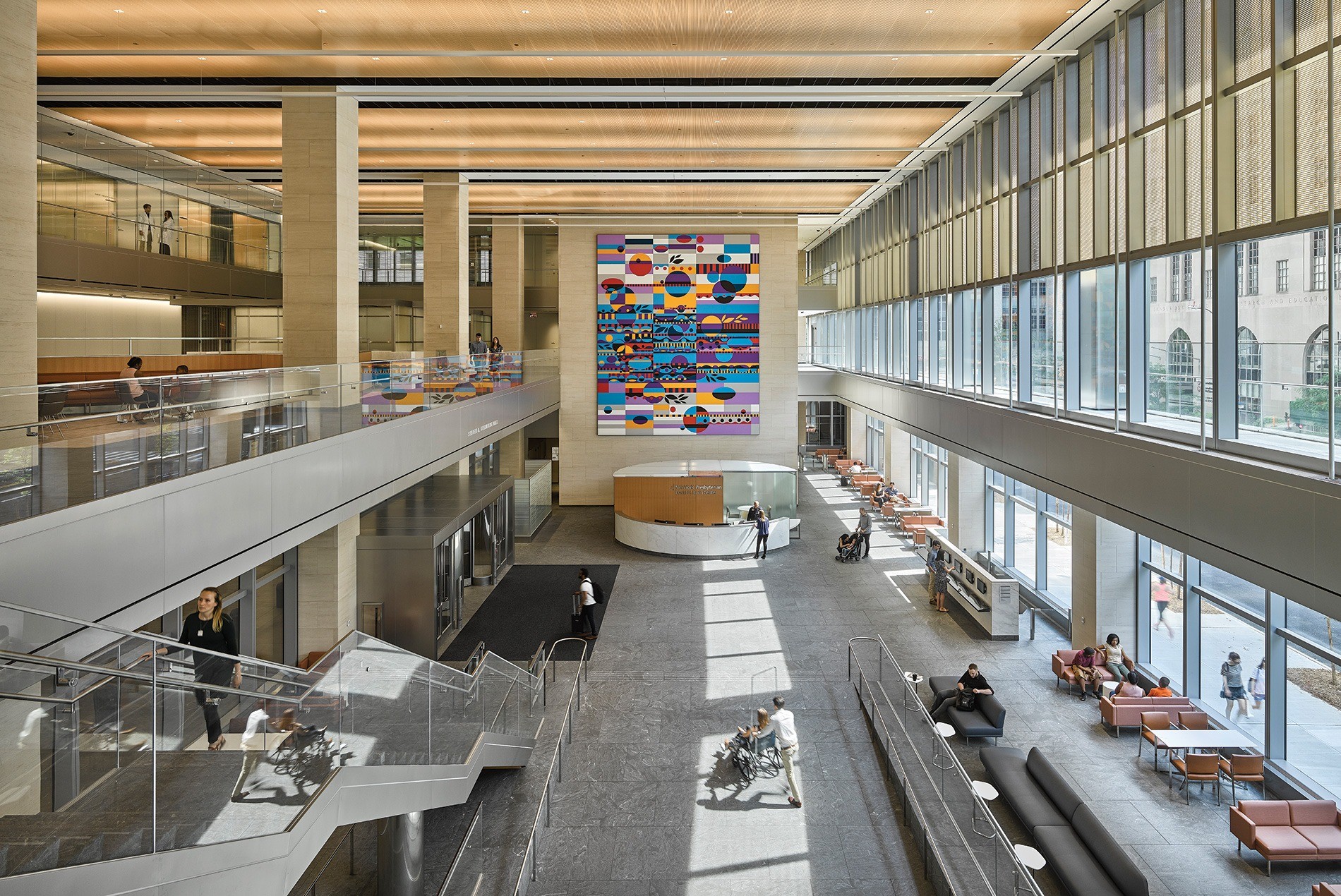
A bright, open lobby welcomes patients and their families to the NewYork-Presbyterian David H. Koch Center in Manhattan. Locating the infusion and radiation oncology services on the 4th floor provides patients access to city views and natural light.
How can design support the emotional journey of patients?
By making sure it’s a seamless experience without duplication. It’s important to consider the different patient types throughout the process. If we’re talking about pediatric patients, what can we do to meet their needs when they are waiting for an appointment? For older patients, how can we help them navigate the process if they require assistance? When we think about design or planning efforts, we want patient consultations to happen within a dedicated quiet area where patients can have conversations to address questions about their treatment, their well-being and anything else that is concerning them. Most of the time patients are coming in for radiation treatments on a daily or weekly basis, so they’re frequently visiting the space. How can the design help them get in and out quickly and easily?
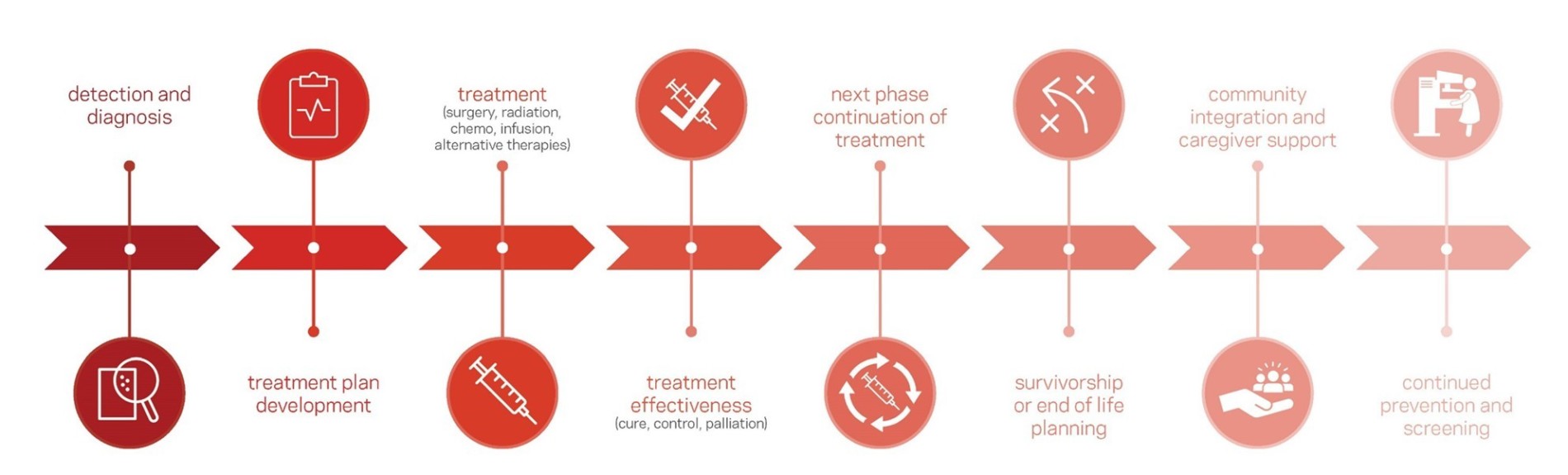
The care journey for cancer patients involves numerous steps spread over months and years, requiring designers to consider ways to make treatment and recovery as streamlined and comfortable as possible.
How can cancer design assist caregivers in their jobs?
Many treatment centers lack dedicated space required for clinical trial teams or specialized services. This hinders the ability of those caregivers to deliver quality care. Space planners and designers need to accommodate the more complex patient visits. The oncology care team requires dedicated space for respite outside of patient-facing areas for wellness and as a place where they can recharge.
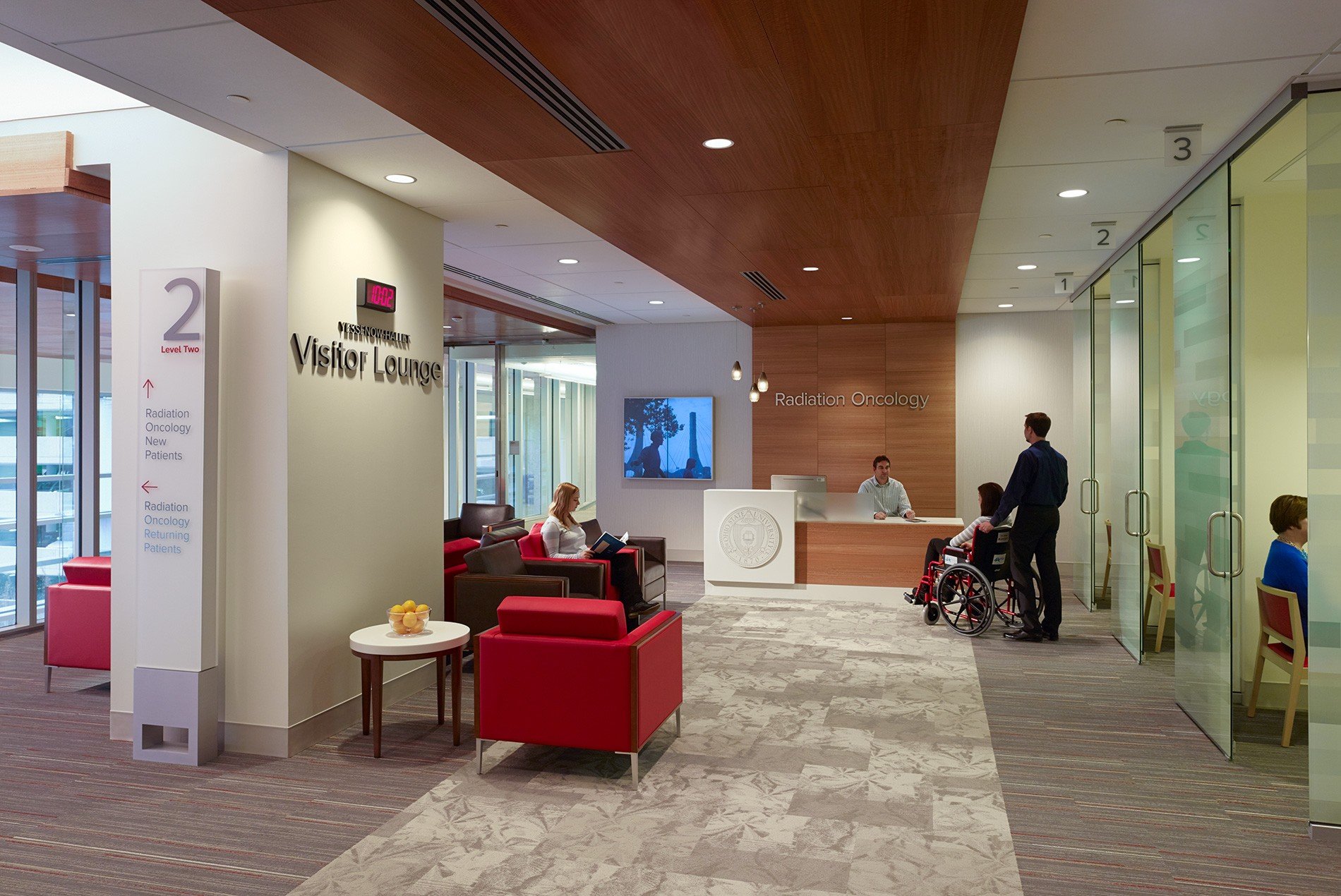
Daylight permeates the Ohio State University Comprehensive Cancer Center and helps support the physical and mental well-being of patients. A terrace, garden and café on the 14th floor offers visitors and staff additional connection to the outdoors.
How might the coronavirus pandemic impact cancer care going forward?
It will have a long-term impact on the patients’ emotional journeys. An important part of cancer care has been allowing patients to bring family members and friends to their treatments, especially for infusions that can last hours. Now patients will likely have to make that journey by themselves or with—at most—just one support person. We need to think about how design can make that journey as comfortable, intuitive and expedient as possible. COVID-19 is forcing designers, planners and clients to think more proactively. Yes, the changes we are making now are a reaction to the coronavirus. But they are also anticipating the challenges of future pandemics and other crises.
Top image: Treatment rooms with programmable lights and displays at the University of Texas MD Anderson Cancer Center in Houston. Photo: Dror Baldinger.