
Detroit needed more than just another government building. It needed a facility that would make a statement about what justice could look like in a recovering city while also catalyzing neighborhood development.
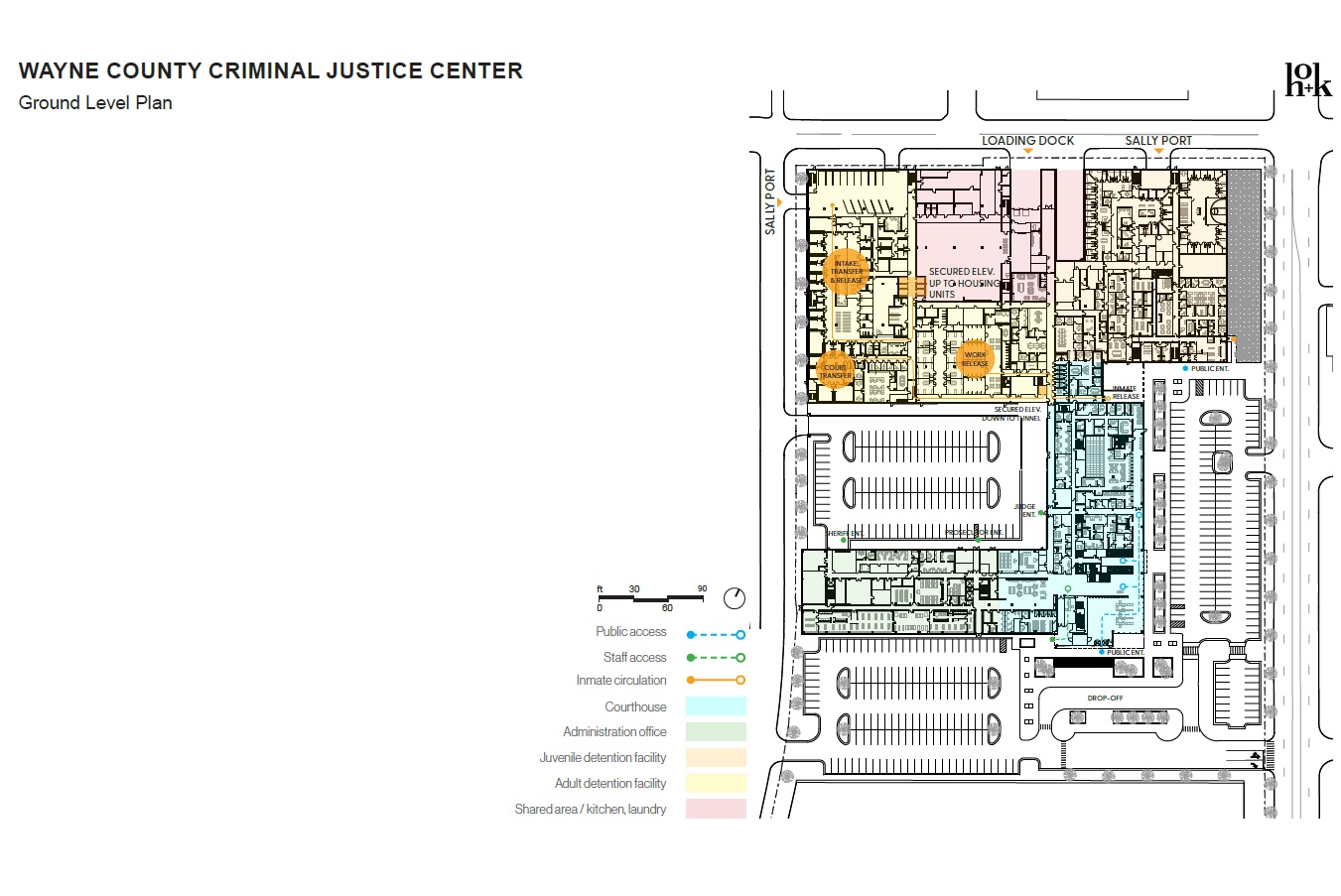
The 1.1-million-sq.-ft. Wayne County Criminal Justice Center sits on former industrial land along I-75. It’s a dramatic transformation. What were once scattered facilities spread across the Detroit area have been brought together on a single campus: a 2,280-bed adult detention facility, a smaller 160-bed juvenile center, a courthouse with 29 courtrooms, offices for the Sheriff and Prosecutor, and a central utility plant. These different functions are connected by a central lobby that sits on a unifying dark stone plinth.
Our design emphasizes openness and dignity, departing from the isolation often seen with U.S. justice buildings. The County intentionally keeps 30% of the detention facility beds empty to support diversion programs rather than maximum occupancy. Threaded through every design move are civic principles including accessibility, transparency and a balance between openness and security.
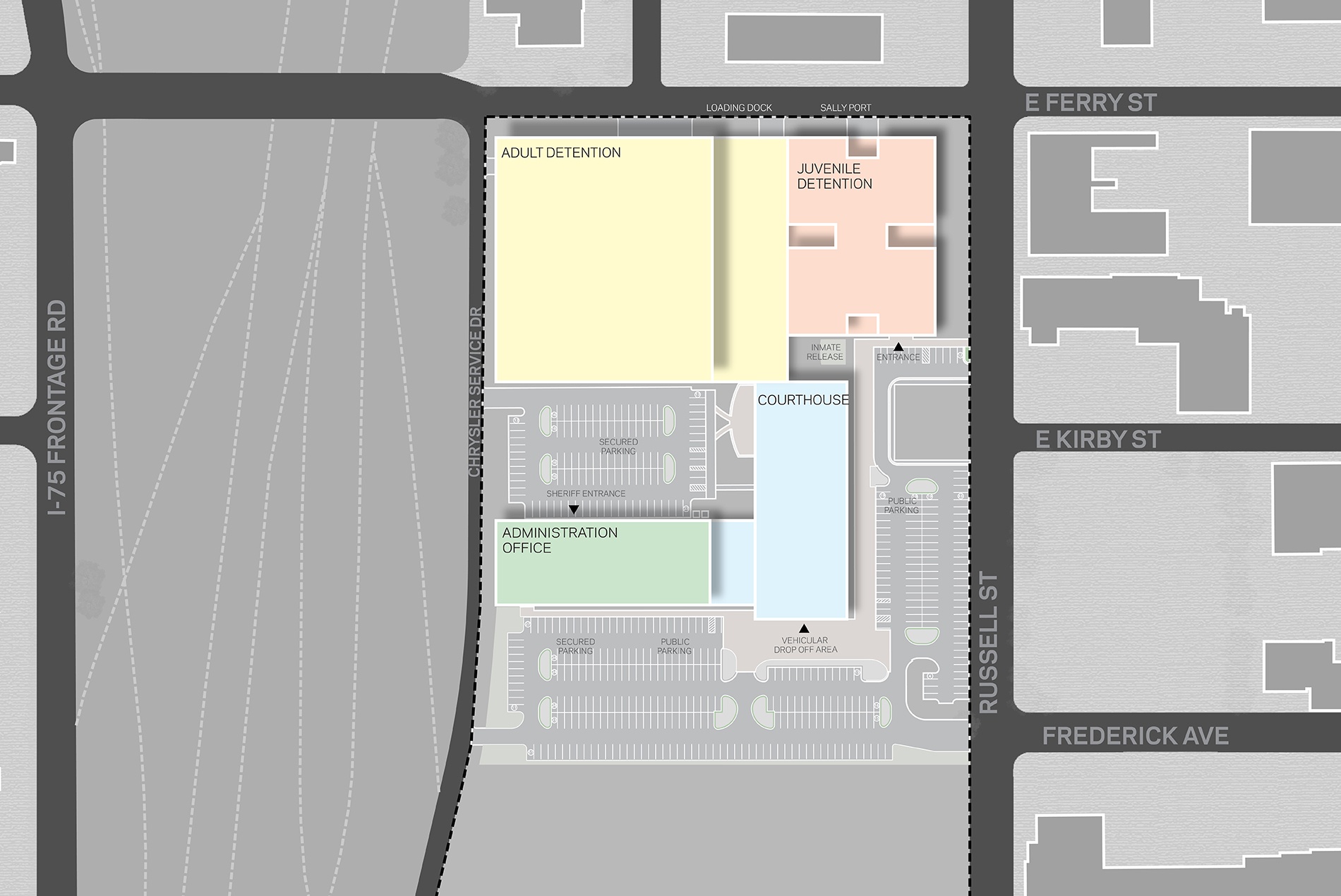
Wayne County and the City of Detroit selected a site next to Detroit’s historic Eastern Market district. This location helps expand downtown’s revitalization outward, anchoring future growth. Early public meetings addressed neighborhood concerns.
The campus unites courtrooms, detention facilities, offices and support infrastructure. This consolidation attracts employees, jurors and visitors daily while eliminating cross-town prisoner shuttles.
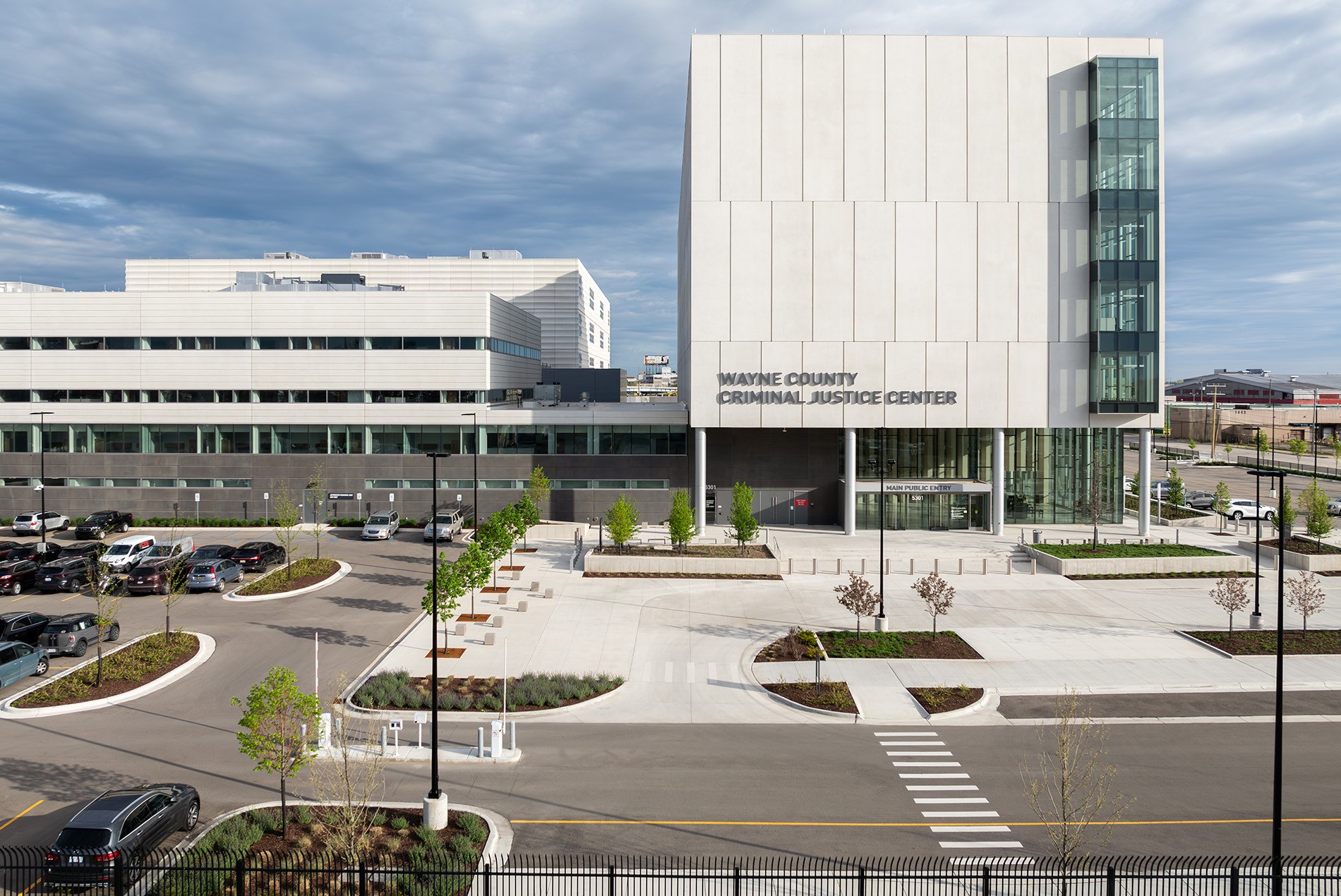
Our plan preserves Detroit’s street grid, avoiding the parking-dominated aesthetic of many government complexes. Buildings meet the sidewalk and the main entrance is scaled for ride-share and transit. The complex “holds the corner,” giving this once-empty block a confident civic face. Public areas are easily accessible and welcoming.
With Phase 2 parcels already planned, the Justice Center has become both proof of and generator of Detroit’s resurgence. Its civic presence respects its context, demonstrating that even secure facilities can be good neighbors.
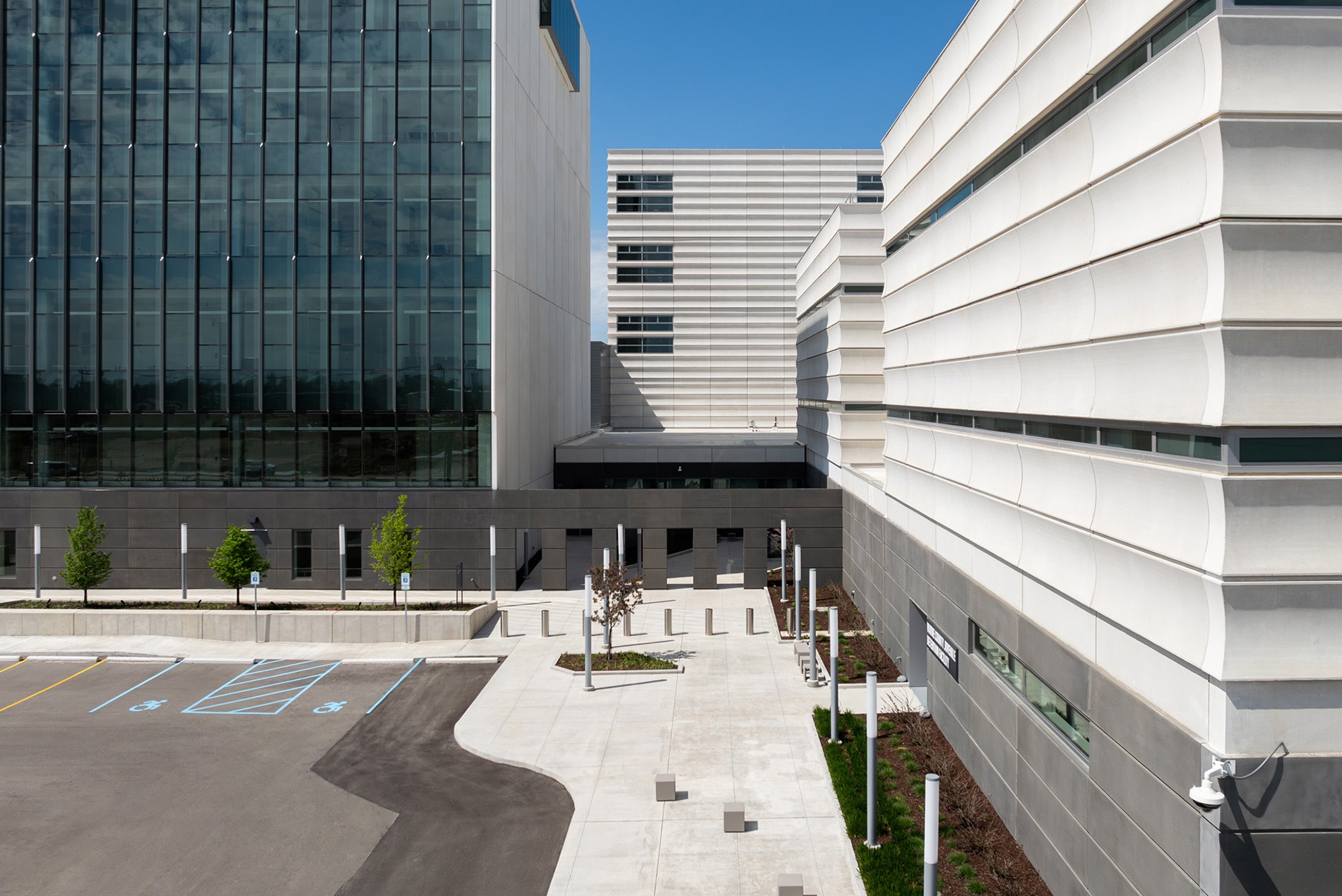
A continuous dark stone plinth organizes the entire complex and establishes the secure ground plane for movement and operations. The plinth gives the campus a clear civic base without resorting to a fortress expression.
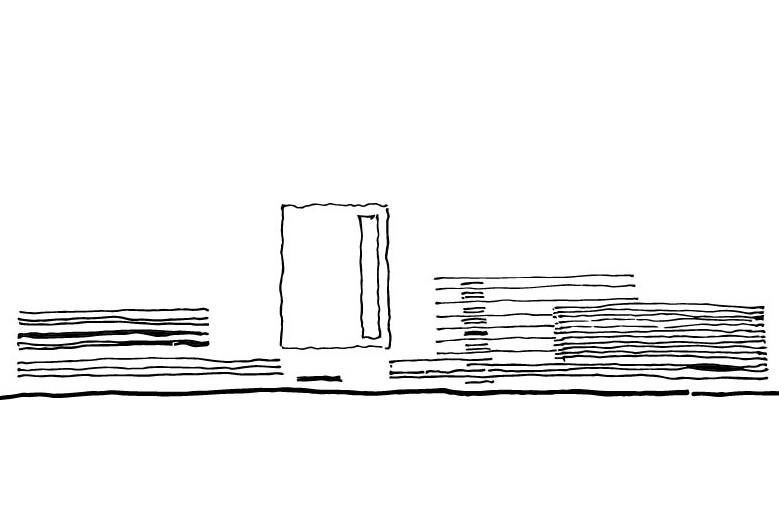
Rising from this plinth is a five-building civic campus—“unique but related ‘siblings.” Each building expresses its distinct functional role through varied massing, scale and different exterior precast and glazing solutions. Yet the courthouse, detention facilities, administrative offices and utility plant remain visually connected through their shared base and material palette. The overall effect is coherence without monotony.
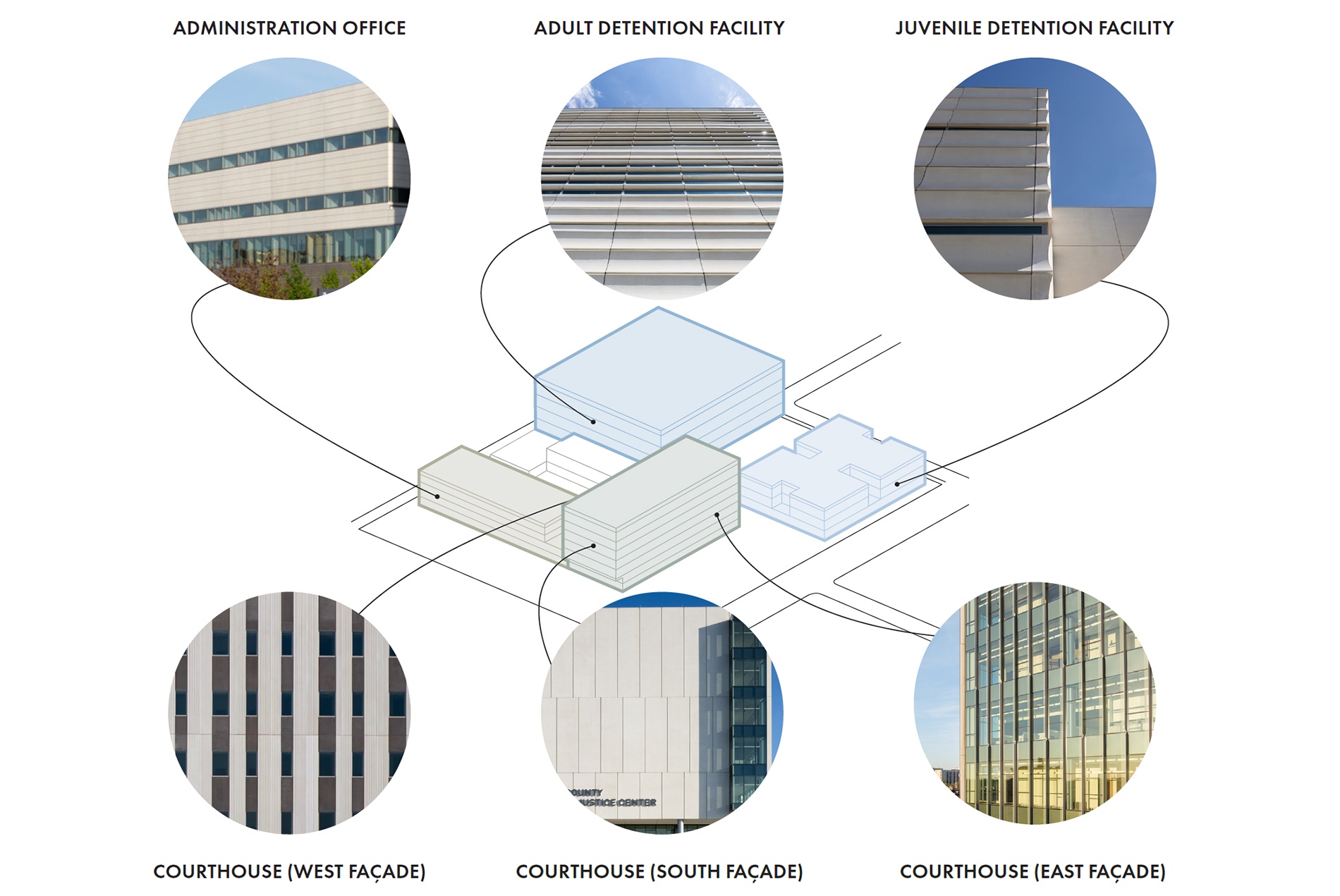
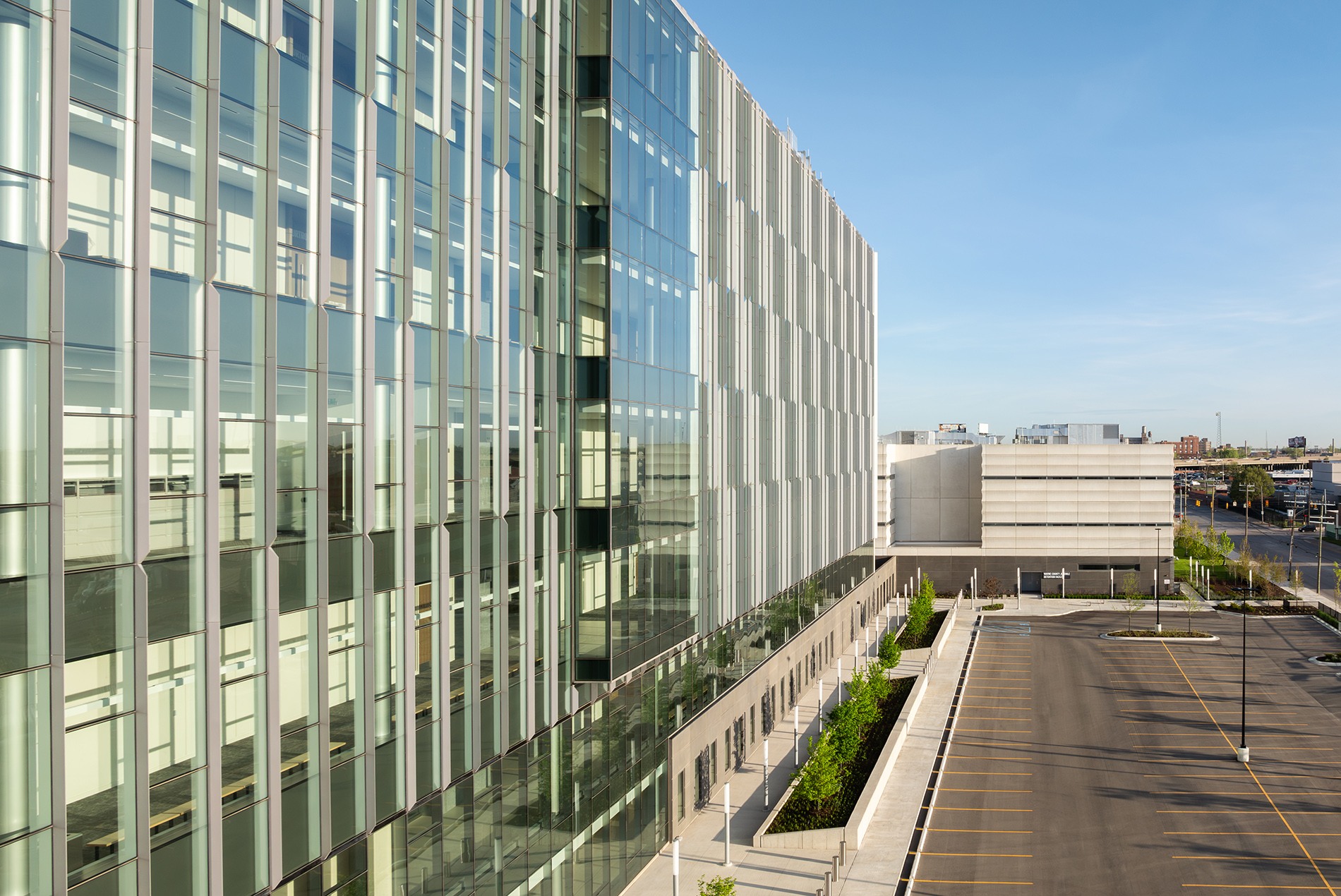
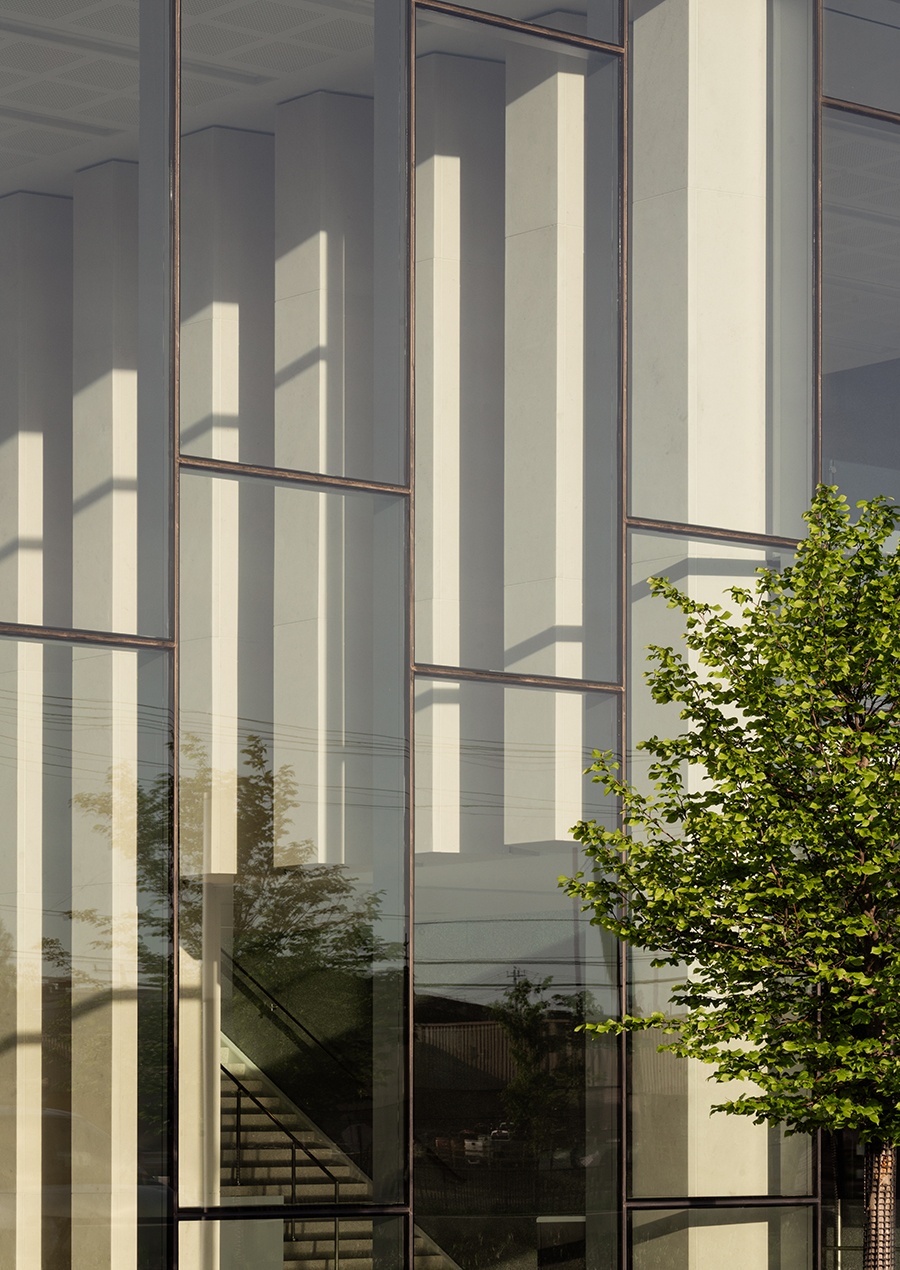
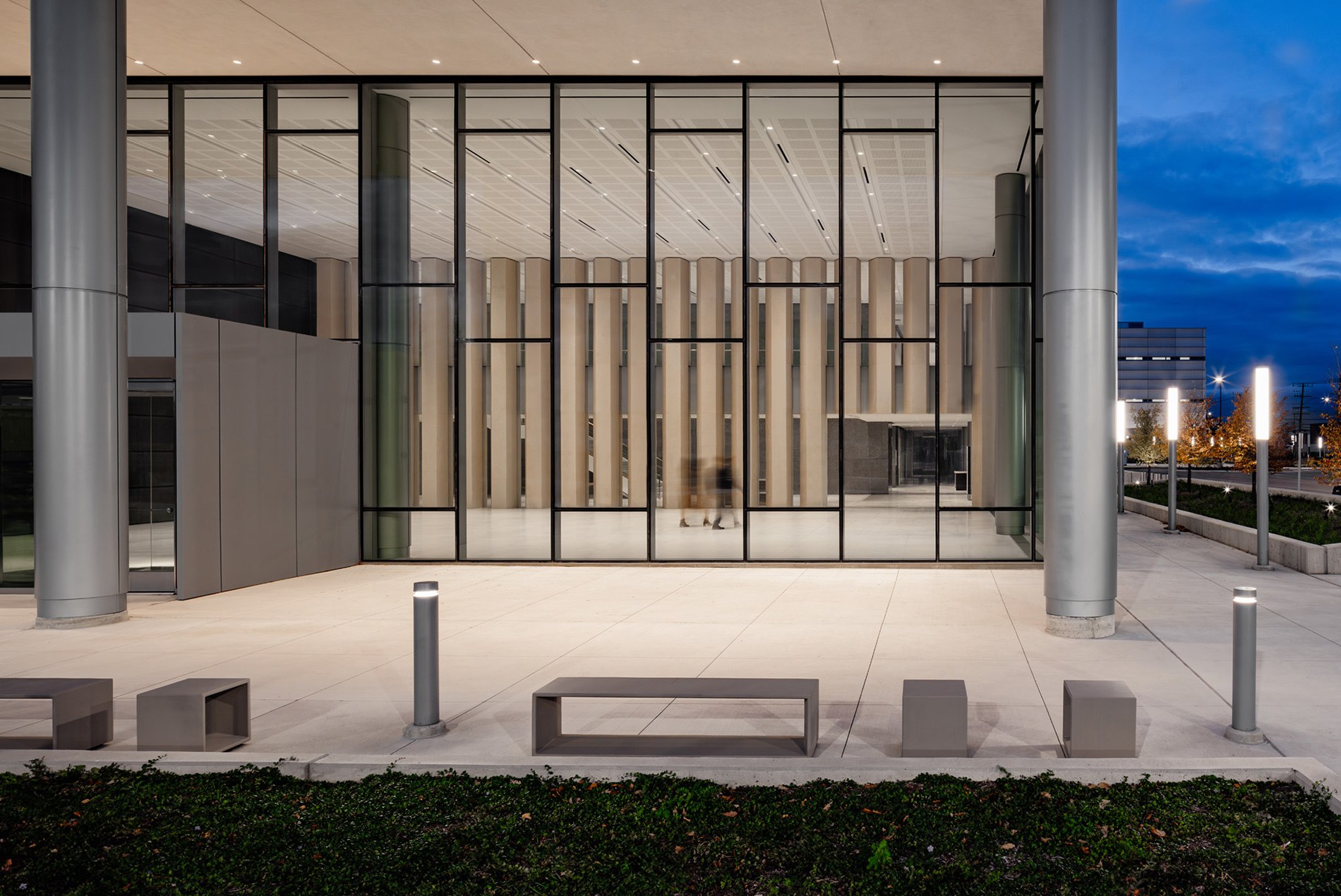
The courthouse’s glass curtain wall creates a civic stage. Its broad plaza serves double duty by welcoming citizens while maintaining required standoff distances.
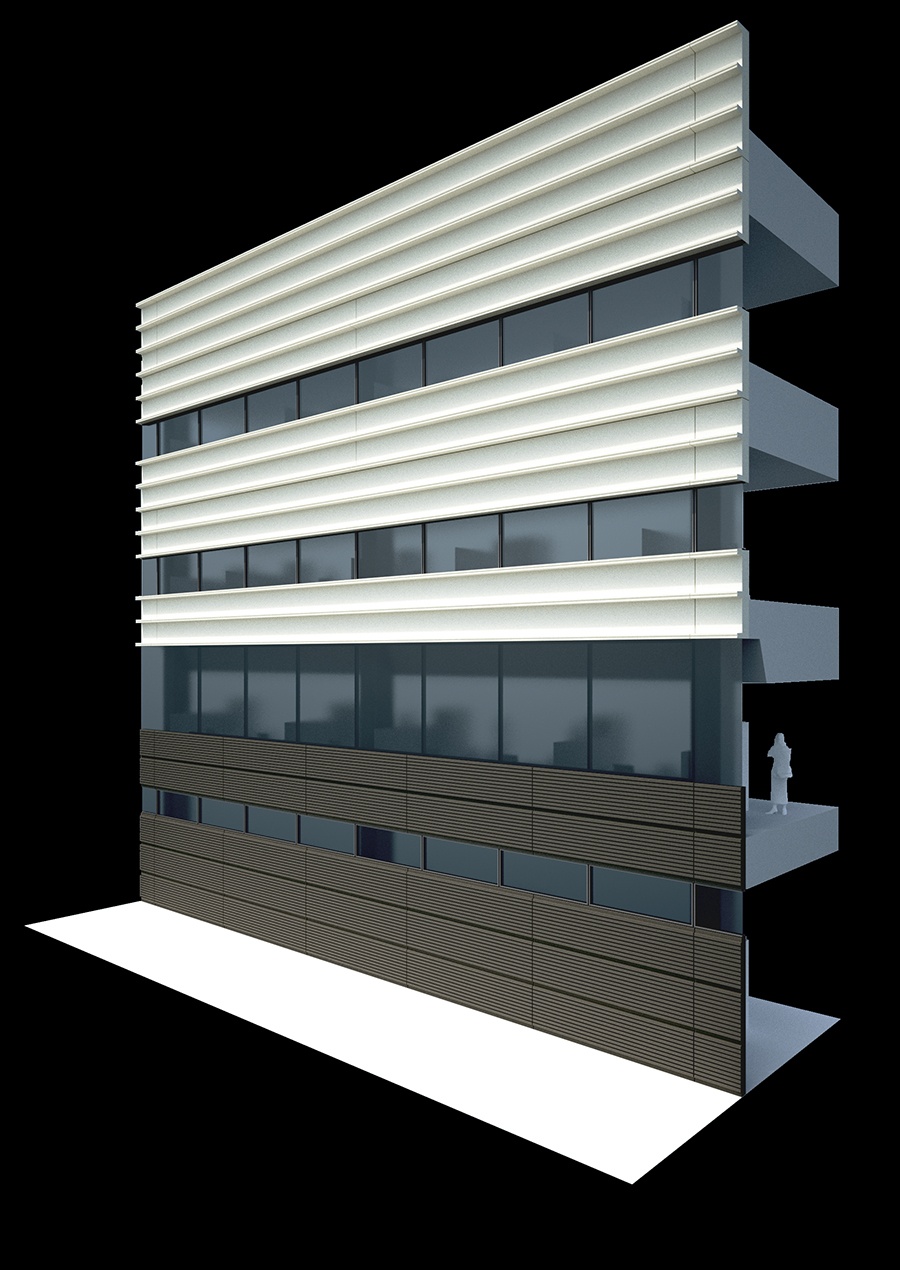
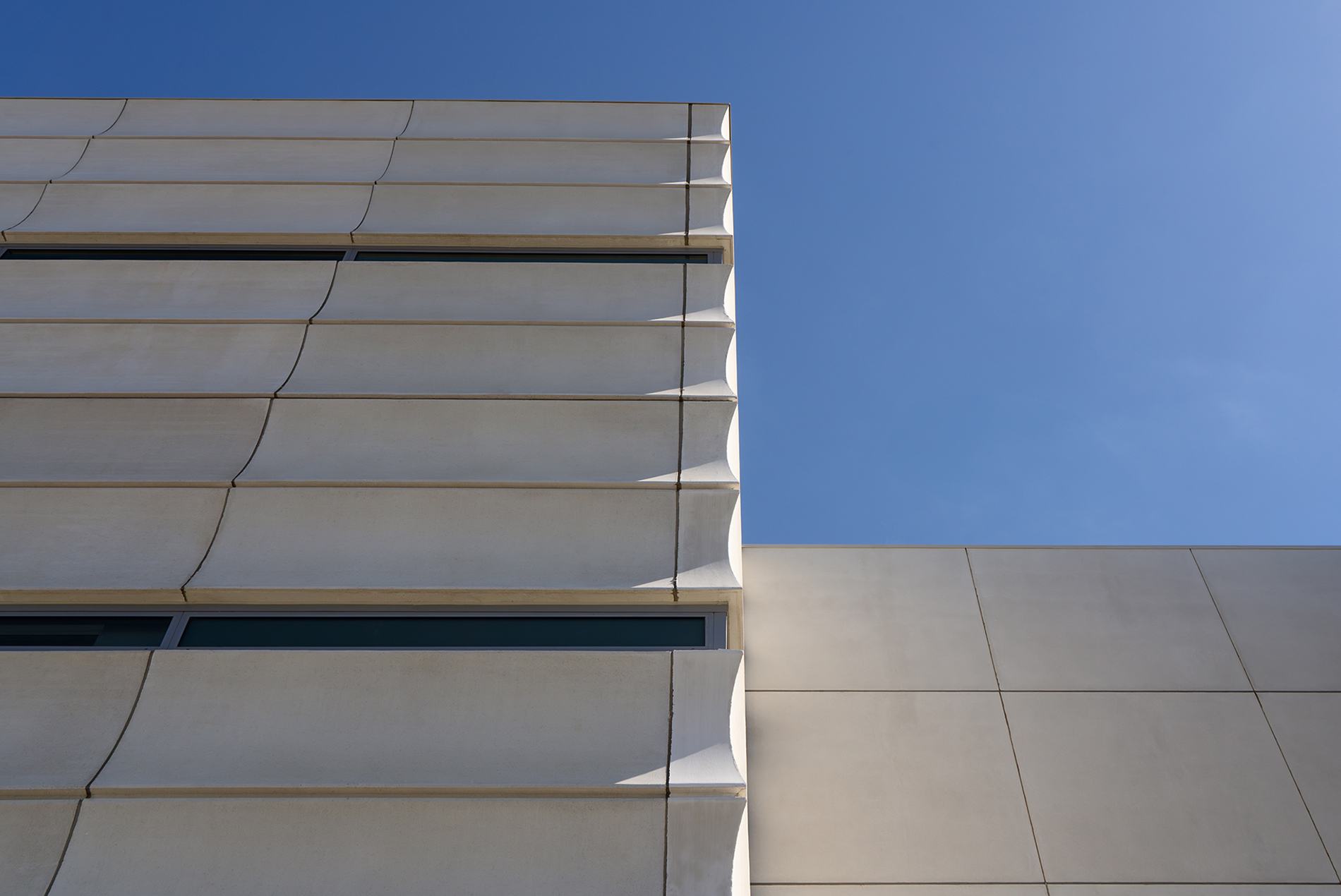
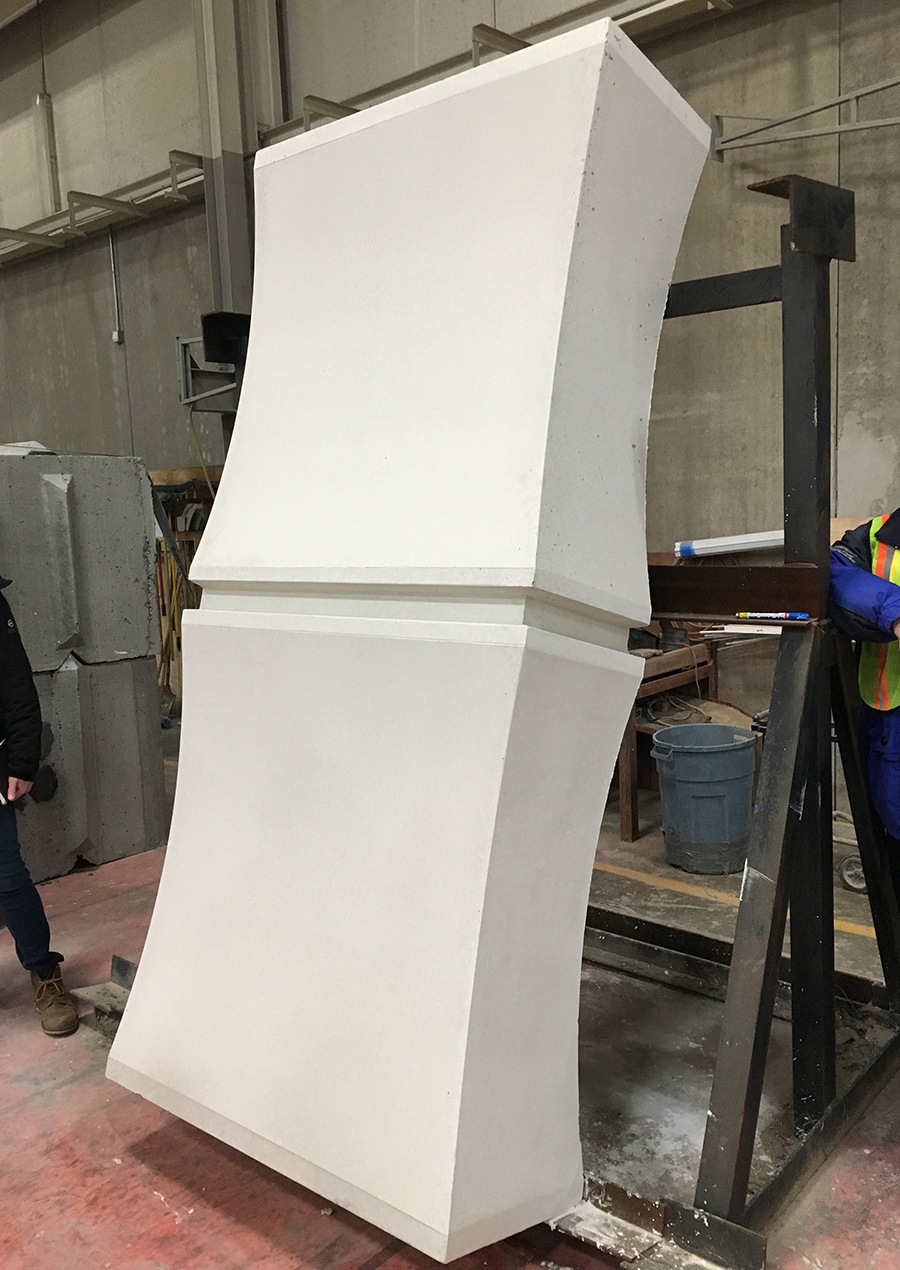
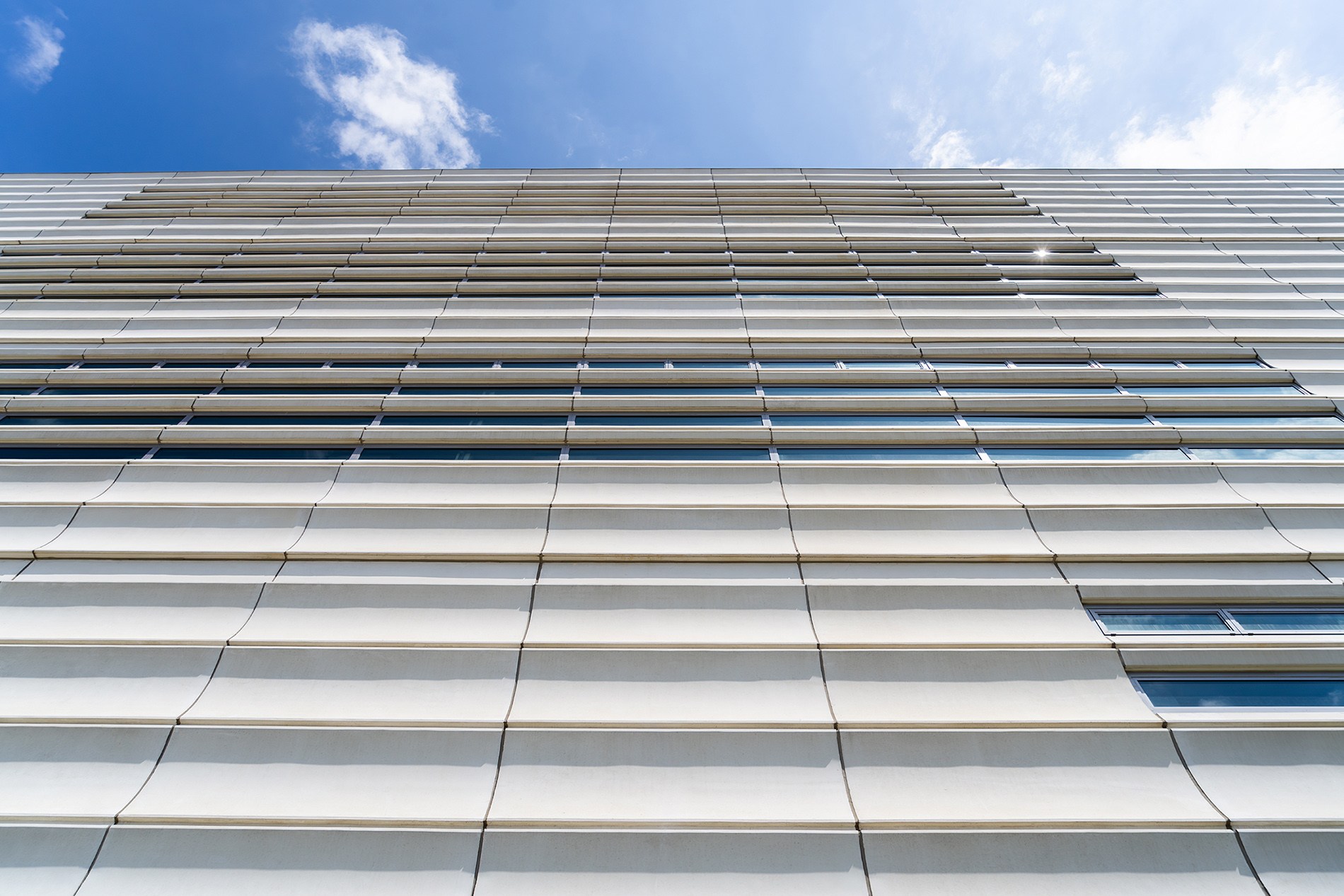
In contrast, the detention facility exteriors feature deeply scalloped precast-stone panels. The design team worked closely with the precaster to develop the custom form, optimizing them to bounce daylight deep inside while shifting from warm sunrise tones to bright midday white and an evening glow.
Each window opening is sized for safety yet placed for light. Thin, high-performance screens replace bars, and careful fenestration keeps the facade reading as a single composition. Sunlight becomes a building material, animating both glass fins at the courthouse and the precast folds next door.
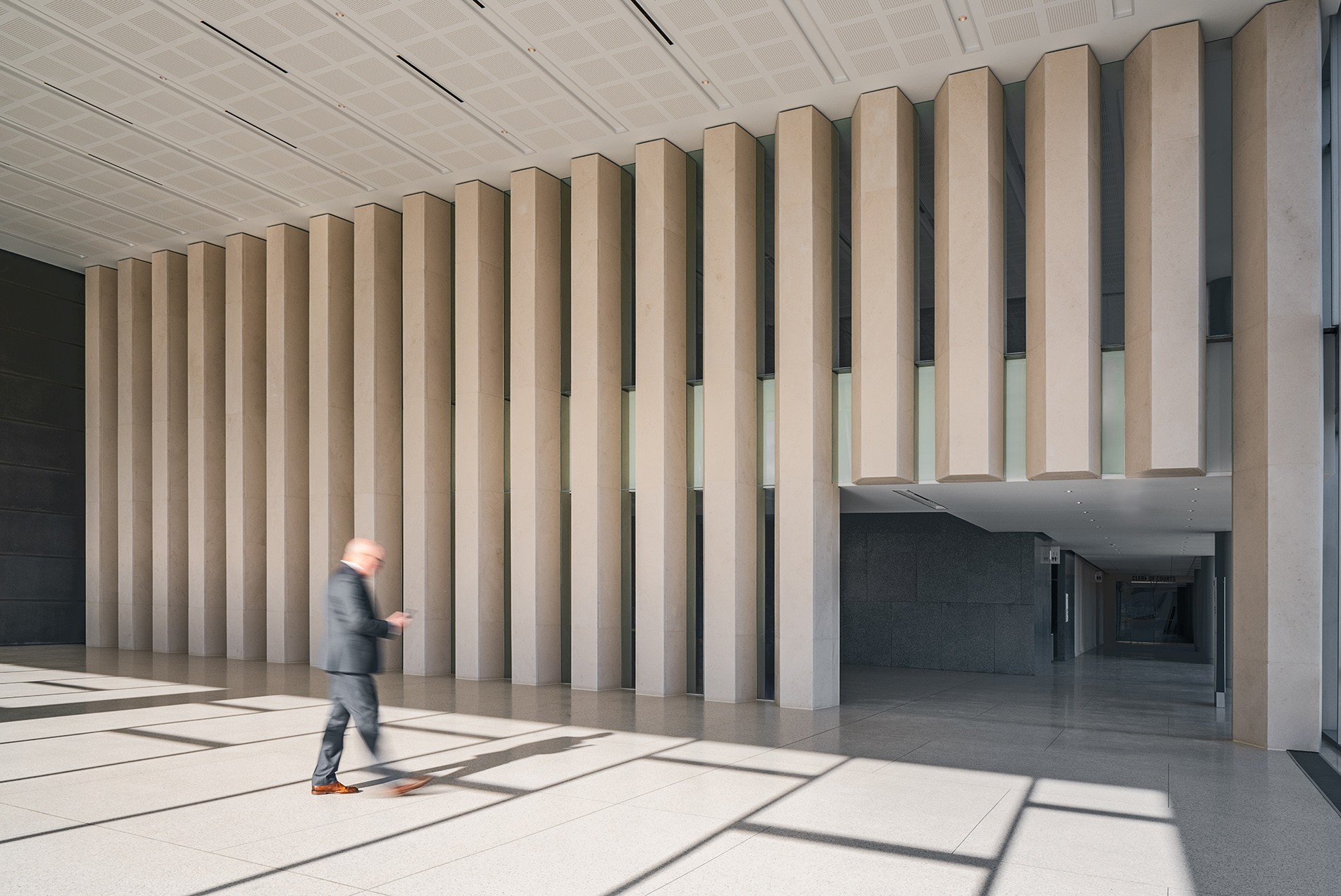
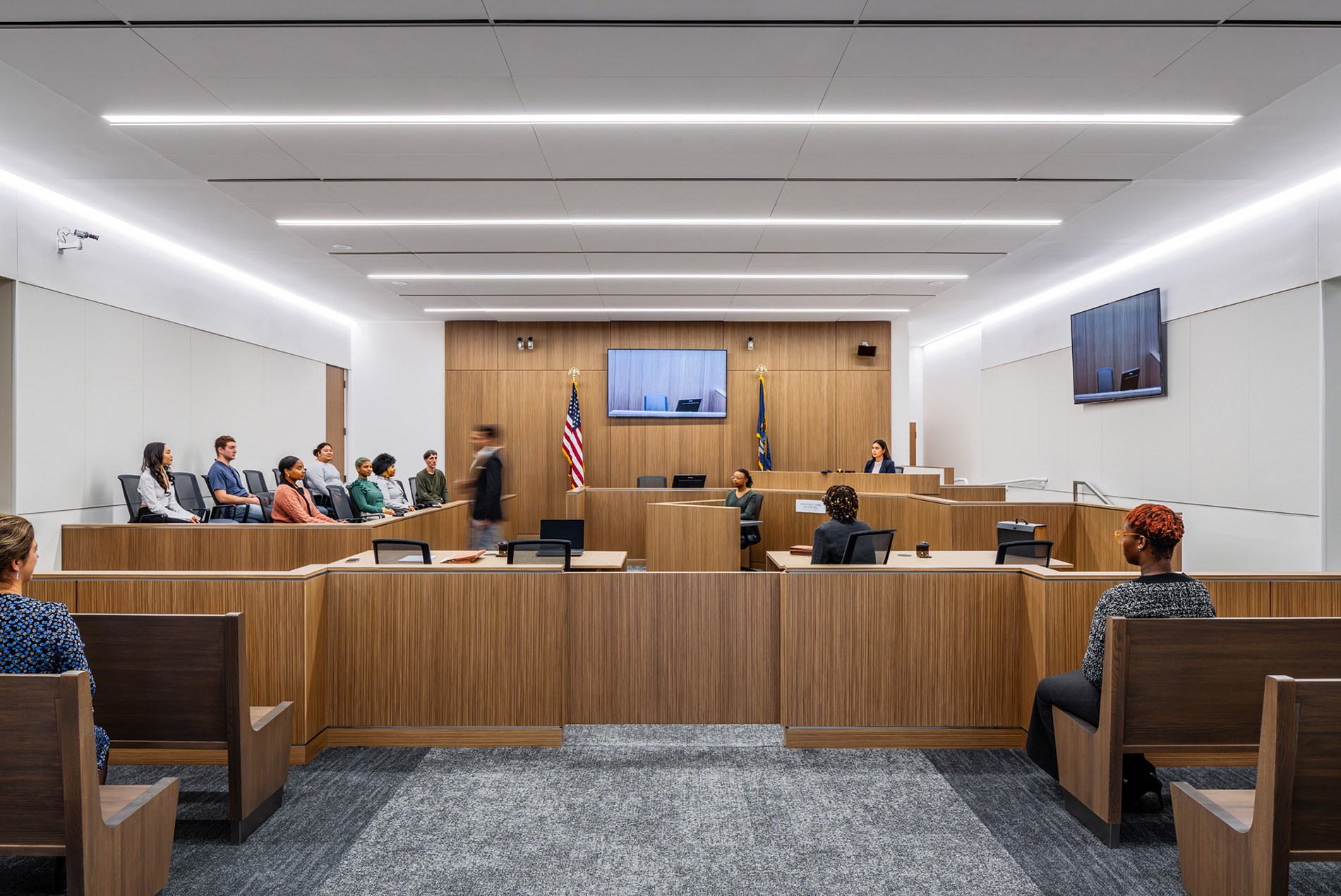
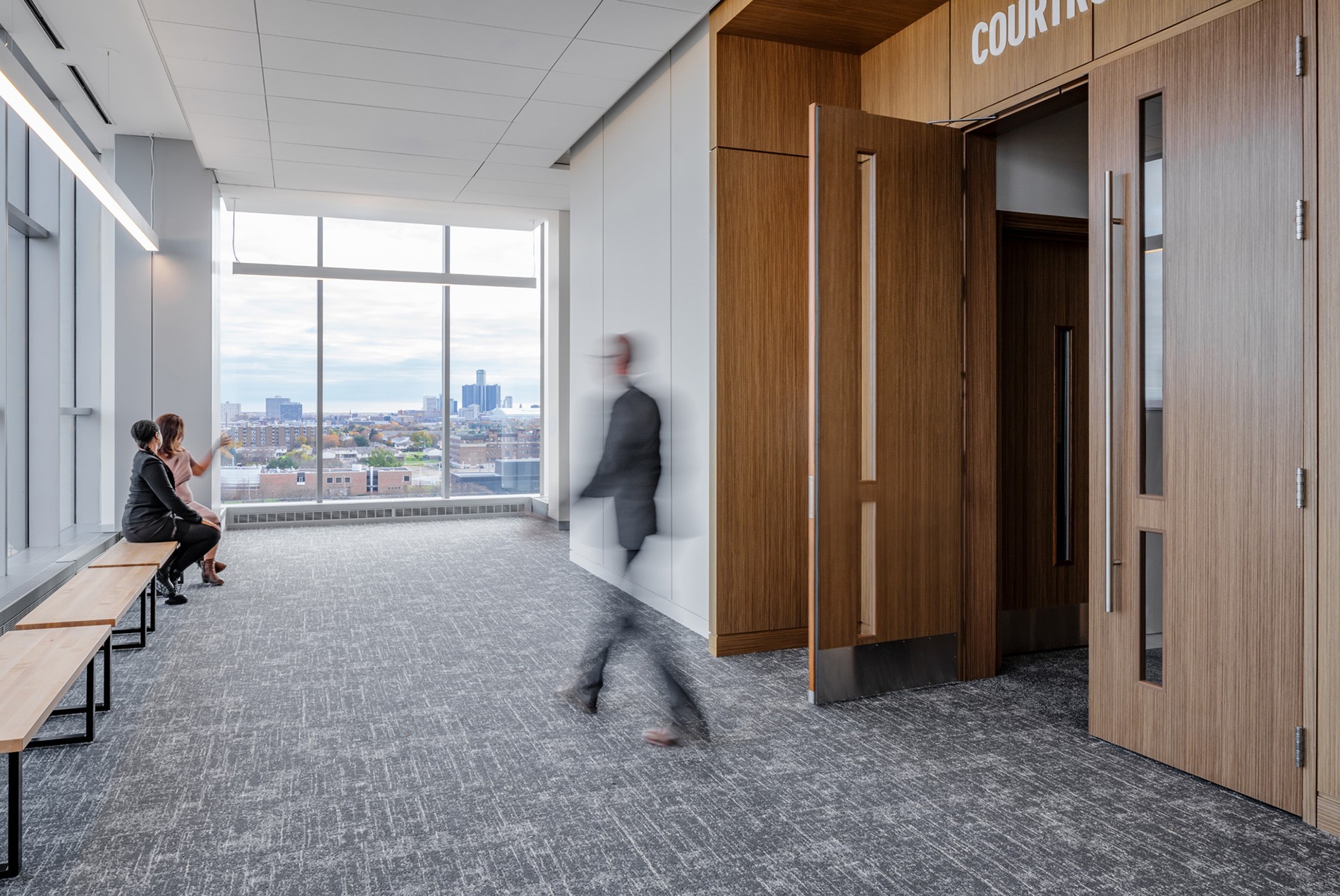
Visitors enter a light-filled atrium clad in Indiana limestone—a welcome antidote to the tense screenings typically found in courthouses. Security remains rigorous, but equipment is tucked out of sight so the space reads as civic, not correctional. Warm wood in courtrooms and corridors reinforces the building’s civic character.
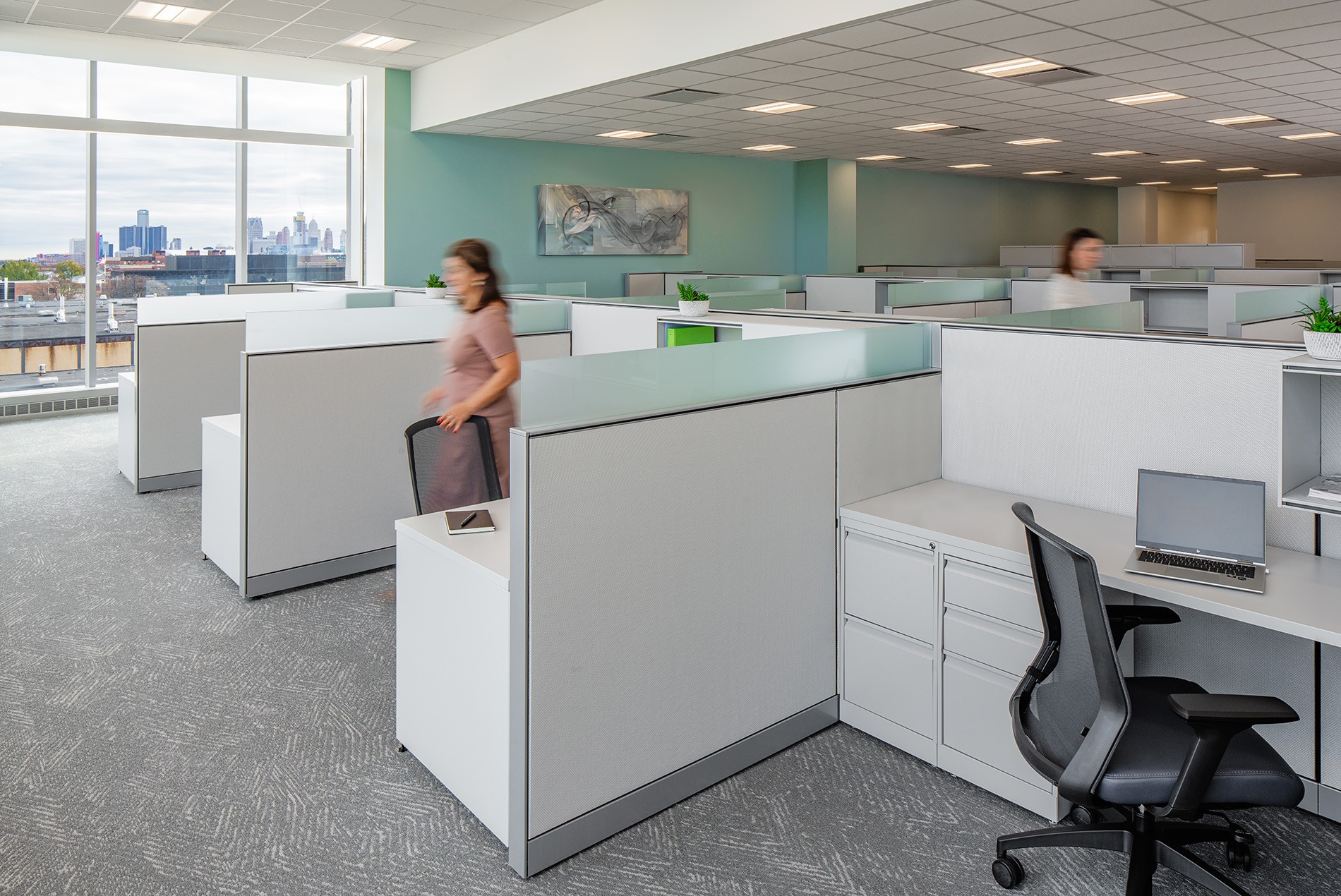
Next door, the Sheriff’s and Prosecutor’s offices occupy a light-filled administrative building with skyline views. Dedicated wellness areas including daylit fitness rooms and mother’s rooms support staff in the secure wings.
Courtrooms open to a glazed public gallery. In the detention wings, every housing pod follows a direct-supervision model with larger windows and normalized finishes. Acoustical ceilings and carpeting manage noise and reduce sensory stress. A palette of calming blues and greens works with large-scale biophilic imagery to bring nature indoors.
Classrooms, gyms and mental health suites sit inside the units, reducing travel and stress while supporting treatment over punishment.
Many justice buildings historically have felt barricaded from the cities they serve. This project turns that legacy inside out through a fundamental rethinking of what these facilities can be.
By marrying security with openness, the Wayne County Criminal Justice Center provides both efficient infrastructure and a genuine civic place. It reminds the profession that justice buildings, long ignored, deserve the same design care and civic dignity as any other public space, elevating the conversation about how these facilities can and should be improved. The project has been recognized with honors including an AIA Chicago Design Excellence Honor Award.
Detroit needed more than just another government building. It needed a facility that would make a statement about what justice could look like in a recovering city while also catalyzing neighborhood development.
The 1.1-million-sq.-ft. Wayne County Criminal Justice Center sits on former industrial land along I-75. It’s a dramatic transformation. What were once scattered facilities spread across the Detroit area have been brought together on a single campus: a 2,280-bed adult detention facility, a smaller 160-bed juvenile center, a courthouse with 29 courtrooms, offices for the Sheriff and Prosecutor, and a central utility plant. These different functions are connected by a central lobby that sits on a unifying dark stone plinth.
Our design emphasizes openness and dignity, departing from the isolation often seen with U.S. justice buildings. The County intentionally keeps 30% of the detention facility beds empty to support diversion programs rather than maximum occupancy. Threaded through every design move are civic principles including accessibility, transparency and a balance between openness and security.
Wayne County and the City of Detroit selected a site next to Detroit’s historic Eastern Market district. This location helps expand downtown’s revitalization outward, anchoring future growth. Early public meetings addressed neighborhood concerns.
The campus unites courtrooms, detention facilities, offices and support infrastructure. This consolidation attracts employees, jurors and visitors daily while eliminating cross-town prisoner shuttles.
Our plan preserves Detroit’s street grid, avoiding the parking-dominated aesthetic of many government complexes. Buildings meet the sidewalk and the main entrance is scaled for ride-share and transit. The complex “holds the corner,” giving this once-empty block a confident civic face. Public areas are easily accessible and welcoming.
With Phase 2 parcels already planned, the Justice Center has become both proof of and generator of Detroit’s resurgence. Its civic presence respects its context, demonstrating that even secure facilities can be good neighbors.
“The future of corrections in Wayne County in rooted in transformation, not just containment. This facility isn’t just a building, it’s a commitment to dignity, safety and accountability.”
— Warren C. Evans, Wayne County Executive (Correctional News, July/August 2025)
A continuous dark stone plinth organizes the entire complex and establishes the secure ground plane for movement and operations. The plinth gives the campus a clear civic base without resorting to a fortress expression.
Rising from this plinth is a five-building civic campus—“unique but related ‘siblings.” Each building expresses its distinct functional role through varied massing, scale and different exterior precast and glazing solutions. Yet the courthouse, detention facilities, administrative offices and utility plant remain visually connected through their shared base and material palette. The overall effect is coherence without monotony.
“It’s a civic campus. The buildings are separated, but they’re physically joined.”
— Jeff Goodale, Director of Justice, HOK (Correctional News, July/August 2025)
The courthouse’s glass curtain wall creates a civic stage. Its broad plaza serves double duty by welcoming citizens while maintaining required standoff distances.
In contrast, the detention facility exteriors feature deeply scalloped precast-stone panels. The design team worked closely with the precaster to develop the custom form, optimizing them to bounce daylight deep inside while shifting from warm sunrise tones to bright midday white and an evening glow.
Each window opening is sized for safety yet placed for light. Thin, high-performance screens replace bars, and careful fenestration keeps the facade reading as a single composition. Sunlight becomes a building material, animating both glass fins at the courthouse and the precast folds next door.
Visitors enter a light-filled atrium clad in Indiana limestone—a welcome antidote to the tense screenings typically found in courthouses. Security remains rigorous, but equipment is tucked out of sight so the space reads as civic, not correctional. Warm wood in courtrooms and corridors reinforces the building’s civic character.
Next door, the Sheriff’s and Prosecutor’s offices occupy a light-filled administrative building with skyline views. Dedicated wellness areas including daylit fitness rooms and mother’s rooms support staff in the secure wings.
Courtrooms open to a glazed public gallery. In the detention wings, every housing pod follows a direct-supervision model with larger windows and normalized finishes. Acoustical ceilings and carpeting manage noise and reduce sensory stress. A palette of calming blues and greens works with large-scale biophilic imagery to bring nature indoors.
Classrooms, gyms and mental health suites sit inside the units, reducing travel and stress while supporting treatment over punishment.
Following the logic of the campus’ urban setting, north-south spines intersect east-west connectors to link intake, housing and courtrooms behind the scenes. A secure pedestrian tunnel links the adult detention facility to the courthouse.
Redundant control rooms allow the detention facility to operate courthouse functions if needed, and 360‑degree cameras reduced the number of cameras needed by 40%. Judges can use videoconferencing technology to conduct routine status hearings with inmates in housing, reducing inmate transfers and expediting case flow.
Our design process aligned the needs of key stakeholder groups while anticipating the need for future flexibility. Because inmate populations and treatment methods continually change, the team designed key areas with a generosity of space that enables potential expansion. To help the Justice Center adapt to support the County’s long-term needs, our team also documented a clear process for making post-occupancy changes.
Sustainability for this project, which reclaims a long-vacant brownfield, is treated as a civic duty.
The campus achieves 59% annual energy savings over the AIA 2030 baseline and operates 15% better than ASHRAE 2007. Its modeled EUI of 82 kBtu/sf/yr cuts 43% from the norm for 24‑hour justice facilities.
A shared central utility plant and a continuously insulated precast envelope achieve those gains while keeping future upgrades straightforward. Low-carbon concrete mixes, recycled finishes and other durable materials extend the building’s estimated 100-year service life while curbing maintenance.
Inside, concrete floors replace vinyl, and reconstituted veneers avoid harmful compounds. High-efficiency fixtures reduce water use, and underground cisterns control stormwater runoff to help protect Detroit’s combined sewer system.
A public-private partnership between Wayne County and developer Bedrock LLC covered about two-thirds of the project’s cost, trading an unfinished downtown jail site for the new campus.
The project used a Construction Manager-at-Risk delivery model, but the team ran it like a highly collaborative design-build project. This integrated approach enabled the team to balance the developer’s focus on the upfront construction budget with the County’s need for a durable, 50-year operational model. Early planning sessions with facility users and key trade partners distilled complex requirements into a cohesive architectural strategy that respected both the budget and the building’s civic role.
BIM-driven coordination allowed facade components to be fabricated directly from the model. The team saved time and money by using the virtual models to resolve conflicts before fabrication.
“It represents justice. It represents our society. It represents our form of government. It’s a building that belongs to all of us.”
— Peter Ruggiero, Design Principal, HOK
Many justice buildings historically have felt barricaded from the cities they serve. This project turns that legacy inside out through a fundamental rethinking of what these facilities can be.
By marrying security with openness, the Wayne County Criminal Justice Center provides both efficient infrastructure and a genuine civic place. It reminds the profession that justice buildings, long ignored, deserve the same design care and civic dignity as any other public space, elevating the conversation about how these facilities can and should be improved. The project has been recognized with honors including an AIA Chicago Design Excellence Honor Award.