The KAPSARC School of Public Policy is a graduate institution that develops future policymakers through education and research.
Our team has designed the building to serve as a hub where researchers, students, staff, faculty and visitors can converge and collaborate. Set along the wadi between the residential community and the research district, the school acts as a node along that path, connecting home life with work life as this third point where the community can come together.
The School will open with about 500 students and is designed to scale to 1,000. Sited on the campus spine, the 212,600-sq.-ft. building concentrates activity along shaded pedestrian routes and shared amenities that spark exchange. Ground-level daycare, a fitness center and a second campus cafeteria reinforce its role as a daily gathering place.
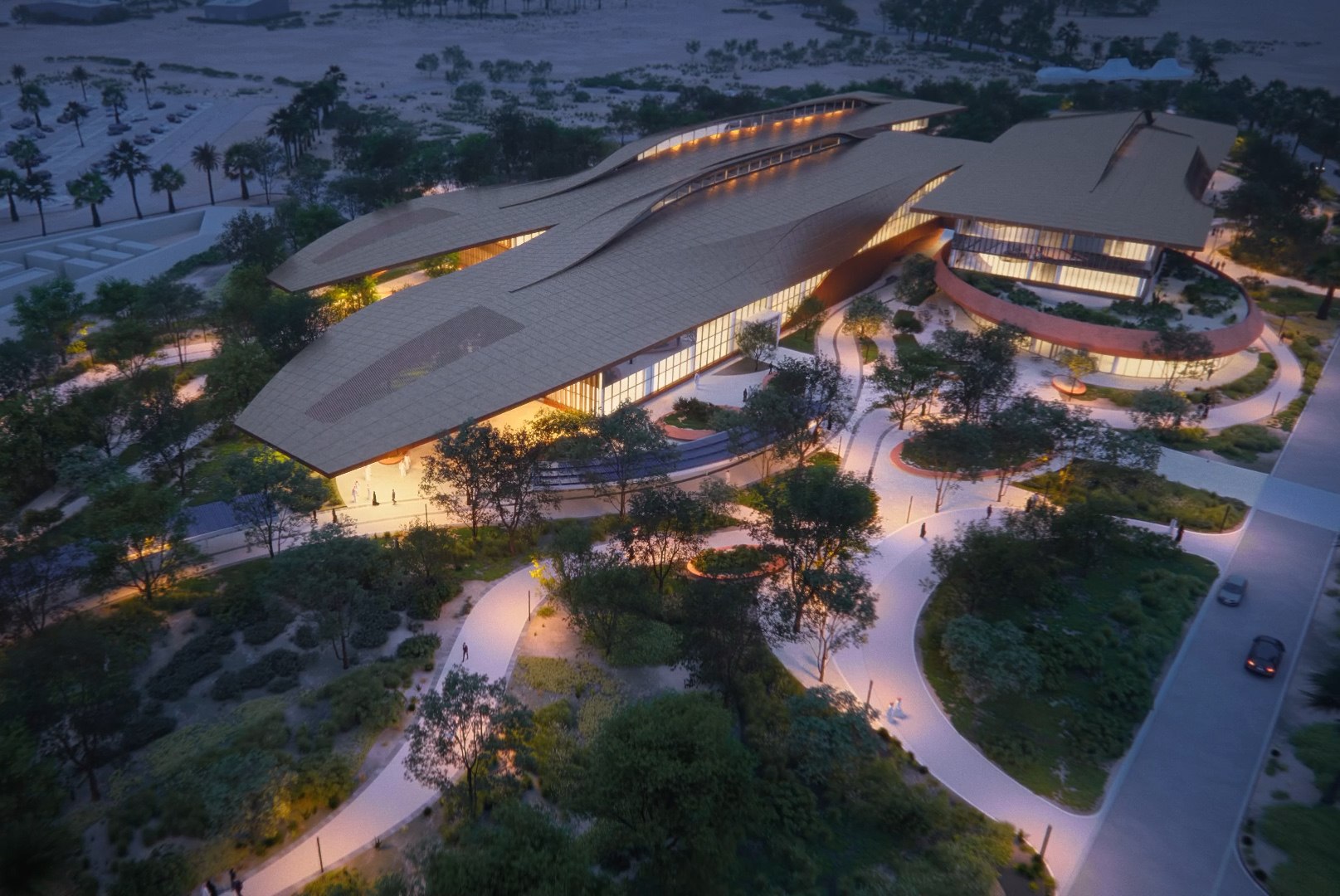
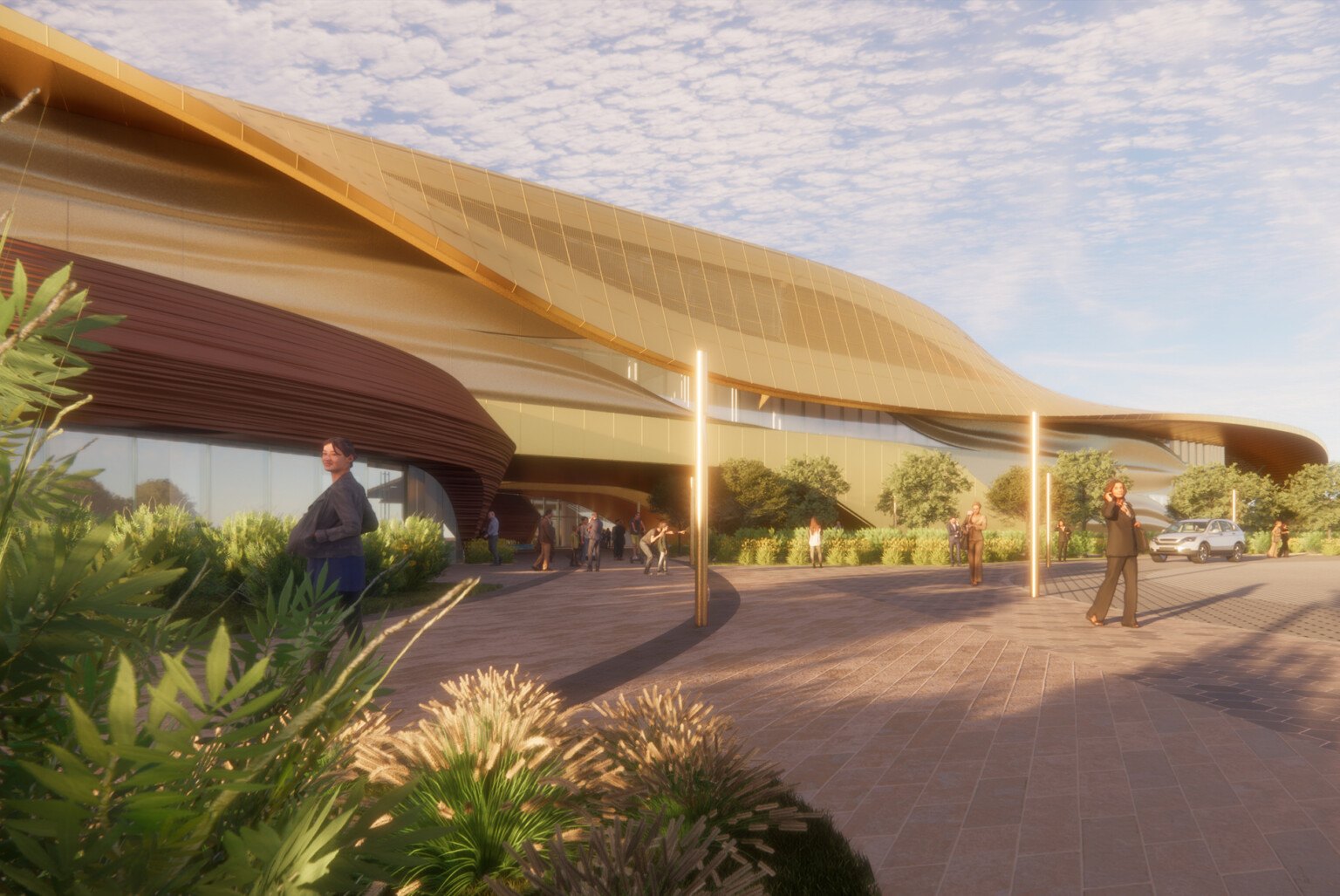
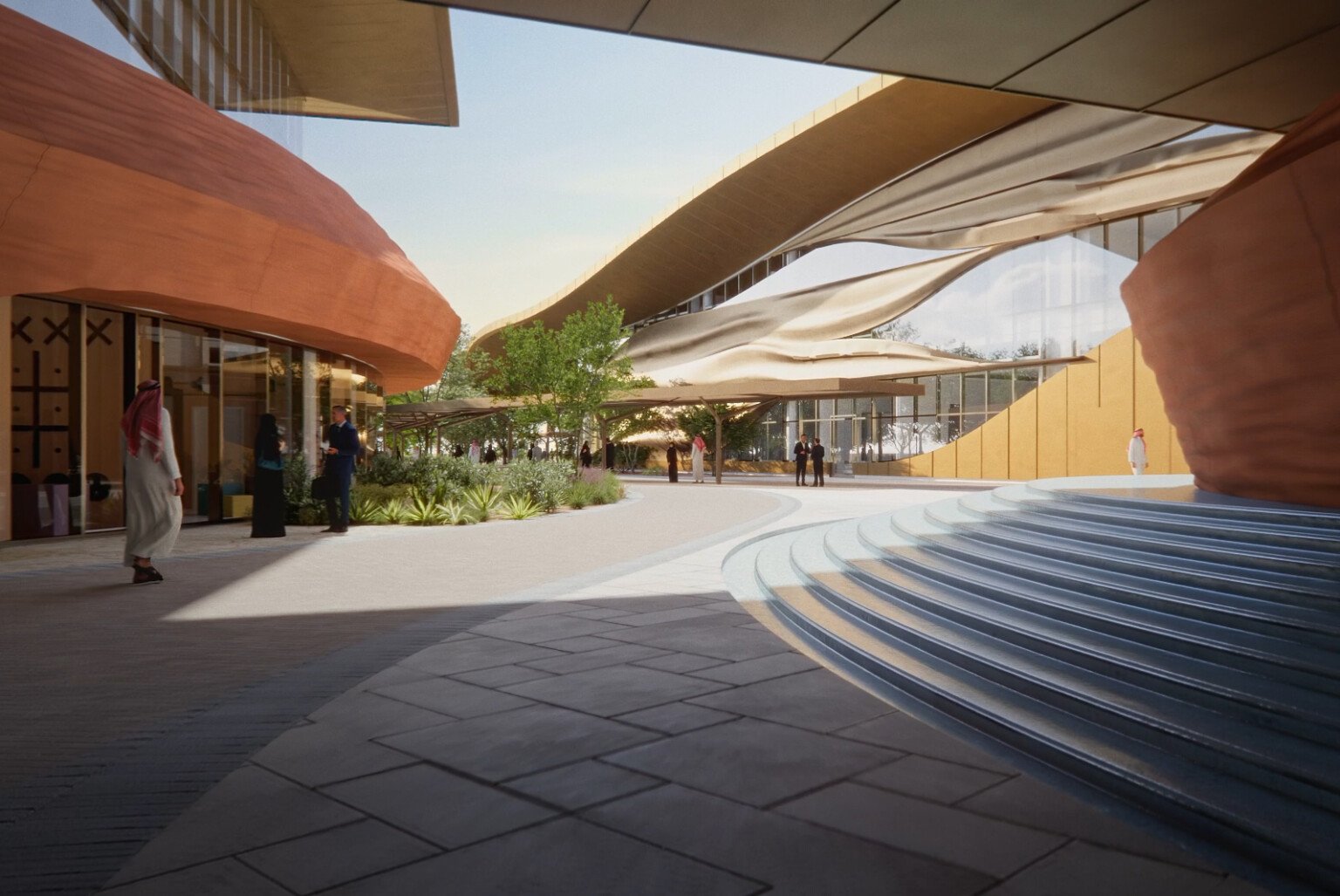
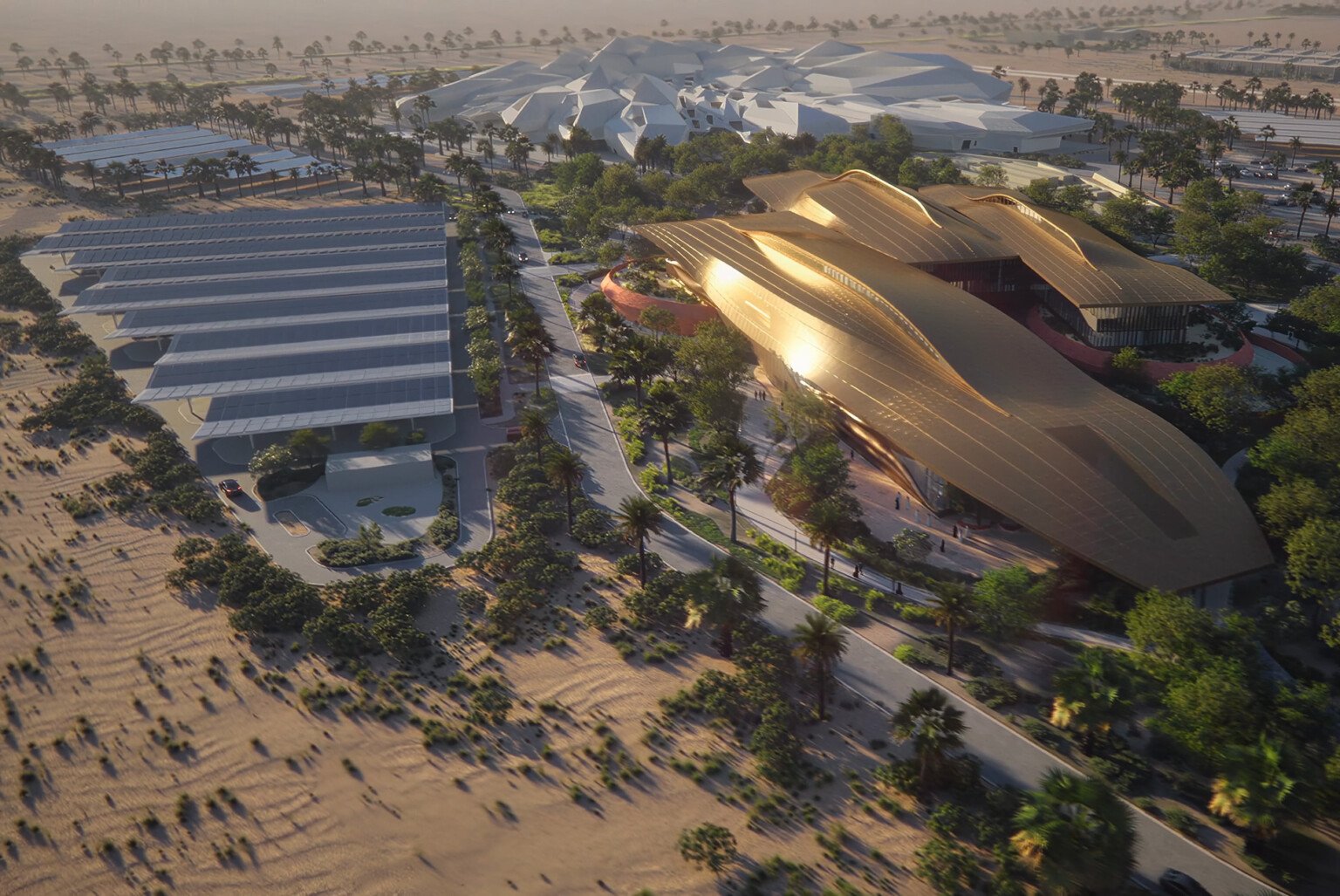
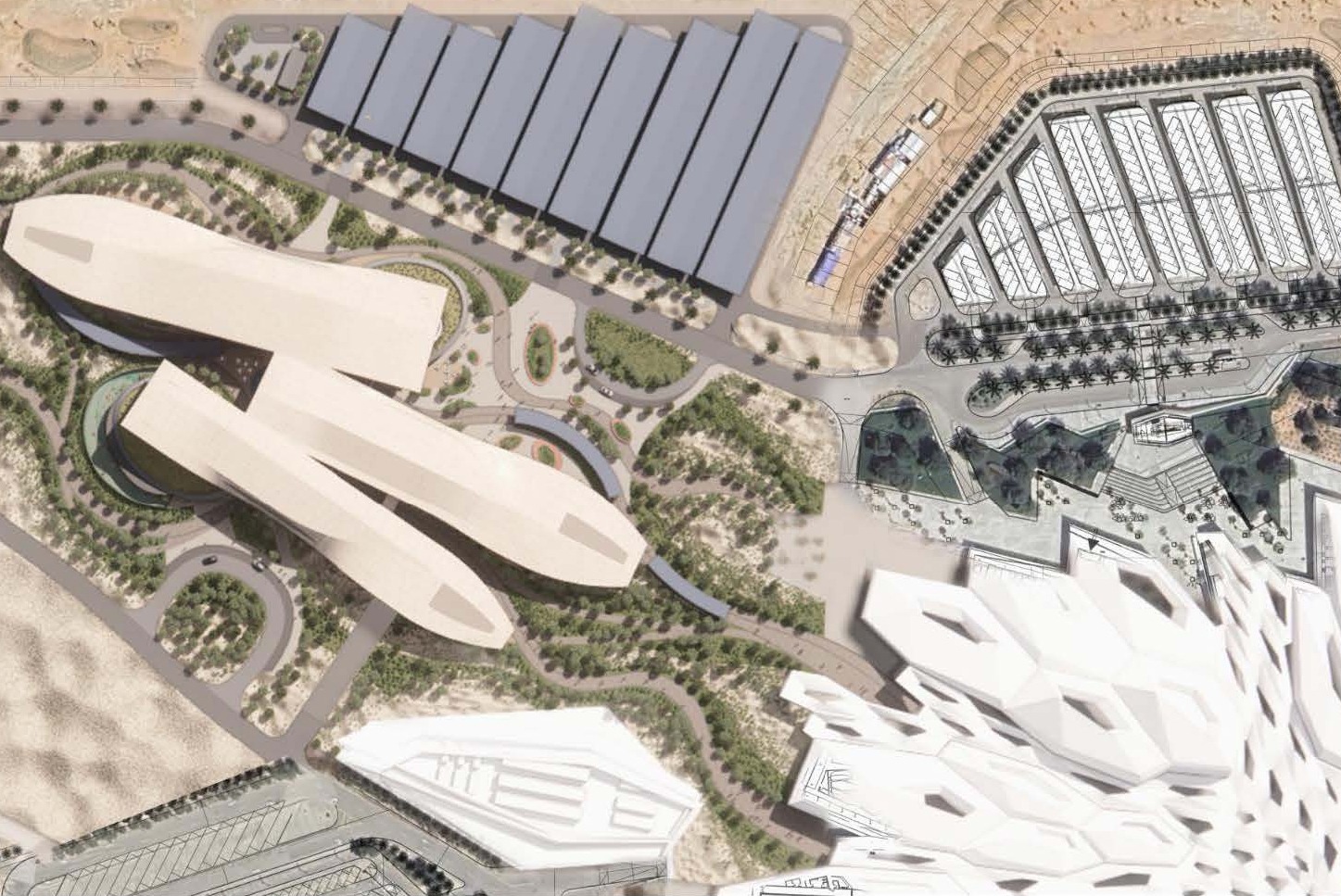
The School is sited along the campus wadi, a seasonal watercourse that blooms into a central garden and shapes the public realm. Three rectilinear wings levitate above this landscape, a design that allows the life of the wadi to flow uninterrupted underneath. This follows a regional tradition of letting buildings create shade, forming comfortable outdoor rooms between the masses.
Where the wings touch down, they are anchored by sculptural forms containing the cafeteria, auditorium and daycare—key community functions. Above, bridges stitch the wings into a single academic neighborhood connecting the various disciplines.
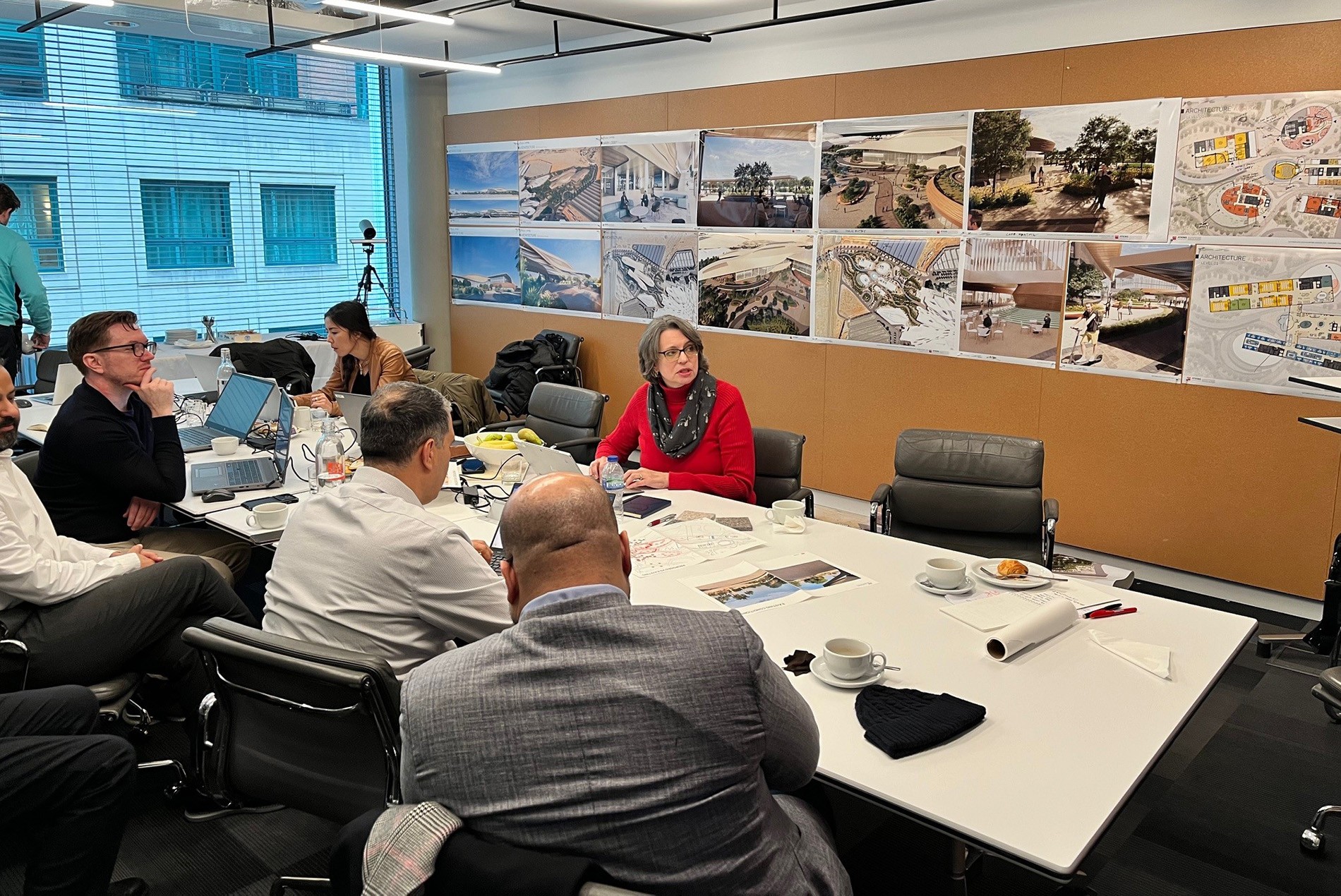
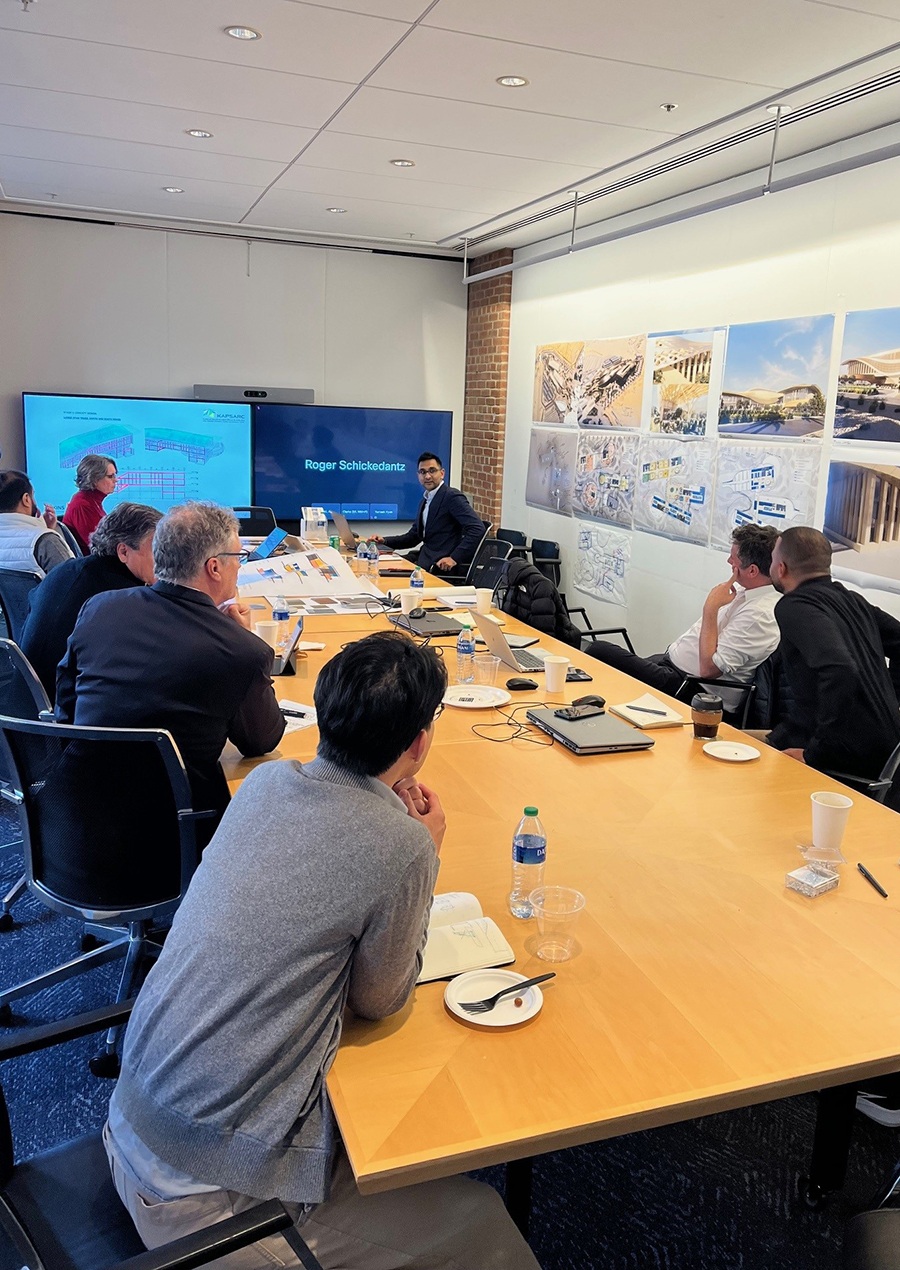
Our design for the School directly addresses a challenge within the campus master plan: a long, exposed walk with little shade that detached the residential community from the research district. The new building transforms this daily commute, establishing itself as a vital community hub along the path. It acts as a “third place” that bridges home and work life, converting routine movement into an opportunity for planned and spontaneous exchange.
Shaded walks beneath the lifted wings guide people into an inviting, triple-height lobby. A grand stair, bridges and clear sightlines help put occupants at ease.
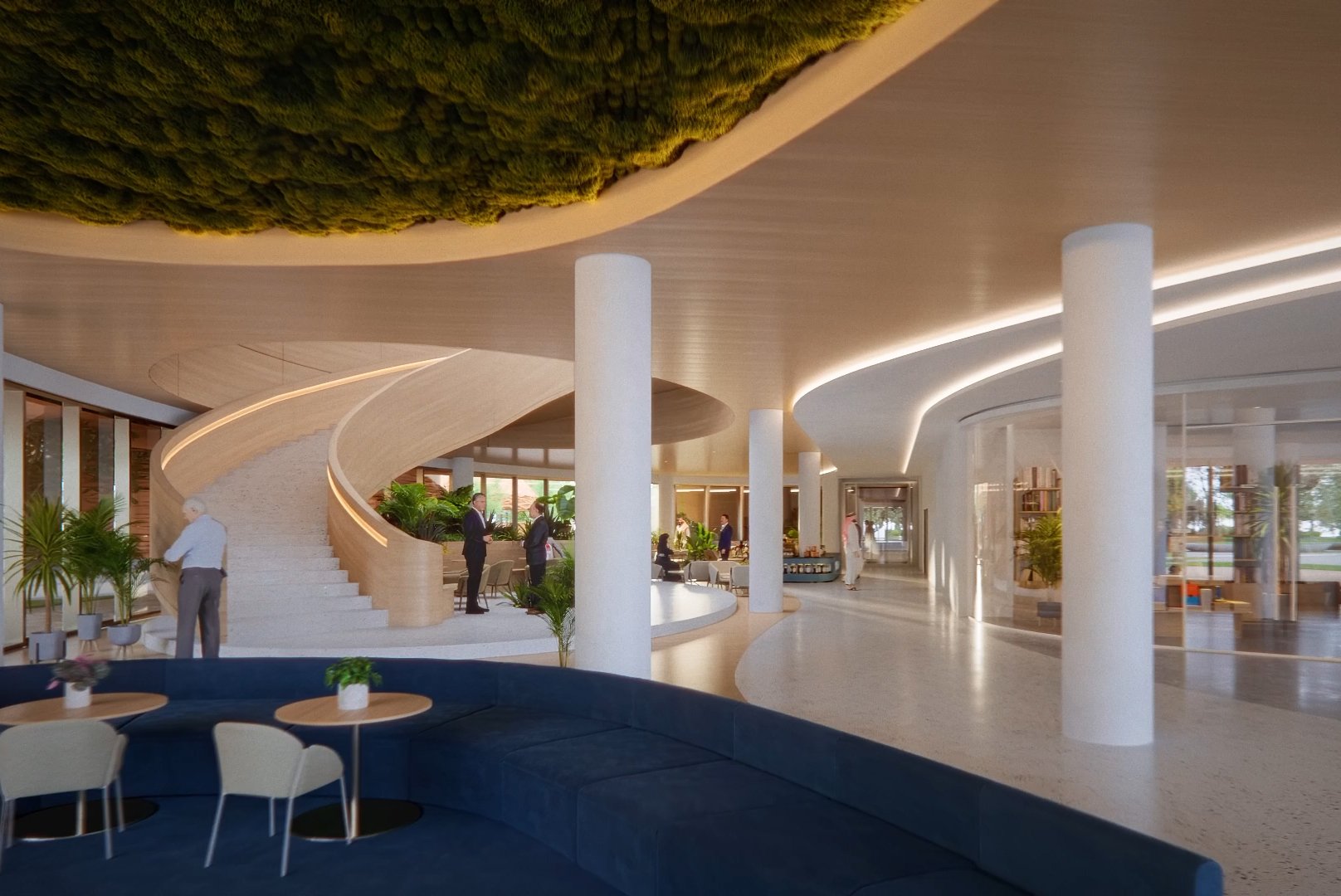
The building program is organized in a clear vertical journey, with public spaces at the bottom and private areas as people move up. This creates an equitable distribution of space, providing the most-used common areas with a direct connection to the landscape. Visitors enter through a triple-height hall on the ground level. From this social hub, people can easily reach the cafeteria, fitness center and daycare.
A grand stair carries movement to the second-level academic core, which appears to levitate above the landscape. Here, classrooms and faculty offices occupy narrow floor plates designed to maximize balanced daylight and preserve views of the campus. The top floor provides the most privacy, concentrating quieter KAPSARC research offices and smaller seminar rooms.
Below grade, a dedicated service level consolidates the loading dock, service elevator and major MEP systems, keeping back-of-house operations efficient and out of public view.
KAPSARC’s mission as an advisory think tank is to imagine a sustainable, secure and affordable energy future. The team wanted the school that would train its future leaders to embody that vision. The client’s charge was direct and, in the words of the design team, “extremely complicated:” create a net-zero energy building in the desert.
Our design targets a net-positive goal, with a large solar installation designed to generate 130% of the school’s annual energy demand. Instead of placing the photovoltaic panels on the building’s roof, the team integrated them into the parking experience. The panels are built into large canopies that provide essential shade for vehicles while generating a surplus of clean energy for the campus. These strategies result in a projected annual Energy Use Intensity (EUI) of 166 kWh/m², a 22% reduction against the ASHRAE 90.1-2016 baseline.
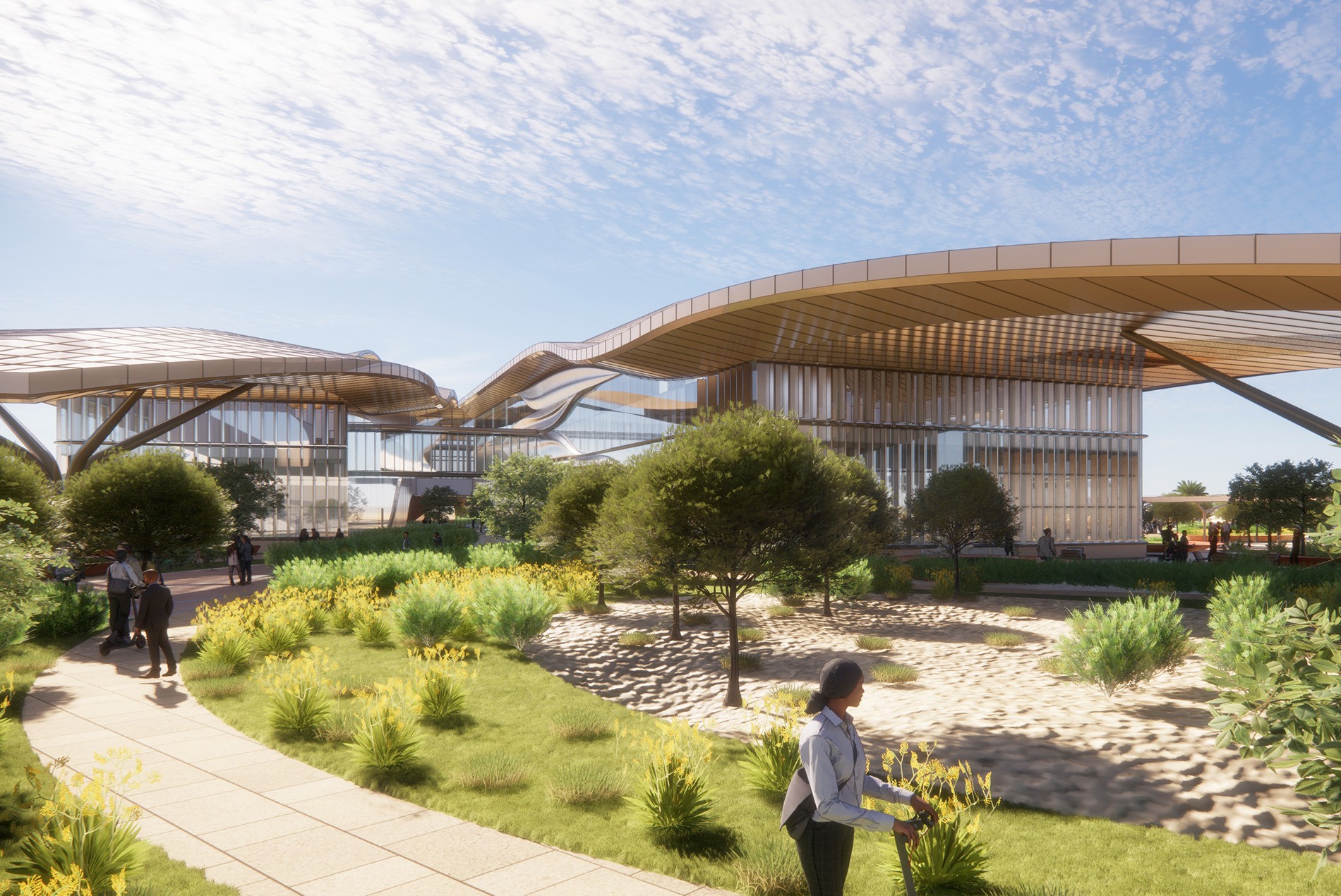
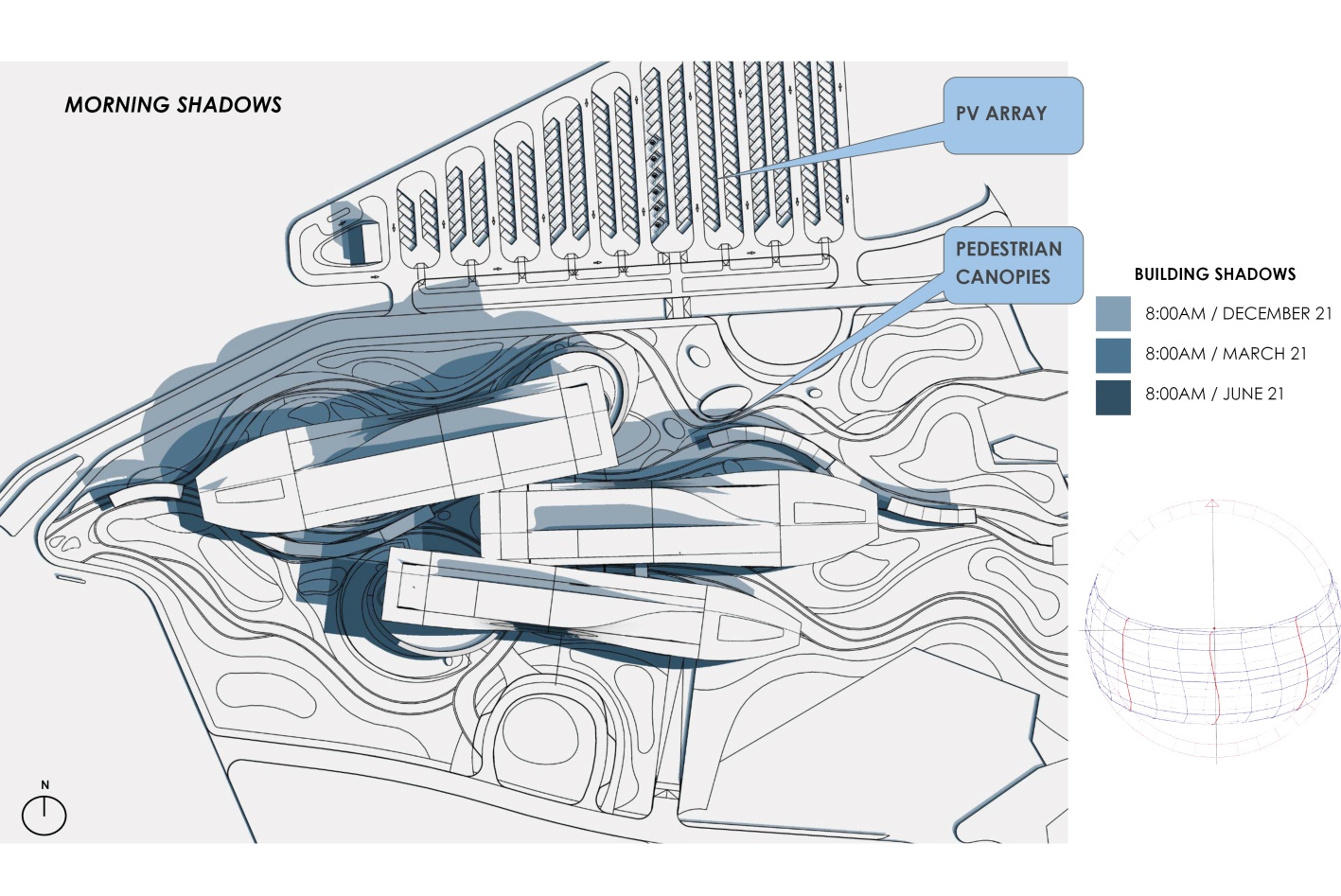
Achieving the net-zero goal required a passive-first approach rooted in regional traditions. The building’s primary sustainable move was to elevate its main wings, allowing the landscape and cooling breezes to flow underneath—a modern take on the Saudi strategy of letting buildings shade the spaces between them. The roof forms extend far beyond the floor plates, creating large, shaded courtyards where teaching, dining and socializing can happen outdoors during the region’s cooler months.
Our design also learns from the practical challenges of the desert. An early concept with horizontal sun shades was rejected because they are known to collect sand during storms and attract nesting birds, creating a significant maintenance burden. Instead, guided by extensive performance modeling, the team developed an efficient “second skin” for the facade. This perforated screen limits heat gain and glare while maintaining views, avoiding the problems of traditional shading techniques.
Material choices were also critical for comfort. Touchable ground-level surfaces use glass-fiber reinforced concrete instead of metal, which can get dangerously hot.
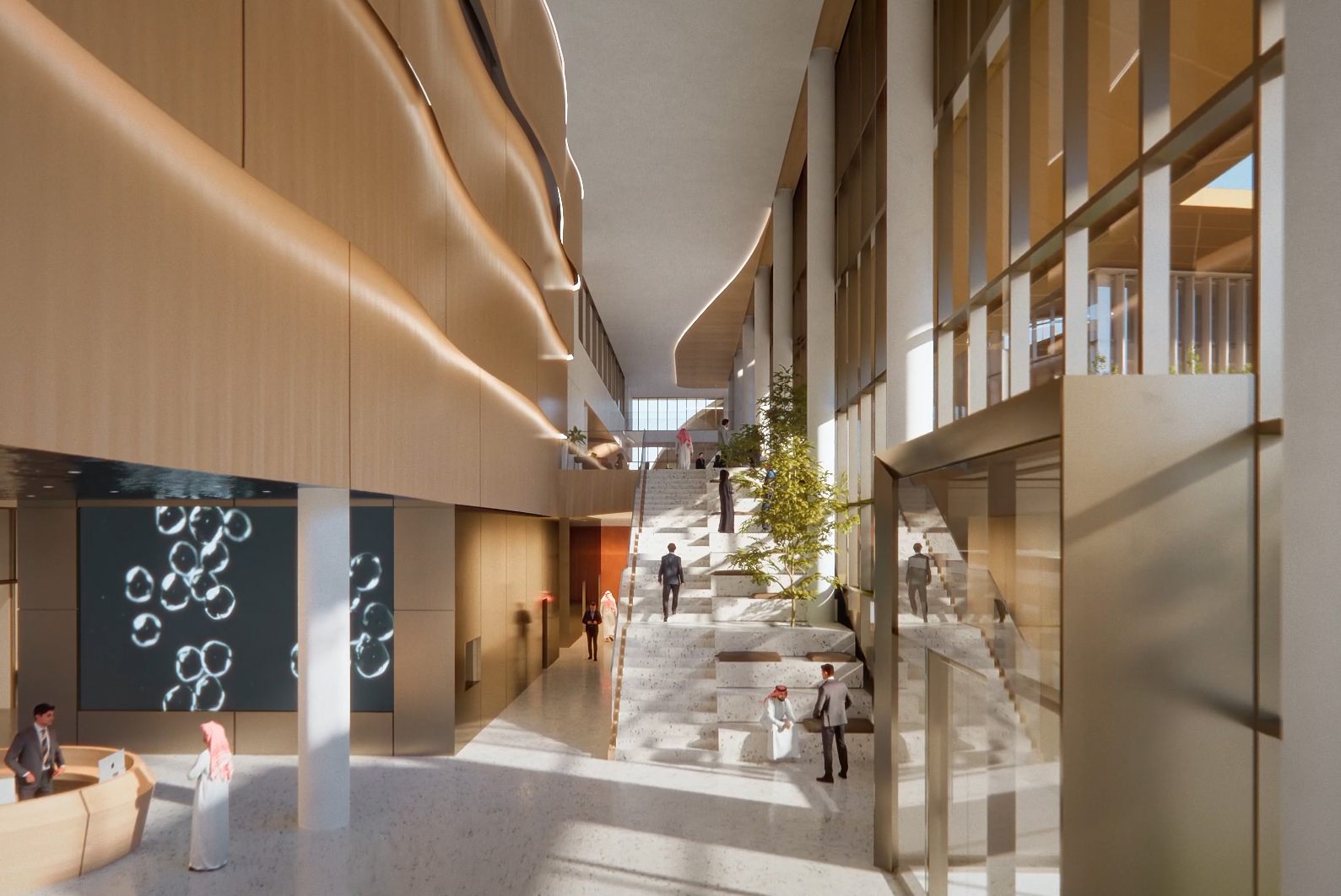
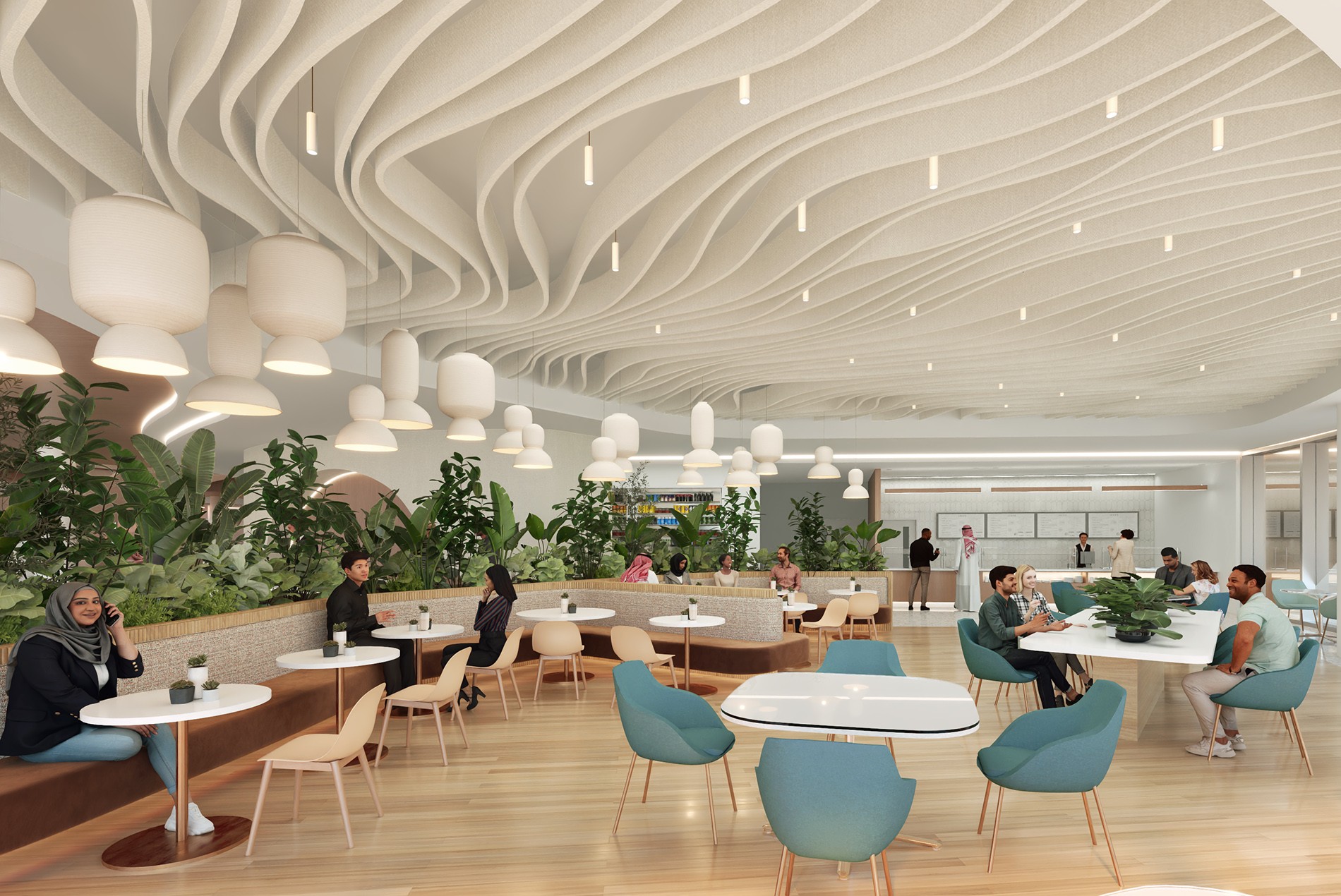
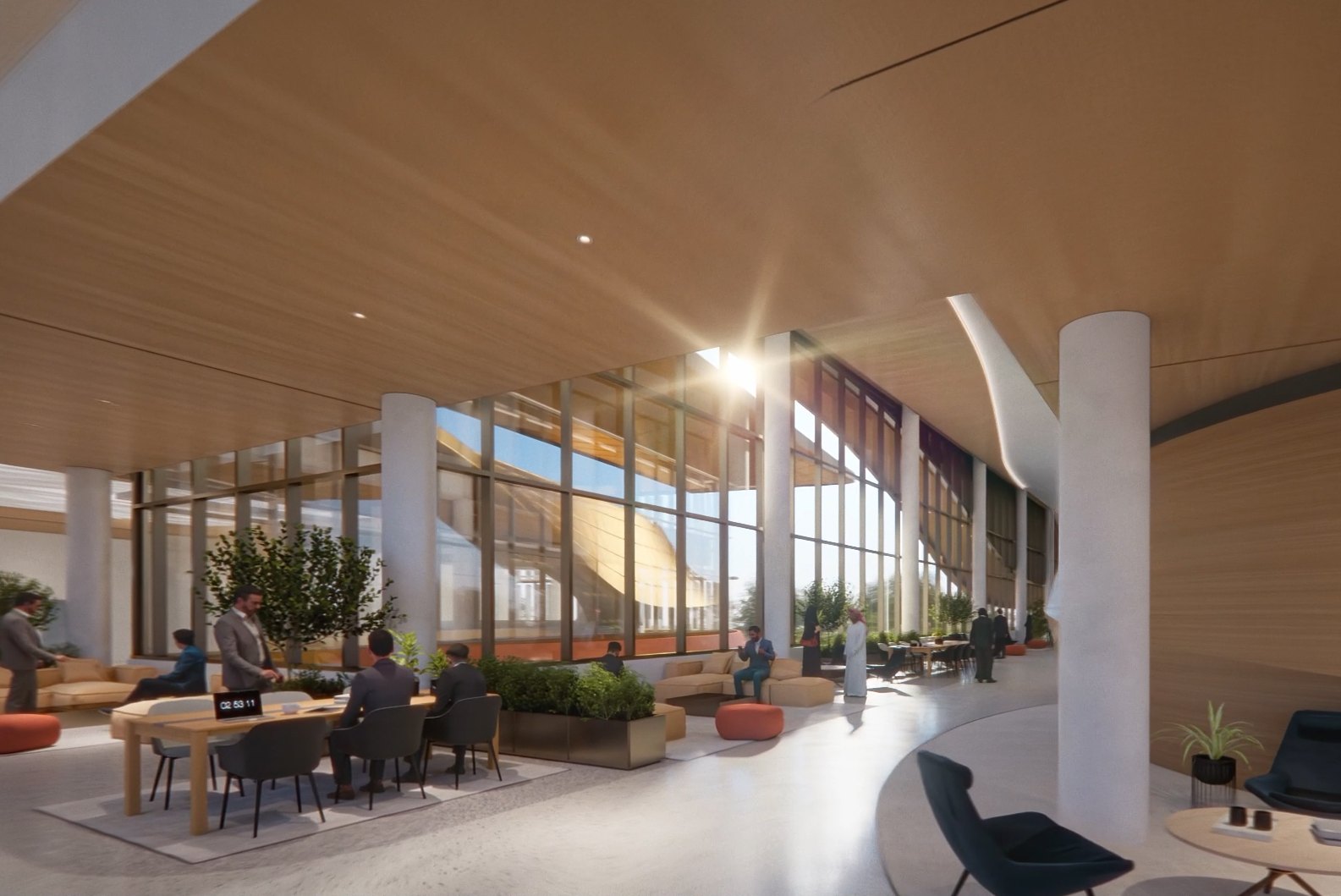
Our interior design carries forward the building’s focus on people, turning it into a spot where students and researchers actually want to linger. Drawing from Salmani architecture, it links modern shapes to Saudi heritage and traditions.
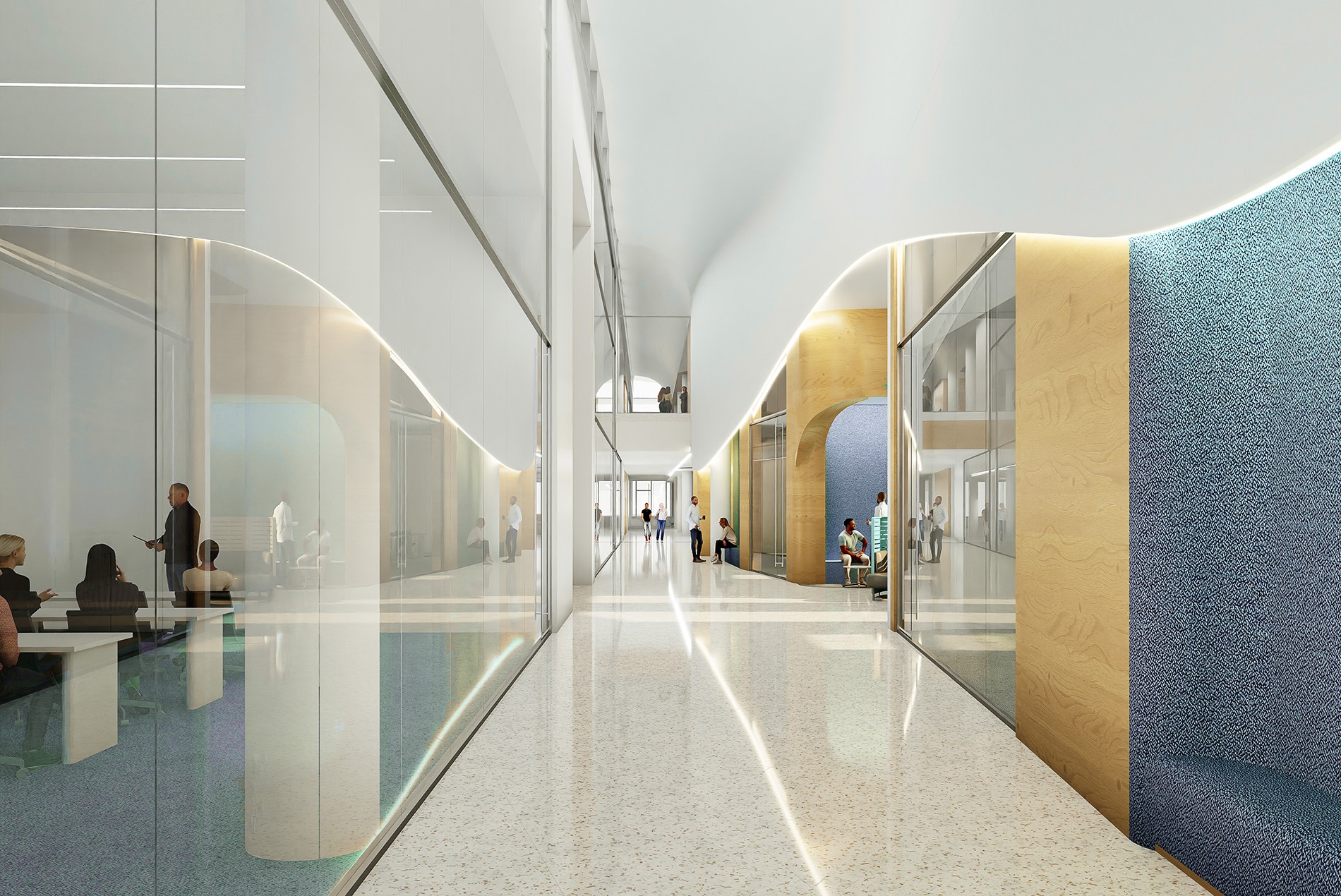
The materials echo the surrounding desert, with warm, natural tones and tactile surfaces. Flowing wood details and hand-worked perforated metal ceilings reference the region’s exceptional craftsmanship. Hanging green walls in the cafeteria soften the boundary between inside and out.
The bridges connecting the wings are more than hallways. Bathed in natural light and offering scenic views of the campus gardens, they are lively collaboration lounges that promote the informal interaction that’s so essential to the School’s mission.
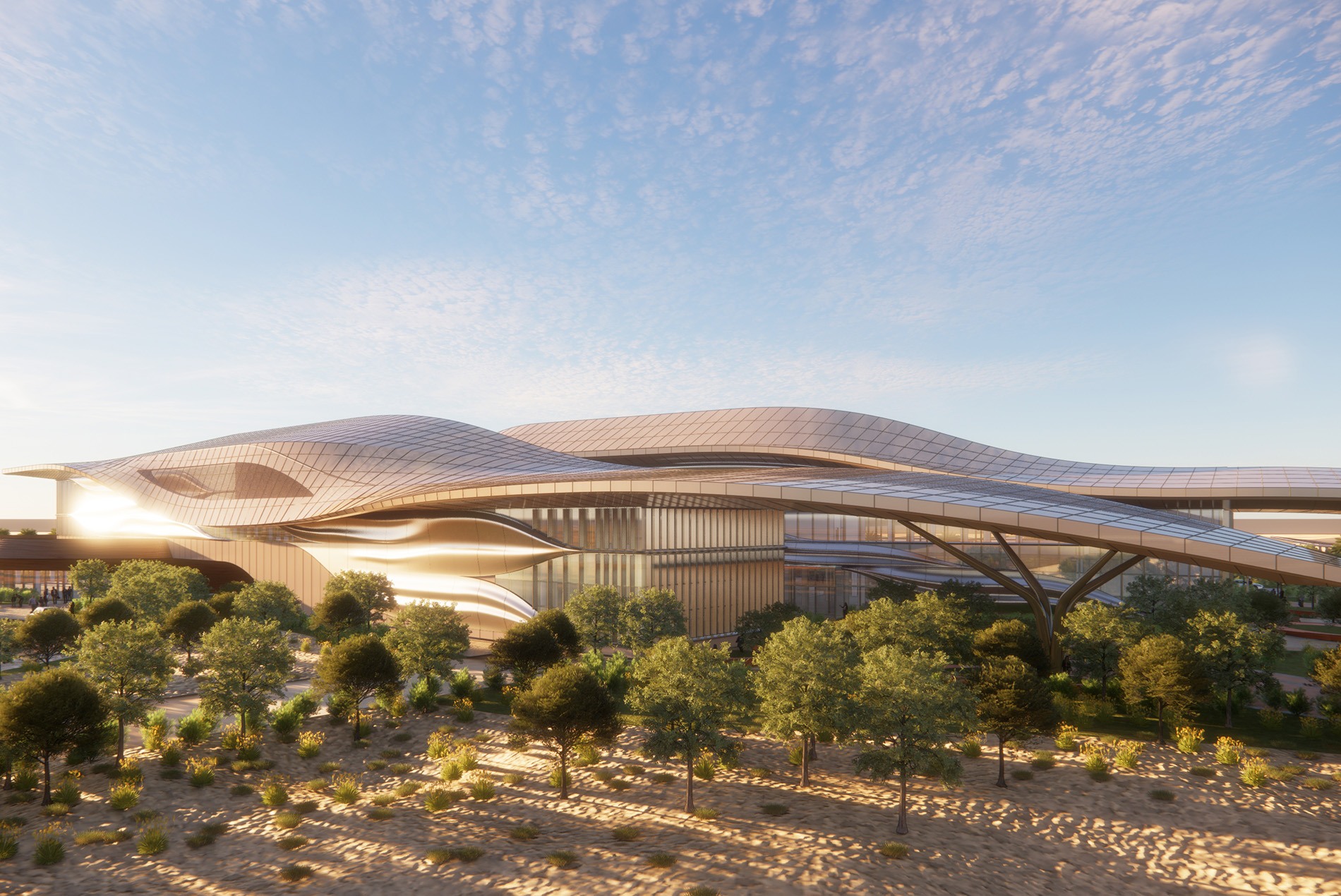
Set to open in 2026, the building will demonstrate that shifting to new energy sources doesn’t mean losing cultural roots. It strikes a harmony between honoring Saudi Arabia’s history and pushing toward what’s next.
As the team puts it, this kind of innovative project only can happen with a forward-thinking client who believes in a design partner to create something that “transforms their lives and the lives of people to come.”
“The vision for KAPSARC School of Public Policy is to develop the knowledge and skills that the new generation needs to shape public policy both locally and globally.”
— Prince Abdulaziz bin Salman, Saudi Minister of Energy, speaking at the Human Capability Initiative in Riyadh
The KAPSARC School of Public Policy is a graduate institution that develops future policymakers through education and research.
Our team has designed the building to serve as a hub where researchers, students, staff, faculty and visitors can converge and collaborate. Set along the wadi between the residential community and the research district, the school acts as a node along that path, connecting home life with work life as this third point where the community can come together.
The School will open with about 500 students and is designed to scale to 1,000. Sited on the campus spine, the 212,600-sq.-ft. building concentrates activity along shaded pedestrian routes and shared amenities that spark exchange. Ground-level daycare, a fitness center and a second campus cafeteria reinforce its role as a daily gathering place.
The School is sited along the campus wadi, a seasonal watercourse that blooms into a central garden and shapes the public realm. Three rectilinear wings levitate above this landscape, a design that allows the life of the wadi to flow uninterrupted underneath. This follows a regional tradition of letting buildings create shade, forming comfortable outdoor rooms between the masses.
Where the wings touch down, they are anchored by sculptural forms containing the cafeteria, auditorium and daycare—key community functions. Above, bridges stitch the wings into a single academic neighborhood connecting the various disciplines.
Our design for the School directly addresses a challenge within the campus master plan: a long, exposed walk with little shade that detached the residential community from the research district. The new building transforms this daily commute, establishing itself as a vital community hub along the path. It acts as a “third place” that bridges home and work life, converting routine movement into an opportunity for planned and spontaneous exchange.
Shaded walks beneath the lifted wings guide people into an inviting, triple-height lobby. A grand stair, bridges and clear sightlines help put occupants at ease.
The building program is organized in a clear vertical journey, with public spaces at the bottom and private areas as people move up. This creates an equitable distribution of space, providing the most-used common areas with a direct connection to the landscape. Visitors enter through a triple-height hall on the ground level. From this social hub, people can easily reach the cafeteria, fitness center and daycare.
A grand stair carries movement to the second-level academic core, which appears to levitate above the landscape. Here, classrooms and faculty offices occupy narrow floor plates designed to maximize balanced daylight and preserve views of the campus. The top floor provides the most privacy, concentrating quieter KAPSARC research offices and smaller seminar rooms.
Below grade, a dedicated service level consolidates the loading dock, service elevator and major MEP systems, keeping back-of-house operations efficient and out of public view.
KAPSARC’s mission as an advisory think tank is to imagine a sustainable, secure and affordable energy future. The team wanted the school that would train its future leaders to embody that vision. The client’s charge was direct and, in the words of the design team, “extremely complicated:” create a net-zero energy building in the desert.
Our design targets a net-positive goal, with a large solar installation designed to generate 130% of the school’s annual energy demand. Instead of placing the photovoltaic panels on the building’s roof, the team integrated them into the parking experience. The panels are built into large canopies that provide essential shade for vehicles while generating a surplus of clean energy for the campus. These strategies result in a projected annual Energy Use Intensity (EUI) of 166 kWh/m², a 22% reduction against the ASHRAE 90.1-2016 baseline.
Achieving the net-zero goal required a passive-first approach rooted in regional traditions. The building’s primary sustainable move was to elevate its main wings, allowing the landscape and cooling breezes to flow underneath—a modern take on the Saudi strategy of letting buildings shade the spaces between them. The roof forms extend far beyond the floor plates, creating large, shaded courtyards where teaching, dining and socializing can happen outdoors during the region’s cooler months.
Our design also learns from the practical challenges of the desert. An early concept with horizontal sun shades was rejected because they are known to collect sand during storms and attract nesting birds, creating a significant maintenance burden. Instead, guided by extensive performance modeling, the team developed an efficient “second skin” for the facade. This perforated screen limits heat gain and glare while maintaining views, avoiding the problems of traditional shading techniques.
Material choices were also critical for comfort. Touchable ground-level surfaces use glass-fiber reinforced concrete instead of metal, which can get dangerously hot.
Our interior design carries forward the building’s focus on people, turning it into a spot where students and researchers actually want to linger. Drawing from Salmani architecture, it links modern shapes to Saudi heritage and traditions.
The materials echo the surrounding desert, with warm, natural tones and tactile surfaces. Flowing wood details and hand-worked perforated metal ceilings reference the region’s exceptional craftsmanship. Hanging green walls in the cafeteria soften the boundary between inside and out.
The bridges connecting the wings are more than hallways. Bathed in natural light and offering scenic views of the campus gardens, they are lively collaboration lounges that promote the informal interaction that’s so essential to the School’s mission.
Set to open in 2026, the building will demonstrate that shifting to new energy sources doesn’t mean losing cultural roots. It strikes a harmony between honoring Saudi Arabia’s history and pushing toward what’s next.
As the team puts it, this kind of innovative project only can happen with a forward-thinking client who believes in a design partner to create something that “transforms their lives and the lives of people to come.”