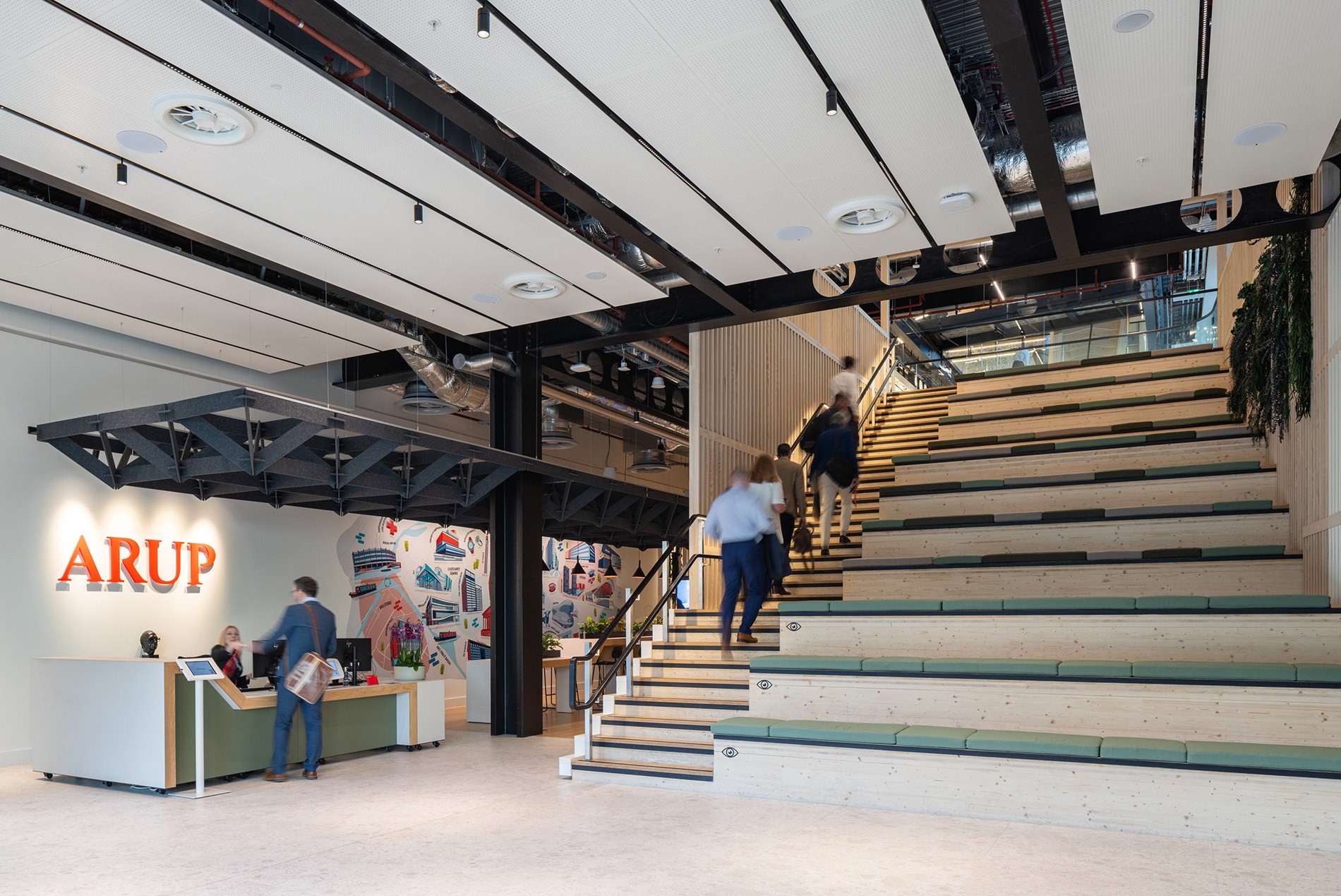
After a decade outside Birmingham, engineering consultancy Arup returned to the city center. The move reconnects the firm with clients and community while accommodating 900 people—each with different working needs—and signals its renewed commitment to the Midlands.
Working with Arup and fit-out specialist Overbury, our interior design transformed three floors of speculative shell space at One Centenary Way into 68,000 square feet of next-generation workspace.
Neuroinclusion was one of the organizing ideas from the outset. The design blends Arup’s technical rigor with a clear understanding of how their people think, feel and work. Arup also wanted the workplace to function like a living lab by using real-time feedback to test assumptions, prove what works and improve the environment over time.
HOK led a collaborative design process with Arup’s Workplace Advisory team, the Inclusive Environment network and the Midlands Connect Ability cohort. The team created data-rich prototypes that mapped work styles and assembled a kit of parts to support different needs.
Workshops helped the design team translate research into user personas and “day-in-the-life” video scenarios that followed hyper- and hyposensitive staff from their commute through a full workday.
This evidence-based approach aligned Arup’s data-driven culture with HOK’s neuroinclusive research and design approach. Before finalizing any layouts, the team was able to establish clear targets for adjacencies, circulation, acoustics and lighting.
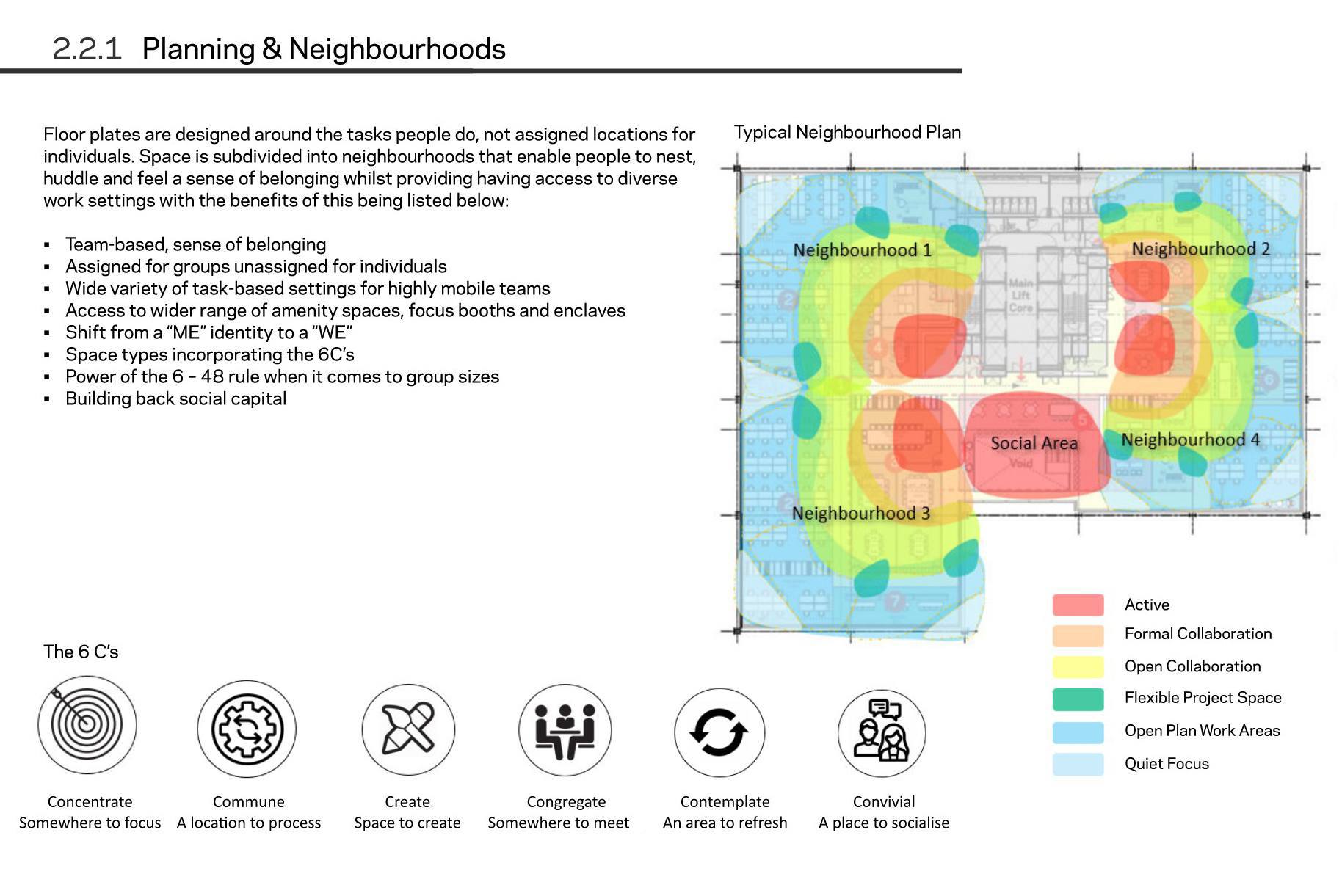
To give people real choice without overload, our design organizes Arup’s workplace around six distinct modes of working: Concentrate, Contemplate, Commune, Create, Congregate and Convivial. This simple framework guided everything from macro-zoning to furniture selection.
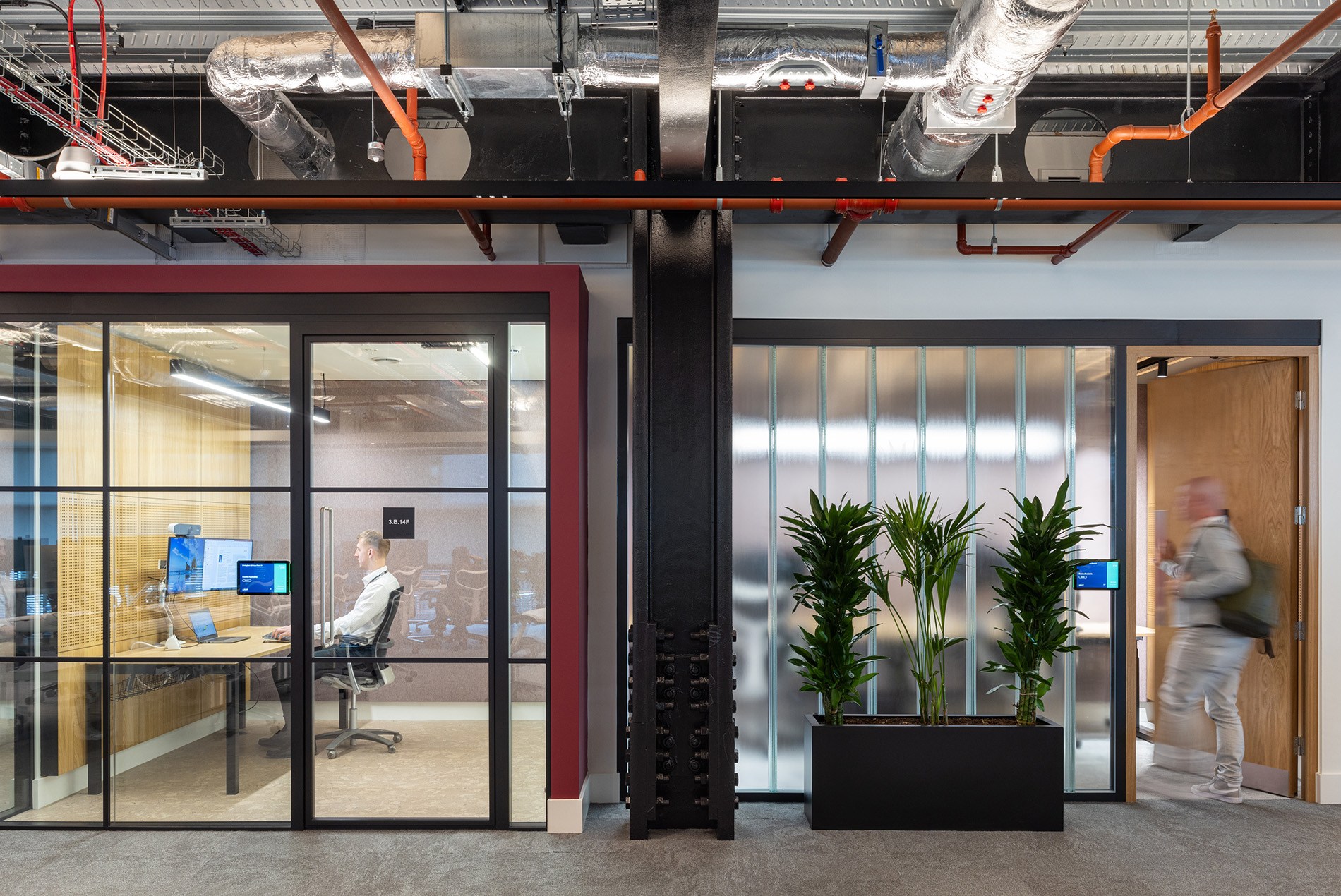
Concentrate encompasses 26 focus rooms in a variety of configurations for heads-down tasks.
Contemplate spaces, including Mindfulness Zones, occupy the quietest corners with daylight and greenery.
Moving inward, Commune and Create areas support collaboration and creativity.
Congregate and Convivial settings activate the ground-floor “shop window,” engaging the public and hosting events.
Soft thresholds, not hard walls, create what the design team calls “fuzzy boundaries,” letting neighborhoods expand, contract or merge as teams grow or shrink.
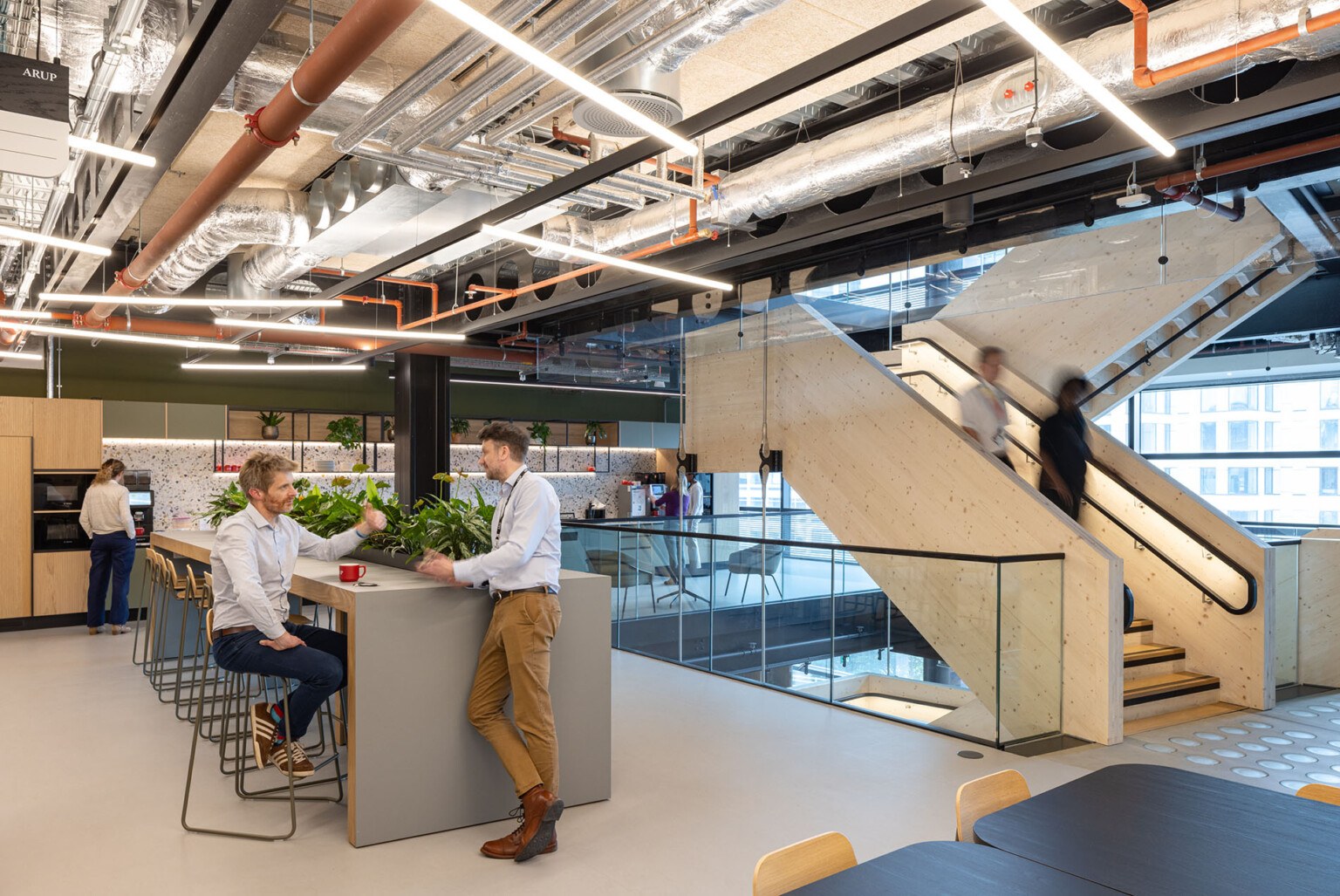
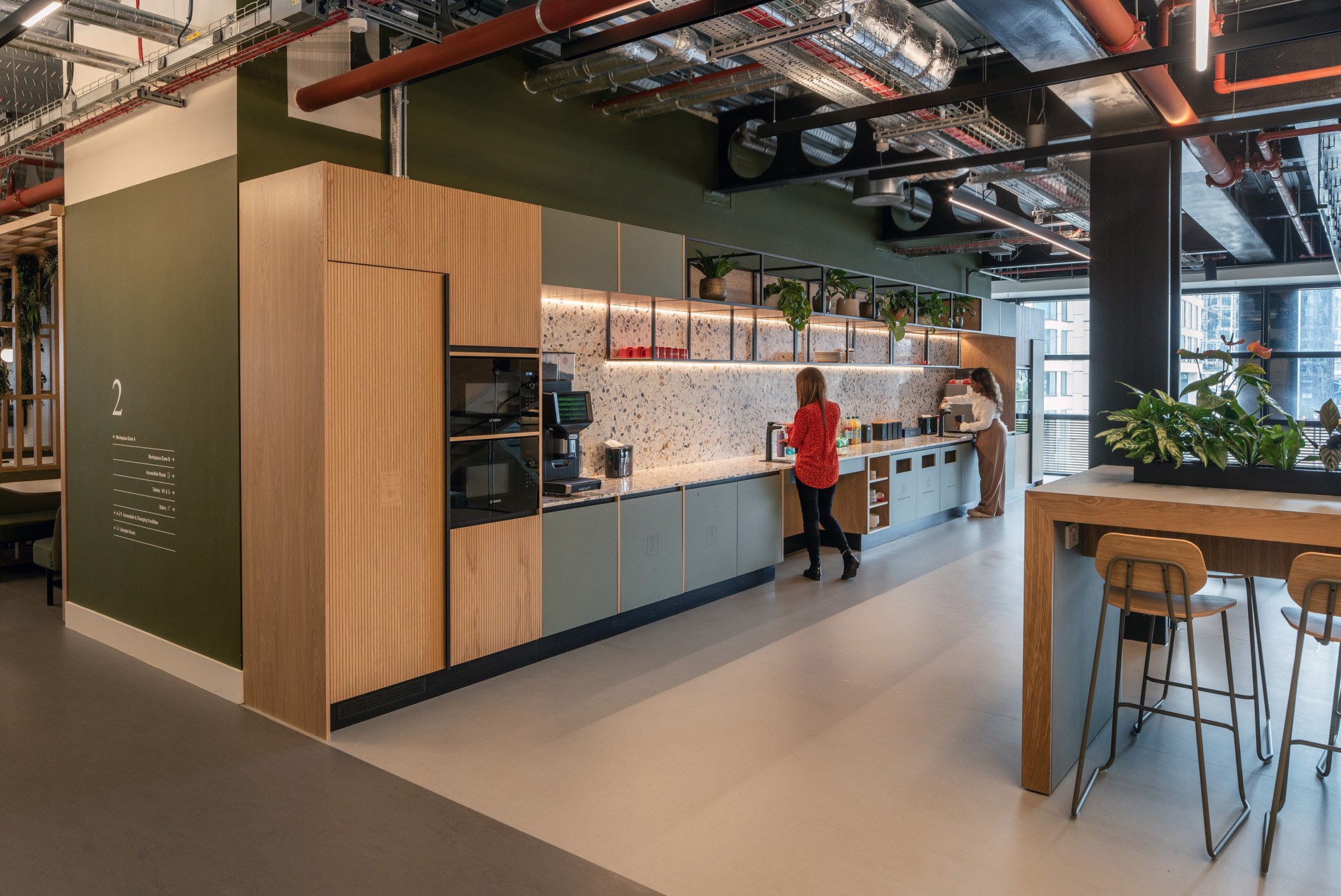
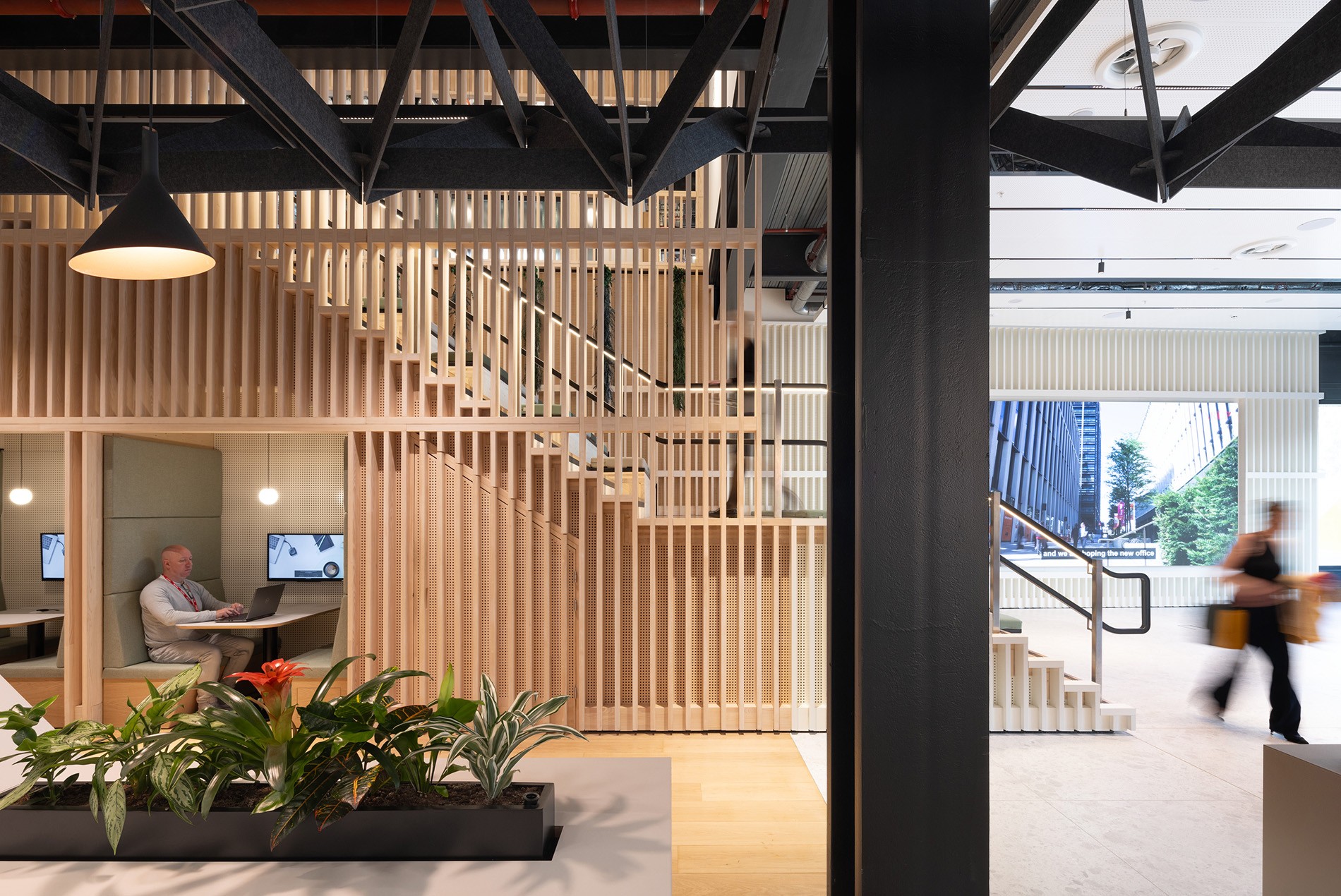
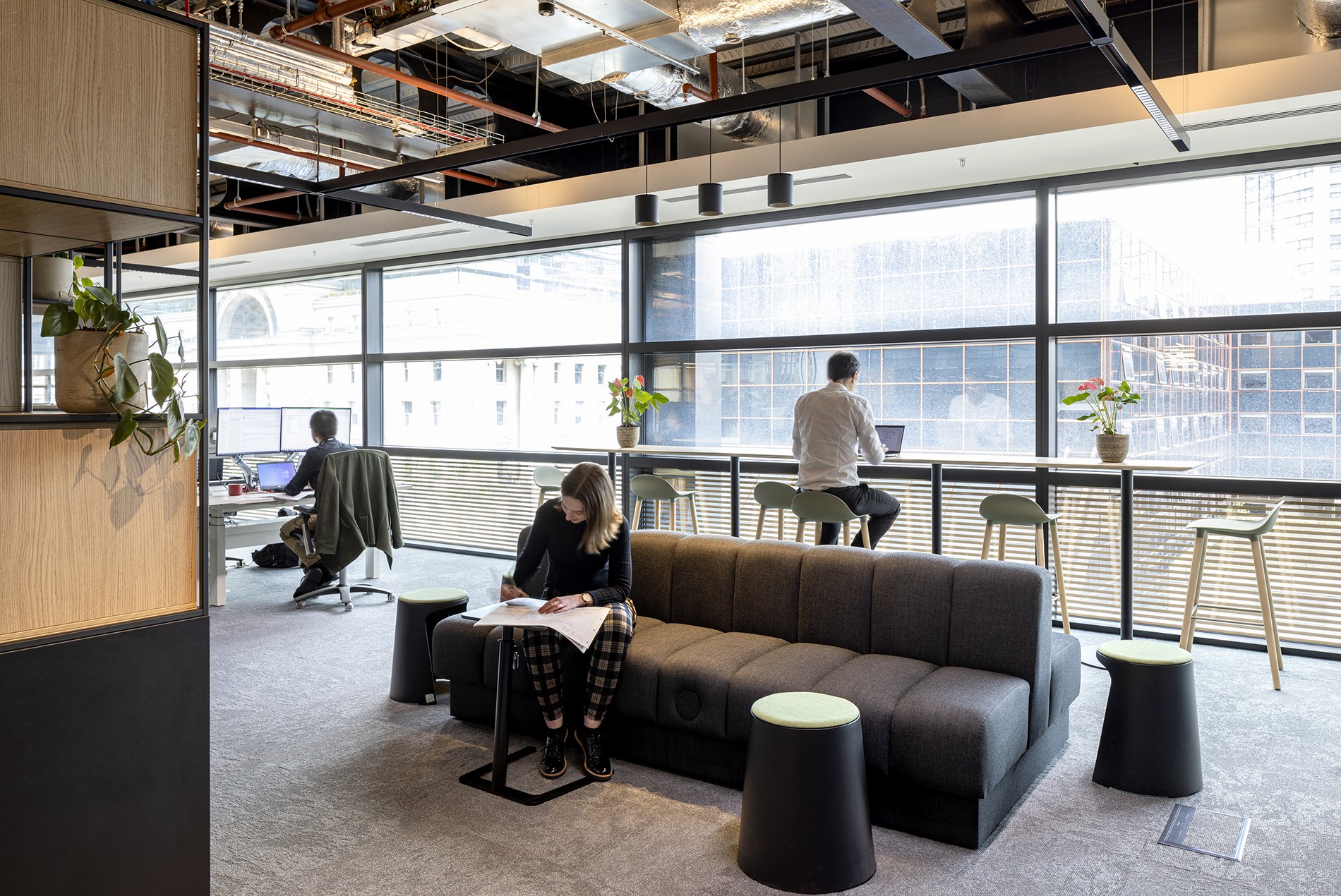
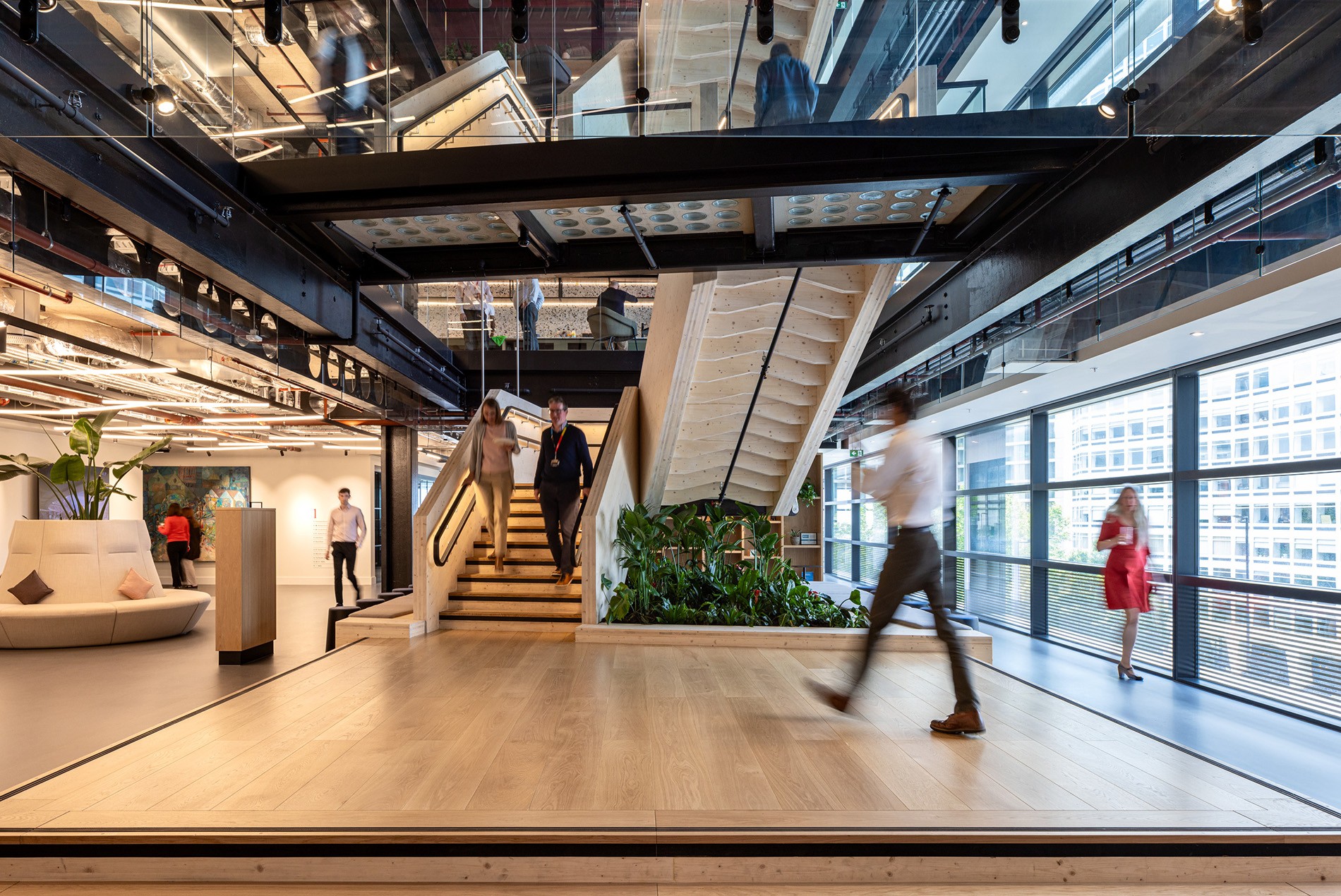
A central atrium anchors the three floors. A sculptural engineered-timber stair encourages walking and interaction. Each floor has a color identity—blue, green or red—shown through accents and wayfinding.
Digital totems display real-time occupancy and environmental data, helping people choose where to work.
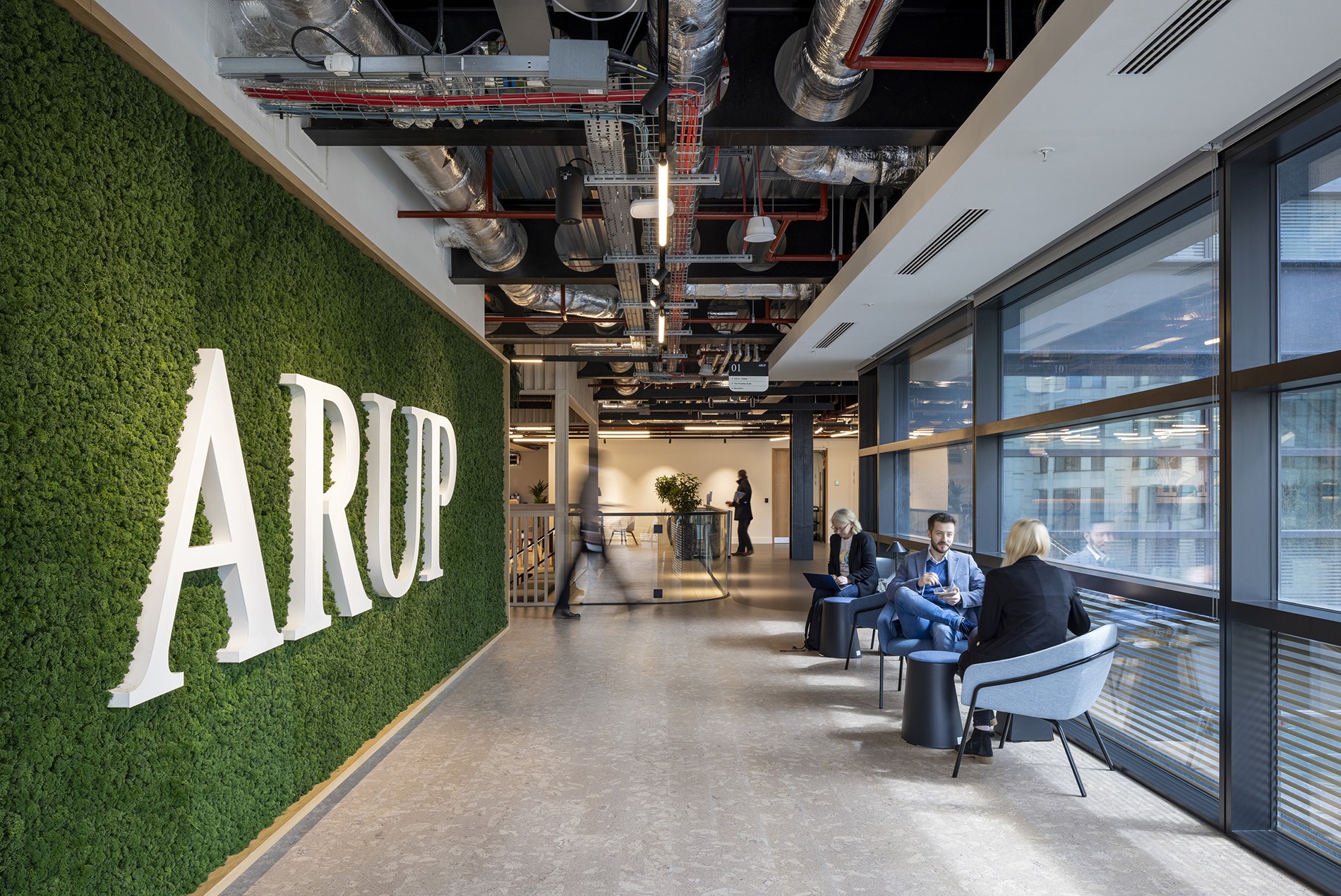
Distinct landmarks like the preserved moss wall with Arup branding, the multipurpose Paradise Suite and dedicated lifestyle rooms serve as anchors in this unassigned seating environment.
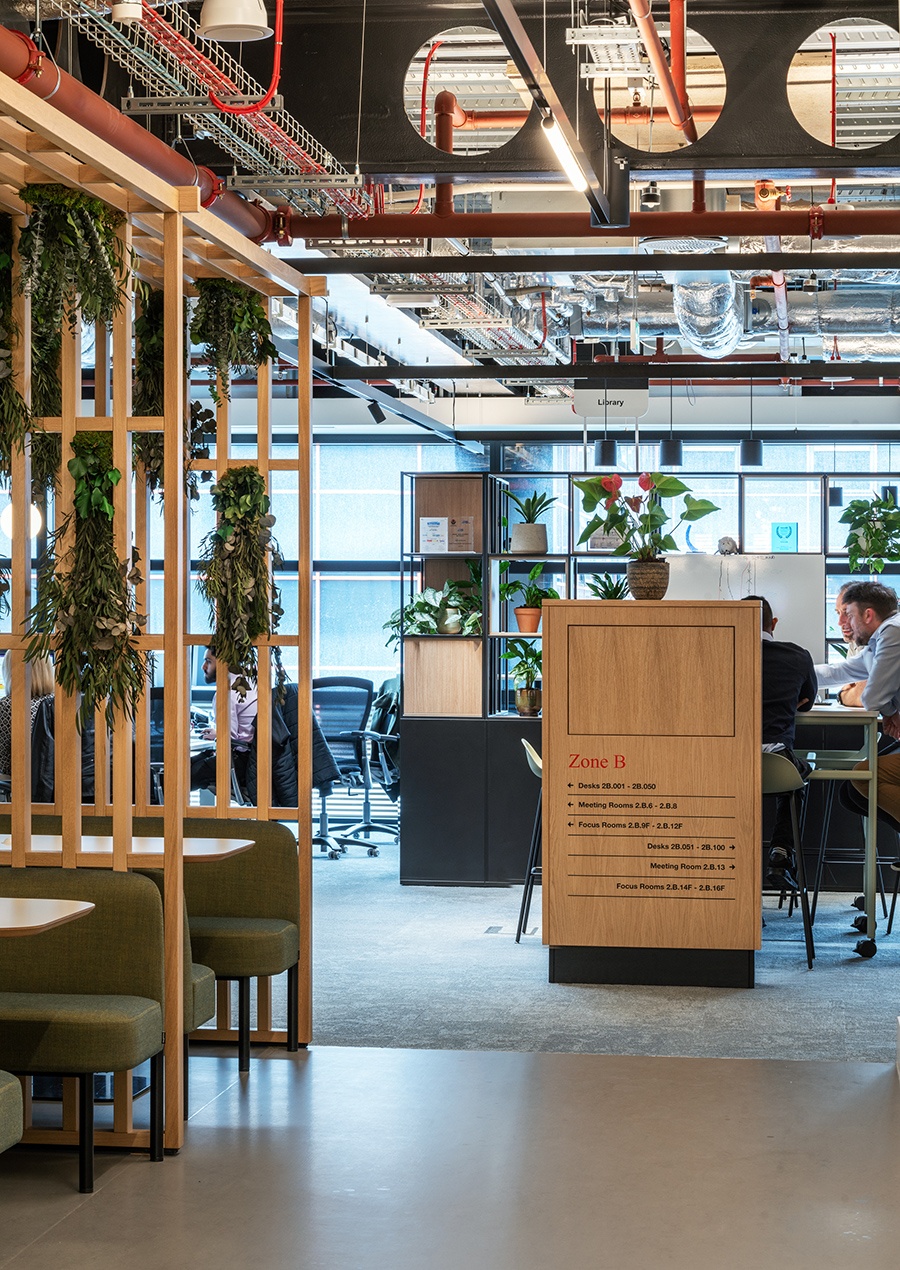
The design brief called for “Arup on show,” with exposed engineering systems that serve as educational tools for new staff and graduates. Our team embraced this industrial aesthetic while carefully managing its sensory impact.
Exposed MEP services run in organized patterns overhead. Set against muted structural elements, the systems reduce visual chaos without hiding their function. High-performance acoustic panels integrated into the exposed ceiling work with cork floors and wall panels to absorb sound.
Light follows natural cycles. A circadian system runs cool and bright in the morning and warm and dim toward evening, adapting to the time of day and change of seasons. Zones with lower ambient light provide adjustable task lighting that gives Arup’s people control over their environment. Smart controls and CO₂ monitoring enhance comfort.
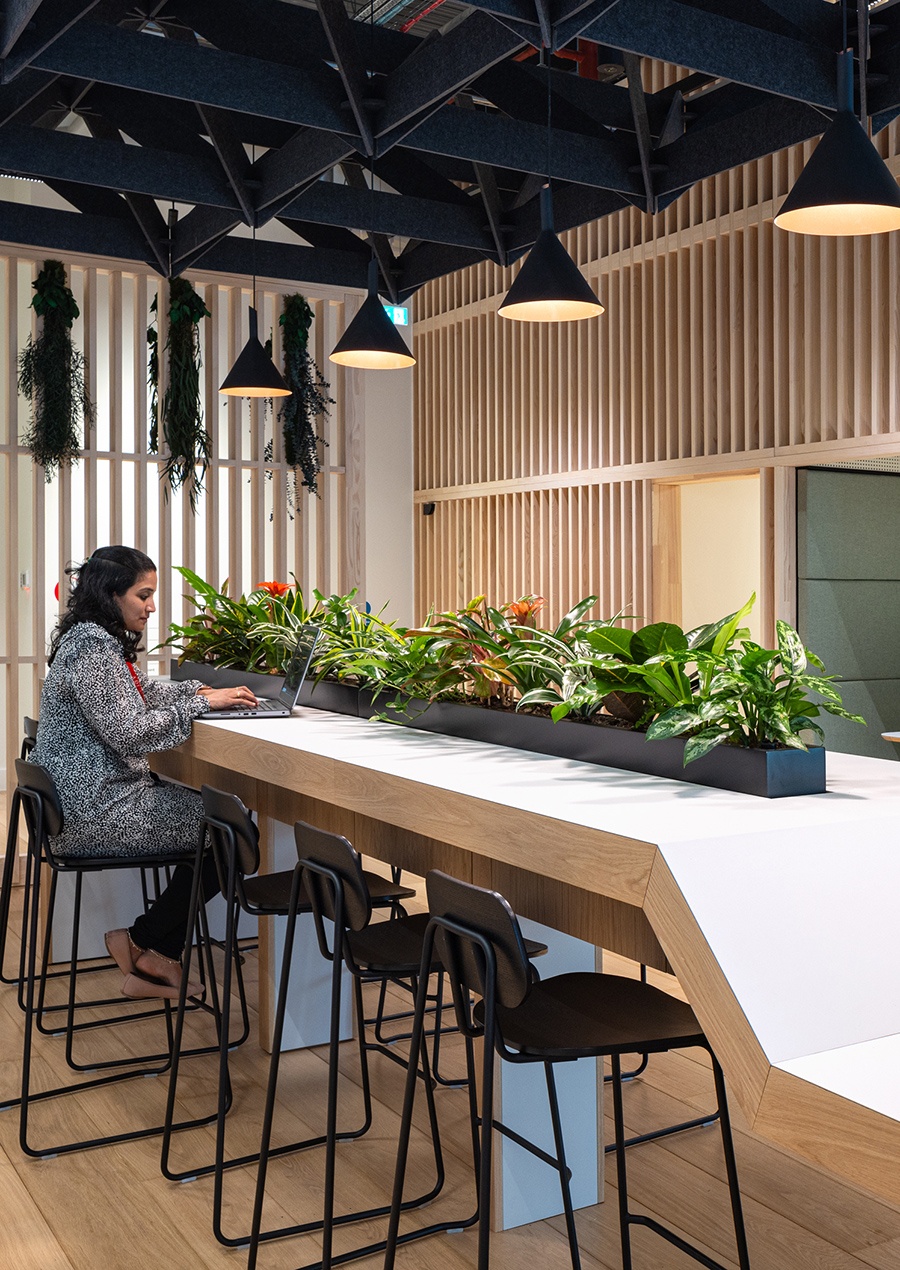
Biophilic elements are integral, not decorative. Planting is used throughout the three floors, and a preserved-moss wall with Arup branding provides a clear biophilic cue at arrival.
Mindfulness zones are in the quietest corners of the space, with daylight and city views framed by greenery. To help balance the industrial aesthetic, plants, natural materials and a nature-inspired palette create sensory calm and promote the well-being of Arup’s people.
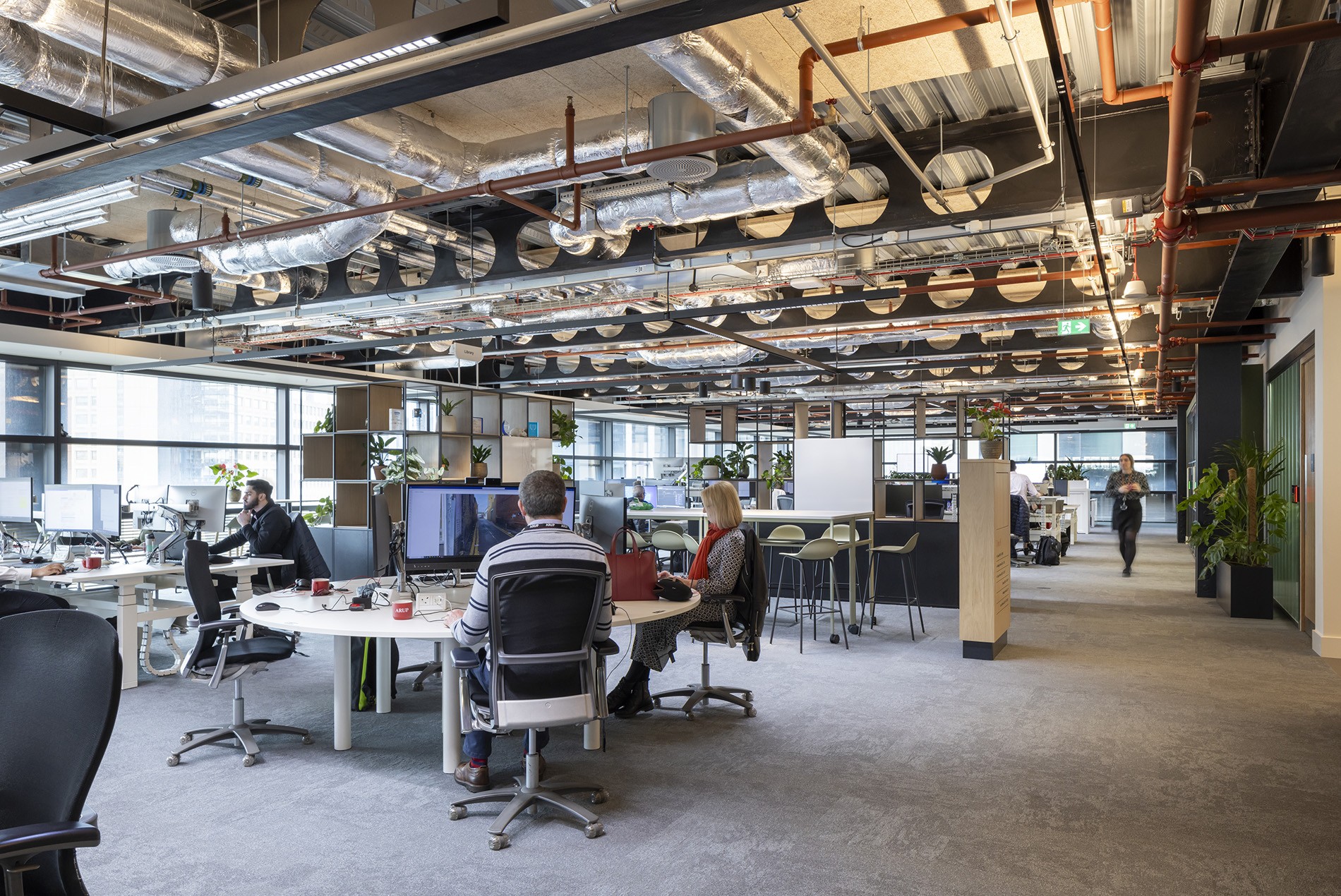
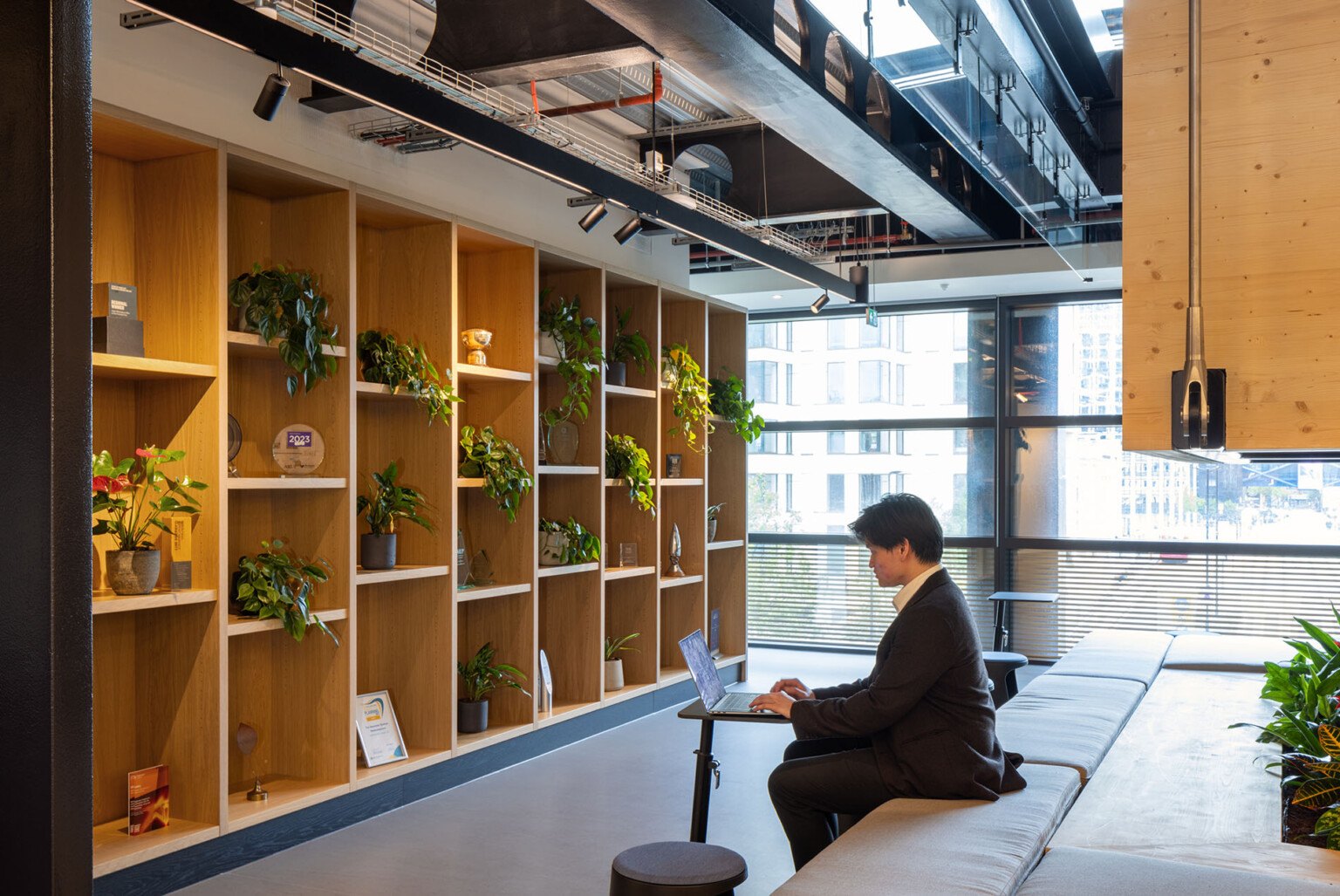
The furniture supports different ways of working. Instead of defaulting to rows of benches, our design includes circular desks that remove direct face-to-face positioning. This eases the social friction of constant eye contact and gives each person a bit of personal territory.
To keep meetings short and focused, some meeting spaces offer standing-height tables with padded lean rails instead of chairs.
Personal lockers anchor the unassigned seating strategy, with staff getting secure storage without fixed desks. Arup’s people choose their posture, proximity and privacy based on the task at hand, not a standard kit.
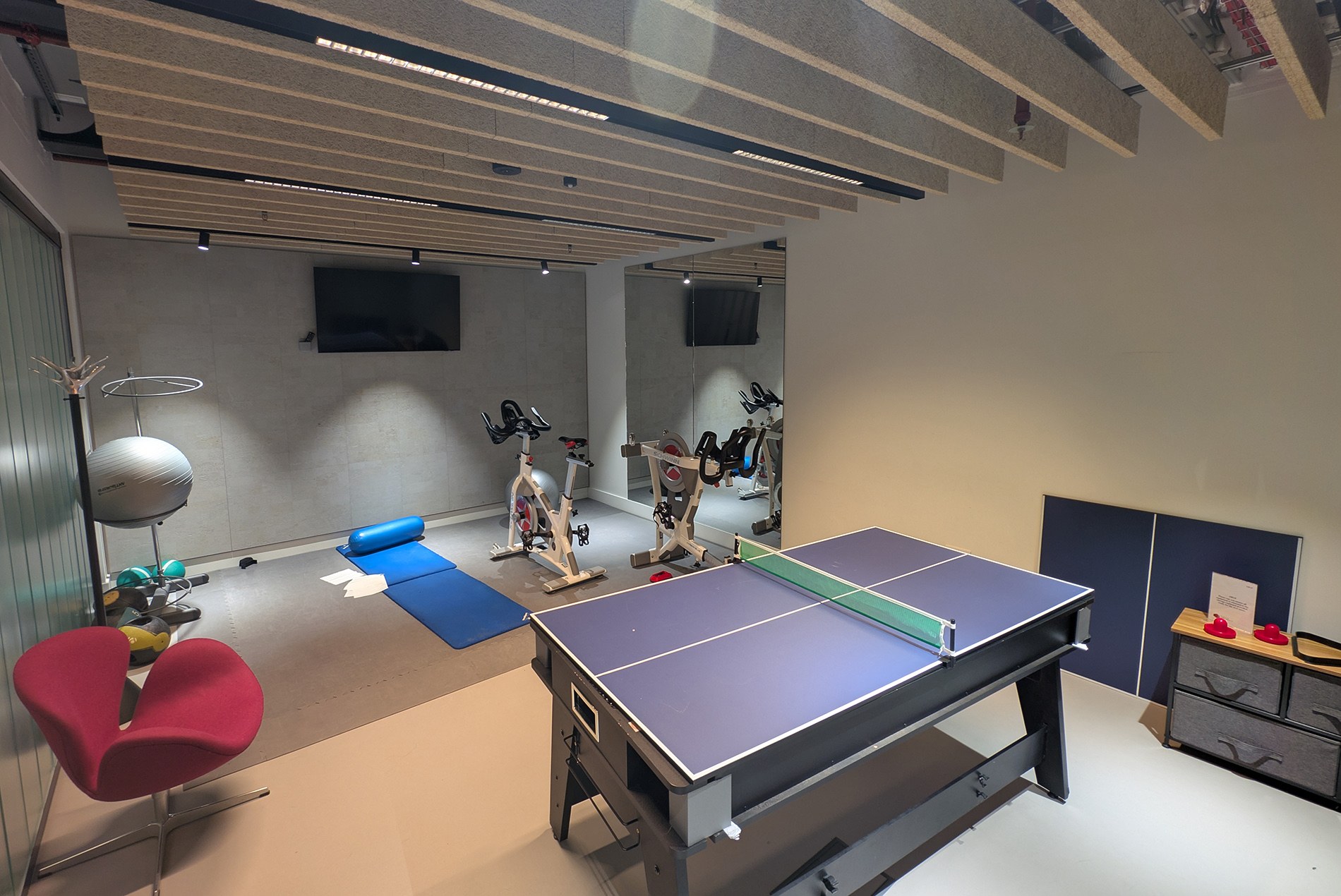
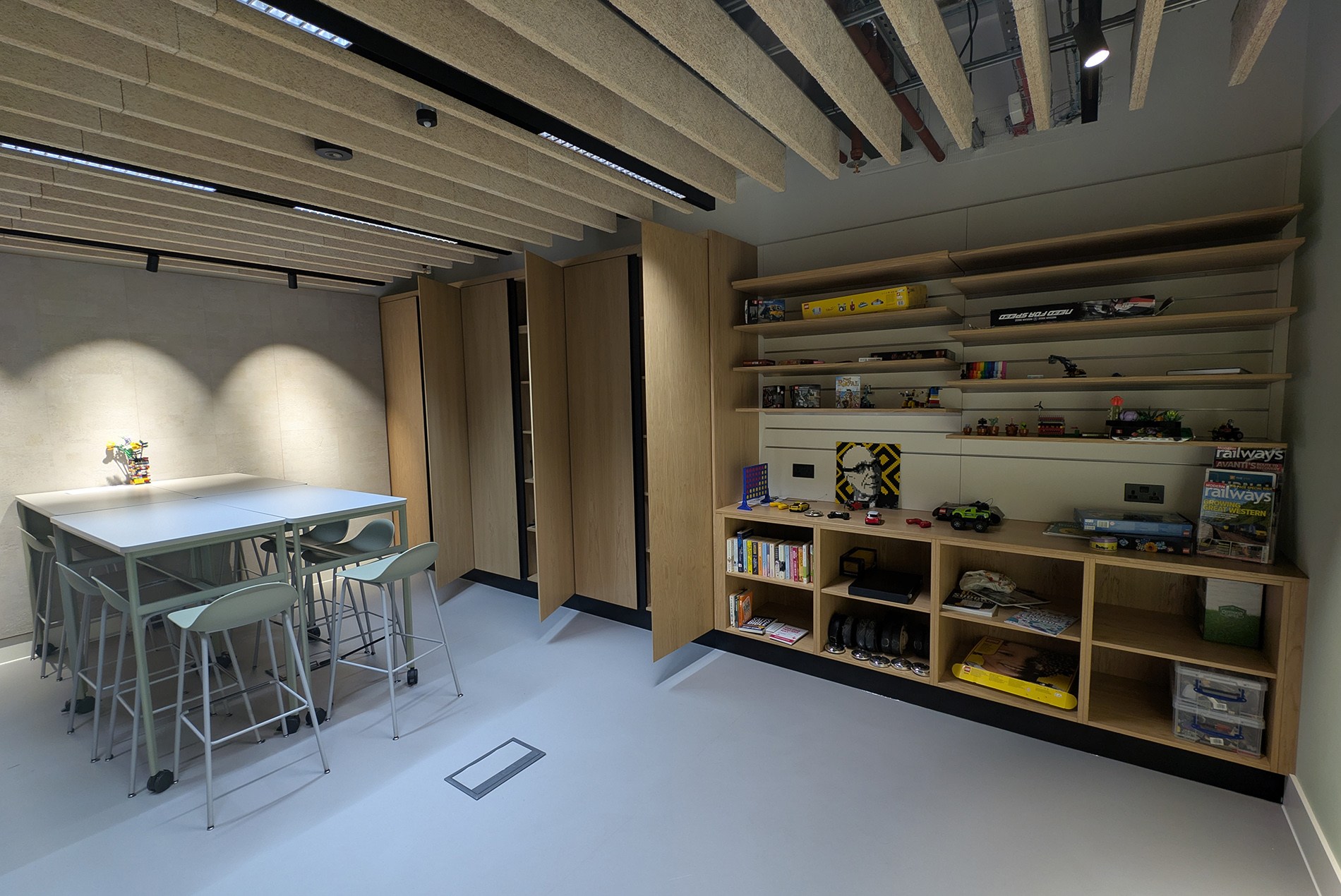
Two acoustically treated Lifestyle Rooms (left)—introduced to ease post-pandemic return-to-office anxiety and sustain the hobbies people picked up during remote work—host everything from music practice to Lego builds. These spaces, endorsed by Arup’s leaders, legitimize restorative breaks without stigma.
The multipurpose Paradise Suite hosts weekly Pilates and social events for 15 to 75 people. Other spaces accommodating specific needs include a parents’ room, wudu and prayer rooms, and a quiet well-being area.
The basement at One Centenary Way houses Birmingham’s first dedicated cycle hub, with showers and lockers encouraging active commuting.
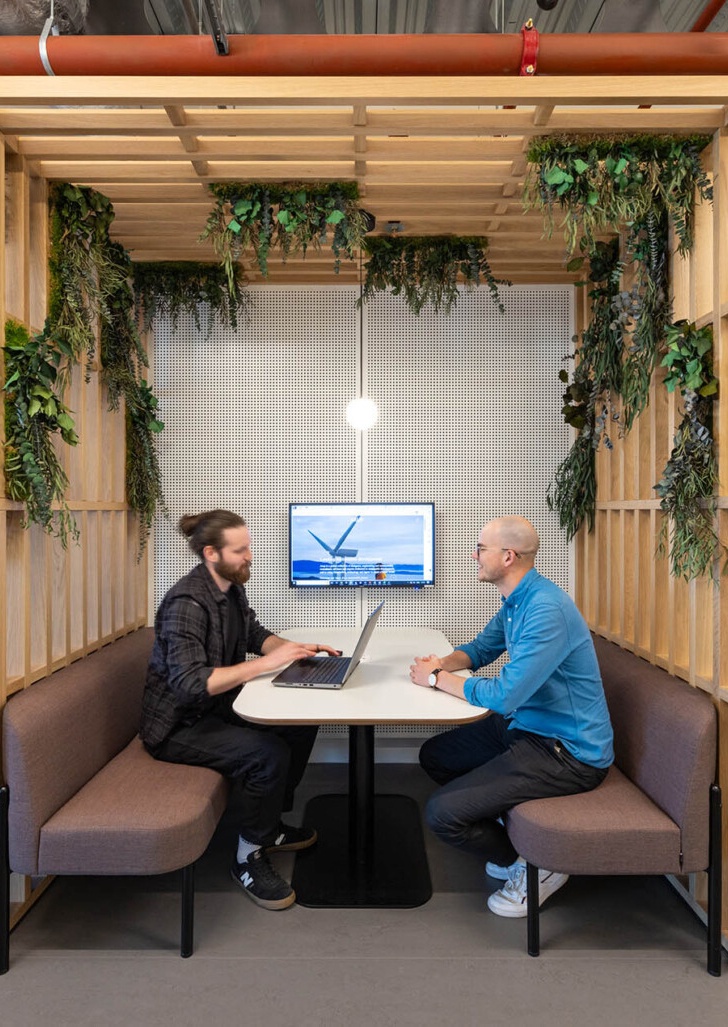
True to its living lab mission, the workplace continues to evolve based on user feedback and performance data. Office attendance is up about 10%, and teams report more social activity. Anecdotal feedback includes one Arup engineer sharing that he no longer experiences the headaches, fatigue or anxiety he used to feel in the office.
The ground floor “shop window” has fulfilled its civic role, hosting charity launches, school visits and STEM programming while enabling the public to see Arup at work. A street-facing café operated by a local social enterprise keeps the space active all day. The workplace also supports a growing social culture, with activities ranging from Pilates classes to a board game group and a model railways club.
Arup uses the space as a teaching tool, demonstrating neuroinclusive, low-carbon design to clients and peers. The British Council for Offices named it “Best Fit-Out of Workplace” for Midlands & Central England.
After a decade outside Birmingham, engineering consultancy Arup returned to the city center. The move reconnects the firm with clients and community while accommodating 900 people—each with different working needs—and signals its renewed commitment to the Midlands.
Working with Arup and fit-out specialist Overbury, our interior design transformed three floors of speculative shell space at One Centenary Way into 68,000 square feet of next-generation workspace.
Neuroinclusion was one of the organizing ideas from the outset. The design blends Arup’s technical rigor with a clear understanding of how their people think, feel and work. Arup also wanted the workplace to function like a living lab by using real-time feedback to test assumptions, prove what works and improve the environment over time.
“We designed a workplace that earns the commute—choice without chaos, quiet without isolation and engineering you can actually see.”
— Tim Hatton, Senior Interior Designer, HOK
HOK led a collaborative design process with Arup’s Workplace Advisory team, the Inclusive Environment network and the Midlands Connect Ability cohort. The team created data-rich prototypes that mapped work styles and assembled a kit of parts to support different needs.
Workshops helped the design team translate research into user personas and “day-in-the-life” video scenarios that followed hyper- and hyposensitive staff from their commute through a full workday.
This evidence-based approach aligned Arup’s data-driven culture with HOK’s neuroinclusive research and design approach. Before finalizing any layouts, the team was able to establish clear targets for adjacencies, circulation, acoustics and lighting.
To give people real choice without overload, our design organizes Arup’s workplace around six distinct modes of working: Concentrate, Contemplate, Commune, Create, Congregate and Convivial. This simple framework guided everything from macro-zoning to furniture selection.
Concentrate encompasses 26 focus rooms in a variety of configurations for heads-down tasks.
Contemplate spaces, including Mindfulness Zones, occupy the quietest corners with daylight and greenery.
Moving inward, Commune and Create areas support collaboration and creativity.
Congregate and Convivial settings activate the ground-floor “shop window,” engaging the public and hosting events.
Soft thresholds, not hard walls, create what the design team calls “fuzzy boundaries,” letting neighborhoods expand, contract or merge as teams grow or shrink.
A central atrium anchors the three floors. A sculptural engineered-timber stair encourages walking and interaction. Each floor has a color identity—blue, green or red—shown through accents and wayfinding.
Digital totems display real-time occupancy and environmental data, helping people choose where to work.
Distinct landmarks like the preserved moss wall with Arup branding, the multipurpose Paradise Suite and dedicated lifestyle rooms serve as anchors in this unassigned seating environment.
The design brief called for “Arup on show,” with exposed engineering systems that serve as educational tools for new staff and graduates. Our team embraced this industrial aesthetic while carefully managing its sensory impact.
Exposed MEP services run in organized patterns overhead. Set against muted structural elements, the systems reduce visual chaos without hiding their function. High-performance acoustic panels integrated into the exposed ceiling work with cork floors and wall panels to absorb sound.
Light follows natural cycles. A circadian system runs cool and bright in the morning and warm and dim toward evening, adapting to the time of day and change of seasons. Zones with lower ambient light provide adjustable task lighting that gives Arup’s people control over their environment. Smart controls and CO₂ monitoring enhance comfort.
“Why wouldn’t companies create a more inclusive workplace? We’ve found it’s better on so many levels. These spaces, with more interesting workplace settings, are much more compelling than standard rows. I’d encourage everybody to embrace neuroinclusive spaces.”
— Alison Kilby, Associate Director and Workplace Advisory Lead, Arup
Biophilic elements are integral, not decorative. Planting is used throughout the three floors, and a preserved-moss wall with Arup branding provides a clear biophilic cue at arrival.
Mindfulness zones are in the quietest corners of the space, with daylight and city views framed by greenery. To help balance the industrial aesthetic, plants, natural materials and a nature-inspired palette create sensory calm and promote the well-being of Arup’s people.
The furniture supports different ways of working. Instead of defaulting to rows of benches, our design includes circular desks that remove direct face-to-face positioning. This eases the social friction of constant eye contact and gives each person a bit of personal territory.
To keep meetings short and focused, some meeting spaces offer standing-height tables with padded lean rails instead of chairs.
Personal lockers anchor the unassigned seating strategy, with staff getting secure storage without fixed desks. Arup’s people choose their posture, proximity and privacy based on the task at hand, not a standard kit.
The design supports Arup’s goal to be net-zero carbon by 2030. Arup and developer MEPC made the building all-electric, eliminating gas. HOK’s early coordination with the base-build contractor enabled the team to adapt services during construction, cutting demolition waste.
Materials prioritize low embodied carbon and sensory comfort. They include cork floors and walls for acoustics, engineered timber instead of steel for the internal stair, sheep’s wool insulation and finishes (including carpeting) with recycled content. Our designers also minimized the use of PVC products. The cast-glass glazing system allows for variable transparency, eliminating the need for an applied manifestation film.
Smart systems support day-to-day performance. Sensors monitor space use and comfort (including CO₂ and temperature) and feed live data to digital totems showing occupancy heat maps and environmental conditions. People can choose a setting that fits their needs in the moment. Arup’s facilities team uses the same data to tune conditions and plan future adaptations.
Together, these measures deliver results 10% better than UK Green Building Council 2025–2030 targets. The fit-out achieves WELL Platinum; the base building is certified BREEAM Excellent.
Two acoustically treated Lifestyle Rooms (left)—introduced to ease post-pandemic return-to-office anxiety and sustain the hobbies people picked up during remote work—host everything from music practice to Lego builds. These spaces, endorsed by Arup’s leaders, legitimize restorative breaks without stigma.
The multipurpose Paradise Suite hosts weekly Pilates and social events for 15 to 75 people. Other spaces accommodating specific needs include a parents’ room, wudu and prayer rooms, and a quiet well-being area.
The basement at One Centenary Way houses Birmingham’s first dedicated cycle hub, with showers and lockers encouraging active commuting.
True to its living lab mission, the workplace continues to evolve based on user feedback and performance data. Office attendance is up about 10%, and teams report more social activity. Anecdotal feedback includes one Arup engineer sharing that he no longer experiences the headaches, fatigue or anxiety he used to feel in the office.
The ground floor “shop window” has fulfilled its civic role, hosting charity launches, school visits and STEM programming while enabling the public to see Arup at work. A street-facing café operated by a local social enterprise keeps the space active all day. The workplace also supports a growing social culture, with activities ranging from Pilates classes to a board game group and a model railways club.
Arup uses the space as a teaching tool, demonstrating neuroinclusive, low-carbon design to clients and peers. The British Council for Offices named it “Best Fit-Out of Workplace” for Midlands & Central England.